
In short
Global News Podcast - Episode Summary
Episode Title
Iran President Apologises for Striking Neighbours
Date: Saturday, 7th March
---
Episode Overview
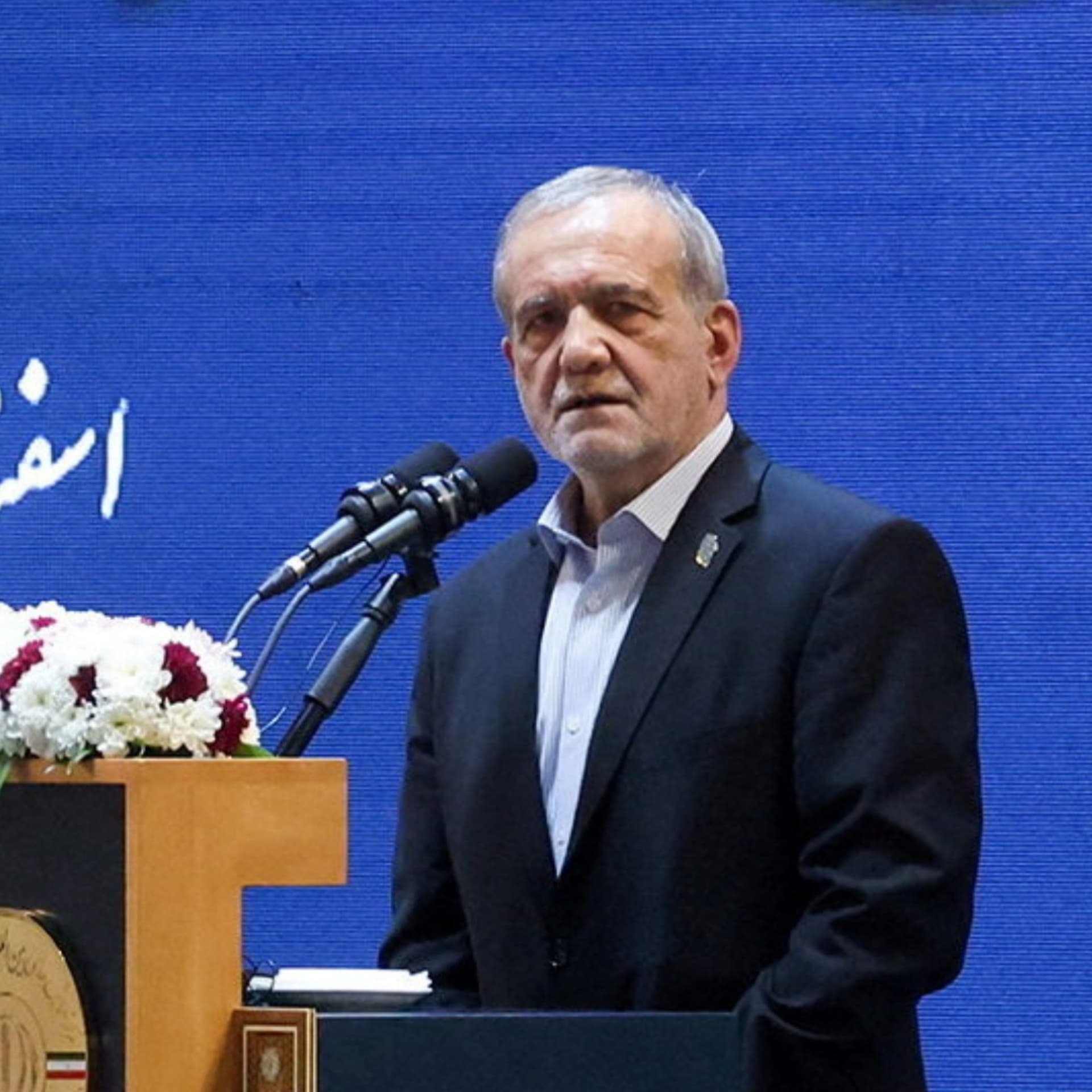
The episode focuses on the Iranian President Masoud Pezeshkian's apology for recent missile and drone strikes against neighboring Arab nations. The geopolitical tensions surrounding Iran's military actions and the subsequent responses from the United States, Israel, and other regional actors are discussed.
---
Key Topics and Discussions
Iran's Apology and Shift in Military Strategy
- President's Statement: Masoud Pezeshkian announces that Iran will cease attacks on its Arab neighbors unless provoked.
- Context of Apology: The Iranian leadership's apology comes amid significant backlash from Arab nations, particularly those hosting US military bases.
- Decentralized Command: Pezeshkian mentioned the absence of centralized military command led to unauthorized attacks. The Iranian military acted autonomously in response to perceived threats.
Reactions from Global Leaders
- Trump's Response: President Trump interprets Pezeshkian's apology as a sign of weakness, asserting that Iran must surrender unconditionally to end hostilities. He emphasizes a harsh stance against Iran, calling it the "loser of the Middle East."
- Regional Officials' Concerns: Gulf state leaders express shock at Iran's aggression, indicating a long-term rift may have been created that could be difficult to heal.
Ongoing Conflict in the Region
- Israeli Airstrikes: Israel continues its operations against Hezbollah in Lebanon, with reports of significant casualties and humanitarian crises emerging from missile attacks.
- Humanitarian Situation in Lebanon: Tanya Babin from MedGlobal highlights the rapid escalation of humanitarian needs due to forced displacements, with shelters overwhelmed and resources stretched thin.
- Impact on Kurdish-Iranian Groups: Reports of increasing attacks on Kurdish-Iranian opposition groups in Northern Iraq, as tensions escalate.
Ground Reports from Tehran and Iraq
- Tehran's Response to Attacks: International journalists report from Tehran, detailing the fear among residents as missile strikes occur close to civilian areas.
- Iraq's Neutral Stance Tested: Iraq faces challenges in maintaining neutrality, as drone attacks target its territory, and warnings are issued to Kurdish fighters regarding their involvement in the conflict.
---
Key Takeaways
- The episode underscores the precarious nature of regional stability in the Middle East, particularly concerning Iran's military strategy and its implications for neighboring countries.
- The Iranian government's internal dynamics, including the influence of a decentralized military command, are critical to understanding the current crisis.
- Humanitarian crises are escalating in Lebanon and Iraq, exacerbated by military actions and forced displacements.
- Global reactions, particularly from the US and Israel, reveal the broader geopolitical implications of Iran's military posture.
---
Conclusion
The episode provides a comprehensive analysis of the current tensions between Iran, its neighbors, and global powers, illustrating the complexity of international relations in the context of military conflicts. It highlights the urgent humanitarian concerns arising from these conflicts and the challenges faced by regional governments in navigating the unfolding crisis.
For more insights and updates on global news, listeners are invited to engage with the podcast through email or social media.
---
*For more information, contact: globalpodcast@bbc.co.uk* *Follow us on social media @BBC World Service* *Use hashtag: #GlobalNewsPod*
Written by AI. May contain mistakes. Listen to the episode to check what was said.
Chapters
Tap a time to open that second in VOIran's Apology to Neighbors
1:23 to 2:36
Discussion on Iranian President's apology for strikes on Arab neighbors.
“I'm Charlotte Gallagher and this is an extra edition of the Global News Podcast to update you on the developments in the US-Israel war with Iran on Saturday 7th March.”
Context of the Apology
2:36 to 4:28
Insights into the geopolitical context and implications of the Iranian president's remarks.
“Arab countries hosting US military bases are adamant they've not allowed them to be used to launch attacks against Iran.”
International Reactions and Tensions
4:28 to 5:40
Exploring reactions to the Iranian strikes and President Trump's response.
“But he made it clear that this was not just his gesture.”
On-the-Ground Situation in Lebanon
5:40 to 7:40
Updates from Lebanon regarding Hezbollah and the humanitarian situation.
“and he said they were absolutely shocked by Iran's strikes and said it would take decades for this rupture to be healed, that there was no going back.”
Lebanon's Response and Consequences
7:40 to 14:01
Discussion on Lebanon's political situation and international aid prospects.
“Pazeshki and the president was issuing his recording, there was a missile attack here, which the Qataris intercepted.”
Hezbollah's Role in the Conflict
14:01 to 14:59
Learn about Hezbollah's capabilities and the international response to the Lebanese crisis.
“They've trained them, they've established them and they funded them until they've reached this point.”
Iraq's Involvement in Regional Tensions
15:00 to 17:31
Explore Iraq's precarious position amidst escalating conflicts and drone attacks.
“Iraq has also been dragged into the conflict.”
Inside Tehran: Public Sentiment Amidst Attacks
17:32 to 19:44
Discover the current mood in Tehran and the impact of military actions on civilians.
“It remains difficult to know exactly what's going on inside Iran.”
Diverging Opinions on the Government's Actions
19:45 to 21:49
Understand the contrasting views among Iranians regarding their government's response to conflict.
“in the streets is that they are so much presence.”
Transcript
Automatic transcript. May contain errors.0:00Donald Trump:This BBC podcast is supported by ads outside the UK.
0:30Donald Trump:exceptions. The result is durable clothing like the premium Slub Crew Tee, No BS High Rise Pant, and Slim Roughneck Pant that become part of your life. Snag the hoodie that will bring you comfort for life. The American Giant Classic Full Zip. Save 20 % off your first order at American-Giant.com when you use code STAPLE20 at checkout. I'm Steve Rosenberg, the BBC's Russia editor. In Our Man in Moscow, I'll show you what it's like being a news correspondent in Russia as the Russian authorities wage war on Ukraine and try to silence dissent.
1:02Masoud Pezeshkian:The sound of war has reverberated around Ukraine for three years.
1:07Donald Trump:Dramatic geopolitical upheaval alongside threats of intimidation and imprisonment. Our man in Moscow. Watch with a subscription to bbc.com and the BBC app. Visit bbc.com slash docs to learn more.
1:22Masoud Pezeshkian:This is the Global News Podcast from the BBC World Service. I'm Charlotte Gallagher and this is an extra edition of the Global News Podcast to update you on the developments in the US-Israel war with Iran on Saturday 7th March. Today's main stories. The Iranian president, Masoud Pejeshkian, says Iran will stop striking its Arab neighbours as long as no attacks originate from their territory. President Trump has characterised the remark as a surrender in response to relentless US and Israeli bombardment. And we'll hear from northern Iraq, where Kurdish-Iranian opposition groups have been coming under attack.
2:04Masoud Pezeshkian:And I'm located in the very centre, close to the compound of the supreme leader
2:09Donald Trump:that was actually attacking the first moment of the Israel and American attack. I feel like it was like two streets from my house.
2:18Masoud Pezeshkian:One Tehran resident tells us about her experience of the war so far.
2:26Masoud Pezeshkian:As the US-Israel war with Iran enters its second week, the Iranian president has apologised to Iran's Arab neighbours for striking them with missiles and drones. Arab countries hosting US military bases are adamant they've not allowed them to be used to launch attacks against Iran. Several Gulf countries also try to dissuade Washington from starting its bombing campaign. In a televised speech, President Masoud Pezashkian said attacks would stop as long as no attacks come from those countries.
3:01Donald Trump:I should apologise to the neighbouring countries that were attacked by Iran on my own behalf. What happened was that our commanders and our leader lost their lives following the barbaric aggression and our armed forces, the champions that are sacrificing their lives to defend our territorial integrity, fired at will because their commanders were absent and did whatever was necessary. They proudly and powerfully defended our homeland.
3:27Masoud Pezeshkian:On Friday, President Trump said only Iran's unconditional surrender would end hostilities, but President Pez Eshkierkan ruled that out.
3:40Donald Trump:That we surrender unconditionally, they should take that dream to their graves. What we are committed to are international law, human frameworks, and the principles they talk about. They should be committed to those principles.
3:55Masoud Pezeshkian:Our chief international correspondent, Lise Doucette, who was reporting from Iran not long ago, listened to the president's speech. The president is known for trying to strike conciliatory tones. You may remember that during the major protests which were put down with lethal force, He apologized for the government's shortcomings, at least in economic matters, not in political ones. And here he is again now today offering a conciliatory tone, apologizing to neighboring states, particularly in the Gulf, which have been coming under attack by Iranian forces. But he made it clear that this was not just his gesture.
4:31Masoud Pezeshkian:He said that a decision had been made by Iran's current leadership. It's a three-man interim leadership council, and they had decided that they would make this clear to neighboring states. And he had this interesting explanation, and we heard of it earlier from the foreign minister, Abbas Adakshi, when he was embarrassed that Oman, which is a key mediator for a long time, had also been hit by Iranian strikes. And he said that the command had been decentralized. decentralized. So again, Pashishian said that army officers, he said, had been firing at will in the absence of a top command. So one would suggest that they're going to try to make their decisions a bit more consolidated if they can.
5:13Masoud Pezeshkian:But there was still the caveat that if attacks by the US or Israel originate in countries with military bases, they would still be a target.
5:25Donald Trump:So it's not rushed off by President Trump.
5:29Masoud Pezeshkian:Yes, and I should say that the decision of the leadership and his apology is in response to the fury among Arab leaders. I spoke to a senior official in the Gulf yesterday, and he said they were absolutely shocked by Iran's strikes and said it would take decades for this rupture to be healed, that there was no going back. And he said, after this, he said, if we ever sit down for negotiations, Ballistic missiles will have to be on them because they are clearly a threat. And yes, to President Trump, of course, how swiftly he responded in the middle of the night in the United States. And he says, I'll read a little bit of it.
6:07Masoud Pezeshkian:Iran, which is beat to hell, hell in capital letters, has apologized and surrendered to its Middle East neighbors and promised that it will not shoot at them anymore. And then he goes on to say, he says, Iran is no longer the bully of the Middle East. and then in capital letters, they are the loser of the Middle East. It's such a harsh tone and he said that they will, they're going to be hit very hard. And sadly, it has an echo of some of those petulant messages he has sent before and it's hard to remember that about a year ago, he said he wanted to be remembered as the president of peace and a unifier in the world.
6:45Donald Trump:Now there is talk of regime alteration And this is in the wake of what's happened in Venezuela, of course. And I guess that I mean, Donald Trump has been talking about, you know, he personally being involved in who will be the next leader in Iran and finding another Delcy Rodriguez, the equivalent of the Venezuelan deputy who has sort of stepped up now to become an American ally in the wake of Maduro being taken into prison.
7:09Masoud Pezeshkian:I think President Trump is realizing that his second job as commander in chief gives him this extraordinary sway. And he has such powerful military weapons, the strongest stuff in the world, and therefore he can lose them at will. He calls Venezuela the perfect scenario, but it simply wouldn't work in Iran to take the leader off and then work with the administration that's left. That was Lise Doucette. Our correspondent Barbara Plett Usher has also been listening to the Iranian president's statement from the Qatari capital, Doha. As Mr. Pazeshki and the president was issuing his recording, there was a missile attack here, which the Qataris intercepted.
7:50Masoud Pezeshkian:There have also been missile and drone strikes this morning, so I think it will be greeted with a fair bit of scepticism. Now, what the president said was that the Iranian military units had acted on their own authority and did what they deemed necessary after their commanders were killed. It suggests that he's speaking about the decentralized defense strategy that the Iranians organized in the anticipation that Israel and the U.S. would go after their top leadership. So in effect saying that local commanders could continue to carry on without centralized orders. So it sounds like the leadership, at least the diplomatic and political leadership, is trying to control a situation that has very much angered their Arab neighbors.
8:38Masoud Pezeshkian:And perhaps they are seeing that it is not helping their case, the Iranian case, because it seems more and more that the Gulf leadership has been joining ranks with the United States rather than arguing Iran's case. And is there a sense of shock in Qatar that they've been drawn into this conflict? Yes and no. Before the war started, Qatar and the other Arab countries in this region warned the U.S. that there could be dire consequences. They all host U.S. military bases, and the Iranians had said quite clearly that they would target the U.S. military bases. They also warned the U.S. that if the leadership felt there was an existential threat, that it was being targeted directly, then it could get much worse than that.
9:27Masoud Pezeshkian:And it might even involve the Iranians targeting their oil and gas industry. And that is what has happened. So it is their worst case scenario. But I think the week of quite relentless, or at least regular, I would say, missile and drone fire from Iran and the fact that it has hit residential areas and civilian infrastructure as well is something that has really, I'm not sure if they were quite expecting that. I don't know if the civilians were expecting that. It has been something that has really hit the region hard. And you've had some very sharp statements from some of the officials, especially in Qatar and the United Arab Emirates.
10:05Masoud Pezeshkian:That was Barbara Platt-Usher reporting from Doha. As we record this podcast, Iranian media reports say two influential clerics clerics have called for a quick selection of the new supreme leader to help steer the nation amid the ongoing US and Israeli strikes. President Trump has argued the US should have a role in choosing the new leader, a demand rejected by Tehran. Israel is continuing to pound Lebanon, saying it's targeting strongholds of the Iranian-backed militant group Hezbollah. Two Ghanaian UN peacekeepers have been critically wounded in a missile attack. The Lebanese health ministry says more than 200 people have been killed since airstrikes began.
10:48Masoud Pezeshkian:The prime minister, Nawaf Salam, has warned a humanitarian disaster is looming as hundreds of thousands of people are being forced to leave their homes ahead of an anticipated ground incursion by the Israeli military. Tanya Babin from the humanitarian group MedGlobal is based in Beirut.
11:05Donald Trump:What we're witnessing right now in Lebanon is an extremely rapid humanitarian escalation. So in the last almost 72 hours now, since the massive evacuation orders in the south, in Dahye, in the southern suburbs of Beirut, and in the Biqa region, which is northeast, the scale and the speed of this displacement is pushing humanitarian resources to the absolute brink. Shelters are filling up so quickly. The authorities are now trying to prepare, as of last night, one of the main sports stadiums in Beirut, to try to accommodate these additional displaced families. These families, remember, are fleeing.
11:44Donald Trump:They're given a very short time to leave their homes.
11:46Masoud Pezeshkian:Many people are arriving at shelters with no basic supplies, nothing. I've been speaking to our correspondent in Beirut, Lina Sinjab. She first told me about those two UN peacekeepers that have been critically injured.
11:59Donald Trump:The statement coming out from the UNIFL that the peacekeeping mission in the south of Lebanon that a missile hit their base yesterday, at least three were injured, but two in critical condition. The statement did not specify the source of the attack. However, the Lebanese president, Joseph Aron, came out to condemn the attack and blame it on Israel Defense Forces. who they didn't make any statement about that. And in the last round of war in 2024, there were several attacks by IDF on UNIFL, on UN peacekeeping mission in the south. It's really worrying that in this time, these kinds of attacks continue on peacekeeping missions.
12:42Donald Trump:Just in the past hour, we've heard of an attack in the Bekaa Valley. At least a dozen people, probably more, were killed, which will bring the number of the total dead over 200. And that's likely to increase.
12:54Masoud Pezeshkian:For Lebanese people, they've gone through this so many times. I mean, I read an interview with one woman today who said, look, I've not even finished repairing my house from the last set of military strikes. And now it's been damaged again.
13:06Donald Trump:You know, I spoke to one person who said it's generation after generation. It's his grandmother fled with his mother and then his mother fled with him. And now he's fleeing with his children. So it's really generation after generation living in this war with Israel. But this time you can see more voices critical of Hezbollah because really they didn't want any involvement. They haven't recovered from the last war in 2024. And yet Hezbollah decided to launch rockets into Israel, prompting this retaliation and attack on civilians in big numbers.
13:41Masoud Pezeshkian:Do you think this could be a real turning point for Hezbollah in Lebanon? because as you said, support for them is weakening and people are just so fed up with this situation.
13:50Donald Trump:You know, I think the political decision and the public decision is clear about Hezbollah, but this is not a group that was established yesterday. They've started in the 1982 by Iran with the Revolutionary Guard. They've trained them, they've established them and they funded them until they've reached this point. Although in the last war in 2024, they've lost 5 ,000 of their fighters, most of their leaders. Israel destroyed their weapons depot, but we can see today that they've managed to rearm themselves and they still have tens of thousands of fighters. So it really is going to cause a big rift in the society.
14:24Masoud Pezeshkian:And yesterday, the Lebanese prime minister asked for international help. Is there any sign that is coming?
14:29Donald Trump:I think the international community made it clear first the decision and the action to be taken from the Lebanese government, from the Lebanese army, so that they would be able to chip in, even on the level of financial aid to rebuild and reconstruct. They also want to monitor the country that government with long reputation of corruption. So there are lots of lists of demands from the international community from Lebanon before anyone can come in and help. But actually, the key issue is what to do with Hezbollah and how to stop them.
14:59Masoud Pezeshkian:That was Lina Sinjab in Beirut. Iraq has also been dragged into the conflict. There have been some explosions at several locations overnight. Drones attacked oil facilities in Basra and rockets targeted a complex near Baghdad airport, which has a military base and a US diplomatic facility. Iran is also stepping up its attacks on Kurdish-Iranian opposition groups at their bases in northern Iraq. Ola Gherin is in Erbil, the capital of the Kurdistan region of Iraq.
15:28Donald Trump:Iraq is trying hard to stay out of the war next door. That's getting harder to do. Late last night, after about 10 o 'clock local time, we had a series of explosions which we could hear. Now, they were actually interceptions of four drones, which security officials here are saying were bomb-laden drones, and which appeared to have been targeting one of the main hotels here, quite a high-profile location. In the end, they were shot down, debris fell in an open area, no injuries, no casualties, but it certainly increased the tension here. And there had been a warning shortly before that from the US embassy telling its citizens to get out of hotels in the city because they believed that they might be targeted.
16:14Donald Trump:Now, the attack has been claimed by one of those pro-Iran militias. It's an Iraqi group based here, but supportive of the regime across the border. And we heard open threats yesterday from Tehran. A senior official there saying that facilities here, all kinds of facilities, would be targeted if Kurdish Peshmerga fighters crossed the border from here into Iran. Now, that's a story that's been bubbling for the past few days. These Peshmerga fighters here are part of opposition groups, Iranian Kurdish groups that have been here for decades. President Trump is now openly encouraging them to get involved in the war.
16:59Donald Trump:You'll have heard that he said it's a wonderful idea and he's all for it. So far, they say they have not crossed the border. The authorities in Baghdad and the authorities here in Erbil, which is an autonomous Kurdish region, both say we do not want them to do that. We do not want to get involved. We don't want our territory being used to launch attacks on our neighbour. But as the days go by here, the tension, the level of tension is increasing. And I would say the risk for Iraq of becoming embroiled.
Read the full transcript
17:31Masoud Pezeshkian:That was Ola Guerin reporting from Iraq. It remains difficult to know exactly what's going on inside Iran. The BBC, like most international media, can't freely report from the country. And communications with people there remain difficult. But a few international journalists are still able to report from Tehran. Catalina Gomez has lived there for around 20 years and reports for the French news channel France 24 and Spain's L 'Anguagdia newspaper. She spoke to James Menendez and began by telling him about the attacks which hit the city on Friday.
18:06Donald Trump:It was basically around 5, 5.10 in the morning that several explosions came. Like they were dropping the bombs very consecutive. and it lasts for five minutes. It was very strong. Everything was shaking. You can feel the sound of the plane on the earth. Immediately, all these pictures from Tehran start going out in the social media. They were very strong. You could see this huge attack in the city. And it continues during the day in different parts, east, west, and in the afternoon, came back to the centre very strongly. And those ones early in the morning at dawn, I mean, how close to you were they, do you think?
18:45Donald Trump:I'm located in the very centre, close to the compound of the supreme leader that was actually attacking the first moment of the Israel and American attack. I feel like it was like two streets from my house. And more generally, I mean, are you able to find out what is being hit in this campaign? Tehran is a very, very secure city with a lot of checkpoints of different militia groups like the Basijis or the special forces or the special police. Then there are some areas that is very difficult to transit around. It's interesting you talk about the checkpoints and the presence of the militias and so on.
19:29Donald Trump:That suggests that much of the regime's military apparatus and personnel, I mean, they're all still in place. It's not like people have been deserting their posts, is it? I mean, what we know and we would see in the streets is they are not deserting. They are really much there. I know that they have been attacking bases of militias, but we can see in the streets is that they are so much presence. But I also have to point something interesting. Two days ago, I was in the north of the city close to a very famous place in Tehran, Tadrish is usually very crowded. Of course, these days it's not crowded because we are in holidays because they declare seven days of mourning.
20:11Donald Trump:But some people close to the system were there with flags and chanting slogans, remembering Supreme Leader, but also against America and Israel. And it was full of checkpoints that day, very difficult and very dangerous, because they were showing their guns very openly. But today I was there and it was very, very quiet. It's Friday. People should be out. And also there were almost no checkpoints that really show something because very empty. I never see in my life Teheran as empty. So people clearly staying at home. And are you able to speak to people at all in the city and find out what they think about what's going on?
20:53Donald Trump:I mean, clearly people are worried, but I just wonder whether, you know, people welcome what's happening. I mean, what are their thoughts about what the days and weeks to come might hold? People are worried, but people have different approach, depending on where they are. I mean, people who support the system and is mourning the Supreme Leader, they are very much requesting for revenge. And they are really against America and Israel, but they believe that Iran has to go until the end. And you have other people who are really, really worried because even if they are against the Islamic Republic, they are worried what is happening with the country and what is going to happen after.
21:37Donald Trump:And they are also very worried of being a victim of these attacks of the Israelis, of Americans. And also they are very afraid of these militias and these checkpoints in the streets that something will happen to them. That's why people are trying to be very careful
21:51Masoud Pezeshkian:being in their house or out of the city. That was Catalina Gomez speaking to James Menendez from Tehran. And that's all from us for now. If you want to get in touch, you can email us at globalpodcast at bbc.co.uk. You can also find us on X at BBC World Service. Use the hashtag Global News Pod. And don't forget our sister podcast, The Global Story. This edition of The Global News Podcast was mixed by Craig Kingham and the producer was Stephen Jensen. The editor is Karen Martin. I'm Charlotte Gallagher. Until next time, goodbye.
22:35Donald Trump:I'm Steve Rosenberg, the BBC's Russia editor. In Our Man in Moscow, I'll show you what it's like being a news correspondent in Russia as the Russian authorities wage war on Ukraine and try to silence dissent.
22:47Masoud Pezeshkian:The sound of war has reverberated around Ukraine for three years.
22:51Donald Trump:Dramatic geopolitical upheaval alongside threats of intimidation and imprisonment. Our Man in Moscow. Watch with a subscription to bbc.com and the BBC app. Visit bbc.com slash docs to learn more.
From the publisher
The Iranian president, Masoud Pezeshkian, has said Iran will stop striking its neighbours as long as no attacks originate from them; he's apologised for Tehran's attacks on those countries in the past week. President Trump has referred to that apology in a post on social media, saying "this promise was only made because of the relentless U.S. and Israeli attack". He added that today Tehran "will be hit very hard." Israel is continuing to pound Lebanon, saying it's targetting strongholds of the Iranian-backed militant group Hezbollah; Ghanaian UN peacekeepers have been wounded in a missile attack. Also, we hear from northern Iraq, where Kurdish Iranian opposition groups have been coming under attack. And we talk to an international journalist based in the Iranian capital Tehran.
The Global News Podcast brings you the breaking news you need to hear, as it happens. Listen for the latest headlines and current affairs from around the world. Politics, economics, climate, business, technology, health – we cover it all with expert analysis and insight. Get the news that matters, delivered twice a day on weekdays and daily at weekends, plus special bonus episodes reacting to urgent breaking stories. Follow or subscribe now and never miss a moment. Get in touch: globalpodcast@bbc.co.uk