In short
Global News Podcast Summary
Episode Title
Iran Protests: 'Death to the Dictatorship'
Podcast Description The Global News Podcast delivers breaking news and current affairs from around the world, covering a wide range of topics including politics, economics, climate, business, technology, and health. New episodes are released twice a day on weekdays and daily on weekends, including special episodes for urgent breaking stories.
---
Episode Overview In this episode, the podcast discusses the widespread protests in Iran due to worsening economic issues, the imposition of US sanctions on individuals in Iran and Venezuela, progress in Poland towards recognizing same-sex couples, and the humanitarian crisis in Gaza exacerbated by new Israeli regulations.
---
Key Topics Discussed
- Iran Protests
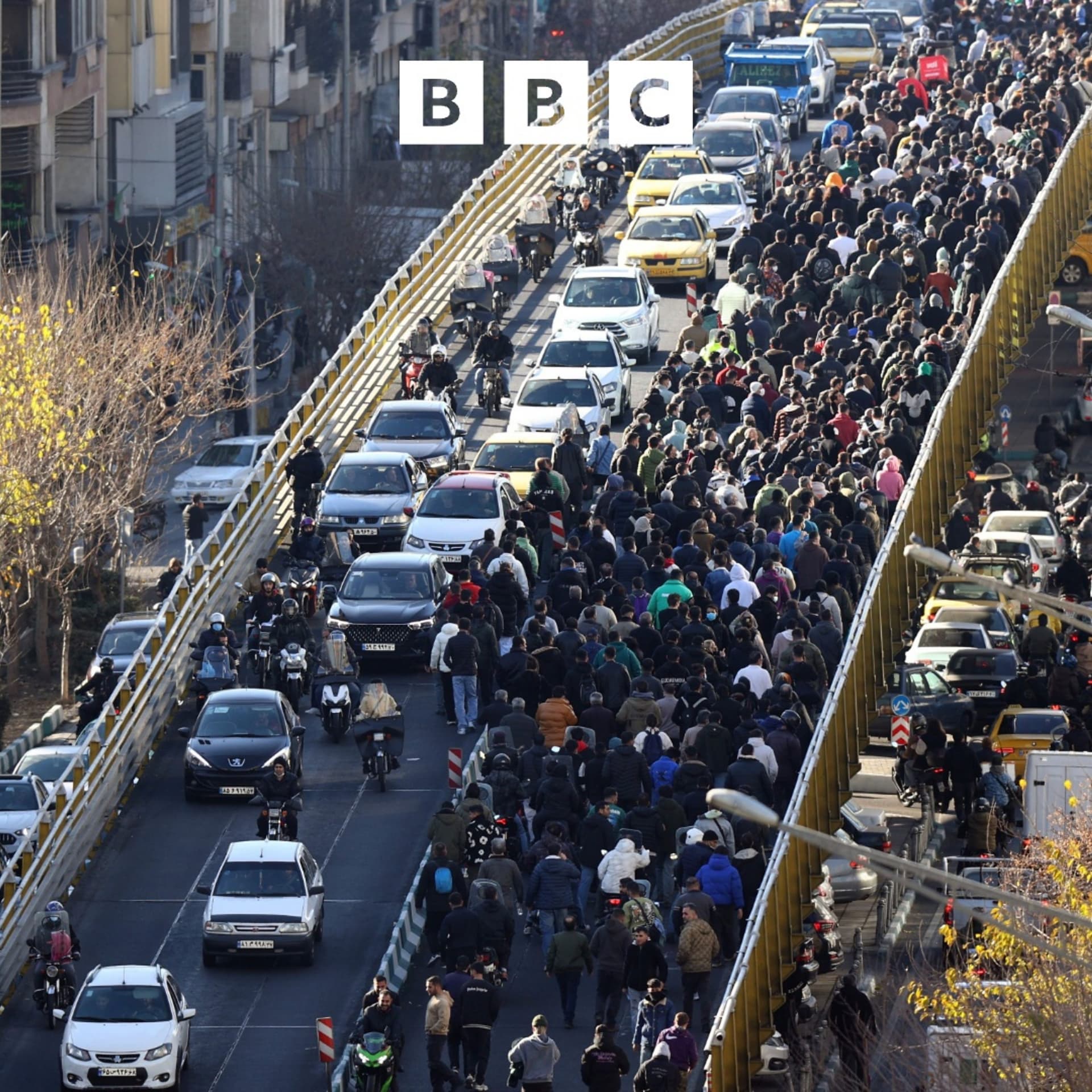
- Background: Protests began in response to economic hardships, spreading from Tehran to other major cities, fueled by student involvement.
- Key Messages:
- Protesters are chanting slogans against poverty, corruption, and dictatorship.
- The Iranian government acknowledges the economic realities but has historically responded violently to protests.
- The current government response appears more conciliatory compared to previous crackdowns, possibly indicating awareness of the fragile situation.
- Concerns:
- The potential for government repression remains high, as previous protests have seen significant violence and casualties.
- Economic grievances include a collapsing currency and rampant inflation, with the public blaming government policies.
- US Sanctions on Iran and Venezuela
- Details: The US has announced sanctions targeting individuals allegedly involved in weapon proliferation between Iran and Venezuela.
- Connections: There are longstanding ties between Tehran and Caracas, both of which face pressure from the US for various reasons, including oil trade and regional stability concerns.
- Poland's Same-Sex Couples Bill
- Context: The Polish government is considering legislation that would officially recognize civil unions for same-sex couples for the first time, albeit with limitations.
- Responses:
- The bill provides limited rights such as access to medical information and inheritance but does not allow for adoption or shared surnames.
- Mixed reactions from the LGBT community, where some see it as progress while others view it as insufficient.
- Humanitarian Crisis in Gaza
- Situation: Aid organizations are facing new regulations from Israel that could bar them from operating in Gaza, worsening the humanitarian situation.
- Impact: Over two million people in Gaza face dire conditions marked by a lack of shelter and sanitation, compounded by ongoing military and logistical obstructions.
- Research on Addressing Homelessness
- Study Overview: Researchers are testing the impact of direct cash transfers to homeless individuals in the UK, based on a previous successful study in Canada.
- Insights: Initial Canadian findings showed significant positive outcomes for participants, and the UK study aims to assess similar potential benefits.
---
Notable Quotes
- "Death to the dictatorship” - Protesters in Iran expressing their demands against the ruling government.
- "Victory is not easy, but it is certain." - Narges Mohammadi, reflecting on the resilience of the Iranian people amidst oppression.
---
Conclusion This episode of the Global News Podcast highlights critical developments affecting Iran, Venezuela, Poland, and Gaza, emphasizing the interconnectedness of local protests and international policies. The discussions reveal insights into the challenges faced by governments in addressing civil unrest, humanitarian crises, and social reforms in their respective countries.
Contact Information Listeners can reach out via email at [globalpodcast@bbc.co.uk](mailto:globalpodcast@bbc.co.uk) or on social media using the hashtag #globalnewspod.
---
End of Summary
Written by AI. May contain mistakes. Listen to the episode to check what was said.
Chapters
Tap a time to open that second in VOThe Flawed Draft of History
0:05 to 0:42
Exploration of the complexities in journalism and historical narratives.
“If journalism is the first draft of history, what happens if that draft is flawed?”
Iran Protests Overview
0:47 to 2:02
An overview of the current protest movements in Iran and their implications.
“I'm Paul Moss and in the early hours of Wednesday, the 31st of December, these are our main stories.”
Economic Grievances and Protests
2:02 to 3:58
Discussion on the economic hardships fueling protests and government responses.
“When it comes to facing down protest, Iran's rulers don't usually hold back.”
Historical Context of Protests
3:58 to 6:15
Contextualizing the current protests within Iran's history of dissent.
“The government, the president certainly, do sound unusually conciliatory talking about the need to understand the protesters' concerns.”
International Reactions to Iran
6:15 to 7:01
Analysis of international responses, particularly from the US, to Iran's situation.
“the social changes that came after it has sustained.”
US Sanctions on Iran and Venezuela
7:01 to 8:20
An update on new US sanctions affecting Iran and Venezuela amidst rising tensions.
“But first, while Iran's rulers face renewed opposition on the streets, they've also come under renewed threats from the United States.”
Trump's Position on Iran and Venezuela
8:20 to 12:32
Discussion on Trump's stance regarding Iran and Venezuela's relationship.
“So these two countries are very firmly in President Trump's targets.”
Poland's LGBT Legalization Efforts
12:32 to 14:01
Exploring the recent bill in Poland aimed at legalizing civil unions for same-sex couples.
“Poland is, in many ways, you'll have to excuse the near pun, a deeply polarised society.”
Poland's LGBT Bill: A Historic Moment
14:01 to 14:37
Discussion on Poland's new LGBT bill and its implications for civil rights.
“I realise this, but this is the minimum of civilisation that Poland must be able to afford.”
Humanitarian Crisis in Gaza
16:15 to 20:18
An in-depth look at the humanitarian situation in Gaza amidst aid restrictions.
“There's less than 24 hours to go until some of the world's biggest aid organisations will be banned from operating in the Gaza Strip.”
Show all 15 chapters
Direct Cash Transfers for the Homeless
20:18 to 24:48
Exploration of a study on giving cash to homeless individuals to combat homelessness.
“Now, as I was coming into the BBC headquarters to record this programme, I passed through a street which is full of tents, living inside them just some of the many homeless people who now populate London.”
Kazuyoshi Miura: The Ageless Footballer
24:48 to 26:21
Profile of Kazuyoshi Miura, the world's oldest professional footballer at 58.
“Now, a story about the world's oldest professional footballer.”
Protests in Iran: A Fight for Freedom
26:21 to 28:04
Discussion on the current protests in Iran and the situation of activists.
“She's previously spent 10 years in prison.”
Mother's Arrest and Current Situation
28:04 to 29:44
Learn about the harsh reality faced by the Nobel Peace Prize laureate's mother after her arrest.
“Since you mentioned your mother, what can you tell us about her current situation?”
Widespread Support for Democratic Change
29:44 to 30:28
Discover the shared values among Iranians calling for a democratic regime change.
“Unfortunately, it's been over 10 years since I've been able to hug my mother.”
Transcript
Automatic transcript. May contain errors.0:00This BBC podcast is supported by ads outside the UK. If journalism is the first draft of history, what happens if that draft is flawed? In 1999, four Russian apartment buildings were bombed, hundreds killed. But even now, we still don't know for sure who did it. It's a mystery that sparked chilling theories. I'm Helena Merriman, and in a new BBC series, I'm talking to the reporters who first covered this story. What did they miss the first time? The History Bureau, Putin and the apartment bombs. Listen on bbc.com or wherever you get your podcasts. This is the Global News Podcast from the BBC World Service.
0:47I'm Paul Moss and in the early hours of Wednesday, the 31st of December, these are our main stories. Iran's government says it will listen to protesters' complaints as demonstrations spread across the country. The US lays sanctions on Iranians and Venezuelans allegedly involved in trading weapons parts and technology. What do we know about the ties between Tehran and Caracas? And Poland considers a bill which would for the first time give official recognition to same-sex couples. Also in this podcast... It's a catastrophe. Over 2 million innocent people trapped in the prison that is the Gaza Strip.
1:25And now we're seeing aid continue to be obstructed and withheld. With new warnings about the humanitarian situation in Gaza, aid organisations face being kicked out by Israel from January the 1st.
1:40It started with shopkeepers. Now Iran's latest protest movement has been taken up by students.
1:51Poverty, corruption, tyranny, death to the dictatorship they chanted in the capital Tehran. But Tuesday saw demonstrations reported at 10 universities across the country.
2:06When it comes to facing down protest, Iran's rulers don't usually hold back. The last major movement in 2022 was perhaps typical. Security forces opened fire on crowds. More than 500 people were killed and around 20 ,000 arrested, according to human rights groups. This time, though, seems very different, with the Iranian president adopting what certainly sounds like a conciliatory tone. The government should listen to the protesters' legitimate demands, Masoud Pazeshkin said. And the Speaker of Iran's Parliament, Mohammad Bagher-Galibaf, also seemed in a mood to understand rather than condemn.
2:48People's concerns and protests over economic hardships must be responded to with full responsibility and dialogue and taking necessary measures focused on increasing people's purchasing power and reforming the economic decision-making process. So economic hardship, the government seems to acknowledge, is a reality for many, perhaps most Iranians. But the list of grievances has now expanded, as I heard when I spoke to Bachman Kalbasi from the BBC's Persian service. The trigger is this collapse of currency, but the grievances of the Iranian public against the government and the situation in the country is a long running and it goes across demographics and cities and classes.
3:36So as soon as there is a trigger, other grievances come to the surface quite quickly. And usually from the perspective of protesters and, dare I say, a big portion of the Iranian society, it's the leadership's fault and it's their policies that is causing the hardships that they're experiencing. So the chants quickly turn from economic demands to targeting the Supreme Leader himself and the government, which is what we have seen in the last 48 hours. The government, the president certainly, do sound unusually conciliatory talking about the need to understand the protesters' concerns. What should we read into that?
4:20We should read into that, that they are aware of how fragile the situation is and how terrible the economic conditions are. And there is worry, obviously, that if this spreads, that controlling it and containing it may need the kind of brutal force that they have used before. But it will be harder to use this time around, given Iran's isolation and general political situation in the country. obviously they are trying to come across as conciliatory because there's also the reality that they have no answers for the unbelievable inflation that exists and the collapse of the currency lack of electricity water pollution the problems are not one fold and they have no solution for any of them at this point so their only response is either to go to brute force right away or try to be conciliatory at the beginning, at least, to see if they can calm the situation down.
5:22If we look back at the protests three years ago, those started over the attempts to crack down on women who weren't following strict dress codes. And since then, women in Iran have actually been flouting these rules far more widely than before. In some ways, they won in that protest. And I wonder if that's given a sort of momentum and optimism to the protesters who are out on the streets now. Yes. And there is six rounds of protest. If we start from the biggest one of all, 2009, which started with reaction to what millions and millions of Iranians saw as a cheating in the election and reinstalling Ahmadinejad, the president at the time, all the way to the woman life freedom, which you just referenced.
6:04Each of them were put down by violent oppression of the forces, but each had long term impacts on the political system. And the example of women walking around without a hijab almost everywhere in major cities, obviously risking being arrested, harassed, what have you, shows that even though they managed to end those protests, the social changes that came after it has sustained. And so one has to assume that even if they manage to put this one down, which is likely what will happen in the next few days if it continues, the fact that the system has once again faced protest will result in some changes in the way it is behaving.
6:52But it will not be enough for tens of millions of Iranians who want fundamental change. Bachman Kalbasi, and we'll hear more about the protests and about a Nobel laureate imprisoned by Iran later in the podcast. But first, while Iran's rulers face renewed opposition on the streets, they've also come under renewed threats from the United States. Donald Trump said on Monday he'd seen reports that Iran was once again developing a nuclear and ballistic weapons program. He said he'd support strikes against the country if this proved true. Then on Tuesday, Washington announced sanctions on individuals and entities in Iran and also in Venezuela, saying they were trading weapons, parts and technology.
7:34Our correspondent in Washington, Sean Dilley, gave me more details. The crux of what the United States is claiming is that there is a trade not just in drones and drone technology, but conventional weaponry and parts needed for drones and conventional missiles. in Venezuela what that apparently looks like from the non-specific release that the US government has put out is that drones that are either developed or developed and built in Iran are being used in Venezuela and the United States says it's concerned about the threat that poses in the Red Sea and the Middle East as a result but it's probably no coincidence that President Maduro is under a great deal of pressure from President Trump at the moment on a number of fronts and the trade in oil as well links between Iran and Venezuela.
8:23So these two countries are very firmly in President Trump's targets. They are, as you say, his targets. Venezuela and Iran have for a while been perhaps Donald Trump's main enemies in his own eyes. Are they really working together? Because it is remarkable to see these two linked in the way that they have been. Yeah, I mean, part of President Trump's issue with President Maduro is how close they are to regimes that might not necessarily be in cahoots with the United States in the same way. And Iran's a big part of that. Again, pointing to the US claims that some of the illicit oil trade and the sanctions ships are traveling to and from Iran.
9:01That is significant. It's not the case that Iran and Venezuela have suddenly started trading with each other or being close as a result of the recent troubles outside on the coast of Venezuela. The two countries and the two regimes have been very close for an incredibly long time, not least of which because of the very strong shipping connections between the two and the fact that both would be historically quite suspicious of the United States. And again, people looking at this story, they'd be forgiven for thinking, is this a Donald Trump, President Maduro issue? But it was the case that oil, including that that traded with Iran, was sanctioned under Joe Biden's regime.
9:41And for many years, those tensions have been very difficult with Iran, not just because of its relationships in Venezuela, but because of its proximity to Israel, the Middle East, and the risk of destabilizing the region. The Israeli Prime Minister Bibi Netanyahu was meeting with Donald Trump on Monday at Donald Trump's residence, Mar-a-Lago. Presumably, this is something that emerged from their discussions. It hardly seems a coincidence that the sanctions have been issued now. It absolutely is the case that Benjamin Netanyahu was concerned about the issue of Iran's capabilities. That issue was absolutely brought up.
10:18There was concern from Benjamin Netanyahu about Iran building up a nuclear program. And Donald Trump said that if they did that, that threat would be eradicated. Sean Dilley. For Venezuela, sanctions may not exactly sound like the biggest threat it faces from the US right now. The country has seen tankers boarded off its coast and boats have been targeted by airstrikes as part of what the US claims is an effort to stop drug smuggling. Then on Monday, Donald Trump said the US had hit a Venezuelan port, which he claimed was used to load drug smuggling boats. Now that would certainly mark an escalation of hostilities.
10:56And yet, as our Latin America correspondent Will Grant explains, the new measures announced on Tuesday will still be seen as significant. In essence, from the Venezuelan perspective, these latest sanctions simply complicate what is already a very, very complicated situation, an increasingly escalating situation. There are already major sanctions in place against individuals from Nicolas Maduro down throughout his government, throughout his inner circle and his military. These latest steps send out another message to Nicolas Maduro's administration that the Trump administration intends to squeeze the government in Caracas on every single front, whether or not that be direct sanctions against individuals, confiscating sanctioned oil vessels, which has been taking place, and of course, militarily through the attack on go-fast boats, speed boats, which were alleged to be carrying drugs through Venezuelan waters.
12:03The main question that many have in Caracas is really the apparent explosion at what President Trump called a dock area in Venezuela, if that is going to usher in further attacks on land targets in Venezuela, and that this conflict is about to escalate even further. That, I think, is the real question, far more than the impact of any set of sanctions against individuals or companies. Will Grant. Poland is, in many ways, you'll have to excuse the near pun, a deeply polarised society. Many among its younger urban-based population have values which would be considered progressive by any European standards.
12:46But in rural areas, the country's more conservative Catholic tradition still holds sway. One issue which has proved particularly polarising is LGBT relationships. And now the government in Warsaw has sent a bill to Parliament to legalise civil unions for couples living together. And that would include same-sex relationships. Anna Aslam reports. This bill would allow any two people, regardless of gender, to sign a cohabitation contract, which would let them access each other's medical information, inherit assets and jointly file taxes, among other benefits. However, it would not allow couples to share surnames or adopt children.
13:24And for many LGBT campaigners fighting for equality, the bill is a disappointing half-measure. Ahead of the last election, Prime Minister Donald Tusk had promised to introduce a bill legalizing civil partnerships within 100 days. But he struggled to deliver reforms because of his coalition government's more conservative wing. Poland is mostly Catholic, and many religious conservatives have criticized measures advocating for LGBT rights as gender ideology backed by destructive foreign powers. The president, Karol Nowrowski, has said he'll veto any bill that, as he puts it, undermines the constitutionally protected status of marriage.
14:00Prime Minister Tusk acknowledged this bill's limited scope is the result of a compromise. No one will be entirely satisfied. I realise this, but this is the minimum of civilisation that Poland must be able to afford. Our task is to make life easier and to ensure that those who choose partnership, and therefore who benefit from the status of next of kin, will be able to be treated by the Polish state as all citizens deserve. The first reading of the bill is scheduled for next month. If it gets through both houses of parliament, it'll then need to be signed into law by the president. So, still a long way to go.
14:37But Warsaw has described the cabinet's adoption of the bill as a historic moment in itself. The LGBT community's reaction has been more reserved. Some say it's a necessary compromise in the right direction, but others have voiced frustration. One campaigner described the bill as a paradox. He said, the government finally acknowledges our existence, but remains too afraid to grant us dignity. A recent survey found only about a third of Poles support the introduction of same-sex marriage, but nearly two-thirds back some form of legal recognition for same-sex unions. Poland remains one of the most restrictive European Union states on LGBT rights, alongside Bulgaria, Romania and Slovakia.
15:18Anna Aslam. Still to come in this podcast... We provide a kind of lump sum of cash to people who are experiencing homelessness, and it recognises that actually they're probably the best people to make decisions for themselves. Giving straightforward money donations to homeless people, does it solve their problems?
15:43If journalism is the first draft of history, what happens if that draft is flawed? In 1999, four Russian apartment buildings were bombed, hundreds killed. But even now, we still don't know for sure who did it. It's a mystery that sparked chilling theories. I'm Helena Merriman, and in a new BBC series, I'm talking to the reporters who first covered this story. What did they miss the first time? The History Bureau, Putin and the apartment bombs. Listen on BBC.com or wherever you get your podcasts.
16:21There's less than 24 hours to go until some of the world's biggest aid organisations will be banned from operating in the Gaza Strip. Oxfam, Care International, Médecins Sans Frontières, all of these, according to Israel, have failed to comply with new rules which require them to give extensive details about everyone they employ. And that deadline comes just as foreign ministers from 10 countries, including France, the UK and Japan, all warn of a deteriorating humanitarian situation in Gaza. Over a million people there urgently need shelter from the winter conditions, while a lack of sanitation has left them at risk from toxic floodwaters.
17:02Shana Lowe is a spokeswoman for the Norwegian Refugee Council, another charity which faces being banned from Gaza. She spoke to my colleague Rebecca Kesby and explained first why they haven't fulfilled Israel's demands. It's a very real threat to our staff and it's a safety issue for our staff to ensure that their identities are protected and to ensure that they and their families are protected. Secondly, many of our organizations, if not all, receive money from the EU, are based in the EU or are receiving funds from EU member states. And the EU has very strict privacy laws that would prevent us from providing these staff lists.
17:42I mean, I'm sure you're aware that the Israeli authorities have made accusations multiple times that some staff that work for aid organizations or even the UN UNRWA organization that was running the aid effort in Gaza for many years. They've made accusations that some staff have been affiliated to Hamas. I mean, doesn't Israel have a right to know who is going into the Gaza Strip? Well, of course they have a right to know who's going into the Gaza Strip, and we've never refused to provide them with the names of our international staff who are entering. And all of our international staff who are entering Gaza have their names submitted on lists that Israel approves to allow them in.
18:23The issue for us is around the private data of our local staff in a context where we've seen hundreds of aid workers be killed over two years of hostilities. There's also been the allegation that Hamas has been stealing humanitarian aid from various organizations. And actually, the BBC did look into this and did gather evidence from sources within Gaza that, in fact, significant quantities of aid had been taken by Hamas during the conflict. We have mechanisms to ensure that aid is not diverted and our donors conduct thorough audit of the work that we're doing to ensure that what we're doing is what we say we're doing.
19:03There was one incident this year where armed men took contingency supplies from the Norwegian Refugee Council and we immediately reported that to the appropriate channels and publicly acknowledged it. But considering the amount of aid that we have been delivering over the course of the last two years and the last 15 years in Gaza, the amount of aid that at least that we have handled, very, very little of it has been diverted. It all comes on the day that foreign ministers from several countries, including the UK here, but also Japan and Canada, have been talking about the deteriorating humanitarian situation in Gaza.
19:42With 25 aid organisations effectively banned under this new ruling, what does that mean for the humanitarian situation in the Gaza Strip? It's a catastrophe. Over two million innocent people trapped in the prison that is the Gaza Strip, who faced two years of bombardment, tremendous devastation and destruction. And now we're seeing, as we've seen over the last two years, aid continue to be obstructed and withheld. The Norwegian Refugee Council itself has been unable to bring any aid directly into Gaza for over nine months. And so this is just a continuation of the obstruction that we faced. Shana Lowe of the Norwegian Refugee Council.
20:21Now, as I was coming into the BBC headquarters to record this programme, I passed through a street which is full of tents, living inside them just some of the many homeless people who now populate London. Homelessness is a growing problem in relatively wealthy nations, not just the UK, but the US and Canada and others. And even among those who want to solve the problem, there's still much debate about how to do so. Well, a new study is looking into whether handing over money directly to homeless people can help. Researchers at King's College London are giving the equivalent of about$2 ,500 to some rough sleepers and then following their progress over the course of a year to see if this helps them find somewhere permanent to live.
21:06Michael Buchanan reports. In a small office of a homeless charity in East London, lives are being slowly changed. Daniel has just found out he's one of the homeless people who've been chosen to receive a one-off grant of£2 ,000. His immediate thought is to buy an electric bike. This will save him tube fare so he can get to work. Keeping the job will help him pay for the bedsit he moved into four days ago. Daniel has been supported by the New Way Project, a homeless charity in Newham, who've put a number of their clients forward for inclusion in the study. They can come and they can have a hot drink.
21:41We do cereal, we do toast. By the time we arrive, Alana has already been told that she's going to get the money. She cooks breakfast each morning as well as receiving help from New Way. The 57-year-old has been homeless on and off for about a decade, living in temporary accommodation, hostels, even rough sleeping. It is really difficult. You really appreciate some clean clothes and somebody to do some washing for you and a hot meal. You just feel so hopeless. You don't know where you're going. and there's a constant fear going on, and the day is just so long. It really is not easy, not easy at all.
22:18So I'm going to do the transfer now for you. Alana is now getting the money transferred to her bank account. I haven't felt this sort of excited about life in a long time. There was something about this grant that felt really dignifying. Angie Allgood is New Ways director and co-founder. We work with people that are in the grip of terrible addiction and it would be really unwise to give them money that could harm them. So this clearly isn't going to be something that fits all people. The UK study has been run by King's College London. Half the 250 homeless participants will get£2 ,000 each. The other half will get nothing.
23:02All of them, from Belfast as well as London, will be followed over the course of a year to see how, if, the money allowed them to end their homelessness. So I've been involved since the first stage, the pilot. Hannah Piggott is leading the research. We provide a kind of lump sum of cash to people who are experiencing homelessness. And it kind of recognises that actually they're probably the best people to kind of make decisions for themselves. You know, if it's successful and it helps people to exit homelessness, then hopefully it can be another tool in the government, but also in charities, kind of toolbox to help address homelessness when people need that additional support.
23:41The UK study builds on a similar project carried out in Canada in 2018. A limited study of 50 homeless people in Vancouver saw them receive the equivalent of£4 ,000 to see if it ended their homelessness. Professor Jiaxing Zhao from the University of British Columbia oversaw the study. The results were completely mind-blowing. About 80 % of them got into housing right away. So they spent it on rent, furniture, even used cars, phones, things that would last. As well as helping the participants, the study also showed lower costs to taxpayers, fewer visits to hospitals and night shelters and less crime.
24:18And there was also no increase in the use of drugs or alcohol. So that was very good to see because our prevailing assumption for people in homelessness or in poverty is that if they get cash, they're going to squander it. But that was not the case at all. The full results of the UK study won't be known until 2027. The Canadian experience, however, suggests that direct cash transfers could, in time, be used to help some people escape homelessness. Michael Buchanan. Now, a story about the world's oldest professional footballer. At 58, you might perhaps expect me to tell you that Japan's Kazuyoshi Miura has retired.
24:59In fact, today's news is that he's joined a new club. Mr Miura has been signed by a club in the country's J-League. He said he was ready to take on a new challenge. Katie Gornall has been assessing this latest move in a sporting career that spans five decades.
25:21About to begin his 41st professional season, the silver-haired striker is still going. Kazuyoshi Miura, known as King Kazuta fans, has announced he's signed on loan with Japanese third division side Fukushima United. The contract extends a career that began way back in 1986 with the Brazilian club Santos. A former Japan international, one of Miura's 89 caps came against England in 1995. Remember David Platt and Stuart Pearce? Yep, they were both in the team he played against. The goals don't come like they used to, but Miura is considered a role model for generations of Japanese players. The forward, who will be 59 in February, is often asked what the secret is to his record-breaking career.
Read the full transcript
26:08He insists there is no secret, other than hard work and dedication. As he signed his latest professional contract, he summed it up simply, my passion for football hasn't changed, no matter how old I get. Katie Gornall, back now to events in Iran. And the latest wave of protests there comes just weeks after one of the country's most prominent human rights activists, Nages Mohamedy, winner of the 2023 Nobel Peace Prize, was arrested after giving a speech at a memorial for a fellow activist. She's previously spent 10 years in prison. During that time, she's been apart from her son, Ali Rahmani, who left Iran to be with his father in exile in Paris.
26:49From the French capital and in French, he spoke to James Kumarasamy about the situation in his home country. Iran has seen huge protests before. Or does he think the ending will be different this time?
27:07It's important to understand that every protest, whether it's the one in 2019, the one in 2020 following the death of Masa Amini, or the one that occurred in 2009, they are all different, but their essence is always the same thing. Iranians today are all protesting against the Islamic Republic of Iran, against a theocratic, misogynistic and patriarchal government. Personally, you know, I keep the hope. For me, each uprising brings us a little closer to victory. But nevertheless, we mustn't be fooled. The Islamic Republic of Iran, unfortunately, currently maintains a very, very powerful repressive force that allows it to stay in power.
27:43Nevertheless, I'd like to quote my mother, Nardes Mohammadi, who said that victory is not easy, but it is certain. We cannot know when this regime will fall, but nevertheless, we can do everything in our power as Iranians, as those who love freedom, as patriots, to make sure that this regime goes as soon as possible.
28:04Since you mentioned your mother, what can you tell us about her current situation? What do you know about her at the moment? So my mother, Nargesh Mohamadi, the 2023 Nobel Peace Prize laureate, was arrested on the 12th of December during the commemoration of the death of Mr Ali Kordi. My mother was arrested with brutality worthy of the Islamic Republic of Iran in a violence that is unfortunately commonplace but well-known and systemic. Along with her, others were arrested. But now we know that their situation is extremely difficult. They have been held in police custody, which has been torture since December 12th.
28:41And what's more, my mother does not have the right to call or even see her lawyers. Since December 12th, she has only been able to call my uncle to express her fear in her injuries as she was beaten. Can I ask how widespread you think the views that your mother stands up for are shared throughout Iran? We are seeing these protests in different cities, in universities, but outside cities and universities, how widely are they shared?
29:12I think these values are shared not only by my mother, but also with the entire population. It's first and foremost about a total change of the regime, the coming of a secular democratic system that respects equality between men and women and grants freedom of the press, democracy and freedom of expression. These are the values that are shared, that are advocated, that are carried into the streets by activists, by exiles like my father. And we hope for unity and that all of this can take shape as quickly as possible. When is the last time you actually saw your mother? Unfortunately, it's been over 10 years since I've been able to hug my mother.
29:50Does it feel now closer to the moment when you will be reunited with her? Of course, it's extremely difficult. But you see, personally, I still consider myself quite privileged. Certainly, today I'm separated from my mother. There are more than 4 ,000 kilometres between us. But I have many compatriots, brothers and sisters in Iran, who have lost their mothers, who will never be able to hold them in their arms again. Certainly today, I and all Iranian families are going through an extremely difficult period. But we keep that hope that one day, very soon, all the families, all the friends will be able to reunite in Iran in freedom.
30:33Ali Rahmani. And that's all from us for now, but there'll be a new edition of the Global News Podcast later. If you want to comment on this podcast or the topics covered in it, you can send us an email. The address is globalpodcast at bbc.co.uk. You can also find us on X at BBC World Service. Use the hashtag hashglobalnewspod. This edition was mixed by Pat Sissons and the producer was Peter Goffin. The editor is Karen Martin. I'm Paul Moss. Until next time, goodbye.
31:12If journalism is the first draft of history, what happens if that draft is flawed? In 1999, four Russian apartment buildings were bombed, hundreds killed. But even now, we still don't know for sure who did it. It's a mystery that sparked chilling theories. I'm Helena Merriman, and in a new BBC series, I'm talking to the reporters who first covered this story. What did they miss the first time? The History Bureau Putin and the Apartment Bombs Listen on BBC.com or wherever you get your podcasts
From the publisher
Protests over Iran's worsening economic problems have spread from the capital, Tehran, to other major cities. University students have now joined the demonstrations, calling for an end to poverty and corruption. How will the government respond? Also: the US places sanctions on Iranians and Venezuelans accused of the "aggressive and reckless proliferation of deadly weapons". Poland considers a bill to recognise same-sex couples for the first time. Some of the world's top aid organisations are set to be barred from Gaza under new Israeli rules. And researchers try a creative way of addressing homelessness.
The Global News Podcast brings you the breaking news you need to hear, as it happens. Listen for the latest headlines and current affairs from around the world. Politics, economics, climate, business, technology, health – we cover it all with expert analysis and insight. Get the news that matters, delivered twice a day on weekdays and daily at weekends, plus special bonus episodes reacting to urgent breaking stories. Follow or subscribe now and never miss a moment. Get in touch: globalpodcast@bbc.co.uk