In short
Global News Podcast - Episode Summary
Episode Title
Iran Protests: Hundreds Feared Dead
Episode Overview This episode of the Global News Podcast discusses the ongoing violent protests in Iran, the U.S. military's actions in Syria, the political unrest in Venezuela, and various other news stories, including a rare Superman comic sale and a study on dog behavior.
---
Key Topics Discussed
- Iranian Protests
- Background: Violent protests have erupted in Iran against the government, reportedly resulting in hundreds of casualties.
- Witness Accounts: Medics in Tehran report injuries from direct gunfire, particularly targeting young protesters.
- Protest Dynamics: Large crowds, including families, continue to defy government warnings and gather in cities like Tehran and Mashhad.
- Government Response: There are reports of internet blackouts and restrictions on communication, complicating the organization's protests.
Key Figures
- Bachman Kalbasi (BBC Persian Correspondent):
- Reports increasing casualty numbers and accounts of bodies being withheld from families.
- Highlights the resilience of protesters despite governmental suppression.
- Former CIA Director David Petraeus:
- Discusses potential U.S. responses to the situation, including military and diplomatic options.
- U.S. Military Operations in Syria
- Operation Hawkeye:
- U.S. strikes targeting the Islamic State in response to the killing of American soldiers.
- Analysts suggest these actions serve more as a statement of intent than a decisive blow to IS.
- Political Situation in Venezuela
- U.S. Military Action:
- U.S. forces captured President Nicolás Maduro, but his regime continues to function.
- Reports of Venezuelans fleeing to Colombia amid concerns for safety and political repression.
Personal Accounts
- Laura Hernandez (Venezuelan Expat):
- Shares her experience of fleeing Venezuela after being threatened for expressing support for political change.
- Crisis in Greece
- Train Crash Aftermath:
- Discusses how a deadly train collision has spurred public outrage and the formation of new political movements.
- Emphasizes the call for accountability regarding rail safety and government corruption.
- Dog Behavior Study
- Research Findings:
- A study reveals that dogs can learn to understand human speech by eavesdropping, outperforming some young children.
- Dogs, particularly border collies, demonstrated the ability to recognize object names and respond accordingly.
- Google Employee Harassment Case
- Victoria Woodall's Claims:
- Woodall alleges she faced retaliation after reporting a manager for sexual misconduct, leading to her redundancy.
- Google denies wrongdoing, claiming Woodall misinterpreted normal business practices.
- Cultural Moment: Superman Comic Sale
- Record Auction:
- A rare Superman comic sells for $15 million, a significant cultural artifact that reflects the character's longstanding popularity.
- Tribute: Bob Weir
- Passing of a Music Icon:
- Bob Weir, founding member of the Grateful Dead, is remembered for his contributions to music and culture.
---
Conclusion This episode highlights critical global events, particularly the dire situation in Iran, the ongoing military actions in Syria, and sociopolitical shifts in Venezuela, alongside lighter segments addressing cultural phenomena and scientific studies. The podcast serves as a comprehensive roundup of pressing international affairs and human interest stories.
Contact Information
- For feedback or comments, email: globalpodcast@bbc.co.uk
- Follow on X (formerly Twitter): @bbcworldservice using the hashtag #globalnewspod.
Written by AI. May contain mistakes. Listen to the episode to check what was said.
Chapters
Tap a time to open that second in VOFlawed Journalism and History
0:05 to 0:30
Explore the implications of flawed journalism in historical narratives.
“If journalism is the first draft of history, what happens if that draft is flawed?”
Introducing the Podcast
0:30 to 0:42
Get to know the Global News Podcast and its host.
“The History Bureau, Putin and the apartment bombs.”
Current Events Overview
0:48 to 1:08
An overview of the main stories in the news, including Iran and Syria.
“A picture of violence and horror is emerging in Iran as anti-government protests continue across the country.”
Iran Protests Update
1:08 to 1:51
Details on the ongoing protests in Iran and the violence occurring.
“I get some very funny stories of owners telling me they were thinking of ordering a pizza and they were talking between them.”
US Response Options
1:51 to 2:34
Possible options for US intervention in Iran are discussed.
“despite increasingly severe warnings from the authorities.”
On the Ground Reports
2:34 to 4:38
First-hand accounts of the casualties and chaos in Iran.
“And then, of course, there are many military options.”
Government Tactics Against Protesters
4:38 to 5:48
Discussion on the Iranian government's tactics to control protests.
“And despite it all, Saturday saw even more protests in the city like Mashhad, second largest city in Iran, also in Tehran.”
Role of Opposition Figures
5:48 to 7:54
Examining the influence of exiled prince Reza Pahlavi on protesters.
“So that is how we're getting these images and these reports about the dead.”
Call to Action for Protesters
7:54 to 8:20
Bachman Kalbasi discusses calls for continued protests in Iran.
“And there's also other opposition figures and groups who are joining for what everybody now is calling for, which is the end of this dictatorship.”
US Military Actions in Syria
8:20 to 11:12
Overview of recent US military operations against ISIS in Syria.
“And there's a new story available every weekday.”
Show all 19 chapters
Venezuelan Refugees and Challenges
11:12 to 14:04
Insights into the lives of Venezuelans fleeing to Colombia.
“It's been more than a week since American forces flew into Venezuela to seize President Nicolas Maduro.”
Venezuelans in Limbo
14:04 to 14:36
Learn about the uncertain future facing Venezuelans amidst political challenges.
“as the future of their country remains in limbo.”
Greece's Rail Disaster Aftermath
15:27 to 17:52
Explore the impact of Greece's worst rail disaster and the rise of new political movements.
“A large part of the blame was put on a perceived lack of funding for rail maintenance.”
Dogs Understanding Human Language
17:52 to 20:53
Learn about a study showing dogs can understand words by listening to conversations.
“Now, if you're a dog owner, you probably know just how clever your beloved pet is.”
Whistleblower at Google
20:53 to 22:45
Hear the details of a former Google employee's claims of retaliation after reporting misconduct.
“after reporting a manager for sharing inappropriate sexual stories with clients.”
Remembering Bob Weir
22:45 to 24:13
Reflect on the life and legacy of Bob Weir, founding member of the Grateful Dead.
“I rode on a bus with his band Rat Dog for four years, as well as all the Grateful Dead time.”
Superman's Historic Auction
24:13 to 28:00
Discover the story behind the record sale of Superman's first comic book.
“When it was first published in 1938, though, you could buy it for just 10 cents.”
Teaser for Future Discussions
28:27 to 28:57
Insight into upcoming discussions and topics related to the Iran protests.
“I'm talking to the reporters who first covered this story.”
Promoting Related Content
28:57 to 29:09
Information on where to listen to related stories and discussions.
“The History Bureau, Putin and the apartment bombs.”
Transcript
Automatic transcript. May contain errors.0:00This BBC podcast is supported by ads outside the UK. If journalism is the first draft of history, what happens if that draft is flawed? In 1999, four Russian apartment buildings were bombed, hundreds killed. But even now, we still don't know for sure who did it. It's a mystery that sparked chilling theories. I'm Helena Merriman, and in a new BBC series, I'm talking to the reporters who first covered this story. What did they miss the first time? The History Bureau, Putin and the apartment bombs. Listen on bbc.com or wherever you get your podcasts. This is the Global News Podcast from the BBC World Service.
0:47I'm Chris Barrow and at 4GMT these are our main stories. A picture of violence and horror is emerging in Iran as anti-government protests continue across the country. The US military has carried out strikes in Syria against the Islamic State as revenge for the killing of two American soldiers. We hear from Venezuelans who fled to Colombia after the capture of the president, Nicolas Maduro.
1:13Also in this podcast... I get some very funny stories of owners telling me they were thinking of ordering a pizza and they were talking between them. And then the dog ran into the room with their toy named Pizza. How dogs learn to understand words by eavesdropping. And later... I actually got to hold it in my hands. It was an incredible thrill as a comics fan all my life to have this piece of history in my hands. They did take it off me again, mate. Find out what makes a Superman comic worth$15 million.
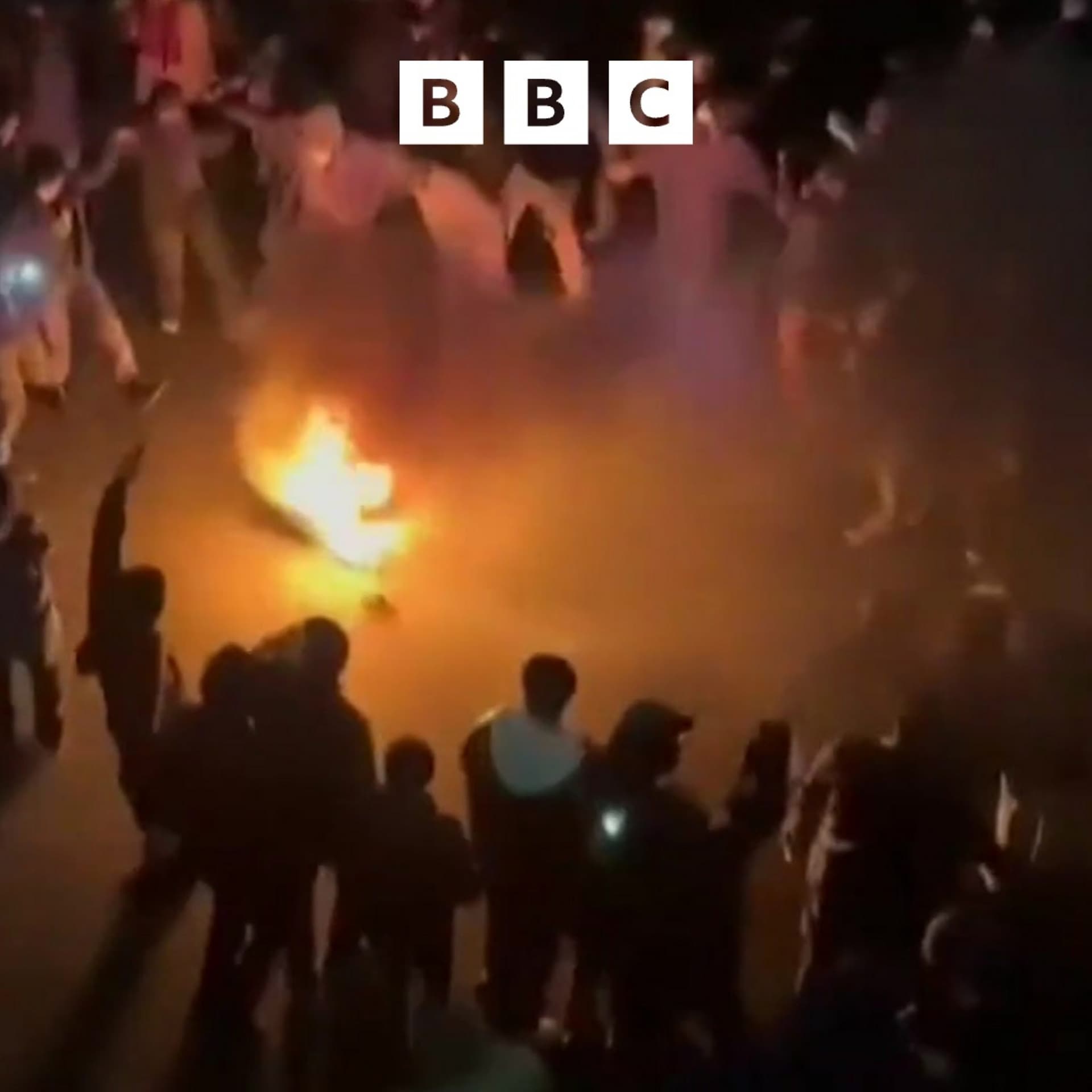
1:46Large crowds have returned to the streets of Iran's capital, Tehran, as anti-government protests spread across the country, despite increasingly severe warnings from the authorities.
2:02Witnesses say families, including children, are taking part. In his latest comments, President Trump has said Washington, in his words, stood ready to help. So what could a US intervention look like? David Petraeus is a former CIA director. There are numerous options, all the way from diplomatic and informational, even just getting Starlink dishes in on the ground would help them communicate with each other and with the outside world. There can be economic sanctions of various types against individuals, against Iran's ability to export oil. There's humanitarian options. And then, of course, there are many military options.
2:38And I was also the former commander of U.S. Central Command, which is the greater Middle East. That would be the regional combatant command that undoubtedly has been developing the menus of options for the president and others to consider. There can certainly be strikes on the headquarters of the security force organizations that are violently putting down these protests, these demonstrations that have been killing the people in very substantial numbers. He could go after the missile capability that they have, which, of course, was heavily damaged during the Israeli strikes against Iran, which concluded with a U.S.
3:13substantial bombing as well. They've been trying to reconstitute those missile arsenals. That would be useful. It could prevent some of the retaliation that might be of a concern. Again, a number of different activities that wouldn't require boots on the ground, many of which could even be done with unmanned systems, cruise missiles and the like. For an update on the latest situation on the ground in Iran, I spoke to our US-based BBC Persian correspondent, Bachman Kalbasi, and a warning, you may find some of what he shared distressing. The numbers that we're seeing in terms of casualties are increasing by the hour.
3:50We have at BBC Persian confirmed horrific accounts of tens of bodies being sent to hospitals in cities like Rashid and also Tehran, Karaj, Mashhad. And the numbers are now very much in the hundreds, dead and injured, many of them with live ammunition. Hospitals are struggling to cope. Most can't really help those arriving with gunshot wounds. And the government is even restricting families from receiving the bodies of their loved ones. They're simply identifying them and not allowing them to take them for burial. So it's a scene of horror in many of these cities where the security forces have opened fire on protesters.
4:37The jaw-dropping reality of all of this is that the shootings have happened on Thursday night and Friday night. And despite it all, Saturday saw even more protests in the city like Mashhad, second largest city in Iran, also in Tehran. Parts of it was overtaken by protesters. So it's the scene and reality of a extremely violent crackdown while protesters are persisting. And they are persisting despite an internet blackout, getting information out being extremely difficult. I guess these are some of the tactics of the authorities to try and suppress these protesters. Indeed. I mean, the minute they took the extraordinary step of basically cutting the country off from the outside world and they went further, They even restricted communication within the country, between the citizens.
5:30You can't send SMS or text messages to other people with mobile phones. It's even hard to call landlines in some cases. So they are basically cutting all ways that the citizens can communicate with each other or sent information outside. And given this reality, you would think that protesters won't be gathering again, but they did. And the images of that has trickled outside as well, whether with Starlink, which is most of the people who have access, have managed to send these footage out or in occasional cases of somebody connecting to the Internet. So that is how we're getting these images and these reports about the dead.
6:13We also saw images of something look like a gymnasium space where bodies were lined in black bags, rows and rows of bodies. still being verified of where exactly it is. But it is very clear that we are looking at piling of people who've been killed and their bodies just staying in different spaces. There have been calls from the exiled prince Reza Pahlavi for people to keep coming out, for Iranians to keep protesting. Are his calls particularly powerful? Is that driving a lot of the protesters? Or does he not have as much support as perhaps people might think? It is a debate of whether how much support he has.
6:53And we have to remember that these protests did not start with him calling for protests. It started with the grievance about the economic situation. But of course, one has to be realistic about the fact that Thursday night and Friday night, the big protests and also Saturday evening were following his calls for a certain hour for people to gather. So there's definitely support for him. We've seen a lot of chants and nostalgia about regime before the current regime also plays a role. So there's definitely a base of support for him. And he's certainly now directing some of these protests. Of course, it becomes a lot harder when the internet is completely cut off.
7:39So people can't really hear messages that he says, except through satellite television, like BBC Persian and other satellite TVs where his messages are broadcast. But so the reality is there is a base for him. And there's also other opposition figures and groups who are joining for what everybody now is calling for, which is the end of this dictatorship. I'm Bahman Kilbassie. And you can hear and see more on the protests in Iran on our YouTube page, where we ask our chief international correspondent, Lise Doucette, whether this could be the end of the religious regime. Just search for BBC News, click on the logo, then choose podcasts and global news podcast.
8:20And there's a new story available every weekday. The US military has carried out strikes in Syria against Islamic State as part of Operation Hawkeye. It's the latest action in a mission that was launched last December after a deadly IS attack on American and Syrian forces. Meanwhile, the US special envoy met the Syrian president in Damascus and offered Washington support in stabilising the country. Our Middle East analyst Sebastian Usher told us more. The US Central Command has issued a statement saying that it's carried out multiple strikes across Syria against Islamic State targets. This is the second major operation it's carried out since there was an attack which the US has accused an Islamic State fighter of carrying out in Palmyra last month on December 13th.
9:07Just a few days after that, there was a similar range of strikes across the country in response to that. I mean, we don't know exactly how much impact that's had on what's left of IS. Some of the information that I've seen is that it hasn't really had a huge effect. So I think it's more to give that statement of intent. And that's very much the way that it was phrased by the US Central Command. I mean, they call this Operation Hawkeye Strike. As I say, this is in response to an ambush in which two American soldiers were killed and a US civilian interpreter were killed. So, you know, a major setback for the US in that.
9:45And the US Central Command ends its statement with this saying, our message remains strong. And this is very Trumpian. If you harm our war fighters, we will find you and kill you anywhere in the world, no matter how hard you try to evade justice. That is what the message they're trying to get across. And they say they're trying to root out Islamic State and terrorism in its entirety. Do we have a sense of when they'll be satisfied that that's happened? In a sense, obviously, there is a military strategy to this, but it is also performative in a way. I don't think that the strategists can believe that they can stamp out what's left of IS in Syria on this.
10:26I mean, IS has essentially gone to ground. It's in remote areas, it's in cells. I think there's been a sense that since the toppling of Bashar al-Assad, what's left of IS there sniffed an opportunity perhaps to regroup, to carry out attacks again, trying to get close to the sort of scale that they once were capable of doing. But nothing like any concerted effort to take territory. That's long gone. There's no chance of that. So, I mean, this is essentially a massive operation to swat what in some sense is a fly as far as the US central command there is concerned. Not say that IS doesn't represent a threat in many other areas around the world to the US and other interests.
11:07But in Syria, it's not perhaps anywhere near what it once was. Sebastian Usher. It's been more than a week since American forces flew into Venezuela to seize President Nicolas Maduro. And while he waits for his next appearance in court in March, his authoritarian regime still runs the country, and security forces have been given powers and permission to capture anyone who supports the US military operation. The US State Department has told Americans in Venezuela to leave immediately after reports of armed militias setting up roadblocks and searching cars for US citizens. Some Venezuelans have also fled, uncertain about the future of the country.
11:45Our correspondent Sumi Samascanda has been speaking to expats in Colombia. The heart of Cucuta, a town on the border with Venezuela, where many Venezuelans have come to find work and build a new life, including Laura Hernandez. She'd moved back to Venezuela in December after many years in Colombia. But after Nicolás Maduro was captured, she says she put out a message on WhatsApp, Venezuela Libre, Free Venezuela. She says in minutes her SIM card was blocked. She deleted all messages. But police arrived at her house asking for information. She denied any knowledge. When they left, she fled, leaving her three sons with family for now.
12:27I tell them to say they don't know anything about me, that I left the country and they don't know where I am because I'm scared something will happen to them and there will be reprisals against them. Why did you write Venezuela Libre? Because it's what we all wanted, that they removed the president because we thought removing him meant Venezuela would change. But we're returning to the past, to the same. We couldn't independently verify Laura's story, but there are reports of similar cases. For other Venezuelans, the winds of change are reason for hope. With President Trump, quote, running the country, and the interim government announcing it's releasing some political prisoners, They're hoping for new economic opportunities back home, too.
13:13Little by little, at least with food and medicine, now there's everything. Now it's possible to go back home. I'm going to return with the help of God. On a busy stretch of highway near the border, Marta Alarcón has built her life around helping the thousands of Venezuelans who have stopped by her stand, a haven providing food, water, medicine, and the kindness of a stranger. Marta's guests have written countless messages of thanks, including this past week. Couples have been coming because they say things are difficult, because they've started closing everything. There's no money to buy anything, no food.
13:53I pray to God that Venezuela will get better so that everyone can return. Why? Because there are many people here who have suffered too much. It's an uncertain time for Venezuelans here. as the future of their country remains in limbo. Sumi Samaskanda with that report.
14:15And still to come in this podcast... If the Grateful Dead had an ethic, it would be serve the music, and Bobby certainly did. That was what he was put on earth for, and he did it to the last. Founding member of the Grateful Dead, Bob Weir, has died.
14:35If journalism is the first draft of history, what happens if that draft is flawed? In 1999, four Russian apartment buildings were bombed, hundreds killed. But even now, we still don't know for sure who did it. It's a mystery that sparked chilling theories. I'm Helena Merriman, and in a new BBC series, I'm talking to the reporters who first covered this story. What did they miss the first time? The History Bureau, Putin and the apartment bombs. Listen on bbc.com or wherever you get your podcasts.
15:27and anger at the government. A large part of the blame was put on a perceived lack of funding for rail maintenance. Now, that tragic incident could have a profound impact on the next election there, as a new political party has sprung up in response to it. Stephanie Prentiss told us more. Chris, it's worth revisiting the severity of this crash to really understand that long-lasting significance. I was working here when it happened, and it felt like every time I went into the studio to give an update, even more horrifying details had emerged. It was a head-on collision. The front carriages of this passenger train just completely crushed on impact.
16:04There was a fireball that moved through some of the carriages. Rescuers couldn't even get inside to reach people that were trapped because of the high temperatures. 57 people died and many were young students who'd been in that front carriage that took the brunt of the impact. It was the worst rail disaster Greece had seen in decades and the people there haven't forgotten. On the second anniversary in 2025, we again saw mass demonstrations against the government in more than 100 cities. People still really angry and really frustrated of what happened and saying even now, not enough has been done to modernise those railways and improve the safety standards.
16:42And so tell us about this new party then. So we're not only 40 people are going on trial in March over that collision, but that hasn't stopped accusations of corruption around the general investigation. And amid that search for justice, one of the victim's mothers has become something of a national figure. So Maria Christianu became known as the mother of Tempe. Tempe, of course, being where it happened. She lost her 20-year-old daughter and she never stopped campaigning for answers. And now she's announced a new party. She says it'll combat corruption. Polls are suggesting it could do well. It's been called the citizens movement.
17:17The polls say it could get between 10 and 30 percent of the vote. It's obviously far too early to be calling that. There isn't a general election in Greece until 2027. We do know the government is currently in some trouble. It's managing a farmers crisis that spans an EU investigation, as well as protests on the ground from farmers themselves. And we've seen other protests generally over low wages, cost of living pressures. So new parties springing up can be seen as representative of the frustration some Greeks are feeling, and the 2023 crash is something that really united the nation against the government at the time.
17:54Stephanie Prentice. Now, if you're a dog owner, you probably know just how clever your beloved pet is. But a new study suggests that some canines can learn to understand words by eavesdropping in on our conversations, sometimes even better than a one-and-a-half-year-old child. Dr Shani Drawer is from the University of Veterinary Medicine in Vienna and is the author of the study. She explained her findings to Julian Warica. I've been working with these special dogs for a while and I've noticed how they're paying attention to their owners. And I'd also get some very funny stories of owners telling me they were thinking of ordering a pizza and they were talking between them and then the dog ran into the room with their toy named Pizza.
18:36Or they were talking on the phone and they mentioned something like a bag of rice and then the dog ran with the toy named Bag of Rice. And I was like, OK, so the dogs are doing something here. And I really wanted to understand the depth of what they were doing. So we know that almost all dogs can learn things like sit or down or stay, the labels of actions. What we found in our previous studies is that actually only very few dogs show evidence of learning object labels. So, for example, to get their ball versus to get their rope or a frisbee. And I have to say, it's not only our research group that found this.
19:13There are also a few other research groups that tried to train dogs to learn names of objects and found that there were only a small group of dogs that can do this. And particular breeds of dogs? The majority of these dogs are border collies. It's important to note that they're not only border collies. We have also a few other quite surprising dogs. So in previous studies, we had a Pekingese, a Shih Tzu, Yorkshire's, and it's still very rare even among border collies. Because these dogs are so rare, we work online. The dogs are located all around the world, speaking Norwegian, Portuguese, English, a lot of different languages.
19:52And in our studies, you know, they're learning only a name of an object, so it doesn't seem to matter to them in which language you say it. But there are other studies of neuroimaging, not for me, for my colleagues, that show the dogs actually do differentiate between languages and languages that they don't hear often. In our study, you know, in the headline of the study, we say like one and a half year old children. The reason for this is because when we look at the surface level behavior, it looks the same. The dogs were listening to very brief interaction. And at the surface level, they managed to perform something like kids do it.
20:25But like is the key word here. It looks the same. It doesn't mean that what goes on in their brain is the same. And actually, this is something we always need to keep in mind when we're looking at animals behaving, quote unquote, like humans. then we need to keep in mind that even if the behaviour looks the same, it's most likely that the thoughts that underlie this behaviour are different. Animal behaviour researcher Dr Shani Drawer. A senior Google employee in Britain has claimed she was made redundant after reporting a manager for sharing inappropriate sexual stories with clients. Victoria Woodall told an employment tribunal in London she was subjected to a relentless campaign of retaliation after raising concerns about the man who was later dismissed for gross misconduct.
21:09Google denies any wrongdoing. A judgment is expected later this month. More details from our investigations correspondent, Rhianna Croxford. Victoria Woodall claims she was working in the UK sales and agencies team at Google when two female clients contacted her to report that a manager had been sharing details about his swinger lifestyle. One complained that during a business lunch, he'd been boasting about the number of black women he'd had sex with. Another said that he had shown her a nude photo of his wife. Google investigated and found the manager's conduct amounted to sexual harassment, and that he'd also touched two colleagues without their consent.
21:51But Ms Woodall claims she was retaliated against for reporting him. In court, she said that, among other actions, her boss had tried to downgrade her performance and demoted her on a big project before she was made redundant. Google denies any retaliation, arguing that Miss Woodall became paranoid after whistleblowing and began to view normal business decisions as sinister. Rhianna Croxford. The American singer and guitarist Bob Weir, who was a founding member of the Grateful Dead, has died at the age of 78. The band was credited with defining the sound of San Francisco's psychedelic rock movement.
22:29He joined the group as a teenager and spent the next 30 years touring the world, followed by a loyal group of fans known as Deadheads. He was diagnosed with cancer last summer, weeks before he played the Grateful Dead's 60th anniversary shows. His former publicist Dennis McNally shared his memories of Bob. We spent a lot of time together. I rode on a bus with his band Rat Dog for four years, as well as all the Grateful Dead time. and he was a unique personality. He had a very off-kilter or unusual sense of humor that was dry and funny. There's a Grateful Dead song called Liberty and there's a line in it, find your own way home.
23:11And though that's true of all the members, they were all anarchists and all went their own way. In some ways, Bobby was the epitome of that and music was his life. And if the Grateful Dead had an ethic, it would be serve the music. And Bobby certainly did. And, you know, that was what he was put on earth for. And he did it to the last. Bobby played, you know, covered the bass notes sometimes. Sometimes he played lead. None of them played conventionally. And that required all of them to listen to each other, which is the essence of improvisational music. And that's what made them special. At a Grateful Dead show, everyone in the room was a member of the Grateful Dead.
23:54And that was the way the band thought about it, at least down deep. So they weren't performing in a theatrical sense. They were having a conversation with each other musically that included the audience. And Bobby subscribed to that and played to that. Dennis McNally. Now, if you know your Iron Man from your Iron Fist or your Green Lantern from your Green Arrow, then you won't be surprised to learn that a rare first edition comic book that introduced the world to Superman has just sold at auction for$15 million. When it was first published in 1938, though, you could buy it for just 10 cents. Mike Collins is a comic book and storyboard artist who's worked for DC Comics on some of their most famous superheroes like Batman, Superman and Wonder Woman.
24:41Celia Hatton asked him if he's ever seen a copy of this first edition. About five or six years ago, I was visiting the offices of DC Comics out in Burbank. And the executive editor, who's somebody I've worked with over the years, in fact, I've drawn Superman for him many years ago, said, do you want to come and visit the vault? And you don't always get the chance to visit the vault. So, of course, I said yes. And we went through, I saw lots of old comics. I saw costumes from various movies and what have you. And then he opened this big drawer up and inside was sealed in plastic, a copy of Action Comics number one.
25:16And I actually got to hold it in my hands. It was an incredible thrill as a comics fan all my life to have this piece of history in my hands. They did take it off me again, mind. I'm sure they did. So can you describe for us what Superman looks like in that very first edition, the first time we ever see him? It's very protean. We're used to seeing this big yellow and red S on his chest. When it started, it was a very simple and a small S and wasn't always very obvious it was an S there. And Superman's hair was completely slicked back and he was a far bulkier figure. The boots weren't always drawn the way we see the boots now.
Read the full transcript
25:58I mean, what's interesting about Superman is that he was actually created by Joe Siegel and Jerry Schuster five years earlier. And it got rejected and rejected and rejected. So they really sort of never thought this thing was going to see print. It's only when Action Comics number one was going to press, they didn't have enough material to go in there. So they had to go through the slush pile, and they found this story that these two kids had written and drawn, because they were only in their late teens when they did it, and shoved it in there. And obviously, they did it as a one-off thing, but then it was a massive success.
26:29It went from, I think the first issue, Action Comics, sold something like 200 ,000 issues, but after a few months, it was selling a million issues a month. So they really had to think about what Superman was and how Superman looked. And so within a year, we got to see the Superman we kind of think of as today. What was it like to draw Superman yourself? It was easily one of the biggest thrills of my life. But it was so daunting when you realise when you're sitting putting pencil to paper that you are drawing a character that's been around for longer than your parents. You know, it's a figure out of history.
27:04I did freeze up a bit when I started because it was just the most extraordinary opportunity to do. What a thrill. And what's the appeal of Superman? Why do you think he made it as a character beyond all of these other characters that were in competition at the time? I think it's the human aspect. Even though Superman as a character is this alien and that explains his powers because he's from another planet, he still has the Clark Kent identity. And I grew up as a specky kid. so seeing a heroic figure that wore glasses it sort of gave you that little bit of humanity to it i mean you'll get other characters that are literal gods like thor but you have this aspect of superman that he is also clark kent he's also the guy in the office that people should look down because he's not sporty and he's a bit book learning rather than sort of being a jock even though secretly he's a jock comic book artist mike collins
28:00and that's all from us for now there'll be a new edition of the global news podcast later if you'd like to comment on this podcast and the topics we're covering do send us an email the address is globalpodcast at bbc.co.uk you can also find us on x at bbc world service use the hashtag global news pod this edition was mixed by chris lovelock the producer was stephanie zacherson the editor is karen martin i'm chris barrow and until next time thanks for listening Goodbye.
28:56I'm talking to the reporters who first covered this story. What did they miss the first time? The History Bureau, Putin and the apartment bombs. Listen on bbc.com or wherever you get your podcasts.
From the publisher
A medic at one Tehran hospital reported "direct shots to the heads of the young people, to their hearts as well", while a doctor said an eye hospital in the capital had gone into crisis mode. Despite this, large crowds have returned to the streets of Iran's capital, including entire families with children, defying increasingly severe warnings from the authorities.
Also: the US military has carried out 'Operation Hawkeye' strikes in Syria against the Islamic State, as revenge for the killing of two American soldiers. We hear from Venezuelans who have fled to Colombia, after the capture of President Nicolás Maduro. Why a deadly train crash in 2023 in Greece could lead frustrated voters to turn to new political options in the 2027 election. The case of a Google employee made redundant after reporting sexual harassment. Why a rare Superman comic that was once stolen from Nicolas Cage has sold for $15m. And how much are dogs eavesdropping on us?
The Global News Podcast brings you the breaking news you need to hear, as it happens. Listen for the latest headlines and current affairs from around the world. Politics, economics, climate, business, technology, health – we cover it all with expert analysis and insight. Get the news that matters, delivered twice a day on weekdays and daily at weekends, plus special bonus episodes reacting to urgent breaking stories.
Follow or subscribe now and never miss a moment.
Get in touch: globalpodcast@bbc.co.uk