
In short
The episode covers: Iran’s rejection of a US 15-point peace plan to end the war, including demands to dismantle nuclear ambitions, stop enriching/decommission facilities, allow UN monitoring, end funding for proxies (Hezbollah, Houthis, Iraqi militias, and involvement with Hamas), and keep the Strait of Hormuz open. Iran’s state media quotes a military spokesperson mocking the US as “negotiating with themselves,” saying defeat can’t be dressed up as an agreement and that Iran will end the war on its own terms. It also links the conflict to an oil crisis: the Philippines declares a national energy emergency, seeks fuel from sanctioned countries (including Russia; mentions Venezuela/Iran), and faces price spikes affecting transport and food.
Guests
Sebastian Usher (BBC Middle East analyst in Jerusalem) explains the US plan; Surinjana Tiwari (BBC Asia business correspondent, Manila) reports on the Philippines; Larry Fink (BlackRock CEO) is quoted on oil price scenarios; Victoria Derbyshire (BBC) interviews Epstein survivors (Joanna Harrison, Shantae Davis, Lisa Phillips, among others).
Notable examples
Bear the koala-detection dog retires; UN debate on declaring the transatlantic slave trade a crime against humanity.
Written by AI. May contain mistakes. Listen to the episode to check what was said.
Chapters
Tap a time to open that second in VOIran Rejects US Peace Proposals
0:58 to 1:55
Iranian state media reports on the rejection of US peace plans.
“Iranian state media is reporting that Tehran has rejected US proposals aimed at ending the war.”
Mocking the US Negotiations
1:55 to 3:19
Iranian military mocks US attempts at ceasefire and negotiations.
“peace plan proposed by the United States to end the war.”
Details of the US Peace Plan
3:19 to 5:36
Overview of the extensive demands outlined by the US for Iran.
“That is the end of any kind of ambition towards developing nuclear weapons.”
Iran's Response to US Demands
5:36 to 7:42
Iran's leadership statements on US demands and their stance on the war.
“But do we know who this is coming from, from inside Iran?”
Impact of War on the Philippines
7:42 to 11:13
Discussion on the Philippines' energy crisis due to the Iran war.
“It's now seeking new sources of oil, including from sanctioned countries such as Russia.”
Economic Predictions Amidst Conflict
11:13 to 12:50
BlackRock CEO discusses potential oil price scenarios due to the war.
“To say the war with Iran has created uncertainty in the global economy is something of an understatement.”
Upcoming Stories Preview
12:50 to 13:05
Teaser for an upcoming segment about a heroic Australian dog.
“Larry Fink speaking to our business editor, Simon Jack.”
Survivors Speak Out: Epstein's Legacy
16:14 to 21:06
Hear firsthand accounts from survivors of Jeffrey Epstein and their fears.
“In a special programme from Washington, the BBC's Victoria Derbyshire spoke to survivors who told her their stories.”
UN Discussion on Slavery Reparations
21:07 to 24:06
Explore Ghana's call for recognition of the transatlantic slave trade's impact.
“Ghana's president is there and he's accused the Trump administration of normalising the erasure of black history.”
Netherlands' Social Media Ban for Youth
24:08 to 27:46
Learn about the Netherlands' ban on mobile devices in schools and its effects.
“One place that's taking action is the Netherlands.”
Show all 14 chapters
Farewell to Bear: The Koala Detection Dog
27:47 to 28:00
Discover the story of Bear, the dog who saved koalas from bushfires.
“Here on the Global News Pod, we love a good animal tale and this next story is definitely podcast gold.”
The Story of Bear, the Koala Detection Dog
28:00 to 29:15
Learn about Bear, a unique dog trained to detect koalas and his journey from abandonment to a critical role in wildlife rescue.
“from the country's devastating bushfires a few years ago is retiring after a decade of service.”
Bear's Role During Australia's Bushfires
29:15 to 31:04
Discover how Bear helped find surviving koalas after devastating bushfires in Australia.
“Each time bear smells that specific scent of the koala, he gets to play with us.”
Bear's Retirement and New Life
31:04 to 31:59
Explore what Bear's retirement looks like and how he continues to bring joy to those around him.
“is that he was playing a game and we were all, all the humans were really in a bad spot, right?”
Transcript
Automatic transcript. May contain errors.0:00This BBC podcast is supported by ads outside the UK.
0:30Restrictions apply. Promotions may vary. Visit jewelosco.com for more details. Finding a hoodie that lasts through the season can be tough. The American Giant Classic Full Zip hoodie is made to last year after year. Snag the hoodie that brings comfort for life. Save 20 % off your first order at american-giant.com with code STAPLE20 at checkout. This is the Global News Podcast from the BBC World Service. I'm Alex Ritson and at 16 hours GMT on Wednesday the 25th of March these are our main stories. Iranian state media is reporting that Tehran has rejected US proposals aimed at ending the war. It says the Americans are only negotiating with themselves.
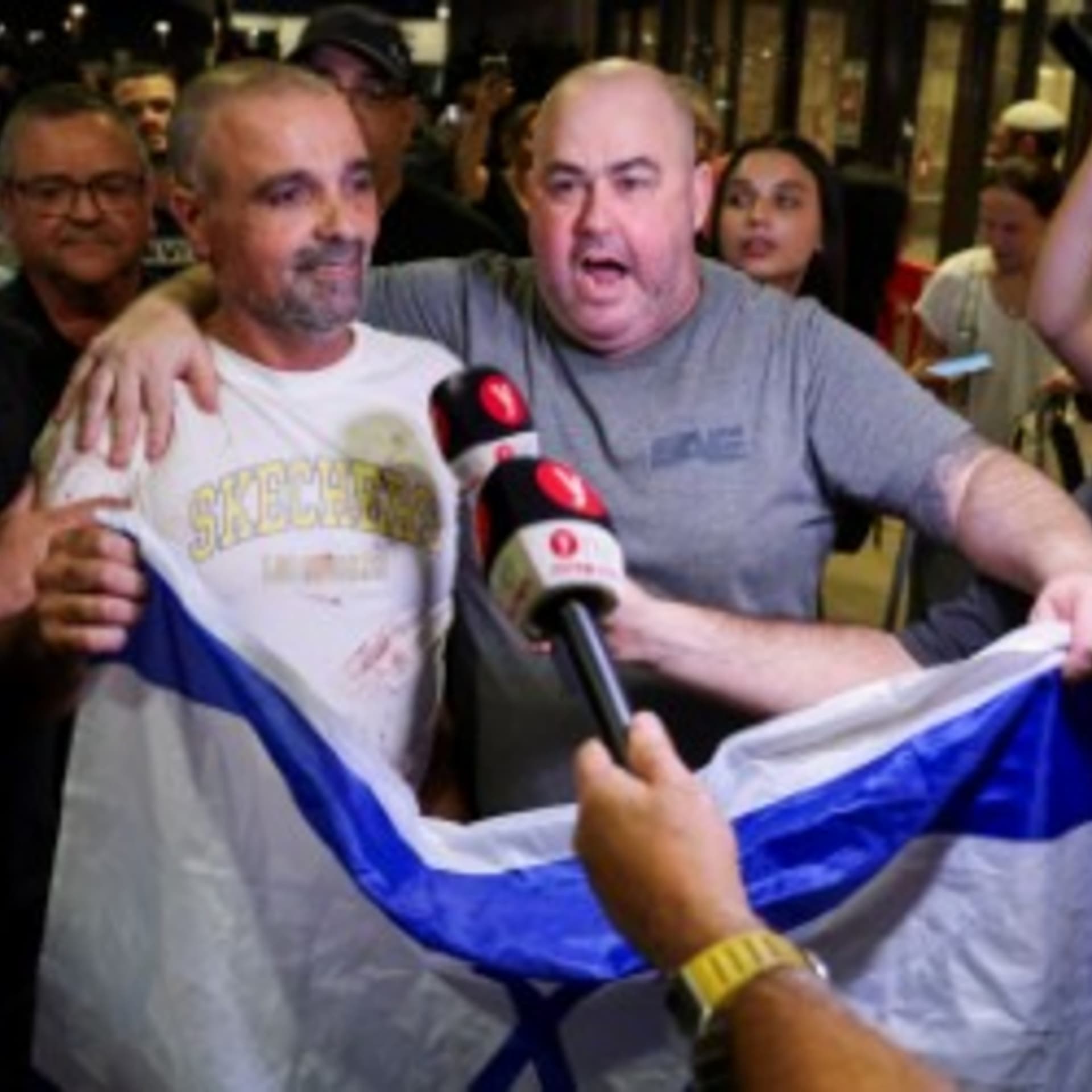
1:15The oil crisis caused by the war continues. The Philippines has declared a national energy emergency and says it's ready to buy oil from sanctioned countries such as Russia. Also in this podcast, survivors of the late paedophile Jeffrey Epstein speak out. There are a couple of times where I would triple check that my garage was locked because I was afraid I'd go out and like my car would explode the next morning. Just weird random fears. And the UN considers whether the transatlantic slave trade was a crime against humanity.
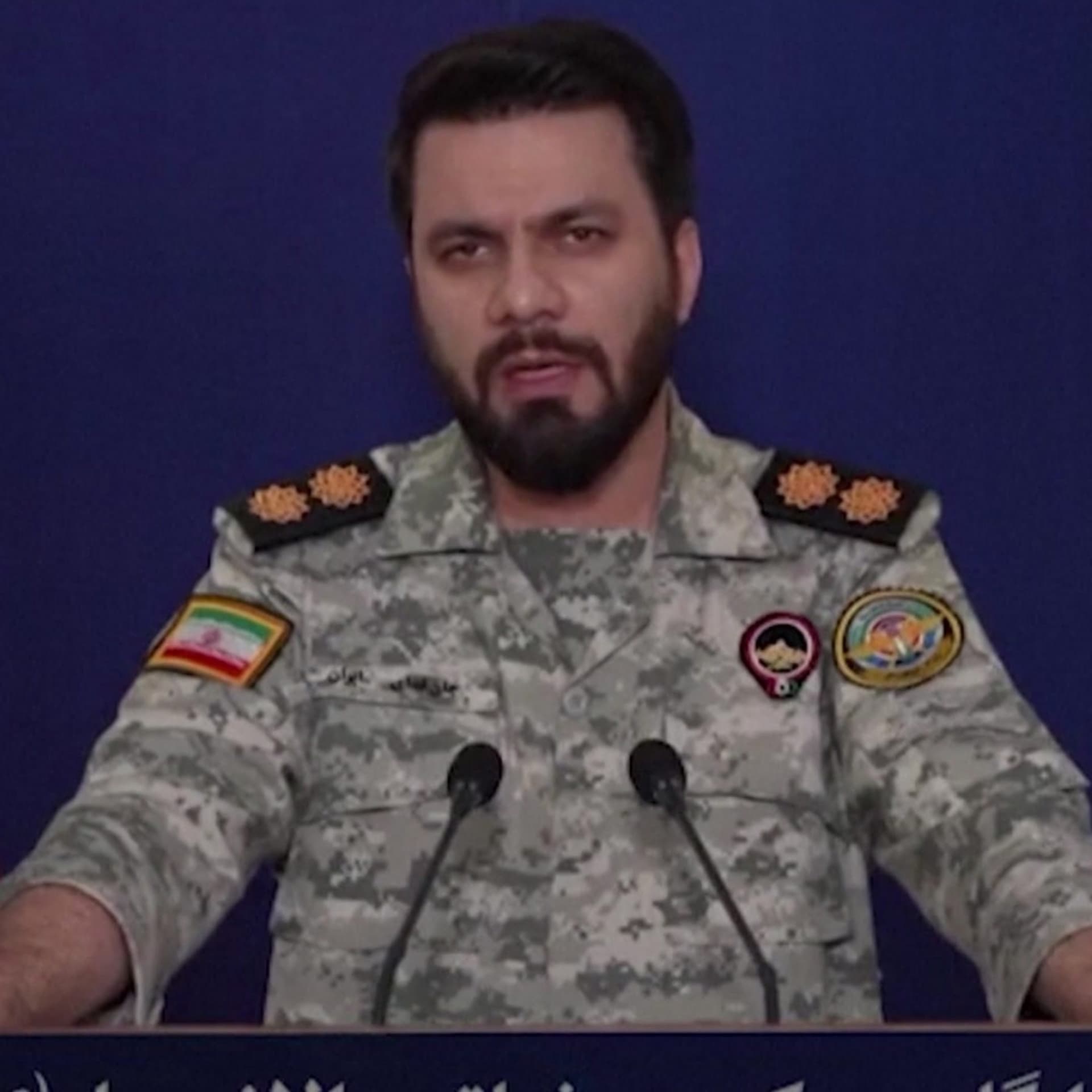
1:54Iranian state media is reporting that the government in Tehran has rejected a 15-point peace plan proposed by the United States to end the war. Over the last two days, President Trump has, publicly at least, seemed upbeat about the prospects of a conclusion to the fighting, an attitude that's sometimes been ridiculed by Iranian officials. In what was perhaps an indication that they were going to reject the plan earlier on Wednesday. An Iranian military spokesperson mocked US attempts at a ceasefire deal. Speaking on Iranian state television, Lieutenant Colonel Ibrahim Zolfagari, the spokesperson for Iran's main military command, insisted that the Americans were only negotiating with themselves.
2:47The strategic power you used to talk about has turned into a strategic failure. The one claiming to be a global superpower would have already gotten out of this mess if it could. Don't dress up your defeat as an agreement. Your era of empty promises has come to an end. We state this clearly. Until it is our will, nothing will go back to the way it was. Just before we recorded this podcast, our Middle East analyst, Sebastian Usher, who's in Jerusalem, gave us the latest. Well, the plan essentially is quite comprehensive in terms of what it's demanding from Iran. That is the end of any kind of ambition towards developing nuclear weapons.
3:31Now, we know that that was the key aim of the war, both from the US and Israel announced from the start. And it's been in the ether for a long, long time. So it has to dismantle its nuclear capabilities, commit to not pursuing further nuclear weapons, not to enrich any more nuclear material and to hand over the enriched uranium that it has developed, that its nuclear facilities, Vinatans, Isfahan and Foghau, will all be decommissioned, that the Atomic Energy Agency, the UN watchdog on nuclear facilities and programmes, will be given full reign, as it was meant to have had in the past, to monitor all Iran's activities.
4:10Also that Iran will no longer fund or run any proxy militant forces in the region. That would mean Hezbollah, that would mean the Houthis to an extent, that would mean militias in Iraq. It would to some extent mean the involvement that Iran has had with Hamas. So it essentially, the way it's been phrased, this has not been put publicly, but saying it will abandon its proxy model. And another issue, the Strait of Hormuz, which has become an absolute essential factor in what's been happening in the past week or two in the way the war has been working itself out, with Iran essentially closing it to almost all shipping with a knock-on effect that has had on energy markets around the world.
4:56This, again, not made public, not officially confirmed, but one of the points in this plan is the Strait of Hormuz will remain open as a free maritime zone and unblocked in the future. Now, Iran, in return for all of these concessions, would have sanctions, all sanctions relating to its nuclear ambitions removed. There would be some assistance given to its civilian nuclear infrastructure at Boucher. But it seems, from what we've been hearing, this is not acceptable, certainly in its present form, to the Iranians. We've been getting all these lines through the Reuters news agency, but they are quoting press TV in Iran, just responding to the plan, saying Tehran will only end the war at a time of its choosing and only if its conditions are met as well.
5:51But do we know who this is coming from, from inside Iran? Who's making decisions? Who would messages be passed to who is shaping the narrative? I mean, we don't know 100%. I mean, we don't know what role the new supreme leader, Mushtaba Khamenei, is playing. For all we know, he might be dead. There's been no sign of him, no visibility since he was appointed the supreme leader. The Speaker of Parliament, Galibath, he certainly has come to the fore. He is the man who the US was saying would be involved in the negotiations, would be leading the team if those negotiations were to take place. I mean, you could say that this is a negotiating position for Iran.
6:36Certainly the messages that officials have been giving out recently have been very, I mean, have been openly mocking the US essentially, describing originally the idea that there were talks as fake news, and then saying that this is in response to the energy markets, essentially giving without saying it specifically, but essentially saying that the US, that President Trump in particular, had blinked first. And, you know, in a sense, that despite the massive destruction that there's been, the decapitation of so much of its leadership, Iran may believe that it has a very strong position still, because it survived.
7:12Sebastian Usher in Jerusalem, speaking to Lucy Hockings. The closure of the Strait of Hormuz to most shipping and the day-to-day fluctuations of the war, not to mention the sometimes very difficult pronouncements from President Trump, have led to wild swings in the price of oil. But it's now far more expensive than before the fighting started. This has caused problems for many countries. In the Philippines, the government has declared a national energy emergency. It's now seeking new sources of oil, including from sanctioned countries such as Russia. Our Asia business correspondent Surinjana Tiwari spoke to me from the Philippine capital, Manila.
7:54The Philippines government has said that it is in discussions with the US to source fuel from, as you mentioned, sanctioned countries, including potentially Venezuela and Iran. And actually, local media have reported and the government has already said that it was working on securing fuel supplies from Russia, and that the first tranche in five years actually arrived today. Now, as I mentioned, that was local media reports, but the government did confirm that they are definitely going down that track. Look, what's going on in the Middle East has huge consequences for the Philippines. It relies on fuel imports, more than 90 % of its oil needs come from the Gulf.
8:41And ever since the conflict started, It's really suffered. There have been multiple price hikes. And as a result, the president had to impose that state of emergency, the state of energy emergency, because there were so many threats to the current stock of fuel. What's the reaction to this suggestion been? It's been a mixed reaction. The private sector has really welcomed these emergency powers because it gives so much more flexibility to the government, not only to procure new oil supplies, but also to give cash handouts to transport workers, for example, who are really struggling to make ends meet, but also to try and oversee the supply of things like food.
9:25there was lots of concerns about food hoarding as a result of the higher fuel costs. Now, I've been speaking to some ordinary people to find out what their reaction is. Here is a jeepney driver, which is an open bus that's used widely in the Philippines for commuting, and also a food stall owner.
9:48The situation is as bad as the pandemic. Diesel has become very expensive. There's strong demand for rides, but each trip now costs me much more to operate. The government is offering some cash assistance, but I won't receive mine until the next round. And there's still no clear timeline for when that will be. We are shocked by how quickly prices are rising. The cost of cooking gas and food has gone up sharply. We've seen fewer customers as people cut back on spending. And I've had to reduce what I spend on my children as well. Briefly, Surinjana, what are you hearing from the rest of Southeast Asia?
10:26Most of the oil that passes through the Strait of Hormuz actually comes to Asia. So many countries in this region are under a lot of pressure and many of them are emerging economies, big manufacturing hubs that require a lot of electricity and energy in order to power their factories. So just today we heard from the Vietnamese government that diesel prices have doubled there. The Philippines also is seeing diesel and petrol prices double the rate it was before the Iran war started. And then there's Thailand, even Japan and South Korea are really struggling, although they have much more capacity to hold reserves than these developing economies do.
11:11Surinjana Tawari. To say the war with Iran has created uncertainty in the global economy is something of an understatement. Even those paid to work out what's happening have no real idea how it will end and what the consequences will be. Larry Fink is the chief executive officer of BlackRock, the US investment firm that manages$14 trillion. He sees two possible scenarios. I could see a year from now oil at$40 a barrel. I could see it above$150 a barrel. We have two very extreme outcomes. And in my conversations throughout the world with the U.S. government and all that, to me, everybody has to recognize there's not going to be an outcome that's somewhere in the middle.
12:01It's going to either be two extremes. Is Iran a country that can be accepted by the international community? Can Iran be a country that participates in the world again? And if that outcome occurred, then you could have the Iranian oil back into the marketplace alongside the growth of the Venezuelan oil. And you could paint a picture where oil prices could be lower than they were prior to the Iranian war. If there's a cessation of war and yet Iran remains a threat, a threat to trade, a threat to the Straits of Hormuz, Then I would argue that we could have years, years of, you know, above$100, closer to$150 oil.
12:45What happens to the global economy if that happens? How do we see it? We'll have global recession. Larry Fink speaking to our business editor, Simon Jack. Still to come in this podcast, we hear about the Australian dog who has helped rescue koalas from bushfires. It's a simple reward-based game, right? Each time Bear smells that specific scent of the koala, he gets to play with us, and so he has the best time ever. And so he just wants to do it all the time, and therefore he searches for koalas all the time. Bear, the 11-year-old Australian cooley, finally retires.
13:35Cold weather can wreak havoc on your skin. You don't want to miss out on this month's great savings on all your favorite skincare essentials. Now, through March 31st, earn four times points when you purchase participating skincare items like Dove Soap, Dove Body Wash, Dove Beauty Bar, Soft Soap Body Wash, and Irish Spring Body Wash. Points can be redeemed later for discounts on groceries or gas. Offer ends March 31st. Restrictions apply. Promotions may vary. Visit Jewelosco.com for more details. Every soda next to Mr. Pibb got something to say. The classics reminisce about the glory days. The doctors giving a dissertation.
14:12The prebiotic bubbles giving TED Talks. Then there's Mr. Pibb. Sweet cherry up front. Bold ears on the follow. No pitch. No promises. Just bold cherry bringing the flavor. Some sodas talk big. Mr. Pibb backs it up. Bold kick of cherry. And you missed the pin. Craving the coffee flavor you love, but without the caffeine? Cachava's got you covered with their newest coffee flavor. This all-in-one nutrition shake delivers bold, authentic flavor crafted from premium decaffeinated Brazilian beans. Quality nutrition shouldn't be complicated. Just two scoops of Cachava's all-in-one nutrition shake and you've got 25 grams of protein, 6 grams of fiber, greens, and so much more.
14:56Whether you're craving that coffee taste to kickstart your morning ritual or as a nutrient-packed reward to round out your afternoon. Cachava keeps you fueled and satisfied wherever your day takes you. Plus, it actually tastes delicious. No fillers, no nonsense. Just the good stuff your body craves. And for the times you feel like switching it up, you've got seven flavors to choose from, all with the highest quality ingredients. Treat yourself to the flavor and nutrition your body craves. Go to cachava.com and use code NEWS. New customers get 15 % off their first order. That's K-A-C-H-A-V-A dot com code news.
15:59You want to be smart with your wallet, your career choices, in meetings with your colleagues and at dinner parties. Listen to Big Technology Podcast wherever you get your podcasts.
16:13Survivors of the late convicted sex offender Jeffrey Epstein have told the BBC they believe everyone in his orbit knew what was going on. In a special programme from Washington, the BBC's Victoria Derbyshire spoke to survivors who told her their stories. They saw. Yeah, everyone saw, from the cab driver, to the chef, to the maid, to the cameras. They knew what was going on. I mean, I knew. You couldn't be friends with Geoffrey and not know what was going on. Are you saying it's impossible for them not to have known? Right. Why? Because they're all 40s, 50s, 60s and the girls are all under 23. But you can already see what's going on if you walk into a room where there's that power dynamic and huge age gap.
16:58One of the victims, Joanna Harrison, is speaking out for the first time. She wanted to remain anonymous, but her name was released in the Epstein files. She was 18 when a friend introduced her to Jeffrey Epstein. She was raped by him. My fear was, with the files being released, that my name would be released, which it was. And it was released over and over and over again. Even though it was supposed to have been redacted? Supposed to have been redacted. There were even times that we reached out, things were taken down, but then new things were put back up. And so it's just kind of a never-ending thing.
17:32And you just get sick of it. And it's like, all right, I guess it's my time. Do you feel it's been forced upon you? I do, yeah. In terms of your name being out there? For all of us. I mean, it's not normal to see your abusers face every day for six years on TV, hear their name. You walk in a store and you see them on a magazine. just kind of gets to a point where you're being suffocated and you need to breathe. And I feel that this is my way of trying to breathe. Many of the women who spoke to us said they were worried about their safety after speaking out. Shantae Davis was in her early 20s when she first met Epstein.
18:07You know, I find myself locking doors in my house that I didn't normally lock before. There were a couple of times where I would triple check that my garage was locked because I was afraid I'd go out and my car would explode the next morning. Just weird, random fears. Because you think what you might potentially be targeted because you've spoken out against the powerful elite? Yeah, and because I don't plan on quitting and I still have a lot more to say that hasn't been said. So, yeah, I feel like there's already been people who have been silenced permanently. And I don't know why would we be left off that list, to be honest.
18:43I mean, even Geoffrey himself, whoever killed him silenced him. You don't believe he took his own life? Absolutely not. No. None of us do. None of you do? We knew the kind of person he was. He never. He thought he was going to walk away from even this. He knew he was going to get away with everything. What Epstein and his network of rich, powerful friends and associates did has dominated American and UK politics after the release of millions of documents related to Epstein by the US Department of Justice. Millions more still haven't been made public. Former Prince Andrew was stripped of his title over his links to the convicted sex offender.
19:22Lisa Phillips, who was a 21-year-old model when she first met Epstein, told the BBC a friend of hers was sent by Epstein into a room with the former prince. Andrew Mountbatten-Windsor has strongly denied any wrongdoing. My girlfriend, she was the reason why I started speaking out, because I wanted to speak for her because she didn't want to, because the abuse happened to her. And in late 2003, she said she went to his Upper East Side house and former Prince Andrew was there and that he made her, forced her to go into a room and to have sex with this man. And she didn't want to and she argued with him.
20:03She said he made her and she went into the room for a few minutes and then he kind of discarded her and walked out. And when you say he, who's the he making her do that? Jeffrey Epstein. Making her go into that room and Andrew was in there and she was required to have sex with him. That's what happened. Right. Andrew denies all wrongdoing. Why do you think your friend has never gone public? Well, I don't blame her. I mean, I think most victims don't want to go public. Have the police in the UK, Lisa, ever asked to interview you about what your friend alleged Andrew did? The police in the UK? No.
20:44No. Should they? Yeah, I think they would learn a lot by talking to the victims. Victoria Derbyshire talking there to some of the victims of Jeffrey Epstein. The BBC has approached the former Prince Andrew for comment about the specific allegations made by Lisa Phillips, but has not received a response. Let's go now to the United States. Ghana's president is there and he's accused the Trump administration of normalising the erasure of black history. Speaking at an event on slavery reparations at the United Nations, John Dramani Mahama said President Trump's executive orders had required national parks and museums to remove so-called anti-American ideology.
21:30His comments come ahead of a vote at the UN General Assembly on a draft resolution led by Ghana calling for the transatlantic slave trade to be formally recognised as a crime against humanity. Our global affairs correspondent Richard Kagoy in Nairobi told me more about the vote. For the African states, what this means is an opportunity for all countries who are affected or involved in this to have an honest conversation. They're saying it's an opportunity to revisit history, an opportunity for countries to have what they describe as a constructive dialogue, and just mainstreaming the whole conversation to become a global reflection.
22:15They're saying it's not just about reopening old wounds, but they just want an acknowledgement of the honesty in terms of the atrocities that were committed during the over 400 years of the transatlantic slave trade. So for them, he's saying it's just working towards a path of healing and also justice, you know, collectively, not divided based on historical experiences. So what are they hoping to achieve? Well, they want the transatlantic trade to be declared a crimes against humanity because of what the people who are the victims really underwent. What they're pushing for is also the construction or the establishment of a reparations fund, much as the fact that they have said it's not just the monetary value, but they're just saying a fund needs to be established and mobilizing member states to contribute towards it.
23:05And also the return of artifacts that were stolen from different parts of Africa that do hold sentimental value, historical, cultural and also spiritual. This without any cost at all. So those are just some of the highlights from this resolution. The reparations fund is likely to be the sticking point, though, isn't it? Absolutely and that's why former colonial powers have really shied away from opening this discussion They say they're sorry but really not an honest formal apology has been issued towards this and so it's difficult because most of them say that current generations shouldn't really be held for historical wrongs that were committed centuries ago Briefly, what are the chances of getting this resolution today passed?
23:54It's really tricky, but significantly, this is a major step that's been taken by the African continent just to push for this. But yeah, it's a wait and see how this pans out based on the mobilisation that's been done. Richard Kagoy. A question being asked in many countries at the moment is how to protect young people from the dangers posed by social media. One place that's taking action is the Netherlands. Since January 2024, mobiles, smartwatches and tablets have been exiled from classrooms, corridors and canteens in schools across the country. A Dutch government study of more than 300 schools found that three quarters reported better concentration and around two thirds a better social atmosphere since phones were taken out of the school day.
24:41And now Dutch politicians are debating whether under-15s should be kept off social media altogether. Our correspondent Anna Holligan has been to a secondary school in Amsterdam to see how the rules are working in practice. I've just arrived at the Cygnus gymnasium and there is a bright fluorescent yellow notice and it says let up. So from this point, as I cross over into the school playground, pupils' phones have to be stored in their lockers. Your telephone is at home or in the locker. That slogan now applies nationwide. Instead of passing a law, the Dutch government went for a national agreement with schools, parents and teachers.
25:31I'm Felix and I'm 15 years old. I'm Carol and I'm also 15 years old. Yeah, I've seen some changes. People in the breaks, they talk more, they're doing stuff like going to the store together and not just sitting on the bench in the cafeteria, sitting on their phone. The social connections of me and my friends have improved. But the debate has now moved beyond the school gates. The Dutch government advises under-15s to stay off social media. and the new coalition wants an enforceable Europe-wide age limit, arguing addictive platforms deserve the same restrictions as alcohol or gambling. Just parked my bike by the edge of a canal and I'm heading into the Dutch Ministry of Education.
26:15My name is Koen Beking. Our distracted kids feel anxious, not only in schools but everywhere else in society, I think. And public opinions shifting in that direction too, with Generation Z, perhaps surprisingly, among the strongest supporters of a ban. Back at Cygnus Gymnasium, I asked Felix and Carol, what would you say to your peers, so 15-year-old boys and girls, about how your life has changed as a result of the ban? When I first heard the news, I also thought, like, I want to switch schools. This isn't what I came here for. But I haven't really felt a downside of it. Both boys spend between two and five hours a day scrolling.
27:02And would you be as positive about the ban that they're talking about for social media for 15-year-olds? I think you would get used to it relatively fast, because that's then the new normal. The Dutch Research Council is now investigating one of the ban's possible unintended consequences, whether going without a phone all day triggers more intense scrolling before and after school. The pupils here in Amsterdam insist it doesn't. But the most rigorous study to date found teenagers in phone-free schools compensated for lost screen time almost minute for minute once they got home. Anna Holligan in Amsterdam.
27:47Here on the Global News Pod, we love a good animal tale and this next story is definitely podcast gold. An Australian dog credited with saving more than 100 koalas from the country's devastating bushfires a few years ago is retiring after a decade of service. Bear, who's an 11-year-old Australian coolee, was one of the first dogs trained to detect the scent of koala fur. His work drew attention and praise from around the world, including from Hollywood stars. Hey, I'm Tom Hanks, and I'm going to read some of the nicest tweets on the internet. Here's a dog one. This is Bear. He was abandoned as a puppy due to his OCD, but quickly found a new life as a koala detection dog.
Read the full transcript
28:36This is a Disney movie. that must be made. The story of Bear, the koala detection dog. That's adorable. My colleague James Menendez has been hearing more about Bear from one of his handlers, Romaine Critescu. Bear is definitely what we call OCD, obsessive compulsive disorder. Bear would play all day long, all night long, weekends. He doesn't care, just he wants his toy. It actually, you know, sometimes become a problem for that kind of dog. So bear just was too much for a normal family. So he was surrendered to us. And basically for us, it's a simple reward based game, right? Each time bear smells that specific scent of the koala, he gets to play with us.
29:23And so he has the best time ever. And so he just wants to do it all the time. And therefore he searched for koalas all the time. How difficult was it to train him to detect that koala scent? Yeah, it was extremely difficult. I'm not going to lie. We have quite a few detection dogs and Bear definitely had the toughest job because koalas are high up in trees. So even though Bear is trying to take us to the scent, he actually can't take us up the tree, obviously. So he's got to kind of bring us to the strongest scent that he can find on the ground, but trying to then pinpoint the koalas. Yeah, it was tough.
30:00It was a very long and difficult training. But it did work in the end. Tell us about what it was like working with Bear during those terrible bushfires in Australia a few years ago. Yeah, and at the time of those fires, everywhere around the world, I think people were really struggling with just, you know, the impact that that fire had on human lives and, of course, on nature and wildlife. And so we were, you know, in our office at the university and we thought, oh, you know, we have a dog that can find koalas. How silly is that that we're not in the ground trying to find surviving koalas? And so we decided to go on the road and we ended up being six months on the road.
30:41And so there was a really dire situation months after the fire where everyone kind of had moved on to something else. And something else was often COVID because COVID was starting. And so, yeah, we just felt that, you know, there was no one else but I was really going through those burned forests, trying to find surviving koalas. So that was really important. We stayed there. And the beauty of Bear, and a little bit why he brought so much joy to people, is that he was playing a game and we were all, all the humans were really in a bad spot, right? But Bear doesn't see the devastation the same way we did.
31:17And, you know, he has a gushy personality. He's quite fine as a dog. And so I think it was a little bit of comic relief to have that dog who really was doing silly things and just making everyone laugh. Yeah, people needed their spirits lifted. So what's he going to do now in retirement? I mean, presumably he still needs quite a lot of stimulation, doesn't he? Yeah, absolutely. He's been adopted by one of his main handlers who also has another dog, a Labrador, and he's in love with this Labrador. So they're having the best time as buddies and lots of belly rubs, of course, lots of treats because Bear loves his food as well.
31:52So lots of the good stuff, just not with koalas. Romain Crotescu speaking about Bear, the koala rescue dog now happily living in retirement. And that's all from us for now. If you want to get in touch, you can email us at globalpodcast at bbc.co.uk. You can also find us on X at BBC World Service. Use the hashtag globalnewspod. And don't forget our sister podcast, The Global Story, which goes in-depth and beyond the headlines on one big story. This edition of the Global News Podcast was mixed by James Piper and the producer was Vanessa Heaney. The editor is Karen Martin. I'm Alex Ritson. Until next time, goodbye.
32:50Every day the world gets a little weirder and a lot more awesome. Cool Stuff Daily takes a look at everything from mining in space to the latest in the fight against cancer to how AI is basically changing everything. It's all the cool stuff you didn't know you needed to know. Join us for Cool Stuff Daily as we take a quick look at science, tech, and the, wait, what? stories that make you sound way smarter at dinner. Subscribe to Cool Stuff Daily now, because the future's happening fast, and it's way too fun to miss.
From the publisher
Iran's state broadcaster says that Tehran has responded "negatively" to a US peace plan. A senior, unnamed official said Iran would end the war when it decided to do so - and when "its own conditions are met". The details of the 15-point plan were never made public, but it's reported to have demanded major concessions from Tehran. Also, after declaring an energy emergency, the Philippines said it was seeking new sources of oil from sanctioned countries, including Russia. The CEO of investment firm Blackrock said that if the war led to long-term high oil prices, there would be a global recession. We also hear from some of the survivors of the convicted sex offender Jeffrey Epstein, the impact of a smartphone ban in Dutch schools, and how an Australian dog that was used to rescue koalas is getting a well-earned retirement.
The Global News Podcast brings you the breaking news you need to hear, as it happens. Listen for the latest headlines and current affairs from around the world. Politics, economics, climate, business, technology, health – we cover it all with expert analysis and insight. Get the news that matters, delivered twice a day on weekdays and daily at weekends, plus special bonus episodes reacting to urgent breaking stories. Follow or subscribe now and never miss a moment. Get in touch: globalpodcast@bbc.co.uk