
In short
This BBC Global News episode covers: Iran’s claim it shot down a US fighter jet over western Iran, with open-source analysis suggesting an F-15E (not F-35) and possible crew search/ejection; Iran and Gulf states trading strikes, including Kuwait damage to a power/desalination plant and oil refinery, and US/Israel hitting bridges and energy infrastructure.
Key claims
attacks on civilian infrastructure violate international humanitarian law; UN officials call bridge/power targeting war crimes; Trump threatens further escalation (“back to the Stone Age”).
Guests
none in the “Global News” segments, but named interviewees include security analyst Tim Franks (via Mikey Kay), UNICEF deputy executive director Ted Chaban, Burkina Faso researcher Hilaria Alefrosi, and UNICEF/UN correspondents (Katie Watson, Lise Doucette, Caroline Davies, Richard Kagoy, James Koppner, Sebastian Asher).
Notable examples
Kuwait’s Mina al-Ahmadi refinery; Iran-US bridge strikes; South Sudan abductions of children; octopus mating lab study by Harvard’s Nicholas Bellono (Science).
Written by AI. May contain mistakes. Listen to the episode to check what was said.
Chapters
Tap a time to open that second in VOIran Shoots Down US Fighter Jet
0:43 to 1:49
Iran claims to have shot down a US fighter jet amid rising tensions.
“Hello, I'm Anka Desai and at 16 GMT on Friday the 3rd of April, these are our main stories.”
Details on the Fighter Jet Incident
1:49 to 4:14
Analyzing the specifications of the aircraft and the circumstances of the incident.
“We begin the podcast with the latest in the Middle East.”
Iran's Attacks on Gulf Neighbors
4:14 to 5:48
Discussion on Iran's missile attacks on infrastructure in Kuwait and the region.
“But where I go back to open source channels, there is suggestion from open source that it's Kazakhstan province, which is a province in Iran, which is literally right up to the Iraqi border.”
Regional Reactions and Concerns
5:48 to 7:16
Insights into the reactions of Gulf nations to Iran's actions and the sentiment in the region.
“Yes the Gulf nations have warned Iran against targeting water plants as you mentioned there.”
International Implications of the Conflict
7:16 to 12:04
Exploring the international response and the potential consequences of the ongoing conflict.
“on Thursday, the US and Israel struck one of Iran's biggest unfinished bridge projects.”
Impact of Rising Oil Prices
12:04 to 13:25
Examination of how the conflict is affecting fuel prices and economic conditions in Pakistan.
“The UN says food prices have risen to their highest level in six months and could increase further if the war in the Middle East continues.”
Muslim Event in France
13:25 to 14:02
Update on the French government's response to a large Muslim event amidst security concerns.
“And we have more on this on our YouTube channel.”
French Government's Ban Context
14:02 to 14:49
An overview of the French government's rationale for banning a group linked to the Muslim Brotherhood.
“which critics say is linked to the International Muslim Brotherhood.”
Human Rights Violations in Burkina Faso
16:08 to 19:22
Discussion of the human rights issues and criticisms faced by Burkina Faso's government.
“His rights record has come under a lot of criticism, most recently by Human Rights Watch.”
South Sudan's Humanitarian Crisis
19:25 to 22:31
An exploration of the ongoing security and humanitarian crisis in South Sudan.
“Fierce fighting since December 2025 between government forces and opposition fighters has forced hundreds of thousands of people from their homes.”
Show all 15 chapters
Children's Protection Issues in Conflict
22:32 to 22:44
Discussion on the protection of children in the ongoing South Sudan conflict.
“We've also called on the parties to de-escalate and return to a political dialogue.”
Easter in a War-Torn Jerusalem
22:51 to 27:09
Insight into the experience of Holy Week in Jerusalem amidst ongoing conflict.
“It's been the same story for Muslims with Eid and now Israeli Jews with Passover.”
Octopus Mating Behavior Uncovered
27:15 to 28:01
Research findings on how male octopuses mate, revealing their unique reproductive process.
“Sebastian Asher reporting from Jerusalem.”
Octopus Mating Behavior and Sensory Organs
28:01 to 29:54
Learn about the unique mating behaviors of octopuses and their sensory mechanisms.
“And then the arm searches around the internal organs and finds the oviduct.”
Female Octopus Sperm Selection
29:54 to 31:21
Discover how female octopuses choose their mates and select sperm for fertilization.
“but it's essentially, it's all about sort of trying to work out how the male responds to stimuli and is satisfied and decides where he's going to stick his third tentacle.”
Transcript
Automatic transcript. May contain errors.0:00This BBC podcast is supported by ads outside the UK. It's 2009 and we're in the German mountains. A man straps himself into a car on the world's most dangerous racetrack. He whispers to himself, It's time to put my balls on the dashboard. As he starts the engine. In 15 minutes, he's in an ambulance, unconscious. In 15 years, he's a billionaire. This is Toto Wolff, Formula One's most powerful team boss and the breakout star of Drive to Survive. This week on Good, Bad, Billionaire, how Toto Wolff made his billions. Listen wherever you get your BBC podcasts. This is the Global News Podcast from the BBC World Service.
0:43Hello, I'm Anka Desai and at 16 GMT on Friday the 3rd of April, these are our main stories. Iran says it has shot down a US fighter jet over the west of the country. There's been no official confirmation from the Pentagon, but an unnamed US official is being quoted as saying that a search is underway for the crew. It comes as Iran has also continued its attacks on its Gulf neighbours, striking critical infrastructure in Kuwait after President Trump threatened to further escalate the American bombing campaign. Also coming up in this podcast, Burkina Faso's leader tells people that they can forget about democracy and has rolled back on plans to hold elections.
1:26And we also look at South Sudan's rapidly worsening security and humanitarian crisis. Over 540 children have been registered by UNICEF and protection partners as being unaccompanied, so separated from their families. And then we have this issue of abduction, which is terrifying for mothers who lose their children and mothers overall. We begin the podcast with the latest in the Middle East. Iran says it has shot down a U.S. fighter jet over the west of the country. At the time of recording, there's been no official confirmation from the Pentagon. but an unnamed US official is being quoted as saying that a search is underway for the crew.
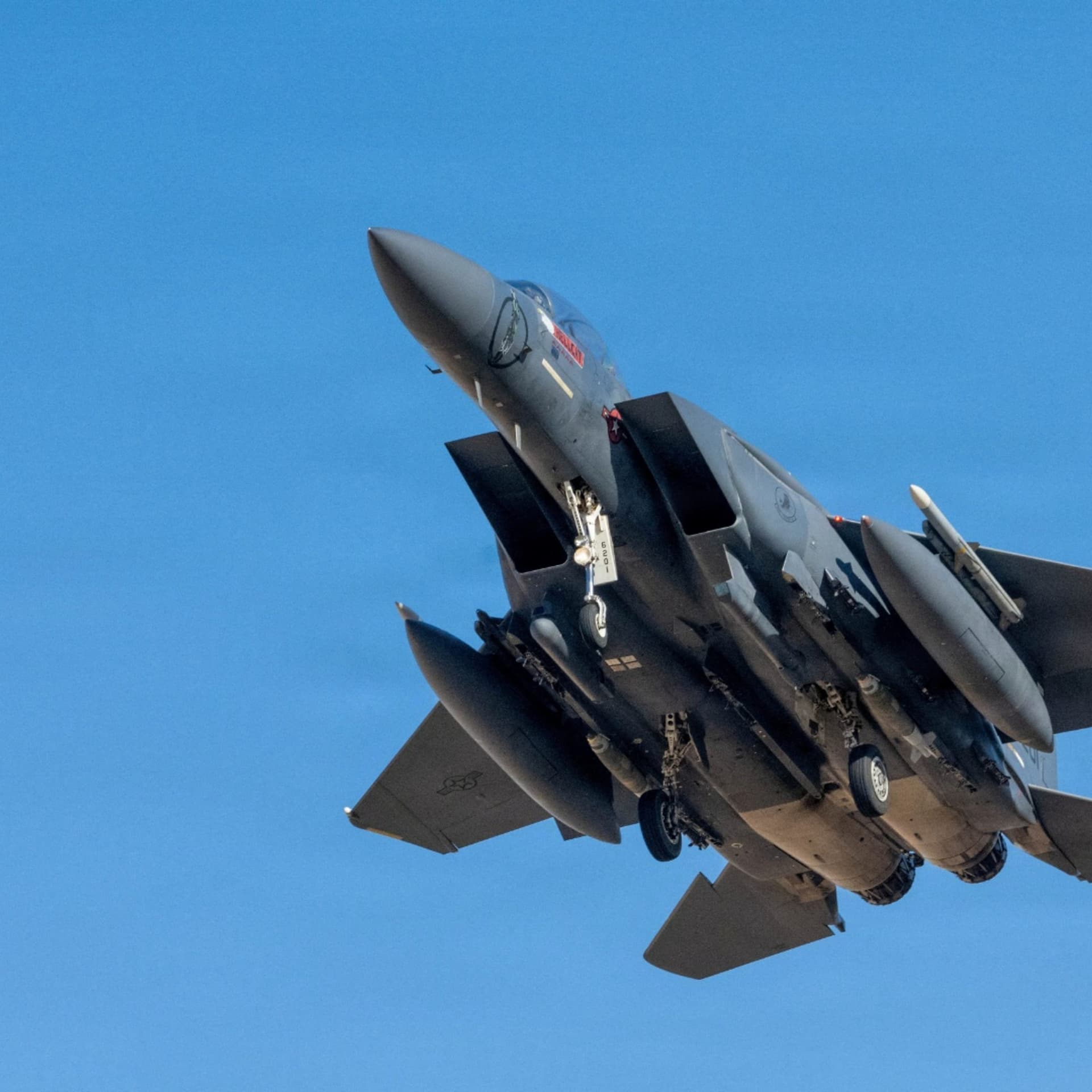
2:05If the incident is confirmed, it would be the first time since the beginning of the war that a US jet has been shot down over Iran. Mikey Kay, host of the security brief on BBC News, gave Tim Franks this update. This first came to light on some very credible open source intelligence channels about the claims of Iran shooting down an aircraft. It was originally reported that it was what's called an F-35, fifth generation fighter. But on looking at the debris on open source intelligence, it's quite clear that the symbology and the markings on a specific part of the wreckage, which was the top end of the tail fin, the tail fin, Tim, an F-15E basically has two tail fins.
2:45And the markings from the livery, which is basically a red strip through to a badge which is USAF in Europe badge that basically aligns that debris the striking similarity between that debris and the an F-15 strike eagle from the 494 fighter squadron which is part of the 48th fighter wing based at RAF Lake and Heath near Cambridge. And how many crew would there be on board typically? Let me just talk to you about what the F-15 is it's a strike eagle it's a pretty large jet but it is air to air and air to ground capable which means that it's being used and there has been user-generated footage that have seen the F-15 doing what's called drone cap, which is Drone Combat Air Patrol.
3:28So basically F-15s airborne looking for Shahed-136 drones coming across the Iraqi border. We know they've been doing that. We know that three F-15s have also been shot down earlier on in Operation Epic Fury by friendly fire. So we know that those F-15s from the 494th are in the region and they're on combat operations every day. But I think it's important to note here that whilst there are three US officials basically confirming that there has been a shoot down, we don't know why it's been shot down or how it's been shot down. We don't know if it's from enemy fire. We don't know if it's from friendly fire.
4:06We don't know if there was a technical fault. And the geolocation of the debris has not been corroborated yet. But where I go back to open source channels, there is suggestion from open source that it's Kazakhstan province, which is a province in Iran, which is literally right up to the Iraqi border. So when you start joining the dots on this type of investigative work, the dots do kind of make sense. There's also been combat search and rescue that have been put up and looking for the crew that would have likely ejected. In another development, officials in Kuwait say an Iranian missile has damaged a power and desalination plant.
4:44That comes as Donald Trump is threatening ever greater destruction, including striking power plants and bridges, unless Iran does a deal. The escalation comes, despite international law experts warning of serious violations by the US, Israel and Iran as civilian infrastructure is targeted. First, here's our correspondent Katie Watson in Doha in Qatar on the latest there and across the UAE. Q8 had a few hits overnight early this morning. the Ministry of Electricity and Water said a power and water desalination plant was attacked. There was material damage to some components. And they also had an attack on a key oil refinery, Mina al-Ahmadi.
5:25It's one of the largest in the Middle East. It has a capacity of about 350 ,000 barrels of oil a day. It's also been targeted before. And that's just Kuwait. There were alarms that went off in the UAE and Bahrain, an attack in the UAE on a gas facility. so clearly what we're seeing and continue to see is this retaliation by Iran and the Gulf continues to feel those effects. Yes the Gulf nations have warned Iran against targeting water plants as you mentioned there. Is there a sense of growing anger in the region? Certainly I mean I think there's frustration that nobody no authorities really speak publicly but there is a sense of wanting, obviously, this war to be over, but wanting the threat of Iran to be over.
6:10I was talking to some Qatari officials earlier this week who made clear that attacks on civilian infrastructure, such as desalination, is a huge threat to the region. This is a part of the world that, what, 90 % of drinking water, roughly, comes from desalinated water. So if you don't have access to that, then it makes the region pretty unlivable pretty quickly, and that is a concern here, certainly. And what about the mood where you are, Katie? How much is normal life being affected? Have you been able to gauge a sense of how people are feeling? It's much quieter than it normally is, that's for sure.
6:44It doesn't feel particularly vibrant at the moment. Obviously, there were people who decided to leave when the war started. Some of those people might be coming back. Obviously, there's a lot of Qataris who are still here. This is their home. But I think it's difficult because the authorities are trying to make it clear that they're safe, that they're doing their best to defend themselves. Perhaps foreigners might feel a little less certain about that. But overall, people are getting on with their lives. It just might be that there are fewer people here right now. Katie Watson reporting from Doha.
7:15Well, on Thursday, the US and Israel struck one of Iran's biggest unfinished bridge projects. Iranian authorities say eight people were killed and nearly 100 injured. What is likely to raise fresh questions about attacks on infrastructure that blurs the line between military and civilian targets. BBC Persian have managed to make contact with some people in Iran on what they think about the destruction of the bridge. I feel hopeless. Trump posts shamelessly about attacking our bridge. I don't know how much further this is going to go. Why is no one standing up to him? He's really taking us back to the Stone Age.
7:52We will end up with a ruined country. I'm more disappointed and saddened that I'm in the middle of a situation where I see Iran being destroyed and I can't do anything. My country is being destroyed more and more every day. That bridge could have reduced the traffic in the city. It was destroyed in the second strike. This strike has got me worried. I don't know why they hit it. I was really surprised that they hit a bridge, but I think they must have a reason for it. International humanitarian law says attacks must distinguish between combatants and civilians. The US and Israel insist they're only targeting sites linked to Iran's military or security apparatus.
8:34But the UN's humanitarian chief, Tom Fletcher, strongly condemned the strategy. This has been a gradual and then very sudden deterioration in the way that we talk about protection of civilians, the way that we talk about international humanitarian law. You know, this stuff isn't negotiable. You don't hit civilian infrastructure. That includes hospitals, you know, across Beirut and across Lebanon. I met huge numbers of medics whose ambulances are being hit at the moment. You don't hit schools. You don't hit energy sources. You don't hit bridges. Those are war crimes. That is absolutely clear in international law.
9:08But somewhere along the way, we seem to have thrown that all aside. And we've chosen impunity, indifference, game show gambling over solidarity and humanity. We asked our chief international correspondent, Lise Doucette, what were to make of the kind of sites being hit? We heard from President Trump in his first primetime address during this conflict in the early hours of yesterday morning that he was in his bombastic language going to bomb Iran back to the Stone Ages. a comment that's been criticized both by legal experts warning about potential war crimes, also causing growing alarm among Iranians, even those who had dared to hope that the beginning of this war would mean the beginning of the end of the regime.
9:56He did say that if Iran didn't come to a deal, that they would hit every single one of their power pants, again, and other potential war crimes. And then they've started hitting the bridges. And he has celebrated the hitting of this bridge, which linked Tehran with the nearby major city of Karaj. And in his latest post on Truth Social, he goes, bridges next, electric power plants, then electric power plants. And then he said he knows Iran's leadership knows what it has to be done and done fast. And it's not just the bridges. Dr. Tedros, who heads the World Health Organization, which, of course, President Trump had pulled out of the WHO.
10:36But he has regularly been expressing concern about the attacks on health facilities. The most recent is the century old Pasteur Health Centre. It's a major public health agency that had been producing and distributing vaccines. And Dr. Tedros reported that it had suffered significant damage. There was a report that Iran was using the center for other military related activities, for other kinds of research. But it has been widely condemned as an unacceptable targeting in this war. You've been asking about what is what is Iran going to do in retaliation? Because, of course, Israel has been expressing concern about where the missiles are landing there.
11:25Gulf states, of course, are furious about attacks on their infrastructure. And we did hear from the Speaker of the Iranian Parliament, Mohammed Abagur Khalibaf, who regularly hits back against President Trump on social media. He used that biblical expression, eye for an eye and a tooth for a tooth in this war. So the language is escalating. And in a war where President Trump has again said his deadlines are always fluid, that there would be another two to three weeks. This targeting on both sides, on all sides, raises questions about what is going to be hit next. Lise Doucette reporting. The UN says food prices have risen to their highest level in six months and could increase further if the war in the Middle East continues.
12:12The Food and Agriculture Organization said high oil prices were mostly to blame. Several countries have mandated working from home and raised petrol prices with restricted passage through the Strait of Hormuz, affecting their ability to import oil and gas. Pakistan's government has raised fuel prices by a further 43 % overnight. Caroline Davies has more from Islamabad. This is a dramatic increase in the price of fuel here in Pakistan, and the government here is tying it directly to the war in Iran. Now, Pakistan is highly dependent on imported oil, a large amount of which comes through the Strait of Hormuz.
12:50And in fact, this is the second time that Pakistan's government has increased the price of fuel since the conflict began, which means that petrol has now increased 77 percent since the beginning of this conflict and diesel by 87 percent. Now, Pakistan's government did announce some subsidies for certain groups, including motorcycle users, small farmers, passenger buses amongst them. But the rager concern is that this will filter into inflation and many here in Pakistan will already be making assessments about how often and how far they travel. Caroline Davies reporting. And we have more on this on our YouTube channel.
13:27Just search for BBC News on YouTube and you'll find the Global News podcast in the podcast section. There's a new story available every weekday. A French court has overturned an attempt by the government there to ban a Muslim event, which is expected to draw tens of thousands of people over the weekend. The annual meeting of French Muslims started as planned this afternoon, despite the police warning of the risk of terrorism. Hugh Schofield reports. Part cultural and religious conference, part trade fair, this event is organised by an association called Muslims of France, which critics say is linked to the International Muslim Brotherhood.
14:05The French government is on principle ill-disposed to it because it fears the group promotes separatism. But the reason given for trying to enforce a ban was the international context, the war on Iran and an increasingly polarised political atmosphere in France. The risk of terrorism against Muslims could not be ignored, the government said. Far-right groups might seek to disrupt proceedings and foreign influencers might try to stage a provocation. But the organisers sought an injunction to overturn the ban and just in time, they got it. The court ruling that police had failed to substantiate that there was a serious risk to public order.
14:43For the organisers, the suspicion is that the government was looking for a reason to have the assembly stopped. Hugh Schofield reporting. Still to come in this podcast. They don't mate often and octopuses actually don't interact often, they're solitary. When they do interact, they're very aggressive. And so we wanted to observe mating in the lab. The new findings on how octopuses mate.
15:30From less than a dollar a week for your first year, read, watch and listen to trusted, independent journalism and storytelling. It all starts with a subscription to BBC.com and the BBC app. Find out more at bbc.com slash unlimited.
15:50This is the Global News Podcast. Next, Burkina Faso's leader has told the people there they can forget about democracy in an interview on national TV. Captain Ibrahim Traore rolled back on plans to hold elections, despite promising them four years ago when he seized power. His rights record has come under a lot of criticism, most recently by Human Rights Watch. Its new report says the government and allied forces have killed more than twice as many civilians as Islamist militants in the past few years. Hilaria Alefrosi is a senior researcher on the report and told us the death toll is likely to be much higher and that government forces are more brutal and violent than the militants.
16:33Military abuse creates a cycle of grievances, frustrations and resentment, especially among the most affected communities, which can fuel recruitment into the ranks of the Islamist armed groups, which are actually surfing and exploiting this kind of military abuse for their propaganda. Our global affairs correspondent Richard Kagoy is in Nairobi and told me more. Ibrahim Tauri is, you would say, young. He's in his later 30s, considered to be one of the youngest African leaders, you know, where the average age is about 65 years. He has sort of built a persona around himself as an African leader who's out to liberate the West African country from the influences of what he calls Western imperialism and neocolonialism.
17:24So what he has done is he has made radical reforms and policies in terms of nationalizing the country's mine sector, which is very rich in gold. And he says he wants to establish gold reserves. And so this has really endeared him, particularly to young people, not only just in Burkina Faso, but also across Africa. So a lot of them see him as the revolutionary reader. That was Thomas Sankara, who was the leader there in the later 1980s. He's been able to build his personality using social media. He's reflecting what people say is perhaps a political shift that's taking place across the continent.
18:10And his appeal also goes even just beyond Africa. He seems to be resonating with African-Americans, you know, black Britons. Yeah, so he's been able to do that over a period of time since he seized power in a military coup. So it seems a real sense of cult of personality with him. But is this likely to last and what sort of reaction has there been to him? I mean, opinion is divided. Lots of people are really conflicted about him. So he's got this sense of promise in terms of the way that he has approached his governance. That's what a lot of people say, perhaps, you know, breaking with the past with how African leaders seem to be done.
18:48But a lot of people are saying even with the changes that he's doing in terms of the country's mineral wealth, it's a sense in terms of consolidating power and wealth for himself and for people around him. You know, as you mentioned, his human rights record has come under scrutiny. He's muzzled critical voices. He suspended international news outlets and suspended even their journalists. You can see there's been a systematic dismantling of democratic institutions, including the country's electoral commission and political parties as well. Richard Kagoe reporting from Nairobi. South Sudan is facing a rapidly worsening security and humanitarian crisis.
19:30Fierce fighting since December 2025 between government forces and opposition fighters has forced hundreds of thousands of people from their homes. Ted Chaban is UNICEF's deputy executive director and is visiting South Sudan this week and is among the first senior UN officials to reach some of the remote conflict affected areas. He's been speaking to James Koppner about what he saw there. So I was in the Jongle area of South Sudan. That's in the northeast where much of the fighting has taken place. And there's now over 286 ,000 displaced. And we went to a small village called Shwil in northern Jongle.
20:11The population is normally 6 ,000 people. In the last two months, this has expanded to 30 ,000 people with displaced taking refuge there. And up the river, there's another 25 ,000 people in a nearby village. And what we saw is a population really in very bad shape. We met a mother called Nyawad, and she was eating leaves from the tree under which she was sitting for sustenance. She had a small baby in her lap, but as she was running away from her village, she had lost her five-year-old son, Garwish, because he had been abducted. And she just looked gaunt and just completely devastated by losing her son.
20:53We then went to another place called Weai, about an hour away by plane. And there, everything had been looted. The health center, the water point had been destroyed. It's one of the 26 health centers that we know have been destroyed during this fighting. So it's not just the civilians that are paying the price. It's the civilian infrastructure on which they depend that has also been destroyed. Luckily, there's some very good actors on the ground that are responding, local NGOs, international NGOs, the UN agencies such as UNICEF, but much more is needed. In particular, I would imagine for children, the immediate disaster perhaps of fleeing one's home, but it's been quite hard historically to get kids into school in South Sudan in the best of times.
21:35Now with so much displacement, I imagine many children will be missing out on an education. The schools are closed. I mean, in the country as a whole, Even before this crisis, more children were out of school than in schools, and this is further impacting their education. None of the children displaced are in school in Jonglei. We're doing some early kind of learning and play activities, but it's not a substitute for the stability, the normalcy of being in school. And I have to say we're also facing a protection crisis. Over 540 children have been registered by UNICEF and protection partners as being unaccompanied, so separated from their families.
22:16And then we have this issue of abduction, which is terrifying for mothers who lose their children and mothers overall. Both the government and the opposition have signed an action plan to desist from recruiting and using children in their forces. forces. We've also called on the parties to de-escalate and return to a political dialogue. There needs to be a political way forward. There needs to be full access for humanitarians on the ground. That's UNICEF's Deputy Executive Director Ted Chaban speaking to James Copponel. Holy Week leading up to Easter in Jerusalem has been a sub-Judah fair this year, as the war against Iran continues.
22:57It's been the same story for Muslims with Eid and now Israeli Jews with Passover. Pilgrims and tourists have stayed away, while sacred sites with immense significance for billions of Christians, Muslims and Jews around the world have been closed in the Old City. But the spirit of Jerusalem has survived, as our correspondent Sebastian Asher has been finding out. Welcome back. It's good to be back. Old friends meeting up again in the Christian quarter in the Old City, lamenting events that have made Holy Week leading up to Easter a shadow of itself. Isa, a Jerusalem resident whose family has lived here for generations, tries to be hopeful, as befits the man known as the city's one and only Santa Claus.
23:42Whatever happened, still Jerusalem, you can feel the heart still beating. With him are Tom and Samantha, an American couple who've been coming here for Easter for the past eight years and were not going to be put off this year. It's so powerful to be in the place where Jesus walked, where all of the Holy Week events literally took place. So that is so moving to us. We felt like this was something we're supposed to do. So we were feeling a little frustrated because we did try to come and the flights got canceled. And we felt really strongly, because we come to pray, the events need prayer. So for Samantha and I, it felt like something very important to do right now.
24:27But yeah, it feels different. Our families definitely felt more trepidation about it.
24:34I'm standing here in what is normally, especially during Holy Week, the week leading up to Easter, one of the busiest parts of the old city of Jerusalem. Very, very unlike any time that I've seen here before in the old city. Just looking to my left, I see the gateway which leads into the Church of a Holy Sepulcher. That's closed. There are two guards who are stopping people from going in there. This is a very, very different sense of what the city normally represents for Christians around the world.
25:11Three weeks ago, a fragment from an Iranian missile made impact on the edge of the old city, just a few hundred metres from the Church of a Holy Sepulchre, Al-Aqsa and the Western Wall. all closed for fear of mass casualties, where a missile to strike during mass religious gatherings.
25:39So on Palm Sunday, the church of Bethpage up on the Mount of Olives held a mass for local Christians. The joyous procession with thousands of worshippers from near and far holding palms that normally sets off from there was cancelled. The destination is traditionally the Church of a Holy Sepulchre. At the same time that Mass was being held in Bethpage, the Latin Patriarch Cardinal Pierre Battista Pizzaballa was denied entry to Jerusalem's most revered church by Israeli police. The incident sparked an international outcry. The break in centuries-old tradition was also felt deeply by local Christians like Isa.
Read the full transcript
26:15It's made me feel sad first as a patriarch because he's a leader of the head church of Jerusalem. Like, this is like his house. It's like my house, and also this is his house. He's more important person for Jerusalem. This is like he going home. You cannot tell someone, don't go to your home. Good afternoon, everyone. Welcome to this conference. Two days later, inside the Latin Patriarchate, Cardinal Pizzaballa played the incident down as a misunderstanding. The limited mass he was due to hold on Palm Sunday, the Church of the Holy Sepulchre, is now being allowed to go ahead on Easter Sunday. And he reiterated how he and other religious leaders accepted the wartime restrictions, but grieved that Holy Week felt bereft.
27:00The Jerusalem without pilgrims is not complete. You see that it's almost dead, unfortunately. a place of life, but without life in this moment, which is very safe. Sebastian Asher reporting from Jerusalem. Now, the octopus is one of the sea's most fascinating creatures, intelligent, elusive, and still not fully understood. One of the questions that has long puzzled scientists is how it reproduces. Now, researchers at Harvard say they've uncovered part of that mystery, specifically how the male succeeds in mating. My colleague Tim Frank spoke to Professor Nicholas Bellono, the senior author of the study published in the journal Science.
27:44He began by explaining what the process actually looks like. The male has one specialised arm. It's the third arm from the right. And it uses this arm not only to identify the female, but then it inserts the arm into the female mantle. And then the arm searches around the internal organs and finds the oviduct. And then once it finds the oviduct, both the male and the female freeze. And then the male passes a spermatophore, which is a package of sperm, from its mantle down the length of the specialized arm to the oviduct. And then that's when fertilization happens. Right. And just to be clear, the mantle is this sort of bulbous structure behind the eyes.
28:31Yes, the head. How does the male know when it sort of hit the right part, as it were? And what have you discovered on that? We discovered this kind of by accident. So they don't mate often, and octopuses actually don't interact often. They're solitary. When they do interact, they're very aggressive. And so we wanted to observe mating in the lab. And so our idea was to put two octopuses into one tank, but be mindful that they are aggressive together. So we put a barrier between them. and then we put little holes in that barrier so that they could sort of get used to one another and recognize that there is an octopus in the tank and then our plan was to remove the barrier so they could mate.
29:18However, the male octopus was able to put this specialized mating arm through one of those holes, find the female and initiate mating. So this told us already that they were able to mate without visual information because they were blocked by this barrier and they could do the same thing in complete darkness. So the discovery, even at that point, is that the specialized arm for mating is actually a sensor of the female. And that led to the rest of the study, which is to define how it serves as a sensory organ, which was unknown. Your research, and I'm not in any way sort of downplaying it, but it's essentially, it's all about sort of trying to work out how the male responds to stimuli and is satisfied and decides where he's going to stick his third tentacle.
30:09Is there any suggestion or interest in how female octopuses decide that they're going to allow a male to mate with them? Yeah, definitely. This is a really interesting part of the system. So there's two things that the female does that contributes to selection of a mate. One is the behavioral aspect that we watched with this barrier where she will accept or not accept the male to find her with the hectacolus and initiate mating so she can swim away if she doesn't like that particular male. And then the other part that's really interesting to me is that she also can select which sperm she uses to fertilize the eggs.
30:55So even from wild-caught females can look in the oviduct, find different sperm from different octopuses of the same species. Also, even some octopuses of different species will try to cross mate and she can save the sperm for a really long time and then decide not only when to fertilize the eggs, but which sperm to select. Professor Nicholas Bellono.
31:50Sanctuary. The editor is Karen Martin and I'm Anka Desai. Until next time, goodbye.
32:20a week for your first year, read, watch and listen to trusted, independent journalism and storytelling. It all starts with a subscription to bbc.com and the BBC app. Find out more at bbc.com slash unlimited.
From the publisher
Iran says it has shot down a US fighter jet over the west of the country. Iranian state media has published pictures and videos purporting to show parts of the downed plane and one of the ejector seats. American aircraft and reconnaissance drones are said to be involved in the search, but there has been no official confirmation from the Pentagon or the White House.
Also: Despite President Trump's claims that Iran's military capacity has been decimated by almost five weeks of US-Israeli strikes, Iranian missiles and drones damaged oil, natural gas and water desalination facilities in Gulf nations on Friday. The UN says food prices have risen to their highest level in six months and could increase further if the war in the Middle East continues. A French court has overturned an attempt by the government to ban a Muslim event which is expected to draw tens of thousands of people over the weekend. Burkina Faso's leader has told the people there they can forget about democracy in an interview on national TV. South Sudan is facing a rapidly worsening security and humanitarian crisis. We look at how Easter festivities are going ahead in Jerusalem, despite challenges... and scientists answer a long standing mystery of how octopuses mate.
The Global News Podcast brings you the breaking news you need to hear, as it happens. Listen for the latest headlines and current affairs from around the world. Politics, economics, climate, business, technology, health – we cover it all with expert analysis and insight. Get the news that matters, delivered twice a day on weekdays and daily at weekends, plus special bonus episodes reacting to urgent breaking stories. Follow or subscribe now and never miss a moment. Get in touch: globalpodcast@bbc.co.uk



