
In short
Global News Podcast - Episode Summary
Episode Title
Iran says it's ready for talks with US
Episode Description
In this episode, the focus is on escalating tensions between the US and Iran, alongside various international developments. US President Donald Trump threatens military strikes against Iran while indicating a willingness to engage in talks. The episode also covers significant stories from China, Cuba, genetic research on longevity, Kurdish forces in Syria, and a criminal case in New York.
---
Key Headlines
- Iran Ready for Talks: Iran expresses willingness to negotiate with the US but insists on equal terms after Trump's military threats.
- UK Relations with China: During Prime Minister Keir Starmer's visit to China, sanctions on British MPs are lifted.
- Cuba National Emergency: Trump declares a national emergency on Cuba and imposes tariffs on oil suppliers.
- Longevity Research: New study suggests genetics play a crucial role in determining lifespan.
- Syrian Conflict Update: Kurdish-led forces reach an agreement to integrate into the Syrian army.
- Impersonation Crime in New York: A man arrested for posing as an FBI agent to free a murder suspect.
---
Detailed Summary
- Iran's Stance on US Negotiations
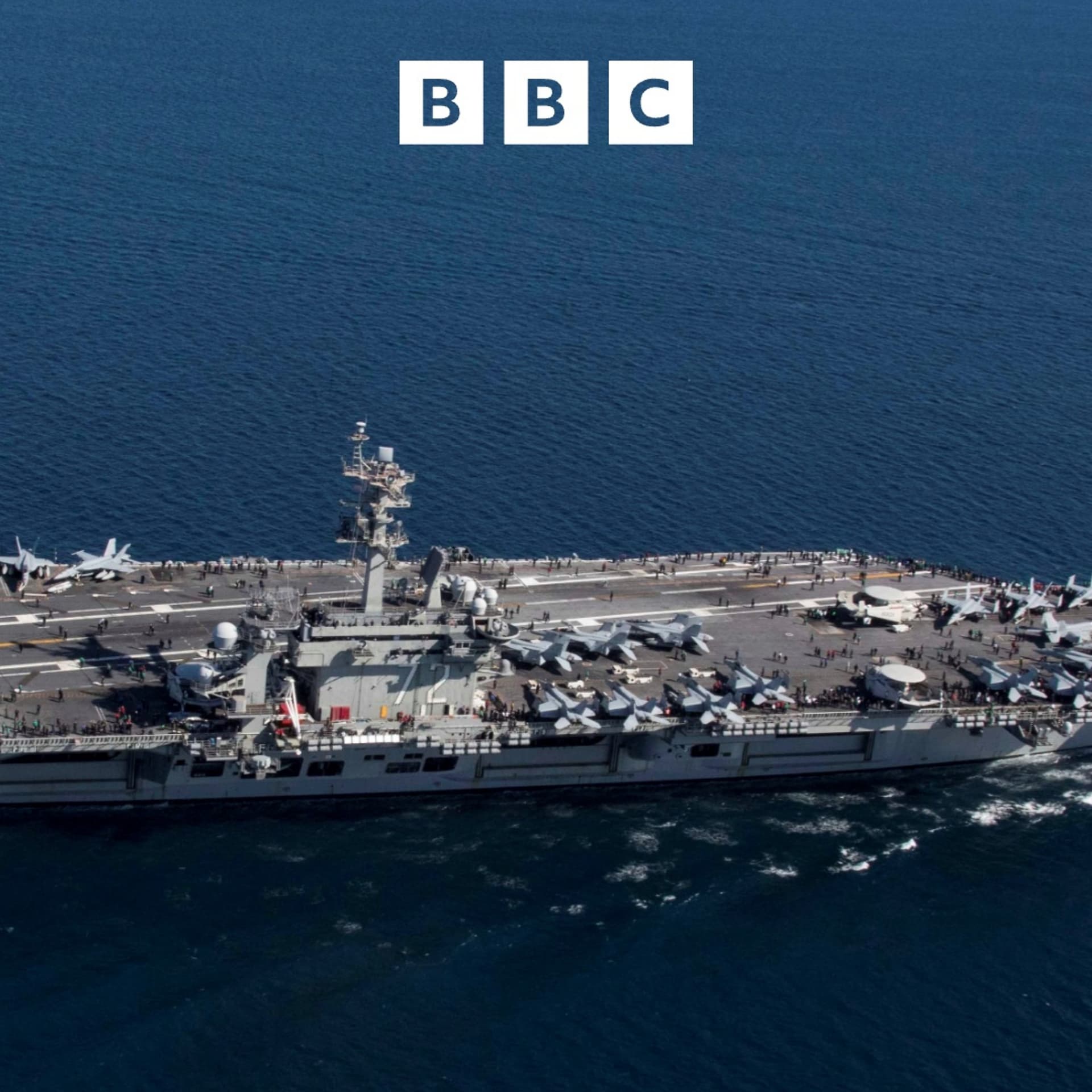
- President Trump has sent a "huge armada" to the Middle East while threatening military action against Iran.
- Iranian Foreign Minister Abbas Araghchi is in Turkey for talks and expresses Iran's readiness to negotiate on the nuclear program under equal conditions.
- Iran aims to reduce regional tensions and emphasizes that defense capabilities should not be part of the discussions.
- UK-China Relations
- Prime Minister Keir Starmer announces that China has lifted sanctions on British parliamentarians who criticized its human rights record regarding the Uyghur minority.
- Starmer's trip is focused on strengthening economic ties, with discussions highlighting the UK's concerns over espionage and human rights.
- US-Cuba Relations
- Trump declares a national emergency regarding Cuba, citing national security threats due to Cuba's ties with countries like Russia, Iran, and China.
- The executive order imposes tariffs on nations supplying oil to Cuba, signaling an intention to deter Mexico from becoming Cuba’s primary oil provider.
- Genetics and Longevity
- A major study reveals that genetics may account for as much as 55% of longevity, challenging previous beliefs that environmental factors were more significant.
- Research suggests that while genetics play a vital role, lifestyle and healthcare improvements over the past century have significantly increased average life expectancy.
- Kurdish Forces in Syria
- Kurdish forces announce a deal with the Syrian government for integrating their military into the national army, raising concerns about the security of detained IS fighters.
- Reports from the Al-Raj camp, housing families of suspected IS members, highlight fears among the camp inhabitants regarding their uncertain futures.
- Criminal Case in New York
- A man is arrested for allegedly impersonating an FBI agent in an attempt to release murder suspect Luigi Mangione.
- The case raises questions about security and impersonation in the criminal justice system.
- Self-Driving Taxis
- The UK is set to trial self-driving taxis, with Waymo planning a service launch later this year amidst ongoing discussions about safety and regulation.
- Experts emphasize that while autonomous vehicles could improve road safety, widespread use will require significant technological and legal advancements.
---
Conclusion In this episode of the Global News Podcast, listeners are provided with a comprehensive overview of pressing international issues, from diplomatic negotiations to groundbreaking research affecting health and longevity. The discussions illustrate the interconnectivity of global politics and the implications of domestic policy decisions across borders.
For more updates, listeners are encouraged to follow or subscribe to the podcast and can reach out via email at globalpodcast@bbc.co.uk.
Written by AI. May contain mistakes. Listen to the episode to check what was said.
Chapters
Tap a time to open that second in VOMain Stories Overview
0:45 to 2:12
Discussion of major news stories including Iran and US relations.
“I'm Janet Jalil and at 16 hours GMT on Friday the 30th of January, these are our main stories.”
Iran's Diplomatic Efforts
2:12 to 3:38
Analysis of Iran's readiness to negotiate with the US and its conditions.
“US armada to the Middle East, while at the same time signaling that he is open to negotiations.”
Impact of US Military Presence
3:38 to 4:48
Discussion of the implications of US military action and Iran's response.
“I got more from BBC Persians' Sarah Namjou.”
Protests in Iran
4:48 to 6:06
Updates on the Iranian protests and estimates of casualties.
“He says he wants to stop it killing protesters and to end its nuclear ambitions.”
China Lifts Sanctions
6:06 to 7:40
Details regarding China's lifting of sanctions on British MPs.
“And some other groups are putting it up to 30 ,000.”
US Executive Order on Cuba
7:40 to 11:02
Exploration of President Trump's executive order regarding Cuba.
“but for the parliamentarians, a lifting of those sanctions.”
Genetics vs. Lifestyle in Longevity
11:02 to 14:01
New research findings on the role of genetics in life expectancy.
“The Mexican government is yet to issue a response.”
The Role of Genetics in Life Expectancy
14:01 to 15:30
Explore how genetics and environmental factors influence life expectancy.
“than the genetic contribution would have gone down and the environmental would have gone up.”
Future of Aging Research
15:31 to 16:15
Discuss the potential for genetic research in altering aging processes.
“Does that make it easier for scientists to try to identify the genes that dictate how long we're going to live?”
Trump's Nomination of Kevin Walsh
17:46 to 21:34
Analyze Trump's nomination of Kevin Walsh and implications for the Federal Reserve.
“Kevin Walsh will take over from the current chairman, Jerome Powell, in May.”
Show all 14 chapters
Kurdish Forces and the Syrian Camp Situation
21:35 to 26:18
Report on the conditions in a Syrian camp for IS families amid regional conflict.
“After weeks of clashes, Kurdish forces say they've now reached a deal with the Syrian government that will see them integrate their fighters into the Syrian army.”
Impersonating an FBI Agent Incident
26:19 to 28:00
Detail a bizarre case of a man impersonating an FBI agent in New York.
“click on the logo, then choose podcasts and global news podcast.”
The Rise of Autonomous Vehicles
28:00 to 30:28
Explore the advancements and challenges of self-driving cars in the UK and beyond.
“vehicles are and whether after years of hype they will actually become part of everyday life.”
Legal and Safety Considerations for AVs
30:28 to 31:29
Understand the legal challenges and safety implications of driverless cars.
“The laws around these vehicles is still being worked out.”
Transcript
Automatic transcript. May contain errors.0:00This BBC podcast is supported by ads outside the UK. If journalism is the first draft of history, what happens if that draft is flawed? In 1999, four Russian apartment buildings were bombed, hundreds killed. But even now, we still don't know for sure who did it. It's a mystery that sparked chilling theories. I'm Helena Merriman, and in a new BBC series, I'm talking to the reporters who first covered this story. What did they miss the first time? The History Bureau, Putin and the apartment bombs. Listen on BBC.com or wherever you get your podcasts. This is the Global News Podcast from the BBC World Service.
0:47I'm Janet Jalil and at 16 hours GMT on Friday the 30th of January, these are our main stories. Iran says it's ready for talks with the US but only on equal terms after Donald Trump's threats of military action. China lists sanctions on a group of British parliamentarians during a visit by the UK Prime Minister Keir Starmer. The US president nominates an outspoken critic of the central bank, the Federal Reserve, to succeed Jerome Powell. We'll tell you who he is. Also in this podcast, could our genes be crucial to living long and healthy lives? New research suggests that our genes could be more important than previously thought.
1:31The fact that genes determine how long we live is hardly surprising because we know your chance of breast cancer, your chance of cardiovascular disease, that runs in families. You can hear it some of that risk. And the UK becomes the latest country to trial self-driving taxis, coming later this year. My first observation is no driver, no pedals, no steering wheel, but it feels quite normal.
1:59At the height of the Iranian protests this year, President Trump promised help was on its way, only to backtrack as thousands of demonstrators were slaughtered by the regime's security forces. Now the US president is again threatening to strike Iran after sending what he calls a huge US armada to the Middle East, while at the same time signaling that he is open to negotiations. We have a lot of very big, very powerful ships sailing to Iran right now. And it would be great if we didn't have to use them. Can you say what the message was that you shared with Iranians? Well, I told them two things.
2:35Number one, no nuclear. And number two, stop killing protesters. They're killing them by the thousands. Iran, weakened by earlier US and Israeli attacks, is now intensifying its diplomatic efforts. Iran's Foreign Minister Abbas Aragji has been holding talks in Turkey where President Erdogan has offered to mediate between Tehran and Washington. Mr Aragji told journalists that Iran was ready to speak to the US about its nuclear program but only on equal terms and that currently no such talks had been set up. In relation to a possible meeting or talk with American officials, We do not have any plan or program.
3:20But what we want to see is we are ready for a just, fair and equitable negotiation. And the preconditions of such a fair and equitable negotiation is still not yet fulfilled. About the type of negotiation, the venue of that. First of all, we need to see the preconditions and the preliminary talks about this. I got more from BBC Persians' Sarah Namjou. As you mentioned, the Iranian foreign minister is in Istanbul today as Turkey is trying to mediate between Iran and the United States. Iranian foreign minister Abbas Ar-Raghjid said that Iran is prepared to resume the talks with the United States, but that talk should be fair, as he said and as he put it, and should not include Iran's defense capability.
4:10and he repeated that Iran is ready to negotiate to reduce the tensions in the Middle East. And he was in a joint conference with the Turkish foreign ministry and he also said that diplomacy is their priority. In recent days, Iran's neighbours, neighbouring country in the Middle East, they've been trying to increase their efforts for diplomatic negotiation and kind of to mediate between Iran and the US and to lower the tensions. And this all comes as alarm is growing over those US warships heading towards the Middle East. President Trump is also signalling that he wants to talk to Iran. He says he wants to stop it killing protesters and to end its nuclear ambitions.
4:54How are the Iranians likely to respond to those two requests? Exactly. It seems that President Trump is willing to give diplomacy a chance and has put it in his latest remark. He said that he wants Iran to stop nuclear activities and also killing the protesters. He also said that the US officials are in touch with the Iranian officials. People, I can say that in Iran, they are looking at all these diplomatic efforts and also military buildup very anxiously. They don't know what is going to happen next. And also President Trump has so far proved that he is unpredictable. We don't know what the US next step would be, but we are seeing that increasing diplomatic effort is that Iran doesn't want this war to start.
5:43And those protests that were crushed earlier this month, what do we know now about how many people were killed? Actually, as you've been reporting on the internet shutdown in Iran, it's very difficult to come up with an exact number of people and protesters who've been killed. The number that we currently have and human rights groups are reporting is even up to 17 ,000 people. And some other groups are putting it up to 30 ,000. It's very difficult to come up with an exact figure, but the situation is really worrying. We are still having difficulties to contact the people inside Iran because of the Internet situation.
6:19and also we are facing arrest of doctors, medical staff and other people who've been part of the protest. Sarah Namjoo. China has lifted sanctions on a group of British parliamentarians during a visit by the UK Prime Minister Keir Starmer. The restrictions had been imposed after the MPs criticised China over alleged human rights abuses against the Uyghur minority. The British Prime Prime Minister made the announcement during a visit to Shanghai at the end of a trip designed to boost Britain's economic ties with China. Here's our political editor, Chris Mason, who's travelling with him. So this is the third day of the Prime Minister's trip to China.
7:02Spent a couple of days in Beijing, flew to Shanghai and has done a series of interviews, including one for me for the BBC. and news in that interview that in those discussions that he has had with President Xi in the last 24 hours or so, news that parliamentarians in the UK who have been sanctioned by China for remarks they have made about China, not least about the Uyghur people imposing restrictions on them in terms of their travel, for instance, to China, that those sanctions are being lifted. Alongside that, a former MP, an academic and a lawyer were not sure about the sanctioned status for them, but for the parliamentarians, a lifting of those sanctions.
7:51Let's listen to the exchange I had with the Prime Minister on this topic. There is deep concern from some back home about Chinese spying, about espionage, about human rights concerns, and MPs who have been sanctioned by China. What do you say to those who are worried, who at the very least seek reassurance, given your desire for a closer relationship? One of the benefits of engaging is to not only seize the opportunities, but to raise those difficult, sensitive issues, which you can't raise if you're not in the room. You can't raise if you don't have a leader-to-leader meeting. On the question of the parliamentarians, I know it's a cause of concern, which is why I did raise it.
8:30And the response of the Chinese as a result of our discussions is that restrictions no longer apply. And President Xi said to me that means that all parliamentarians are free to travel to China. Now, that rather vindicates my approach because that's only because we're here that we have had the engagement and that has provided the opportunity for a leader-to-leader discussion on sensitive issues as well as the opportunities that we've opened up through this visit. And those six parliamentarians, and indeed one former MP, Tim Lawton, got wind that this announcement might be coming and put out a joint statement.
9:11They said, we reject any deal that prioritises our personal convenience over the pursuit of justice for the Uyghur people. They also set out a concern about whether or not this deal had any knock-on ramifications for Chinese individuals that the UK has sanctioned. Chris Mason in Shanghai. President Trump has issued an executive order which declares a national emergency on Cuba and applies punitive tariffs against any nation which supplies it with oil. It's the latest step the US has taken to increase pressure on the communist-run island and follows American forces' capture of a close ally of Cuba's, the Venezuelan President Nicolas Maduro, earlier this month.
9:57Many analysts interpret the executive order as being largely directed at Mexico, which, since Mr Maduro was seized, has replaced Venezuela in becoming a big supplier of oil to Cuba. From Mexico City, Will Grant reports. The executive order by President Trump does two things. The first is that by declaring a state of emergency over Cuba, the Trump administration is, in effect, arguing that the island's energy supply is now a question of US national security. The order said that Cuba hosts Russia's largest overseas signals intelligence facility and also mentioned the island's relations with what it called malign actors adverse to the United States, specifically China, Iran, Hamas and Hezbollah.
10:42The other thing the order does is threaten consequences in the form of tariffs against any nation which continues to supply the beleaguered communist-run island with crude oil. Specifically, the intention appears to be to warn off Mexico from replacing Venezuela as the island's principal energy supplier, after Nicolas Maduro was forcibly removed from power in Caracas earlier this month. The Mexican government is yet to issue a response. Venezuelan crude oil has largely propped up the Cuban revolution over the past 25 years, and the island is currently experiencing its worst economic and energy crisis since the end of the Cold War.
11:19Earlier this week, it was reported that the Mexican state-run energy firm Pemex had chosen not to send a tanker of crude earmarked for Cuba, a move which President Claudia Sheinbaum described as a sovereign decision by Pemex. President Trump and his Secretary of State Marco Rubio undoubtedly intend the message on Cuba to dissuade any prospective energy partners from working with the island. Speaking at a Senate Foreign Affairs Committee hearing earlier this week, Mr Rubio made it clear that forcing wholesale reform in Cuba is a key goal for the Trump administration and a central part of the strategy on Venezuela.
11:54Appearing on the red carpet for the premiere of an Amazon-funded documentary about the First Lady called Melania, Mr Trump was asked if the aim of the executive order was to choke off Cuba. President Trump replied by repeating his comments that the island is a failing nation. Will Grant. Now, what's more important when it comes to how long we'll live? Lifestyle and environmental factors or our genetic makeup? Previous research has suggested that genes account for a third or less of how long our lifespans are. Now though, a major study has found genes can be just as important as external factors.
12:33Tony Blakely is a professor of epidemiology at the University of Melbourne. He's been explaining the new research to James Menendez. They've looked at twins in both Denmark in Sweden, and they've removed deaths that are due to injury and infectious disease to leave the more intrinsic diseases that kill you, like cancer and cardiovascular disease. They then looked at the variation in life expectancy between twin pairs and amongst the twin pairs and arrived at about 55 % of longevity is due to genetics. Compared to previous studies, that's a higher percentage, and it's a well-done study. It's slightly surprising to me that other things that can cause death weren't stripped out before?
13:15Well, if we die of an injury or we die of suicide or we die of COVID, for example, that is part of mortality. So it is part of what causes us to live different lengths. But you're right in that if you're asking the question about what is inside our body, the cancers, the cardiovascular disease, it is a bit surprised it hasn't been stripped out before. But let's put this in context and the authors do this themselves. They make it quite clear that the result is dependent on where you are in time, place and person. So for example, this study done several decades ago or done in Sri Lanka or Australia with many different ethnic groups and comparing cities that had different air pollution levels and where smoking was half the population, i.e.
14:00we had more difference between the population environmental factors than the genetic contribution would have gone down and the environmental would have gone up. So it's a very contingent result. But surely our genes have basically stayed the same. Exactly. So another way to look at this is that there's been a 30-year increase in life expectancy in the last 100 years, which is phenomenal. And that is not because our genes have changed. That's because we've got better sanitation. We've worked out some of the causes. We've reduced air pollution. We've got better lifestyles. And we've got better health care treatment.
14:35So those things are all the reason that the average life expectancy has gone up in the last 100 years. But you still see variation between people and how long they live. And that variation is increasingly genetic over time as we clean out some of these other environmental pauses. That all said, at this point in time and going forward, if you want to live a long life, the thing that you can do most is things like healthy lifestyle, physical activity. All those things still make a difference. But in terms of the genetic factors, is it right to say that we're actually like animals? I mean, we're not special.
15:11Exactly. We're just part of the animal kingdom. During COVID, I thought we forgot that a little bit. So the fact that genes determine how long we live is hardly surprising because we know your chance of breast cancer, your chance of cardiovascular disease, that runs in families. You can inherit some of that risk. So it's not too surprising that how long you live across all those diseases is in part, in this case, at least half determined by your genetic inheritance. Does that make it easier for scientists to try to identify the genes that dictate how long we're going to live? Well, this is the big question, and this is a really interesting scientific endeavour at the moment.
15:47So for the last hundred years, we've kind of played the whack-a-mole game, whereby we try and reduce this disease and another disease pops up and we pack that disease. It's worked well. We live a lot longer now. There is a school of thought that's saying, hmm, maybe if we can work out the genes or other influences that change the whole aging process, that make us age slower or faster, we might be able to end up with treatments. Maybe in 20 years' time we'll have something a bit like we got a Zempick now for obesity. Maybe there'll be drugs then that will help with reducing your aging process across the board.
16:21I think it's unlikely, but who knows? Maybe we'll get there, and the study is a bit of a flag in that direction. Professor Tony Blakely. Still to come in this podcast. I'm feeling so bad because I came here. I came with my husband. I am feeling like I'm destroying my life. I will be so happy if I never didn't come in this place. We visit a camp in Syria where thousands of IS wives and children are still being held by Kurdish forces who have now agreed to become part of the Syrian army.
17:04If journalism is the first draft of history, what happens if that draft is flawed? In 1999, four Russian apartment buildings were bombed, hundreds killed. But even now, we still don't know for sure who did it. It's a mystery that sparked chilling theories. I'm Helena Merriman, and in a new BBC series, I'm talking to the reporters who first covered this story. What did they miss the first time? The History Bureau, Putin and the apartment bombs. Listen on BBC.com or wherever you get your podcasts.
17:43President Trump has nominated an outspoken critic of America's central bank, the Federal Reserve, as its new head. Kevin Walsh will take over from the current chairman, Jerome Powell, in May. Mr Walsh was one of the Fed's governors during the financial crisis of 2008. He's also a son-in-law of the billionaire Trump donor and supporter, Ronald Glauder. Mr Powell has faced months of insults from Mr Trump, who's accused him of failing to cut interest rates fast enough. He's facing a criminal investigation over renovations to Fed buildings, which he says is politically motivated. James Menendez spoke to Aaron Klein, who worked with Kevin Walsh, and he began by asking him if he thought Mr.
18:25Walsh was a good choice. Yeah, I think it's a choice that any Republican president could have made. It's a very inside-the-box, standard choice. Somebody who has experience at the Central Bank, who's been a leading academic, who's voiced a lot of what would be considered historically conservative viewpoints. So I think it's a very fine and reasonable choice in the world of Trump. things that make sense are wins. As chair, though, I mean, is he likely to be more receptive, more pliable to President Trump's demands to cut interest rates? Well, that's going to be the big question, because through most of his career, he's been relatively hawkish and wanted higher interest rates.
19:06You know, how somebody is going to do once they get the job is the big open question. Of all of the finalists, Warsh was among the people that I think would be less pliable and more committed to the Federal Reserve's long-term goals. But it's hard to know until you actually have the crusher and the spotlight of the Federal Reserve. Look, Jay Powell at one point convinced Trump that he would go along and get along. And that clearly backfired from Trump's point of view and was a massive success for those of us who believe in an independent central bank. How close is Kevin Walsh to President Trump?
19:40And I'm thinking about his father-in-law here. Yeah. So his father-in-law is very close. His father-in-law, Ron Lauder, has known Trump for an extremely long time. They go back a very long way in the New York world. Kevin himself was from New York, but was from more upstate. So they have a long family relationship and a very close one between his father-in-law and the president. There aren't so many people that have known Trump longer than Lauder. Does Kevin Walsh believe in the Fed's independence from the government, do you think? Let me be clear. The Fed needs to be independent from the president of the United States.
20:20I think too many people at the Federal Reserve believe it's independent from the government, which would be a mistake. The Federal Reserve needs to do a better job of respecting the law. They can do that while also resisting political pressure to set interest rates. In his heart, he absolutely believes. Will he be able to push that agenda forward in the face of the pressure from the White House? That's the million dollar question. And also, he is just one man and one amongst several governors. And then there are the regional governors as well. And I know you've written about this. I mean, do you think there is a longer term campaign to continue undermining the Fed's independence from the administration?
21:01Absolutely. Trump has a sitting his chief economist sitting at the Fed while he's still a White House employee on a quote unquote leave of absence. And by the way, the few Republicans in the Senate who are voicing concern about the president's politicization of the Department of Justice against Fed Chairman Powell had no problem with this type of undermining. So the idea of an independent agency is antithetical to Trump's worldview that he alone should set every policy in the government with almost no bounds. Aaron Klein. After weeks of clashes, Kurdish forces say they've now reached a deal with the Syrian government that will see them integrate their fighters into the Syrian army.
21:45The Kurdish-led SDF were crucial in defeating so-called Islamic State in Syria. The recent clashes between the SDF and government forces have raised fears about the security of Kurdish-run prisons, which have held suspected IS fighters for years, and the Roj camp, where thousands of mostly foreign IS wives and children have also been detained for years. Our senior international correspondent, Ola Guerin, reports. I'm in Al-Raj camp where family members of suspected IS fighters have been detained for years. Stretching out in front of me there are blue and white tents with numbers written on the side.
22:30It's a pretty bleak place. We're in the Syrian desert but there's snow on top of the hills in front of me. And for years now, Kurdish forces have been keeping a tight grip on this camp and others like it. They say they've been protecting the world. They insist that many of those living here still believe in IS and want to see it make a comeback. We're with one of the women in the camp. She doesn't want to be named, but she has two children. Can I ask how old are your children? One is nine, one is seven years. And how long have you been here? I'm nine years, almost here in the camp. My oldest son, he was one year and eight months.
23:17Other, I born him here. What is the mood like here at the moment? We are very worried because we don't know what's happening. We hear some stories that here maybe it will be war. Honestly, we are really worried. How do you feel about IS now? Me, I'm feeling so bad because I came here, I came with my husband. I'm feeling like I'm destroying my life.
23:53Do you wish you hadn't come? Yeah, I would be so happy if I never didn't come in this place. Do you think there is a chance you'll get home? I hope so, I hope so. Around 2 ,000 relatives of suspected IS fighters are detained in Raj, among them 40 British women and children. There are no courts here and no trials, and some make no apologies for their past with IS. What would you say to people outside who say, you came and you joined IS and you don't have the right to go home.
24:41First of all, I didn't join the organisation. My husband forced me to come here. He died and my children and I are paying the price. We want to tell people that we are victims. I want to leave this place so my daughter can study and live her life. She has a right to an education, to visit a park, to get medical care. If she's ill, God forbid, she should be able to go to hospital like any other child, without soldiers going with us.
25:17I'm with Hekmiye Ibrahim, who is the manager of Raj Camp. We're just standing by some of the tents. The sun is shining, but it's a bitterly cold morning. Everything here at the moment is calm and under control, but it's a very uncertain time. Do you think that IS will try and take advantage of this moment, maybe try and break people out of the camp?
25:44Based on the current situation across the region, anything is possible and anything could happen, especially given that ISIS cells have become very strong. Syria as a whole has become like a swamp for Daesh. A situation that allows the group to rebuild itself again. And if there is all-out war here, IS stands to benefit from the chaos. And that report was by Orla Gehrin. And for more on this story, you can go to YouTube, search for BBC News, click on the logo, then choose podcasts and global news podcast. There's a news story available every weekday. A man has been arrested in New York and accused of impersonating an FBI agent in alleged bid to free a high profile prisoner, Luigi Mangione, who's due to stand trial for the murder of a senior health insurance executive.
26:46Since his arrest in 2024, Mangione has attracted a legion of supporters as debate continues over the high cost of health care in the U.S. From New York, here's Ned Atorvik. According to a complaint filed by New York prosecutors, 36-year-old Mark Anderson from Mankato, Minnesota, approached the intake area of the jail on Wednesday night and said he was an FBI agent with paperwork signed by a judge authorizing the release of a specific inmate. A law enforcement source said that inmate was Luigi Mangione. When officers asked the man for his credentials, he instead displayed his Minnesota driver's license, said he was armed, and threw numerous documents at the officers.
Read the full transcript
27:29A search of his backpack revealed he was carrying a large barbecue-type fork and a round steel blade resembling a pizza cutter. According to the law enforcement source, he traveled to New York City for a job opportunity that didn't pan out and had been working at a pizzeria. Neddatorfik. Self-driving taxis or robo-taxis are already operating in several cities across the globe, mostly in the US and the Far East, even as questions continue about how safe driverless vehicles are and whether after years of hype they will actually become part of everyday life. The major player, Waymo, says it intends to start a taxi service here in the UK this September.
28:12subject to government approvals. Shiona McCallum reports. Cars that drive themselves are an increasingly common sight in the US, and this year we should see them hitting the streets in the UK for the first time too, starting in London. Experts say their widespread use could still be some years away, but when it comes, our roads and cars might look very different. Please fasten your seatbelt for your safety. I've been for a drive in a Zoox owned by Amazon. A turquoise and black, small, fully driverless vehicle already carrying passengers here on the streets of Las Vegas. It's different from other robo-taxis because it's not like a retrofitted car.
28:57Hi, good afternoon, ladies. Thank you for writing. So we ask that you thoroughly come up. His design is unique, much like a train carriage on wheels. Continue. Press the close doors button. My first observation is no driver, no pedals, no steering wheel, but it feels quite normal. So far the vehicle has handled a left and a right turn. It's also stopping at traffic lights right now. We're on a bit of a junction actually and we're in the middle lane, but it seems to be able to navigate quite complicated roads pretty well. Zoox, like other autonomous vehicles, relies on a combination of radar cameras and other tech to create a detailed 3D map of its surroundings.
29:37Watch your head and check for traffic as you leave. Don't forget your thing. Professor Phil Copeman has been studying AVs for around 30 years and has written a book called Embodied AI Safety. This technology of dedicated robotaxis that have no place for a person, no steering wheel, is going to be a long, slow grind. Robotaxis are city by city by city. No one's going to throw a switch and then all of a sudden you can go, coast to coast with no need for a steering wheel in the vehicle ever. There are also driverless cars already on the streets of China and Singapore. Waymo operates autonomous taxis across parts of the US and Japan and is now testing the tech here in the UK.
30:24Their London service is expected to launch later this year. The UK has done a great job of trying to put legal frameworks in place that's still a work in progress. The laws around these vehicles is still being worked out. A robot taxi has a crash, who's held accountable? And is the entity held accountable the one who actually can control safety? In the US, that's severely broken. The UK is trying to get that right. Dr. Susie Charman is the executive director of the Road Safety Foundation. A machine doesn't have a narrow field of focus. It can see in process, if you like, everything that's going on.
30:58It won't be driving drunk or under the influence of drugs. It won't be driving when really sleepy or stressed or distracted by the children in the back. So we can expect machine drivers to actually be quite good at the task of driving. So will self-driving cars become common in our cities? The answer is yes, but not soon, and not without major changes in technology, law and public trust. For now, the future is still being tested. Shiona McCallum reporting. And that's all from us for now. If you want to get in touch, you can email us at globalpodcast at bbc.co.uk. And don't forget our sister podcast, The Global Story, which goes in depth and beyond the headlines on one big story, available wherever you get your podcasts.
31:47This edition of the Global News Podcast was mixed by Kai Perry. The producer was Arian Kochi. The editor is Karen Martin. I'm Janat Jalil. Until next time, goodbye.
32:05If journalism is the first draft of history, what happens if that draft is flawed? In 1999, four Russian apartment buildings were bombed, hundreds killed. But even now, we still don't know for sure who did it. It's a mystery that sparked chilling theories. I'm Helena Merriman, and in a new BBC series, I'm talking to the reporters who first covered this story. What did they miss the first time? The History Bureau, Putin and the apartment bombs. Listen on bbc.com or wherever you get your podcasts.
From the publisher
US President Donald Trump is again threatening military strikes on Iran, saying he has sent a ‘huge armada’ to the Middle East while signalling he is open to negotiations. Meanwhile, Iranian foreign minister Abbas Araghchi has been holding talks in Turkey, where President Recep Tayyip Erdogan has offered to mediate. Also: during a visit to China, the UK prime minister Keir Starmer announces that Beijing has lifted sanctions on a group of British MPs who criticised its treatment of Uyghur Muslims; President Trump declares a national emergency on Cuba and imposes punitive tariffs on countries supplying oil to the island; a major study finds that our genes may be just as important as lifestyle and environment in determining lifespan; Kurdish-led forces in Syria say they’ve agreed a deal to integrate their fighters into the Syrian army; in New York, a man is arrested for allegedly impersonating an FBI agent in a bid to free a high-profile murder suspect, Luigi Mangione.
The Global News Podcast brings you the breaking news you need to hear, as it happens. Listen for the latest headlines and current affairs from around the world. Politics, economics, climate, business, technology, health – we cover it all with expert analysis and insight. Get the news that matters, delivered twice a day on weekdays and daily at weekends, plus special bonus episodes reacting to urgent breaking stories. Follow or subscribe now and never miss a moment. Get in touch: globalpodcast@bbc.co.uk