In short
Iran-Israel escalation and Iran’s claim it will stop strikes if Israel stops attacking Lebanon; Pope in Spain on Catholic clergy sexual abuse; UK plan to block under-16s from sharing/viewing explicit images online; Xi Jinping’s visit to North Korea; Leonardo da Vinci online manuscript collection; great white shark footage in the Mediterranean; AI humanoid robot “Daryl” denied entry to Britain’s Magic Circle.
Guests/backgrounds
Siavash Ardalan (BBC Persian, Tehran); Yolanda Nell (BBC Jerusalem); Lise Doucette (BBC chief international correspondent); Guy Hedgco (Madrid); Rob Watson (UK tech/online safety); Jake Kwan (Seoul); Roberto Ferrari (Museo Galileo, Florence); Rebecca Kesby (interviewer); Helen Briggs (shark conservation); David Penn (Daryl buyer); Marvin Burglis (Magic Circle president).
Key claims/examples
Iran says it’ll pause operations unless Israel attacks Lebanon; Israel had interceptions and no immediate casualty reports; Pope calls for “listening, truth, justice and reparation” and defends confession secrecy; UK gives Apple/Google a 3-month deadline for device controls/AI; Xi visit tests China’s leverage as North Korea relies on China for 80–90% trade; Leonardo Tecca unites digitized notebooks from Milan/Florence/Windsor; divers filmed a critically endangered Mediterranean great white; Magic Circle says Daryl lacks “human heartbeat”/in-the-moment response.
Written by AI. May contain mistakes. Listen to the episode to check what was said.
Chapters
Tap a time to open that second in VOIran's Military Operations Against Israel
2:06 to 4:06
Discussion on the recent aerial attacks between Iran and Israel and Iran's announcement to stop military operations.
“In our last podcast, we were reporting the first major breach of the ceasefire between Iran and Israel in two months.”
Responses and Escalation in the Conflict
4:08 to 6:28
Analysis on the responses from both Iran and Israel amid the escalating conflict.
“There's been no official response yet from the Israelis.”
Pope's Visit to Spain and Child Abuse Discussion
6:29 to 8:12
Coverage of the Pope's statements regarding child abuse within the Catholic Church during his visit to Spain.
“Well, staying with this story, with more analysis on how things have unfolded over the last 24 hours, here's our chief international correspondent, Lise Doucette.”
UK Government's Stance on Child Protection Online
10:33 to 13:31
Discussion on the UK government's plans to prevent children from accessing explicit images online.
“And now to news that the UK says it will become the first country in the world where it'll be impossible for children to take, share or view naked pictures online.”
Magic and AI: A New Era
14:01 to 14:42
Exploration of an AI robot's refusal to join the Magic Circle and its performances.
“And if that isn't a magician, genuinely, I don't know what is.”
Xi Jinping's Visit to North Korea
15:47 to 18:00
Discussion on Xi Jinping's visit to North Korea and its implications.
“Next to North Korea's capital and the sounds of China's leader, Xi Jinping, being welcomed as he enters Kim Il-sung Square right in the heart of Pyongyang.”
Leonardo da Vinci's Legacy
18:00 to 23:11
Overview of the new online collection of Leonardo da Vinci's works.
“Jake, you mentioned North Korea's military ambitions.”
Great White Shark Sightings
23:11 to 24:31
Rare footage of a great white shark in the Mediterranean and conservation efforts.
“Conservationists hope this spotting will encourage protection efforts for the species, as Helen Briggs reports.”
Debate on AI in Magic
24:31 to 28:00
A discussion about the role of AI in magic performances and the Magic Circle's stance.
“And finally, we end the programme with a fierce debate in the world of magic.”
Transcript
Automatic transcript. May contain errors.0:00This BBC podcast is supported by ads outside the UK.
0:30for easy pickup or delivery. Restrictions apply. See the website for full terms and conditions. Yep, he's planning another project. So this Father's Day at Lowe's, tap into free gifts for Dad. Get a free Select Craftsman power tool when you buy a Craftsman V20 charger with 2-amp hour and 4-amp hour batteries. Plus, get a free DeWalt power tool when you buy a Select 20-volt Max XR 4-amp hour battery kit. Dad knows our best lineup is here at Lowe's. Valid through 714, while supplies last. Selection varies by location. This is the Global News Podcast from the BBC World Service. I'm Celia Hatton, and it's 16 hours GMT on Monday, the 8th of June.
1:17These are our main stories. Iran and Israel engage in a series of aerial attacks. Tehran said it will stop for now, but it will resume if Israeli forces attack Lebanon. On a visit to Spain, the Pope has been speaking about child abuse carried out by members of the Catholic Church. And the UK Prime Minister Keir Starmer gives tech companies a three-month deadline to stop children from seeing or sending explicit images. Also in this podcast, a new online collection of the drawings and notebooks of Leonardo da Vinci has been launched. It's a remarkable opportunity to explore this artistic and scientific culture of the Renaissance through one of its most extraordinary figures.
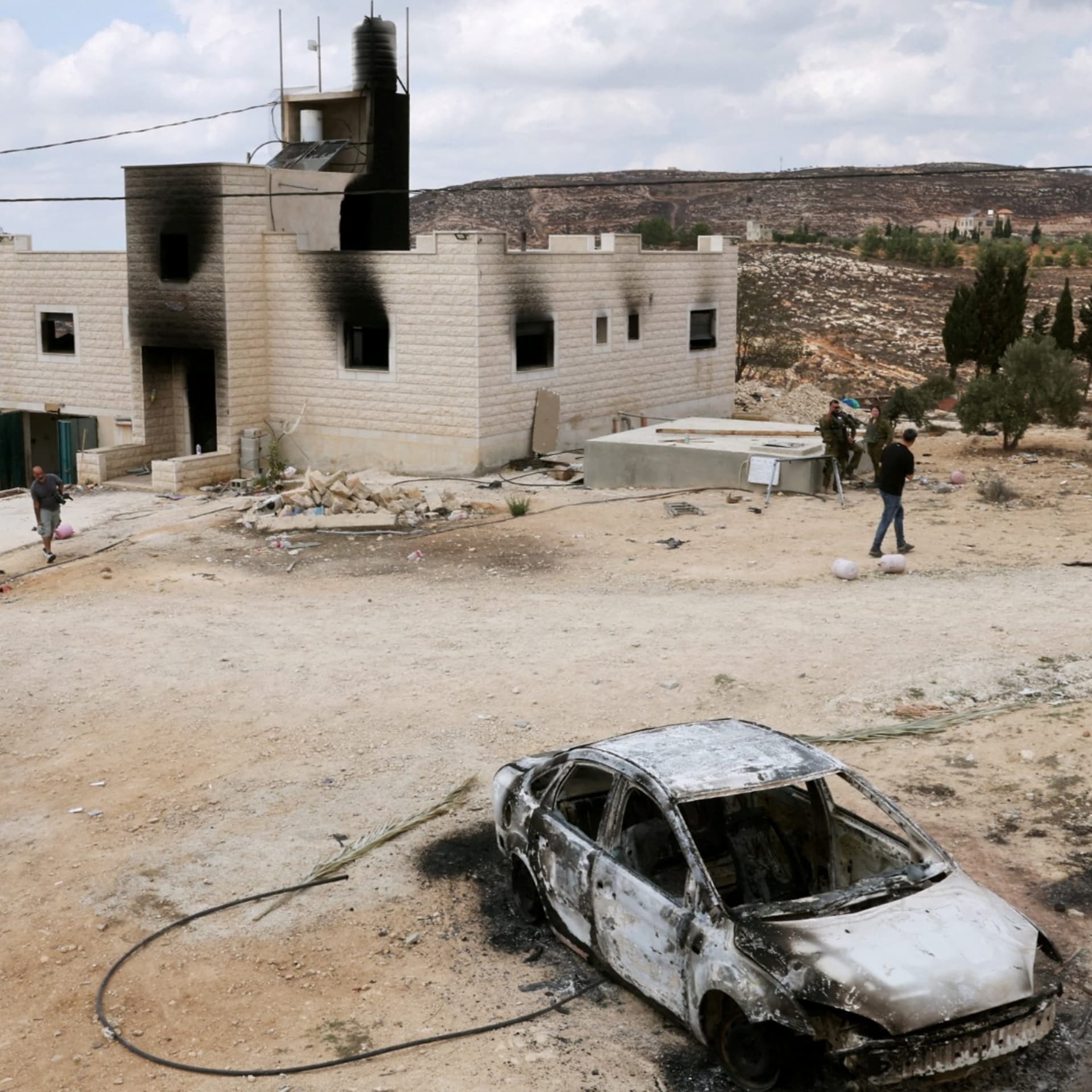
2:06First, to our top story. Things move fast in the Middle East. In our last podcast, we were reporting the first major breach of the ceasefire between Iran and Israel in two months. After Israel attacked Iranian-backed Hezbollah targets in Lebanon over the weekend, Iran responded by firing on Israel. Then Israel retaliated, and there was a back and forth of attacks, including an Israeli assault on a large petrochemical complex. But now Iran has announced an end of military operations against Israel, as long as they stop attacking Lebanon. That from Tehran, after a call from President Trump on social media for both sides to stop shooting.
2:48Before Iran's brief announcement it would stop, I spoke to Siavash Ardalan from BBC Persian about the latest attacks by Israel in the capital, Tehran and beyond. What we've been hearing has been just limited to news that the air defences have been activated. We don't know exactly which parts of Tehran have taken a hit after other strikes that Israel carried out hours before in Tehran and the areas surrounding it. Unlike the previous round, Iranians this time have been much more cautious in taking videos and publishing videos of points of impact or where Israel, or in that case, the U.S., has struck very much similar to the discipline showed in Arab countries in the region.
3:34But from what we've been hearing, it's not just been Tehran, but other major cities as well, Esfahan, Tabriz. These were not urban areas, but apparently military bases. The only place where it could be considered civilian is Israel's targeting of Iran's petrochemical industry in the city of Moshad in Khuzestan. Now, that was an area where Iran responded in kind by saying that it targeted the petrochemical installations in the city of Haifa. Siavash Ardalan. I asked our correspondent in Jerusalem, Yolan Nell, whether there'd been any response from Israel to Iran's announcement it was ending military operations.
4:17There's been no official response yet from the Israelis. The Israeli Security Cabinet is expected to meet later tonight. But before this announcement from Iran's armed forces, both Israel and Iran had said that they were preparing for fighting to go on at least for days. So clearly there was a lot of mediation in the region that was going on behind the scenes. President Trump also came out with that truth social post, telling both sides to immediately stop shooting. He must have seen his efforts really to kind of get a full peace deal over the line, potentially lying in ruins. There have been some reports I've seen in the Israeli media suggesting that there was a call between Mr.
4:57Trump and Israel's Prime Minister Benjamin Netanyahu. We know, of course, that these two leaders speak to each other regularly and were seeking confirmation about that. But when it comes to strikes on Lebanon and Iran saying there'll be more devastating attacks if Israel resumes those strikes, well, Israeli strikes have continued in southern Lebanon. And apparently, even since that announcement from Iran's armed forces came out. You've been telling us about the diplomacy that's been going back and forth, but you're on the ground. Can you tell us about the scale of the attacks we've seen in the last 24 hours?
5:31Well, this was definitely the most serious escalation that there's been since the ceasefire came into effect two months ago. And, you know, we had several rounds of rockets fired in this direction by the Iranians. And the Houthis also fired one or two missiles at Israel, according to Israeli defense officials. About 32 ballistic missiles came this way in total. and that was extremely alarming for people, although it was on the cards. And it was the first time in two months that people here in Jerusalem heard the sirens going off and had to run to their air raid shelters. We don't know at the moment full details of any damage that might have been caused.
6:15We know there have been interceptions of these missiles, but Israel operates rules of military censorship, so we don't always have full details immediately. We're not hearing at the moment any Israeli reports of casualties as a result of all these attacks. Yolanda Nell. Well, staying with this story, with more analysis on how things have unfolded over the last 24 hours, here's our chief international correspondent, Lise Doucette. It seems to have been a momentary spiral, all calm now, but with a warning from all sides that it could resume again. I think we're seeing yet more evidence of a new security doctrine among the leadership which has emerged in Iran through this war.
6:51You may remember in years past under the former Ayatollah, Ayatollah Ali Khamenei, we used to talk about Iran's strategic patience, playing the long game, exercising restraint, not attacking immediately, doing it at a time of their choosing. That is now done. This is one of the first times that Iran has attacked first against Israel, making it clear that it will go on the offensive. Although it's interesting, the foreign ministry is calling it defensive. The army is calling it offensive. making it clear that it will not step back because the hardliners used to criticize the moderates who were in power saying, you're showing restraint is a sign of weakness.
7:29Now they are the ones calling the shot. And this is doubly significant because it's also doing it on behalf of an ally. This is understood to be the first time as well that Iran has struck Israel because it believes, it continues to emphasize that the ceasefire must include the Lebanese front, must include Hezbollah. Iran is making it clear, and the message doesn't seem to have got through to President Trump, that for Iran, Hezbollah is not just a bargaining chip. The ties between Hezbollah and Iran go back many years. They are personal, they are political, they are religious, they are institutional.
8:04And Iran will not simply cast aside its support for Hezbollah. Our chief international correspondent, Lise Doucette. Now to Spain, where Pope Leo is on the third day of a visit. In a meeting with bishops, he spoke about what he described as the scourge of sexual violence by Catholic clergy and called for a culture of care in the church. Spain's National Ombudsman has estimated that around 200 ,000 children have suffered sexual abuse by clergy in Spain, dating back to 1940. Our correspondent Guy Hedgco is in Madrid and gave us this update. He gave a half-hour address to lawmakers in the Spanish Parliament in which he talked about a range of issues And then straight after that, he spoke to Spanish bishops.
8:50And that was when he made explicit comments about the issue of sexual abuse in the church. And he basically talked about the need to face up to it head on. He said that the church's response to this problem should be to respond with listening, truth, justice and reparation. and he called for an ever more determined commitment to prevention and a culture of care. Now, recently, the Catholic Church in Spain has reached an agreement with the Spanish government to provide reparations for victims of abuse. So these comments by the Pope certainly look like an endorsement of the agreement that has been reached there.
9:31The Pope also said that disclosures by clergy within the confessional should not be revealed. How will that be received by critics of the church? Yes, that's right. I mean, he said that confession preserves a sacred space of inner freedom where the believer can open his or her soul before God. Now, a number of countries, for example, France, have debated recently whether to force priests to report sexual abuse that is disclosed during confession. So this is quite a live issue in a number of countries. and clearly that the Pope doesn't want to see a change there. I think as far as critics go, I think there might be people who would see this as evidence that the Pope or the Church is not willing to follow through necessarily when it comes to issues of wanting to ensure that it's responding in the right way in terms of sexual abuse and so on.
10:28So I think there will be ammunition there for critics of the Church, certainly. Guy Hedgco. And now to news that the UK says it will become the first country in the world where it'll be impossible for children to take, share or view naked pictures online. Prime Minister Keir Starmer says it's now up to big tech companies like Apple and Google to solve this problem in three months or face legal consequences. And he says there are no excuses for those companies not to deliver. I'm calling on tech companies operating in this country to introduce device controls that prevent children from sending and receiving sexually explicit images, because this is not an impossible challenge.
11:11These are the sum of the most innovative companies in the world, and I believe they can solve it. Our correspondent Rob Watson told us more. We know what the ambition is, as we heard it there, and that is for Britain to become the country which stops Celia children, that is those under 16, from, as you say, either sharing, taking or sending sexually explicit images. I mean, I think we're a bit less clear on how that will work, and that's what we'll be looking out for. But I think what the government is pointing us towards and why they say they believe that the tech companies are capable of this, and by this they mean really Apple and Google, is that you would possibly use AI to deal with the sharing issue.
11:52That is, AI would know what was being shared. And then it would maybe possibly require software updates for the camera on your device to know what to ban an image if you were the person taking it was a certain age. But, you know, obviously not straightforward, Celia, but that's the ambition. OK, so that's the call from the government. What about this three month deadline, though? Have we heard anything from the tech companies? We've heard from Google who say they are deeply committed. I'm sort of paraphrasing what they said, deeply committed to protecting children online and that they are working constructively with UK partners.
12:30And what Apple has previously said is that it's already committed to age verification for its users. I mean, exactly how the government and the tech companies are going to work on this, I guess, is what we'll be looking out for in the next three months. I mean, I don't think there's any doubt that the government's preference would be that this was done voluntarily. but what the government is threatening, I believe, is things like criminal liability and fines. This all comes at a really interesting time in UK politics, doesn't it? I mean, we know that governments around the world are increasingly worried about children's activities online and many are considering social media bans.
13:07But is Keir Starmer trying to seize a political moment here at a time when his position is under threat? I think the answer for that is possibly yes, Celia. And look, there is no doubt there is gossip at Westminster about this idea of a legacy for Keir Starmer. And that's because there are many inside the governing Labour Party who don't actually think he's going to be around for much longer as prime minister and leader. And that perhaps his legacy could be making it more difficult for children to see harmful material, whether sharing images or using social media accounts. Rob Watson. And we have more on this story on our YouTube channel.
13:45Search for BBC News on YouTube and you'll find the Global News podcast in the podcast section. There's a new story available every weekday.
13:57Still to come in this podcast. He's performing as a magician. He's moving people emotionally. He's amazing them with magic. And if that isn't a magician, genuinely, I don't know what is. An AI humanoid robot is refused entry to the Magic Circle, the members association for magicians in Britain.
14:42the USA. Moto Casino is a free-to-play social casino. No purchase necessary. 21 plus to play. Void or prohibited. Sign up today for a generous welcome bonus. Moto Casino. America's social casino. Download the Moto Casino app today. Hey, it's Ryan Seacrest for Jewel Osco. For you, save days are here now through June 23rd. Find hot deals throughout the store and earn four times the points. Look for in-store tags to earn on eligible items from Angel Soft, Silk, All, Spam, Hormel, planters and canada dry then clip the offer in the app for automatic event long savings stack up those rewards to save even more enjoy savings on top of savings when you shop in store or online for easy pickup or delivery restrictions apply see the website for full terms and conditions i'm kai right i'm carter sherman welcome to stateside with kai and carter we're a new show from the guardian we're talking to big thinkers and the best journalists just trying to understand the world through smart conversation and honest reporting we don't have billionaires telling us what to say.
15:40Stateside with Kyan Carter will come out three times a week, Monday, Wednesday, and Friday, starting May 13th. Subscribe on YouTube or wherever you get your podcasts.
15:59Next to North Korea's capital and the sounds of China's leader, Xi Jinping, being welcomed as he enters Kim Il-sung Square right in the heart of Pyongyang.
16:14Mr. Xi has arrived for a two-day visit. It's his first visit to see his neighbor in seven years. The two nations have a long history, often describing their relationship as forged in blood. That's a reference to the Korean War, which happened more than seven decades ago when China had just gone through its communist revolution. But in the last few years, things have changed. North Korea is now developing close and very lucrative ties with Russia. And Pyongyang is also a growing military power. Xi's visit is happening just after North Korea unveiled a new nuclear material facility last week. North Korea's Kim Jong-un has been calling for an exponential expansion of the country's nuclear arsenal.
16:57Our Seoul correspondent, Jake Kwan, told us more. I think Xi Jinping is seeing how North Korea, this traditional ally, and probably, you know, very much one of its closest ally, start to leave China's sphere of influence. We saw Pyongyang getting really chummy with Moscow. We saw Kim Jong-un sending thousands of troops to Ukraine war. And there were more and more kind of trade in oil, fuel and other supply weapons between those two countries. And for China, North Korea is both a buffer state and it's also a bit of a burden. They want to keep a close control, close leash on Pyongyang. So when North Korea start deciding things for their own, and also when they step up weapons tests, for example, what they're afraid of is a scenario where America and other Western countries start stepping up an arms race in Asia and bringing more and more troops or strategic weapons to China's neighborhood.
17:54So what Xi Jinping wants to do is to affirm that, again, North Korea is within their power and North Korea is one of its closest ally and they still have full control over North Korea. Jake, you mentioned North Korea's military ambitions. You're speaking to me from just over the border in South Korea. Is the region really looking at North Korea as a de facto nuclear state now? Well, here's the thing. I think when you speak to a lot of experts, a lot of them have been calling for a more sober look at the situation. North Korea has been saying for years now that their nuclear weapons is not going away.
18:34We just heard last week Kim Jong-un saying that their nuclear weapons making capability is double the efficiency from years ago. Yesterday, Kim Jong-un's sister, Kim Yo-jong, said that they're never, ever giving up nuclear weapons, just on the eve of Xi Jinping coming to visit the country. So a lot of people are very skeptical whether North Korea could ever be pushed to give up on their nuclear weapons. And this is actually one of the things that we're watching in Xi Jinping's visit. Will he say something about North Korea's nuclear weapons program, which is something that China previously opposed?
19:08And how much does North Korea rely on China for support now? Well, for North Korea, China has always been a lifeline. Trade with China is a good 80-90 % of North Korea's economy. And it really is depending hugely on China for investment or technology, smartphones, you name it. A lot of things come through the northern border. So for North Korea, China is an ally that they cannot lose. Jake Kwan. The Italian Ministry of Culture has launched a new online collection of the drawings and notebooks of Leonardo da Vinci, which have been brought together for the first time in nearly 500 years. The work had been divided up by a student of da Vinci's after his death.
19:56Now, the online collection called Leonardo Tecca unites digitized archives from Milan, Florence, and even the Royal Collection from Windsor Castle here in the UK. Roberto Ferrari, the executive director of the Museo Galileo in Florence, has been speaking to Rebecca Kesby. When we think of Leonardo da Vinci, we immediately picture the paintings and Mona Lisa, the Last Supper. But the thing is that beyond the 20 paintings attributed to him, we do have nearly 4 ,000 manuscript pages, 4 ,000. And this written legacy is so much less known than the pictorial one. This is what the Leonardo Tecca precisely what is about.
20:41It's a remarkable opportunity to explore this artistic and scientific culture of the Renaissance through one of his most extraordinary figures. Not just a painter, the thinker, the scientist, the engineer, the inventor, as he wrote and sketched his way through ideas. It is. It's so exciting. I mean, he died more than 500 years ago. But I mean, his technical ingenuity and creativity was so far ahead of its time, wasn't it? I mean, he was dreaming up things that then others actually made inventions of things. I mean, he's credited with having an idea for a helicopter or some sort of flying machine, maybe the modern tank.
21:23And it was hundreds of years before anybody else actually made those things. Exactly. And even when he didn't succeed, this is relevant for us. But the problem is that we would like also to encourage young scholars to engage with Leonardo's manuscripts. It is a genuinely difficult undertaking, made even harder by the fact that in the 16th century, a sculptor named Pompeo Leone physically cut up many of the pages and rearranged them. So the material itself comes to us already fragmented and disrupted. So the Leonardo Teca is here to help break down those barriers. Everything is at fingertips also for those who are just curious.
22:08One of the collections is here, is under the Royal Collection, I think. It's at Windsor Castle. How did that happen? How did the British monarchs get hold of this stuff? This story starts when Leonardo dies, and the manuscripts came into the possession of an Italian sculptor, Pompeo Leoni, who dismounted and cut the folios, separating the materials into two albums, according to his own judgment. But what happened is that in the early 17th century, Leoni's son-in-law inherited the manuscripts and sold the most substantial album to Count Galeazzo Arconati, who donated it to the Veneranda Bibliotheca Ambrosiana in 1637.
22:54The other album containing the figurative works was brought to England in the 1620s and entered the Royal Collection around 1670, probably as a gift to Charles II. Roberto Ferrari speaking to Rebecca Kesby. Divers have filmed rare underwater footage of a great white shark swimming in the Mediterranean Sea. Swimmers shouldn't worry. Conservationists hope this spotting will encourage protection efforts for the species, as Helen Briggs reports. The great white shark is the largest predatory fish alive today, known for its streamlined grey body, highly tuned senses and speed. They're typically found off the shores of South Africa and Australia, but a different population has lived in the Mediterranean for half a million years or more.
23:43This top predator is critically endangered in the Med, and sightings are very rare. Dirk Remmens was diving to a wreck between Sicily and the Tunisian coast to clear lost fishing nets when he came close to the huge Great White. He says he was astonished. We, as a team of three, saw this huge shark. Swam away, turned around, came back towards us. And in fact, my fingers were trembling when I was trying to get the camera operating. But on the other hand, I think my biggest fear was that I couldn't get the camera running. He says people shouldn't be afraid because a shark was many miles offshore and scientists hope the sighting will encourage governments to create marine protected areas in Mediterranean waters to protect sharks, rays and other dwindling species.
24:30And you can see Dirk Remmer's footage of the shark on the BBC News website. And finally, we end the programme with a fierce debate in the world of magic. David, can I ask you a question? Am I real? Daryl, the AI humanoid robot, has been making a name for himself on stage with what reviewers describe as extraordinary performances. But it's not been enough for him to be granted permission to join the magic circle. That's the Members Association for Magicians in Britain. It says that despite his impressive tricks, the robot lacks the human touch. Amal Rajan has been speaking to David Penn, who bought Daryl for$52 ,000 in China, and to Marvin Burglis, president of the Magic Circle, who turned down the request for the robots membership.
25:21Amal started off by asking David on what grounds he submitted Daryl to join the elite group of magicians. On what grounds? Genuinely, I don't understand that question because he's on stage. He's performing as a magician. He's moving people emotionally. He's amazing them with magic. He's creating empathy. And when he leaves the stage, he's getting standing ovations. And if that isn't a magician, genuinely, I don't know what is. Well, I know the man to ask. It's Marvin Burglass. What do you say, Marvin? Well, I've seen Daryl perform, and he is absolutely extraordinary. The technology and ingenuity is genuinely impressive.
26:00But there's no doubt that advances in AI, robotics and immersive technology are opening fascinating new doors for the art of magic. But for me, magic is more than simply fooling people. The very best magicians create wonder, tension, laughter and emotion. And it makes the heads on the back of the neck stand up. Sounds like that's exactly what Daryl's doing, according to David. We just heard he's on stage, he's performing, he's generating empathy, he's moving people, standing ovations, mesmerising people. Doesn't he satisfy all of the conditions you've just laid? He satisfies most of them. And one day I'm sure we will have robots as members.
26:35But for the moment, reading an audience and responding in the moment and creating a shared experience of astonishment, I think they still need the human heartbeat behind it. So, David, the argument there from Marvin is that Daryl, it is a he, isn't it? Daryl has a gender, yes, or indeed a sex. The argument is that he can inspire people, move people, generate empathy, but he can't respond in the moment. And that inability to respond in the moment places some sort of a limitation on his ability to connect with other sapiens. Well, that's part of the illusion of the performance that he does respond in the moment.
Read the full transcript
27:10I'd invite people to come and see it live. Marvin used the word wonder. It's a wonderful word like astonishment that we use in the magic world all the time. Technology will never replace wonder, of course. I acknowledge that. But it certainly does amplify it. And when you see Daryl performing live, when he asked the question, you played the soundbite, there's a part in my show where we have a monologue where he actually asked me if he is real. But it's the experience that he creates that is real. Daryl might not be real in and of himself, but the experience that he creates is real. And that experience is magic, which is why I'm so disappointed that the Magic Circle have not acknowledged that on this occasion.
27:55I'm a proud member. I just wish Daryl could join me. David Penn, Daryl the Robot's biggest supporter, and Marvin Burglass, president of the Magic Circle. And that's all from us for now. If you want to get in touch, you can email us at globalpodcast at bbc.co.uk. You can also find us on X at BBC World Service. Use the hashtag Global News Pod. And don't forget our sister podcast, The Global Story, which goes in-depth and beyond the headlines on one big story. Today, we explore the Chinese leader Xi Jinping's trip to North Korea. This edition of the Global News Podcast was mixed by Chris Ablakwa and the producer was Steven Yensen.
28:37The editor is Karen Martin. I'm Celia Hatton. Until next time, goodbye.
28:48I'm Kai Wright. I'm Carter Sherman. Welcome to Stateside with Kai and Carter. We're a new show from The Guardian. We're talking to big thinkers and the best journalists, just trying to understand the world through smart conversation and honest reporting. We don't have billionaires telling us what to say. Stateside with Kai and Carter will come out three times a week, Monday, Wednesday, and Friday, starting May 13th. Subscribe on YouTube or wherever you get your podcasts.
From the publisher
Iran's military has said it's halting military operations against Israel, after the first direct hostilities between the two sides in two months. It said it had delivered what it called a 'painful response' to Israel, warning it against further attacks, including in southern Lebanon. Also: On a visit to Spain, the Pope has been speaking about child abuse carried out by members of the Catholic Church. The British prime minister Keir Starmer gives tech companies a three-month deadline to stop children from seeing or sending explicit images. Chinese President Xi Jinping arrives in North Korea for a two-day visit, his first to the country in seven years. And can a AI humanoid robot perform as well as a human magician?
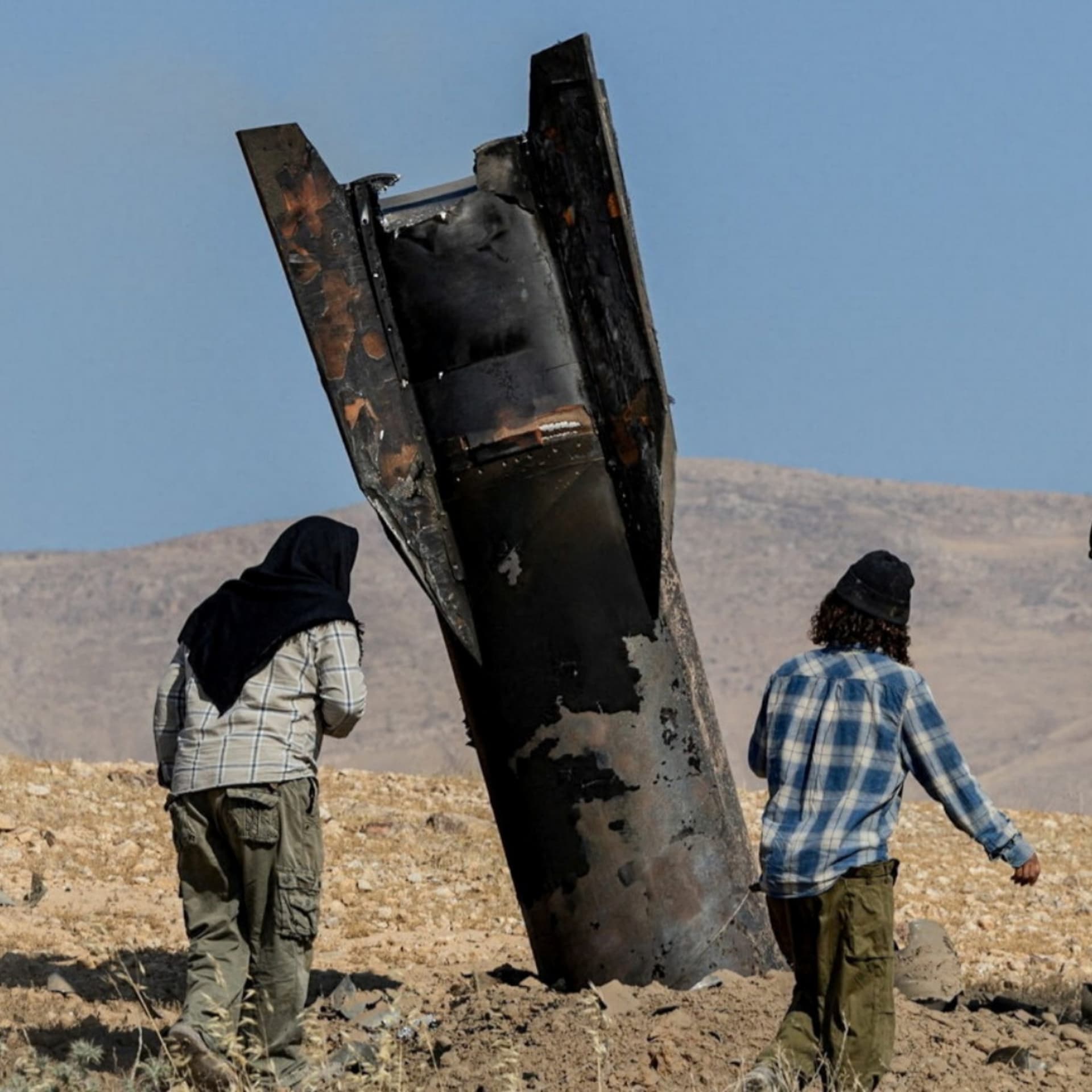
The Global News Podcast brings you the breaking news you need to hear, as it happens. Listen for the latest headlines and current affairs from around the world. Politics, economics, climate, business, technology, health – we cover it all with expert analysis and insight. Get the news that matters, delivered twice a day on weekdays and daily at weekends, plus special bonus episodes reacting to urgent breaking stories. Follow or subscribe now and never miss a moment. Get in touch: globalpodcast@bbc.co.uk Photo: Israeli settlers stand next to part of a missile protruding from the ground, following strikes from Iran in the central Israeli-occupied West Bank. Credit: REUTERS