
In short
Global News Podcast Episode Summary: Iran says US Kharg Island attack a failure
Episode Overview Title: Iran says US Kharg Island attack a failure Date: [Insert Date] Host: Oliver Conway Key Topics: US-Iran tensions, military actions, environmental impact of war, regional dynamics involving Hamas, Qatar, and Israel.
Key Highlights
US Attack on Kharg Island
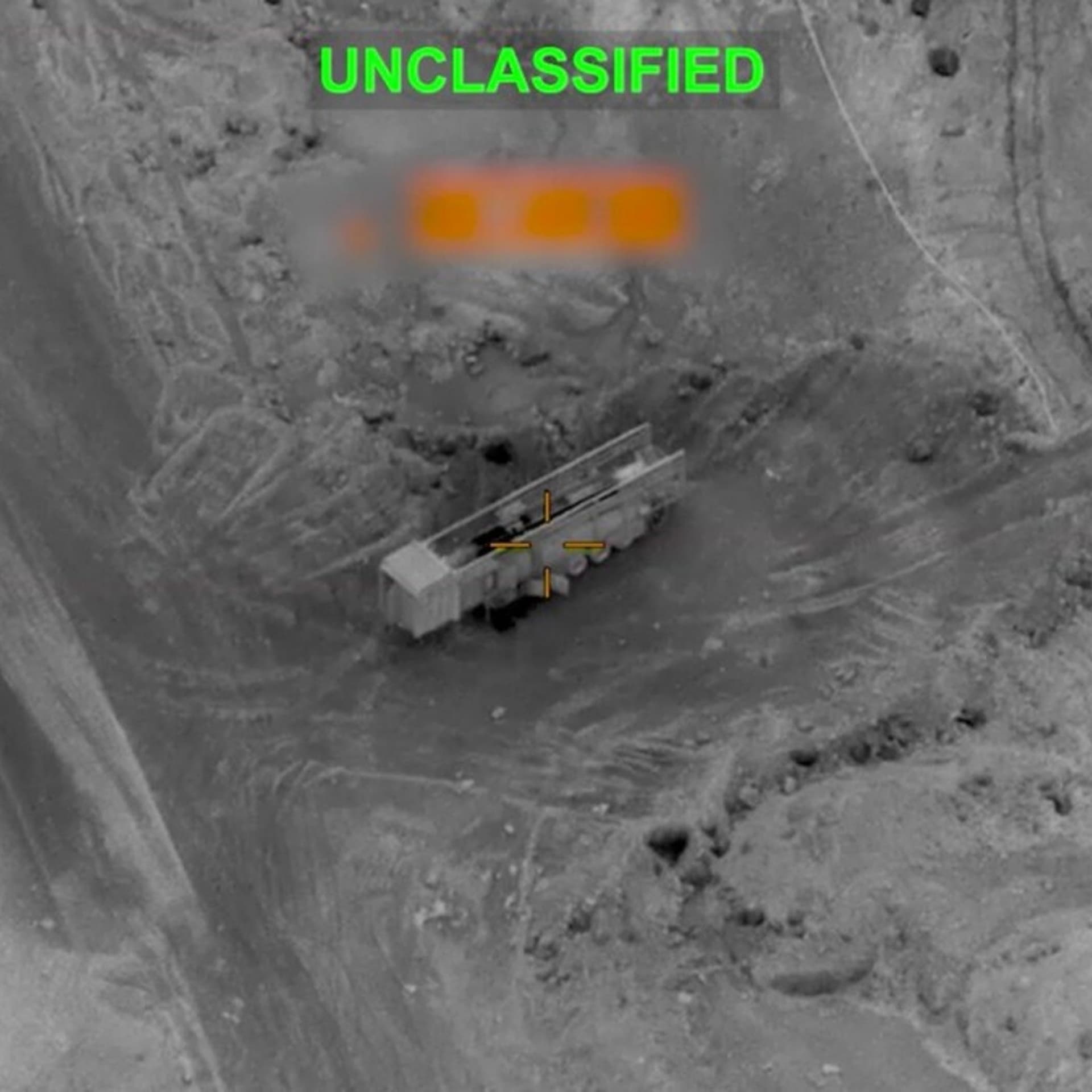
- President Trump's Assertion: Claimed that the US military had successfully targeted military objectives on Iran's oil-exporting Kharg Island, threatening further action against Iranian oil infrastructure if Iranian aggression continues in the Strait of Hormuz.
- Iran's Response: Tehran labeled the US attack a failure and warned that any strikes on Iranian energy facilities would result in retaliatory actions against US-linked oil interests in the region.
Regional Evacuations and Military Movements
- Qatar Evacuations: Residents in various areas of Qatar were instructed to evacuate due to potential Iranian missile threats, particularly around US economic interests.
- Military Build-Up: The US military is sending additional forces, including warships and Marines, to the region, suggesting the potential for ground operations.
Environmental Impact of Conflict
- Toxic Consequences: The war has led to significant environmental degradation, with reports of oil fires and toxic smoke affecting air quality in Iran, raising concerns over public health.
- Health Crisis: Iranian authorities reported a rise in emergency health cases related to respiratory issues, indicating the severe impact of warfare on civilian health.
Hamas’ Intervention
- Rare Rebuke: Hamas called on Iran to cease its missile attacks on neighboring states, highlighting the complex dynamics within the region where Hamas relies on Iran yet seeks to maintain relations with other nations.
Historical Context and Risks
- Comparative Analysis: The situation has drawn parallels to historical military interventions, raising concerns about the long-term implications of US involvement, particularly amid rising oil prices and economic repercussions for Gulf states.
Regional Responses and Developments
- Israeli Military Actions: Israel continues to target Iranian interests, with airstrikes reported on Hezbollah positions in Lebanon, asserting its stance in the ongoing conflict.
- Concerns for Gulf States: The Gulf Arab states are deeply concerned about the repercussions of US actions, fearing increased instability and economic harm as regional tensions rise.
Key Takeaways
- The conflict between the US and Iran escalates with significant military and environmental implications.
- Regional players like Hamas and Gulf states are navigating complex relationships as the situation unfolds.
- The health and environmental impact of warfare poses serious long-term challenges, particularly for Iranian civilians.
- The historical context of military interventions serves as a cautionary tale for current US strategies in the Middle East.
Conclusion The episode illustrates the intricate web of military, environmental, and geopolitical consequences stemming from the US-Iran conflict. As tensions rise, the involvement of regional powers and the impact on civilian populations remain critical areas of concern.
---
For further insights and updates, follow the Global News Podcast or reach out via [globalpodcast@bbc.co.uk](mailto:globalpodcast@bbc.co.uk).
Written by AI. May contain mistakes. Listen to the episode to check what was said.
Chapters
Tap a time to open that second in VOIran Claims US Attack Failure
1:08 to 1:40
Iranian news reports that a US attack on Kharg Island was unsuccessful.
“Hello, I'm Oliver Conway with the latest on the US-Israeli war on Iran.”
Escalation of Military Tensions
1:40 to 2:58
Discussion on the serious implications of military actions in the region.
“How long will the US-Israeli war on Iran continue?”
Oil Market Implications
2:58 to 3:56
Exploration of the economic impact of US strikes and potential oil market consequences.
“It's known as the tanker war of the 1980s because the Iraqi air force would bomb it several times, trying to hurt Iran's economy.”
Historical Context of Military Interventions
3:56 to 5:41
Analysis of past military interventions and their long-term effects.
“Because if he plans to invade and occupy Harge Island, that is going to bog the US down for an indefinite amount of time.”
Iran's Military Capabilities
5:41 to 8:20
Overview of Iran's drone warfare and military tactics amidst ongoing conflict.
“It's ruining the tourism industry in this part of the world, which in a country, in a place like Dubai, is hugely important.”
Regional Reactions to Conflict
8:20 to 12:18
Insights into how neighboring countries are responding to the escalating conflict.
“You can launch them from the back of a truck, from a cave, from pretty much anywhere.”
Impact on Civilians in Iran
12:18 to 14:03
Civilians in Iran express their experiences and fears amidst the conflict.
“The Palestinian group that's backed by Iran fought a devastating two-year war with Israel in Gaza.”
The Escalating Conflict with Iran
14:03 to 14:51
Explore the intensifying struggle between the US, Israel, and Iran's regime.
“and the Israeli Prime Minister Benjamin Netanyahu is ramping up and entering the decisive stretch that will continue as long as necessary.”
Impact on Lebanese Civilians
14:52 to 18:12
Hear firsthand accounts of the emotional toll on civilians in Iran and Lebanon.
“Another woman from the city of Karaj said she is wrecked mentally and emotionally.”
Environmental Consequences of War
18:13 to 20:24
Understand the environmental damage and health effects resulting from ongoing conflicts.
“As we were hearing earlier, the war has already had a big impact on the global economy.”
Transcript
Automatic transcript. May contain errors.0:00This BBC podcast is supported by ads outside the UK.
0:30Be your best you all year round. Please visit mentallyhealthynation.org to learn more. It's 2009 and we're in the German mountains. A man straps himself into a car on the world's most dangerous racetrack. He whispers to himself, It's time to put my balls on the dashboard. As he starts the engine. In 15 minutes, he's in an ambulance, unconscious. In 15 years, he's a billionaire. This is Total Wolf, Formula One's most powerful team boss and the breakout star of Drive to Survive. This week on Good Bad Billionaire, how Toto Wolff made his billions. Listen wherever you get your BBC podcasts. This is an extra edition of the Global News Podcast from the BBC World Service.
1:14Hello, I'm Oliver Conway with the latest on the US-Israeli war on Iran. We're recording this at 13 hours GMT. An Iranian news agency says a US attack on its oil-exporting island failed to achieve its goals. President Trump says military targets on Haag were obliterated. In a rare rebuke to its ally, the Palestinian militant group Hamas has called on Iran to stop its attacks on neighbouring countries. And we look at the environmental impact of the war.
1:47How long will the US-Israeli war on Iran continue? Donald Trump said on Friday he didn't think it would last long, but added it will end, quote, when I feel it in my bones. The US is sending additional warships and marines to the region, suggesting the possibility of American boots on the ground in the near future. However, President Trump is under pressure at home over the war's impact on oil prices. On Friday, he said the US had obliterated military targets on the Iranian oil hub of Haag and threatened to target the oil infrastructure there if Iran stops ships going through the Strait of Hormuz.
2:24Iran responded by saying any attacks on its energy facilities would lead to strikes on US oil interests in the region. So what are we to make of it all? Our security correspondent Frank Gardner is in the Saudi capital, Riyadh. If you strip away the kind of bombast from this, because there's a certain degree of chest beating by both sides here, if you do this, I'll do that, strip that away, and this is quite a serious escalation, because Kharj Island, it's been described as the beating heart of Iran's oil industry. 90 % of its oil exports go out through that terminal. It's a small island in the north of the Gulf.
2:57It featured quite prominently in the eight-year Iran-Iraq war. It's known as the tanker war of the 1980s because the Iraqi air force would bomb it several times, trying to hurt Iran's economy. So there's no question that taking out the military who guard it has been a blow to Iran, and it would have been an even bigger blow if it knocked out its actual oil facilities as well. It's slightly self-defeating for the Americans, this, because if you knock out Haraj Island altogether, then that takes between one to two million barrels per day off the oil markets. And the price is already above$100 a barrel.
3:36Great for Russia, the money is flowing into Moscow's coffers, not great for the US consumer or for Donald Trump's MAGA base. So there are risks in this. I'm not sure what we're to make of this flotilla, this ARG, this amphibious ready group that he's ordered to sail from the Sea of Japan westwards to the Gulf, containing 2000 plus US Marines and several thousand more sailors. Because if he plans to invade and occupy Harge Island, that is going to bog the US down for an indefinite amount of time. This is exactly what Trump was voted into office not to do. Yeah, because for a start, it'll take a couple of weeks to get there.
4:17President Trump has recently said, I don't think it's going to be long until this is over. But sending troops suggests it's going to be a longer campaign. It does. And, you know, there is a parallel here. If we pull out and look at all of this objectively and historically, there is a parallel with the Tony Blair years, where there were a couple of very quick, successful in and out campaigns. Sirion in 1999 and Kosovo took a bit longer, but both were successful military interventions without too many repercussions. Then came Afghanistan and then came Iraq. In both cases, Britain getting bogged down and America bogged down for years and years.
5:02And in the case of Donald Trump's administration, you had the quick one and done, as they called it in the States, intervention in Venezuela, slightly mixed outcome, but militarily, it was very successful. And in intelligence terms, it was a huge success. And they've been able to interdict tankers and seize Russian ghost fleet tankers and so on. But this is different. This is a miscalculation, I think, because the Gulf Arab states where I'm speaking to you from, they all said, pretty much all said, don't do this. This is going to hurt everybody, especially us. You know, you might win this militarily, but we're going to pay the consequences.
5:38And guess what? That's exactly what's happening. And it's driving up oil prices. It's ruining the tourism industry in this part of the world, which in a country, in a place like Dubai, is hugely important. But the biggest miscalculation is the US seems to think that it would be able to intimidate Iran to come to the negotiating table and comply with US demands. And that bit isn't working. The Iranians, yes, they've been absolutely battered, the Iranian regime. They've lost a huge number of commanders, but they haven't collapsed yet. They've only got to survive to win this. And currently they are surviving because they are still sending these drones into US and allied targets in the region.
6:23Yeah, I mean, I spent part of yesterday out in the desert visiting a previously undisclosed British Army unit. Ben Wallace, the previous UK Defence Secretary, the Minister for Defence, sent this artillery air defence unit from Britain to Saudi Arabia, what, nearly four years ago now, and they've been practising to shoot down drones. They've got these things called stormer armoured vehicles. They're short-range air defence. Their job is to help defend Saudi critical national infrastructure, which is vulnerable to attack. I mean, you know, if you look at, say, oil or petrochemical, these are huge, great big targets, big facilities.
7:00And I don't know if you remember, seven years ago, there was a devastating attack by missiles and drones on Saudi Aramco's petrochemical facilities at places called Abqaiq in Kharaes in eastern Saudi. And I went to visit the aftermath of that, and it knocked half of Saudi's oil exports off the market for several days. And that was a bit of a wake-up call to the Saudis as to just how vulnerable they are to Iranian drones. Seven years on, drones have become a part of modern warfare, an integral part of it. And the Iranians, even if you knock out all their ballistic missiles, they've got an almost inexhaustible supply of these nasty Shahid drones.
7:39They're about, I don't know, two and a half metres long. They pack 90 kilograms of high explosive and they can slam into high rise buildings, into embassies, into office blocks, into hotels. You know, they're not huge, but they can ruin your entire day. So it's what Ukrainians have been putting up with for four years. You know, they all know too much about these. I mean, it was the equivalent of the doodlebugs that Londoners had to endure after the Blitz, that these things would come over sent by Germany. And there are so many of them that some of them get through. They can shoot down most of them, but some of them get through and they wreak a lot of damage.
8:18And Iran's got a lot of these. You can launch them from the back of a truck, from a cave, from pretty much anywhere. And it can reproduce up to 500 of these underground every month. So Iran is all about playing the long game because they know that Donald Trump hasn't got the patience to do that. He wants this to be won and done, declare victory, job done, mission accomplished, off we go. But Iran's still going to be there and so is the Islamic Republic at this rate. Frank Gardner in Saudi Arabia. In the past few hours, India says two of its tankers have crossed through the Strait of Hormuz after being granted permission by Iran following high-level talks.
8:58Indian officials said the vessels were carrying liquid petroleum gas and were headed to Indian ports. Iran's ambassador to India described the two nations as friends with shared interests. Officials in the UAE say they are working to contain a fire at one of the largest oil storage locations in the Middle East, after it was hit by falling debris from a downed drone. The blaze at Fujairah has reportedly caused the loading of oil to be suspended. Earlier in another Gulf state, Qatar, evacuation orders were issued in several areas mainly linked to US economic interests, after Iran described them as legitimate targets.
9:37I heard more from our correspondent in Doha, Barbara Pletasha. These are areas where you do have some US economic interests. Now, the Interior Ministry did not specify the areas when it put out the notice of the evacuations. But from what we understand where people received alerts, One of them was the center of the city in a place called Musharib. So you have there companies like Google and American Express, also some Qatari government offices. And then there is a place that is known as Education City. It's a large 12-acre campus that also has a technical compound. And there you have a presence of Microsoft.
10:13And there were alerts there for evacuation as well, presumably because of the Microsoft office. But there are also branches of six American universities there. And where would these people be going once they've evacuated? Well, we didn't get that information, but there have been evacuations here before. There was a similar area-specific evacuation, I think, last week around the U.S. Embassy, and the Qatari Interior Ministry has said that they provide places for them. So they have a system for evacuations when they need to happen. What we heard was that the evacuation order in Musharab came through just after midnight, I think, and people then rushed to underground car parks to take shelter because the alert said evacuate immediately to the nearest safe place.
10:58And then we had that enormous explosion that echoed around the city just at 1.30 in the morning. So that was an immediate threat, it seems. But in terms of whether they have to stay longer before they can go back, I think the government is going to make arrangements for them. And briefly, what is the view of Qatar in terms of how long this will continue? Well, I think it's like everyone else. They're all wondering how long it will continue. And their big concern is how much of an impact it will continue to have as it continues. Certainly, as Frank was saying, it has affected the economy in the tourism, the oil and so on, as we've been reporting.
11:34But then also, once it ends, what will they be left with? The Americans are looking for a victory that they can then say, we've done it and we can go. But the Gulf Arab states, including Qatar, are going to be left with whatever the result is. with an Iran that has been quite radically bombarded, but the regime is still in place, possibly in a more hardline and radical form. So there's a lot of concerns here. I would say that in Qatar, life is a bit surreal because you don't have that many attacks and they're usually intercepted. That's on the surface. Underneath, there's a great deal of anxiety about what's going on.
12:08Barbara Pletasha in the Qatari capital, Doha. Well, in an unusual intervention, Hamas has urged Iran to stop firing missiles and drones at neighbouring states. The Palestinian group that's backed by Iran fought a devastating two-year war with Israel in Gaza. With more details, here's Elektra Naismith. This statement is a rare rebuke from Hamas of its main ally and sponsor. While it affirmed Iran's right to respond to US and Israeli aggression, Hamas called on Tehran to stop targeting its neighbours. It's a significant development for the Palestinian group and highlights Hamas's tricky position.
12:44Tehran is a major financial backer, providing weapons, training and technology. In turn, Hamas is a key regional proxy, a member of Iran's Axis of Resistance, a loose coalition aimed at combating US and Israeli influence. But Turkey is also a big backer, providing significant financial and political support, as is Qatar, which hosts Hamas's political office and provides yet more financial resources. Both have come under Iranian attack. Hamas says Israel is trying to sow discord between Iran and its Islamic neighbours. It's called for all countries in the region to cooperate and has reportedly already reached out to some, including Qatar, Turkey and Iraq.
13:25This is a war that will benefit few, if anybody in the region. That is except for Israel. Eletra Naismith. Israel is reported continuing Iranian airstrikes on its territory, most recently over the southern town of Elat. Air defences were triggered and no damage or casualties have been reported. Overnight, one airstrike caused a building in the central town of Shoham to catch fire. Other missiles also exploded. No casualties have been reported there. The Israeli defence minister, Israel Katz, says the conflict is entering a decisive phase. The global and regional struggle against Iran, led by the US President Donald Trump and the Israeli Prime Minister Benjamin Netanyahu is ramping up and entering the decisive stretch that will continue as long as necessary.
14:14Iran is engaging in regional terrorism and extortion meant to deter Israel and the United States from pressing on with the campaign and is receiving an uncompromising response which is strong as steel. We are entering the decisive phase of the struggle between the regime's attempts to survive while causing increasing suffering to the Iranian people. Only the Iranian people can put an end to this with a determined struggle until they overthrow the terrorist regime and secure the salvation of Iran. Well, residents of cities in Iran have said they were hit hard on Friday night. A woman in her 20s in the capital Tehran told the BBC, something exploded nearby and shook the house to the core.
14:55It was never like this. My heart was pounding. Another woman from the city of Karaj said she is wrecked mentally and emotionally. My life is basically paralysed, she said. Most of my time during the day goes to checking the news and constantly checking on people I know. Meanwhile, Israel is continuing to target Hezbollah command centres in the Lebanese capital, Beirut, accusing the group of making extensive military use of ambulances and medical facilities. Lebanon says Israeli strikes have killed 26 paramedics since the conflict resumed on 2 March. The French President Emmanuel Macron has offered to facilitate ceasefire discussions between Israel and Lebanon.
15:37Our correspondent in Beirut is Lina Sinjab. There were two attacks today on paramedics. The first was like at least 12 were killed. And earlier in the week there was also another attack on paramedics where two people were killed. And apparently in the second attack the number of paramedics have risen to reach this number. And this is happening as Israeli air strikes continue to ponder on the city here in Beirut or in the south. And the diplomatic efforts by the government are on the way. This message of direct negotiations with the Israelis we've heard from the Lebanese president earlier in the week, where he's calling on the international community to help mediate and get these direct talks.
16:22And of course, France has good relationship with Lebanon and is keen to find a solution. But the problem is, who is the decision maker? I mean, Lebanon has a sort of a shadow state which is run by Hezbollah that is deciding the fate of the whole country and the fate of the Shia community. Hezbollah launched this war and dragged Lebanon into this war and continues to fire rockets into Israel and continues to assert its position despite calls from the government to ban its military and security activities, despite anger from the community and anger from the government, and even worries about the split between the society and the army trying to control the situation, they're continuing, they make statements that their fight is a legitimate one, they make common operations with the Iranians, and now they're coming with statements saying they are ready to fight for a long, long time, even till the end of their presence or the end of Israeli's occupation to the south.
17:24And this is really a big statement coming from a group that has been hammered and crippled by Israeli attacks in 2024. It shows that they've managed to rearm themselves and prepare themselves for such an operation. They even said that they were waiting for the right moment to happen, tying their battle to the Iranian ones. But for many here, this is totally against the interests of the country, the safety and security of the country, and certainly the safety and security of the Shia community, who are on the go, on the run in hundreds of thousands. Now we have reached 800 ,000 of displaced Lebanese, mostly from the Shia community, simply because of a decision by Hezbollah to fight this war against Israel.
18:10Lina Sinjab in Beirut. As we were hearing earlier, the war has already had a big impact on the global economy. But what about the implications for the environment? Thick toxic smoke and black acid rain have been seen blanketing Iran's capital Tehran after missiles damaged oil depots and refineries. Our science reporter Roland Pease spoke to Julian Warreger. The videos of the blackened skies of Tehran were pretty horrific. It did remind me of the end of the first Gulf War back in 1991. You may remember that as they were retreating, the Iraqi army from Kuwait, they sabotaged 800 oil wells in Kuwait.
18:49And the whole skies back then looked apocalyptic. And I did see that there were reports of black rain in that occasion as well, which reached as far as Afghanistan. In subsequent reports, they described the black rain as unburned oil. Also, what was happening was the ferocity of the fires was moving the air so much that it was carrying up everything around it, including unburned hydrocarbons, which then drifted around. And I think that's what some of the unburned oil then was just condensing and raining out. There are descriptions of puddles of oil and pools in the desert from that. Though it could also be that there's soot dissolved in ordinary rainwater.
19:29The soot particles can trigger rain. So that's another possible explanation. Within those plumes, there's going to be so-called polyaromatic hydrocarbons. These are forms of benzene, which are very bad for health. There could be dioxins, which are well-known toxins. I saw descriptions of burning sensations, which could come from there's a lot of sulfur in this kind of oil. There's also nitrogen burning in there, and that dissolves, and that makes acid rain. So pretty nasty stuff. Yeah, I mean, nasty initially, but I mean, in terms of the health effects going forward, Presumably some of them we don't know about yet and won't for a while, perhaps.
20:03Absolutely. I did see that the Iranian Health Ministry reported 170 ,000 people seeking emergency health care in just one week. Relating to this, the heart and respiratory problems, they did add that that's a 20 to 25 percent rise above normal level. Tehran is already actually one of the most polluted cities in the world. Partly it's geography, partly because of the aging lorries that are driving around. There are a large part of it. The trouble is that there's no scientific information either out of the capital. So they've no idea what the air quality is at the moment. But it is a very acute thing.
20:40So what persists is going to be unknown. There's one other thing which I did read, which is they use a particular form of oil in Iran, which is called mazout, which is rather thick and nasty. has very high levels of sulfur in it. So that also, if that's been burned in these fires, that's going to be a particular reason why there's a problem. BBC science reporter Roland Pease. And that is all from us for now, but the Global News podcast will be back soon. This edition was mixed by Craig Kingham and produced by Richard Hamilton. Our editors, Karen Martin. I'm Oliver Conway. Until next time, goodbye.
21:27It's 2009 and we're in the German mountains. A man straps himself into a car on the world's most dangerous racetrack. He whispers to himself, It's time to put my balls on the dashboard. As he starts the engine. In 15 minutes, he's in an ambulance, unconscious. In 15 years, he's a billionaire. This is Toto Wolff, Formula One's most powerful team boss and the breakout star of Drive to Survive. This week on Good Bad Billionaire, how Toto Wolff made his billions. Listen wherever you get your BBC podcasts.
From the publisher
On Friday President Trump said the US had obliterated military targets on the Iranian oil hub island of Kharg and threatened to target the oil infrastructure there if Iran stopped ships going through the Strait of Hormuz. Tehran accused Washington of a failed mission and warned that any attacks on its energy facilities would lead to strikes on US-linked oil interests in the region. Also: People in the Gulf State of Qatar have been told to evacuate several areas that could be targeted by Iranian missiles; the Iranian-backed Palestinian militant group, Hamas, has urged Iran to stop attacking its Gulf neighbours; and the environmental cost of war on Iran as oil fires and toxic air spread.
The Global News Podcast brings you the breaking news you need to hear, as it happens. Listen for the latest headlines and current affairs from around the world. Politics, economics, climate, business, technology, health – we cover it all with expert analysis and insight. Get the news that matters, delivered twice a day on weekdays and daily at weekends, plus special bonus episodes reacting to urgent breaking stories. Follow or subscribe now and never miss a moment. Get in touch: globalpodcast@bbc.co.uk