In short
Global News Podcast Episode Summary
Episode Title
Iran War: Oil Prices Soar
Episode Description In this episode, the podcast discusses the recent surge in oil prices, reaching over $100 per barrel for the first time since 2022, amid the ongoing U.S.-Israel conflict with Iran. The episode also covers various global stories, including political trials in Turkey, instability in South Sudan, and developments in Ukraine.
---
Key Topics & Discussions
- Oil Prices and Economic Impact
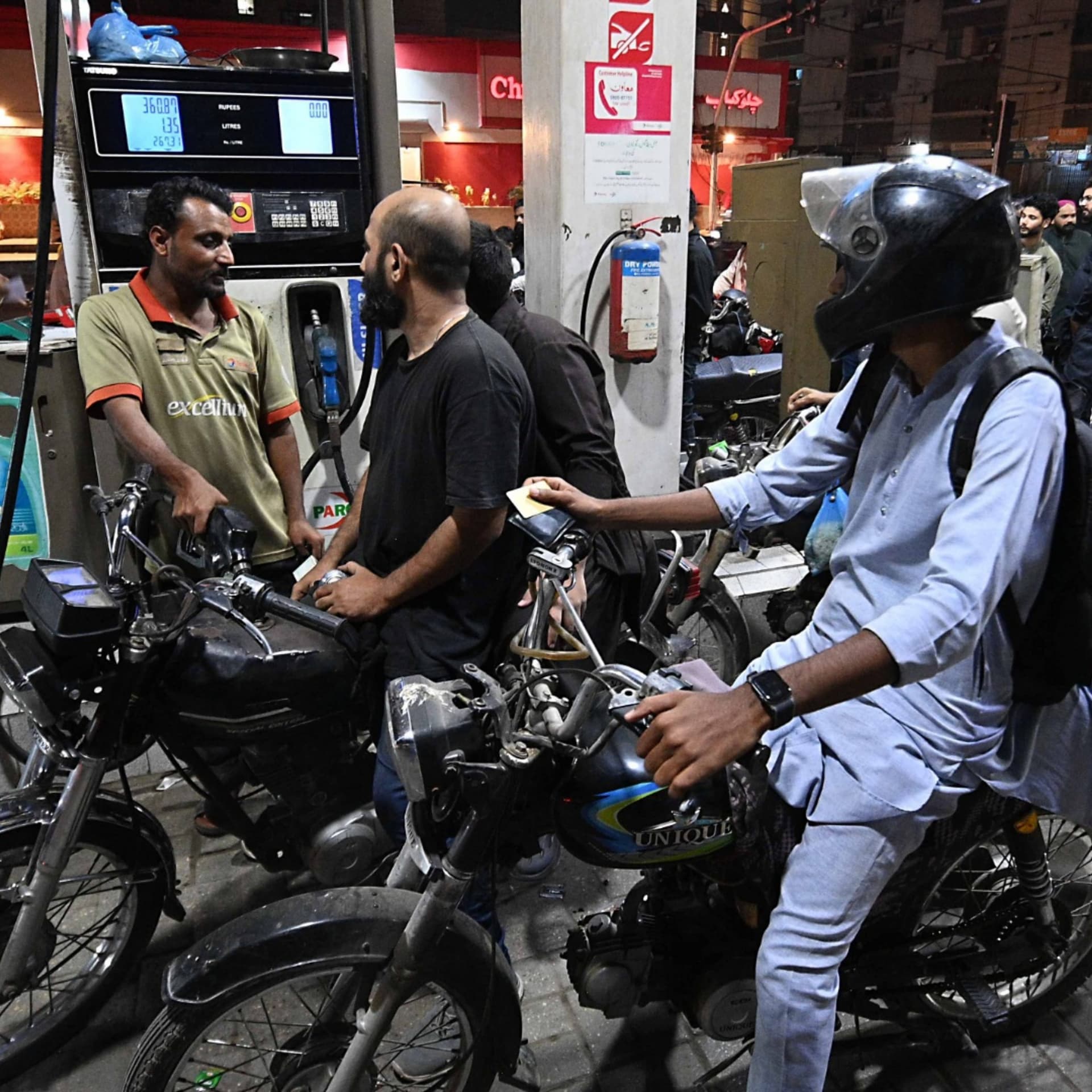
- Current Situation: Oil prices have surged by 20%, exceeding $100 per barrel due to the U.S.-Israel war with Iran.
- Donald Trump's Perspective: Trump claims the economic fallout is "a very small price to pay" for world peace.
- G7 Response: Discussions among G7 ministers about potential emergency oil reserves; no decisions made yet.
- Strait of Hormuz: Critical oil shipping route impacted by the conflict, severely affecting global oil supply.
- Price Increases: Higher oil prices lead to increased costs in manufacturing, transportation, and household heating, contributing to inflationary pressures.
- Iran's Political Landscape
- New Supreme Leader: Mojtaba Khamenei, son of the last leader, is seen as a continuation of hardline policies, leading to despair among some Iranians.
- Public Reaction: Mixed responses, with some expressing hope for change, while others fear a more oppressive regime.
- Iranian Women's Football Team
- Controversy: The team's refusal to sing the national anthem raises concerns about their safety upon returning to Iran.
- Asylum Considerations: Support from the Australian Iranian community for potential asylum applications, with uncertainty about the team's wishes and implications for their families in Iran.
- Political Trial in Turkey
- Ekrem İmamoğlu's Case: The jailed mayor's corruption trial viewed as politically motivated amidst significant public support and protests.
- Public Sentiment: Divided opinions; opposition sees it as a tactic to undermine political challengers, while government supporters view it as legitimate.
- Instability in South Sudan
- Civilian Displacement: Thousands fleeing conflict zones amid fears of civil war resurgence.
- Government Actions: New military offensives announced, further complicating humanitarian efforts in the region.
- Ukraine's Involvement in Middle Eastern Conflict
- Drone Assistance: Ukrainian President Zelensky pledges to send drone experts to assist Gulf states under Iranian threat.
- Technological Innovations: Discussion on Ukraine's development of effective drone technology for intercepting aerial attacks.
- Ancient Egyptian Correction Fluid
- Historical Discovery: Findings reveal ancient Egyptians used a form of correction fluid, highlighting their craftsmanship and humanity.
---
Key Takeaways
- The surge in oil prices is a direct consequence of geopolitical tensions, affecting global economies and potentially leading to inflation.
- The Iranian regime's continuity under the new leadership raises questions about future reforms and societal impacts.
- The Iranian women's football team's situation emphasizes the personal and political risks athletes face in oppressive regimes.
- Turkey's political landscape remains polarized as high-profile trials raise concerns about judicial independence and democratic integrity.
- South Sudan's instability poses a humanitarian crisis, affecting thousands as conflict escalates.
- Ukraine's proactive stance in the Middle East conflict showcases its strategic military innovations aimed at countering threats.
- Historical insights into ancient practices provide a deeper understanding of cultural continuity and human connection across time.
---
Contact Information For more insights or to get in touch, you can email: [globalpodcast@bbc.co.uk](mailto:globalpodcast@bbc.co.uk).
Use the hashtag #GlobalNewsPod on social media for discussions related to this episode.
---
This summary encapsulates the essential information and discussions from the episode, providing a clear and structured overview for listeners and readers alike.
Written by AI. May contain mistakes. Listen to the episode to check what was said.
Chapters
Tap a time to open that second in VOOverview of Current Events
1:40 to 2:25
Discussion of main stories including oil prices and Iran's new leadership.
“I'm Charlotte Gallagher and at 1600 Hours GMT on Monday the 9th of March, These are our main stories.”
Economic Fallout of War
2:25 to 3:22
Exploration of how the US-Israel war affects global oil prices and markets.
“after they refuse to sing their national anthem?”
Disruption in the Strait of Hormuz
3:22 to 4:49
Report on shipping disruptions in the Strait of Hormuz due to the conflict.
“There are beautiful wooden dows all around this jetty here.”
Rising Oil Prices and Their Consequences
4:49 to 7:18
Insight into how rising oil prices impact costs and inflation globally.
“So they're around$72 a barrel in late February.”
Iran's New Supreme Leader
7:18 to 9:20
Discussion on the implications of Mojtaba Khomeini becoming Iran's leader.
“They don't have a huge amount to release, do they?”
The Human Cost of War
9:20 to 12:54
Details on civilian casualties in the conflict and specific incidents reported.
“For more, I spoke to our chief international correspondent, Lise Doucette.”
Investigation of a Missile Strike
12:54 to 14:00
Analysis of a missile strike and its implications for responsibility in the conflict.
“Because yesterday, the semi-official news agency mayor published a video moments before a missile hits the base.”
US Involvement in School Strike
14:00 to 14:34
Discussion on the implications of a US operation linked to a school bombing.
“He obviously has blamed Iran for the strike on the school.”
Political Trial in Turkey
14:34 to 15:02
Overview of the political trial of Istanbul's jailed mayor, Ekrem İmamoğlu.
Public Sentiment Around İmamoğlu's Trial
15:02 to 18:20
Exploration of public reactions and the political implications of İmamoğlu's trial.
“Like, how about that for a tagline for the show?”
Show all 19 chapters
International Concerns for Turkish Democracy
18:20 to 19:03
Concerns raised by human rights groups regarding the independence of the Turkish judiciary.
“and raised public concern about the state of democracy in Turkey.”
Instability in South Sudan
19:05 to 21:08
Discussion on the ongoing instability and humanitarian crisis in South Sudan.
“Emre Temel, to South Sudan, where the world's youngest nation is grappling with instability and fears of a return to civil war.”
Ukraine's Drone Defence Assistance
21:08 to 23:27
Insights into Ukraine's drone technology and its assistance to Gulf states.
“is feared to exacerbate these situations and even more people are feared to flee their homes.”
Zelensky's Strategy in the Gulf
23:27 to 25:50
Analysis of Ukraine's diplomatic strategy amidst rising geopolitical tensions.
“This drone pilot, callsign Draka, thinks Ukraine has much to offer.”
Iranian Women's Football Team's Dilemma
25:50 to 27:50
Concerns over the Iranian women's football team following their Asia Cup participation.
“There's concern about the safety of the Iranian women's football team after they refused to sing their national anthem at the first game at the Asia Cup in Australia.”
Historical Context of Correction Fluid
27:50 to 28:00
A brief look at correction fluid and its significance in communication.
“certainly seeing some of the players today.”
Iranian Team's Match Behavior
28:00 to 28:42
Discussion on the Iranian team's interaction with fans during a match.
“And it was interesting because at the match last night, there was very little interaction between the team and the fans.”
Discovery of Ancient Correction Fluid
28:42 to 30:26
Exploration of ancient Egyptian correction fluid discovered in papyrus.
“Now to a bit of ancient history for our younger listeners.”
Insights from the Fitzwilliam Museum
30:26 to 31:57
Helen Stredwick discusses the significance of papyrus corrections in history.
“And why do you think that this was a sort of correction fluid as opposed to an addition that they decided that they wanted the black torso of this jackal to sort of look multicoloured?”
Transcript
Automatic transcript. May contain errors.0:00This BBC podcast is supported by ads outside the UK.
0:30access to your money when you need it. And when you're ready to invest, you can transfer your cash to one of Wealthfront's expert built portfolios in just minutes. More than 1 million people already use Wealthfront to save and build wealth with confidence. Get started today at Wealthfront.com. 3.3 % base APY via program banks as of January 30th, 2026. It is representative variable, requires no minimum, and is earned on funds swept to program banks. Instant withdrawal subject to conditions boost up to$150 ,000. Cash account offered by Wealthfront brokerage LLC member FINRA SIPC, not a bank. Investing involves risk, including possible loss of principal investment advisory services provided by Wealthfront Advisors LLC and SEC registered investment advisor.
1:06This is not the future we were promised. Like, how about that for a tagline for the show? From the BBC, this is The Interface, the show that explores how tech is rewiring your week and your world. This isn't about quarterly earnings or about tech reviews. It's about what technology is actually doing to your work and your politics, your everyday life. And all the bizarre ways people are using the internet. Listen on BBC.com or wherever you get your podcasts.
1:39This is the Global News Podcast from the BBC World Service. I'm Charlotte Gallagher and at 1600 Hours GMT on Monday the 9th of March, These are our main stories. Oil prices surge as the US-Israel war with Iran continues. President Trump says it's a very small price to pay for what he calls world peace. But how long will this continue? The new supreme leader of Iran is the son of the last one, leading some Iranians to despair about the future. This means that nothing is going to change. It's the same path, perhaps even worse. Anyhow, I don't think the situation can continue. I don't think that it will last.
2:24Also in this podcast, what will happen to the Iranian women's football team after they refuse to sing their national anthem? They're in Australia now, but will they return home? If they did seek asylum, and we do not know whether they do want to, what would that mean for their families back home?
2:46We start with the economic fallout of the US and Israeli war against Iran. Its impact is spreading across the globe. Oil prices have shot up by 20 % today to more than$100 a barrel and stock markets have fallen. Donald Trump has said it's a very small price to pay for what he calls world peace. G7 finance ministers have been discussing the release of emergency oil reserves but say no decision has been taken. The Strait of Hormuz, through which around a fifth of the world's oil supply is usually shipped, has all been but closed to traffic for a week now. The BBC's Anna Foster is in Doha. There are beautiful wooden dows all around this jetty here.
3:29They normally take people around this harbour on tourist trips. But because of the war, that's all been cancelled. But then even further out, those are the ships that are really drawing attention at the moment. because they can't get through the Strait of Hormuz, which is just a way to my right, where the gulf really narrows. And when you look, I've been taking a look at one of these apps that shows you what shipping traffic is out there. And I've been looking at the oil tankers in particular. So if I click on this one, this is a Panamanian crude oil tanker, the Aqua One at Anka. This is the Well Sail.
4:05You can see there's a real cluster. They're stuck on the inside so they can't get out and take their cargo around the world. And similarly, on the other side of the Strait of Hormuz, again, when you look on screen at all these little turquoise and red and green arrows that mark different ships, you can see, again, a cluster that need to get here to refill. And they're stuck on the other side as well. And that is why, when we talk about the global economic impact, you see it right here. You see it on this tiny screen on my phone. Everything has ground to a halt. Some oil depots in Iran have also been destroyed over the weekend.
4:45Our international business correspondent Theo Leggett told me more. Since the conflict in the Middle East began, global oil prices have increased by about$30 a barrel. So they're around$72 a barrel in late February. They're now hovering above$100. We did see a spike of$119 or thereabouts overnight, but things have tailed off a little bit. Now, that's a very significant increase. and oil prices are now at the highest level they've been since immediate aftermath of Russia's invasion of Ukraine. A lot depends on how long prices stay at these levels and how high they ultimately go. Obviously, news of the G7 talks about potentially releasing oil reserves has brought the headline price down a bit for the moment, but those decisions will undoubtedly affect where the price goes in the short term.
5:34Now, a higher oil price translates into higher costs. for factories that are making things. It's their energy bills, transport costs for goods, fuel costs for ordinary people, you know, the petrol and diesel you put in your car, those could go up. So a swathe of costs go up. We've also seen a big increase in the price of gas because about a fifth of the world's supplies of liquefied natural gas come through the Straits of Hormuz. That can increase the cost of household heating. It can increase the costs of industrial energy. It also can increase the cost of electricity. For example, in the UK, the price of electricity is very closely linked to the price of gas because gas is used in generation.
6:17So all of these costs could go up, which means if you have a sustained high oil price, it will lead to inflation. The question is how much inflation? You mentioned Russia there, and they are one country that could benefit from this because the US have already eased some sanctions on Russian oil. Do you think more of that will happen? Potentially, because this is an idea about keeping oil in the system. So what the US has done is withdrawn a threat to take action against India if India keeps on buying consignments of Russian oil against the interests of sanctions. Now, Russia has been able to supply oil despite the war in Ukraine, but those suppliers have had their price capped by action from the US, the European Union and others.
6:59What this means is it's easier for Russia to sell that oil and it may get a higher price for it. The more money Russia gets from oil, the more that feeds into Russia's budget. It eases the economic problems that have been caused by the squeeze from sanctions. And as you mentioned, the G7 finance minister's meeting today, they may release some oil reserves, but presumably that's a limited pot. They don't have a huge amount to release, do they? Yes, it is a limited pot. As I understand it, it's about four days of global output. That's the equivalent. So releasing some of that, and they certainly wouldn't release all of it, but releasing some of that in the short term would bring oil prices down.
7:34But the problem is, when do you release it? Do you release it now in order to ease whatever spike we're going through at the moment? Or do you wait until, for example, the Northern Hemisphere winter when it might be badly needed? How long do you think this crisis is going to go on for? Theo Leggett. And we have more on the economic impact of the war on our YouTube channel. Search for BBC News on YouTube and you'll find Global News Podcast in the podcast section. There's a news story available every weekday. Heavy explosions have continued to rock the Iranian capital after the country named its new supreme leader Mojtaba Khomeini.
8:10Little is known about the 56-year-old son of the last supreme leader who was killed in an airstrike nine days ago. Only a few photos and videos of him have ever been published, but it's expected he'll rule in the same way as his hard-lined father. Thousands of people have gathered in a central square in Tehran to pledge their allegiance to him. But there were chants of defiance in Tehran when the news was first announced. BBC Persian has received some messages from people in Tehran who don't support the Iranian regime with their reaction to the news. We've voiced up their words. Even the slimmest chance for a change no longer exists within the system.
8:48The assembly could not have selected anyone closer to the former leader. So everything will remain much the same. They don't even need to change their chance to support the name. Why isn't there much information available about him so we can see how charismatic he actually is? They sent out mass text saying he has become the leader. Now I'm just waiting for Trump's speech. This means that nothing is going to change. It's the same path, perhaps even worse. Anyhow, I don't think the situation can continue. I don't think that it will last. For more, I spoke to our chief international correspondent, Lise Doucette.
9:26He has really been in the shadow of his father. He's been working in his office for decades, a very reclusive figure and very mysterious. I mean, just imagine that suddenly he is propelled into the top position in the Islamic Republic of Iran at a time of war. And Iranians don't even know what his voice sounds like. Last night when it was announced that Iranian friends were looking online to see any evidence of public speeches, there were none. Any time, many public events, there were hardly any. He's not held any formal government positions. They don't really know that much about him. But what they do know, as you've just been reporting, for those who support the government, it's a continuity of the Khamenei line, a hard line, conservative line.
10:16For those who had hoped that the start of the war was the beginning of the end of the Islamic Republic, they think that a harsh regime will become harsher still. One of the moments that's being mentioned now in articles about him is what happened in 2005 and 2009, where a very conservative cleric, Mahmoud Amininejad, won disputed presidential elections. And the prominent reformist candidates, those who are seen as being more moderate in Iran's political spectrum, accused him of conspiring behind the scenes to rig the election victory. So if that was the beginning of his work behind the scenes, he now emerges a little bit from that shadow to see a cementing of the power of the hardliners with the reformers, including the president, Masrush Bechishkan, being pushed ever more into the sidelines.
11:12Do you think we'll even see him that much in public, at least for the moment, at least, considering he's such a target for the US and Israel? There's been not a sign of Mustafa Khamenei since Saturday morning after those first strikes, which killed not just his father, Ayatollah Khamenei, but also his mother, his wife, and one of his sons. And that, I should mention, Charlotte, is now another dimension in this war. It's deeply personal. It's about revenge. He'll want to take revenge. And Donald Trump, who didn't want him to be in power, also sees it as personal revenge, because, as we know, he doesn't like people taking issue with him.
11:50So he hasn't been seen. It was reported that he was injured and it's not clear that he is. So he's got this conundrum. He's got to project stability and continuity, but he also has to keep himself alive when he's got a target on his back. That was Lise Doucette. Along with the economic cost of this war, there's also, of course, the human cost. The greatest single loss of civilian lives came, as far as we know, right at the start of the war with an airstrike on a school in the southern town of Manab. A video uploaded by Iran's semi-official mayor news agency of the moment a missile appears to hit the school.
12:30More than 160 people died, many of them young girls. I said the video appears to show impact. Well, the video has now been verified by the BBC's in-house team of specialists. Merlin Thomas told Tim Franks the latest. We've been investigating this deadly incident that happened on the first day of the war. And in this war, there's been limited amounts of video footage emerging because of the internet blackout. But this new video that's emerged sheds new light on exactly what's happened. Because yesterday, the semi-official news agency mayor published a video moments before a missile hits the base.
13:05Now, we've slowed the video right down and we've shown it to multiple weapons experts who've identified the missile as a US Tomahawk missile. Now, it's worth saying that Israel and Iran do not have tomahawks. So to be clear, this new video doesn't show the missile hitting the school building, but you can see smoke rising in the background near the school building. And because of that, and expert analysis of verified videos and satellite imagery, it suggests that the area came under a wave of US strikes. And you can see that in satellite imagery, which shows a number of buildings that were hit.
13:40Donald Trump has said in terms, and I think it was just on Saturday that he said, when asked the question, did the US bomb the school? No, in my opinion, based on what I've seen, that was done by Iran. It sounds as if this could contradict that. Yes, it casts serious doubt on what President Donald Trump has said. He obviously has blamed Iran for the strike on the school. And we've asked the US about this, and we'll continue to investigate that. But experts that we've spoken to, the body of evidence we've looked at, as well of satellite imagery indicates that the presence of a Tomahawk missile says that this was a US operation.
14:16Just briefly, I mean, any reason why the US would not be able to establish whether they had bombed the school by now? It's not clear. Normally, in these kinds of operations, they would have intelligence that would indicate where they've struck. So they've not explained and been forthcoming as to why they haven't come forward with an answer. That was Merlin Thomas. Still to come in this podcast When we actually start looking at objects and can actually see chisel marks or somebody's thumbprint or something like that you immediately become more connected to the person who made it A new finding reveals ancient Egyptians were just like us
15:01This is not the future we were promised Like, how about that for a tagline for the show?
15:38To Turkey now.
15:44Large crowds of supporters of Istanbul's jailed mayor marching ahead of a landmark corruption trial that they call politically motivated. Ekrem İmimoglu was arrested shortly after announcing his intention to run for president and is seen as one of the few politicians capable of defeating President Erdogan. If Ekrem Imamoglu had not announced his presidential candidacy, today he would still be in office as the metropolitan mayor. Today, with a political coup, with a political trial, he's being held in a trap. The case is political. Our mayors are imprisoned because it is political. I do not believe there is any corruption, nor do I want to believe it.
16:28He faces more than 140 charges, including corruption and running a criminal organisation. Emre Temel from the BBC's Turkish service told me more. Ekrem Imamoglu was jailed on the same day he was announced as presidential candidate of the main opposition Republican People's Party, CHP, in March last year. And his arrest triggered Turkey's largest street protests in more than a decade. This is a long-awaited trial which began today. It is expected to last several years and it is considered as one of the most significant legal proceedings in recent Turkish political history. We heard the accusations.
17:09At the time, Istanbul's chief public prosecutor, Akın Gürlek, who is Turkey's justice minister now, requested prison sentences totaling more than 2 ,500 years. Mr. İmamoğlu denies all the charges. His request for the trial to be broadcast live on TV has been rejected by the government. Wow. I mean, what's the mood in Turkey around this trial? Obviously, we heard from some of his supporters there, but presumably some people have different feelings. Yes, the mood is tense and unpolarised, I should say. Many opposition supporters view the trial as politically motivated, as we heard, aimed at weakening a key challenger to Turkey's president Recep Tayyip Erdogan.
17:47And street protests and demonstrations have reflected anger and frustration among Mr. Imamoglu's supporters. And today's courtroom scenes have been kind of chaotic. Applause for the mayor signaling a strong public opinion. However, on the other hand, pro-government supporters largely accept the judicial process as legitimate. President Erdogan and his party maintain that Turkish judiciary is independent. However, overall, I should say, this trial has intensified political tension and raised public concern about the state of democracy in Turkey. And human rights groups external have also raised concerns, haven't they?
18:28Yes, they have expressed concern over the independence of Turkish courts. And trial has drawn widespread criticism outside the country. Both Human Rights Watch and Amnesty International have denounced it as politically motivated. They both argue that the case undermines democratic norms and judicial independence, independence, sorry, and Amnesty specifically highlighted concerns over secret witness testimony and fair trial violations. Overall, international reaction reflects significant unease about democracy and human rights in Turkey. Emre Temel, to South Sudan, where the world's youngest nation is grappling with instability and fears of a return to civil war.
19:14Thousands of people have fled the rebel stronghold of Okobo in Jongle State after the army issued an evacuation order as it prepares a new military offensive. Government forces are trying to retake territory from those loyal to First Vice President Riyat Marker, who's in detention in Juba on charges of murder, treason and crimes against humanity, which he denies. Kalkadan Yibatel is at an aid centre. This is a humanitarian hub in Bor, which is the capital of Jonglei State. It's South Sudan's largest state and recently it's most restive. Since the beginning of the year, there have been intense clashes in various areas within the state, between government forces and rebels that are aligned with imprisoned opposition leader Rick Machar.
20:01Now, over the weekend, the army has announced an evacuation order in a county called Akobo, which is one of the most remote in the state. It said that it's about to launch a new military offensive and it told humanitarian agencies, members of the UN mission to close their offices and evacuate. It also told civilians to try to seek shelter in government-controlled areas. Now, this Akobo area is a stronghold for the rebel forces. I've been speaking to some of the aid organisations here and they were telling me that thousands of people are already fleeing from that county, county, many of them on Sunday, some crossed borders into neighboring Ethiopia because that county is close to the Ethiopian border and others are you know running away in different directions.
20:48Aid organizations have left the area as well in UN chartered plans on Sunday which means some of the towns in those areas are currently deserted. Civilians have often been caught in the crossfire an unknown number of people have been killed and close to 300 ,000 people are displaced. The most recent evacuation order is feared to exacerbate these situations and even more people are feared to flee their homes. That's going to worsen the humanitarian situation which is already dire as it is. Added to that, this ongoing insecurity, it's going to be very difficult for many desperate people to receive very essential supplies that they require.
21:31Kalkadan Yibatow. The Ukrainian president, Volodymyr Zelensky, has said he's sending drone experts to the Middle East this week to help Gulf states under attack from Iran. Just before we recorded this podcast, Mr Zelensky said that 11 countries had asked for Ukraine's help after it spent four years inventing cheap and effective ways of defending the skies from similar Russian attacks. Our diplomatic correspondent, James Landale, is in Ukraine and has been to see the latest anti-drone technology the country has to offer. We're standing in a field in the middle of the Ukrainian countryside and it's a place where people come to test drones.
22:10We've come to look at a drone called a bullet. They're putting it together in front of us and it looks like a very strange weapon, a hybrid weapon. Half quadcopter drone, half plastic shell. and it's the latest technology, the latest design that the Ukrainians have come up with to destroy lethal Russian Shahid drones that attack Ukraine almost nightly.
22:41The bullet's just taken off, rising on its four propellers and then suddenly, whoosh, away it goes. It tips on its side, rockets away and now it's just a small speck on the horizon. Top speed is well over 300 kilometres an hour.
23:04This is one of Ukraine's newest and fastest interceptors. And the idea behind it is very simple. The pilots launch the bullet and use a first-person camera simply to crash it into an incoming drone. They're deadly, and the pilots know they could be just as effective against similar Iranian Shahid drones, causing havoc across the Middle East. This drone pilot, callsign Draka, thinks Ukraine has much to offer. Honestly, we have enough work here. But we understand that this war is spreading across the world and that Iran is an ally of Russia. So I think we could find the resources to send our instructors to train people who are fighting the same enemy.
23:53We've come now to the factory where the drones are made. There are rows and rows of men and women soldering, assembling, fixing, sorting. And there are piles and piles of these drones. You really get a sense of just how relatively simple it is to make these drones and why they're so cheap. Stanislav Grushin is co-founder of the General Cherry drone company. Are you surprised that it has taken this amount of time for the rest of the world to wake up to the importance of this? Speaking honestly, I'm really surprised. It seems that every country is preparing to the past wars, but not the ongoing ones.
24:38Have any countries come to you? Have you had extra demand requests in the last week? Yes, a lot of state agents from different countries from all over the world, not just Arabic ones who are already facing the threat from Iran, they understand now how it may be. The request is pretty high and very urgent. President Zelensky says Ukrainian experts will arrive in the Gulf this week to offer immediate help with drone defences. But he's clear nothing should damage Ukraine's own, and he's looking to swap interceptors for more Patriot missiles. The war in the Middle East poses risks for Kiev. Rising oil prices fueling Russia's war machine, distracted allies turning their attention elsewhere.
25:30But Ukraine's hard-won expertise in interceptor drones gives President Zelensky an opportunity, not just to win new friends and funds in the Gulf but also to keep his war from being forgotten.
Read the full transcript
25:48That was James Landale. There's concern about the safety of the Iranian women's football team after they refused to sing their national anthem at the first game at the Asia Cup in Australia. The squad did sing the anthem at their next two games but they've been called wartime traitors by a conservative commentator in Iran who's calling for them to be punished. They're now out of the tournament and due to return home but many in the Australian Iranian community are encouraging the women to apply for asylum. Donald Trump too has said that forcing the team back to Iran would be a terrible humanitarian mistake.
26:22I've been talking to our Australia correspondent Katie Watson. I've been at the hotel all day and I've seen some of the players and they're being watched closely. There's been very little contact. Certainly, I was speaking to some Iranian Australians here. Many have tried to reach out to the team and not succeeded. And there is certainly concern about what the fact that they didn't sing the national anthem and then did, what it means if they do go back to Iran. So, of course, they're now out of the tournament. So the expectation is that they would then return to Iran. Obviously, there is a war going on.
26:57So logistically, it might be quite hard to go back. But also there is a lot of pressure and they've been put in a very difficult situation because if they did seek asylum and we do not know whether they do want to or whether all of them want to, you know, that's something that's very individual. Well, if they did, then what would that mean for their families back home? So I think there is there is that concern. I was speaking to Amnesty International earlier who was saying that one of the other issues is communication. Do they know that they are able to seek asylum? and that also needs to be communicated to them.
27:31So there is concern about what it means for the players if they did decide to return and if they decided not to return also for their families. At the match on Sunday, there were people chanting, kind of saying that they will support the women here if they wanted to stay. So there's certainly support there. But yeah, it's an incredibly difficult situation, certainly seeing some of the players today. I mean, they do have people with them all the time and there hasn't been much communication with the team. And it was interesting because at the match last night, there was very little interaction between the team and the fans.
28:06Unlike the Philippine side, who did line up and thank their supporters, the Iranian side went straight off the pitch at the end of the match. And only there was one player who was seeking medical assistance on the sidelines at some point during the match, turned and blew a kiss to the crowd and there were huge cheers. So it was slightly a bit of a statement, really. But that was the only thing that we really saw. And so it's very hard to get any kind of real understanding of what the team is wanting to do and also, you know, when they're going. That was Katie Watson in Australia. Now to a bit of ancient history for our younger listeners.
28:47Before the delete key, there was something called correction fluid. It's a gloopy liquid, usually white because most paper is white, and applied to your mistakes on the page with a little brush attached to the top of a small bottle. So why am I telling you this? Because it now appears it's really ancient history. Staff at the Fitzwilliam Museum in England have, they say, discovered that ancient Egyptians had their own version to take care of spelling mistakes or wayward brushstrokes 3 ,000 years ago. Helen Stredwick is the senior creator for the ancient Nile Valley at the museum. she told Tim Franks, where she spotted this fluid.
29:24Well, we're seeing it on a papyrus that contained a text that we refer to as the Book of the Dead, which is a funerary papyrus. And that is illustrated with small vignettes that accompany various spells that are written inside there. And on one of those, we see a very large black jackal. And either side of the body of the jackal is a very noticeable, when you spot it, white stripe that looks very much like the old style of tipex that I used to use when I was using a typewriter to correct it. And it looks as if it's been used to change the shape of the body of the animal. You can see it really clearly when you sort of stop and look at it in any detail.
30:08The thing is that most people only glance at the vignette because the text is the part that has been in the past a very interesting thing to Egyptologists. But when you start looking at the way that the vignettes have been painted, then there's a moment where you go, oh, why is there that white stripe there and another one there? And why do you think that this was a sort of correction fluid as opposed to an addition that they decided that they wanted the black torso of this jackal to sort of look multicoloured? Well, looking at the rest of the papyrus, the artist or artists is extremely skilled and doesn't use paint in a wasteful way at all.
30:50So where there are layers of paint, they are used very carefully. So we use infrared imagery on it and that allows us to see through the layers of paint, particularly see the black layers of paint that might be underneath things. and, you know, writer's reign, we could see that the body originally was much, much fatter and that there's these white stripes which overlie a significant part of the black. So it's quite clear it's been done to thin it down. I then also have been looking at editions of other books of the dead and lo and behold, yes, I can see it on other papyri. To me, it's been a delight to actually have time to draw people's attention to these amazing people who made these things and to kind of really humanize the Egyptians perhaps a bit more because for a lot of people the first focus of their attention has always been on the kings of Egypt or the maybe esoteric religious thinking that the Egyptians had but when we actually start looking at objects and can actually see chisel marks or you know, somebody's thumbprint or something like that, you immediately become more connected to the person who made it.
32:02That was Helen Strudwick at the Fitzwilliam Museum in Cambridge. And that's all from us for now. If you want to get in touch, you can email us at globalpodcast at bbc.co.uk. You can also find us on X at BBC World Service. Use the hashtag Global News Pod. And don't forget our sister podcast, The Global Story. This edition of the Global News Podcast was mixed by Kai Perry and the producer was Charles Sanctuary. The editor is Karen Martin. I'm Charlotte Gallagher. Until next time, goodbye.
32:54Your world. This isn't about quarterly earnings or about tech reviews. It's about what technology is actually doing to your work and your politics, your everyday life. And all the bizarre ways people are using the internet. Listen on BBC.com or wherever you get your podcasts.
From the publisher
The benchmark oil price has passed $100 a barrel for the first time since 2022. But Donald Trump says the economic fallout from the US-Israel war with Iran is "a very small price to pay" for world peace. After Iran named a new supreme leader, Mojtaba Khamenei, heavy explosions have continued to rock the capital Tehran. The Turkish opposition leader Ekrem Imamoğlu has gone on trial in Istanbul for corruption, in a case he describes as politically motivated. We report from South Sudan, where the world's youngest nation is grappling with instability and fears of a return to civil war. The Ukrainian president Volodomyr Zelensky has said he is sending drone experts to the Middle East this week to help Gulf states under attack from Iran. There is concern about the safety of the Iranian women's football team after they refused to sing their national anthem at the first game of the Asian Cup in Australia. Scientists have discovered an ancient Egyptian equivalent of correction fluid.
The Global News Podcast brings you the breaking news you need to hear, as it happens. Listen for the latest headlines and current affairs from around the world. Politics, economics, climate, business, technology, health – we cover it all with expert analysis and insight. Get the news that matters, delivered twice a day on weekdays and daily at weekends, plus special bonus episodes reacting to urgent breaking stories. Follow or subscribe now and never miss a moment. Get in touch: globalpodcast@bbc.co.uk