
In short
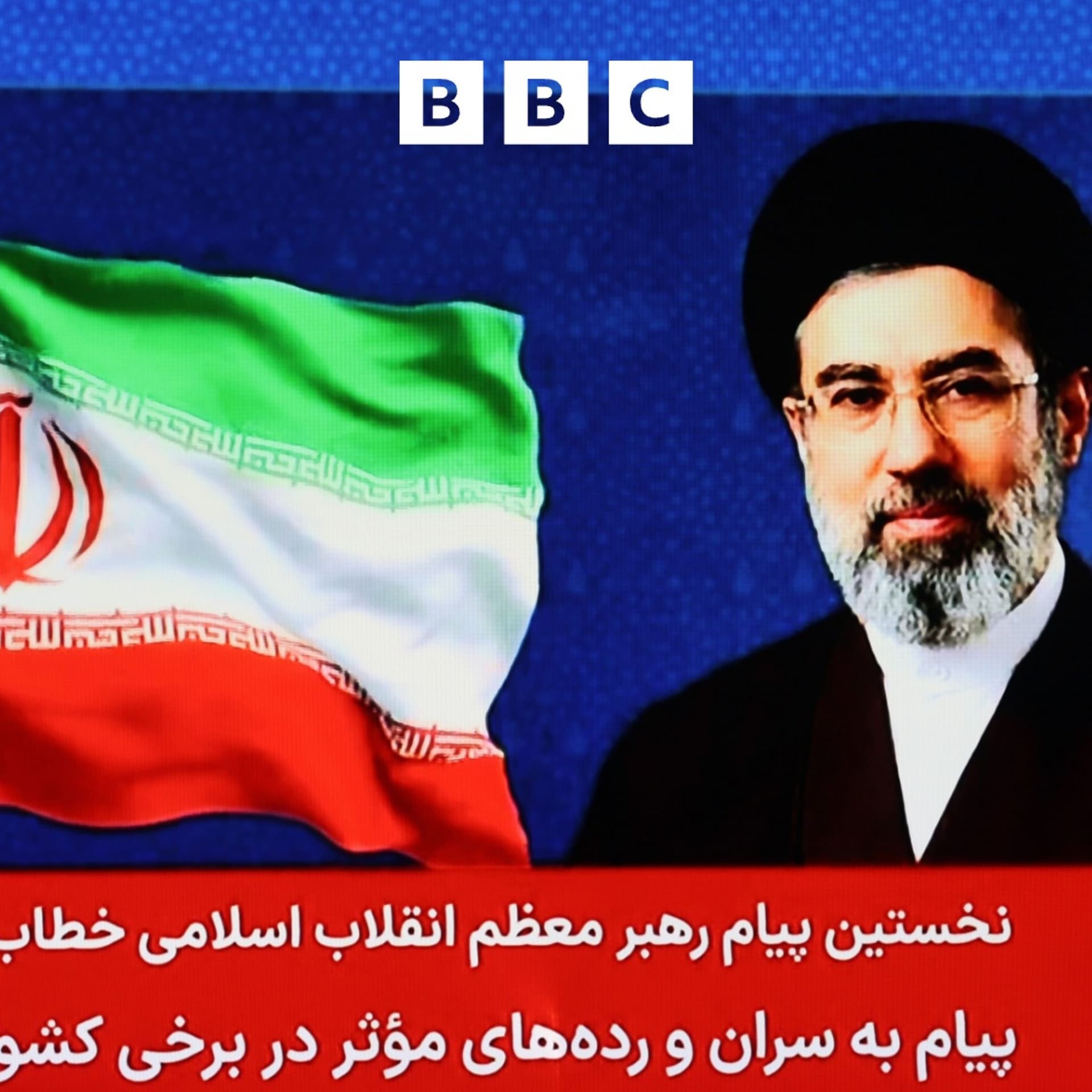
Global News Podcast Episode Summary: Iran's New Leader in Defiant First Message
Episode Overview The latest episode of the Global News Podcast, hosted by Ankur Desai, focuses on the significant geopolitical developments following the appointment of Mojtaba Khamenei as Iran's Supreme Leader. It covers various timely topics including Iran's military stance amidst ongoing conflicts, public sentiment in the United States regarding military engagement, and notable events in Russia and China.
---
Key Themes and Discussions
Iran's Supreme Leader Mojtaba Khamenei
- Introduction of the New Leader:
- Mojtaba Khamenei, son of the late Ayatollah Ali Khamenei, delivers a statement via Iranian state television, marking his first message since assuming leadership.
- The message emphasizes Iran's intent to avenge its martyrs and maintain control over the Strait of Hormuz, a critical global shipping route.
- Health Concerns:
- Speculation surrounds Khamenei's health status, with reports suggesting he may have been injured during the initial US-Israeli strikes that also resulted in the death of his father.
- Public Sentiment:
- Many Iranians express fear and anxiety, indicative of life under constant threat from military conflict. Reports highlight that citizens are living in a state of martial law, with restrictions on movement and severe inflation.
US-Iran Conflict
- Public Opinion in America:
- Current approval ratings for the war in Iran are notably low, with only 41% of Americans supporting military actions, the lowest since WWII.
- The podcast covers perspectives from various Americans, highlighting a divided sentiment regarding the conflict, with some supporting military actions while others advocate for peace.
- Impact on Global Oil Markets:
- The ongoing conflict is causing volatility in oil prices, with crude oil prices rising to over $100 a barrel as markets react to the instability in the region.
Other Global Headlines
- Russia's Court Sentences:
- Four individuals receive life sentences for a mass shooting in Moscow, marking one of the deadliest terrorist attacks in recent Russian history.
- China's Ethnic Unity Law:
- A new law aimed at promoting "ethnic unity" is criticized for potentially eroding minority rights by enforcing the use of Mandarin and restricting cultural practices among ethnic groups.
- Auction of Legendary Artifacts:
- A collection belonging to the late billionaire Jim Irsay, featuring iconic musical instruments and memorabilia, is set for auction, including items like Kurt Cobain's Fender Mustang guitar.
---
Key Takeaways
- Defiant Tone from Iran: Mojtaba Khamenei's message signals a continuation of hardline policies and military engagement in the region, despite the divided sentiments among the Iranian populace.
- US Public Sentiment: Low public support for military action reflects a growing wariness among Americans regarding prolonged involvement in overseas conflicts.
- Economic Implications: The ongoing conflict is significantly impacting global oil markets, illustrating how geopolitical tensions can have wide-reaching economic consequences.
---
Conclusion The episode captures pivotal moments in current global events, focusing significantly on Iran and its new leadership, while also touching on the broader implications of international conflicts on public sentiment and economic stability. The discussions illustrate the interconnectedness of military actions, public opinion, and global markets in today's geopolitical landscape.
---
Contact Information For more details or to provide feedback, listeners can reach out via email: [globalpodcast@bbc.co.uk](mailto:globalpodcast@bbc.co.uk).
Written by AI. May contain mistakes. Listen to the episode to check what was said.
Chapters
Tap a time to open that second in VOKey Headlines Overview
1:08 to 1:46
Overview of major news stories including Iran and China.
“This is the Global News podcast from the BBC World Service.”
Iran's New Supreme Leader's First Statement
1:46 to 3:18
Discussion of Mojtaba Khamenei's message and its implications.
“Our theater has been jammed with newspapemen and hundreds of photographers all over the nation.”
Analysis of Khamenei's Message
3:18 to 4:50
Expert analysis on the content and context of Khamenei's statement.
“The emphasis is on statement because questions are being asked with greater urgency.”
Life Under War in Iran
4:50 to 6:53
Description of the current living conditions in Iran amidst ongoing conflict.
“So I think it is roughly what would be expected at a time when very much those who are calling the shots are the Islamic Revolutionary Guard Corps, the hardline paramilitary force set up to defend the revolution.”
Impact of War on Global Oil Prices
6:53 to 11:43
Discussion on how the Iran conflict is affecting oil markets.
“our national infrastructure, which is the future of our country.”
Public Sentiment Towards the War
11:43 to 13:01
Exploration of American public opinion regarding the war with Iran.
“And if you're a trader, you make the calculation and you think this crisis is going to go on for longer than three weeks, then logically the price of oil would go up.”
War and Its Unjust Costs
14:01 to 15:20
Explore the impact of war on American society and the lives of veterans.
“We have seen some flag-draped coffins coming back to the United States with service members who've been killed.”
Perceptions of Military Engagement
15:20 to 17:35
Discuss the unclear objectives behind U.S. military actions in Iran.
“We're forbidding things from happening that we don't want to happen.”
Cultural Shifts in China
17:35 to 18:50
Examine the implications of new laws on ethnic minorities in China.
“but may not convince Americans it was worth the cost.”
Force Assimilation and Cultural Suppression
18:50 to 21:42
Delve into the forced cultural assimilation of ethnic minorities in China.
“That's the sound of the closing ceremony of the National People's Congress in Beijing, where delegates clapped during the arrival of the president Xi Jinping.”
Show all 15 chapters
Russia's Terrorism and Justice
21:42 to 24:20
Discuss the aftermath of a deadly concert hall attack in Russia.
“There are restrictions on, for example, people under the age of 18 studying Tibetan scripture.”
Allegations in the Culinary World
24:20 to 26:18
Uncover the resignation of a high-profile chef amid abuse allegations.
“The head chef of Noma, one of the highest-rated restaurants in the world, has resigned amid allegations of abuse.”
Jim Irsay's Auction Collection
26:18 to 28:01
Explore the remarkable auction collection of businessman Jim Irsay.
“It belonged to the billionaire American businessman Jim Irsay, who died last year.”
Exploring Iconic Music Artifacts
28:01 to 29:31
Learn about significant music artifacts, including Ringo Starr's drum kit and its importance.
“It was smashed into a sound desk at quite a rowdy gig in Dallas in late 1992, I think it was.”
The Manuscript of a Literary Icon
29:31 to 30:22
Discover the fascinating story behind Jack Kerouac's original manuscript of On the Road.
“The other thing that caught my eye was a manuscript, Jack Kerouac.”
Transcript
Automatic transcript. May contain errors.0:00This BBC podcast is supported by ads outside the UK.
0:30Be your best you all year round. Please visit mentallyhealthynation.org to learn more. It's 2009 and we're in the German mountains. A man straps himself into a car on the world's most dangerous racetrack. He whispers to himself, It's time to put my balls on the dashboard. As he starts the engine. In 15 minutes, he's in an ambulance, unconscious. In 15 years, he's a billionaire. This is Total Wolf, Formula One's most powerful team boss and the breakout star of Drive to Survive. This week on Good, Bad, Billionaire, how Toto Wolff made his billions. Listen wherever you get your BBC podcasts. This is the Global News podcast from the BBC World Service.
1:13Hello, I'm Ankur Desai and at 16 hours GMT on Thursday the 12th of March, these are our main stories. A statement has been read on Iranian television purported to be from the country's new supreme leader, Mojtaba Khamenei. The US-Israeli conflict against Iran continues to disrupt oil supplies and create financial market volatility. And one other headline, a so-called ethnic unity law has been passed in China that critics believe will further erode the rights of minorities. Also in this podcast. Our theater has been jammed with newspapemen and hundreds of photographers all over the nation. And these veterans agree with me that the city never has witnessed the excitement stirred by these youngsters from Liverpool.
1:55right now and again in the second half of our show. Ladies and gentlemen, the Beatles. If you have some spare change, may we interest you in a remarkable collection up for auction featuring guitars from music icons.
2:11Four days after Mujtabur Khamenei was appointed as Iran's supreme leader, he has spoken to the Iranian people and the world for the very first time. But it wasn't in person. Instead, an announcer read his message on Iranian state television and gave no clue as to the state of the leader's health. Some reports say he was injured in the attack that killed his father, his predecessor, on the first day of US and Israeli attacks. Here's some of that statement.
2:43Dear brothers of the armed forces, the demand of the people is to continue this effective defence that is making the enemy regret its actions. The lever of blocking the Strait of Hormuz should definitely be used regarding opening new fronts in which the enemy has little experience and is vulnerable. We have carried out assessments and will be putting them into action in case of the continuation of the war, and they will be carried out, taking into account our interests. Our Chief International Correspondent Lise Doucette gave us her reaction to the new Supreme Leader's message. The emphasis is on statement because questions are being asked with greater urgency.
3:30Ever since Moustaba Khamenei was chosen as Iran's new Supreme Leader, nothing has been seen of him. In fact, there's been no sign of him since the very first day of the war, about February the 28th, the Saturday morning, with the first Israeli-American salvos, which killed Mushtab HaMenei's father, mother, wife, son, niece, sister, we understand, several of his relatives. And very early reports that he had been injured seemed to have been confirmed. But then the question was asked, well, how injured is he if he can't even provide a written statement? And here comes a written statement. So perhaps we have to treat it with caution as to whether or not it was written by him.
4:12but it certainly is in his name. It is a defiant statement. It underlines that this is very much in line the continuity of his father, basically saying that the war will go on, that the Strait of Hormuz, that vital shipping lane, would continue to be closed. He tried to send a sort of conciliatory message to the neighbours, saying that he believes that Iran believes in friendship with its neighbors, but the attacks on the U.S. basis would continue. He also, of course, spoke to the people of Iran, calling for national unity. So I think it is roughly what would be expected at a time when very much those who are calling the shots are the Islamic Revolutionary Guard Corps, the hardline paramilitary force set up to defend the revolution.
5:04He's now their commander-in-chief, And it's widely believed one of the main reasons why he was chosen, not just that he was his father's son, but that he is so closely linked to them and of the same ilk. And that promise to continue retaliating and, of course, the continued U.S. and Israeli attacks on Iran. I mean, all that's going to be met with, I imagine, dismay by many Iranians. Well, Iran is a very divided country. It's been divided for many, many years now. We saw it when we were there last month. It's very much in a crossroads, pulling in the direction of those who took to the streets and yet again in large numbers in January, calling not just for better lives, changes in the economy, an end to spiraling inflation, but also a complete change in the system.
5:53And they shouted death to Khamenei, his father. And when he was appointed, some shouted from their windows death to Mushtaba. But the Islamic Republic also has its supporters. And in the same way, there are those who already revile him. There are those who will revere him as their spiritual leader, who will want him to continue with what they call the resistance towards the United States and Israel. And what's happening now is this war drags on, even though there were voices of Iranians inside and outside the country who were saying, well, if the only way we can bring about change is through an American attack to bring down this system, even many of those voices, and some of them are prominent, including the Nobel laureate Shireen Abadi in Britain, the former prisoner Nazarene Zaghari Ratcliffe, saying this is not the war we want.
6:47You are not just going after the leadership in the system. You are destroying the infrastructure of Iran, our national infrastructure, which is the future of our country. you're actually also damaging our prized National Heritage Sites. Lise Doucette. The war has now been going on for 13 days and the hostilities show no sign of ending any time soon, despite President Trump claiming it would soon be over. US-Israeli strikes have been intensifying in Iran and Iranians are retaliating with missile attacks against their neighbours in the Gulf. In Iran, people are now living in constant fear As Meena Joshaghani from the BBC Persian reports.
7:30The buzzing of Israeli drones. Twelve days after the start of the war, it's neither faded nor become any easier to ignore. The skies over Iran's capital have turned into a freeway, one Tehran citizen told me, where Israeli and American fighter jets move with ease. But for people in Iran, the fear is not only of foreign fire, It is also of their own government. The situation is awful. Morning, noon and night, we are under bombs. The internet is cut off. There is no medicine. Many of the doctors aren't around. Inflation is terrifying. The whole country is basically under martial law. The streets are full of armed men.
8:15If you make the slightest move or say anything out of line, they'll bring the baton down. Those same armed men and the checkpoints run by the Revolutionary Guards and the Besij militia were among the targets of Israeli drone strikes on Wednesday. Iranian media report that at least 10 members of the security forces were killed in the attacks. Iran keeps launching missiles and drones to Israel and Gulf countries, causing shocks to the global energy market. But with no air defense, no warning sirens and no shelters, intimidation of citizens has become the government's most effective weapon. On Wednesday morning, Iran's state television reported the arrest of several people accused of sending videos to telegram channels opposed to the regime.
9:04Mixed messages are being heard from the United States. President Trump has for some time now stopped speaking about Iranian protesters or regime change, instead pointing to the Venezuela model, calling on someone from within the system to yield to American will. Israel says it wants to remove the threat posed by the Iranian regime, which is still standing by its position and hasn't backed down. And the Islamic Republic, by selecting the son of the previous leader as his successor, has effectively thumped its nose at them. Mina Joshaghani reporting. Well, this war is having a huge impact across the region, and all the Iranian attacks on tankers and facilities in the Gulf have been affecting the oil market in particular.
9:52The price of crude oil again rose to over$100 a barrel, temporarily before dropping back somewhat. The rise came despite the International Energy Agency announcing on Wednesday that its members would release 400 million barrels of oil and refined products from their reserves. John Brown is former chief executive of the British oil giant BP. The problem at the moment is that the people who are trading oil can't see the real direction. They don't know how long this conflict is going to last, how long the Straits of Hummers is in effect closed. We're losing about 15 to 16 million barrels a day as a result of that.
10:31And whether or not these releases, which have been agreed by the 32 members of the IEA actually take place. I think only last night, I think only five or six countries had actually identified exactly how much they were going to release. So I think most people will look at all this and say, show me what's really happening and I'll tell you what the price is going to be. We got more details from our Asia business reporter, Nick Marsh in Singapore. What we just heard there, show me what's really happening. I think, is the question that traders are asking and have been asking for the past couple of weeks now, because, yes, that was a historic release of stockpiles or agreement to do that.
11:16But the reality on the ground is that ships continue to be attacked. Those two tankers in Iraqi territorial waters that we just heard about, for example, quite far away from the Strait of Hormuz. And the reality is that, you know, barely any ships at all are willing to take the risk. It's still a danger zone. It's still a war zone. And so long as the flow of oil is stopped and there's a blockage there, then you're going to keep seeing the price of oil increase. 400 million barrels, it's a lot, but it's roughly three weeks worth of what would be transiting through the Strait of Hormuz. And if you're a trader, you make the calculation and you think this crisis is going to go on for longer than three weeks, then logically the price of oil would go up.
11:59And we've seen that reflected today. And what's the significance, particularly for consumers in Asia and around the world? Is there a sort of ripple effect at the moment? I've seen the price of fighter jet fuel rising faster than oil prices, for example, and it's spreading across commodities like aluminium and fertiliser even. Yeah, exactly. I mean, the price of oil and gas underpins the price of everything, right? You need it to power factories, you need it to transport anything, you know, including food. And, you know, it obviously underpins the price of fuel, right? like the petrol that you put into your car or your moped or whatever.
12:31Asia is particularly vulnerable because it imports vast amounts of Middle Eastern oil and gas. I mean, last year, 90 % of all of the oil and gas that went through the Strait of Hormuz was bound for Asia. So if you're a big economy like Japan or China, you know, you can get by by relying on your stockpiles and things like that. And governments there have put price caps in. If you're a smaller country like the Philippines gets 95 % of its crude oil from the Middle East, you are talking about weeks worth left and we're seeing that reflected in the panic buying and rising prices as well already. Nick Marsh reporting.
13:05Public approval in the US for the war with Iran is the lowest at the start of any conflict since the Second World War, with around 41 % agreeing with the US decision to attack Iran. The war has also seen rising petrol prices across the United States, causing concern for Americans as well as the president who had promised no forever wars. The BBC's North America editor, Sarah Smith, has been in Kentucky speaking to people there about the cost of the war. I'm in Louisville, Kentucky, walking down Muhammad Ali Boulevard. He was a son of the city and the street that bears his name is now lined with sports bars and pizza joints.
13:45Muhammad Ali was not just a world championship boxer. He was also possibly America's best-known conscientious objector. He refused to fight in the Vietnam War. With the U.S. now engaged in another controversial conflict in Iran, this felt like a good place to meet a modern anti-war activist, David Worm. Any time that a country starts a war like the one that's being waged against the Iranian people, that is wholly unjust and has no real purpose to serve the people in this country or that country, it is just a horrific travesty. We have seen some flag-draped coffins coming back to the United States with service members who've been killed.
14:26What does that do to how people in America feel about the conflict? You know, it can be pretty dividing. I think for some people to see service members coming back in coffins, it makes them buy into these conflicts more because they feel that they need revenge.
14:44There are enough bars along Muhammad Ali Boulevard to create a Kentucky bourbon tasting trail. which is exactly what Randy, Tim and Paul were doing until they were interrupted by the BBC. Of course I support it. They're all backing the attacks on Iran. They believe Donald Trump knows exactly what he's doing. Bad people are going to do bad things no matter what. There's a big plan, a master plan, and the average person is not going to understand it because everybody is about what are you going to do for me today or what's affecting me today. I mean, I hate that we're there, but I definitely understand the logic of why we're doing what we're doing.
15:20Let's get in and out, do our job. We're forbidding things from happening that we don't want to happen. Kentucky is famous for his love of horses. Work with me, Thunder. Work with me. On this farm in Taylorsville, working with the animals is part of a therapeutic program for American Army veterans. Let's do a wide turn here. Jeremy Harrell served in the Iraq War and saw firsthand how American military adventures in the Middle East can spiral out of control. He is a Trump supporter who believes action against Iran is justified. I think this is probably 45 years later than it should have been. Are you concerned about this dragging on and possibly even involving troops going into Iran?
15:57You're talking about human lives, right? You're talking about the very people that we want to protect, right? And then the family members who then would have to go on and live and see pictures of their father or mother and never interact with them again. That is a heavy cost. And I think any responsible leader in this country would consider that above all. Donald Trump is strongly suggesting this attack on Iran may be over soon. He knows that fears of a prolonged conflict could have been driving up global oil prices and increasing costs for Americans at home. Last night he claimed most people say it's already been won.
16:31But then he said he still needs to finish the job. You can't conceive of what I'm capable of. Finishing this fight. The White House has been accused of treating war like a video game as they have been releasing edited clips of movies, TV shows and games like Call of Duty spliced together with real-life footage of US strikes on Iranian targets. Any US victory in Iran may not look like it does on a movie screen. I met Lynne Romans in the quiet of the Jefferson Town War Memorial. She knows exactly what the cost of conflict can be. Her son Darren was killed in the early months of the Iraq War. I don't feel like I know that we're there.
17:10Are we there to change their leadership? Are we there to make their country better? You know, these countries have been fighting since the beginning of time. And why do we think that we have the right answer for everything? President Trump has been very unclear about his objectives, about what he's trying to achieve in Iran. That may give him the flexibility to declare mission accomplished whenever he chooses, but may not convince Americans it was worth the cost. And North America editor, Sarah Smith. And for more on the conflict in Iran, search for BBC News on YouTube and you'll find Global News Podcast in the podcast section.
17:48In the latest edition, our Jerusalem correspondent looks at what Israel wants from the war with Iran and whether it's on the same page as the US. Still to come in this podcast, the head chef and co-founder of one of the world's most prestigious restaurants has resigned over allegations that he abused members of staff.
18:14It's 2009 and we're in the German mountains. A man straps himself into a car on the world's most dangerous racetrack. He whispers to himself, It's time to put my balls on the dashboard. As he starts the engine. In 15 minutes, he's in an ambulance, unconscious. In 15 years, he's a billionaire. This is Toto Wolff, Formula One's most powerful team boss and the breakout star of Drive to Survive. This week on Good Bad Billionaire, how Toto Wolff made his billions. Listen wherever you get your BBC podcasts.
18:49This is the Global News Podcast. Now to China.
19:01That's the sound of the closing ceremony of the National People's Congress in Beijing, where delegates clapped during the arrival of the president Xi Jinping. The Congress has approved a sweeping new law to promote what's called ethnic unity, which will require all schools to use Mandarin as the standard language. I asked a correspondent in Beijing, Stephen McDonnell, how life will change for China's ethnic minorities. According to human rights groups, it's going to speed up the process of the forced assimilation of China's ethnic minorities into the broader Han Chinese culture by restricting the use of their own languages, their native languages, and making them use Mandarin more by restricting various cultural practices.
19:47Certainly anything that they might do which would suggest that they might be, you know, considering breaking away from China or something would get them into a lot of trouble. And so for that reason, the law has been criticised. People will wonder, why would the Chinese government need a law to do anything? And the truth is they don't need it. The Communist Party can do whatever it wants here. It's all powerful. But the fact that this law has been passed shows that there's an intent on the part of the government to really speed up this process. And that's what's worried groups of, say, Tibetans and Uyghurs, Mongolians, you name it, supporting people who are living here and also what's worrying human rights groups.
20:31And how will that change the makeup of the country effectively? Well, I mean, it won't change the numbers, but what's been already happening here is that for many, many years, the government has deliberately had this policy of moving Han Chinese people into places previously dominated by other ethnic minorities. So if you went to Lhasa, the regional capital in Tibet, or Rumqi, the regional capital in Xinjiang, they look like Chinese cities like anywhere else in China. There's Han Chinese culture everywhere. And you might even be struggling to look around to find, well, can I see any locals here?
21:12That's been a deliberate policy. And so the more it's sort of accelerated, the more we're going to see this type of thing happening. And so going back to the original point of not just schools, but is there a possibility that parents could be prosecuted too then if they're not teaching their children Mandarin from the very get-go? Not only that, but what they're supposed to be doing is teaching their children the virtues of the Communist Party as well, which could also get them into trouble if they're not doing that. There are restrictions on, for example, people under the age of 18 studying Tibetan scripture.
21:48You can't become a monk anymore the way you used to be able to as a young person in Tibet and start studying Tibetan scripture until you're over 18. Now, so that's already happening. So it's not like this is all going to start as a result of this law. The whole worry is that by turning a policy, if you like, into a law, you're kind of locking it down. It might come as a surprise to people that Mandarin hasn't been already like this. But if you watch television in China and there's a drama on, you'll notice it has subtitles in Chinese. The reason it has subtitles in Chinese is that there are so many people, especially older people, who still don't speak Mandarin.
22:31And the more these older people, they move on, the more that younger people coming through school are forced to use Mandarin, the more that these other cultures are suppressed. The government's thinking that the more easy it is for them to stop any talk of Uyghurs or Mongolians or Tibetans or whoever demanding this and demanding that and especially demanding greater autonomy or, heaven forbid, demanding to break away from the country. Stephen McDonnell. The court in Russia has given life sentences to four men convicted of carrying out one of the worst terrorist attacks of recent years, the mass shooting at a concert hall outside of Moscow.
23:13149 people were killed and hundreds of others injured in the attack at the Krokus City Hall in Krasnogorsk two years ago. From Moscow, here's our Russia editor Steve Rosenberg. The attack on the Krokus City Concert Hall in 2024 was the deadliest in Russia for 20 years. 149 people were killed and hundreds more injured when gunmen went on a shooting spree and then set the building on fire. An affiliate of the Islamic State Group had claimed responsibility. The trial in Moscow has been held behind closed doors. Today, the court delivered life sentences to the four men accused of being the gunmen.
23:52They're all citizens of Tajikistan. And also to 11 alleged accomplices. When the convicted attackers first appeared in court two years ago, they showed signs of having been beaten. One was barely conscious. Russian officials continue to claim that Ukraine was somehow linked to the attack, but it provided no evidence, and the Ukrainian authorities fiercely deny any connection. Russia editor Steve Rosenberg. The head chef of Noma, one of the highest-rated restaurants in the world, has resigned amid allegations of abuse. Rene Redzepi announced his exit on social media, saying, After more than two decades of building and leading this restaurant, I've decided to step away and allow our extraordinary leaders to now guide the restaurant into its next chapter.
24:41Joanna Keane has more. Rene Rydzepi said when he first started cooking, shouting, humiliation and fear were part of the culture. He vowed never to lead like that. But after opening Noma in Denmark more than two decades ago, he said the pressure began to grow and he became the kind of chef he promised himself he would never be. He's admitted there were outbursts, anger and at times even physical aggression where he shouted and pushed people, acting in ways that he describes as unacceptable. To those who've suffered under my leadership, my bad judgment or my anger, I am deeply sorry, he said, adding that he had worked to change.
25:17Saru Jayaraman, who's campaigning for fair wages and better treatment of staff in the hospitality industry, says the problem is a wider one. This is not the exception. He is not one bad apple. He is not unique at all. He's the rule, not the exception. This is the culture in the restaurant industry worldwide. It is a culture of low or no wages, exploitation, abuse, and frankly, much worse for workers at far less posh restaurants than Noma. A statement from Noma said meaningful changes had been made to transform the culture over several years. Its latest venture is a pop-up in Los Angeles, where reservations for$1 ,500 per person sold out in minutes.
Read the full transcript
26:01But by opening on Wednesday, several corporate sponsors, including American Express, had withdrawn their backing. And protesters holding placards reading Noma broke me gathered outside. They vowed to keep returning while the restaurant is open in Hollywood. Joanna Keane reporting. A remarkable collection spanning legendary guitars, other famous musical instruments, literary artefacts and sporting and film memorabilia is up for auction. It belonged to the billionaire American businessman Jim Irsay, who died last year. He was the owner of the American football team, the Indianapolis Colts. But as you'll hear, his interests and passions stretched far and wide.
26:41James Menendez spoke to Amelia Walker, director of the Auction House Christie's, which is running the sale. She's head of the private collection department. Jim Irsay was a really passionate music fan. He was the CEO and owner of the Indianapolis Colts. so obviously was a huge sports fan and the collection is peppered with some amazing items of sports memorabilia but primarily it was music that drove his collecting and Guitar Magazine called it the greatest guitar collection on earth. The guitar in Jim Erce's collection that belonged to Kurt Cobain is a 1969 Fender Mustang, a left-handed Fender Mustang, quite a rare vintage guitar in itself because there weren't many left-handed guitars made.
27:27And by all accounts, it was one of Kurt's favourite instruments. It was the guitar he used in the music video for Smells Like Teen Spirit, the generational anthem of certainly my generation and millions of people around the world. Jim Irsay bought this at auction fairly recently. And when he bought it in 2022, it achieved the second highest price ever for a guitar at auction at just over$4.6 million. I think it's also one of the few guitars that Kurt Cobain didn't smash up. Yeah, exactly. I mean, he quite famously would destroy his guitars, but I think he really treasured this. It does show the signs of being, you know, slightly abused.
28:03It was smashed into a sound desk at quite a rowdy gig in Dallas in late 1992, I think it was. But, you know, he didn't completely destroy it. And that's why we still have it with us today. Now, yesterday and today, our theatre has been jammed with newspapemen and hundreds of photographers from all over the nation. And these veterans agree with me that the city never has witnessed the excitement stirred by these youngsters from Liverpool who call themselves the Beatles. Now tonight, you're going to twice be entertained by them. Right now and again in the second half of our show, ladies and gentlemen, the Beatles!
28:35Jim Mercer's collection was really focused on the Beatles. He was an enormous Beatles fan. We have on display Ringo Starr's first Ludwig drum kit, which he bought in May 1963 and used exclusively until February 1964. 64 used on with the Beatles and you know hit records like I want to hold your hand she loves you you know every every performance and recording in that period of time really up until the Beatles went to America in February 1964 they didn't take the whole kit with them because the idea was to buy a new kit they just took Ringo's snare drum and a brand new logo drum head that greeted 73 million Americans when they turned on their TV sets and watched the Ed Sullivan show.
29:18Wow. Yeah. And what really broke them in America, that appearance? And presumably that's going to go for, what, seven figures? Well, both the drum kit and the drum head are separately estimated at one to two million dollars. The other thing that caught my eye was a manuscript, Jack Kerouac. I saw in the clouds huge and massed above the fiery golden desert of Evenfall, the great image of God with forefinger pointed straight at me through halos and rolls and gold folds that were like the existence of the gleaming spear in his right hand which saith, come on boy, go thou across the ground. It's the original manuscript typescript scroll for Jack Kerouac's On the Road, the kind of beeped generation manifesto, if you will.
30:04It's over 120 feet long. It took Jack Kerouac, I think, sort of feverish 20 days to write it in almost one sitting. And it's a fascinating document. It is, you know, really an incredible artefact, which we're incredibly proud to have back at Christie's. amillie walker of christie's there on a remarkable auction starting today and that's all from us for now if you want to get in touch you can email us at global podcast at bbc.co.uk you can also find us on x at bbc world service you can use the hashtag global news pod and don't forget our sister podcast the global story which goes in depth and beyond the headlines on one big story this edition of the global news podcast was mixed by russell New Love and the producer was Paul Day.
30:53The editor is Karen Martin and I'm Ankur Desai. Until next time, goodbye.
31:06It's 2009 and we're in the German mountains. A man straps himself into a car on the world's most dangerous racetrack. He whispers to himself, it's time to put my balls on the dashboard. As he starts the engine. In 15 minutes, he's in an ambulance, unconscious. In 15 years, he's a billionaire. This is Toto Wolff, Formula One's most powerful team boss and the breakout star of Drive to Survive. This week on Good, Bad, Billionaire, how Toto Wolff made his billions. Listen wherever you get your BBC podcasts.
From the publisher
Iranian state television has broadcast a message in the name of the newly appointed Supreme Leader, Mojtaba Khamenei. The message was read by an announcer and gave no clue as to the state of the leader's health. Some reports say he was injured on the first day of US and Israeli attacks. In the message, he said Iran would avenge the blood of its martyrs, and continue to close the Strait of Hormuz, through which one fifth of the world's oil passes. We hear from people in Iran, many of whom say they are now living in constant fear. We also report from the US, where public approval for the war with Iran is the lowest at the start of any conflict since the Second World War, with around 41% agreeing with the US decision to attack Iran. In other news, a court in Russia has given life sentences to four men convicted of carrying out one of the worst terrorist attacks of recent years - the mass shooting at a concert hall outside Moscow. Also: an auction of a remarkable collection of legendary guitars - including Kurt Cobain's trademark 1969 Lake Placid blue Fender Mustang and other famous musical instruments, literary artefacts and sporting and film memorabilia - which belonged to the late billionaire American businessman, Jim Irsay.
The Global News Podcast brings you the breaking news you need to hear, as it happens. Listen for the latest headlines and current affairs from around the world. Politics, economics, climate, business, technology, health – we cover it all with expert analysis and insight. Get the news that matters, delivered twice a day on weekdays and daily at weekends, plus special bonus episodes reacting to urgent breaking stories. Follow or subscribe now and never miss a moment. Get in touch: globalpodcast@bbc.co.uk



