
In short
Global News Podcast: Episode Summary
Podcast Overview The Global News Podcast delivers breaking news and current affairs from around the world, covering a vast array of topics including politics, economics, climate, business, technology, health, and more, with expert analysis and insight.
Episode Title
Iran's Supreme Leader Describes Demonstrators as Vandals Date: January 9, 2024 Host: Alex Ritson
Episode Description This episode focuses on the ongoing anti-government protests in Iran, the Iranian Supreme Leader's response, and other major news stories from around the world, including a significant missile attack in Ukraine and recent events in Switzerland.
---
Key Topics Discussed
- Iran's Anti-Government Protests
- Background: Protests began nearly two weeks ago, triggered by rising living costs.
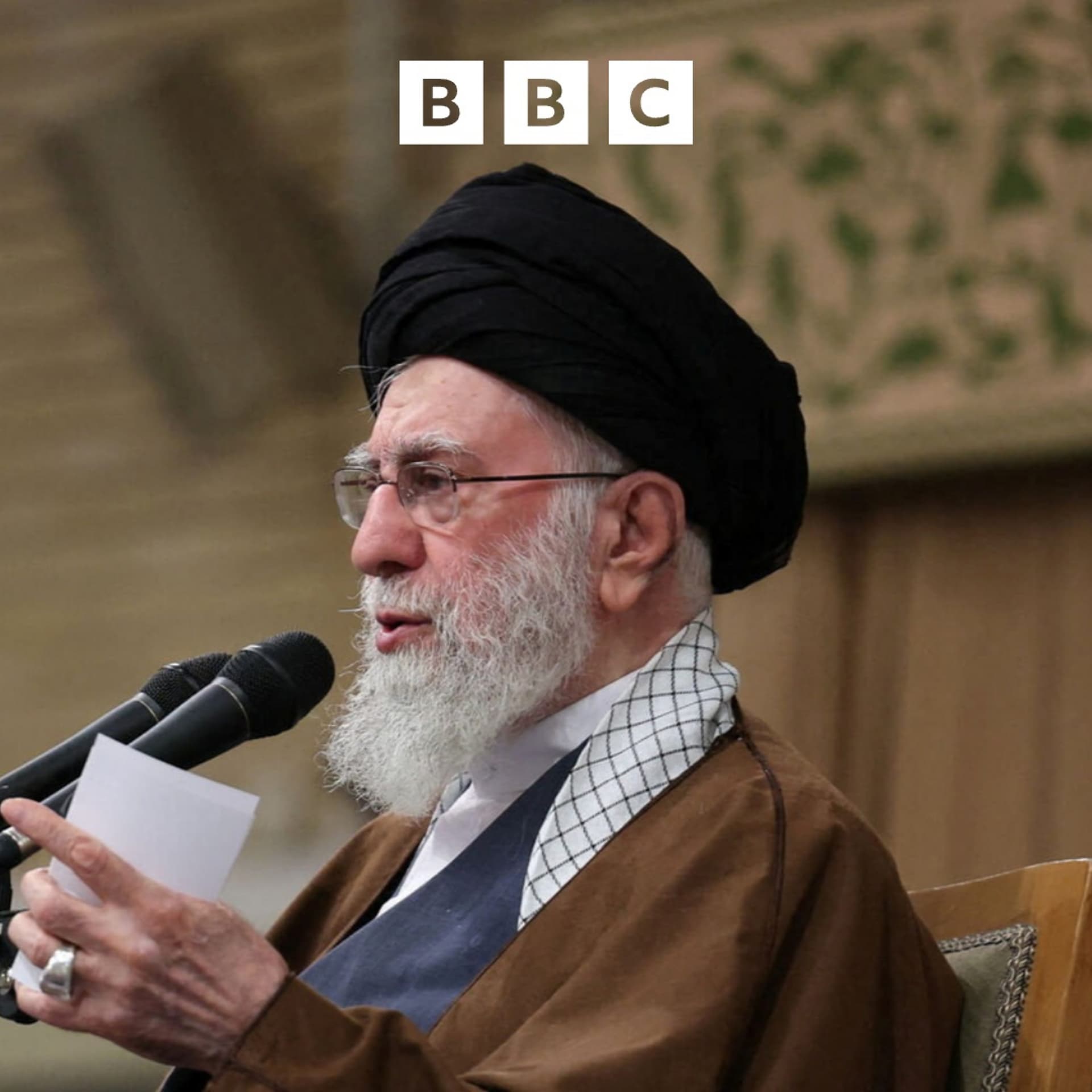
- Supreme Leader's Response: Ayatollah Ali Khamenei characterized the demonstrators as “vandals” and “mercenaries,” emphasizing that the Iranian government would not relent.
- Expert Insight: Kazra Najafi from BBC Persian commented that Khamenei's remarks signal a likely crackdown on protesters, suggesting potential violence given the scale of protests across approximately 340 locations in Iran.
- Russia's Missile Attack on Ukraine
- Details of the Attack: Russia utilized a hypersonic missile against the western Ukrainian city of Lviv, amidst ongoing air attacks. This missile type is noted for its difficulty to intercept due to its speed.
- Context: The attack was framed as retaliation against a supposed Ukrainian drone strike on President Putin’s residence, which Ukraine and the US deny occurred.
- Human Impact: Reports from Kyiv indicate significant casualties and destruction of critical infrastructure during these attacks, compounded by severe winter conditions leading to power outages and water shortages.
- Switzerland's Day of Mourning
- Event Overview: Switzerland observed a national day of mourning for victims of a tragic fire that occurred on New Year's Eve, claiming 40 lives and injuring over 100 people.
- Investigations: Authorities are investigating the bar owner's possible negligence regarding safety measures, raising further questions about regulatory compliance.
- Panda Diplomacy and Zoo Changes in Japan
- Panda Departure: Japan will be without giant pandas for the first time in decades as the last two, on loan from China, are set to return home.
- Public Reaction: Many fans express disappointment at the loss. In response, a southern Japanese zoo is employing people dressed in panda costumes as a quirky alternative attraction.
- Controversy Over AI Deepfake Technology
- Platform Changes: Elon Musk's platform X has restricted the use of its AI tool Grok, previously criticized for generating sexual deepfake images, now limited to paying subscribers.
- Public Backlash: The decision follows significant backlash regarding the misuse of deepfake technology, particularly concerning the impact on victims.
- Potential Breakthrough in IVF Technology
- Research Development: A study from OvoLabs suggests a method to rejuvenate human eggs, potentially improving IVF success rates significantly for older couples.
- Expert Caution: While the findings are promising, experts urge caution until the research undergoes peer review and further validation.
- US Federal Immigration Operations
- Recent Incidents: Following a fatal shooting incident in Minneapolis by federal immigration agents, similar occurrences have raised tensions and led to community calls for accountability in Portland, Oregon.
---
Conclusion The episode encapsulates major geopolitical and social issues, highlighting the dynamic nature of global news that significantly impacts people's lives across various regions. The discussions underscore the deep complexities surrounding protests, international relations, and the evolving landscape of technology and its societal implications.
Additional Information For further details on these stories or to engage with the podcast, listeners are encouraged to reach out via email at globalpodcast@bbc.co.uk or follow them on social media platforms.
---
*This summary serves as a concise reference to the key updates discussed in the latest episode of the Global News Podcast.*
Written by AI. May contain mistakes. Listen to the episode to check what was said.
Chapters
Tap a time to open that second in VOIran's Supreme Leader's Warning
0:48 to 1:38
Discussion on the Supreme Leader's comments about protesters.
“Iran's supreme leader sends a chilling warning to thousands of anti-government protesters.”
Protesters as Vandals
1:38 to 3:06
Analysis of the Supreme Leader's language regarding the protests.
“Iran has been plunged into a near total internet blackout.”
Possible Crackdown on Protesters
3:06 to 4:17
Insight into the implications of a government crackdown on protests.
“And the Iranian TV, by the way, is coming up with a lot of stuff about how the protesters are terrorists and hired by the enemies of Iran to cause as much destruction as possible.”
Trump's Rhetoric on Iranian Protests
4:17 to 5:32
Discussion on Trump's potential response to Iranian protests.
“What about Donald Trump saying that he would intervene if protesters were hurt?”
Ukraine Under Attack
5:32 to 6:12
Overview of the recent attacks on Ukraine's infrastructure.
“Then you had clashes, localities in Tehran and other places, big clashes, but we didn't have as many protesters on the streets as we have seen in the last few days.”
Russia's Military Strategy
6:12 to 7:50
Exploration of Russia's military tactics in the conflict with Ukraine.
“There's no let-up in the war in Ukraine.”
Kiev's Struggles Amid Attacks
7:50 to 9:16
Impact of missile attacks on Kiev and its residents.
“And the same can be said for many of Ukraine's major cities from Lviv in the west to places like Dnipro and Zaporizhia in the centre in the south.”
US Involvement in Colombia
9:16 to 11:18
Discussion on US relations and military involvement in Colombia.
“So the combined effort of impact of this really inclement weather and those Russian strikes deliberately targeting infrastructure is having a devastating impact.”
Colombian President's Response
11:18 to 12:23
Insights into Colombia's political stance on US intervention.
“Colombia's history shows how it has responded to large armies.”
Elon Musk's AI Tool Controversy
12:23 to 13:15
Examination of the issues surrounding the AI tool Grok and deepfakes.
“What we've developed today is two simultaneous approaches.”
Show all 17 chapters
The Impact of Deepfake Technology
13:15 to 14:00
Discussion on the implications of deepfake technology on privacy.
“mainly of women and in some cases of children.”
The Rise of Deepfake Technology
14:00 to 16:04
Explore the implications of deepfake technology on personal privacy and safety.
“You say, at Grok, and then that alerts the chatbot.”
Switzerland's National Mourning
16:55 to 20:08
Details surrounding a national mourning in Switzerland for fire victims.
“In Switzerland, bells have been ringing out as the country observes a day of national mourning for the victims of the New Year's Eve fire at a ski resort in which 40 young people were killed.”
Controversy Over ICE Operations in Portland
20:08 to 22:56
Discussion on a shooting incident involving federal agents in Portland.
“Now to the US and a day after the fatal shooting of a woman by federal immigration agents in the city of Minneapolis, there's been a similar incident, this time in Portland, Oregon.”
Breakthrough in IVF Technology
22:56 to 26:03
Insights into a potential breakthrough in IVF that could help older couples.
“There may be a breakthrough in IVF, the fertility treatment procedure, and one that particularly benefits older couples.”
The End of Panda Diplomacy in Japan
26:03 to 28:00
Discussing the implications of Japan losing its giant pandas amid diplomatic tensions.
“Later this month, Japan will be without any giant pandas for the first time in decades.”
Panda Diplomacy and Visitor Experience
28:00 to 28:48
Explore the implications of using pandas as diplomatic tools amidst tensions.
“its keepers in black and white headgear and clothes.”
Transcript
Automatic transcript. May contain errors.0:00This BBC podcast is supported by ads outside the UK. If journalism is the first draft of history, what happens if that draft is flawed? In 1999, four Russian apartment buildings were bombed, hundreds killed. But even now, we still don't know for sure who did it. It's a mystery that sparked chilling theories. I'm Helena Merriman, and in a new BBC series, I'm talking to the reporters who first covered this story. What did they miss the first time? The History Bureau. Putin and the apartment bombs. Listen on BBC.com or wherever you get your podcasts. This is the Global News Podcast from the BBC World Service.
0:47I'm Alex Ritson and at 16 hours GMT on Friday the 9th of January, these are our main stories. Iran's supreme leader sends a chilling warning to thousands of anti-government protesters. Switzerland holds a day of mourning for the victims of a fire on New Year's Day. And Elon Musk's platform X stops most users from being able to use the AI tool Grok's image generation option over sexual deepfake pictures. Also in this podcast, why the pandas in a Japanese zoo will soon be replaced by people in panda suits. As a fan of pandas, I'm really sad because we'll no longer have pandas here. I hope they'll come back again.
1:37As nationwide protests escalate and spread across the country, Iran has been plunged into a near total internet blackout. In his first public comment since the protests started nearly two weeks ago, the Supreme Leader Ayatollah Ali Khaymari has insisted that the Islamic Republic would not back down in the face of the protesters, who he called vandals and saboteurs.
2:06Last night in Tehran and some other places, a bunch of vandals showed up and destroyed buildings belonging to their own country, just to please the US president. Let him, Donald Trump, run his own country if he can. In his own country, there are all kinds of incidents going on. The Islamic Republic was established with the blood of several hundred thousand honourable people and it will not back down in the face of those who engage in destruction, nor will it tolerate mercenaries serving foreign powers. I asked Khazran Arji from BBC Persian what he made of the Supreme Leader's comments. He's doubling down on cracking down on the protesters.
2:52He is basically, it seems to be the situation where he has decided that the only way to go forward is through a good heavy crackdown. And the Iranian TV, by the way, is coming up with a lot of stuff about how the protesters are terrorists and hired by the enemies of Iran to cause as much destruction as possible. So and the television is basically preparing a ground for a crackdown. And that kind of crackdown in Iran, I would have thought, is like security forces taking a very hard line on the streets against the protesters in the days to come. And by that you mean there could be a bloodbath? A bloodbath.
3:41It's very possible given the fact that the sheer number of protesters on the streets, if you're going to crack down on this you have to be pretty hard because of the numbers you have to do it across the country and in many many locations we're talking about in the last two weeks almost we've had trouble and protests in about 340 odd locations throughout the country up and down the country small towns big cities so on and so forth so it has to be nationwide wide. And yeah, it's going to be bloody. What about Donald Trump saying that he would intervene if protesters were hurt? Well, you have to ask him what he has in mind and how he can intervene.
4:31He says he's ready to go, he's ready to act in support of the protesters. If the regime starts killing demonstrators. We will have to wait and see. I suppose what he has in mind is sort of physical military attack against bases of Iran's Revolutionary Guard or security forces or something to that nature. But beyond that, we really don't know. So far, it remains rhetoric, but it's an important rhetoric. And I would have thought that some protesters inside Iran who are on the streets these days, when they hear that from the president of the United States, they get encouragement, because they feel that, you know, there's this big power that supports them.
5:23Every time when there are protests in Iran, we ask you, is this going to be the end of the regime? Is it any different this time? It's different in a sense that the sheer number of people is different to the last time that we saw unrest on the streets of Tehran in 2022 in the protests that were labeled as women, life, freedom. Then you had clashes, localities in Tehran and other places, big clashes, but we didn't have as many protesters on the streets as we have seen in the last few days. Kazra, Najee, and for more on this story, you can go to YouTube, search for BBC News, click on the logo, then choose podcasts and Global News Podcast.
6:11There's a new visualized story available every weekday. There's no let-up in the war in Ukraine. The authorities there say Russia has launched a large-scale attack on Ukraine's critical infrastructure overnight using attack drones and sea and land-based missiles. The Russian Defence Ministry said it used an advanced hypersonic ballistic missile known as the Oreshnik in an attack in the Western Lviv region near the border with Poland. Russia first used such a hypersonic missile against Ukraine two years ago. Its use is causing concern in Ukraine and in Europe, as the high speed of the missile makes it difficult to intercept.
6:51Lisa Yasko is an MP for the governing Servant of the People Party. She explained why she thinks Russia used such a weapon. Putin is very angry and he wants to show all his power now. That comes as no surprise to us, but I think for him many things are very emotional and he knows that this weapon is a massive destruction weapon and that all the world will have a reaction to that and there will be victims. So I think he is just showing his uncontrolled power that he actually can do whatever he wants, no matter what anyone says. I believe this is what he is doing. Russia said the attack was in retaliation to what it said was a Ukrainian drone strike on the Russian president, Vladimir Putin's residence in the Novgorod region last month.
7:41Ukraine and the US have rejected the Russian claim of such an attack. We heard more from our correspondent, Weira Davis. Nobody here in Kyiv, I think, got much sleep last night. And the same can be said for many of Ukraine's major cities from Lviv in the west to places like Dnipro and Zaporizhia in the centre in the south. There were over 300 missiles or drones attacking Kiev last night. Now many of those will have been dealt with and shot down but of course with such a large number of offensive missiles coming in some of them did land. At least four people were killed in Kiev including one paramedic had gone to the scene of an earlier attack and about an hour later a second drone is reported to have hit exactly the same place and killed the paramedic.
8:30There were fatalities elsewhere in the country, many, many injuries. And of course, one of the other consequences of such a large attack by Russia, particularly against critical infrastructure, especially with this really inclement weather here, real temperatures are about minus 17, minus 18 degrees centigrade in many parts of the country. That has led to power blackouts, shortages of water supplies. In some places now, they're having to drain water pipes of their water because there's no power to pump the water through central heating systems and there's a real danger of pipes bursting and freezing.
9:09And to such an extent that the mayor of Kiev, Vitaly Klitschlo, has suggested that some residents of Kiev should actually leave and go elsewhere because the services in the city are being overwhelmed. So the combined effort of impact of this really inclement weather and those Russian strikes deliberately targeting infrastructure is having a devastating impact. Weira Davis. The Russians also say after overnight shelling by Ukrainian armed forces, more than 500 ,000 people have been left without electricity and heat in the Russian city of Belgorod. Following US strikes on Venezuela and the seizure of Nicolas Maduro last Saturday, US President Donald Trump said a military operation targeting Colombia sounds good.
9:52A phone conversation between Mr Trump and the Colombian President Gustavo Petro appeared to have smoothed relations. But despite that, the Colombian president says he is still wary about a US intervention in his country. He told the BBC he believes there is a real threat of such action after the US strikes on Venezuela and the seizure of Nicolas Maduro. Mr. Petro spoke to our South America correspondent Ioni Wells in Colombia's capital, Bogota. I do believe it's a real threat, and the prospect of removing it depends on the ongoing conversations. Colombia has already experienced military violence from the United States, most recently in Panama at the beginning of the 20th century.
10:37Today, Panama is not part of Colombia. Colombia has lost territory many times. But this is just one example. So, we don't think we're just talking for the sake of talking, and even less so from the moment there was a verbal altercation in relations. President Trump has also said to you personally to watch your back. How worried are you for your personal safety? Yes, but let's say that faced with the threat of the magnitude of such powerful army, such powerful military forces in Colombia, the response isn't exactly the same as what has happened in Venezuela. Colombia's history shows how it has responded to large armies.
11:22Our defense isn't in barracks. It's in the mountains, in the jungles. And can you be sure that the U.S. won't do to you, to Colombia, what it has done in Venezuela with Nicolás Maduro? There was a major weakness in Nicolás Maduro, one that steamed from Venezuelan politics itself, a stage of degradation of the process initiated by Chávez. This led to a significant withdrawal of support from Venezuelan society. I just spoke with Delcy, whom I've known for a long time. Negotiations between Venezuelan forces must be between Venezuelan forces. President Trump has also accused you personally of trafficking cocaine.
12:03What is your response to that?
12:08People voted for me because it has always been proven here that I'm not involved in that. For 20 years, and this is important, I have been fighting against the drug cartels at the cost of my family having to go into exile. Should you have adopted a more tough military stance to tackle narco-trafficking rather than just trying to talk? What we've developed today is two simultaneous approaches. One, talking about peace with groups that are bandits, it's no longer politics, and the other developing a military offensive against those who don't want peace. We've carried out 1 ,440 armed confrontations, capturing 14 ,000 members of these types of structures.
12:58The Colombian president Gustavo Petro is speaking to the BBC's Ioni Wells. Elon Musk's platform X has stopped the vast majority of its users from being able to use the image generation capabilities of its AI tool Grok after it was criticised for allowing people to make sexualised deepfake images mainly of women and in some cases of children. The company is now saying that only paid subscribers can request images, meaning their name and payment information would be on file. The British government has said that the new rules limiting the use of Grok to paid users are insulting to victims of misogyny and sexual violence.
13:39I got more details from our cyber correspondent, Joe Tidy. The issue has always been about images, how people are using images and how they're effectively commissioning Grok to alter and digitally undress images of women and in some cases children on the app. And the way that it worked was that people on the social network, they could bring, and you still can bring in Grok to your kind of conversation. You say, at Grok, and then that alerts the chatbot. You can ask it questions like, you know, Why is the sky blue? Whatever. The sort of chatbot stuff that we see all the time. But when people were asking, and it became very prevalent the last couple of weeks, when they were asking, hey, Grok, can you undress this person?
14:16Can you put them in a sexual pose? Within seconds, the chatbot was replying with a very lifelike image of people, usually women. And as I say, in some cases, illegal images of children. And it was instant. And there was no filtering here. And I think deepfake technology has been around for a long time. But the shock here has been that it was so immediate and public on the feed. So if you were a person that this happened to, not only would you feel, you know, in some way, we spoke to some victims of this, you know, some women that this happened to, you'd feel sort of violated, but also humiliated in some cases.
14:47Some of the women said because the pictures of you in poses and wearing things that you haven't worn are suddenly public to everyone. This action, they won't stop the images from being made, will it? No, but it does stem the tide. So what we have seen the last, particularly the last sort of three or four days, is that it became a sort of trend. People were doing this more and more and more. I was going on the grok, the kind of replies on Twitter, and it was almost every minute you would see this kind of activity, people using it and abusing it. And the company said initially that anyone doing this, the onus is on them.
15:19If they're doing anything illegal, they will face consequences. But now it seems that after so much backlash from not only the people it was happening to, but also commentators in the tech world and probably more pertinent politicians. So, for example, the EU Commission, French government, British government, Ofcom in the UK, and most recently the Prime Minister Keir Starmer saying, you know, this is disgusting and disgraceful. that appears to have had some sort of an issue, a sort of impact on the company. Now what they've said is only paying subscribers can do that. You could look at this as a sort of cynical move to get more paying subscribers, but what it does do is it does stop the vast majority of people being able to use this Grok tool in this way.
15:57Jo Tidy. Still to come in this podcast. If this could then be translated to the clinic, this could be potentially the biggest improvement in IVF success rates over the last decades. A potential major breakthrough in fertility treatment for older couples.
16:23If journalism is the first draft of history, what happens if that draft is flawed? In 1999, four Russian apartment buildings were bombed, hundreds killed. But even now, we still don't know for sure who did it. It's a mystery that sparked chilling theories. I'm Helena Merriman, and in a new BBC series, I'm talking to the reporters who first covered this story. What did they miss the first time? The History Bureau, Putin and the apartment bombs. Listen on bbc.com or wherever you get your podcasts.
17:01In Switzerland, bells have been ringing out as the country observes a day of national mourning for the victims of the New Year's Eve fire at a ski resort in which 40 young people were killed.
17:17More than 100 people were also injured in the fire at a bar in Cran, Montana, many suffering extensive burns. The French and Italian presidents among guests attending a memorial service in the town of Martin Nye.
17:40One of the owners of the bar, Jacques Moretti, has been taken into custody. He and his wife are being investigated on suspicion of negligent homicide. Our correspondent, Sarah Rainsford, joined me from Crom, Montana. Yeah, I'm sure you can hear the piano music playing quietly behind me. That's from a giant screen that's been erected in the middle of Crom, Montana, just down the road actually from the Constellation Bar, which is where that terrible fire took hold on New Year's Eve. And there are hundreds and hundreds of people here in the very, very snowy street here following this memorial service.
18:18Lots of people standing quietly, lots of people hugging one another or holding hands, and lots of people, of course, also holding flowers. They've come to remember the dead. They've also come here to remember those who were so badly injured in this fire and some of them still fighting for their lives in hospital. So a real moment of reflection, not just in this community, of course, but right across Switzerland. And I think people still really shocked by the idea that a country that so many people thought was and is extremely safe suddenly has this huge tragedy in one of the places most well-known for fun, for pleasure, for safety.
18:58and now there is this bar that's covered with white tarpaulin. There are funerals, they're having funerals several days this week and of course huge questions for the owners of the bar and for the authorities here about safety measures inside La Constellation and how this tragedy actually was even possible. When you talk to people in Cromontana and particularly the lawyers of those who've lost their lives, their families, They think the investigation should investigate whether in fact there were people who knew that the materials used in the bar were flammable and dangerous. They want to look into whether the local authorities, why they didn't carry out the mandatory annual safety checks that should have been in place and that didn't happen.
19:45There are lots and lots of questions that haven't been answered. and of course this is an international tragedy because many of the dead and the injured were from France, from Italy, from Romania, from other countries. So a huge number of countries in fact following what happens here and I spoke to the Italian ambassador to Switzerland and he told me very firmly that Italy will make sure that there's justice for all of those who lost their lives here. Sarah Rainsford. Now to the US and a day after the fatal shooting of a woman by federal immigration agents in the city of Minneapolis, there's been a similar incident, this time in Portland, Oregon.
20:22Police say an agent shot and wounded two people in a vehicle. The mayor of Portland, Keith Wilson, called for ICE, the federal immigration force, to suspend operations in the city. Portland is not a training ground for militarized agents. When the administration talks about using full force, we are seeing what it means on our streets. That is why we are calling on ICE to halt all operations in Portland until a full and independent investigation can take place. Our community deserves accountability. And most of all, our community deserves peace. Our North America correspondent, Nedda Torfik, has been following events in Portland.
21:02From local officials, what we understand is that there was an emergency services call that police responded to. They said that a man actually called in and that they treated a man and a woman and rushed them to the hospital. Now, beyond that, officials said they didn't have much more information. What we heard from the Department of Homeland Security was that during a traffic stop, they were targeting a Venezuelan illegal alien and someone connected to a gang's prostitution ring. And they said that was the passenger of the vehicle that they were attempting to stop. Now, they said the driver was a man who weaponized essentially his vehicle and tried to run over federal agents.
21:52And they said a federal agent then fired his weapon defensively. And if you have been following, of course, what's happened in Minneapolis, that is an explanation that is very similar to the one used there to justify the use of force of a federal agent shooting and killing Renee Good. I've been out all day in Minneapolis. People in their windows have signs saying ice out of our city. Restaurants have signs saying that they won't serve ice. They're not welcome in their restaurants. Community members, including faith leaders, have all come out, and they are very clear that they do not trust the administration's claim that this was essentially a domestic terror act, that Renee Good was an agitator, that she was trying to ram over the federal agent.
22:44They say they have all watched the video, that it was clear to them that she was trying to get away, and they say that ICE has only caused fear in their communities, and they want ICE agents out. Neda Torfik. There may be a breakthrough in IVF, the fertility treatment procedure, and one that particularly benefits older couples. That's the conclusion of a study by a company called OvoLabs. Its CEO is Dr Agata Zielinska. In the laboratory of Professor Melina Shuh, my co-founder at OvoLabs, we've been able to achieve the first rejuvenation of a human egg in vitro. And what this essentially means is that we could reduce the fraction of eggs with genetic defects, so chromosomal errors from 71 % to as little as 47%.
23:31If this could then be translated to the clinic, this could be potentially the biggest improvement in IVF success rates over the last decades. And from a practical perspective, it could potentially allow more couples to conceive within just a single IVF attempt. But how justified is this optimistic assessment? Professor Robin Lovell. Badge leads the Cell Biology and Developmental Genetics Laboratory in London. He talks to Justin Webb and added a cautionary note. The frequency of chromosome abnormalities is very high in the embryos for older women, basically because of this process called meiosis, where you have these divisions of the germ cells, particularly as the eggs are developing, which begins in the embryo in eggs.
24:20So the chromosomes are held in this sort of stasis for decades before this particular type of cell division is completed. And that's very precarious. And so there's a specific mechanism to try and keep the chromosomes together properly so they don't missegregate and give you these chromosome abnormalities. What they've done is they've explored this mechanism somewhat and they think they have identified a couple of components that are critical to help hold these chromosomes together in that pot. But then in older women, this mechanism seems to deteriorate, so it's not working very well. So I think what they're doing is basically introducing these sort of components that degrade over time back into the eggs.
25:06And the thing is, if they have done it successfully, and I don't think it's been peer-reviewed yet, has it, this paper? So it's quite a long way to go. And I think they wouldn't claim anything else other than that they think it might work. But if it were to work, it would be a significant development. Oh, definitely. It would be very important. So it's one of the biggest problems that reduces the rate of having successful IVF, for example, reduces rates of pregnancy in women without IVF, probably. There's abnormal chromosomes. And so if they really have done that, then it is indeed very important.
25:36What needs to happen now? Well, it hasn't been peer-reviewed. We just have a little bit of sketchy information to go by. They've only tried it, I think, on 100 human eggs of different ages, which is not many. And of course, they're not giving away really what's in this, what they're calling Emory Protector 1 material that they're injecting into the eggs. Potentially very important, but it's just at the moment a bit hard to judge. Robin Lovell-Badge. Later this month, Japan will be without any giant pandas for the first time in decades. The final two animals, on loan from China, will be returned to their homeland at the end of January, and there are no plans to replace them.
26:19This latest twist in panda diplomacy, known as panda sanctions, has led one Japanese zoo to take extreme measures to make up for the loss of the visitor attractions, as Alice Adderley reports.
Read the full transcript
26:37That's the sound of people queuing to visit the final two pandas, Xiao Xiao and Lei Lei, before their departure from their zoo in Tokyo. Such is the demand to see the creatures, the zoo is limiting the length of visits to one minute per person. This woman said she was upset they would be going back to China at the end of January. As a fan of pandas, I'm really sad because we'll no longer have pandas here. I hope they'll come back again. The pandas' return without a replacement is a significant loss to Japan and leaves its zoos without them for the first time since 1972, when China gifted a pair to Japan following the normalisation of bilateral ties after World War II.
27:21The loss is widely thought to have been caused by Beijing's anger at comments by the Japanese Prime Minister Sanai Takechi in November, which it took to mean Japan would take military action if China invaded Taiwan. This tourist at the Ueno Zoo in Tokyo in December expressed the feelings of many Japanese at the loss of the twin pandas who were born in Japan. It's mainly the shock of not being able to see pandas in our country anymore. That's a really big deal for me. Now a zoo in southern Japan, Adventure World in Wakayama Prefecture, is providing an alternative attraction by dressing its keepers in black and white headgear and clothes.
28:03They then pose as pandas and visitors can feed them pieces of apple while they sit in a cage. The tours take place inside the actual living areas where the bears once resided. It's not clear how popular the new visitor experience will be and whether it will make up for the loss of the real thing. Given their immense popularity in Japan, the animals may be used as a diplomatic card for China to get Takichi to retract her remarks. Despite the tensions, officials from Tokyo intend to request a new panda loan and we'll be hoping the panda sanctions can be lifted. Sounds like pandemonium. Alice Adderley with that report.
28:47And that's all from us for now, but there'll be a new edition of the Global News podcast later. If you want to comment on this podcast or the topics covered in it, you can send us an email. The address is globalpodcast at bbc.co.uk. You can also find us on X at BBC World Service. Use the hashtag Global News Pod. This edition was mixed by Charlotta Hadroy-Dosimska and the producers were Richard Hamilton and Arian Kochi. The editor is Karen Martin. I'm Alex Ritson. Until next time, goodbye.
29:29If journalism is the first draft of history, what happens if that draft is flawed? In 1999, four Russian apartment buildings were bombed, hundreds killed. But even now, we still don't know for sure who did it. It's a mystery that sparked chilling theories. I'm Helena Merriman, and in a new BBC series, I'm talking to the reporters who first covered this story. What did they miss the first time? The History Bureau, Putin and the apartment bombs. Listen on BBC.com or wherever you get your podcasts. Watch ya.
From the publisher
Anti-government unrest has continued to spread across Iran, despite an internet blackout and a defiant address by the Supreme Leader. Ayatollah Ali Khamenei dismissed the protesters as "a bunch of vandals" and said the authorities would not back down. Demonstrations began nearly two weeks ago because of anger at rising living costs. Also: Russia uses a powerful hypersonic missile against the western Ukrainian city of Lviv, in another wave of air attacks. Switzerland observes a national day of mourning for the victims of the New Year's eve fire. And why the giant pandas in a Japanese zoo will soon be replaced by people in panda suits.
The Global News Podcast brings you the breaking news you need to hear, as it happens. Listen for the latest headlines and current affairs from around the world. Politics, economics, climate, business, technology, health – we cover it all with expert analysis and insight. Get the news that matters, delivered twice a day on weekdays and daily at weekends, plus special bonus episodes reacting to urgent breaking stories. Follow or subscribe now and never miss a moment. Get in touch: globalpodcast@bbc.co.uk