
In short
Global News Podcast Summary
Episode Title
Iran's Supreme Leader Killed in US-Israeli Strikes
Episode Overview In this episode, the Global News Podcast discusses the significant geopolitical event of the death of Iran's Supreme Leader, Ayatollah Ali Khamenei, during US and Israeli military strikes. The episode explores the implications of this event on Iran and the broader Middle East, as well as the international reactions it triggered.
---
Key Points
- Death of Ayatollah Ali Khamenei
- Event: Ayatollah Khamenei was confirmed dead due to US-Israeli airstrikes in Tehran.
- Reactions in Iran:
- Public Response: Many Iranians celebrated his death in several cities, which included young people dancing and waving flags.
- Official Response: Iran declared a 40-day mourning period and the Revolutionary Guard threatened retaliation against the "murderers."
- Reactions from World Leaders:
- President Trump labeled Khamenei as one of the "most evil people in history."
- Implications for Iran
- Power Vacuum: Uncertainty surrounds who will succeed Khamenei, with speculation about candidates, including his son.
- Public Sentiment: Khamenei's tenure was marked by repression and discontent, with protests against the regime erupting in recent years.
- Revolutionary Guard's Role: The military's influence and control over succession are crucial in maintaining stability within the government.
- Geopolitical Reactions
- Iran's Retaliation: Following Khamenei's death, Iran carried out strikes on US and Israeli targets across the Gulf, raising concerns about escalating regional tensions.
- UN Security Council Response: The Council held an emergency meeting where there were calls for de-escalation from various member states. Iran accused the US and Israel of war crimes due to civilian casualties.
- Future Considerations
- Potential for Regime Change: While some believe Khamenei's death could lead to regime change, others argue that the next leader will still aim to preserve the Islamic Republic's core structure.
- Regional Impact: Closing the Strait of Hormuz could have significant consequences for global oil supplies, with Iran poised to leverage this strategic chokepoint.
- Internal Challenges: The episode also touches on ongoing internal unrest and the potential for a larger movement against clerical rule in Iran.
---
Analysis The Legacy of Ayatollah Khamenei
- Khamenei’s rule was characterized by a repressive regime that suppressed dissent and maintained power through a combination of religious authority and military might. His death opens a critical juncture for Iran, raising questions about the future of governance and civil liberties in the country.
Potential Outcomes
- Succession Dynamics: The Revolutionary Guards' ability to quickly establish a new leadership could stabilize the regime, but this hinges on internal loyalty and public sentiment.
- Increased Tensions: The military strikes against US and Israeli targets may escalate conflict in the region, complicating international relations and security measures.
- Public Unrest: The Iranian populace, still simmering with unresolved grievances, may seize this opportunity for change, potentially leading to widespread protests or calls for reform.
---
Conclusion The death of Ayatollah Ali Khamenei signifies a pivotal moment in Iran's political landscape, with far-reaching implications for its internal stability and international relations. The episode reflects on the historical context of Khamenei's rule, the immediate reactions to his death, and the uncertain future that lies ahead for Iran and its people.
---
Contact Information For further inquiries or comments regarding this episode, listeners are encouraged to reach out via email at globalpodcast@bbc.co.uk.
Written by AI. May contain mistakes. Listen to the episode to check what was said.
Chapters
Tap a time to open that second in VOIran's Supreme Leader Confirmed Dead
1:10 to 1:48
Iran has confirmed the death of Supreme Leader Ayatollah Ali Khamenei.
“This edition is published in the early hours of Sunday, the 1st of March.”
Implications of Khamenei's Death
1:49 to 3:19
Discussion on the potential impacts of Khamenei's death on Iran and regional stability.
“Also in the podcast, we hear about Iranian retaliation hitting targets across the Middle East and threatening to close a key oil transit route.”
Khamenei's Legacy and Its Consequences
3:23 to 6:55
Examination of Khamenei's influence on Iran's political landscape and public sentiment.
“But what does his death mean for the people of Iran?”
Looking Back at Khamenei's Life
6:59 to 10:43
A retrospective on Khamenei's rise and his impact on Iranian society over the years.
“Ayatollah Ali Khamenei had the final say on all important matters of state in Iran.”
Future Prospects for Iran Post-Khamenei
10:48 to 13:04
Discussion on Iran's future and possible changes following the death of Khamenei.
“Our Chief International Correspondent, Lise Doucette, has recently returned from Iran.”
Iran's Military Strategy and Regional Tensions
13:04 to 14:04
Exploration of Iran's military capabilities and strategies in response to threats.
“That is the absolutely red line for this regime.”
Iran's Strategic Position and Choke Points
14:04 to 14:56
Discussion about Iran's military strategies and its control over key waterways.
“And in that armory, it has the ability to close this one of the world's most strategic waterways.”
Leadership Transition in Iran
14:56 to 15:40
Details about the temporary leadership in Iran amidst ongoing tensions.
“Still to come on the podcast, what is the strategy now for the Iranian government?”
UN Security Council Meeting Overview
16:12 to 17:45
Analysis of the UN meeting regarding US-Israeli actions against Iran.
“Undercover in the furthest corners of the dark web, US special agents are on a mission to locate and rescue children from abuse.”
Iran's Military Response and Regional Impact
17:45 to 21:40
Details on Iran's military retaliation and regional security implications.
“You're listening to the Global News Podcast.”
Show all 13 chapters
Analysis of Iranian Strategy and Government Sentiment
21:40 to 26:02
Insights into the Iranian government's decision-making and strategic outlook.
“Nedda Tawfiq at the United Nations in New York.”
Future Outlook for Iran Amidst Conflict
26:02 to 28:03
Discussion on Iran's internal situation and potential for change following the conflict.
“In the US, there's been a mixed reception to the attacks.”
Uncharted Territory: Iran's New Reality
28:03 to 29:27
Explore the implications of the supreme leader's death and internal turmoil in Iran.
“No matter how much the Iranian leaders have thought about this moment, prepared for this moment, a war has been unleashed.”
Transcript
Automatic transcript. May contain errors.0:00BBC Persian:This BBC podcast is supported by ads outside the UK.
0:30Anthony Hopkins. The interview from the BBC World Service. Listen now wherever you get your BBC podcasts. We focus on the part of the internet that most people don't know about. It's called the dark web. Undercover in the furthest corners of the dark web, US special agents are on a mission to locate and rescue children from abuse. Moving now. From the BBC World Service, World of Secrets. The darkest web follows their shocking investigations. Listen on bbc.com or wherever you get your BBC podcasts.
1:09BBC Persian:You're listening to the Global News Podcast from the BBC World Service. Hello, I'm Oliver Conway. This edition is published in the early hours of Sunday, the 1st of March. Iran has confirmed the death of its supreme leader, Ayatollah Ali Khamenei.
1:37BBC Persian:The 86-year-old cleric was killed during a barrage of US-Israeli strikes. President Trump called him one of the most evil people in history, as some people celebrated in Iran. But who is in charge now? Also in the podcast, we hear about Iranian retaliation hitting targets across the Middle East and threatening to close a key oil transit route. And we get an update from the UN Security Council.
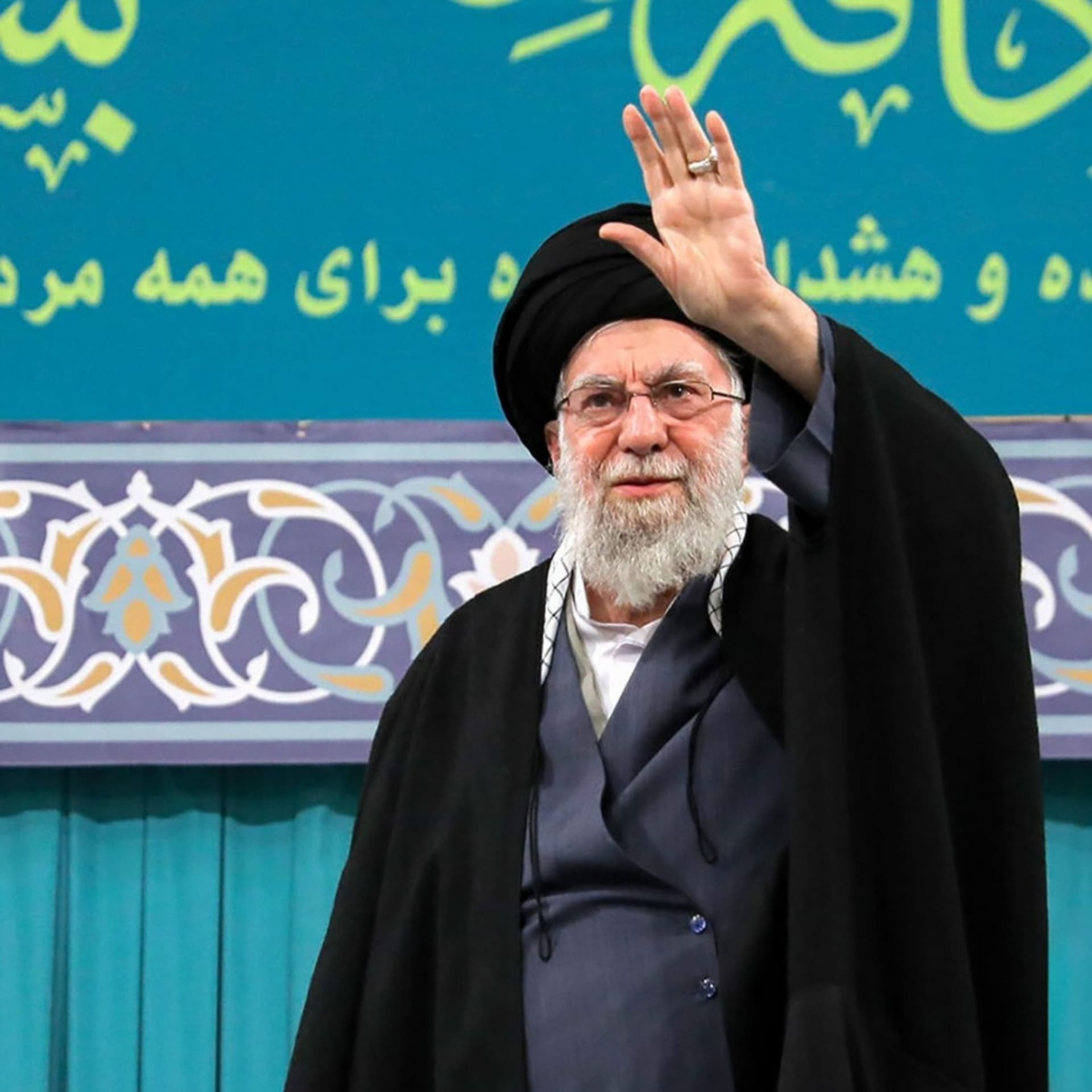
2:09BBC Persian:For nearly four decades, Ayatollah Ali Khamenei has wielded absolute power in Iran, but no longer. As dawn broke in Tehran, Iranian state media confirmed he was dead, killed at his office in the early hours of Saturday. It followed a day of heavy airstrikes across Iran by the US and Israel, codenamed Epic Fury. President Trump earlier broke the news of the death of the 86-year-old cleric, calling him one of the most evil people in history, but Iran denied it. Nevertheless, as rumours spread of his demise, there were celebrations in a number of Iranian cities.
2:51BBC Persian:Young people, including women without headscarves, danced and waved flags in a residential area near the city of Qaraj. In the west of the capital, Tehran, people were filmed cheering and whistling from their windows and balconies as celebrations echoed between tall apartment blocks.
3:11BBC Persian:Well, Iran has now announced 40 days of mourning, while the Revolutionary Guard Corps promised severe decisive punishment for the murderers of Ayatollah Khamenei, as it put it. But what does his death mean for the people of Iran? Here's Kashyyar John A.D. of the BBC Persian Service. For 36 years, his will was what was implemented, no matter elections, parliamentary elections, a president, all of them were second to him. So he was the most important person in the country. And he had a, according to the constitution of the Islamic Republic, he had a high religious as well as high political standing and nobody was above him.
3:54He was above the law. And many people were not happy with the way the country moved forward during his reign. And the result of that dismay and that resentment was the uprisings, was the protests in January, which were heavily crushed. So Khamenei's last chapter of his reign will be remembered as a bloody chapter in which thousands of people were killed on the streets of Tehran and other cities across the country, people who were not happy with their economic situation. And now the chance you were hearing now, these are the people which will remember Khamenei, not by what happened during this 36 years, but by the crackdown on the protesters.
4:42Who is in charge of the country at the moment? We still don't know. Look, considering the standards of the Islamic Republic, the announcement of Khamenei's death was faster than usual. 36 years ago, when his predecessor, Ayatollah Khomeini died. They waited till 7 in the morning to announce his death. Khomeini's death has been announced 5 in the morning. That shows that they have some confidence about the succession structure. The designation has probably been made, but in secret. Let's keep in mind, the question is not only who is going to succeed Khomeini, it is how fast the military, the IRGC, will be able to announce its new command structure.
5:26We know that during these attacks in the past less than 24 hours, many senior commanders of the IRGC and the military forces of Iran have been killed and they need to be replaced in order for a smooth transition. We have to see whether they managed to sustain their attacks on Israel and U.S. bases across the Persian Gulf region. And maybe they are reluctant to announce that early because they remember the experience from Hassan Nasrallah's death in an Israeli bombing. So when the Lebanese Hezbollah announced Nasrallah's replacement, he was also killed in a successive Israeli strike. So they have to be very careful.
6:11They know that. But at the same time, let's not forget the regime is on shaky grounds. It's been like weakened by U.S. and Israeli attacks. But more importantly, it has been weakened by the mass protests across the country in January. And again, last week, all major university campuses in Iran witnessed mass protests against the regime. I remember seeing pictures of students hanging effigies of Khamenei in the university campuses, which was never heard of. So the regime is on shaky ground. And the people have their chance of probably taking over if the conditions are right for them.
6:55BBC Persian:Kashia Jonee Dee of the BBC Persian Service. Well, the Ayatollah was only Iran's second leader since the 1979 Islamic Revolution. Caroline Hawley looks back at his life. Ayatollah Ali Khamenei had the final say on all important matters of state in Iran. He served as president of the Islamic Republic under Ayatollah Khomeini, the founder of Iran's theocratic state. When he died in 1989, Ali Khomeini took over as supreme leader.
7:27He'd suggested when his name was first proposed for the role that he wasn't worthy of it. He'd grown up in the holy city of Mashhad and became a cleric at a young age, though not one of huge consequence. And historian Ali Ansari says that at first he wasn't a hardliner. When he was president, he was probably on the more progressive side of politics in Iran. The interesting thing about him is how, in a sense, his position radicalised him. His position corrupted him. People telling him that he's God's gift to the world and this sort of thing. I mean, eventually it gets to you. You start to believe it.
7:59As supreme leader, he'd had to build his power base by aligning himself with Iran's hardline military force, the IRGC, the Revolutionary Guards. The regime's repression alienated more and more Iranians. Elected presidents who'd promised political reform were repeatedly thwarted by the Supreme Leader, and protests against the regime when they broke out were brutally crushed.
8:25In 2009 came the first major challenge to his rule. There were mass demonstrations in response to a presidential election that many Iranians felt were stolen by the system in favour of a conservative candidate. The regime responded with deadly force.
8:45Then, in 2022, came an uprising led by women, chanting, woman, life, freedom. It began after the death in custody of a young woman, Masa Amin, who'd been arrested and accused of not wearing her hijab properly. But protesters of all ages were demanding change, challenging as never before the very legitimacy of clerical rule. They chanted death to the dictator, a reference to Ali Khamenei, as they did again during an uprising in January that was put down with unprecedented force, only engendering more hatred of him. He was committed to the end to preserving the central tenets of the Islamic Republic.
9:28He blamed the unrest, as he always did, on outsiders, Iran's enemies, Israel and the US.
9:40Within the Middle East, he tried to project power and influence by sponsoring a network of proxy groups, including Hezbollah in Lebanon, who were meant to help deter Israel from attacking. But the so-called axis of resistance crumbled under Israeli attack in the wake of the Hamas assault of October the 7th, 2023. But it was Iran's nuclear program that provoked the biggest crisis of his rule.
10:07He'd warned America not to attack, saying Iran was not a nation that would surrender. Professor Ali Ansari says Ayatollah Khamenei was a true believer to the end in the Islamic revolution. You know, he was echoing the sort of idea the Shah had about the great civilization, but his great civilization was this sort of great Islamic civilization that very few
10:27BBC Persian:people bought into, apart from the strict hardliners, and actually was doing an enormous amount of damage to the fabric of society. You know, the material damage can be sorted, but it's the moral damage that's the most important, really. He was the longest serving ruler in the Middle East, hardline defender of the Islamic Republic, at a huge cost to his people, who increasingly wanted a different kind of rule. Caroline Hawley. Our Chief International Correspondent, Lise Doucette, has recently returned from Iran. I asked her, how prepared is the country for the death of the supreme leader. It was reported last year, even before the 12-day war, that Ayatollah Khamenei had already instructed the body known as the Assembly of Experts to prepare for any eventuality, including his assassination.
11:14And at the time, the New York Times reported that a short list of at least three possible candidates had been drawn up so that when the moment came, they would be able to move swiftly to ensure there was no vacuum. And of course, these preparations took on added urgency when Iran saw, even in the first wave of attacks last year, that Israel was able to assassinate, on the first night alone, nine nuclear scientists, top security chiefs. And now there is a new war. And the Assembly of Experts will be poised to move into action to choose a new supreme leader. And there has been speculation for many years over who could possibly replace Ayatollah Khamenei, the second supreme leader since the Iranian revolution of 1979.
12:04And among the possible successors has been the name of his son, Moshribah. But there are many who say, no, that simply cannot be possible because in Shia Islam tradition, You don't have that kind of anointing with some member of your own family.
12:19BBC Persian:Now, there have been many protests in recent years and decades against the authorities. Could the death of the Ayatollah, could that lead to regime change or perhaps trigger a crackdown? I think it would be a big leap to think that the change of one individual would mean the end of the regime. It would be change in the regime. But once it's been announced that there is a new person in charge, whatever the orientation of this cleric, and he's certain to be a conservative cleric, his overriding objective will be absolutely the same. And that is the survival of the Islamic Republic, the survival of clerical rule and the continuing power of the security forces who keep this system in place.
13:04That is the absolutely red line for this regime. And we've seen that whether there have, for example, been presidents who are regarded more as more reformist or hard line, no matter who they are, they all fall in line when it comes to the survival of this clerical regime. Will these attacks concentrate their minds about a possible shift in direction, of course, after what happened in Venezuela, where you had the removal of a president and a new president stepping into place and working with the United States of America? Could that happen in Iran? It will be much more difficult. But these are really extraordinary times.
13:42BBC Persian:Now, as well as firing missiles at what it calls hostile forces in the region, Iran says it's closed the Straits of Hormuz, that vital artery for oil and gas. What impact could that have? And what else might the Iranians do? Iran's ambition, of course, as it reacts in what it calls self-defence, is to use every weapon in its arsenal as it faces up against the most powerful military in the world, as well as the military might of Israel. And in that armory, it has the ability to close this one of the world's most strategic waterways. And if the Strait of Hormuz, this choke point, is shut off for any length of time, this will have wide ranging repercussions for the world over because so much maritime traffic, including oil tankers, go through these waters.
14:36Iran knows that. But of course, Iran also benefits from that waterway, so it won't want to pinch it too much, too long. But that certainly is one of the weapons that it has always made clear that it's willing to use to inflict as much pain as possible in order to end this aggression as it sees it as soon as possible.
14:55BBC Persian:Lise Doucette. And as we record this podcast, it's being reported that a council of three people, the Iranian president, the head of the judiciary, and a cleric on the powerful Guardian Council, will temporarily assume leadership duties in Iran until a successor can be chosen. Still to come on the podcast, what is the strategy now for the Iranian government? I think it is beleaguered, it is panicked, it is divided and dithering. But what they will be thinking is we can last longer than Trump. We hear from a defence expert.
15:39The interview. The best conversations coming out of the BBC. One of the greatest tennis players in history, Martina Navratilova. People shaping our world from all over the world. Music icon Stevie Wonder. From global leaders, the Brazilian president, Luiz Inácio Lula da Silva. The president of Poland, Karol Nowrowski. US president Donald Trump. To cultural icons. Two-time Oscar-winning actor, Sir Anthony Hopkins. The interview from the BBC World Service. Listen now wherever you get your BBC podcasts. We focus on the part of the internet that most people don't know about. It's called the dark web.
16:18Undercover in the furthest corners of the dark web, US special agents are on a mission to locate and rescue children from abuse. Move in now. Police! From the BBC World Service, World of Secrets, the darkest web follows their shocking investigations. Listen on BBC.com or wherever you get your BBC podcasts. Available now on the documentary from the BBC World Service, Sheila Coronel tells the story of how the Philippines' 1986 revolution is being rewritten. A million protesters faced down tanks in Manila and toppled a dictator. But 40 years on, the Marcos family are back in power. How did this happen?
17:03Rewriting a revolution. Listen now by searching for BBC The Documentary, wherever you get your BBC podcasts. America is changing, and so is the world. But what's happening in America isn't just a cause of global upheaval. It's also a symptom of disruption that's happening everywhere. I'm Asma Khalid in Washington, DC. I'm Tristan Redman in London, and this is The Global Story. Every weekday, we'll bring you a story from this intersection. where the world and America meet. Listen on BBC.com or wherever you get your podcasts.
17:45BBC Persian:You're listening to the Global News Podcast. The US and Israel defended their attacks on Iran during an emergency meeting of the UN Security Council in New York on Saturday, saying they acted to stop an existential threat. But the Iranian ambassador, Amir Saeed Iravani, accused the two nations of deliberately attacking populated areas. As a result of this brutal armed attack, hundreds of civilians have been killed and injured. In addition to the numerous civilian residential buildings, the aggressors have also targeted a school in the city of Minop, killing more than 100 children. The number of innocent civilians continues to rise.
18:29This is not only an act of aggression, it is a war crime and a crime against humanity.
18:36BBC Persian:Our correspondent at UN headquarters, Neda Tawfiq, told us more about the meeting. The UN Secretary General, Antonio Guterres, didn't use the word illegal, but he talked about countries' obligations under the UN charter. And in that respect, he condemned the U.S.-Israeli airstrikes on Iran, and he also condemned Iran's retaliatory attacks on countries in the region. And essentially, even though the United States Ambassador Mike Waltz and Israel's Ambassador Danny Dannon strongly defended striking Iran, we heard from the U.S. ambassador saying it was a moment in history that required moral clarity.
19:17And President Trump had met the moment. They were going to ensure peace through strength. And we heard the Israeli ambassador saying that this was not in any way a decision that was made impulsively. So despite that defense, even from their Western allies on the council, France and the UK, everyone called for this to end, saying that the region really can't deal with any more destabilization.
19:45BBC Persian:Yeah, I mean, will there be any concrete action as a result of this Security Council meeting? Look, I mean, the Security Council has long been paralyzed over Iran, but certainly you have Russia, a permanent member, which invaded Ukraine. You have the United States has been deeply involved, you know, in the war in Gaza. And so these divides run very deep. So there's unlikely to be any action whatsoever given those divides on the council. And we saw that play out again today with Russia and China saying that Iran had been stabbed in the back because during those mediated talks that Oman was indirectly helping with, you know, the strikes on Iran happened in the midst of that.
20:31So those divides are there. But the point of these emergency meetings is showing that they understand the danger of this moment and the seriousness of it, even if they can't act. Yeah.
20:42BBC Persian:What about America's allies? They're deeply opposed to Iran's actions in the region. And yet at the same time, they probably don't want this kind of war. Yeah, that's right. I mean, let's also talk about, for example, the Gulf countries that spoke today, Because France, you know, suggested that they would help those countries in any way they can with defense because Bahrain spoke and said they were trying to help mediate talks. They were pushing for a peaceful resolution. And so they reject Iran's suggestion that it can target them defensively. And for the UK and France, both of them saying there needs to be resumption on talks on Tehran's nuclear program.
21:25but they understand that this can only be solved in a diplomatic way because the stakes are just too high in the Middle East for miscalculation right now and for, as I said, the spreading further to other regional partners.
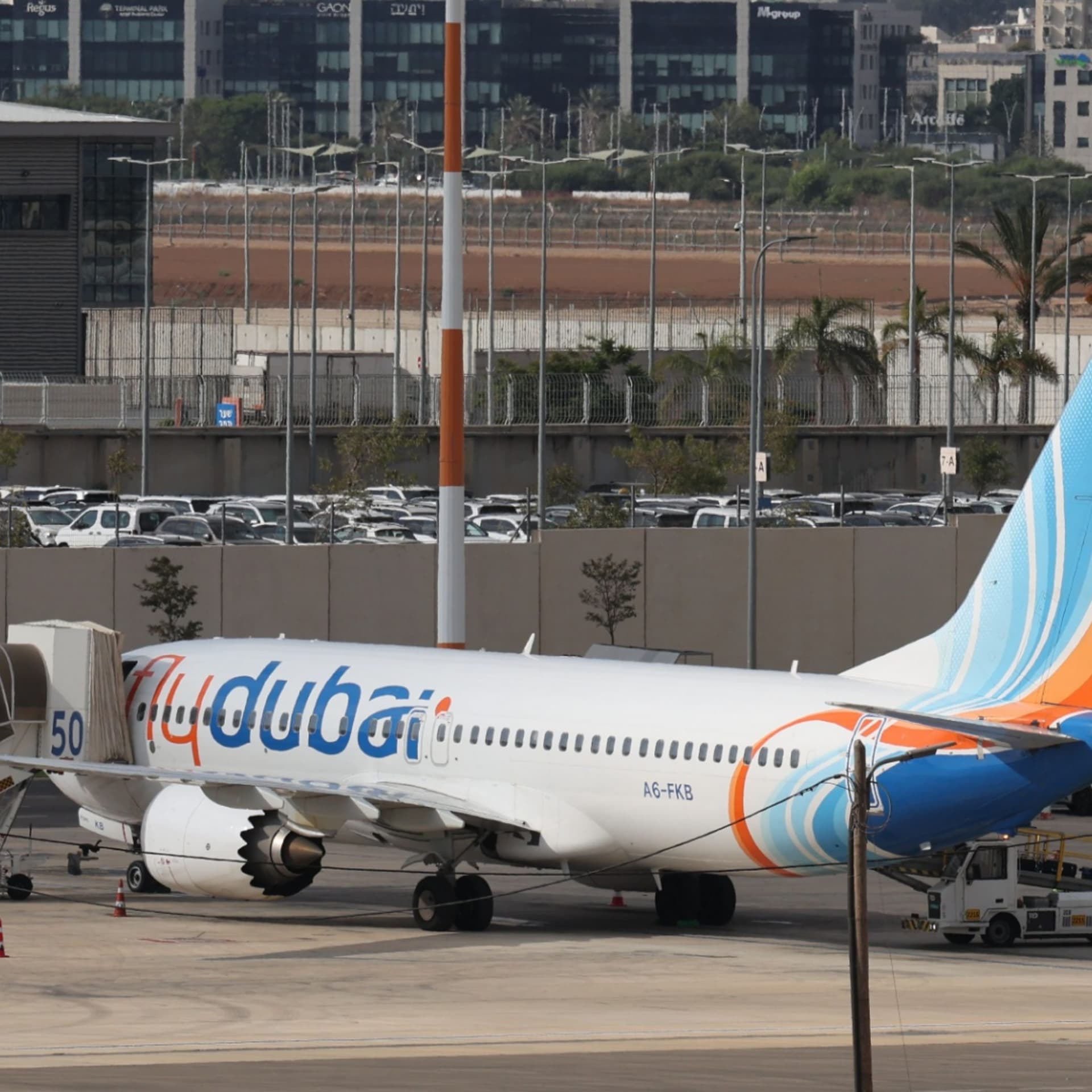
21:40BBC Persian:Nedda Tawfiq at the United Nations in New York. In the early hours of Sunday, Iran said it was launching its most intense operation yet against Israel and US bases in the Middle East. Earlier, strikes were reported in the UAE with two dead, as well as in Qatar, Bahrain, Kuwait, Iraq, Saudi Arabia and Jordan. There were also reports of fires at multiple sites in Dubai and four people were injured in a strike on Dubai airport. Israel has also been targeted. Our correspondent Yugo Bacchega is in Jerusalem. Here in Israel, it's been a day of constant air raid alerts and also interceptions by the country's air defense systems.
22:22And in fact, in Tel Aviv, emergency services are now carrying out rescue operations in a neighborhood that was hit. And according to the emergency services there, at least 21 people were injured. At least one of them is in a critical condition. And one residential building there was partially destroyed as a result of this impact. So the first significant impact. Today, the Israeli authorities said around or at least 100 missiles and drones were fired by Iran. But it is believed that the vast majority of them were either intercepted by the country's military or fell in open areas in the country.
Read the full transcript
23:02But again, the briefing reporters saying that they believe that this operation is likely to continue for several more days. Now, there is a state of emergency in place in Israel, which means that schools are closed. workplaces have also been closed, the airspace has been shut down and obviously all public gatherings have been banned. And the population here has been warned to stay alert, to follow the instructions and to stay close to shelters because they believe that this threat coming from these missiles fired from Iran in response to these attacks by the Americans and the Israelis is going to continue.
23:41BBC Persian:Hugo Bechega in Jerusalem. Well, the defence editor of The Economist, Shashank Joshi, has been assessing Iran's response. Joe Pike asked how it compared to the retaliation after the 12-day war with Israel and the US last year. Completely different. It's much quicker. It took about 18 hours for the Iranians to respond to the first Israeli strike last year, I think. This was within hours, very fast, albeit on quite a small scale. But more importantly, it was much, much broader. That's both geographically and in terms of targets. They've hit pretty much all the countries of the Gulf Cooperation Council apart from Oman, which is to be expected since Oman was doing the mediation with America.
24:21BBC Persian:And they struck not just U.S. military bases like the Fifth Fleet in Bahrain, but actually, interestingly, also hitting economic targets, it seems, oil industry in the eastern province and Saudi Arabia, or at least I don't know what else they'd be hitting in that part of the world. And, of course, striking Dubai, you know, you may have seen these videos. I've just seen one of areas around the Burj al-Arab being struck. Those are really efforts to go after these densely populated, vitally important economic areas for the United Arab Emirates to say we can disrupt your economic model unless you lean on the United States to stop this conflict.
24:57BBC Persian:And I expect to see a little bit more of that in the days ahead. And Chashak, what is your assessment of the mentality of the Iranian government and the military at this point? And I suppose also how long they're able to sustain this? I think it is beleaguered. It is panicked. It is divided and dithering. And the supreme leaders struggle to make decisive decisions over the last two years and moments of crisis. And when you're going underground and you're worried that the Israelis are tracking your electronic communications, then it becomes all the harder to communicate and get your messages out.
25:32BBC Persian:So part of the effort here by the Israelis is to disrupt Iranian command and control by decapitating the leadership. And I think that that will have a huge impact on Iran's ability to coordinate. But what they will be thinking is we can last longer than Trump. Trump doesn't want a four-week, month-long campaign. That's absolutely not what he'd like. And we can survive that long and ride this out. Then we can confound this effort at regime change. And I think that will be their strategy now. Shashank Joshi of The Economist. In the US, there's been a mixed reception to the attacks. Democrats expressed frustration that the president ordered the strikes without seeking congressional approval.
26:13BBC Persian:Many Republicans backed it, but some of the MAGA faithful, including Tucker Carlson and Marjorie Taylor Greene, were opposed, with the latter calling it a betrayal. More details from our correspondent Simi Jolaosho in Washington. There's been mixed reaction from Republicans to Donald Trump's strikes in Iran. We've heard from Senate Majority Leader John Thune, who says that Iran's nuclear ambitions pose a clear and unacceptable threat to the U.S. and that Iran has refused diplomatic routes and he's commended President Trump for taking action. That's reflected by Attorney General Pam Bondi, who described President Trump as courageous and decisive.
26:56And then House Speaker Mike Johnson has also said that Iran is now facing severe consequences for its lack of agreeing to a deal with the U.S. And that President Trump and the administration have made every effort for a peaceful way forward and for a diplomatic solution. But not all Republicans are supporting President Trump's actions. Representative Thomas Massey has said that he opposes the war and he will be siding with Democrats who have decided to vote on a War Powers resolution immediately. The War Powers resolution is a law that checks the president's power to deploy troops. It gives him 48 hours to notify and explain his decision to Congress and will allow 60 days of engagement unless Congress approves further deployments by troops.
27:52BBC Persian:Simi Jolosho in Washington. So what does the next few days and weeks look like for the Iranian people? Let's hear again from our chief international correspondent, Lise Doucette. Well, to use his expression, this is really uncharted territory. No matter how much the Iranian leaders have thought about this moment, prepared for this moment, a war has been unleashed. And even with at its very start in one day of strikes, so much already is changing with the death of the supreme leader and many other senior political and security officials in the Islamic Republic of Iran. And of course, it comes at a moment where Iran has been facing not just an unprecedented external threat, but internal upheaval.
28:39When we were in Iran earlier this month, I have to say that it felt like a different country. And the anger and the pain over the use of lethal force, which caused the greatest loss of life in the thousands in Iran's history, it was still raw. There are those across Iran who are hoping that this will be the beginning of the change, the systemic change that they want. And at the same time, the supporters of the Islamic Republic and its revolution will be calculating how best they can hold on to power. This is a defining moment in the Islamic Republic of Iran as it faces off against problems at home and this very unpredictable war that is now confronting it.
29:26BBC Persian:Our chief international correspondent, Lise Doucette.
29:56The best conversations coming out of the BBC. One of the greatest tennis players in history, Martina Navratilova. People shaping our world from all over the world. Music icon Stevie Wonder. From global leaders. The Brazilian president, Luiz Inacio Lula da Silva. The president of Poland, Carol Navrotsky. US president, Donald Trump. To cultural icons. Two-time Oscar-winning actor, Sir Anthony Hopkins. The interview from the BBC World Service. Listen now wherever you get your BBC podcasts. Thank you.
From the publisher
Iran's Supreme Leader, Ayatollah Ali Khamenei, has been killed in his office by US and Israeli strikes - ending his 36-year iron rule of the Islamic Republic. As the government announces a 40 day mourning period, many Iranians have reportedly taken to the streets to celebrate. The Revolutionary Guard has promised to punish the "murderers", and is carrying out retaliatory strikes across the Gulf region. There have been strong reactions at the UN Security Council and on Capitol Hill. So who's now in charge of Iran? And what does this mean for the rest of the world? We get analysis from BBC Persian and our international correspondents about the significance of this moment.
The Global News Podcast brings you the breaking news you need to hear, as it happens. Listen for the latest headlines and current affairs from around the world. Politics, economics, climate, business, technology, health – we cover it all with expert analysis and insight. Get the news that matters, delivered twice a day on weekdays and daily at weekends, plus special bonus episodes reacting to urgent breaking stories. Follow or subscribe now and never miss a moment. Get in touch: globalpodcast@bbc.co.uk
Image credit: Iranian supreme leader's office handout/EPA/Shutterstock