
In short
The episode (BBC Global News Podcast) leads with the US-Iran memorandum: even after the deal is electronically signed and due to be formally signed in Switzerland, Israel and Hezbollah exchange fire. Skirmishes continue in southern Lebanon; Israel says it will keep troops and maintain a buffer/security zone “as long as necessary,” while the US and Iran disagree on whether Lebanon withdrawal is part of the framework. Netanyahu’s stance risks friction with President Trump, especially after Trump criticized Israeli strikes on Beirut. The episode also covers Iran vs New Zealand at the LA World Cup (2-2), where some Iranians protested/boycotted but others cheered. It then shifts to US anger over AI data centres (energy/water/environment; voters abandoning Republicans) and how AI/digital tools help plant conservation at Kew. Other segments: Sherbro Island, Sierra Leone, pitched as a “Singapore of West Africa” (Idris Elba, Siaka Stevens, wind/solar plans), and an Anish Kapoor exhibition at London’s Hayward Gallery. Guests/correspondents: Charlotte Gallagher, Paul Adams, Sam Farzaneh, Anthony Zerka, Helen Briggs, Ed Butler, James Kumarasamy (interviewing Anish Kapoor).
Written by AI. May contain mistakes. Listen to the episode to check what was said.
Chapters
Tap a time to open that second in VOUS-Iran Peace Deal and Escalation of Violence
1:38 to 2:25
Discussion on the potential impact of violence between Israel and Hezbollah on the US-Iran peace deal.
“but could violence between Israel and Hezbollah undermine it before it's been officially signed?”
Ongoing Skirmishes and Political Implications
2:25 to 3:48
Analysis of the ongoing skirmishes and their implications for Israeli politics and Netanyahu's stance.
“and Israel and Hezbollah are back attacking each other, with skirmishes reported on both sides.”
Netanyahu's Relationship with Trump
3:48 to 5:26
Exploration of Netanyahu's interactions with Trump amidst escalating tensions.
“The US say Israel's withdrawal from Lebanon is not part of the framework deal.”
Potential Outcomes of the Israeli Conflict
5:26 to 6:33
Discussion on the objectives of the Israeli government and the likelihood of achieving them.
“Israel were told what was going to happen.”
International Dynamics and the G7 Summit
6:33 to 8:08
Overview of the international context and implications of the upcoming G7 summit.
“they could very well move through the court.”
Iran's Football World Cup Campaign
8:08 to 9:18
Reporting on Iran's World Cup match against New Zealand amidst political tension.
“But he paid tribute to the leadership in Iran, which he now describes as pragmatic.”
Complex Emotions Among Iranian Fans
9:18 to 12:07
Discussion of conflicting emotions among Iranian fans at the World Cup game.
“But the football was overshadowed by politics.”
Complex Emotions Among Iranian Fans
14:01 to 14:33
Discussion of conflicting emotions among Iranian fans at the World Cup game.
“Prices, participation, delivery area, and charges may vary.”
Controversy Surrounding AI Data Centers
15:23 to 19:16
Explore the protests against AI data centers and their environmental toll.
“They're protesting against a sprawling AI data centre on the parched shores of the Great Salt Lake that is twice the size of Manhattan.”
AI's Role in Plant Conservation
19:16 to 21:54
Learn how AI and digital technology aid in plant conservation efforts.
“and its disruptive effects, its ability to replace humans with AI agents, and it will cost people their jobs.”
Show all 13 chapters
Transforming Sherbro Island
21:54 to 26:16
Discover the ambitious plan to develop Sherbro Island into a business hub.
“It's got some high-profile backers, including Shaka Stevens, the grandson of a former president, and the film star Idris Elba.”
Anish Kapoor's Exhibition
26:16 to 28:00
An overview of Anish Kapoor's latest exhibition and its themes.
“That's at bbc.com or wherever you get your podcasts.”
Exploring the Depths of Art
28:00 to 30:46
Learn about the interplay of darkness and emotion in contemporary art through personal anecdotes and philosophical insights.
“Well, of course, we're made of red and blackness.”
Transcript
Automatic transcript. May contain errors.0:00This BBC podcast is supported by ads outside the UK.
0:30The new tropical butterfly refresher from Starbucks. Guava and passion fruit flavors with mango pineapple flavored pearls. Yeah, that feels like summer before you even taste it. Funny how one small stop becomes the best part of the day. Start your summer rhythm with Starbucks. Try the new tropical butterfly refresher from Starbucks.
0:56Sun's out, so dads are too. This Father's Day at Lowe's, shop the gear that'll make his summer. Get two free select DeWalt power tools when you buy a select 5-amp hour battery kit for weekends in the garage. Plus, get a free Blackstone 6-piece stainless steel griddle kit when you buy a select Blackstone griddle. Our best lineup is here at Lowe's. Valid through 624. While supplies last, selection varies by location.
1:26This is the Global News Podcast from the BBC World Service. I'm Will Chalk and in the early hours of Tuesday the 16th of June, these are our main stories. We've heard so much about this potential US-Iran peace deal, but could violence between Israel and Hezbollah undermine it before it's been officially signed? Also, Iran begin their Football World Cup campaign with a great match against New Zealand in LA. Also in this podcast, we hear how growing anger in the US against AI data centres has led to voters abandoning the Republican Party. My entire community is going to break rank. Everybody. All of us.
2:08We've had enough. Could a little-known island off Sierra Leone become the Singapore of West Africa? and we get a glimpse of a new exhibition by the award-winning British sculptor Sir Anish Kapoor.
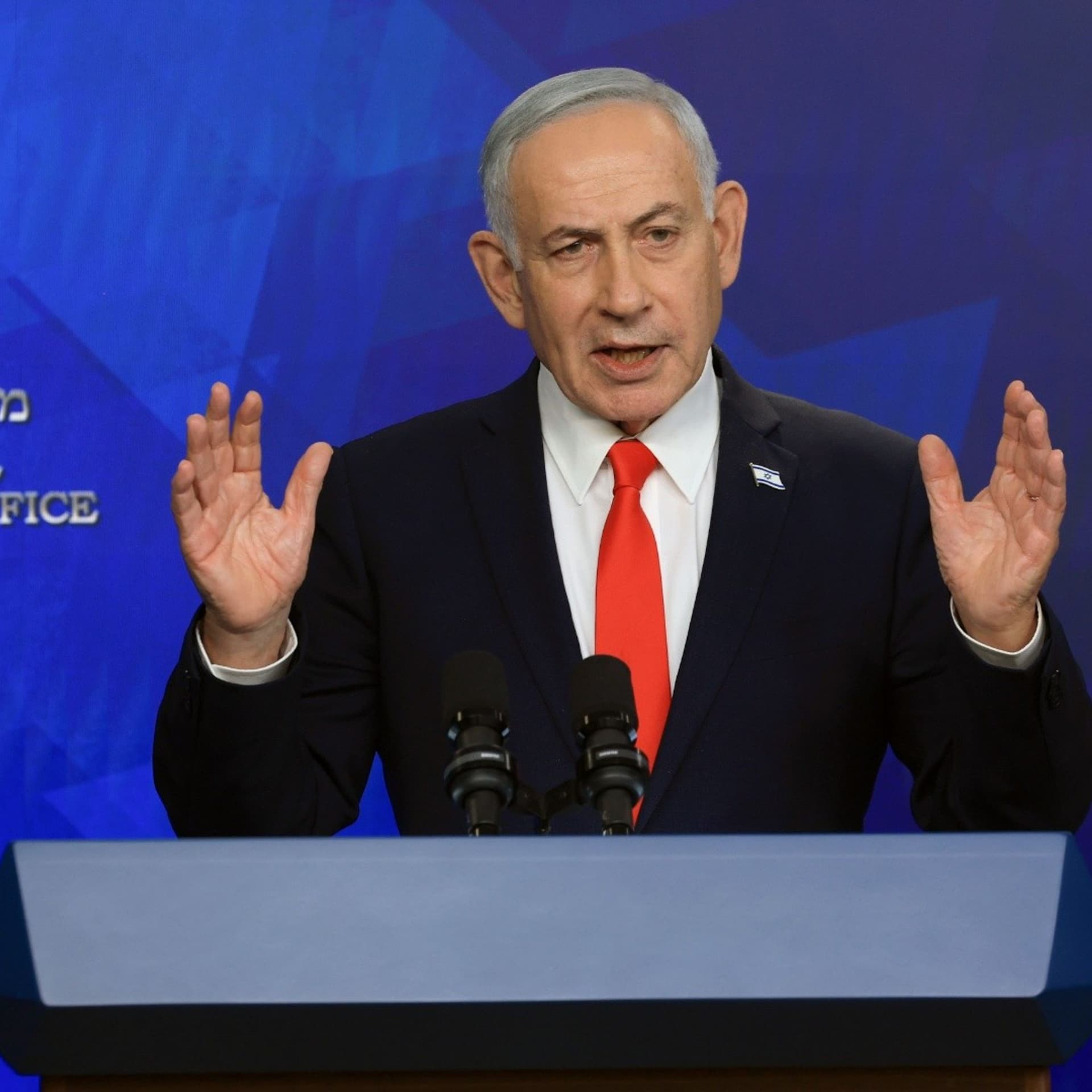
2:25Well, the virtual ink is barely dry on the US-Iran Memorandum of Understanding and Israel and Hezbollah are back attacking each other, with skirmishes reported on both sides. The problem is the ongoing unrest is so deep-rooted that even if this latest deal calls for an immediate and permanent halt to all military operations, including in Lebanon, it's hard to see an end to the fighting there any time soon. The Israeli Prime Minister, Benjamin Netanyahu, is insisting his country's forces will remain there as long as necessary. Regarding Lebanon, we've created a buffer zone, a security zone, and we'll remain there as long as necessary.
3:05Iran wanted us to withdraw from there, but that did not happen. Do you know why it didn't happen, among other reasons, because I stood very, very firm. And I believe our American friends respect this determination and stance, this persistence. We're staying there because we need to protect the residents of the north. Well, despite Benjamin Netanyahu's confidence there, this could put him at further odds with President Trump, who's already criticised him over recent Israeli attacks on Beirut. To remind you where we are as we record this podcast, We're told the deal's been signed electronically by both sides, but we're light on details as to what's in it.
3:42And we're told there's going to be a formal signing ceremony in Switzerland on Friday. I asked our correspondent Charlotte Gallagher if these skirmishes have already broken the deal. It really depends who you ask. The US say Israel's withdrawal from Lebanon is not part of the framework deal. However, Iran say it very much is. So this will be one of the things that they've got to hammer out over the next 60 days. Of course, that is if the ceasefire stands. As well as, of course, Iran's nuclear program, that's going to be a really hard issue for them to go through during that time. But as you said, skirmishes earlier, a man was killed, Lebanese state media say, in a drone attack on a car, an Israeli drone attack.
4:22The Israeli military say numerous rockets were fired at their soldiers inside southern Lebanon. So the conflict there is still continuing, but of course, on a much smaller scale than it has been previously. Benjamin Netanyahu has said many, many times how little desire he has to stop striking Hezbollah in Lebanon. Does that put him then on a collision course with Donald Trump and how can he get out of it? We know that Donald Trump was very angry when Israel hit Beirut as the ceasefire deal was nearly signed. and we know that they had a very strongly worded conversation. That was President Trump and Benjamin Netanyahu.
5:03In a press conference earlier, he was pressed on his relationship with President Trump. And Benjamin Netanyahu said they didn't always see eye to eye, but they'd known each other for a long time. And he said his priority was always the defense of Israel. But it does certainly look like Israel is more isolated from its most powerful ally than it has been in recent times. You know, they weren't included in these talks with Iran and the US. Israel were told what was going to happen. They weren't consulted. So I think they're definitely not as close as they have been. That's the way it seems, certainly.
5:38And that is what people inside Israel are saying. The deal's been really criticised by not just Israeli politicians, but the public as well. Yeah, and of course, that has implications, doesn't it, for Benjamin Netanyahu's political career? It does. I mean, there is an election upcoming in Israel and opposition figures, people that are running against Benjamin Netanyahu will say, well, you started a war and you couldn't finish this war. So that will be one of the accusations thrown at him. In his press conference earlier, he sort of used it a bit as a party political broadcast, actually, Will. He was saying, I am the only leader of Israel that will stop Iran getting a nuclear weapon.
6:17If you don't have me, things could be very different. And he was really kind of making his pitch to the voters in Israel as much as answering questions about the deal. He was saying, look, vote for me. And another reason why he wants people to vote for him is he's facing corruption charges, which he denies. And if he is no longer leader of Israel, they could very well move through the court. So obviously that in his mind as well. This idea of an immediate and permanent halt to all military operations in Lebanon, is that something that Benjamin Netanyahu would ever agree to? I think one of the most important things to say about this is Israel had some really key objectives, which was the ending of the Iranian regime and also the ending of Hezbollah inside Lebanon.
6:58Now, the Iranian regime, many people say, is actually stronger than it was before the war. And Hezbollah is still there. So those objectives were just not achieved. And no, I don't think there's any chance really of Israel withdrawing from Lebanon while they see Hezbollah as a threat. Charlotte Gallagher there on the Israeli perspective. As for Donald Trump, he's now in France, where he's attending the 52nd G7 summit. And as we said, it's later this week that he's expected to go to Switzerland for that formal signing of the memorandum. Our diplomatic correspondent Paul Adams reports. This weekend's news that the US and Iran have agreed to end the war will go some way towards establishing a positive mood among the leaders gathering in France.
7:41But they, like all of us, will want to know more. Details of the Memorandum of Understanding have yet to be published. It's not a peace treaty, only the broad outline for a set of difficult negotiations to come. Iran's president, Massoud Pazeshgian, has called it an honourable document. Meeting the summit's host, the French president Emmanuel Macron, Donald Trump said the Strait of Hormuz would be fully open by Friday. He said Iran had agreed not to have a nuclear weapon. That's hardly new. It's made the same pledge in the past. But he paid tribute to the leadership in Iran, which he now describes as pragmatic.
8:17We got along very well with Iran. It's a different set of leaders. As you know, the first set is gone, the second set is gone, and we found the third set to be very smart. The Iran deal that we made is going to bring a lot of success to the world. It's all a far cry from the call for regime change the president made when he launched the war at the end of February. The deal is due to be signed at a ceremony in Geneva on Friday. White House officials say an electronic signing has already taken place and that details may be published in the next 48 hours. When asked if he might stay on in Europe and attend himself, Mr Trump didn't rule it out.
8:56Paul Adams there. Safe to say it was a game unlike any other. Iran playing football in the US while the two countries try and put an end to more than 100 days of hostilities. As we record this podcast, the World Cup fixture between Iran and New Zealand has just ended. It was a 2-2 draw. It was a great match to watch. But the football was overshadowed by politics. Some Iranians boycotted the game. Many of those who went protested against the Iranian regime. And FIFA's ban on the pre-revolutionary Lion and Sun flag. BBC Persian's Sam Farzaneh was watching the match in LA. I asked if the atmosphere was what he expected.
9:37No, I was not expecting people cheering for Iran's national team. I was expecting more booing, which they actually started with booing the national anthem. And all of a sudden, as soon as the game started, all I was hearing whenever the ball was on the Iranian side, whenever they had the ball, it was cheers. And it was interesting for me, even some of those people who were carrying the Lion and Sun flag that was for the pre-revolution in Iran, even those people, I was seeing them, they were cheering for the national team. Where I was sitting, there were a couple of women who constantly, they were cheering the New Zealand team, and they were cheering them in Persian, which was interesting.
10:31I think none of the other fans of Kiwis could understand that they were doing. Yeah, that's an unusual moment, isn't it? Look, it's so conflicting, isn't it, for Iranians, as you've touched on there. You know, we've heard from supporters who say, we want to cheer on our team because, you know, they're our countrymen, but they feel that conflict that by doing so, they are endorsing the regime. Exactly. And other than that, some of them were considering this team not as Iran's national team. They're thinking about them as more like the Islamic Republic's team. Some of the protesters outside of the stadium were saying that this is not even the Islamic Republic's team.
11:12It's the IRGC's team. And they were saying, OK, if you are going to that stadium, you are going to watch IRGC playing. so the temperature is hot and it was amazing that I saw some people are still cheering for the team yeah well I mean given all the build-up and all the drama I mean it should be pointed out we've had it on here in the newsroom it was in my view the game of the tournament so far I think so nice for fans who've had a turbulent few months to be able to to enjoy something like that and for you as well, I imagine. Definitely. And it's interesting, just a few moments ago, Iran's head coach, he said that I'm really happy about the game.
11:54He said it was one of the best games of this tournament, but I'm not happy about the result. BBC Persians, Sam Farzaneh, speaking to me from LA. Still to come in this podcast. What do you think Charles Darwin would have made of this modern science? I think you'd be amazed and really pleased, actually, because it's incredible. How modern tech and centuries-old samples from the natural world are combining to give researchers hope.
12:31Do we all need to be detoxing ourselves? Before I go asking, how can I detox? I have to look inward. Okay, what am I doing? Can I identify at least three ways that my body detoxes and ways to support that? I promise if my message was more dramatic like that, I would have millions of followers and make millions of dollars. But I cannot sleep at night trying to sell someone something that their body already does naturally. We're living in a crazy world now. I think it's a lot of people fear a lack of control. And as a result of this, this is the way of them trying to make sense of the world and try to take control over their own bodies.
13:07So by actively doing something, I'm going to detoxify things. Therefore, I'm going to feel better, I think, is absolutely one of the reasons that, you know, detoxifying has become so popular. Listen to the full episode of Health vs. Hype with the American Medical Association on the iHeartRadio app, Apple Podcasts, or wherever you get your podcasts. Big transfer news today. Who's moving? Me. To the couch. with Domino's best deal ever since they just added stuffed crust. Any pizza, any toppings, now with stuffed crust for$9.99. It's a long-term contract with no release clause. Only$9.99? Yeah, that sounds like the move.
13:48I'm heading straight to Dom. Mmm, I know. Prices higher for some locations. Excludes XL and specialty pizzas. Select this offer from 615 through 726. Online only. Size availability varies by crust type. Max 7 toppings, 6 for pan and New York style crust. Minimum purchase required for delivery. Prices, participation, delivery area, and charges may vary. Hey, it's Ryan Seacrest for Jewel Osco. Now through June 23rd, shop for you save days and get great savings on all your favorite personal care essentials and earn four times points. Shop in-store or online and save on items like head and shoulder shampoo, Pantene shampoo, Tres-Same conditioner, L 'Oreal hair dye, Tres-Same hairspray, and Aussie miracle curls and earn four times points to use for future savings on groceries or gas.
14:30Offer ends June 23rd. Restrictions apply. Offers may vary. Visit Jewelosco.com for more details. Hey, it's Ryan Seacrest for Jewelosco. Ready to save? It's time for Cyber Deals. Kick off summer with fresh savings that brighten the season. You don't want to miss these exclusive week-long digital offers on your favorite products that are only available when you shop online. Save on eligible items from Gatorade, Oreo, Frito-Lay, and Doug. Only available now through June 16th on pickup or delivery orders only. Restrictions apply. See the website for full terms and conditions.
15:06This is the Global News Podcast. If you use AI chatbots, how much damage to the environment is a fair price to pay for them?
15:23Well, that is a crowd in the US state of Utah who already think the cost is too high. They're protesting against a sprawling AI data centre on the parched shores of the Great Salt Lake that is twice the size of Manhattan. Tech bosses say the centres are essential to the growth of artificial intelligence. But across the US, Republicans and Democrats are uniting in voicing their alarm about the vast amounts of energy and water such data centres consume and the noise, the pollution, the falling property prices and destruction of nature they cause. The CEO of OpenAI, Sam Altman, speaking at one data centre in Michigan, said such concern was misplaced.
16:04This could very well turn into the site where cancer gets cured, where hundreds of millions of students around the world learn and get private tutoring, where millions of small businesses can run their business with AI in the cloud. But a worrying development for President Trump's Republicans. lifelong supporters are abandoning the party in droves because of its backing for the AI data centers like this woman in Texas. My entire community is going to break rank. Everybody. All of us. We've had enough. New York Democratic Congresswoman Alexandria Ocasio-Cortez visited a data center in Georgia and described conditions there to a congressional hearing.
16:45Families are starting to see not only their water pressure decrease, but their appliances have all stopped working because it is decimating their water quality. They now rely on bottled water to drink and prepare meals, and water bills are expected to increase by 33 percent. Janat Jalil asked our North America correspondent Anthony Zerka what this all means. I think that gives a flavor of exactly how controversial these data centers are becoming all across the United States. It's at these town halls and local elections where the politicians are really feeling the heat from angry constituents. They're concerned about the rapid expansion of these data centers, the amount of electricity that they are using, the amount of water that they are sucking up, the possible environmental consequences of these large buildings being dropped in their local communities.
17:38And I think you could hear from that as well, that this isn't a partisan issue, a very rare case where there are conservatives and liberals who are speaking out. There was a poll the other day that upwards of 70 % of Americans don't want data centers near where they live. Yes, Sam Altman, they're defending these AI data centers, but also a big concern for him that the stock price of companies like his depend on building these huge centers in order to be able to generate enough power for AI to be used. Exactly. They are looking at the bottom line and they're trying to figure out how to continue to keep up with the demand from American companies and global companies for these AI services.
18:21And they need to find ways of being able to meet that demand. And that requires these massive centers. The one in Utah, I believe, is proposed to use as much electricity as the rest of the state of Utah put together, which is an eye-watering number. So they have to try to find ways to generate electricity. They have to find an abundant water supply. And they have to find a way to get around these attempts on a local level to impose moratoriums on data centers and to make it more difficult for them to be built in their communities. I think you heard from that one voter in Texas who's a conservative, and Texas is typically a Republican state being open to voting for Democrats, for the opposition party.
19:03Because of this. They're becoming one-issue voters. So I think both parties see peril if they don't acknowledge the concerns of voters. But it's part of a larger concern about AI technology and its disruptive effects, its ability to replace humans with AI agents, and it will cost people their jobs. And that all kind of bundled together is what makes this such a potent issue. Anthony Zerker there. We've just heard about one of the downsides to the rapid rise of AI, but it can also have its plus sides. Because while a new report is warning that the world's plants are disappearing faster than scientists can keep up, researchers from the Royal Botanic Gardens Kew here in London say the digital world and AI is offering hope.
19:50Here's Helen Briggs. So this is the Brugmansia, and it's got these huge kind of peach-coloured trumpet flowers. They're about the size of your forearm. In a glass house at the Royal Botanic Gardens Kew, conservation scientist Dr Matilda Brown admires a plant very few of us will get to see because it's extinct in the wild. She says plants are disappearing faster than science can keep up. It's lucky it's so pretty really because other species, they are going extinct sometimes before we even know about them. And with every species we lose, we're losing benefits to humanity that we might not even know about, whether that's the next cure for cancer or the next climate-resilient crop.
20:31The secrets to saving these plants could lie in the archives at Kew. If you look at this specimen here, you can see the tiny tomatoes. Herbarium curation manager Nina Davies is showing me a particularly historic specimen. It looks to me like a squash tomato. It absolutely is a squashed tomato. So this has been pressed and dried. But this is no ordinary tomato. It was collected in the Galapagos Islands in 1835 by the famous biologist Charles Darwin, one of millions of plants to be catalogued, photographed and uploaded to the web. What do you think Charles Darwin would have made of this modern science?
21:14I think he'd be amazed and really pleased, actually, because it's incredible. And Dr Brown says AI and digital technology could transform how we fight global extinction. The gains in speed are absolutely phenomenal. If we want to look at 8 million specimens, if taking them out of the cupboard, opening it up, and all we want to know is, is it flowering or not? To do that for the entire Kew Herbarium would take us 70 to 100 years. by putting these specimens online and using things like computer vision and AI, we're able to take that task and get it done in days or weeks or maybe even months, a lot less time than the lifetimes that it would take to do it manually.
21:53Helen Briggs reporting. Off the coast of Sierra Leone in West Africa, Sherbro Island has been earmarked for an ambitious transformation, a new centre for international business and investment designed to rival cities like Singapore or Hong Kong. It's got some high-profile backers, including Shaka Stevens, the grandson of a former president, and the film star Idris Elba. The BBC's Ed Butler has been to Sherbro and asked, can this vision become reality? It's end of school in Bonthe on the island of Sherbro, population 15 ,000 or so. In centuries passed, Sherbro was a bustling British colonial trading post.
22:36Since independence, the district's fallen into economic decline. So the vision for Sherbro is to basically build a modern Singapore of West Africa that is sustainable and open for everyone. That's Siaka Stevens, one of two British born Sierra Leoneans aiming to transform this remote backwater of the country into a global business hub. The other is his childhood friend, the Hollywood movie star Idris Elba. This is Sierra Leone. It's one of the poorest countries in the world. Investment isn't rushing through the door. So what we needed to do is understand how to package an investment opportunity around this beautiful island without destroying it and being conscious that there is a youth culture across Africa of the average age of about 20 that wants something.
23:25And that's what Sheba Island is. Step one is providing the island with a basic level of infrastructure. We just arrived on our motorbikes to what was the one and only landing strip with this hut. It's got a tin roof that's half ripped off. On the walls it says, Welcome to Bonth Airfield. Yeah, it's not a very warm welcome just at the minute, is it, Shaka? I mean, what's the plan here? This is a landing ship, although it's not in the best state is something they're already that can work with so the island is not a complete greenfield site and it will happen. There's still no reliable power supply here so the men are erecting what will become Sherbro's and indeed Sierra Leone's first ever wind farm.
24:09Africa is the last emerging continent in the world. Growing-ish middle class, big economies, Nigeria, Ghana, Ivory Coast, close. So if you can create somewhere that is less risky for a governance structure that people can trust in, is it independent? But this isn't the most obvious spot, is it? No, it's not the most obvious spot on paper, but we are six hours away, direct flight from Europe. We have the winter sun, an English time zone, and Sierra Leone is a very safe country. So we have all the natural attributes to make this an attractive destination. How much do you think the African diaspora needs to play a role in it?
24:48Huge. A lot of our best minds live outside of the continent. If there was homes to purchase now to live here and retire, they would do it. There is a huge reverse migration and it's something that I think we've all been yearning for. But the fact remains there aren't any big international firms who've yet signed up to this vision. Well, except for Octopus Energy. Britain's largest domestic energy provider has supplied those wind turbines and solar panels that we were hearing about. So what's in it for them? I asked its CEO of Energy Generation, Zoe Sir North Bond, if this wasn't just corporate philanthropy meant to make the company look good.
25:31Definitely not philanthropic. When we were looking at building energy installations. What we wanted to do was understand the data sets, how things worked, creating something where we really learned about the local environment to find the things that would enable us to scale the model into the future. There's a tremendous amount that we're learning here that we know already we can replicate, not only for Sierra Leone, but for West Africa across the continent, not generally. Hi there. Back in town, Siaka introduces me to the guest house owner. We're sleeping here tonight. Electricity comes on at eight, I'm told.
Read the full transcript
26:08Meals only by individual request. If change is coming, there's clearly some way to go. Ed Butler there, and you can hear more of Ed's full report on the development of Sherbro on today's edition of Business Daily. That's at bbc.com or wherever you get your podcasts. A new exhibition by the Turner Prize-winning British sculptor Anish Kapoor opens at London's Hayward Gallery on Tuesday. It showcases the theatricality of an artist known for his works of gleaming steel, such as Chicago's Cloud Gate, but also for his black voids and his vast deep red installations, which encompass mystery and ritual.
26:49As well as creating public works of art, he is also very public about his political views. Last year, Greenpeace installed his giant blood-red canvas called Butchard on a North Sea gas rig as an act of environmental activism. Among the new works on display is a giant inflatable PVC sculpture which occupies multiple rooms and is called All of Nothing. It was the first stop when James Kumarasamy had a preview of the exhibition in the company of Anish. We are struck as soon as you walk into this exhibition by all or nothing. Quite a feat, I'd imagine, to actually get it up. It's a very big inflatable that fills the space, and I wanted the viewer to be confronted with something that's right up against your body.
27:39Why is that? I mean, sculpture's all about your body. It's all about interaction physically and then, I hope, emotionally. But it's also a deep red. That does something. So there's some, if you like, internal organ going on. It was always going to be red with you, wasn't it? Mostly. What is it? But what's the fascination? Well, of course, we're made of red and blackness. And they both make peculiar kinds of darkness. So tell us about these works. I think there's a newer work over there, but some of these are older, aren't they? They are. Here on the floor is a work called Descent into Limbo, which I made in the late 80s.
28:19It is a space full of darkness. It's not a hole. It's a carpet on the floor. And it looks like a hole. Well, it does that strange thing of being empty and full. When I first made it, I showed it in a small little building. This gentleman had stood in line for 45 minutes. He goes into the room and he goes, Oh, God, I've done lots of things in the name of contemporary art. But to stand in line for 45 minutes to look at a black carpet, he was furious. He then took his glasses off and threw them, thinking it was a black carpet. Of course, they disappeared. And suddenly there was a physical sense in him of, what have I done?
28:56Where is this? What is this? He's taken part in performance art, hasn't he? And blackness, we're going to move back to redness, I think. We are. The other side of this show, in a sense, is ritual interior. So if one proposition about interior is void and nothing and empty, and the other, of course, is blood and gore and redness in a different spectrum. I'm eternally attracted to that. I feel it's a fundamental question of art. What does it say about the world? Oh, God, the world is a disaster. I firmly believe that I have nothing to say as an artist. I don't have some message to give the world.
29:38A bad poem, they say, is one that falls into meaning. A good poem, therefore, sits somewhere between meaning and no meaning. I mean, last year, Butchard, you used your art to make a statement, hanging it on an oil rig with Greenpeace. When you look at the way that environmentalists have actually desecrated art in some instances, what do you think of that? It's very sensitive, but those young people that did that did it because Shell, I believe, sponsored the National Gallery. I don't condemn it and I don't condone it. Shall we go upstairs? Of course. What would you like us to know about this work?
30:18It's called Hamakoum, in Hebrew, means the place. I suppose what I've done here is make a space apart. The important question is about how the viewer brings, if you like, their own psychological questions, body spaces, etc., to a work, how they complete the equation. It's not about me telling you how it is, it's rather about the interaction between the two. Anish Kapoor speaking to James Kumarasamy.
31:15Emma Joseph. The editor is Karen Martin and I'm Will Chalk. Until next time, goodbye.
31:45Water Seal products. Our knowledgeable team is ready to help bring your dreams to life one gallon at a time. Stop by your local Menards today. Save big money at Menards.
From the publisher
Israel and Hezbollah exchange fire again, despite the US-Iran peace deal. It's not clear if the agreement includes an end to the fighting in southern Lebanon. Also: there are protests at Iran's opening match in the football World Cup; how AI can help save plants from extinction; an interview with sculptor Anish Kapoor; and could Sherbro Island be the next Singapore?
The Global News Podcast brings you the breaking news you need to hear, as it happens. Listen for the latest headlines and current affairs from around the world. Politics, economics, climate, business, technology, health – we cover it all with expert analysis and insight. Get the news that matters, delivered twice a day on weekdays and daily at weekends, plus special bonus episodes reacting to urgent breaking stories. Follow or subscribe now and never miss a moment. Get in touch: globalpodcast@bbc.co.uk Photo: Israeli Prime Minister Benjamin Netanyahu holds a news conference, following a US-Iran deal, in Jerusalem, June 15, 2026. Credit: Reuters



