
In short
Israel passes a law allowing the death penalty for people involved in the Oct 7, 2023 Hamas attacks and kidnappings; EU approves sanctions on West Bank settlers; UK Labour PM Keir Starmer faces resignations and calls to resign; UN reports Pakistan airstrikes in Afghanistan killed 400+ (worst Kabul strike hit a drug rehab centre); Philippines senator Ronald De La Rosa hides in the Senate to avoid an ICC arrest warrant; France hosts an Africa Forward Summit in Nairobi; research links arts engagement to slower biological ageing.
Guest backgrounds
Yolande Nell (BBC reporter in Jerusalem); Weira Davis (BBC reporter on West Bank settler violence); Rebecca Kesby (BBC political correspondent, via Rob Watson); Yogit Lemoye (BBC correspondent in Kabul); Jonathan Head (BBC SE Asia correspondent); Richard Kogoy (BBC global affairs reporter in Nairobi); Daisy Fancourt (UCL psychobiology/epidemiology researcher; interview via Nick Robinson).
Key claims
Death penalty law passed 93-0; human rights groups allege unfair trials and torture-linked confessions; EU sanctions target settlers accused of extremist violent colonisation; UN says Pakistan strike killed at least 269 at Omid rehab centre (possibly 400+ overall); De La Rosa says ICC action violates Philippine sovereignty; France seeks “mutually beneficial” economic reset with Africa; arts engagement correlates with “younger” epigenetic age.
Notable examples
Comparisons to Israel’s 1961 Eichmann televised trial; Nablus newborn family mourning Naif Shami; settlers hacking Hussein Asasa’s grave; Kabul mass grave for rehab bombing victims; De La Rosa fleeing police and claiming Senate sanctuary.
Written by AI. May contain mistakes. Listen to the episode to check what was said.
Chapters
Tap a time to open that second in VOIsrael's Death Penalty Law
1:30 to 2:49
Discussion on Israel's new law permitting the death penalty for October 7 attackers.
“The EU approves fresh sanctions against Israeli settlers accused of supporting the extremist and violent colonisation of the West Bank.”
Public and Political Reactions
2:49 to 5:50
Insights on public support and political implications of the death penalty law in Israel.
“This law passed with 93 votes to zero, an unusual level of cross-party support, in the 120-seat Israeli parliament, the Knesset.”
Sanctions Against Israeli Settlers
5:50 to 10:41
The EU's response with sanctions against Israeli settlers and related violence.
“The European Union has approved new sanctions against Israeli settlers accused of supporting what it calls the extremist and violent colonisation of the West Bank.”
Crises in the UK Labour Party
10:41 to 14:06
Exploration of the internal crisis within Keir Starmer's Labour Party following poor election results.
“following last week's abysmal election results.”
Political Turmoil in the UK
14:06 to 14:27
Learn about the challenges facing the UK Prime Minister amidst political resignations.
“But obviously, what you're saying before that is a draining away of the prime minister's authority.”
Philippines Senator's Arrest Attempt
14:32 to 14:46
Discover the dramatic events surrounding a senator's refuge in parliament.
“Would you surrender to them if you were a Filipino?”
Casualties from Airstrikes in Afghanistan
18:58 to 20:17
Hear about the devastating impact of airstrikes in Kabul.
“A majority of the deaths in Afghanistan were caused by a single strike in Kabul.”
Family Stories from the Airstrike Victims
20:17 to 22:21
Listen to the heart-wrenching stories of families affected by the airstrike.
“We've come off the main roads of the city and we're going to meet the brothers of Muhammad Anwar Walizada.”
Pakistan's Denial of Civilian Targeting
22:21 to 23:35
Learn about Pakistan's claims and the Taliban's response regarding the airstrike.
“The Pakistani government says that the people in that hospital were not civilians, that they were terrorists, that they were being trained to be suicide bombers.”
Renewed Fears in Afghanistan
23:35 to 23:55
Explore the implications of the airstrikes on safety and security in Kabul.
“Despite the Taliban's assurances of safety, for a people who are recovering from decades of war, this new conflict with a former ally, Pakistan, has renewed fears of a return to violence and bloodshed.”
Show all 14 chapters
Senator De La Rosa's Dramatic Standoff
23:58 to 24:49
Follow the chaotic scenes as a senator seeks refuge from arrest.
“To the Philippines now, where a senator has taken refuge inside the country's parliament in an effort to avoid arrest over his alleged role in former President Rodrigo Duterte's war on drugs.”
ICC Warrant Controversy
24:49 to 27:54
Delve into the debate surrounding the ICC arrest warrant and Philippine sovereignty.
“Why should we be taken away by these foreigners?”
France's Evolving Relationship with Africa
28:01 to 32:32
Explore how France is attempting to reshape its ties with African nations amidst past colonial legacies.
“For decades, France has had a problematic relationship with Africa.”
The Impact of Arts Engagement on Ageing
32:41 to 35:13
Learn about the findings of a study linking arts participation with biological ageing.
“New research suggests that participation in the arts is not just good for your soul, but actually slows down your body's biological clock.”
Transcript
Automatic transcript. May contain errors.0:00This BBC podcast is supported by ads outside the UK.
0:30Moto Casino, American Social Casino.
1:00Offer ends May 26. Restrictions apply. Offers may vary. Visit julesco.com for more details. This is the Global News Podcast from the BBC World Service. I'm Alex Ritson and at 15 hours GMT on Tuesday the 12th of May, these are our main stories. Israel's Parliament passes a new law that permits the death penalty for those found guilty of taking part in the October the 7th attacks. The EU approves fresh sanctions against Israeli settlers accused of supporting the extremist and violent colonisation of the West Bank. Britain's embattled Prime Minister tells his cabinet he's going nowhere as he faces growing calls to resign.
1:46Also in this podcast, we speak to our reporter in the Afghan capital Kabul who tells us about the deadliest single attack on the country in decades. So we can look at these patterns to see if someone is older or younger than the number of birthdays they've had. And we found that people who engage more in the arts have got this younger epigenetic age. New research suggests participating in artistic endeavours could slow the ageing process.
2:18On 7th October 2023, Hamas-led fighters killed more than 1 ,200 people in southern Israel. Another 251 were kidnapped. Now, Israel's parliament has passed a new law to impose the death penalty and conduct public trials for those involved in the attacks and kidnappings. Human rights groups have criticised the legislation, saying the trials will not be fair and some confessions have been extracted through torture, which Israel denies. I heard more from Yolande Nell in Jerusalem. This law passed with 93 votes to zero, an unusual level of cross-party support, in the 120-seat Israeli parliament, the Knesset.
2:58And what it basically does is it's empowering a panel of judges using both civil and military law to hand down the death penalty by a majority vote. And key parts of these hearings expected to take place or begin in about a year's time, they're going to be shown on a live stream and especially set up Jerusalem courtroom. So all of that has led to comparisons with Israel's trial of the Nazi war criminal Adolf Eichmann, which was shown on television back in 1961. He was hanged in 1962, the last person to be executed, actually the only person to be executed after conviction by an Israeli civil court, although the death penalty has remained on Israel's statute books.
3:40And so a lot of politicians were talking about this as being appropriately historic. And they're saying that the rules are different from normal criminal trials because of the scale of the cases and the import of the cases. and the rules have been adjusted to allow sort of fast tracking, really, because you have, numbers are not totally clear, 300 to 400 Gazans reportedly held by Israel as criminal defendants accused of involvement in the 7th of October attacks. And there are, I should say, another 1 ,200 or so held as what are termed unlawful combatants without charge, mostly from Gaza as well.
4:16And advocates of this new law say it's going to meet international standards. human rights groups disputing that. Yeah, not a single lawmaker in the Knesset voted against this. Is that view reflected among the general population? So, I mean, for decades, interestingly, Israel has been a de facto abolitionist state. But that has changed. Back in March, the death penalty for terrorist law passed. That was aimed at Palestinians who were convicted of of serious terrorism offences. It doesn't apply retroactively, so that's why this legislation was needed specifically to deal with the events of 2023.
4:54But the 7th of October attacks were the deadliest ever day in Israel, and recent polls have really indicated that there is growing support for the death penalty, particularly among Jewish Israelis, not the 20 % or so of the population who are Arab Israelis. But this really, you know, when there have been polls that have taken place recently, The support was highest, according to what they showed, when it came to carrying out the death penalty on the Hamas operatives who led the 7th October attacks. Victims of the attacks, the bereaved families, they've been cautiously supportive about this. But they, like most Israelis, according to the polls as well, they want to see an independent commission of inquiry to into the 7th October attacks.
5:37They're saying that this is only part of the justice for those who carried it out. They also want to have a full inquiry so that those who are the authorities in Israel who were responsible, they should take responsibility. At the moment, the Israeli government is only agreeing to a government-led inquiry. Yoland Nell in Jerusalem. The European Union has approved new sanctions against Israeli settlers accused of supporting what it calls the extremist and violent colonisation of the West Bank. There's growing concern about a surge in the number of Palestinians killed and injured as a result of attacks by Israeli settlers and accusations of excessive force by the Israeli military, the IDF, as Weira Davis reports.
6:22In Anabalus hospital, the cries of a newborn as new life emerges from tragedy. Hours before Yaman's emergence into the world, his father's life had been cut short by an Israeli sniper. We're now walking up to the Shami family home in the old city of Nablus. It's a beautiful house and this should be a happy house because their daughter had just given birth to a baby boy. But it's also a huge time of sadness here. And the mother and father-in-law said they're bereaved amidst their happiness. They treated Naif like a son of their own. He might grow up thinking the Israelis shot my father, that his heart might be filled with hatred.
7:12God willing not, say the grandparents, Mikawa and Fahye, in conversation. To whom can we complain, they ask me, when they who judge are also our adversaries. That Sunday morning, Naif was keen to get back to the hospital where his wife was due to give birth to their first child. He'd locked up his kebab shop here in the heart of the city and he wanted to get away because Nablus was tense. Israeli troops had come into the town that morning and they were clashing with some ewes who were throwing stones. As he crossed the road to the spot where I'm now standing, knife collapsed on the floor. He'd been shot in the back of the head.
8:00Israel said he may have been part of a group that was throwing stones and agitating, but pictures taken on local CCTV and on some phones seem to suggest that he was walking away from the scene and certainly did not appear to be throwing anything. Dr Hassan Hamad was first on the scene as Naif collapsed to the floor, fatally injured. We've again asked the IDF about claims, including from eyewitnesses, that he was not involved in any stone throwing. I was sure and I saw Naif. I saw him and I know him before. Naif is not from these people who are throwing stones. We know these people also. From my experience, they don't need excuses to open their fire.
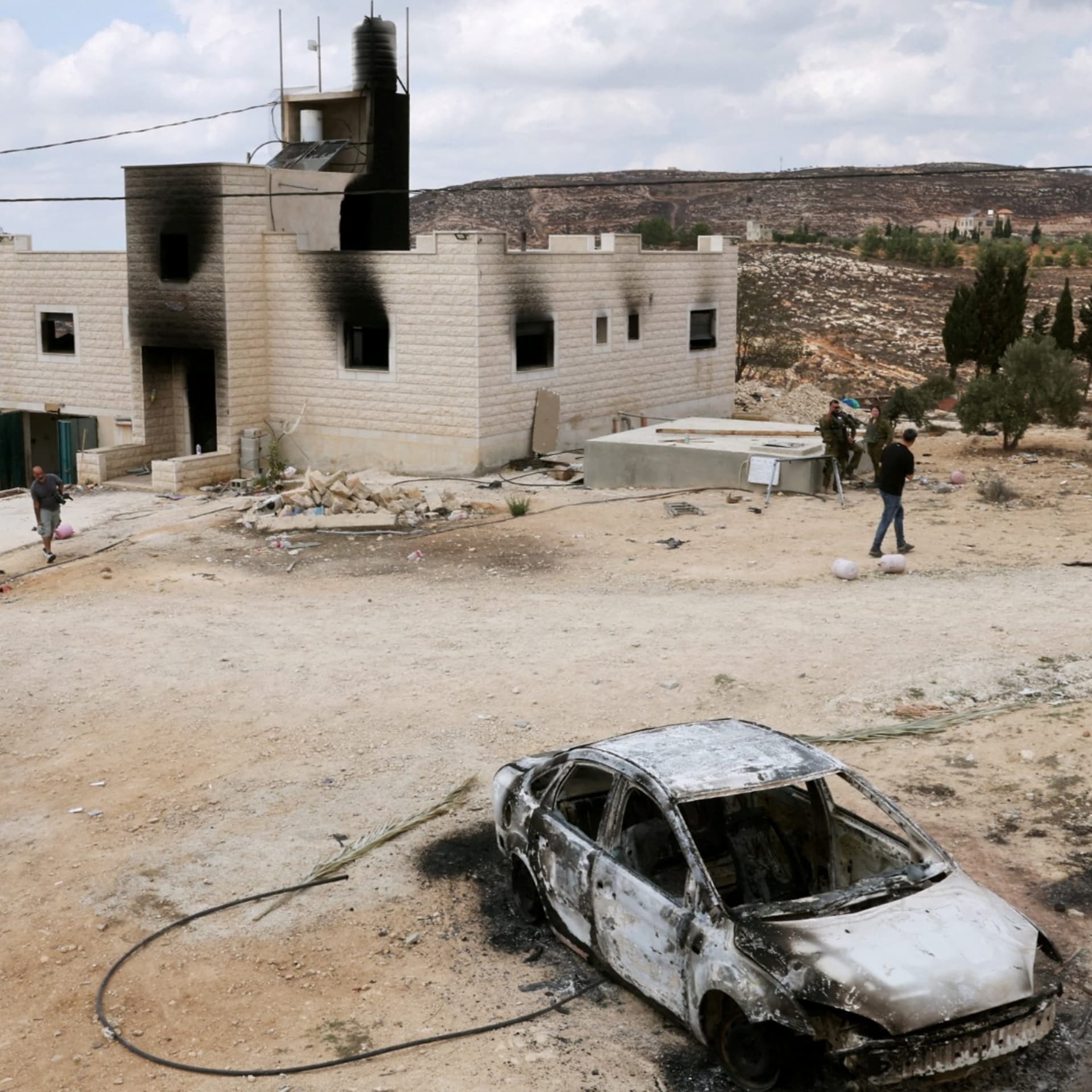
8:47And because they know that nobody will punish them, nobody will stop them. That sense of impunity was also felt here, near Janine in the northern part of the West Bank, as mourners paid their respects to the family of Hussein Asasa, an 80-year-old patriarch who died of natural causes. When the old man's sons buried him in the village cemetery, within an hour, Israeli settlers descended on the grave, hacking at it with tools and trying to remove the body. Under the gaze of Israeli soldiers and the heavily armed settlers, the brothers had to dig up the grave themselves, carrying the shrouded body of their late father down the hill to relative safety.
9:31The IDF later said it condemns any attempts to attack in a manner that harms public order, the rule of law and the dignity of the living and the deceased. Mohamed Asasa is the eldest brother.
9:48We got back to my father's grave just in time, he tells me. They'd almost dug down and reached the body. How can we be safe as Palestinians when our dead relatives aren't even secure in their graves? after being forced to unceremoniously dig up their father's body Hussein's remains have now been reinterred here in a cemetery in a neighboring village the Israeli army says it's investigating and they say they tried to confiscate tools the settlers were using to damage his grave the UN called this an appalling and emblematic example of the dehumanisation of Palestinians in the occupied West Bank.
10:33That report from Wirra Davis. Ministers have started resigning from Keir Starmer's government as the embattled British Prime Minister fights to stay in office following last week's abysmal election results. One of them is the high-profile Jess Phillips. She said in her resignation letter that she had given up believing that Keir Starmer could bring the change she wanted to see. On Tuesday morning, members of the press shouted questions at Mr Starmer's senior ministers as they went into 10 Downing Street for a cabinet meeting. Do you have confidence in the Prime Minister? Should the Prime Minister fight on ministers?
11:10Has the Prime Minister lost confidence in the cabinet? As we record this podcast, more than 60 out of Keir Starmer's governing, Labour Party's 403 MPs have now demanded he go. Despite this, he's steadfastly refusing to do so, delivering a defiant message to his cabinet. He said that whilst the past 48 hours had been destabilising, the process for challenging a leader had not yet been triggered. A split in Keir Starmer's cabinet emerged on Monday, but on Tuesday several ministers spoke out in support of him after the meeting. Among them the Science and Technology Secretary, Liz Kendall. The Prime Minister talked about the challenges we face as a country, the crisis in the Middle East, the impact on the cost of living here, and that this government will do what we were elected to do, which is serve the British people.
12:03The Prime Minister has my full support in this. Let me just say this, there is a process to challenge the leader. No one has made that challenge. But the Labour MP Paulette Hamilton said that Keir Starmer had been stubborn and reckless. What he's now done is he's thrown the gauntlet out and him himself has started whatever civil war you'd like to talk about that will happen in the party. People were willing to give him the benefit of the doubt, but the way he's come out, it won't be pretty, and that's what worries me. As a nurse, I worry about his mental health, and I worry that the way he's handled this, It doesn't make us look bright on the world stage.
12:50Rebecca Kesby got the latest from our political correspondent, Rob Watson. Overall, once more, Rebecca, Britain is plunged into a deep, deep crisis with the governing Labour Party profoundly divided over what on earth to do next. So familiar scenes, if you like. I was thinking about it when we heard those shouts of Willie Resign. It was similar to what we heard when, of course, the Conservatives were in power for 14 years. But to sort of bring you up to date, where we are is a sort of tense standoff between the Prime Minister, Keir Starmer, making it clear to his cabinet and beyond that to the party, look, I'm not going anywhere unless someone challenges me.
13:27A standoff between him and a substantial chunk of the Labour Party that thinks it's just not working with Keir Starmer as our leader. Something needs to change. So it feels to me as though this is utterly untenable that you just can't quite go on like this. But how it resolves is not clear, Rebecca. Right. So we've had some fairly high profile resignations so far from ministerial positions and junior positions as well. But what would need to happen to actually trigger the mechanism of a leadership election? Well, technically, what you would need is 81 Labour MPs to say we're having a leadership challenge and this is the person.
14:05So that's technically what you need. But obviously, what you're saying before that is a draining away of the prime minister's authority. You mentioned ministers resigning. I think it's now up to three. So if you add that overall to something like 20 % of parliamentary Labour members, Labour MPs saying the prime minister needs to think about his position, you see what a tough place he's in. Our UK political correspondent, Rob Watson. Still to come in this podcast. Why should I surrender? How about you? Would you surrender to them if you were a Filipino? We have existing Philippine courts. Why should we be taken away by these foreigners?
14:46A senator in the Philippines takes refuge inside the country's parliament in an effort to avoid arrest over his alleged role in former President Rodrigo Duterte's war on drugs.
15:04When Kohler, the global design leader in luxurious kitchen and bath products, came to me and said, Martha, we need an ambassador for our timeless, elegant, durable cast iron products. I said, I'm in. Now let me see the factory. Weeks later, I was suited up in coveralls and work boots, walking through their Kohler, Wisconsin cast iron foundry. I stood next to the molten iron furnace, saw the hand-applying enamel, and touched the gorgeous finished products waiting to be sent out into the world. Since 1883, Kohler cast iron products have been forged and finished by the incredible craftspeople right in Kohler, Wisconsin.
15:49I'll tell you, I gained a newfound respect and appreciation for Kohler's cast iron craftsmanship. So now, I am lending my discerning stamp of approval to my most beloved Kohler cast iron products for their durability, beauty, and timelessness. Shop my Kohler cast iron favorites curated on Kohler.com. Bring the warmth, character, and enduring style of these timeless products into your kitchens and bathrooms. As the Kohler cast iron ambassador, I say, long live cast iron. The U.S. Virgin Islands invites you to discover the stunning beauty of St. Thomas, St. Croix, and St. John. The U.S. Virgin Islands is truly a magical place, one of a kind, and unlike any other destination.
16:40With incredible food, warm hospitality, vibrant culture, and breathtaking beaches, it's everything you could want in a vacation. And the best part? No passport is required when traveling from the U.S. No hassle, just easy travel. Whether it's the world-famous Trunk Bay in St. John that was voted the best beach in the world, the picturesque Megan's Bay Beach, or the stunning Point Udall, America's easternmost point, USVI will take you to a place that no other Caribbean destination can match. For most, the U.S. Virgin Islands is just a quick nonstop flight or a simple connection away. Start planning your getaway to America's Caribbean at visitusvi.com.
17:20That's visitusvi.com. USVI, naturally in rhythm Hi, Uncle Lazer here America's built on fast cars, fast food, and even faster women Moto Casino's built in America You know what they're fast at? Fast cash, prize, redemption You see, only Moto is U.S. owned and operated Moto, it's American made That's who we are, and that's who we care about Play for free at Moto.us Moto Casino, the social casino board, we're prohibited No purchase necessary, visit Moto.us for more details Must be 21 plus Moto Casino America's Social Casino
18:32This is the Global News Podcast. At least 400 civilians have been killed in Afghanistan since a cross-border conflict with Pakistan broke out in October last year, according to the latest numbers released by the UN. Pakistan has carried out a number of airstrikes in Afghanistan, accusing the Taliban government of harbouring militants responsible for attacks in Pakistan, a charge the Taliban denies. A majority of the deaths in Afghanistan were caused by a single strike in Kabul. The UN has now confirmed that at least 269 people were killed when Pakistan struck a drug rehabilitation centre in Kabul on 16 March.
19:12the deadliest mass casualty incident in Afghanistan in recent decades. Pakistan denies it hit civilians, saying it precisely targeted military installations and terrorist infrastructure. I spoke to our correspondent in Kabul, Yoghata Lemoye. One of the reasons why this incident has shocked people so much is this is not a country that's a stranger to conflict and war. It's endured four decades of it. But in recent history, you've never seen a single strike with that kind of death toll. And even the UN report released today is saying at least 269. They're saying that the actual number could be significantly higher.
19:53Afghanistan's Taliban government actually puts it at more than 400. And the reason they say that it could be significantly higher is because there were many bodies that were charred beyond recognition. The list of the patients who were admitted to this drug rehabilitation center actually was burnt in the fire. and so there are families who have not been able to find their loved ones at all or the remains of their loved ones. And that is the reason why I think it sends shockwaves through this country and we have been speaking to the families of some of the victims. We've come off the main roads of the city and we're going to meet the brothers of Muhammad Anwar Walizada.
20:29He's one of the people who was killed in the bombing at the rehabilitation centre. Muhammad was the elder brother of Mujtapa and Sadiq Walizada and we're just about to speak to them to understand what happened on the night that he was killed. Sadiq received a call telling him that the Omid Rehabilitation Centre where Muhammad was admitted had been bombed. At the beginning it was just chaos. They were dead and wounded in every hospital. We were still hoping that my brother might be alive. Four days later, we found his body cut in pieces. He has six children. No matter how hard we try, we cannot replace their father.
21:15The airstrike ripped through parts of the 2000-bed Omid Rehabilitation Centre. Omid opened a decade ago, back in 2016, at an abandoned NATO base, well before the Taliban seized power in this country. We've driven up one of the hills surrounding the city of Kabul to a graveyard where we're going to meet the family of another victim of the airstrike at the rehabilitation centre. Masuda's younger brother, Mirwais, who was 21 years old, was killed in that airstrike. And just behind us, actually, I can just see rows and rows of graves. This is the mass grave in which we're told about 80 to 90 of the victims who were killed in that airstrike.
21:57they were buried here.
22:02My brother's body was in pieces. There was nothing left of him to give to us, so they buried him here. He was a simple boy who never harmed anyone. After our mother died, I raised him like a son. He lost his job and that's why he got addicted to drugs. The Pakistani government says that the people in that hospital were not civilians, that they were terrorists, that they were being trained to be suicide bombers. What would you like to say to that? Pakistan is lying. There were no militants or military there. They were men who were admitted to Umid to get healed and return to their families. We spoke to the families of more than 30 victims who also rejected Pakistan's claims.
22:52In response to the BBC, Pakistan denied it had hit a hospital, drug centre or civilian facility. The Taliban government's deputy spokesman, Hamdullah Fitrat.
23:05Targeting civilians is a war crime. International organisations should investigate the incident and prosecute those responsible accordingly. This is a huge attack right in the heart of Kabul. One of the big claims of your government since you seized power has been that you brought safety and security to the people of Afghanistan. Is Kabul safe now?
23:32Kabul is definitely safe. Our government is trying to control and eliminate threats against people. Despite the Taliban's assurances of safety, for a people who are recovering from decades of war, this new conflict with a former ally, Pakistan, has renewed fears of a return to violence and bloodshed. Yogit Lemoye with that report. To the Philippines now, where a senator has taken refuge inside the country's parliament in an effort to avoid arrest over his alleged role in former President Rodrigo Duterte's war on drugs. Ronald De La Rosa fled into the Senate building on Monday as police sought to detain him after the International Criminal Court issued an arrest warrant for him.
24:19There are allegations that the former police chief oversaw the deadly war on drugs, causing the deaths of thousands of people. Mr De La Rosa has been in hiding since his former boss, Mr Duterte, was arrested and taken to The Hague last year on charges of crimes against humanity. Mr De La Rosa spoke to reporters shortly after fleeing into the Senate. Why should I surrender? How about you? Would you surrender to them if you were a Filipino? We have existing Philippine courts. Why should we be taken away by these foreigners? This is an attack on our sovereignty. Police later said they would not arrest him while he was in Parliament.
25:00I spoke to our South East Asia correspondent, Jonathan Head, who began by describing the chaotic scenes at the Philippines Parliament. Senator De La Rosa, who, as you say, has been missing in action from the Senate for several months, pretty much since rumours emerged that there was going to be a second arrest warrant from the ICC served on him, suddenly appeared at the door. There must have been expectations he might turn up because National Bureau of Investigations officers were there. He says they tried to stop him entering. He says he managed to barge his way through. He's a big bull of a man, a really burly figure.
25:37And then if you look at the security camera video, you can see them chasing him up the fire escape stairs. And he's quite a heavy man, but he was running just ahead of them, breaking through doors, got into the Senate chamber. Now, the Senate, the upper house in the Philippines, is at the moment dominated by allies of President Duterte and, of course, sympathetic to Bata de la Rosa. So the president of the Senate then announced that he was under the sanctuary of the Senate and that he cannot be arrested there. There's some debate in the Philippines whether that is or isn't exactly possible. but there's a bigger picture here.
Read the full transcript
26:12On the one hand, you've got the quest for accountability for those thousands of drug deaths in which De La Rosa, as the police chief at the time and the right-hand man of President Duterte, is a key figure, and the ICC says there are definitely strong grounds for him to be prosecuted. He's never been brought to trial or even an attempt to do so in the Philippines. You also have this epic feud between the family of President Marcos and the family of President Duterte. They were allies when they won the election four years ago. They've fallen out badly. And, of course, the Duterte camps say the Marcos government's willingness to cooperate with these ICC arrest warrants is all political.
26:51It's all an attempt to damage the Duterte camp. Sarah Duterte, the vice president, who is now facing impeachment, is also the front-runner to win the next election in the next two years. And that's the thing. He says these charges are politically motivated, are they? No, it's an ICC warrant and it's been very carefully thought through. Also, there is enormous amounts of evidence that Brata de la Rosa was a key architect of the policy of allowing massive killings of alleged drug dealers. You know, I think the ICC would argue they've spent years sifting through the evidence. There's a very strong case.
27:25The real argument that the Duterte camp makes is that an ICC warrant shouldn't apply in the Philippines because the Philippines is no longer a member. Now, the Philippine Supreme Court has disagreed with this in the case of President Duterte. The Philippines was a member of the ICC when these killings in Manila started. And remember, the charges relate to earlier killings in the city of Davao. President Duterte pulled it out in 2019. But all these charges relate to actions before that. And the Philippine Supreme Court has agreed that that does make people in the Philippines still liable for what they did at that time.
28:00Jonathan Head. For decades, France has had a problematic relationship with Africa. Several countries on the west of the continent have pivoted away from their former colonial master and been taken over by military governments and strongmen. In response, President Emmanuel Macron is co-hosting the Africa Forward Summit in Nairobi, together with his Kenyan counterpart, William Ruto.
28:31That was the French national anthem, the Marseillaise, being played at the opening of the conference, which is designed to showcase France's revised approach to engagement with Africa. I spoke to our global affairs reporter, Richard Kogoy, who is in Nairobi. Well, it's largely seen as an attempt by France perhaps to broaden its relationship away from areas which are considered to be traditional areas in West Africa, where France was a former colonial power. And it's maybe a strategy to revamp its image and also to reset relations with Africa because the perception about France's relations with Africa has really been affected, especially considering what has been happening in West Africa where it fall out with some of its former colonies, which include Burkina Faso, Mali and Niger.
29:27But largely France has been saying that it's an opportunity for it to reset its relations, which is largely focusing on economic opportunity. They want to see how they can engage in a relationship that is largely mutually beneficial. But I think beneath that it's seeing how does it remain still relevant and how does it engage still parts of the continent that maybe still look at it favorably. Yeah, you talk about mutually beneficial opportunities. What is it specifically that France wants? And are the East African countries really all that interested? That's interesting because if you listen to President Macron's presentation on the first day of the summit, what he said is Africa really needs to be helped, you know, in terms of its ambition to become sovereign, in the sense that relations, especially with former European colonial powers, it shouldn't focus on just aid, but focusing on economic opportunities, so capacity building, especially when it comes to issues of critical minerals.
30:30But then in East Africa, I think a lot of people see France as coming a little bit too late to the party. Many people are asking themselves, so what is France really getting in return beyond the announcements in terms of the multimillion dollars investment that it has announced? A lot of people that you would speak to in Uganda, in Kenya, in Tanzania, they would say they don't want to have the burden that has been associated with French colonialism from what they witnessed happening in parts of West Africa and Central Africa. So there's still a level of scepticism, especially amongst the general population.
31:07But generally, if you look even at the leaderships of the countries within the East African region, they're saying, OK, well, it's great that you're coming here, but then it's an opportunity for us maybe just to diversify the relations that we have. So coming in as another entity that we can relate to. But then you wouldn't say really there's just generally that excitement that you would have expected. Yeah, and this has been generally the economic age of China in Africa. What are other Western countries, Britain has had a big influence in Kenya, what are they going to make of this? Well, Britain was a former colonial power, but Britain's influence over East Africa has been waning over the years.
31:48And what we have seen right now is a lot of countries in East Africa broadening their relationship and ties with other countries. They become very close to China, Turkey, the United Arab Emirates, Qatar, and also India. So what they're saying is that this is not like really to upset Western countries because the challenge would be really refine the value proposition in terms of how they deal with countries, especially within East Africa. What is it that you'll be offering different that perhaps then they will generate that excitement? But I think if you talk to people in Dar es Salaam, in Kampala and in Kenya, The idea is really just to broaden its engagement beyond its traditional partners.
32:30Richard Kagoy. Want to slow the pace of ageing? Don't fancy exercising or improving your diet? Well, why not try a bit of culture? New research suggests that participation in the arts is not just good for your soul, but actually slows down your body's biological clock. The lead researcher is Daisy Fancourt, who's Professor of Psychobiology and Epidemiology at University College London. She spoke to my colleague Nick Robinson. We've been looking at a particular way of measuring biological ageing called epigenetic clocks. So essentially we're all born with our set of DNA, but our lifestyles can decide which parts of our DNA get read out.
33:11So a bit like a recipe book, the recipes are there when it's printed, but we only choose to make some of them. And we've been looking at a process called DNA methylation, which is when a molecule called methyl attaches to our DNA, making it hard to read out, a bit like sticky pages in that recipe book. And as we get older, there are particular patterns of DNA methylation that tend to occur. So we can look at these patterns to see if someone is older or younger than the number of birthdays they've had. And we found that people who engage more in the arts have got this younger epigenetic age. And the problem with these sorts of studies is always You've got to try and screen out everything else that could have an impact, lifestyle, age, geography and so on.
33:50You've done that, have you? Exactly. That's been a big part of this study is considering the demographic and socioeconomic factors that could actually explain this relationship, but also disentangling this from the other kinds of lifestyle and behavioural factors that we already know influence epigenetic ageing. But interestingly, the relationship is there independent of those. And it's actually the same effect size for arts engagement that we see for physical activity. That's fascinating. Well, let's drill down a bit on what you mean by engagement. Do you literally mean if I read 10 pages before going to sleep or have the radio on?
34:23Or do you mean that I have to go and sing in a choir? We've looked at a really broad range of activities within the index. So we looked at performing arts, so making things, crafts, music, dance, as well as people going to cultural events, whether that's museums or libraries or carnivals, gigs, festivals. We used a very broad inclusive index that captured a lot of modern and digital participation as well. But we found it's not just about frequency of engagement. Diversity of engagement also appears really important. So doing different things, not just the one thing that obsesses you. And if people want some advice, really, I know you're not there to give advice.
34:59What would you say? We're all used to the kind of advice we have for diet and physical activity, like get your five a day of vegetables and fruit or get your 10 ,000 steps. And I think it can be helpful if we start to frame arts engagement in a similar way behaviourally. So trying to find a rule for ourselves that tries to prioritise even small amounts of engagement, but on that regular basis, ideally on a day-to-day basis. Professor Daisy Fancourt talking to Nick Robinson. And that's all from us for now. If you want to get in touch, you can email us at globalpodcast at bbc.co.uk. You can also find us on X at BBC World Service.
35:40Use the hashtag Global News Pod. Don't forget our sibling podcast, The Global Story, which goes in-depth and beyond the headlines on One Big Story. This edition of the Global News Podcast was mixed by Louis Griffin. The editor is Karen Martin. I'm Alex Ritson. Until next time, goodbye.
36:09I'm Kai Wright. I'm Carter Sherman. Welcome to Stateside with Kai and Carter. We're a new show from The Guardian. We're talking to big thinkers and the best journalists just trying to understand the world through smart conversation and honest reporting. We don't have billionaires telling us what to say. Stateside with Kai and Carter will come out three times a week, Monday, Wednesday, and Friday starting May 13th. Subscribe on YouTube or wherever you get your podcasts.
36:36you
From the publisher
Parliament in Israel passes a law to set up special military trials for Palestinians accused of taking part in the deadly Hamas-led attack in October 2023. The tribunal will be able to sentence those convicted to death. Also in this podcast: the European Union approves new sanctions against Israeli settlers accused of “supporting the extremist and violent colonisation of the West Bank". Ministers start to resign from Keir Starmer's government, as the embattled British prime minister fights to stay in office. The UN says more than 400 civilians have been killed in Afghanistan since a cross-border conflict with Pakistan broke out in October last year. A senator in the Philippines takes refuge inside parliament to avoid arrest over his alleged role in former President Rodrigo Duterte's war on drugs. President Emmanuel Macron co-hosts the "Africa Forward Summit" in Kenya, to try to reset France's relationship with the continent. And new research suggests participating in the arts slows the ageing process.
The Global News Podcast brings you the breaking news you need to hear, as it happens. Listen for the latest headlines and current affairs from around the world. Politics, economics, climate, business, technology, health – we cover it all with expert analysis and insight.
Get the news that matters, delivered twice a day on weekdays and daily at weekends, plus special bonus episodes reacting to urgent breaking stories. Follow or subscribe now and never miss a moment.
Get in touch: globalpodcast@bbc.co.uk