
In short
Israel’s defence minister says Israel killed Iranian naval commander Ali Reza Tangziri, alleged to oversee Revolutionary Guard operations to mine and block the Strait of Hormuz. The episode weighs whether targeted killings change the war, noting Gardner’s claim that Iran’s IRGC system is redundant and leaders are “replaceable,” with unconventional tactics like limpet mines, drone attacks, and hijackings. It cites Malaysia’s claim that Iran let one tanker pass, while Iran still exports over a million barrels/day and reportedly charges about $2 million per tanker. It also links the conflict to fuel shortages and price spikes in Africa (Zimbabwe rationing, fuel blending changes) and Asia (Philippines jeepney strike; fuel subsidies).
Guests
BBC security correspondent Frank Gardner (Doha); BBC reporters Shingai Nyoka (Zimbabwe), Shirinjana Tawari (Manila), Fergal Keane (inside Iran via interviews); BBC Mickey Bristow (Belarus-North Korea visit); BBC Lana Lam (Australia sunscreen scandal).
Written by AI. May contain mistakes. Listen to the episode to check what was said.
Chapters
Tap a time to open that second in VOMain Stories Overview
0:05 to 0:48
A brief overview of key stories including the assassination of an Iranian naval chief.
“I'm Celia Hatton and at 1600 GMT on Thursday, the 26th of March, these are our main stories.”
Details on Iranian Naval Commander's Assassination
0:48 to 1:51
Discussion on the implications of the assassination of Ali Reza Tangziri.
“Also in this podcast, the president of Belarus, Alexander Lukashenko, is on his first official visit to North Korea.”
Impact of the Assassination
1:51 to 3:47
Analysis of how the assassination might affect Iran's military structure and actions.
“Despite suggestions from President Trump that the Iranians want to make a peace deal, with Pakistan saying it's acting as an intermediary, the war continues.”
Regional Reactions to Ongoing Conflict
3:47 to 5:45
Examining the responses of Gulf states to the war and their stance on Iran.
“And reportedly, Iran is charging $2 million a time for every tanker that goes through.”
Impact of Conflict on Africa
5:45 to 8:01
Discussion on how the war in Iran impacts fuel supplies and economies in Africa.
“Earlier, I spoke to the BBC's Shingai Nyoka, who's in Zimbabwe.”
Philippine Protests Over Fuel Prices
8:01 to 12:32
Coverage of protests in the Philippines against rising fuel prices due to the conflict.
“How bad might things get if the war continues to rumble on?”
Voices from Inside Iran
12:32 to 14:02
Insights into the experiences of Iranians living through the ongoing war and its effects.
“is things like fuel tax cuts as well as fare hikes, because that's something that they say the government can get involved and try and control.”
Life in War-Torn Iran
14:02 to 16:48
Explore the current struggles and sentiments of civilians in Iran amidst war.
“But she's decided to stay despite the dangers of war.”
Transition to North Korea Discussion
16:48 to 17:12
A brief transition introducing the next topic on North Korea's geopolitics.
“and a strong enough support base to continue fighting.”
Belarus and North Korea's New Alliance
17:12 to 20:28
Learn about the recent friendship treaty signed between Belarus and North Korea.
“There were products that in one case said it had a 50 plus SPF, when in fact it only had a SPF of four.”
Show all 12 chapters
Australia's Sunscreen Scandal
20:28 to 23:32
Uncover the revelations of sunscreen products failing to deliver promised protection.
“Now, let's go to Australia, which is dealing with the effects of a public health scandal.”
Art Exhibition on Aging
23:32 to 27:55
Delve into a new exhibition exploring the perceptions of aging through various mediums.
“Now, around the world, people are living longer.”
Transcript
Automatic transcript. May contain errors.0:00Daniel Kearns:This is the Global News podcast from the BBC World Service. I'm Celia Hatton and at 1600 GMT on Thursday, the 26th of March, these are our main stories. Israel says it's killed an Iranian naval chief who was involved in operations to cut off the Strait of Hormuz. But will it make a difference? Inside Iran, people try to continue with their lives despite daily bombing attacks from the United States and Israel.
0:28Rachel Wright:I'm afraid that one day the war will end and something good will not have happened. The problems I have are the same problems as all people. Basic needs. I cannot provide them.
0:38Daniel Kearns:And disruption to oil shipments is having an effect on people and countries as far apart as Kenya and the Philippines. Also in this podcast, the president of Belarus, Alexander Lukashenko, is on his first official visit to North Korea. Both countries are keen to show that they have friends in the world.
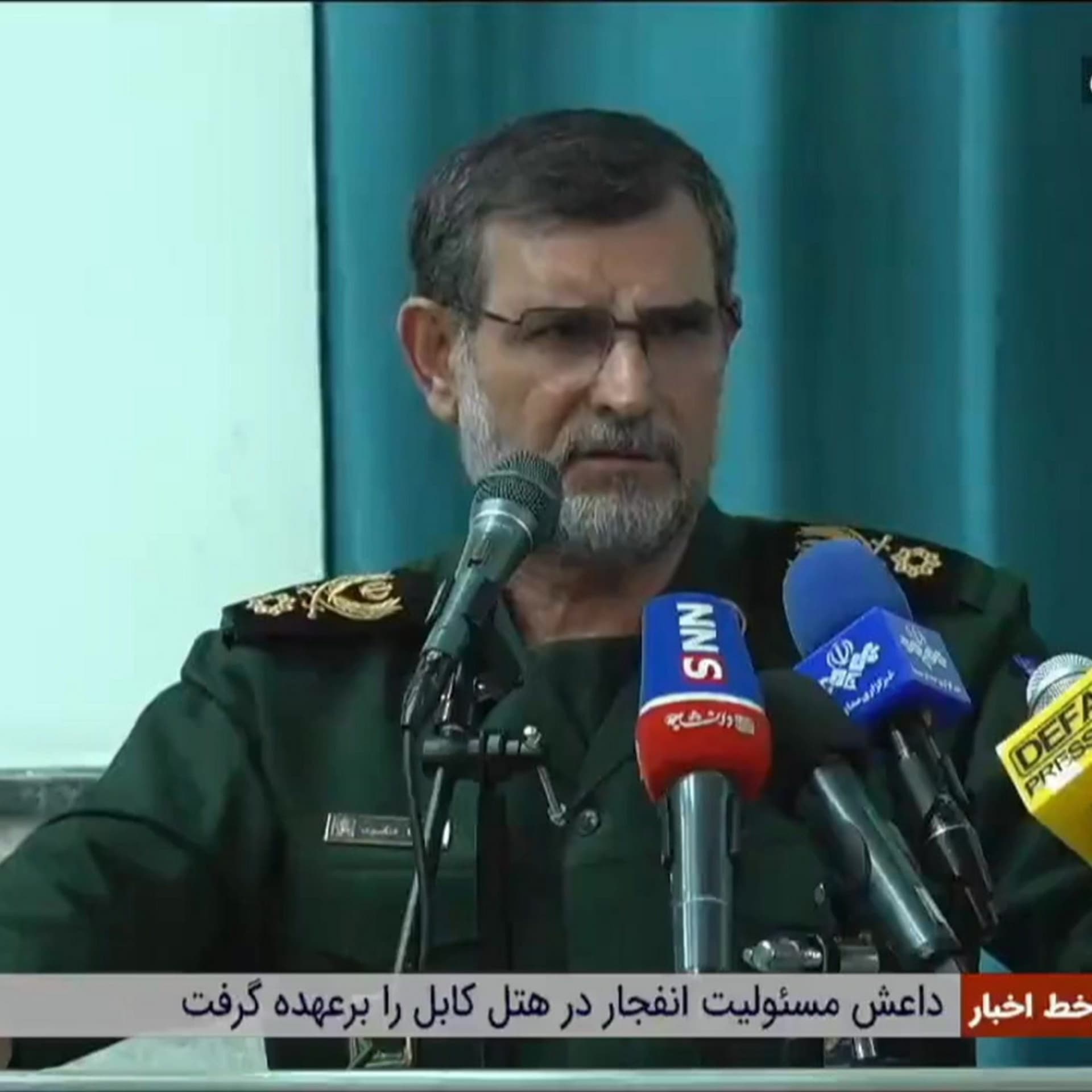
1:04Daniel Kearns:We begin with the latest from the war in Iran. Israel says it's killed an Iranian Navy chief, Ali Reza Tangziri, who was believed to be overseeing Iran's operations in the crucial Strait of Hormuz. In a statement, the U.S. military said his death makes the region safer. If confirmed, this would be the latest assassination of an Iranian leader. The death was announced by Israel's defence minister, Israel Katz.
1:33Rachel Wright:Last night, in a precise and lethal operation, the IDF thwarted the commander of the Revolutionary Guard's navy, Tang Siri, along with several naval command officials. The man who was directly responsible for the terrorist operation of mining and blocking the Strait of Hormuz was blown up and neutralised.
1:51Daniel Kearns:Despite suggestions from President Trump that the Iranians want to make a peace deal, with Pakistan saying it's acting as an intermediary, the war continues. There have been further strikes on Iran, with Tehran also targeting neighboring countries. Our security correspondent Frank Gardner is in the Qatari capital, Doha. I asked him about Ali Reza Tangziri. According to the Israelis, he was directly responsible for this blockade. The problem is with all these assassinations that have taken place during this war, is that these people are replaceable. Once a policy is laid down, there is a degree of autonomy and redundancy built into the Iranian system.
2:30Daniel Kearns:That's what the Revolutionary Guards Corps have done. In Iran, it's almost like you've got two parallel militaries. You've got the conventional military, and then you've got the IRGC, the Iranian Revolutionary Guards Corps. And some years ago, the IRGC kicked out their country's conventional navy from the Gulf and said, we're taking over here. You guys can go and do something else, but we are in charge here. And they've spent the last few years practicing and honing unconventional operations. So things like fast torpedo attack boats, drone swans, and black ops sneaking up and attaching limpet mines to tankers, things like that, as well as boarding and hijacking essentially tankers.
3:15Daniel Kearns:So he will certainly have been involved in much of that, but he's replaceable. Malaysia says Iran has let one of its tankers pass through the Strait of Hormuz. Are other ships getting through? They are, yes. Not most of them. I mean, this is the problem is that Iran is effectively acting like a maritime traffic policeman, deciding who gets to go through and who doesn't. And they are still exporting their own oil, over a million barrels of oil a day, to customers in China, Pakistan, India, but most of the other stuff isn't getting through. And reportedly, Iran is charging $2 million a time for every tanker that goes through.
3:55Daniel Kearns:So this is clearly a far worse, a far less satisfactory situation than the one that existed just a month ago, when Iran had no say, really, in who went through the Strait of Hormuz. I mean, it's got a big long coastline, but there was no question of it choosing who got through. But after nearly a month of being battered by Israeli and US airstrikes, Iran has become defiant and in his no mood to compromise. And they have quite cleverly and malevolently played the strategic economic card, knowing that even though they've got the weaker force militarily, they've got geography and time on their side.
4:35Daniel Kearns:Frank, you're in the Gulf. I mean, as the war continues, are you seeing any shifts in the positions of the Gulf states in terms of what they're willing to do, either to reign in Iran or to end the war? Yes, I am. I mean, there's a definite hardening of views here in the Gulf, particularly in the UAE, the United Arab Emirates, Bahrain, Saudi Arabia and Kuwait, because those are the countries that are getting hit nightly by drones and ballistic missiles. And this is the attitude of all the Gulf Arab states. They didn't support the war and they certainly didn't give any overt assistance to the US or Israel for this war.
5:14Daniel Kearns:But the attitude of the Gulf Arab states is that they have been unjustifiably attacked by their neighbor and they are very cross about it. And some countries on this side of the Gulf really are determined to see an end to the Islamic Republic regime because they're saying we can't live with this regime. Frank Gardner in Doha. The impact of the war in the Middle East, which has been raging for almost four weeks now, is being felt not just within the region, but far beyond. Disrupted fuel shipments are beginning to affect several countries on the African continent that have close ties with the Gulf.
5:51Daniel Kearns:Earlier, I spoke to the BBC's Shingai Nyoka, who's in Zimbabwe. I think this impact is being felt across the continent in many of Africa's 50 plus countries. So, for example, in Mauritius, we've seen the government announce energy saving measures where they are restricting the use of electricity for non-essential equipment, such as certain types of lights, swimming pool pumps, as well as heating, because they say that their supplies are running low. and this is after a shipment that was expected over the weekend has failed to arrive. They say that they have less than a month of fuel in stock and that really is a picture across the continent.
6:34Daniel Kearns:I think a lot of countries were really caught napping when it comes to this. Many of them have lower than the recommended amount of stock. In Sudan, for example, in South Sudan, in the capital of Judah, they've also begun rationing electricity across the capital. But we've also seen in countries like Kenya, these large economies, as well as in South Africa, reports of hoarding, of panic buying that have forced authorities to call for calm because at some fuel stations, the stocks have run out completely. And so what's the situation where you are in Zimbabwe? It's a very similar picture. Zimbabwe has been one of the hardest hit countries in terms of an increase in fuel prices.
7:18Daniel Kearns:Just to give you an example, over the last month, the fuel petrol price has risen by over 40%. And so, like in many other countries, there's a scramble to try to find solutions. And so Zimbabwe was blending its petrol with ethanol at 5%. And now they say that to try to reduce the price of fuel, they're going to increase that blend to 20 % and also scrap some of the taxes that they'd attached to fuel imports because the impact of that increase is that transport costs have risen by almost double within some of the commuter routes. And so there really is a lot of concern about what's going to happen if this war continues.
8:01Daniel Kearns:That's the question. How bad might things get if the war continues to rumble on? It's anybody's guess. I think the examples that we have or the past experience that we have is linked to the war in Russia and Ukraine, where right at the beginning of that war, the fuel prices went up. Here in Zimbabwe, the price has breached the$2 a litre mark. Then it had risen to$3 a litre. We've heard some experts, including the oil tycoon Aliko Dangote, warn that perhaps Africa will face the prospects of working from home because the cost of going into the office is just simply too expensive for businesses to sustain.
8:43Daniel Kearns:Shingai Nyoka in Zimbabwe. To Southeast Asia now and another country that's been particularly hard hit by ripple effects of the conflict in the Middle East. Transport workers in the Philippines have launched a nationwide two-day strike against surging oil prices. Many of the demonstrators drive delivery trucks and jeepneys, private minibuses that city residents rely on for transport. The Philippine government has introduced fuel subsidies and free bus rides for affected commuters. But protesters say they need a lot more financial support. When gas prices are this high, people are going to have a difficult time getting from place to place.
9:26Rachel Wright:People, no matter what sector they work in, whether that be health, whether that be education. Filipino families are already being deeply affected by the rise in commodity prices, such as for education, for food, for housing and for transportation. Because of that, we're seeing our parents bring home less money for our dinners at the dinner table, as well as we're seeing the rise to the cost of education. And we know that given the precarious situation of Filipino families, they definitely will not be able to absorb that cost.
9:54Daniel Kearns:So why is the Philippines so vulnerable in this latest crisis? The BBC's Shirinjana Tawari was at the protests in the capital, Manila.
10:04Rachel Wright:These demonstrators have been out since seven o 'clock this morning. We attended one protest in another part of Manila and they were very loud. They were very impassioned. And what they're doing is they've got multiple locations of these protests and they're all on busy roads because they're trying to get their demands met by drawing attention to the disruption caused by them striking. These are jeepney drivers, they're small minivan drivers, and other even ride-hailing apps were supposed to take part. They're really suffering from the higher cost of fuel, and they say that they're not getting enough government support.
10:44Daniel Kearns:Siren Janna, a lot of people listening to this might think, well, I'm also suffering from higher energy costs, but the Philippines was the first country to declare an energy crisis, wasn't it? Why is the Philippines so vulnerable?
10:58Rachel Wright:Because it imports the majority of the oil it needs from the Middle East, and those supplies have been disrupted, it doesn't really have another source. Now, the government has said that it is working to secure supplies from other sources. That's one of the reasons that it implemented emergency powers earlier this week, in order to have a bit more flexibility to try and find new suppliers. Having said that, though, you know, even if the Philippines had other suppliers, it also has a problem of capacity. It doesn't have the storage, so it can buy the oil. That oil will also take time to reach the country.
11:37Rachel Wright:And on top of that, it doesn't have the storage facilities to be able to hold major reserves like other countries like your Japan's and your South Korea's.
11:46Daniel Kearns:Any discussions for fixing this problem in the long term? For example, investing in renewables or investing in more public transit.
11:56Rachel Wright:Yes, the government has suggested a number of measures in order to save electricity, including, you know, moving to a four-day working week. And, you know, it's even asked government employees to take the stairs instead of the lift. And also, yes, electrification. But remember, electric cars, for example, the charging infrastructure just isn't there. It's nowhere near along that path of having a very comprehensive charging infrastructure in the country. So there are challenges on that side, and that's certainly not going to happen overnight. What these demonstrators are calling for, though, what their main demands are, is things like fuel tax cuts as well as fare hikes, because that's something that they say the government can get involved and try and control.
12:45Rachel Wright:They're also really unhappy with how unregulated the oil market is. It's completely left to private companies to set the oil price. And these demonstrators are saying that the government could get more involved and help with limiting those price hikes.
13:01Daniel Kearns:Siren Janna, Tawari. Let's get a sense now of what's happening on the ground inside Iran. Footage and interviews obtained by the BBC give a rare insight into the experience of Iranians living through the war. We've protected the identities of the people in this report from our special correspondent, Fergal Keane. Wow. A man feels the shockwaves of missiles striking nearby. From his balcony, he sees the tracer fire, bright red against the dark blue of the night sky. Another night under fire in Tehran. We've been able to obtain testimony from several ordinary Iranians in different parts of the country.
13:44Daniel Kearns:To protect them from official retaliation, we've changed their names and used other voices to speak their words.
13:51Rachel Wright:I'm afraid that one day the war will end and something good will not have happened.
13:56Daniel Kearns:Mariam is an artist who's long struggled with the lack of freedom as a woman and a painter. But she's decided to stay despite the dangers of war.
14:06Rachel Wright:Some of my friends left Iran. I stayed to see what will happen. I didn't want to go far away. I wanted to stay here, observe, and if I can, build something and produce something. The problems I have are the same problems as all people. Basic needs. I cannot provide them.
14:26Daniel Kearns:In another part of the city, Asia was shopping in the market for food to celebrate Nauruz, the festival of the Iranian New Year, the arrival of spring. But the war has turned her local market into a place of absences, faces she will never see again.
14:44Rachel Wright:Everything is supposed to become new, happy, fresh. I thought about how last year was. At this exact time, those people who have been killed came with us for Eid shopping and now they are gone. There is war. Everywhere is war.
14:59Daniel Kearns:There's a deepening economic crisis. The price of foodstuffs has doubled. Families struggle to put food on the table.
15:07Rachel Wright:Iran feels very gloomy. In the past, in every part of the market, people sold things on the streets. Flowerpots, hyacinths, vegetables. They sold fish. Now the streets have nothing. They are all empty. I think people's pockets are empty. Our economy is ruined, and the biggest reason for it is the war.
15:28Daniel Kearns:Each morning brings a ritual of grim transformation. Not just security bases, but homes, shops, offices in rubble. Streets filled with shards of steel. Weary civilians cleaning up the mess made in a war they did not choose.
15:49Daniel Kearns:Pro-regime demonstrations, portraying a united nation, are the only ones allowed. Any dissenters would be swiftly silenced. But at home, with family. with friends they trust, those who oppose the regime are willing to share their feelings. My father, who until 20 years ago would have given his life for Khamenei, after his death brought sweets home to celebrate. This man, we're calling him Mahmoud, is furious with what's happening to his country. They are a group of savages with masks, chanting with loudspeakers, guns and vehicles, constantly moving through the streets, shouting. and everyone is at home, worried, afraid, with satellite signals full of noise and disruption and no internet.
16:38They've blocked the roads, they intimidate every car they see
16:41Daniel Kearns:and behave however they want. The state has their oppressive power, military capability and a strong enough support base to continue fighting. Any ceasefire will likely leave the current rulers in place, at least in the medium term. An escalating war could unleash a far more unpredictable dynamic for the regime and the people of Iran. Virgil Keen. Still to come in this podcast, a sunscreen scandal in Australia.
17:16Rachel Wright:There were products that in one case said it had a 50 plus SPF, when in fact it only had a SPF of four. Regulators are calling for big changes to the industry.
17:36Daniel Kearns:This is the Global News Podcast. Now to North Korea.
Read the full transcript
17:48Daniel Kearns:Where the president of Belarus, Alexander Lukashenko, has been warmly greeted at a colorful ceremony hosted by the North Korean leader, Kim Jong-un. The two men signed a friendship and cooperation treaty, but the visit also seemed to be about optics, showing solidarity between nations not aligned to the United States and the West. The newsroom's Mickey Bristow told me more about the visit.
18:12Rachel Wright:Well as you said there they signed a treaty these two leaders agreed to increase cooperation in terms of education, culture, sport, information sharing, increased trade as well. At the moment trade between these two countries is virtually non-existent measured in the thousands and when you think the biggest countries in the world have billions of dollars of trade between each other it's virtually nothing so there's great room for improvement there but I think it's about the optics as you mentioned. We heard a little bit of the ceremony there. It was a really lavish ceremony. Alexander Lukashenko swept into a square in Pyongyang in a big black limousine.
18:47Rachel Wright:The two leaders hugged each other. There was a detachment of soldiers on white horses. Another group of soldiers marched past goose stepping. It was all about showing essentially that these two countries are in solidarity with two other larger nations, Russia and China. And they really are aligned against the United States, against the West and really to show that they have friends in the world.
19:12Daniel Kearns:So trade, diplomatic ties being built. I mean, North Korea does seem to have more friends and to be in a better economic position than it was just a few years ago.
19:22Rachel Wright:Yeah, during the pandemic, North Korea was really on its uppers. The trade stopped with the outside world. There was a series of natural disasters, less food for people to eat across the country. But essentially, since Russia invaded the full-scale invasion of Ukraine in 2022, that offered an opportunity for North Korea. Russia found itself without friends, friends who could supply it with things, and North Korea stepped in. It's given munitions, weapons, even sent soldiers, hundreds of thoughts who have died, fighting the war with Ukraine. And in return, North Korea has received lots of things, military support, food, money.
19:59Rachel Wright:So that's really boosted North Korea's economic position and also given North Korea a bargaining chip in its relations with China. China's now not its only friend.
20:09Daniel Kearns:So that's North Korea. But just briefly, what does Belarus get out of all of this?
20:14Rachel Wright:Something similar. As I said, trades are non-existent. I think the Belarusian leader got to show that he too has friends in the world. He's hitched his wagon with President Putin too. So he needs to show that he has some friends as well as Kim Jong-un.
20:28Daniel Kearns:Mickey Bristow. Now, let's go to Australia, which is dealing with the effects of a public health scandal. Regulators there are calling for big reforms to the sunscreen industry. That's after public outrage kicked off last year when an investigation found that many popular brands of sun protection cream were not providing the protection that they claimed. The proposed changes will focus on improving the reliability and transparency of what sunscreens promise to customers. I spoke with our reporter, Lana Lam, who's in Sydney, and she started by telling me about that initial investigation.
21:04Rachel Wright:It was quite a shock to the consumers because I guess there's been for decades this sort of inherent trust among Australians that the sun cream just works. And so to know that some of these popular and quite expensive brands weren't providing the protection that they claimed to be sort of sent shockwaves across the nation, really. About 2 ,000 people die from skin cancer or melanoma per year here. We are like a skin cancer hotspot. And so we really rely on sun cream in our daily lives.
21:37Daniel Kearns:And what did those initial investigations reveal? That some of these products, for instance, if they're claiming
21:44Rachel Wright:on the packaging, we have like an SPF rating, a sun protection factor rating. And so there were products that in one case said it had a 50 plus SPF when in fact it only had a SPF of four. And And so the sun protection of that product is much lower than the person thinks it is. And so your skin safety is obviously at risk. So what are regulators saying now? That I guess in light of the report that found these sun creams weren't giving the protection that they claim to be, in light of that report and subsequent investigations by the Therapeutic Goods Administration, they've decided that they need to overhaul the regulations that are currently in place.
22:28Rachel Wright:So they're looking at greater oversight, basically, for the regulations that currently exist. So having greater scrutiny of the laboratories that test the sun protection factor of these products and also looking at simpler labelling for the products as well.
22:46Daniel Kearns:What's the effect of this sunscreen scandal overall? I mean, the Australian government has spent so much money and time with these huge public campaigns to convince people to cover up and to wear sunscreen. What have the findings of these investigations done? Are people starting to question that a bit?
23:05Rachel Wright:Yeah, I mean, it's a very challenging situation for many Australians. You know, since childhood, it's drilled into them that wearing sun cream is important, staying in the shade, wearing hats, things like that. So being Sun Smite is part and parcel of growing up in Australia. And so then to have one very key part of that sun awareness be sort of questioned, it's really rattled a lot of people here.
23:30Daniel Kearns:Lena Lam in Sydney. Now, around the world, people are living longer. That's good news. But how do we view these extra years? A new exhibition explores experiences and perceptions of ageing from adolescence to older age through art, science and popular culture. It's called The Coming of Age and it's on at the Wellcome Collection in London. My colleague Jane Hill was shown around by its head curator, Shamita Sharma Charja. It began by looking at some beautiful objects from Japan.
24:03Rachel Wright:The very first objects when you enter the exhibition are a pair of silver sake cups. And they're a kind of object that are given to people in Japan in the year that they turn 100. Now, when this practice fair started in 1963, only 153 cups were given out that year. But by 2014, over 29 ,000 cups were supposed to be given out in that year alone, at the cost of about£1.2 million to the Japanese government. So the scheme was stopped, and there was a public outpry. so then they reinstated it using a smaller nickel alternative. Let's walk around. Sadly, we can't look at every single thing in a fairly sizable exhibition, but explain what we're looking at here because it looks to me like a very thin bone, almost like a cane.
24:55Rachel Wright:So we're looking at Charles Darwin's walking stick and on the top is a skull with bright green eyes. Charles Darwin used to call this his walking maturi or memento mori meaning it was a reminder that one day we all must die. This walking stick is next to a contemporary artwork by an artist called Daphne Wright and it's of a Zimmer frame and the Zimmer frame is actually kind of paired all the way back to its core and covered with unfurled clay so it looks incredibly vulnerable. I just thought it was really interesting that in the 19th century Charles Darwin's walking stick was like a symbol of erudition, whereas a zimmer frame today is not seen in the same way.
25:39Rachel Wright:So we're looking at a very unusual artwork here. So this is a ceramic series called Wild Apples by the artist Serena Korda. So we're walking into a circular space and all around are scattered apples. And in and amongst the apples, there are three roughly hewn kind of tree trunks that are top of which are three ceramic figures. Serena, all women, yes. So Serena really was looking at experiences of menopause. Serena was very interested in the type of object that we have in our collection here at Wellcome called the anatomical venuses, which were the 16th century teaching tools that were used to teach men about women's bodies.
26:22Rachel Wright:And so Serena is really turning that medicalised male gaze on its head, and her figures are standing up, and they are bearing the lived experiences of their bodies.
26:35Daniel Kearns:Well, we started with the beautiful Japanese sake balls, and as we come to the end of the exhibition, something else I can tell clearly from Japan. What is this?
26:44Rachel Wright:That's right. So we're looking at a display of objects from the Restaurant of Mistaken Orders, which is a social enterprise in Japan where all of the floor staff of this restaurant have dementia. So I think the idea is about embracing imperfection. So you can see in the logo of the restaurant, this is the English version of it. It says restaurant and mistaken orders and the K is on its side. But the idea is that Japan is this country that is kind of famed for its precision and attitudes towards work. and actually thinking maybe not everything has to be perfect. It's about fostering understanding.
27:24Daniel Kearns:What would you like people to take away at the end of this exhibition? What are your thoughts about ageing, how we all view older people? Do we value older people and their experience enough? Is it throwing up those sort of questions?
27:39Rachel Wright:What I would really like from this exhibition is for people to come away kind of just thinking about their own experiences and reflections on aging throughout their life course from you know kind of adolescence to middle age and becoming older but also kind of having a really realistic view of age and seeing that there are challenges and benefits to each stage of life.
28:01Daniel Kearns:Jane Hill talking to Shamita Sharma Charja from the Welcome Collection. And that's all from us for now. If you want to get in touch, you can email us at globalpodcast at bbc.co.uk. You can also find us on X at BBC World Service. Use the hashtag Global News Pod. And don't forget our sister podcast, The Global Story, which goes in-depth and beyond the headlines on one big story. This edition of The Global News Podcast was mixed by Sid Dundon. The editor is Karen Martin. I'm Celia Hatton. Until next time, goodbye.
From the publisher
The US military says an Israeli airstrike that killed the Iranian revolutionary guard's naval commander, Alireza Tangsiri, "makes the region safer". Israel's defence minister says he was directly responsible for blocking the Strait of Hormuz. Iran has not confirmed his death. We look at how the Middle East conflict is affecting daily lives in countries as far apart as Kenya and the Philippines. In other news, a lavish welcome for the leader of Belarus in North Korea. And a sunscreen scandal in Australia prompts a rethink.