
In short
The BBC Global News Podcast episode covers multiple headlines. Main story: Israeli strikes were reported in southern Lebanon shortly after a ceasefire with Hezbollah was announced. Lebanese state media and an ambulance service reported 12 strikes and two deaths from a drone strike; Israel said it would keep removing “immediate threats” and would not withdraw troops, calling it a security strip until Hezbollah disarms. Hezbollah had not confirmed the ceasefire and said the “project to eliminate Hezbollah” failed, creating a stalemate.
Guest
Valerie Sanderson (interviewed by correspondent Charlotte Gallagher) argues the ceasefire is “slightly ridiculous” because Israel won’t withdraw and Hezbollah won’t disarm. Key claim: US-Iran talks are fragile; Darren Selnick warns Iran is “playing games” tying Lebanon to Strait of Hormuz issues. Other guests: John Nkengasong (criticizes US ending HIV funding to South Africa; predicts hundreds of thousands of excess deaths) and Terry Egan (obituary segment on sitcom director James Burroughs).
Notable examples
US PEPFAR/USAID role in HIV gains; World Cup matches (USA 2-0 Australia, Scotland 0-1 Morocco, Brazil 3-0 Haiti) and a World Cup rule on covering one’s mouth.
Written by AI. May contain mistakes. Listen to the episode to check what was said.
Chapters
Tap a time to open that second in VOIsraeli Strikes in Lebanon
1:38 to 4:40
Discussion of recent Israeli strikes in Lebanon despite a ceasefire with Hezbollah.
“The US government confirms it's ending funding for South Africa's HIV programmes and Afghanistan says it's launched strikes on two provinces in Pakistan targeting suspected Islamic State militants.”
U.S. Cuts Funding for South Africa
4:40 to 8:13
Analysis of the U.S. decision to end funding for South Africa's HIV programs and its implications.
“The ceasefire between Israel and Hezbollah came after concerns that the conflict in Lebanon would undermine the deal between the US and Iran.”
Tribute to James Edward Burroughs
8:13 to 14:00
A retrospective on the life and career of TV director James Edward Burroughs.
“And Washington justified its decision with unproven allegations that the South African government is failing to protect the country's white minority Africana community.”
Tribute to James Edward Burroughs
15:36 to 16:08
A retrospective on the life and career of TV director James Edward Burroughs.
“This summer, stock up on your favorite brands for both you and your home.”
Pakistan and Afghanistan Conflict Update
16:11 to 18:41
Discussion on the recent military actions and tensions between Pakistan and Afghanistan.
“For you, save days are here now through June 23rd.”
The Kurdish Uprising and Safe Haven Play
18:41 to 19:37
Exploration of the Kurdish uprising post-Gulf War and the play 'Safe Haven'.
“In 1991, after the first Gulf War, the Kurds of northern Iraq carried out an uprising against the brutal government of President Saddam Hussein.”
Cast and Crew Insights on Safe Haven
19:37 to 22:44
Interviews with the cast and crew discussing their roles and the story's significance.
“I'm at the Arcola Theatre in London where they're rehearsing for the play Safe Haven which begins soon and I'm with some of the actors and the director and the writer of the play.”
World Cup Football Match Recaps
22:44 to 25:48
Overview of recent World Cup matches and notable performances by teams.
“art as a way of being able to really tell true stories about these communities, these special, wonderful people.”
Viewer Experience and Technology Impact
25:48 to 28:00
Discussion on how streaming technology affects the viewing experience of live sports events.
“with a small several second delay some say the time lags in new technology like streaming take away from the World Cup experience.”
Transcript
Automatic transcript. May contain errors.0:00This BBC podcast is supported by ads outside the UK.
0:30Make your next financial move with confidence. Follow NerdWallet's Smart Money Podcast on your favorite podcast app. What's up, y 'all? Summer's got a different tempo. Everything's a little looser, brighter. One plan turns into another. You hear something, you stay a little longer. Next thing you know, you're somewhere you didn't plan to be. It's those in-between moments. That's where the ideas hit. Conversations stretch out. Little memories sneak up on you. Sometimes, it's just about what's in your hand. That color, that chill. The new Tropical Butterfly Refresher from Starbucks. Guava and passion fruit flavors with mango pineapple flavored pearls.
1:08Yeah, that feels like summer before you even taste it. Funny how one small stop becomes the best part of the day. Start your summer rhythm with Starbucks. Try the new Tropical Butterfly Refresher from Starbucks.
1:26This is the Global News Podcast from the BBC World Service. I'm Keith Adams and in the early hours of Saturday 20th June, these are our main stories. Israeli strikes are reported in Lebanon despite a ceasefire with Hezbollah. The US government confirms it's ending funding for South Africa's HIV programmes and Afghanistan says it's launched strikes on two provinces in Pakistan targeting suspected Islamic State militants. Also in this podcast... OK, everybody, I would like to get this in one take, please. Let's roll it. Water's working. And action. And cut. Hey, butt guy, what the hell are you doing?
2:12We say goodbye to the man who made countless US sitcoms and a round-up from the Football World Cup as another host country makes it to the knockout stage. There have been Israeli strikes reported in southern Lebanon after a ceasefire with Hezbollah came into effect. An Israeli military spokesman said its forces would continue to remove immediate threats. Hezbollah is yet to confirm the ceasefire, but the Iranian-backed group said the project to eliminate Hezbollah has failed. Our correspondent in Jerusalem, Charlotte Gallagher, has been following the conflict. She spoke to Valerie Sanderson. No one said it's over, but it does seem slightly ridiculous to call it a ceasefire when you have Lebanese state media and also an ambulance service in southern Lebanon saying there have been 12 Israeli strikes in the minutes after the ceasefire was announced.
3:08We're also hearing from Lebanese state media that two people were killed in a drone strike in southern Lebanon after that ceasefire agreement came into effect. And I think the reason why it's not working, it's faltering, is because essentially Israel has said it will not withdraw its troops from southern Lebanon. It calls it a security strip until Hezbollah disarm. Hezbollah have said they will not disarm until the IDF go. So it's kind of a stalemate situation. And I think that's why this ceasefire and the ceasefires before just don't work. This week has seen fierce criticism of the Israeli government from the Trump administration.
3:47How worried do you think is the Israeli government that the row could get worse? I think for Benjamin Netanyahu, he's in a really difficult position because he's facing a lot of criticism, as you said, from President Trump and also J.D. Vance saying essentially, be grateful. We are your most powerful ally. You need us. J.D. Vance was saying yesterday, we supply a lot of your weapons. So I think a bit of a warning, essentially, to, in Donald Trump's words, behave. But then he's facing the internal pressure. Politicians inside the country and also a lot of the public want the offensive push into southern Lebanon to continue.
4:21They want Hezbollah to be dismantled. And they feel like they have been sold out with this deal between Iran and the US. And it's actually made Israelis a lot less safe. So he's facing a very difficult decision. And I think it's almost impossible at this point to keep those two sides happy. Charlotte Gallagher in Jerusalem. The ceasefire between Israel and Hezbollah came after concerns that the conflict in Lebanon would undermine the deal between the US and Iran. Peace talks to end their war were postponed on Friday due to the fighting, but there are reports US officials are now heading to Switzerland.
4:57So when might these negotiations resume, and will the truce between Washington and Tehran hold? Darren Selnick is the former chief of staff to the US Defence Secretary, Pete Hegseth. He gave this assessment to Paul Henley. Well, it looks like everything is very fragile. Straight of Hormuz, it looks like Iran's playing games, trying to tie things again to Lebanon, trying to cut deals about insurance needed to go through the strait. This is a very bad start, to say the least. And it's not a ceasefire, is it? Attacks continue in the south of Lebanon. Israel says it has no intention of pulling troops out.
5:41Right, right. And so the whole situation is very tenuous in terms of what Iran is trying to do and say and push. I also don't think it's very wise to be saying negative things in the press about the president, Trump, and saying he signed out of desperation. The president is serious. If they're not serious during these 60 days, it will end and he will do military strikes again. So they're playing a very dangerous game in terms of signing that document and at this point not looking like they're very serious about actually doing these talks the way they promised. You used to work for the defence minister, Pete Hegseth.
6:24How much in control of the situation of the conflict is the defence department? Well, the Defense Department is ready to strike and act at all times. So they're ready and they're on alert, but they take their orders ultimately from the president. What exactly were G7 leaders applauding Mr Trump for the other day? The Strait of Hormuz is closed. Talks in Switzerland are off. There is no regime change. Vast amounts of money have been spent on this war. and huge reparations are being paid to Iran. It's a disaster, the whole situation, isn't it? Well, it's not looking good. I'm not aware of, according to the president and the vice president, there is no reparations being paid.
7:13All of that's on hold until they perform and they're not performing. So things are not working the way they should be and the president has warned them that if they do this, there's consequences. So I would assume that the president and the vice president are probably talking right now with the Secretary of War and Secretary of State and others about how they're going to deal with this. And it's a very bad situation. I would have hoped Iran would have learned their lesson from previous military strikes. But they are definitely heading in the wrong direction. And I would say as each situation develops more unfavorably, the possibility of military strikes keeps increasing per the hour.
7:57Darren Selnick there. More than 8 million South Africans are living with HIV. That's the highest number of any country in the world. So the decision by the Trump administration to stop funding local AIDS and HIV prevention programs has come as a serious blow. And Washington justified its decision with unproven allegations that the South African government is failing to protect the country's white minority Africana community. John Nkengasong was the founding director general of the Africa Center for Diseases Control and Prevention and was then global AIDS coordinator in the Biden administration.
8:35So what does he think of this U.S. move to cut funding? It's actually unfortunate that the U.S. would take such a decision to cut funding in a country that they have supported for many years. And it's thanks to the U.S. efforts that the situation of HIV AIDS in South Africa had actually decreased and the trajectory was shaped. The U.S. cuts to HIV funding would rapidly destabilize treatment and prevention programs. And modeling clearly suggests that hundreds of thousands of excess deaths will occur over a decade. And major services will collapse for key populations and reverse us in two decades of gains.
9:17So it's very, very unfortunate that such measures will be taken, really, to undermine U.S.'s own leadership role that they have played over the last 25 years in controlling HIV AIDS in Africa and in South Africa in particular. U.S. officials have been defending their decisions, saying that the intention of the U.S. government was to foster self-reliance and reduce dependency on American funding. They've added that South Africa is a middle income country and is more than capable of supporting its own health programs. What do you say to that? I think it's very clear that even when the United States PEPFAR program, which is the president's emergency program for AIDS relief, was fully supporting South Africa, the government of South Africa contributed in excess of 80 percent in their prevention efforts for HIV and AIDS.
10:10So the leadership has always come from the government of South Africa, and the Global Fund and PEPFAR have contributed about 20 % or so. Having said that, the problem is huge. The problem of HIV AIDS in South Africa is the largest in any country that we can imagine by far. So the government of South Africa alone cannot effectively deal with this trend. I mean, it needs all the partnership that is required from the Global Fund. It needs the partnership required from the US government. So I think it would really be unfortunate that these kind of measures will be taken abruptly. It will create shocks that will undermine the health workforce, undermine research platforms, undermine the broader health system functions that were built around PEPFAR and USAID investments.
11:00John Nkengasong talking to my colleague Celia Hatton. Now, do you like sitcoms? Television programmes such as Friends and The Big Bang Theory have changed the genre of TV comedy forever. Now the man behind many of them, James Edward Burroughs, has died at the age of 85. Terry Egan looks back at his career. You want to go home, get some rest, so you can be back for your 9am shift. It's one of those days I hate to see you, you know what I mean? A scene from Cheers, the hugely popular TV comedy about buddies hanging out in a bar in Boston, which began in 1982 and was co-created by James Edward Burroughs.
11:44But just in case that one didn't take your fancy, he had innumerable other shows to his credit. Hey, I know what. Why don't we set out for some Chinese food, guys? Oh, I got the number of a great little Chinese food. Well, let's call them. It's a laundry. The Bob Newhart Show, from which that clip was taken, Taxi, Frasier, Friends, Will and Grace and Mike and Molly. You name it, Burroughs probably directed episodes of it. Born in California, Burroughs' family moved to New York when he was still young. After studying at the Yale School of Drama, he got involved in TV and theatre, where he was introduced to Mary Tyler Moore.
12:26There was no better introduction to the world of the comedy television series. Directing some of her enormously popular shows, and then those of the equally popular comedian Bob Newhart, it was just the start of a career that saw Burroughs refashioning the genre. He concentrated on improving every facet, including lighting, camera numbers and comic timing. And having worked on Taxi with the brothers Glenn and Les Charles, the three determined to acquire more control over their work, which led to Cheers, almost all of whose 275 episodes were directed by Burroughs. And as a spin-off from that came Frasier, which won five consecutive Emmy Awards.
13:11You haven't heard a word I said. Niles, you're a psychiatrist. You know what it's like to listen to people prattling on endlessly about their mundane lives. Touché. In the end, Burroughs had directed over a thousand episodes of television and 50 pilots for TV series, including Third Rock from the Sun. Not to mention various episodes of The Big Bang Theory. But Burroughs' appearance in the Friends episode, The One with the Butt, stands perhaps as a tribute to his comic sense. There, he played the director of a film in which the character Joey is cast as Al Pacino's butt double. OK, everybody, I would like to get this in one take, please.
13:51Let's roll it. Water's working. And action. And cut. Hey, Butt Guy, what the hell are you doing? But as the man behind so many great shows, there was no substitute for James Edward Burroughs. Terry Egan reporting. Still to come in this podcast. Here you are, hiding again. I am not hiding, I'm not hiding, I'm watching. A play about the fate of the Kurds after the first Gulf War. And sorry for the slight delay, that's because we take a look at time-lapse footy.
14:42Did you know not all batteries are the same? For example, only Duracell batteries are built different with Power Boost ingredients. And Duracell are the only batteries that make this sound every time you say Power Boost ingredients. See? Duracell batteries with Power Boost ingredients. You try. Duracell batteries with Power Boost ingredients. Told you. Duracell batteries are built different with Power Boost ingredients. And they're built right here in the USA with U.S. and Global Parts. You ain't heard about Moto Casino? Moto has real Vegas slots. Any game you can find on the floor in Vegas, you can play it on Moto.
15:18I like my slots hot. Moto's free to play, like food stamps, in line at the grocery store, at a funeral, in traffic, keep your eyes on the road. Hop on Moto Casino. Moto Casino got jackpots that are bigger than my belly. Moto, America's hottest free-to-play social casino. Download the Moto Casino app today. Moto Casino is a social casino. What were prohibited? No purchase necessary. Visit Moto.us for more details. Moto Casino. America's social casino. Hey, it's Ryan Seacrest for Jewel Osco. This summer, stock up on your favorite brands for both you and your home. Now through June 23rd, get big deals on everyday essentials from Procter & Gamble.
15:51Shop in-store or online for savings on items like Swiffer Power Mop, Febreze Plug Warmer, Herbal Essence Shampoo, Old Spice 2-in-1, Crest Scope Toothpaste, Secret Deodorant Spray, and Head & Shoulder Shampoo. Get these deals before they're gone. Offer ends June 23rd. Restrictions apply. Offers may vary. Visit JewelOsco.com for more details. Hey, it's Ryan Seacrest for Jewel Osco. For you, save days are here now through June 23rd. Find hot deals throughout the store and earn four times a point. Look for in-store tags to earn on eligible items from Kinder, Ghost Energy, Cottonelle, Ben & Jerry's, and Popsicle.
16:27Then clip the offer in the app for automatic event-long savings. Stack up those rewards to save even more. Enjoy savings on top of savings when you shop in-store or online for easy pickup or delivery. Restrictions apply. See the website for full terms and conditions.
16:44While Pakistan's leaders are playing a big role on the global stage, mediating the deal between the US and Iran, the country remains locked in a conflict of its own with neighbouring Afghanistan. In its first major offensive action in months, Kabul says it has launched strikes on two provinces in Pakistan, targeting suspected Islamic State militants along the border. Pakistan has denied that its territory was used at all. Our global affairs reporter, Ambarasan Etharajan, is following developments. Both sides are giving conflicting information, but the two countries, Pakistan and Afghanistan, they have been clashing near the border areas for several months now, leading to hundreds of deaths, mainly civilian casualties, according to the UN.
17:30Now, in the latest round, the Taliban defence ministry said they used their air force to target what they call as the suspected Islamic State militant hideouts inside Pakistan's Khyber Pakhtunkhwa and Balochistan provinces. But they did not specify what kind of airstrike. So the suspicion is probably they would have used some drones. And that's what the Pakistani authorities were responding to, saying there was no attack, actually. There was only rudimentary drone, and that was shot down. But what Kabul has been saying at some of these IS attacks carried out in recent months. Some of these people were across the border inside Pakistan.
18:09Last few days, the border was quiet and suddenly you have this Taliban claim. This comes after some clashes in which 13 civilians, Afghan civilians, were killed, according to the UN. And that was the Pakistani strike. And that was like preceded by what Pakistan said, militants based in Afghanistan coming and targeting their security forces, hundreds of Pakistani security personnel have been killed over the years. So there have been allegations and counter-allegation, but it is hard to verify what happened. Ambarrasan Etharajan. In 1991, after the first Gulf War, the Kurds of northern Iraq carried out an uprising against the brutal government of President Saddam Hussein.
18:53It was unsuccessful, and fear in revenge, hundreds of thousands of Kurds fled into the mountains. The UK military, along with other allied countries, created a safe haven in northern Iraq to keep out Saddam's forces and to protect the Kurdish population. It came about in large part thanks to the determination of some British diplomats and a Kurdish refugee in the UK. Well, a play about those events, called Safe Haven, is about to be performed in London. The BBC's Martin Venard has been to meet some of the cast and crew.
19:37I'm at the Arcola Theatre in London where they're rehearsing for the play Safe Haven which begins soon and I'm with some of the actors and the director and the writer of the play. My name's Chris Bowers, I'm a former British diplomat and former journalist. So Chris, just tell us why you wanted to write this play. Because it's an amazing story. There was a potential genocide happening in the Kurdish mountains and a few brave British diplomats prevented a genocide. So your story, it's based around who? It's based around one of the key British diplomats, Catherine Rowe, who's the heroine of the story.
20:16So they worked round the Foreign Office because she felt herself to be an outsider, she was very interested in human rights, and sadly she actually had to leave the Foreign Office at the end of the year because she'd gone too far. And the irony is that she'd gone too far actually in helping save hundreds of thousands of lives. Fighting in the mountains is not the only way. We need to train doctors too. Anyway, we must stick to the story. My name is Yad Deen. I'm the producer and director of Safe Haven. I was born in Kurdistan. My parents and I fled when I was six or seven months. I have a very personal connection to this story.
20:53That journey that they made through the mountains on foot, on horseback, to the border of Iran. So when Chris approached me to direct and produce Safe Haven, I was immediately drawn to it. I think I've chosen so many times to learn. I still don't know how to do it. Oh, come on. I think you've got it. I'm Boo Jackson. I play Catherine in Safe Haven. How do you see the role? How do you bring across her role to the public? We met her on the first day of rehearsals, which was amazing. She's completely remarkable. It's a funny balancing act of her being a woman in the Foreign Office in 1991 who was able to make such profound change, but also having to kind of play the game of navigating being a woman in that environment.
21:39She talks a lot about feeling like an outsider in an inside institution, so kind of playing with that. Should my husband stop fighting Saddam? Of course not. And should I not be there for him when he returns? No. Hi, I'm Omar Aga, and I'm playing Dulawer, Dulawer Alaeddin, a doctor from Kurdistan, also a real person, also someone who we met. He is, and was, but in the world of the play as well, heavily involved in raising awareness of what was happening in Kurdistan, also trying to rescue his own sister, who was, you know, left behind there. I'm Iraqi Kurd. My mom was around when this was happening.
22:15It's pretty emotional to be part of, like, then telling that story. Do you hear that? Don't move! What? It's the gas! I'm Lisa Zara and I play Anne and Zaria. I'm Iranian-Welsh and so I did know about Safe Haven but more so I knew about the suffering that the Kurdish community have gone through. And how important is it today that people get to know about this story? We have to keep telling these stories because they're not going away. art as a way of being able to really tell true stories about these communities, these special, wonderful people.
23:01OK, now to the World Cup, to football. The co-hosts, the United States, have qualified for the knockout stages with a 2-0 victory against Australia. In the second game, Scotland suffered a 1-0 loss to the reigning African champions, Morocco. World Cup giants Brazil were far too strong for the Minnows Haiti, leaving the Turkey-Paraguay match as the last one of the day. Our correspondent John Bennett is in Philadelphia. What did he make of the skills on display? We've seen a new rule in action. Basically, as a player now, you're not allowed to cover your mouth when you're talking to an opponent.
23:41And Miguel Almiron did that. The Paraguay player, one of the key players, their most experienced player, used to play in the Premier League. He covered his mouth when he was talking to one of the Turkey players and was shown a red card. This rule was brought in just before the World Cup after an incident last season during a Benfica and Real Madrid match. And we've seen it in action now. Tell us about that US match, because that must be very important for the hosts, John. Yes, really great win for them. Not just the victory, but the performance. An own goal gave them the lead. Then Alex Freeman nodded in the second for the co-host.
24:17And this was all without their key player as well, Christian Pulisic, their star man who's out injured. So to play so well, to do it without their key player, I think it's given the USA a lot of confidence going forward in this competition. Great. And what about the Brazilians? They seem to have found their stride. Yeah, it was always going to be, I think, a comfortable game against Haiti, who are just happy to be here, Haiti, qualifying for this tournament for the first time in 52 years. It was a 3-0 win, but importantly, Carlo Ancelotti, I think a lot of the press in Brazil called on him to make changes.
24:52He did make a change. He brought Mateus Cunha in up front instead of Igor Thiago. And Mateus Cunha of Manchester United scored two goals. So Carlo Ancelotti making a decisive change in his forward line and it worked out for him. And yeah, a comfortable win for Brazil against Haiti here in Philadelphia. Many, many Brazilian fans now out on the streets here in the city celebrating because it had been a poor performance in their first game against Morocco. But they're back on track now with that victory. They're top of the group. And very quickly, John, Scotland, they won't be celebrating, I take it?
25:25No, it was a difficult start for them. they conceded after just 71 seconds Ismail Saibari with the goal for Morocco against Scotland and that's how it finished a 1-0 win Scotland but they pushed to try and get that equaliser but there was a gap in quality Morocco the better side and Morocco all but into the last 32 now John Bennett well football fans watching these games from around the world are often doing so with a small several second delay some say the time lags in new technology like streaming take away from the World Cup experience. Among them is the journalist Gordon Rayner. Back when I was young, everyone would sit down at the same time.
26:05You would turn the TV on, you would get the theme music. It was a big occasion. People would get families round, get their friends round, and everyone in the country would be sitting watching the exact same thing at the exact same time. I have very fond memories of the World Cup in 1990 when I was when I was a student, when famously David Platt scored in the last minute of extra time to put England through to the next round. And we all just sort of ran out into the street in sort of wild celebration. And everyone else was doing the same because everyone had experienced that moment literally at the exact same second.
Read the full transcript
26:39And there was something rather sort of wonderful about it, which I'm afraid you don't really get anymore. If you happen to have your phone in your hand, you will very possibly get a goal alert on your phone that tells you that there's been a goal. depending on whether you're watching a broadcast TV or you're watching on a streaming service or indeed if you listen to it on the radio. The timings between people finding out about a goal whilst they're watching or listening are fairly extraordinary. So if you are listening, for example, on an FM radio, it's pretty much instant. If you're listening to it on a digital radio, it's a couple of seconds behind that.
27:15If you're watching broadcast TV, it's five to ten seconds behind the action.
27:23and then if you're streaming on video on a streaming channel you can be anything up to 100 seconds behind the action so you might find out a minute and 40 seconds after your next door neighbor that there's been a goal and i think probably an awful lot of people listening to this will have had this experience that you're you're watching the tv and then you hear next door neighbors cheering or even one of my colleagues was telling me uh the other day that they heard the local pub half a mile down the road. They could hear them cheering because they were ahead on their TV. So you're watching the action and you know, oh, well, there's about to be a goal and it completely ruins the spontaneity of it.
28:00Some people are on the pitch, they think it's all over. And it also rather ruins the whole sort of idea of the whole nation being together. It is now! Gordon Rayner there, slightly behind the action. And that's all from us for now. Now, if you want to get in touch, you can email us at globalpodcast at bbc.co.uk. You can also find us on X at BBC World Service. Use the hashtag Global News Pod. And don't forget our sister podcast, The Global Story, which goes in-depth and beyond the headlines on one big story. This edition of the Global News Podcast was mixed by Russell Newlove. The editor is Karen Martin.
28:43I'm Keith Adams. Until next time, goodbye. Thank you.
From the publisher
Rescuers in Nabatieh say several Israeli attacks have hit southern Lebanon after the ceasefire with Hezbollah came into effect. Meanwhile, US media reports Steve Witkoff is heading to Switzerland for potential Iran talks. Also: the White House confirms it's ending funding for South Africa's HIV programmes, linking the decision to unevidenced claims that the white-minority Afrikaner community is being persecuted; Afghanistan says it's launched strikes on two provinces in Pakistan targeting suspected Islamic State militants; James Burrows, the man behind countless US sitcoms including Cheers and Friends, has died; and for football World Cup fans - are time lags in technology spoiling your enjoyment of the beautiful game?
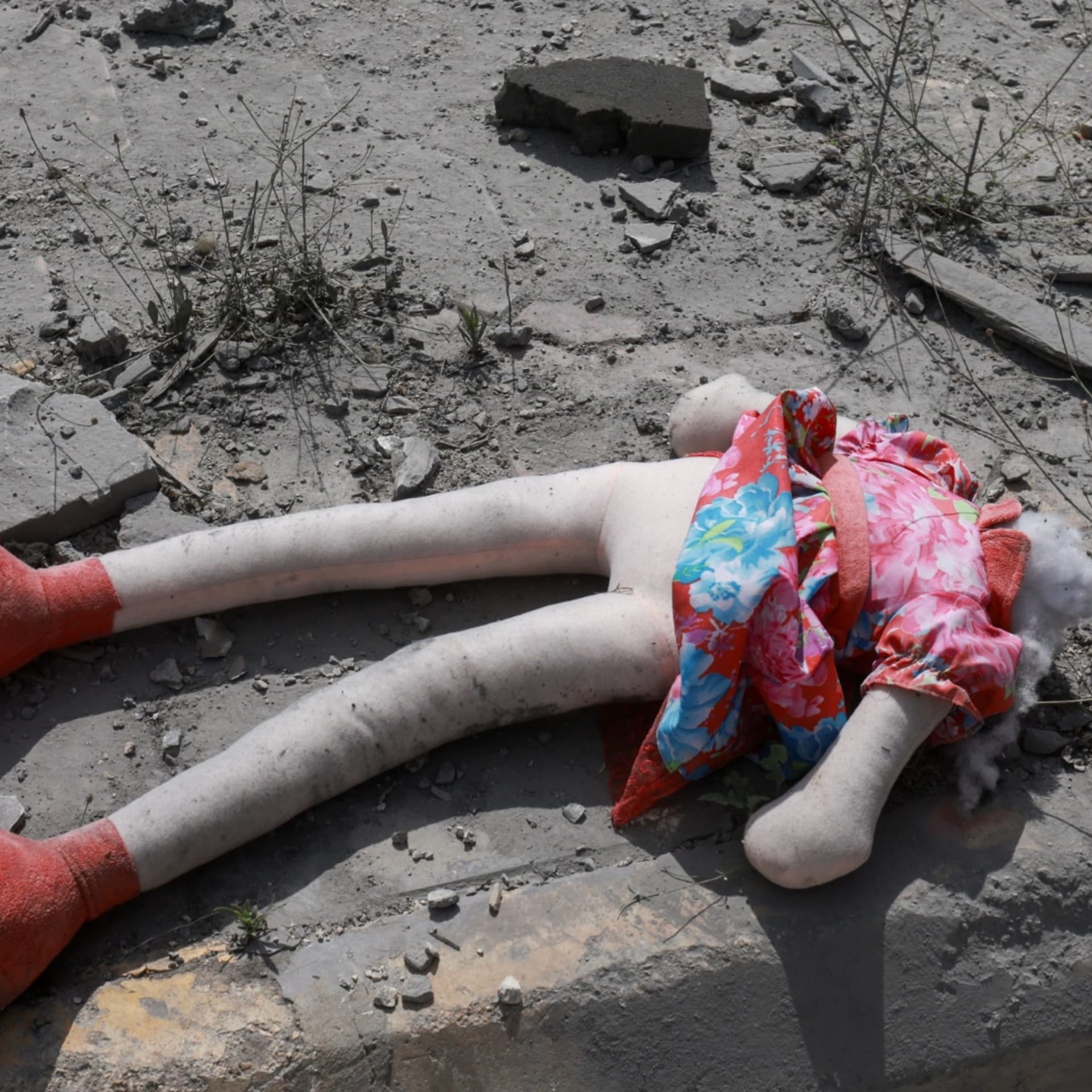
The Global News Podcast brings you the breaking news you need to hear, as it happens. Listen for the latest headlines and current affairs from around the world. Politics, economics, climate, business, technology, health – we cover it all with expert analysis and insight. Get the news that matters, delivered twice a day on weekdays and daily at weekends, plus special bonus episodes reacting to urgent breaking stories. Follow or subscribe now and never miss a moment. Get in touch: globalpodcast@bbc.co.uk Photo: Remains of a toy lie amid destroyed buildings in Deir Qanoun al-Nahr, Tyre district, southern Lebanon. Credit: Reuters/Aziz Taher