In short
This Global News Podcast episode leads with Italy’s Genoa Mirandi Bridge disaster: former Autostrada/Atlantia executive Giovanni Castellucci is jailed for 12 years; other convicted executives/engineers receive 11 and 10 years. The judge cites failures including inadequate maintenance; prosecutors argued neglect, while defense said the collapse involved hard-to-see technical damage (e.g., a cable covered in concrete). 284 hearings followed the 2018 collapse that killed 43 people, including children. Victim memorial head Egle Pesetti says convictions mean accountability, justice, and future safety. Reporter Davide Ghiglione describes being caught in the aftermath years earlier.
Other segments
Pakistan urges US-Iran talks amid US strikes and Iranian retaliation; Ukraine protests Zelensky’s removal of defence minister Mikhailo Fedorov; Gaza “Gaza Bird Singing” helps displaced children via music (Ahmed Muin Abu Amshah); UN fears 500+ dead after Rohingya boat capsizes; EBU guidelines on respectful filming of female athletes (Danielle Selwood, Dame Denise Lewis); NASA Artemis 3/ Roman telescope updates (Dr Nikki Fox).
Written by AI. May contain mistakes. Listen to the episode to check what was said.
Chapters
Tap a time to open that second in VOItalian Bridge Collapse Verdict
0:10 to 1:02
Details on the sentencing of officials for the Genoa bridge disaster.
“to create professional quality cookware, knives, and kitchen tools.”
Italian Bridge Collapse Verdict
1:20 to 2:26
Details on the sentencing of officials for the Genoa bridge disaster.
“The former head of Italian roads is jailed for 12 years for a deadly bridge collapse that killed 43 people.”
Impact on Victims' Families
2:26 to 3:50
Victims' families express relief and hope following the verdict.
“The tragedy killed 43 people, including several children.”
Personal Account from Reporter
3:50 to 5:49
Reporter shares their personal experience during the bridge collapse.
“It's a lot of technical details, but the important thing is that this verdict is finally giving the families some sort of hope and some sort of peace.”
US-Iran Hostilities Escalate
6:01 to 6:36
Discussion on the recent military actions and political tensions between the US and Iran.
“Come back to the negotiating table as the message from Pakistan to Tehran and Washington as the US and Iran continue their hostilities.”
Diplomatic Efforts Amid Conflict
6:36 to 9:05
Analyzing Pakistan's role in negotiating peace between the US and Iran.
“Yesterday at the supermarket, someone mentioned that Abadan had been hit.”
Ukraine's Ministerial Changes
9:06 to 11:15
Controversy surrounding the dismissal of Ukraine's defense minister.
“Well, we don't know who this dual citizen is, an Iranian-American citizen who has been released.”
Music as Healing in Gaza
11:15 to 14:01
Exploration of how music is helping children cope with trauma in Gaza.
“Minister looks like the man who's got the chop.”
Resilience Through Music in Gaza
14:01 to 15:38
Learn how music helps cope with trauma in war-torn areas.
“a music writer and composer, I know how to deal with sound, okay?”
The Rohingya Crisis: A Humanitarian Disaster
15:38 to 16:30
Explore the plight of Rohingya fleeing Myanmar and the challenges they face.
“You've got a lot of slow motion angles and replays, zooming in.”
Show all 14 chapters
Media Representation of Female Athletes
16:30 to 19:20
Discover new guidelines for respectful representation of female athletes.
“More than 500 people are feared dead off the coast of Myanmar after two boats capsized, according to a statement by the United Nations.”
NASA's Future Missions to the Moon
19:20 to 24:35
Get insights on NASA's Artemis missions and the exploration of space.
“to potentially unflattering or sexualised images of themselves being broadcast on TV or online.”
Bluey Translated into Indigenous Languages
24:35 to 26:18
Learn about the translation of Bluey into Australian Indigenous languages.
“If you have children, the chances are you will have come across the lovable and, shall we say, enthusiastic six-year-old blue heeler puppy who lives with mum, dad and little sister Bingo.”
Listener Engagement and Community
26:18 to 27:09
Hear about the podcast's community and listener connections.
“Now, you know we love hearing from you on the Global News podcast, so we were thrilled to get this email from Juliet who says, I'm writing because I know you're doing a map of people who listen to the podcast.”
Transcript
Automatic transcript. May contain errors.0:00This BBC podcast is supported by ads outside the UK. This podcast is sponsored by Made In Cookware. Made In partners with multi-generational artisans and some of the world's best chefs to create professional quality cookware, knives, and kitchen tools. Their products are trusted in Michelin-starred restaurants worldwide and designed to perform just as well in your kitchen. From five-ply stainless clad to carbon steel, every piece is built to last and made to actually make you a better cook. Discover award-winning cookware at madeincookware.com.
1:01the United States at 2.50. Listen on BBC.com or wherever you get your podcasts. This is the Global News Podcast from the BBC World Service. I'm Andrew Peach and at 15 hours GMT on Thursday the 16th of July, these are our main stories. The former head of Italian roads is jailed for 12 years for a deadly bridge collapse that killed 43 people. Pakistan urges the US and Iran to stop attacks and start talking again. and protests in Ukraine against the surprise removal of the defence minister. Also in this podcast...
1:47The healing music helping the children in the ruins of Gaza.
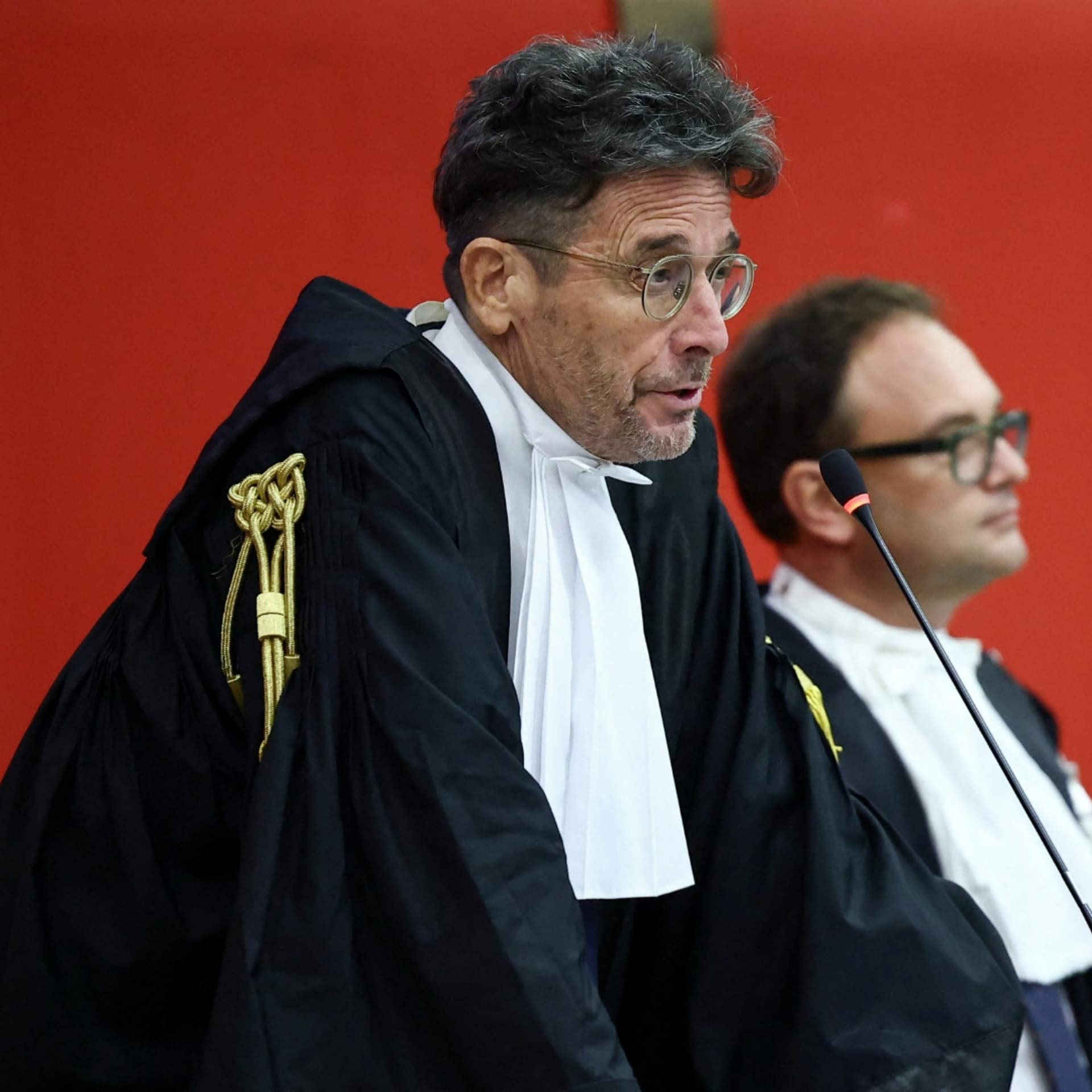
1:57Giovanni Castellucci is sentenced to 12 years' imprisonment. Michele Donferi Mitelli a sentence of 11 years imprisonment, Maurizio Ceneri and Emanuele De Angelis to a sentence of 10 years imprisonment. That was the moment a judge sentenced several executives and engineers for their role in one of the country's most devastating modern infrastructure disasters eight years ago. More than 30 people, including the former head of motorway operator Autostrada, were found guilty following the collapse of Genoa's Mirandi Bridge. The tragedy killed 43 people, including several children. Ahead of the sentencing, Egle Pesetti, the head of the victim's memorial committee, revealed what a guilty verdict would mean to those who lost their lives and their families.
2:41We believe these convictions will bring a sense of accountability to how things are managed, more justice and more safety. We believe that failing to secure convictions would represent a major failure, particularly for future preventative measures. Our reporter in Rome, Davide Ghiglione, explained the significance of today's verdict. The most important decision today is the 12-year sentence for the former CEO of Atlantia, Giovanni Castellucci, who's identified as the main responsible for what happened. Obviously, we know that it was a very lengthy trial. It took 284 hearings before reaching this verdict, which is very important for the families of the victim because they were left almost in limbo for the last few years.
3:29because on the one hand you had the prosecutor saying that happened due to the lack of proper maintenance. But the lawyers were also saying, no, that's not true. It's no one's fault. It's just a tragedy essentially to simplify that because obviously there were a lot of technical details. There was like a damaged cable, which was, according to the lawyers, impossible to see because it was covered in concrete. It's a lot of technical details, but the important thing is that this verdict is finally giving the families some sort of hope and some sort of peace. I was talking to some of the relatives the last couple of days.
4:09They were feeling really, really anxious before the verdict was read this morning by the three judges. And this afternoon, they were relieved. The sister of one of the victims actually messaged me on WhatsApp saying that she was feeling much better now. OK, and what's been said publicly since we heard the verdict in the last couple of hours? There will still be a press conference much later today. The families will be talking shortly. The new CEO of the company in charge of the bridge actually apologised yesterday for the first time to the families of the victims. And now there will be the appeal, almost certainly, but this is a very important indication on what the three judges were thinking.
4:51Davide, what's it been like covering this huge story today when you were very much at the centre of the events in question yourself years ago? It's always difficult for journalists to cover natural disasters, war zones, and it always has an impact on you. But this time, because I was on holiday, I was visiting my parents and it's very much part of my background, that city, that bridge, which I used to take to go to the beach with my parents when I was little. and it was such a busy day as well because it was ahead of a public holiday. I could have been hit. So a few cars for me were actually smashed by huge blocks of concrete falling down.
5:32So I think I was like the fourth car. It was very confusing when it happened. So I didn't think I realised immediately what was going on because mainly due to the storm. But there was this huge plum of smoke and all of a sudden I was part of the story. but at the same time I was already a journalist. So I was the first journalist that to see. It was crazy. It was hard. That was my colleague Davide Guglione with me from Rome. Come back to the negotiating table as the message from Pakistan to Tehran and Washington as the US and Iran continue their hostilities. Overnight, American forces struck a number of targets.
6:12Explosions were reported across Iran. Tehran said if the attacks continue, it'll retaliate further and strike more regional infrastructure. There's little doubt the US strikes are taking their toll in Iran, which was already struggling economically before the war began. People in Iran have sent us messages voiced up by our team. This woman is from Tehran. Everyone in Tehran is worried and upset. Yesterday at the supermarket, someone mentioned that Abadan had been hit. Everyone was distressed and exchanged silent glances. it was as if a lump had formed in everyone's throat. And this man is from southern Iran, closer to the Strait of Hormuz at the heart of the conflict.
6:53The war in the south is just a label. In reality, it is a war over oil and the people of the south have never really factored into the equation. Both the Iranian and the American sides are fighting over oil. Here in the south, amidst 50 degree heat, they still cut off the electricity and the water and every night passes filled with the sounds of explosions, fear and stress. To help guide us through the apparent contradiction of tit-for-tat strikes and possible talks, I spoke to Siavash Ardalan from BBC Persian. Very much like the previous nights, you have a repeat of the pattern where US strikes military bases where it says facilities having to do with Iran's ability to target ships in the Strait of Hormuz and Iran in kind responds by targeting what it says are military bases of the U.S.
7:45in the region, in Ordone, Kuwait, in Jordan, Kuwait and Bahrain. So that's the tit for tat. The only difference, I guess, from the previous nights is that the U.S. expanded its targets from the southern parts of Iran to some parts in central Iran as well. And also we had that terrible news of an area close to a hospital in Afaz getting hit. This is a hospital dealing with cancer patients. So if anything, the hostilities are escalating. And yet we've got Pakistan trying to bring Washington and Tehran, their representatives back to the negotiations. We have no word of whether Iranians have accepted or whether a date has been set for talks.
8:29Iran yesterday, the deputy foreign minister said that it's impossible for Iran to accept to engage in talks under conditions of duress. This is why President Trump is saying that Iranians every day are coming to him begging for talks. So we're not sure exactly what's going on behind the curtains, whether diplomacy has taken a backseat or whether behind all this escalation, there is something going on that will pave the way eventually for talks to begin. And one hint today that it might be the latter is Donald Trump on social media praising Iran for releasing a U.S. citizen. Just tell us what that story is all about.
9:07Well, we don't know who this dual citizen is, an Iranian-American citizen who has been released. Some names have been mentioned on social media. From President Trump's post, we know that it's a woman. Much more than that, we don't know. But yes, because Donald Trump has praised Iran in the midst of these confrontations, that's a good sign. And also it's impossible to imagine that Iran would not release a person in the midst of this war without having in mind of trying to make a gesture. So maybe that's a good sign. Who knows? That's Siavash Adelan from BBC Persian. In our previous podcast, we brought you the news of Ukraine's popular defence minister being removed from his post.
9:52That surprise dismissal has triggered rare protests in Kyiv.
10:03Mikhailo Fedorov had led what many viewed as an ambitious drive to reform and modernise the military. But it seems there'd been substantial differences of opinion between him and Ukraine's military commander-in-chief, Oleksandr Siersky. Asked about the row, President Zelensky acknowledged the two sides were barely on speaking terms, saying he'd made the change for the sake of unity. Our Eastern Europe correspondent Sarah Rainsford told us why Mr Federer's removal was so contentious. He has a lot of fans in the country, and that's because of his sort of modern approach, his modern way of acting.
10:38He's only been in the job for six months, and he had become pretty popular. To give you a description of him, he often wears a baseball cap. He's a big guy. I last saw him a week or so ago in Kiev at a big defence fair where he was on stage with loud music and lots of techie kind of displays behind him. So he loves tech. He's a kind of can-do sort of man who liked to cut through red tape and get things done. I think he ruffled quite a few feathers in the defence ministry and with the military. And in the end, what's happened is that President Zelensky was presented with a choice, either his general, General Siersky, his commander in chief, or his defence minister.
11:14And his defence Minister looks like the man who's got the chop. And he's come out and sort of said, I try to present my reforms. I try to change things. I try to make things better for our country, for the defence of our country. But all of my reforms were blocked. And he says, you know, it's time for Ukraine to think about where it's going and what it's doing. But I think it does expose a really difficult moment for President Zelensky when he's now faced with the choice of who he openly sides with now that this has burst out into the open, because the dispute between the general and the minister was rumoured and talked about, but never as clear as it quite clearly is now.
11:47And that is a problem for President Zelensky. That's our correspondent, Sarah Rainsford. And we have more on that story on our YouTube channel. Just search for BBC News on YouTube. You'll find the Global News podcast there in the podcast section. And there's a news story available every weekday. Now to something extraordinary going on in Gaza, despite the displacement of almost two million people by the war, the widespread destruction of homes, the daily struggle to get aid. Thousands of children are flocking to a small tent for music lessons. Gaza Bird Singing is a musical group for young displaced people and orphans.
12:22The group's founder, Ahmed Muin Abu Amshah, believes that singing and learning to play instruments can offer a way to process the trauma of war and cope with the loss of loved ones. He's been speaking to my colleague Charlene Rodriguez and playing her some of his new song, humming, from his collection Songs from the Rubble.
12:56The sound of the drones is quite potent. What inspired your latest song? I will be honest, it's coming suddenly in my mind that I can't sleep. first moment that I will fall asleep, the drone coming and the sound was annoying. I'm trying to try to do for that sound I can. I just wake up and sit out of my tent on the beach and how can I have to ignore that sound? Let's make a song. I just bring my guitar and compose a song and the next day I record that song and it's a message to all people in the world that we are still suffering.
13:48And you have produced, mixed and put it all together in a tent. I only have my phone, I don't have a laptop, everything is gone. You know, I'm a sound engineer first of all, a music writer and composer, I know how to deal with sound, okay? Just I use my phone and a little bit of AI, and when I go to Bethanon in the ceasefire, I just find in the rubbles, in my house rubbles, only the hardware, the sound card is okay. I take it with me, and I find a mic, and I take it and plug it, and plug it to my phone. It's working. Instruments have been destroyed. Your students and teachers have been displaced.
14:38But you have remained steadfast, the Gaza Birds singing group. The smile upon the faces of the kids, that's what makes me strong, that's what makes me continue on this project. We displaced 15 times from Beit Hanun to Rafah. The project comes when I was trying to heal myself in the war. I just, my friend bring me a guitar and told me, hey, Mr. Ahmed, play. I play the guitar maybe 10 minutes. In these 10 minutes, I forget what I'm suffering. So I want to make this experience for the kids, to let them forget what they suffer. And when I do that, the first time I saw the happiness, the smiles, their eyes is shining.
15:21Hey, we want to sing. I feel that. That makes me strong. And I'm healing myself, healing the community, healing the kids. That's what makes me continue in this project.
15:37Ahmed Muin Abu Amshar speaking to Charlene Rodriguez. And still to come in this podcast. You've got a lot of slow motion angles and replays, zooming in. Women have just said, no, this is enough. New guidelines on how female athletes can and can't be filmed and photographed.
16:22What we're talking about is the world's largest communist nation is at the beating heart of the capitalist system. For more, listen to The Global Story on bbc.com or wherever you get your podcasts.
16:38More than 500 people are feared dead off the coast of Myanmar after two boats capsized, according to a statement by the United Nations. The vessels reportedly departed from Rakhine state in late June, carrying mostly ethnic Rohingyas, including some from refugee camps in neighbouring Bangladesh. For more, I spoke to our global affairs reporter, Ambarasan Ethirajan. The UN says that these groups, they left in two batches, one in late June and also in the first week of July. The interesting thing is why they decided to leave now, even though thousands of Rohingyas, refugees, especially from the camps in Bangladesh and also from Rakhine State and Myanmar, leaving for countries like Indonesia or Thailand and Malaysia in rickety boats and overcrowded boats.
17:26This is not the usual season for people to go. This is also you have a torrential monsoon rain and rough seas. so they did not even reach very far from Myanmar. Now what's happening in Rakhine State at the moment is there's a civil war going on in Myanmar. Our Rakhine army is controlling more than 14 of the 17 townships so people are suffering under various conflicts and the UN already describes the Rohingya as one of the most persecuted minorities in the world over a period of time. The military crackdown in Myanmar was forcing them to flee into Bangladesh. I was going to ask you more about that.
18:02There's always an underlying story behind an incident like this. Tell us a bit more about why people are fleeing to the point that they're risking their lives to do it. Because the life is becoming unbearable, both in Rakhine State and in the neighbouring Bangladesh, where the refugee camps, it's overcrowded. They don't have some of the basic facilities. Because of funding cuts, they are having a shortage of what they usually get from the UN agencies, from food and daily allowance. and they want a better life because they have been driven out of their land, their villages, their homes have been taken over, their lands have been taken over.
18:38That's why they're taking this very risky journey, seeking better life or safety in countries like Malaysia or in Thailand. And there is also another factor here that because of this desperate situation, that is where the human traffickers take advantage. They're charging them a huge amount of money. Many people die on the way. They get thrown overboard if you raise your voice against them. and they ask more money on the way. There is also sexual violence against women while being taken on board these ships. And again, the UN points out that in ongoing conflicts without the international community noticing, the plight of these communities will continue.
19:17And Barristan Etharajan reporting. For decades, female athletes have been subjected to potentially unflattering or sexualised images of themselves being broadcast on TV or online. Now the European Broadcasting Union has issued new guidelines advising broadcasters how to photograph female athletes using respectful camera angles to ensure shots and footage celebrate their sporting power and skill rather than undermining them. For more, my colleague Anita Rani has been talking to the sports documentary maker Danielle Selwood and also the president of UK Athletics Dame Denise Lewis. Definitely over the last few years, that unsightly images of women competing in the height of their power, particularly in the field events where you've got a lot of slow motion angles and replays, camera angles that are zooming in on very unflattering positions that women find themselves in through the course of play.
20:17Women have just said, no, this is enough. We do not want to be reflected and demonstrated and seen in this way. And obviously the mental torture that some of these women have been going through, subject to social media, trolling and abuse online, because of these angles, have really come to a position where women are saying no. Daniel, let me bring you in here. What are the camera angles that they've suggested are acceptable and what are not? And how easily is it to implement? Yeah, I think this is such an important piece of work. I mean, we've all been talking about this in the women's sports industry for decades.
20:53But I think what's particularly important about this is they've actually got very clear guidelines. They've got imagery. They've got, you know, this is where you should put your camera for the long jump, for the high jump, for the pole vault. So it's very clear it's not left for somebody to make a decision. It's got, you know, very clear where you shouldn't be positioned and where you should be positioned. How easy is it to follow these guidelines? It's very easy. You know, there's guidelines that are downloadable, got images on, they've drawn. It's almost like a picture book of where to stand, where to have your camera angle, what to shoot, what not to shoot.
21:27Danielle Selwood there talking to Anita Rani. Let's leave Earth for a moment and head into space. You might remember this moment from April this year. Four, three, two, one. Booster ignition and lift off. the crew of Artemis 2 now bound for the moon humanity's next great voyage begins that was the launch of the Artemis 2 Orion capsule which successfully took four astronauts to the far side of the moon well the team behind the lunar exploration program are now ramping up their preparations for Artemis 3 the astronaut launch in 2027 and the head of science at NASA Dr Nikki Fox told my colleague Rebecca Kesby all about it right now we are full steam ahead for Artemis 3 next year, which will be a low Earth orbit mission, a little bit different to the orbit of the International Space Station, but roughly the same distance from Earth.
22:23And there we're actually going to dock with the landers that will take us down to the surface with the next mission, test out the suits, the brand new suits in space and just get everything ready to be all eyes on Artemis 4 and 5 in 2028 when we actually return astronauts to the moon. surface. Right, so that still is the objective. We've already started stacking that rocket. Most of the components are at Kennedy Space Centre. So Artemis 3 stacked, looking beautiful, almost, you know, getting very close to being a complete rocket for launch next year again, so we can test everything before sending our astronauts to the surface.
23:01You have got another exciting mission on the way as well. Now, this is going to help us with our observation of space. And this is the launch of the Nancy Grace Roman Space Telescope. Tell us about that. Oh, could not be more excited. That is getting ready to launch. So the telescope itself, it's a big astrophysics telescope. It is in Florida at the launch site doing all of those final checks. All great. It's actually going to go to the location very close to where the James Webb Space Telescope is. We call it the L2 point. And from there, it will look out into space. It It will do a huge, like all sky surveys.
23:40It will be looking for exoplanets. It will be looking for planets that could maybe have, you know, signatures of life out in the universe. With Nancy Grace Roman, we will, we've discovered right now, you know, about 6 ,000 planets in other sort of solar systems like ours. You know, we will discover billions of new galaxies, almost one galaxy for every person. We will discover, you know, tens of thousands of new planets, tens of billions of new stars. I mean, that's what we're going to be doing. And we're going to be studying dark energy, which I realize sounds like what on earth is that? It's basically what powers our universe.
24:18It drives why the universe is continuing to expand, you know, why it hasn't stopped, why it is still expanding. That is the energy that literally powers the universe. We call it dark energy because it's very hard to detect. but Nancy Grace Roman will be doing that. NASA's Dr Nikki Fox there. If you have children, the chances are you will have come across the lovable and, shall we say, enthusiastic six-year-old blue heeler puppy who lives with mum, dad and little sister Bingo. I'm talking about Bluey, the award-winning Australian cartoon series. For the first time, it's been translated into Australian Indigenous language.
24:54Simon Atkinson spoke to the producers of these episodes, Maya Tiki, Marika and Will Porter, who hope the project will amplify First Nation voices when helped with language preservation. What if Bluey spoke one of the world's oldest living languages? Well, for the first time, Bluey's been produced in Australian Indigenous language. There are now five episodes in Yungumata, which is a collection of dialects spoken in North East Arnhem Land in the Northern Territory. The five episodes that we chose really resonated because they spoke to our connection to country. The voices? Well, their local elders, musicians and children.
25:33We want to elevate and amplify the voices of First Nations Australia. And when it was shown for the first time... There was a few hundred kids there watching the episode and they were losing their minds. Bluey's already been translated into over 20 languages. That global success has made it a lot of money, including for BBC Studios, which is the commercial arm of the BBC. The producers know these episodes won't make a profit, but say perhaps it'll help keep a language alive. If one person turns on the TV and sees an episode of Bluey in a First Nations Australian language, then who knows what inspiration, what seed can germinate and where we can go from there.
Read the full transcript
26:18That report was by Simon Atkinson. Now, you know we love hearing from you on the Global News podcast, so we were thrilled to get this email from Juliet who says, I'm writing because I know you're doing a map of people who listen to the podcast. To my surprise, you said last week that Juliet from Luxembourg was listening. It wasn't me, but I am also a Juliet from Luxembourg who listens to the podcast every day while working out. I thought it was funny to know there's a little community of Juliet's around Luxembourg listening to the podcast. So maybe there are other Juliet's. If there are, we might need a collective noun for you.
26:52Get in touch. Email globalpodcast at bbc.co.uk. And that's all from us for now. This edition of the Global News Podcast was mixed by Wladimir Muzica. The producer was Guy Pitt. The editor is Karen Martin. I'm Andrew Peach. Thanks for listening. And until next time, goodbye.
27:17The United States is about to mark its 250th anniversary. And so on the Global Story podcast from the BBC, we're telling surprising tales of American influence on the world stage and in ordinary people's lives all across the globe. We have this ability to export our story and a lot of people have bought it. I feel like the American dream is alive, but not well. From the BBC, it's the United States at 250. Listen on BBC.com or wherever you get your podcasts.
From the publisher
The former head of Italy's motorway operator has been given a 12-year prison sentence over the collapse of Genoa's Morandi bridge in August 2018. 43 people died when the bridge running through the city came down in a rain storm during the summer season, sending cars and lorries plummeting to the ground. The ex-chief executive of Autostrade per l'Italia Giovanni Castellucci was accused of delaying planned maintenance of the structure. More than 30 others were found guilty in connection with the disaster.
Also, as Washington continues to strike sites across Iran; we hear from voices inside Iran. Reports emerge of two boats carrying more than 500 Rohingya migrants have capsized off the coast of Myanmar. How 'Bluey', the beloved children's cartoon series featuring a Blue Heeler puppy will now be available in an Australian Indigenous language. And how singing and learning to play instruments is helping to give orphans and young people displaced by war in Gaza hope.
The Global News Podcast brings you the breaking news you need to hear, as it happens. Listen for the latest headlines and current affairs from around the world. Politics, economics, climate, business, technology, health – we cover it all with expert analysis and insight. Get the news that matters, delivered twice a day on weekdays and daily at weekends, plus special bonus episodes reacting to urgent breaking stories. Follow or subscribe now and never miss a moment. Get in touch: globalpodcast@bbc.co.uk