
In short
The episode covers: (1) US-Iran peace talks in Switzerland amid conflicting claims about whether Iran has closed the Strait of Hormuz; the US says ships are still passing, while Iran says it has closed the strait.
Key claims
J.D. Vance says talks will focus on reducing Iran’s nuclear stockpile and maintaining a Lebanon-Israel ceasefire; Trump posts that the US would never impose tolls, and if any toll exists the US would implement it.
Notable examples
Israeli strikes in southern Lebanon killing 20+; Gaza ceasefire violations with at least 10 deaths in 24 hours; UN warnings of worsening humanitarian conditions. (2) Russia-Ukraine fallout: Poland strips Zelensky’s Order of the White Eagle over his naming a unit after the WWII UPA, which Poland accuses of genocide. (3) Colombia election: Abelado de la Esprilla vs Ivan Zepeda. (4) CrimeCon true-crime boom and ethics.
Guests
Joe Inwood (Lebanon/region correspondent), Thomas Morgan (Washington correspondent), Stephanie Prentice (Gaza reporter), Joanna Keane (global affairs reporter), Ione Wells (South America correspondent), Helena Wilkinson (royal finance reporter), Bismarh Farooq (Kashmir cassette music), Sheila Flynn (CrimeCon reporter), plus CrimeCon attendees: Dr. Maggie Zingman, Greg Wallace, Nicole Ernest-Pate.
Written by AI. May contain mistakes. Listen to the episode to check what was said.
Chapters
Tap a time to open that second in VOContradictions in Middle East Peace Talks
2:09 to 4:23
Exploring the mixed signals regarding the Strait of Hormuz and peace negotiations.
“Let's start with those contradictory signals emanating from the Middle East.”
Pressure on Leaders Amid Conflict
4:27 to 6:10
Discussion on the political pressures faced by U.S. and Israeli leaders.
“And that's the point that the Iranians have made again and again.”
Goals of U.S.-Iran Negotiations
6:16 to 6:43
Focus on the nuclear situation and the Lebanon-Israel ceasefire in negotiations.
“The US has midterm elections in November.”
Trump's Stance on Strait of Hormuz
6:43 to 8:33
Analysis of Trump's comments regarding tolls on ships and implications for negotiations.
“It'll be focused on the nuclear situation in Iran, which, if you remember, is the whole reason behind why the US went into this conflict with Iran.”
Gaza Conflict Update
8:52 to 12:28
Reports on the ongoing humanitarian crisis in Gaza following airstrikes.
“In the seven months since the ceasefire with Hamas was agreed, both sides have continually traded accusations of the truce being violated.”
Ukraine-Poland Diplomatic Tensions
12:31 to 14:01
The fallout from the naming of a Ukrainian military unit and its impact on relations with Poland.
“Poland has been one of Kiev's main allies in the war.”
Zelensky Returns Polish Awards
14:01 to 15:30
President Zelensky and senior officials return awards, criticizing Poland.
“Now, we've just learned that President Zelensky has now handed back the medal, he said on social media.”
Colombia's Polarized Election
16:36 to 17:06
Insight into Colombia's election and its implications for peace and security.
“See the website for full terms and conditions.”
Colombia's Polarized Election
17:09 to 21:11
Insight into Colombia's election and its implications for peace and security.
“The authorities in Colombia aren't taking any chances.”
Royal Financial Transparency
21:11 to 22:33
Discussion on King Charles' upcoming tax bill and royal finances.
“It's been a subject of endless speculation over the years, but it seems the public will finally learn how much the British monarch earns because King Charles' personal tax bill is going to be published.”
Show all 13 chapters
The Obsession with Cassette Tapes
22:33 to 24:08
Exploration of cassette tape culture in Kashmir amidst digital trends.
“But in Kashmir, the northern region of the Indian subcontinent, it's long been a ritual for families to gather round the hum of a cassette player.”
CrimeCon: True Crime Culture
24:08 to 28:00
Overview of the true crime convention and its significance for victims.
“dramas to televised trials and viral podcasts.”
True Crime Craze at CrimeCon
28:00 to 28:28
Explore the growing obsession with true crime and its impact on justice.
“The obsession with true crime has exploded over the past decade, and the numbers here at CrimeCon reflect this.”
Transcript
Automatic transcript. May contain errors.0:00This BBC podcast is supported by ads outside the UK.
0:30Make your next financial move with confidence. Follow NerdWallet's Smart Money Podcast on your favourite podcast app. Decisions made in Washington can affect your portfolio every day. But what policy changes should investors be watching? Washington Wise is an original podcast from Charles Schwab that unpacks the stories making news in Washington right now and how they may affect your finances and portfolio. Listen at schwab.com slash Washington Wise. That's schwab.com slash Washington Wise. This is the Global News Podcast from the BBC World Service. I'm Paul Moss and in the early hours of Sunday the 21st of June, these are our main stories.
1:18J.D. Vance heads to Switzerland for US-Iran peace talks. But what's with the contradictory claims about the Strait of Hormuz? After more deadly Israeli airstrikes on Gaza, we hear from eyewitnesses on the ground. And Colombians are preparing to elect a new president, the contest defined by the country's ongoing and brutal conflict.
1:41Also in this podcast... My husband's like, you're going to kill me one day and you're going to get away with it. I'm like, you're so silly. I think it's really important for fans to understand these are real human beings, real lives, real parents. We go inside the annual CrimeCon event to find out why true crime content is spiking in popularity and the problems that come with that.
2:09Let's start with those contradictory signals emanating from the Middle East. We may have become accustomed to mixed messages around peace talks within the region, but even by those recent standards, it's been a particularly difficult 24 hours for anyone trying to figure out what is actually going on. On the one hand, Iran says it's once again closed the Strait of Hormuz. And yet the United States insists plenty of ships have been passing through. And despite this situation in the Strait, both the US Vice President J.D. Vance and the Iranian Foreign Minister are due to sit down together in Switzerland on Sunday to try to thrash out a deal.
2:46and all of this against a background of the ongoing conflict in Lebanon, something Iran insists must end if a peace agreement is to be possible. Israeli strikes are reported to have killed more than 20 people in southern Lebanon on Saturday. This man, Qasim, showed people around the home where an Israeli missile killed his family. It was my in-law's house, my wife's two brothers, my mother-in-law and her son. there were also two babies. One was just one month old, the other is two months old. So with this kind of suffering in Lebanon continuing, what are the prospects of US-Iran peace negotiations even going ahead, let alone succeeding?
3:27I spoke about this to our correspondent Joe Inwood and asked him first what to make of those contradictory claims about the Strait of Hormuz. We can see from tracking data that some ships are getting through. And in fact, J.D. Vance, The US Vice President was saying they've had almost record levels of oil going through over the last 24 hours. But what we really can say for certain from this is it is just an illustration of the strategic weapon that the Iranians have been given by this conflict. Closing the Strait of Hormuz was not something that they would have threatened to do before the war started.
4:00And what's really interesting now, it's their go-to weapon. Despite saying they've closed the Strait, an Iranian delegation has gone to Switzerland. So presumably they're still open to the idea of negotiating some kind of peace deal. Yeah, clearly. The fact that they're saying they're closing the strait, that is not the end of things. It is, as I said before, a way of exerting pressure and effectively exerting pressure on the Americans. But obviously the whole thing is being set back by the situation in Lebanon. And that's the point that the Iranians have made again and again. The ceasefire that we are seeing needs to cover the entire region.
4:35And at the moment it's not. Israel's attacks on Lebanon have caused an ever-growing rift with the United States. The United States making it clear it's exasperated with Israel for doing this. It doesn't seem, though, that the administration, Benjamin Netanyahu, is being put off doing it by what the United States says. It's really, really extraordinary to see the shift in relations or the tone of some of the messaging you get coming from the United States more critical of the Israeli government than certainly I've ever heard before. It's felt that there is a kind of a tonal shift, because what we're seeing here is the divergence in strategic objectives between these two allies.
5:10For the Americans, they just basically want to get out of what many people see as a really strategically difficult situation in terms of the conflict they've got in themselves into the Middle East. Whereas for the Israelis, they have different objectives. And Benjamin Netanyahu has competing pressures on him because he has the international pressures, pressure coming from the United States, to stop the war, to allow the peace process to continue because the Israeli government are very dependent upon the American government for financing and political cover and the such like. But he has domestic pressures as well.
5:40He's got a right-wing coalition, some members of whom are very right-wing and have talked about raining fire, doing real destruction to Lebanon. And he has an impending election, October at the latest, and he knows that if he cannot get some sort of outcome in Lebanon that he can sell to the people of Israel as meaning all of this was worth it, all of the destruction, all of the cost, all of the diplomatic damage that's been done, well, he is going to be in real political trouble. And that is something he is clearly desperate to avoid. Joe Inwood, the Israeli Prime Minister is not the only politician in this conflict facing pressure back home.
6:16The US has midterm elections in November. And all the signs are that its war with Iran is very unpopular with the American public, not least because of the rising cost of oil which it's caused. That gives more incentive than ever for the vice president to reach some kind of deal as he jets off to Switzerland. And as our correspondent in Washington, Thomas Morgan, told me, J.D. Vance insists that the original goals when the US attacked Iran can be achieved. He is maintaining that these discussions will be focusing on two things. It'll be focused on the nuclear situation in Iran, which, if you remember, is the whole reason behind why the US went into this conflict with Iran.
6:57They wanted to curb the amount of enriched uranium Iran had to make sure they couldn't produce any nuclear weapons. So the discussions now will be around decreasing the nuclear stockpile that Iran have. And it will also be centred, J.D. Vance says, around the Lebanon-Israel situation, making sure that ceasefire is maintained. And what we've also had within the last few hours is we've had the President Donald Trump announcing on social media that there will never be a toll on ships in the Strait of Hormuz. And he has said if there were to be a toll, it would be the US that would implement them.
7:36And this is significant because if you remember, the Iranians would like to impose a toll on ships in the future. For now, in the memorandum of understanding, it is agreed upon that all ships would flow freely and there wouldn't be a toll. but the text is open for interpretation about what happens after that and I think now the Strait of Hormuz has come firmly back into the picture and the negotiations after what we've seen over the last 24 hours. Is Donald Trump serious suggesting that the United States could charge a toll for ships to pass through a waterway which after all is rather a long way from the American coast?
8:11It does seem rather fanciful I guess how on earth would that actually in reality operates. But I think the wording in his social media posts is very much in his Trump style, saying that he is the guardian angel or the US are the guardian angels of the countries of the Middle East for the purposes of past, present and the future to reimburse the costs that they've put into that side of the world. I think in reality, it is a US president throwing his weight around, wanting this deal and this next round of negotiation to focus on the one thing. However, he may, with his posting, be shifting it onto something that had actually been put to bed.
8:51Thomas Morgan. With all the focus on Israel's airstrikes on Lebanon, it's easy to forget the conflict which for so long dominated the headlines Israel's war in Gaza, which left more than 70 ,000 people dead, the majority of them civilians. That war certainly hasn't gone away. In the seven months since the ceasefire with Hamas was agreed, both sides have continually traded accusations of the truce being violated. The United Nations says Palestinians are being killed every day. Indeed, in the last 24 hours, according to health officials in Gaza, at least 10 people have died in separate Israeli attacks.
9:28Stephanie Prentice has this report.
9:35The family and friends of journalist Ahmed Rashar taking turns to hold his body in a morgue in central Gaza. The cameraman for Al Jazeera was killed during an airstrike on a refugee camp. His brother Mohammed, a correspondent for the same channel, was killed two months ago in a targeted attack on his car. The IDF claims both brothers were members of Hamas, something Al Jazeera has previously denied. They're two of what health officials in Gaza say are more than a thousand Palestinians killed by Israel since the ceasefire was put in place in October.
10:19Another strike in the early hours of Saturday morning on an apartment block in Gaza City killed a woman and two children. Footage of the scene shows a wall blown off one side of the building, revealing a family home covered in rubble. Mohammed al-Safadi was inside. His four-year-old relative, Zina, was killed. These martyrs are my cousins. I was at home. The missile struck without warning. I was injured and so was my wife. She's still under observation. Shrapnel is all over her body and her teeth are broken. This is the ceasefire the occupation and the negotiators are talking about. What kind of ceasefire is this?
11:01We are civilians. They targeted me, a civilian. What was my crime? I never carried a weapon to resist. What is happening? Outside Al-Shifa hospital, Nael Al-Safadi, another family member, said the people being treated inside were having limbs amputated. These are Netanyahu's targets, children and innocent people. What have these children and innocent people done to deserve this? Are they the ones firing rockets? Did they take part in the 7th of October attacks? They're civilians, citizens. They're not with us in Hamas. We hate Hamas. Further south, in Hon Yunus, footage shows medical teams rushing a child to hospital.
11:46The Palestinian Red Crescent Society, an independent humanitarian organisation, say the young boy is one of a group targeted by Israeli drones with live ammunition. It says their crews transported a dead body and several others who were injured. The ceasefire deal also promised a flood of humanitarian aid into the territory. But across Gaza, displaced people living in camps report a daily struggle to find food and to access clean water. Sanitation issues have led to an increase in reports of rat bites from doctors. And at a recent meeting, the UN warned that Gazans are trapped in a humanitarian nightmare.
12:29Stephanie Prentice reporting. Let's turn to another conflict, one which has also had plenty of false starts when it comes to talk of a peace process, and that's Russia's war with Ukraine. Poland has been one of Kiev's main allies in the war. It welcomed hundreds of thousands of Ukrainian refugees, and the vast majority of humanitarian and military aid for Ukraine passes through its territory. But now the two countries have fallen out over the controversial naming of an army unit. It's led to Ukraine's president, Volodymyr Zelensky, being stripped of Poland's highest state honour. The unit was called the UPA and dates back to World War II.
13:06So what is the contemporary relevance and why has it sparked a diplomatic row? Here's our global affairs reporter Joanna Keane. Well, it started last month when, as you said, President Zelensky named this military unit after the Ukrainian insurgent army. Now, many in Ukraine regard the UPA, which existed in the 40s and 50s, as heroes who fought for Ukrainian independence against the Soviet Red Army, as well as Nazi Germany and the Polish authorities. So for Ukrainians, this title, Heroes of the Ukrainian Insurgent Army, was actually a major honour. Poland didn't agree. It accuses the UPA of genocide of ethnic Poles in 1943-45.
13:47And Poland's president, Karol Noworowski, said the decision was outrageous, deeply disappointing. And so on Friday, he stripped Ukraine's Wladimir Zelensky of Poland's highest state honour, the Order of the White Eagle. Now, we've just learned that President Zelensky has now handed back the medal, he said on social media. We believe that the order was awarded in 2023. It was meant for the Ukrainian people and our army. That was what was said at the time. Today, I've sent it back, he says. Three senior Ukrainian officials have done the same. They were given awards by Poland. They've handed them back.
14:23That's the president's chief of staff, Ukraine's foreign minister, and the ambassador to Warsaw. They say this is a strategic mistake by Poland, which only benefits Moscow. and they say they're handing their awards back to show solidarity with President Zelensky. Joanna Keane reporting.
14:43Still to come in this podcast...
14:55Why an almost obsolete musical format has a stronghold in one part of the world.
15:30We'll be right back. on Plus.
16:03The Other Bennett Sister, now streaming only on BritBox. Watch for the free trial at BritBox.com.
16:33or online for easy pickup or delivery. Restrictions apply. See the website for full terms and conditions.
17:03Download it today. Wireless plans require the purchase of a SIM card. Visit textnow.com for terms and conditions.
17:13The authorities in Colombia aren't taking any chances. With the presidential election on Sunday, security is high. 12 ,500 police officers are seeking to ensure a fair and, above all, peaceful vote helped by the military police, along with members of the country's special forces, and with anti-drone measures also in place. This is a highly polarised contest, candidates bitterly divided on how to end the country's ongoing guerrilla conflict. It's no exaggeration to say that the future direction of the country is very much at stake. And yet, this being Latin America, it seems the Football World Cup is also on voters' minds, as our South America correspondent Ione Wells now reports.
17:59Colombians have been closely following two huge contests this week one taking place in a stadium in Mexico the other taking place at the ballot boxes but in the election the choice couldn't be more polarising
18:15Sepeda for president, this girl says We need security for the country we know who that means, El Tigre On the one hand, there's the right-wing firebrand, Abelado de la Esprilla, an admirer of Donald Trump and El Salvador's President Bukele. He calls himself El Tigre, the Tiger, and wears the national football shirt to rallies, which his critics accuse him of politicising. He's pledged a military crackdown on armed groups and cartels, and to build 10 mega prisons in the jungle. I tell armed groups, I declare you a military target, and I will take you down.
18:59On the other hand, Ivan Zepeda, a left-wing senator whose father was killed by government-aligned paramilitaries in Colombia's decades-long internal conflict between the state and rival armed groups. He's an ally of the current President Petro and has pledged to continue his strategy of prioritising negotiation with armed groups over military action to reduce the loss of life.
19:21Our strength lies in the fact that we trust the people. We believe in our social movements, the youth, the community organisations, in the social leaders.
19:38For many Colombians, the stakes couldn't be higher. Those competing visions for tackling violence will have a huge impact on many people's lives and futures. In the last few years, violence has escalated, membership of armed groups has grown, and it's left tens of thousands of people displaced. I'm at a support centre in Bogotá for people who have been displaced by Colombia's internal armed conflict, and people here are desperate for change.
20:07I have a half-brother on my father's side who was taken by the four guerrillas. We never heard from him again. We had no choice but to displace ourselves. I have a brother who was murdered for not paying an extortion threat in front of his children.
20:29Esprea has retained support in the Caribbean coastal region where he grew up, while Cepeda has had a lead among young voters.
20:38Maria Luisa Sanchez, a childhood family friend of Esprea's, says he has the character, courage, what we need for Colombia, a person who has his pants on, who's tough on drug trafficking, tough on gorillas. The crowd here are ecstatic. A win for Colombia. People are cheering, singing, couldn't be happier. This is a moment that briefly is uniting the country. But the election result is going to be a lot more polarising and we still don't know who's going to be celebrating them.
Read the full transcript
21:10Ioni Wells reporting. It's been a subject of endless speculation over the years, but it seems the public will finally learn how much the British monarch earns because King Charles' personal tax bill is going to be published. He'll be the first on the UK throne to have his finances revealed. It follows calls for more royal financial transparency generally in the wake of the scandal surrounding the former Prince Andrew. Helena Wilkinson reports. The King's personal tax bill will be revealed this week when the annual royal financial accounts are published. The decision is said to have come from the King himself, who also made his tax affairs public as the Prince of Wales.
21:52The bill will cover the tax year ending April 2025 and there's a commitment to release future ones annually. It'll include earnings from the King's private estates, such as Sandringham and Balmoral. A Buckingham Palace spokesman said it was part of a wider drive to be more open with the public. Monarchs aren't obliged to pay income tax, capital gains or inheritance tax on what they receive from their predecessor. But the king voluntarily pays income tax on his private income and capital gains tax on any sale of private assets. Helena Wilkinson. Most people around the world now listen to music digitally, usually on apps such as Spotify perhaps or YouTube.
22:39But in Kashmir, the northern region of the Indian subcontinent, it's long been a ritual for families to gather round the hum of a cassette player.
22:58For decades, cassette players have been used to preserve Sufi music, songs associated with Sufism, the mystical tradition within Islam. Even today, many Sufi music gatherings in the region are recorded exclusively on cassette tapes. Bismarh Farooq from the BBC's Urdu service explained the popularity of this old technology. The internet is not much reliable in the valley. The internet disruptions have been a recurring issue in Kashmir for years now. I remember in 2016 when the first time it was the longest internet ban in Kashmir it was around six months so it's sort of an escape for the young generation like they can't rely on the internet all the time so they move to these cassette players and it is a bit difficult but there are shops in Kashmir in downtown area mostly where you can buy cassettes and you can borrow cassettes from friends that's also the thing in Kashmir.
23:59People do have their libraries, cassette libraries. Even we do have one in my home. Bisma Farooq. True crime stories are inescapable nowadays, from documentaries and dramas to televised trials and viral podcasts. Nowhere is the trend more evident than at the annual CrimeCon, where thousands of true crime enthusiasts get together with investigators, victim relatives and content creators to discuss murder, mystery and violence. This year's event is in Las Vegas and attendees have spent thousands to immerse themselves in true crime for a weekend. Our reporter Sheila Flynn went there.
24:42This year's CrimeCon is taking place at Caesars Palace. It's a famed location on the Las Vegas Strip. So great to see you guys. Thousands of true crime fans are in attendance. I've got into the whole crime scene through YouTube. Nobody I know is into it. They think I'm a little nuts. My husband's like, you're going to kill me one day and you're going to get away with it. I'm like, you're so silly. There's always new fascinating cases. And we had so much fun the first time. We had to come back the second time. We believe in justice. I'm Dr. Maggie Zingman. I'm the mother of Brittany Phillips. 18-year-old student Brittany Phillips was brutally killed in her apartment in 2004.
25:30Her murderer has never been caught. Her mother has been driving a decorated car across the U.S. for more than 20 years in an attempt to bring in tips and to highlight other cold cases. You have people who are learning about the story, but what's even more impactful is probably the surviving families. I mean, missing families, cold case families. Then I find people from criminal justice that we've formed teams, you know. I've learned and gotten relationships with many of the podcasters. And that's something that I really think is so important about this. I was so hesitant to come, but I am really grateful I did.
26:11Greg Wallace is the parent of another victim, Brittany Wallace-Shank, who vanished from Michigan almost eight years ago. I've got her name out there globally now, and, you know, that just gives me more hope, you know. She could possibly be anywhere. At a conference where tickets can cost nearly$2 ,000 and the merch store sells shot glasses and$80 sweatshirts, there's a delicate balance that needs to be struck between entertainment, advocacy, commercialization, and exploitation. How do you think that balance is best struck and how do you think this event handles it?
27:13I've gotten out of Brittany's case. According to most people attending the event, CrimeCon is all about striking a balance. Speaker and rape survivor Nicole Ernest-Pate is one of them. I think as long as true crime is really focusing on victims and families and getting justice and where people can walk away learning something about human behavior, the complexity of humans, how crimes are investigated. I think that's really the key to making sure that this doesn't veer into something gross. I think it's really important for fans to understand these are real human beings, real lives, real parents, real children, real spouses whose lives have been completely destroyed.
28:00The obsession with true crime has exploded over the past decade, and the numbers here at CrimeCon reflect this. And the craze shows no signs of slowing down. People here were already buying badges for 2027's convention in Orlando. But victims and advocates say they hope justice, and the real people affected, remain at the heart of it. Sheila Flynn. And that's all from us for now. If you want to get in touch, you can email us at globalpodcast at bbc.co.uk. You can also find us on X at BBC World Service. use the hashtag Global News Pod. And don't forget our sister podcast, The Global Story, which goes in-depth and beyond the headlines on one big story.
28:47This edition of the Global News Podcast was mixed by Tom Bartlett. The editor is Karen Martin. I'm Paul Moss. Until next time, goodbye.
29:04This is the story of the one. The one who keeps multiple buildings running smoothly day after day. Plumbing that flows, HVAC that hums, cleaning supplies that keep surfaces sparkling. That's why she counts on Grainger. With easy reordering online and 24-7 support, Grainger helps her keep the product she needs on hand. So shelves stay stocked and buildings stay ready. Call 1-800-GRAINGER, click grainger.com, or just stop by. Grainger, for the ones who get it done.
From the publisher
The US vice president, JD Vance, is set to negotiate with Iran in Switzerland after Tehran said it had again shut the Strait of Hormuz - in response to Israel's continuing attacks in Lebanon. The White House disputes the claim that the Strait has been closed. Also: ten Palestinians are killed in the latest Israeli airstrikes on Gaza; Colombians prepare to choose a new president; King Charles is to become Britain's first monarch to reveal his personal tax bill; why the popularity of cassette players endures in Kashmir; and today's obsession with true crime.
The Global News Podcast brings you the breaking news you need to hear, as it happens. Listen for the latest headlines and current affairs from around the world. Politics, economics, climate, business, technology, health – we cover it all with expert analysis and insight.
Get the news that matters, delivered twice a day on weekdays and daily at weekends, plus special bonus episodes reacting to urgent breaking stories. Follow or subscribe now and never miss a moment.
Get in touch: globalpodcast@bbc.co.uk
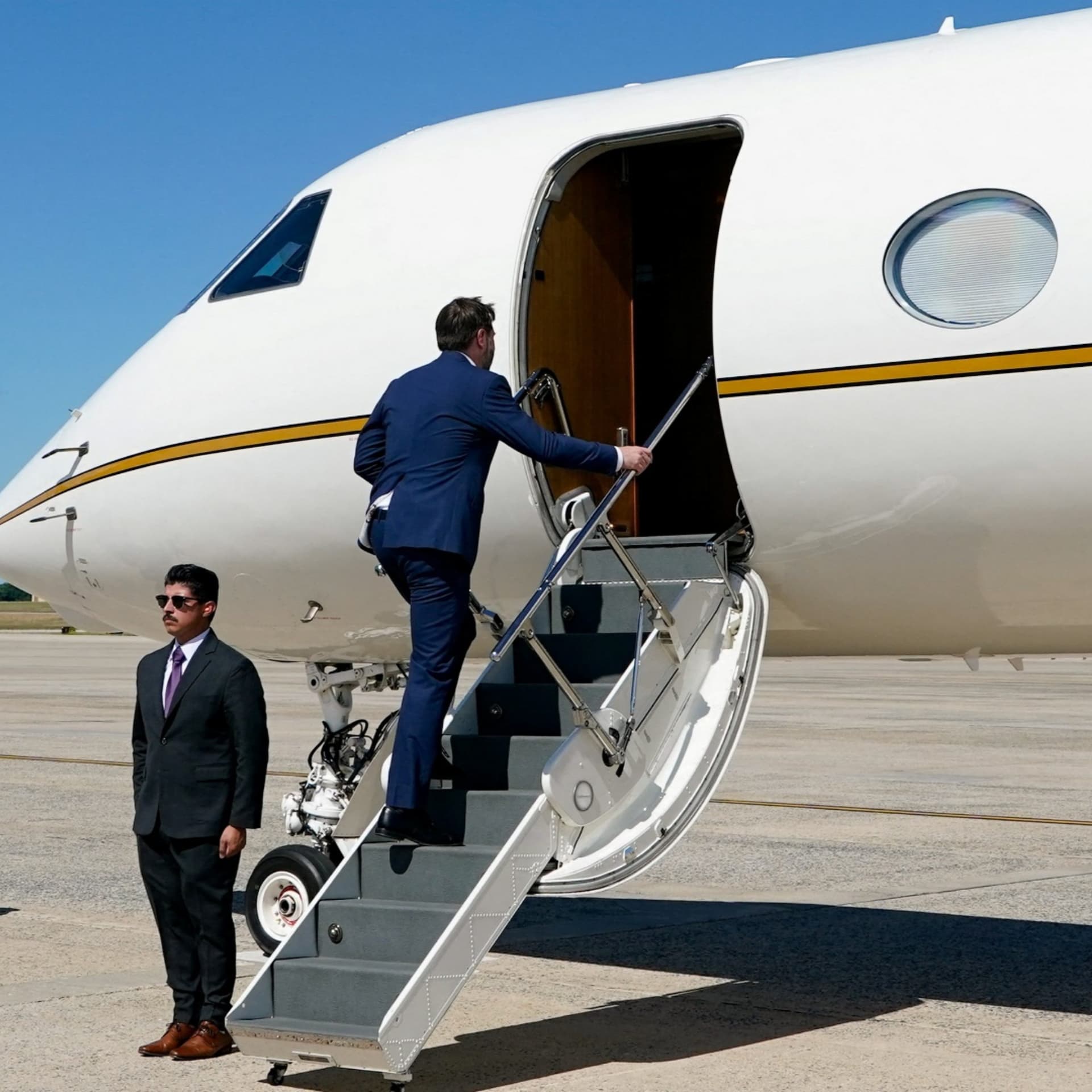
Photo: US Vice President JD Vance boards a plane for Switzerland for peace talks with Iran
Credit: Reuters/Elizabeth Frantz