
In short
The episode is a global news roundup. It focuses on US-Iran talks mediated in Pakistan: Vice President J.D. Vance heads to Islamabad for negotiations after a two-week ceasefire, amid disputes over whether Lebanon and the Strait of Hormuz are covered.
Key claims
Iran says it closed/controlled Hormuz in response to Israel’s Lebanon attacks and requires IRGC checks of ships; Israel/US say the ceasefire conditions aren’t met and that the strait should reopen by negotiation.
Notable examples
700 ships stranded; Kuwait/Bahrain/UAE hit after the ceasefire.
Guests
Caroline Davis (BBC correspondent in Islamabad, interviews a Turkish journalist); Frank Gardner (BBC security correspondent, explains ceasefire breakdown); Laura Bicker (BBC correspondent in Beijing on Taiwan-China talks). Also discussed: Melania Trump’s Epstein hearing push (Lisa Phillips, survivor); Hungary election coverage (Katja Adler); Sweden sex-trafficking trial (Stephanie Zacharsson); NASA Artemis II return (Georgina Rannard).
Written by AI. May contain mistakes. Listen to the episode to check what was said.
Chapters
Tap a time to open that second in VOHumanity's Return to the Moon
0:32 to 1:27
Explore the upcoming moon mission and its significance.
“And 13 Minutes, the BBC Space podcast, is following this epic endeavour every step of the way.”
Geopolitical Tensions and Upcoming Talks
1:27 to 2:23
Discuss the current geopolitical tensions surrounding Taiwan and Israel.
“China's president says reunification with Taiwan is inevitable.”
J.D. Vance's Departure for Islamabad
2:23 to 2:55
Hear J.D. Vance's expectations for negotiations with Iran.
“The US will be represented by Vice President J.D.”
On the Ground in Islamabad
2:55 to 3:59
Get insights into the security preparations in Islamabad for the talks.
“For now, let's get on the plane and hit the road.”
Tensions Surrounding the Talks
3:59 to 5:11
Explore the tense atmosphere and security concerns related to the negotiations.
“And instead, there are tens of camera crews and satellite vans ready to cover the talks whenever they start.”
Ceasefire Status and Regional Implications
5:11 to 7:22
Analyze the fragile ceasefire situation and its broader implications.
“President Trump says Iran is violating the existing ceasefire deal by stopping ships going through the Strait of Hormuz.”
Challenges in Negotiations
7:22 to 10:09
Understand the significant disagreements impacting negotiations between the US and Iran.
“He still seems to think that he can force it open.”
China's Role in Peace Negotiations
10:09 to 14:07
Examine China's potential influence in the Iran negotiations.
“Zhang Liwun has met the Chinese President Xi Jinping in Beijing.”
China's Stake in Iran Oil
14:07 to 14:26
Learn about China's interests in Iran's oil and the Hormuz Strait.
“China is the biggest buyer of oil from Iran and also wants this cross-strait traffic through the Hormuz Strait to get through.”
Melania Trump's Controversial Remarks
15:24 to 16:30
Examine Melania Trump's comments on Epstein and congressional hearings.
“And 13 Minutes, the BBC Space podcast, is following this epic endeavour every step of the way.”
Show all 15 chapters
Survivor Perspectives on Melania
16:30 to 18:48
Hear survivor Lisa Phillips' thoughts on Melania Trump's actions.
“As you might have heard in our previous edition, the US First Lady Melania Trump made a surprise appearance on Thursday, denying links to the late sex offender Jeffrey Epstein.”
Hungary's Upcoming Elections
18:48 to 19:52
Explore the political landscape as Hungary approaches its elections.
“And we have more on this story on the BBC News YouTube channel.”
Implications of Orban's Leadership
19:52 to 22:10
Discuss the regional and international implications of Orban's rule.
“You've got fewer people who live there than in Belgium, where I am at the moment.”
Swedish Court Case on Human Trafficking
22:10 to 24:15
Detail the ongoing trial concerning human trafficking in Sweden.
“A man in his 60s has gone on trial in Sweden, accused of forcing his wife to sell sex to more than 120 men.”
NASA's Artemis Crew Prepares for Splashdown
24:15 to 26:51
Follow the NASA Artemis crew as they prepare for their return to Earth.
“And investigators have identified at least 120 men suspected of having paid for sex with a woman.”
Transcript
Automatic transcript. May contain errors.0:00This BBC podcast is supported by ads outside the UK.
0:06Welcome to The Interface, the show that decodes the tech that's rewiring your week and your world. On this week's episode, we'll look at the way that algorithms could change how much you're paying for your groceries, how even astronauts have issues with Microsoft Outlook, and whether the next trend in tech is less tech. Listen on BBC.com or wherever you get your podcasts. For the first time in more than 50 years, humans are travelling to the moon. And 13 Minutes, the BBC Space podcast, is following this epic endeavour every step of the way. We're telling you the story of Artemis II as it happens, and chatting with some of the people making it possible.
0:5213 Minutes presents Artemis II from the BBC World Service. Listen now, wherever you get your BBC podcasts.
1:27China's president says reunification with Taiwan is inevitable. And will Hungarians get rid of Prime Minister Viktor Orban when they head to the polls this weekend?
1:39Also in the podcast... I would call her bluff and I would, you know, push her a little bit and say, okay, now that you've said that, what can you do? What can you do to help us and what can you do to move us along? Epstein survivors react to First Lady Melania Trump's call for congressional hearings.
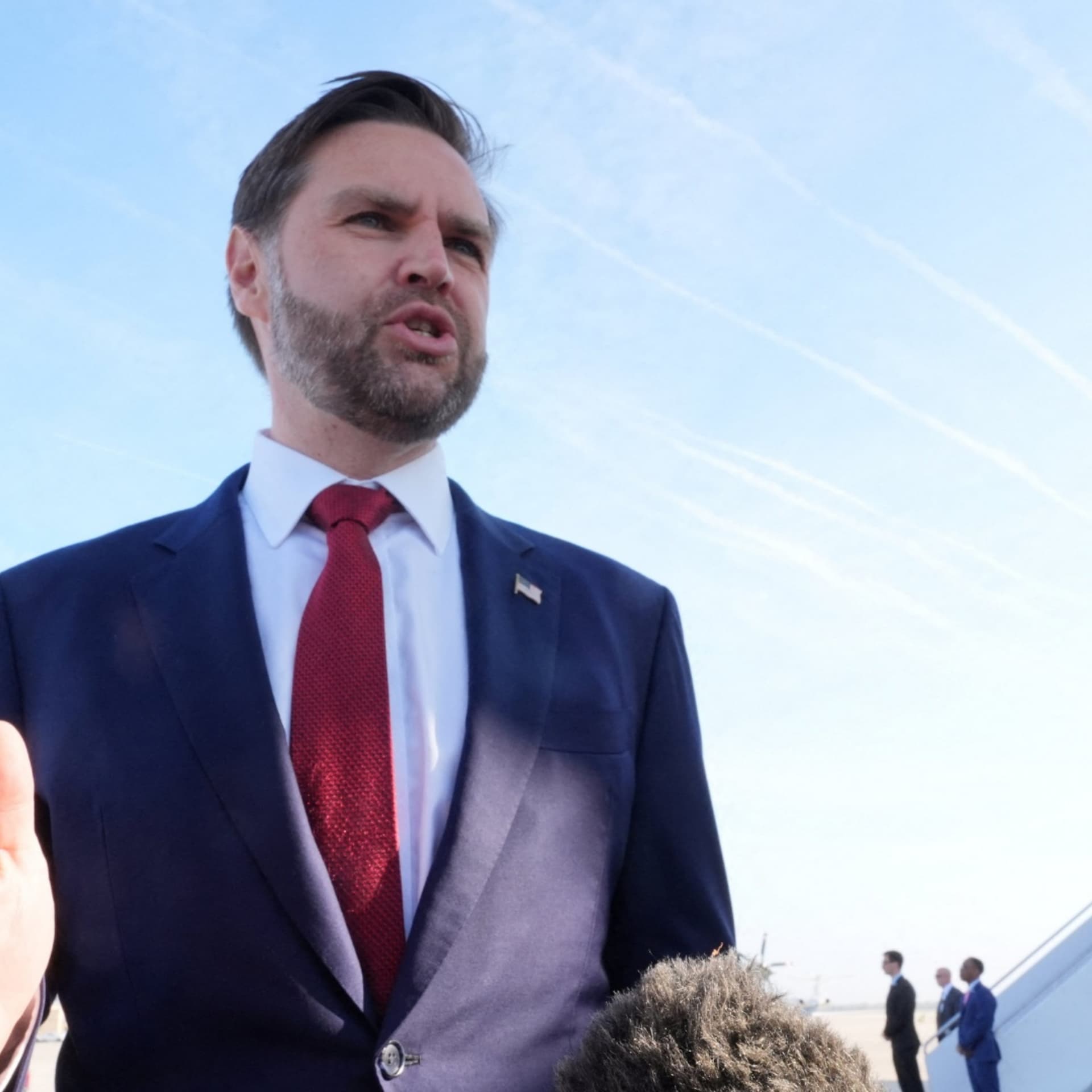
1:59President Trump has denied declaring a premature victory in Iran, but the Strait of Hormuz remains closed and Israel continues to attack Hezbollah in Lebanon. If this reflects the difficulties surrounding the two-week ceasefire agreed on Tuesday, what are the prospects for a longer-term peace deal? Talks are due to begin in Pakistan on Saturday, a day later than originally planned. The US will be represented by Vice President J.D. Vance, and he spoke to reporters just before he left for Islamabad. Look, we're looking forward to the negotiation. I think it's going to be positive. We'll of course see.
2:35As the President of the United States said, if the Iranians are willing to negotiate in good faith, we're certainly willing to extend the open hand. If they're going to try to play us, then they're going to find that the negotiating team is not that receptive. So we're going to try to have a positive negotiation. The President has gave us some pretty clear guidelines, and we're going to see. So I hope you guys have a safe flight. For now, let's get on the plane and hit the road. The authorities in the Pakistani capital are working to get things ready for the talks and security is tight. As we heard from our correspondent, Caroline Davis.
3:08So driving through Islamabad at the moment is a bit of a stop-start process because so many of the roads have been blocked off, particularly the closer you get to the red zone, which is the area of the city where the majority of Pakistan's government buildings are, but also where many of the foreign embassies are based.
3:38Thank you.
3:42So we've made it through some back roads to the area known as Dijuk, which is just on the outside of the red zone. And this is normally a very major road through Islamabad, but it is completely closed off all the way down the road as far as I can see. And instead, there are tens of camera crews and satellite vans ready to cover the talks whenever they start. So we've managed to get a little bit closer to the red zone, but here the roads are virtually entirely empty. All you can see are some police vehicles, some army trucks as well and then a large amount of barbed wire to section off this part of the city.
4:28So where have you come from today to cover this? Istanbul. It's going to be the most important event in the world. Directly it's going to affect the region but indirectly it's going to affect the whole in a broader sense. so it was coming here since we have a great passport it was okay it was easy but we know some friends are having a tough time getting in and what do you feel about the atmosphere here and the sort of the mood around the talks well it's pretty tense obviously there are a lot of security checkpoints it's understandable they're trying to avoid any kind of terror attacks or any sort of incidents that could you know cast shadow over what's going to take place over here Caroline Davis in Islamabad talking to a journalist from Turkey ahead of those talks.
5:16President Trump says Iran is violating the existing ceasefire deal by stopping ships going through the Strait of Hormuz. The Iranians say they have closed the waterway in response to Israel's attacks on Lebanon, including a massive bombardment on Wednesday, which killed a reported 300 people. Israel says it's targeting Hezbollah terrorists, and both sides have carried out more attacks today. The Israeli Prime Minister has now authorised direct talks with the government of Lebanon next week, despite their lack of diplomatic ties. But a senior Lebanese official told the BBC they would only participate if there's a ceasefire in place beforehand.
5:55So where does all this leave the truce originally agreed by the US and Iran on Tuesday? I asked our security correspondent Frank Gardner. It's really a ceasefire in name only, isn't it? Because the two most crucial elements of this supposed deal turn out to be Lebanon, which there is a huge disagreement on whether or not it was part of the ceasefire. As far as Pakistan, which brokered it, is concerned, and Iran, they considered that it was supposed to be a part of the ceasefire deal. Israel and the US say, no, it's not. And then the other big bone of contention, of course, This is the Strait of Hormuz, which affects the global economy far more than the fighting in Lebanon.
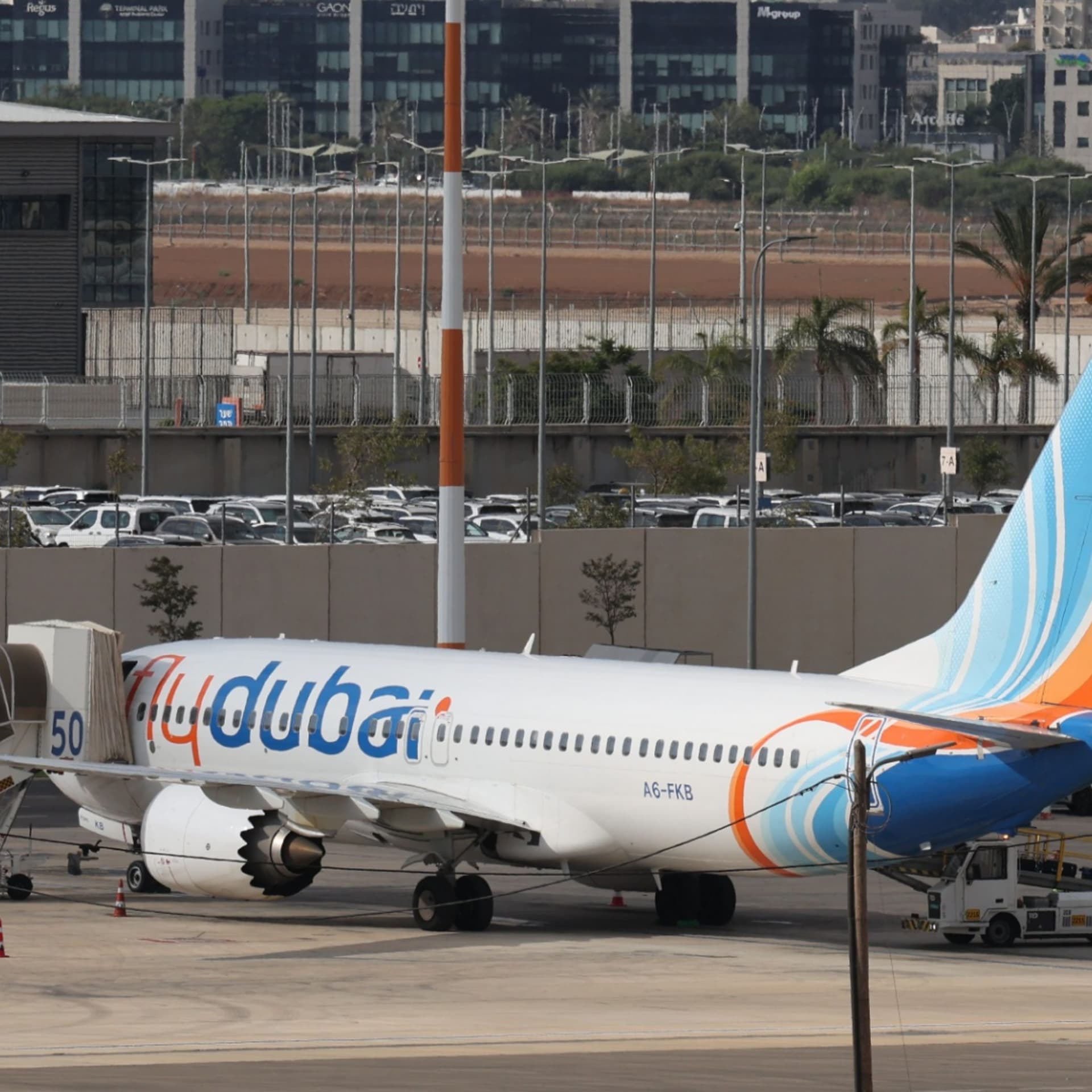
6:37So although it doesn't involve the same carnage in human lives, it is costing the world, I suppose, an awful lot of stress and anxiety and higher prices and so on. You've got around 700 ships stranded inside the Gulf. What Iran has done is it said, yeah, ships are free to pass, but they've got to be checked by our military first. In other words, the IRGC, the Islamic Revolutionary Guards Corps, is demanding to check over, to register every single ship. They want it to go past by a narrow strait between Qesham Island and Larrak Island instead of the usual waterway, which they say is mined. So the Strait of Hormuz is not open for normal business.
7:21Donald Trump is furious. He still seems to think that he can force it open. You can't. The only way that strait can be open for normal business is by negotiation. But at the moment, even though those bits of the ceasefire are not working, bombs are not falling on Iran and it's not launching missiles around the Gulf, or is it? That's largely true. You're right. I mean, Kuwait has been hit in the last few hours. And certainly in the first few hours after the ceasefire, Bahrain and the UAE took hits. That was probably a case of regional commanders in Iran not yet getting the message to ceasefire.
8:03But this war is on pause. I mean, you're right. Yes, it's great that Iran isn't being bombed and that the missiles and drones aren't coming the other way, largely. But this is supposed to be a conditional ceasefire. And the conditions that both sides consider were part of this deal are not being met. so it's going to be very hard to see how they can find common ground in Islamabad. There is so much they disagree on. I mean, we haven't even touched on the fact that Iran, as part of its conditions for ending this war, are demanding reparations for all the damages. They want a recognition of their sovereign control over the Strait of Hormuz.
8:45That's unacceptable to the Gulf Arab states like Bahrain, UAE, Qatar, Kuwait, Saudi Arabia. then of course there's the whole business of Iran support for proxies not just in Lebanon with Hezbollah but the Houthis all the militias in Iraq the Iran for their side want the U.S. to withdraw its forces from the Gulf I mean when I asked Qatar's foreign ministry spokesman you know are you going to consider after all of this asking the U.S. to leave because they haven't stopped you being attacked he said quite the opposite we're going to double down we're going to increase our defence partnerships that exist already.
9:22And those talks between the Israeli government and the Lebanese government, could they achieve anything? Well, it's a start because they've had incredibly cold, frosty relations for decades. Israel's view is that Lebanon needs to take control of its own territory, and that if it can stop Hezbollah firing rockets into northern Israel, there won't be any fighting. There's no need for a war or occupation and bombing and so on. But the problem is that the Lebanese government is militarily quite weak. The Lebanese army is weak. Hezbollah, despite the fact that they've taken a huge amount of hits from Israel in the last two years, they are still the strongest power in Lebanon, and they've got no intention of disarming.
10:05Our security correspondent Frank Gardner. On the first visit by a Taiwanese opposition leader to China in a decade, Zhang Liwun has met the Chinese President Xi Jinping in Beijing. Ms Zhang's trip has provoked fierce debate back home in Taiwan, with many accusing her of cosying up to the Communist Party on the mainland. China views Taiwan as a renegade province and wants to regain control of it by force if necessary. President Xi said it was inevitable that people on both sides of the Taiwan Strait would move closer together.
10:43The current century-long changes in the world are accelerating, but no matter how the international situation and the situation in the Taiwan Strait change, the general direction of human development and progress will not change. The larger trend of compatriots on both sides of the strait walking nearer, closer and together will not change. This is a historical necessity. We have full confidence in this. But Taiwan's government rejects China's sovereignty claims and says only the island's people can decide their future. I heard more about the meeting from our correspondent in Beijing, Laura Bicker.
11:27So this seemed to be a meeting that went quite well between the two. You had President Xi talking about the leaders of two parties meeting to safeguard the peace, the stability of what he described as a shared homeland, to promote the peaceful development of cross-strait relations. Now, that's what he's saying. And I think one of the interesting things is she also almost echoed his words and talked about how when it comes to the rejuvenation of the Chinese nation, that could also help Taiwan. So it did seem that the two were kind of singing from the same hymn sheet, both saying the same thing, that cross-strait, peaceful relations were a priority.
12:09and they would agree to kind of have further dialogue on that. And why has Zhang Liyuan made this visit? So there's two reasons for this. I think when it comes to, for her, it is a bit of a risk because when it comes to public perception in Taiwan, most people in Taiwan consider themselves a sovereign nation, but many also favour keeping the kind of status quo and cross-strait relations, neither unifying with China nor formally declaring independence. I think what she's trying to do at this time, when we're seeing the war in Iran, when we're seeing the United States perhaps not being the most forceful in partners with Taiwan and not saying that they would come to Taiwan's aid in the event that China would invade.
12:55I think that is one of the reasons why she's now promoting herself as perhaps a peacemaker, someone who could be the go-between, even though she is the opposition party at this time. And I think also it is a risk in terms of kind of party politics in Taiwan, but Xi may feel at this time it's one worth taking. Talking about the war in Iran and possible peacemakers, what do you think China's role might be in upcoming negotiations? Well, I think when it comes to China's role in this, what we've seen is that President Trump tweeted saying, or whatever, social media these days, when he put on Truth Social that China would actually help the peace process.
13:34China hasn't really confirmed or denied that this happened, that they played a pivotal role in bringing Iran to the table. We are waiting to see whether China will play a role this weekend. But certainly the peace proposal that Pakistan came up, that five point plan, China backed. Now, Pakistan's foreign minister came to Beijing and it was after that that it was forcefully put to Tehran. And it does seem that there have been phone calls behind the scenes that may have played a role in getting Tehran to actually sit down at the negotiating table. China has an interest in this. China is the biggest buyer of oil from Iran and also wants this cross-strait traffic through the Hormuz Strait to get through.
14:17So that is one of the reasons why China is probably trying to put the push on Tehran to be peaceful and try to get some kind of decision on the Hormuz Strait. Laura Bicker in Beijing. And still to come on this podcast... If I could have told that little girl who took home a picture of Earthrise and hung it in her room that she would eventually launch from that same place to see that same view, I'm pretty sure she would not believe it. A last day in space for NASA's Artemis crew before they splash down to Earth.
14:58Welcome to The Interface, the show that decodes the tech that's rewiring your week and your world. On this week's episode, we'll look at the way that algorithms could change how much you're paying for your groceries, how even astronauts have issues with Microsoft Outlook, and whether the next trend in tech is less tech. Listen on BBC.com or wherever you get your podcasts. For the first time in more than 50 years, humans are travelling to the moon. And 13 Minutes, the BBC Space podcast, is following this epic endeavour every step of the way. We're telling you the story of Artemis II as it happens, and chatting with some of the people making it possible.
15:4413 Minutes presents Artemis II from the BBC World Service. Listen now, wherever you get your BBC podcasts.
16:28You're listening to the Global News Podcast. As you might have heard in our previous edition, the US First Lady Melania Trump made a surprise appearance on Thursday, denying links to the late sex offender Jeffrey Epstein. But she then appeared to go against her husband's demand for the US to move on from the scandal, by calling for congressional hearings for survivors of Epstein's sex trafficking. Some accuse the First Lady of shifting the burden onto victims, saying it should be the abusers who appear. But Democratic Congresswoman Sarah Elfruth thinks Melania's suggestion is correct. We need those hearings.
17:07We need the survivors to be shown the dignity to tell their stories, not just to Congress, I think that's the First Lady's point, but to the American people and hold the right people accountable. and to know that this shouldn't be a partisan issue. We should be able to stand behind survivors of human trafficking and sexual assault and rape together, both parties. So I welcome her lobbying efforts here. Lisa Phillips is a survivor of Jeffrey Epstein's abuse. She says if Melania wants to stand up for the survivors, she needs to act. Obviously, it could just be some more political theatrics, what we've seen all year.
17:45So I wouldn't be surprised for that just to fall by the wayside. But what I would do is I would call her bluff and I would, you know, push her a little bit and say, okay, now that you've said that, what can you do? What can you do to help us? And what can you do to move this along? For me, you can say something, but where, you know, what goes next? What happens next? So if the survivors say, okay, we want to do that. Let's work with Congress. Will we be able to? I'm not sure if she's aware, but we've already, we've already been. to the Capitol three times and had press hearings. So she was saying, let's have a public press hearing.
18:19We've already done that. What's going to happen next? She wants us to stand there and tell our stories and tell a testimony to Congress, but there's no protection in that. Many survivors have NDAs and many are just scared to talk about their abusers. Where's the immunity in that? It's not something that can be easily done. I suggest having a private testimony hearing. I think that would be the smartest thing to do, but a public one is not going to happen. Lisa Phillips. And we have more on this story on the BBC News YouTube channel. Search for Global News Podcast in the podcast section. Hungary goes to the polls on Sunday with its prime minister, Viktor Orban, facing one of his toughest electoral challenges yet after 16 years in power.
19:05This morning, he took to YouTube to accuse outsiders of meddling in the election.
19:13Our opponents will stop at nothing to seize power. They're colluding with foreign secret services, threatening our followers with violence, and calling out election fraud with fabricated accusations even before the election. They're organizing demonstrations and chaos even before your votes have been counted. Let us speak clearly. This is an organized attempt to question the decision of the Hungarian people through chaos, pressure and international discredit. Well, Mr Orban himself received an outside endorsement earlier this week from the Trump administration when the US Vice President J.D. Vance visited Hungary.
19:51The poll is being described as the most consequential vote in Europe in 2026, as our Europe editor Katja Adler explains. Hungary is tiny, right? You've got fewer people who live there than in Belgium, where I am at the moment. And Hungary's GDP is a bit less or around 1 % of the EU's total GDP. But it really is being watched internationally. I think a lot of the focus right now is because of the times that we're living in. I mean, there's a concern amongst so many that we're seeing a backsliding in democracy internationally, that multilateral organisations, you know, countries work together, that they're being eroded, that we're living in times where might is seen as right.
20:31And who are the two key international backers of Viktor Orban? Well, he infamously called illiberal democracy at home and backing him is Donald Trump. He's endorsed him many times. J.D. Vance, despite the war in Iran, was just in Budapest to support Viktor Orban ahead of the election. He's seen as a figurehead of the Christian national right. But he's also been really useful over the years, his 16 years as prime minister to Vladimir Putin. He's delayed EU sanction packages against Moscow most recently since the full scale invasion of Ukraine. He's currently blocking a 90 billion euro loan from the EU to Ukraine, which Kiev said it needs to survive.
21:13So, I mean, here in Brussels and I mean, in a lot of European capitals, they won't say it directly. They're not unhappy that Viktor Orban is tipped to lose. He's seen as an obstructor in Brussels, not just on Ukraine, but also on migration and more. And there has been continuous concern about the backsliding of the rule of law, the independence of the judiciary, media freedom, LGBTQ plus and women's rights at home. And there's also some who say that if Viktor Orban loses, it will be such a headline that perhaps it will be an indication more broadly in Europe that the rise of the hard nationalist right is slowed down.
21:53And if you look at regional elections just recently in France, where Marine Le Pen's party didn't do as well as they'd hoped, and of course Brussels is extremely worried about the French presidential election next year. So those are some of the reasons why Hungary's election resonates, really way beyond its borders. Our Europe editor Katja Adler. A man in his 60s has gone on trial in Sweden, accused of forcing his wife to sell sex to more than 120 men. He denies wrongdoing. Stephanie Zacherson told us about the case. Prosecutors say that for about three years, ever since the early stages of this couple's relationship, the man has been in practice selling his wife to people, men, and threatening her with violence if she does not comply.
22:37So he's now charged with not only what's being called aggravated pimping or facilitation, but also several counts of assault, rape and making threats against her. And the prosecutor in the case, Sida Annerstedt, she says that he's clearly been in charge of what she called ruthless exploitation.
23:01He's been creating and editing sex ads online. He's been in contact with the so-called clients. He's been chatting with them, he's planned the meetings, he's discussed prices and what will happen. Now, the man denies any wrongdoing and his legal team says that everything that happened was consensual and that the couple acted together throughout. But how did all this come to light? So in October of last year, the woman says she fled the couple's home in northern Sweden and phoned the police herself. This then led to the husband being arrested. And since then, he has been in custody while this huge police investigation has been ongoing.
23:43Police say they have, apart from, of course, the woman's own accounts and witness statements. Investigators have been trawling through lots of material found primarily on phones and computers, which include bank transfers and photos and videos of the alleged assaults. And what's been the reaction to all this in Sweden? It's been a shock across Sweden. Sweden's Equalities Minister called it a form of slavery. and her and many others have likened the case to the French case of Giselle Pellico. And investigators have identified at least 120 men suspected of having paid for sex with a woman. In Sweden, buying sex is illegal, but prosecutors say they won't be able to bring all of these cases to court.
Read the full transcript
24:29So far, 26 have been charged. Stephanie Zacharsson. Finally, let's check in with NASA's Artemis crew as they get ready to return to Earth. As we record this, the team are having their final scheduled sleep in space before preparing for re-entry. Ahead of that, one of the astronauts, Christina Cook, shared some of her thoughts. I recently found some photos of myself on a family vacation at Kennedy Space Center. And we were posing in front of the Saturn V rocket with me, with my siblings and my parents. And if I could have told that little girl who took home a picture of Earthrise and hung it in her room, that she would eventually launch from that same place to see that same view, I'm pretty sure she would not believe it.
25:15But even though I still can't believe it, and she certainly wouldn't believe it, she chased that dream and it ended up happening. Our science correspondent Georgina Ranard has more details. This is their final day up there as they prepare for their return to Earth after this 10-day mission. They're facing what is probably the most dangerous time during this mission. Launch, of course, is scary, it's dangerous, but this time they have to re-enter Earth's atmosphere at incredible speed, 25 ,000 miles per hour. They'll be facing temperatures of 2 ,700 degrees Celsius. That's about half the temperature of the surface of the sun.
25:56To do that, the capsule has a protective heat shield around it and that's supposed to shelter them from those temperatures and radiation. But that was actually damaged on the first and only flight of Orion capsule before when it went without humans. So NASA and the astronauts and their families will be watching later with some anxiety, I suspect. NASA has said they have confidence, but it's certainly a tense time. The capsule will reorient itself to go through Earth's atmosphere. It will hurtle through. At some point, 11 parachutes should open and that will allow the astronauts to sort of gently splash down into the Pacific Ocean.
26:33The astronauts should be collected by a warship and then helicoptered to California before they're taken to NASA's Johnson Centre in Houston for medical checkups before they can be reunited with their family members. Our science correspondent Georgina Rannard. And that's all from us for now, but the Global News Podcast will be back very soon. This edition was mixed by Niall Jackson and produced by Siobhan Leahy and Stephanie Zacherson. Our editors, Karen Martin. I'm Oliver Conway. Until next time, goodbye.
27:14Welcome to The Interface, the show that decodes the tech that's rewiring your week and your world. On this week's episode, we'll look at the way that algorithms could change how much you're paying for your groceries. how even astronauts have issues with Microsoft Outlook, and whether the next trend in tech is less tech. Listen on bbc.com or wherever you get your podcasts.
From the publisher
Islamabad warns that the gap between the negotiating positions of the US and Iran remains wide. Each has accused the other of breaking the terms of the tentative ceasefire agreed this week.
Also: on the first visit by a Taiwanese opposition leader to China in a decade, Cheng Li-Wun meets the Chinese President Xi Jinping in Beijing. Her trip has provoked fierce debate back home in Taiwan with many accusing her of cosying up to the communist party on the mainland. As we've previously reported, US First Lady Melania Trump gave a surprise address at the White House, denying any links to the late sex offender Jeffrey Epstein - we hear how survivors of his abuse have reacted. We look ahead to the polls in Hungary on Sunday, with Prime Minister Viktor Orban facing one of his toughest electoral challenges yet, after 16 years in power. A man in his sixties is going on trial in Sweden - suspected of having forced his wife to sell sex to more than 120 men. And the crew of the Artemis II mission make their final preparations to come home.
The Global News Podcast brings you the breaking news you need to hear, as it happens. Listen for the latest headlines and current affairs from around the world. Politics, economics, climate, business, technology, health – we cover it all with expert analysis and insight. Get the news that matters, delivered twice a day on weekdays and daily at weekends, plus special bonus episodes reacting to urgent breaking stories. Follow or subscribe now and never miss a moment. Get in touch: globalpodcast@bbc.co.uk