
In short
Global News Podcast - Episode Summary
Episode Title
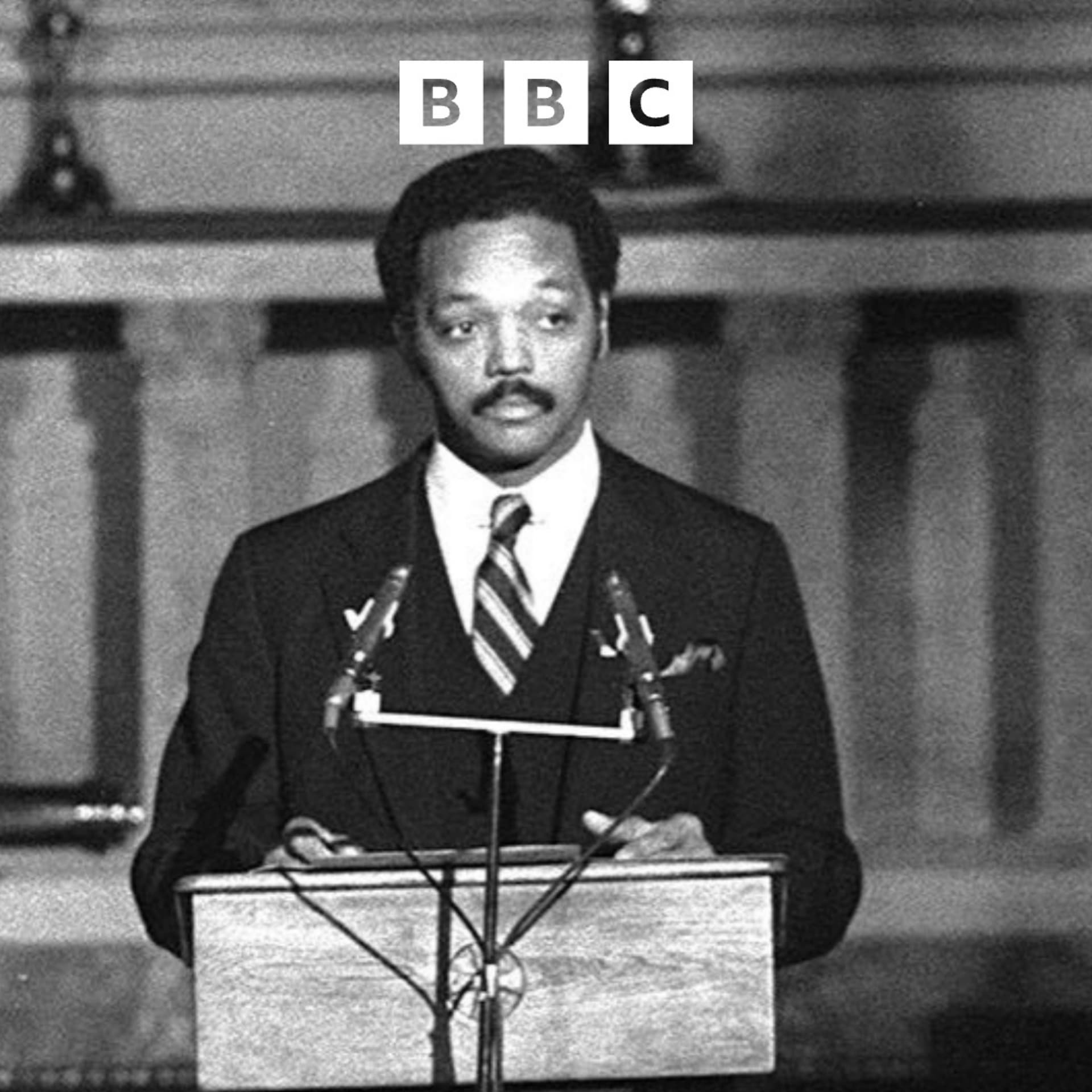
Jesse Jackson dies at 84
Air Date
February 17, 2023
Host
Ankur Desai
---
Overview This episode of the Global News Podcast covers various significant news stories, with a primary focus on the passing of Jesse Jackson, a prominent American civil rights leader. Other topics include ongoing nuclear talks between the US and Iran, an upcoming AI summit in India, and the celebrations of the Lunar New Year in China.
---
Key Discussions
Jesse Jackson's Legacy
- Background: Jesse Jackson was an influential civil rights figure who marched with Martin Luther King Jr. and ran for the Democratic presidential nomination twice.
- Death: He passed away at 84 after battling Parkinson's disease.
- Tributes:
- President Trump referred to him as a "good man" and "a force of nature."
- Jackson's family described him as a "servant leader" advocating for the oppressed.
- Impact:
- His commitment to justice and equality inspired many, paving the way for future leaders, including Barack Obama.
- He was known for his powerful speeches, particularly the slogan "Keep Hope Alive."
Nuclear Talks Between the US and Iran
- Recent Developments: Iran reported that recent talks in Geneva regarding its nuclear program have been more constructive, agreeing on guiding principles for future discussions.
- Public Sentiment: Residents of Tehran expressed hope that a successful deal could improve their dire economic situation.
- Military Tensions: Ongoing military maneuvers by Iran and the US suggest a complex backdrop of negotiations, with skepticism about the likelihood of immediate peace.
AI Summit in India
- Event Overview: One of the world’s largest AI summits is taking place in Delhi, focusing on online safety and the responsible use of artificial intelligence.
- Concerns Raised: Professor Yoshua Bengio emphasized the urgent need for global leaders to understand the risks associated with AI.
- Inclusivity Issues: There are concerns that lower and middle-income countries, particularly India, may not benefit equally from AI advancements compared to Western nations.
Lunar New Year Celebrations
- Cultural Significance: The episode discusses the significance of the Year of the Fire Horse, celebrated by over 1.5 billion people globally.
- Traditions: Celebrations include family gatherings, gift exchanges, and festive meals. Fireworks and entertainment shows also mark the New Year.
---
Key Takeaways
- Jesse Jackson's death marks the end of an era in civil rights activism, leaving a profound legacy of inclusion and justice in American politics.
- The ongoing negotiations between the US and Iran represent a fragile yet critical phase in international diplomacy concerning nuclear issues.
- The AI summit in India highlights the global conversation about the future of technology and its equitable development.
- The Lunar New Year celebrations reflect rich traditions and cultural unity across various East Asian communities.
---
Conclusion This podcast episode encapsulates significant global events and their implications, offering insights into the legacy of a civil rights icon, the complexities of international relations, the evolution of technology, and cultural celebrations around the world.
For more updates, listeners are encouraged to subscribe and stay informed about the latest news.
---
Contact Information
- Email: [globalpodcast@bbc.co.uk](mailto:globalpodcast@bbc.co.uk)
- Follow the Global News Podcast for more breaking news and analysis.
Written by AI. May contain mistakes. Listen to the episode to check what was said.
Chapters
Tap a time to open that second in VOJesse Jackson's Legacy
0:44 to 1:52
An overview of Jesse Jackson's life and significant contributions.
“Jesse Jackson, the US civil rights leader who marched with Martin Luther King and later ran twice for president, has died at the age of 84.”
A Look Back at Jackson's Activism
1:52 to 4:39
Exploring Jesse Jackson's activism from the 1960s to his presidential runs.
“A statement from his family said his unwavering commitment to justice, equality and human rights helped shape a global movement for freedom and dignity.”
Reflections on Jackson's Influence
4:39 to 6:39
Mark Morial reflects on Jesse Jackson's influence and legacy.
“Well, Mark Morial heads the civil rights organisation at National Urban League and was a close friend and colleague of Jesse Jackson.”
Reactions to Jackson's Passing
6:39 to 7:50
Discussion on the reactions following Jesse Jackson's death.
“He had presidential campaigns which mobilized millions of people.”
Iran Nuclear Talks Update
7:50 to 13:13
Insights into the ongoing nuclear talks between the US and Iran.
“So how do the people of Tehran feel about the talks?”
AI Summit in India
13:13 to 14:02
Coverage of the AI summit in India and the importance of safe AI practices.
“and then click on the logo and then choose Podcasts and then Global News Podcast.”
AI Summit Expectations
14:02 to 17:23
Discover the anticipated dynamics and themes of the upcoming AI summit in Delhi.
“and that needs their attention and intervention as soon as possible.”
Ukraine Talks and Challenges
18:25 to 21:24
Explore the current state of peace talks regarding Ukraine and Russia's ongoing conflict.
“Alexander Mareshko heads the Foreign Affairs Committee of the Ukrainian parliament.”
Sperm Storage for Soldiers
21:24 to 26:13
Understand the significance of sperm storage for Ukrainian soldiers amid ongoing war.
“albeit how awful that is, than sign a peace agreement that would be tantamount to a gradual surrender.”
Figure Skating Backflip History
26:13 to 28:00
Learn about the history and challenges of performing a backflip in figure skating.
“Last week at the Winter Olympics, the American skating star Ilya Malinin sent spectators into a frenzy after performing a backflip, the first legal one in the Games for 50 years.”
Show all 13 chapters
The Daring Backflip of Surya Bonali
28:00 to 30:14
Learn about Surya Bonali's iconic backflip performance and its challenges.
“And I felt like if I do the backflip, people will say, hey, it's fantastic.”
Celebrating the Lunar New Year
30:14 to 31:34
Discover the traditions and significance of the Lunar New Year celebration.
“Chinese or Lunar New Year starts today and for the next 15 days, it's thought that more than one and a half billion people around the world will be marking the occasion.”
Culinary and Cultural Festivities
31:34 to 32:42
Explore the foods, family gatherings, and entertainment of the New Year festivities.
“They often have group meals and they exchange gifts.”
Transcript
Automatic transcript. May contain errors.0:00This BBC podcast is supported by ads outside the UK.
0:30to make those markets work for you. Follow Merrin Talks Money on Apple Podcasts, Spotify, or wherever you listen. This is the Global News Podcast from the BBC World Service. Hello, I'm Ankur Desai and at 16 hours GMT on Tuesday the 17th of February, these are our main stories. Jesse Jackson, the US civil rights leader who marched with Martin Luther King and later ran twice for president, has died at the age of 84. Iran says it's agreed a set of guiding principles in its latest nuclear talks with the US in Geneva. And the Swiss city is also the venue for another set of negotiations between Russia and Ukraine.
1:13Also in this podcast, one of the world's biggest AI summits is happening in India this week, with the issue of online safety at its core. It's urgent that leaders of this world understand where we could be going and that needs their attention and intervention as soon as possible. And giddy up, it's the year of the fire horse. Celebrations begin for the Chinese or Lunar New Year.
1:42The Reverend Jesse Jackson, the famed American civil rights leader who marched alongside Martin Luther King Jr. in the 1960s and twice ran for president, has died. He was 84 and had been diagnosed with Parkinson's disease in 2017. A statement from his family said his unwavering commitment to justice, equality and human rights helped shape a global movement for freedom and dignity. And then he left an indelible mark on history. Alim Makhbou takes a look back at his life. November 2008, Barack Obama and a moment of history. In the crowd, the tear-stained face of a man who'd done much to pave the way, the Reverend Jesse Jackson.
2:25It's been a long time coming, but tonight, because of what we did on this day, change has come to America. Born to a teenage single mother in Greenville, South Carolina, Jesse Jackson grew up in a world where black and white were legally segregated. In 1959, he won a football scholarship to university, but threw himself into the civil rights struggle that was engulfing America. There's a great swell of cheers to welcome Martin Luther King. Under the leadership of Martin Luther King. Reverend King sent the young Baptist minister to Chicago to organise protests. On marches, the two men faced violent crowds opposed to the movement.
3:09Then, in Memphis, Martin Luther King was murdered in front of Jackson. The assassin was later arrested, having fled the country, but Jackson was never convinced he'd been working alone. This man could not have stalked Dr King, had the logistical operation, had operative alternative passports and got out of the country with money alone. A powerful public speaker, Jackson continued the struggle. But I am somebody. I may be on welfare, but I am somebody. In the 80s, he twice ran for president, but failed to win the Democratic Party nomination. But for the first time, a black man was a serious contender.
4:00Our time has come. We must leave racial battleground and come the economic common ground and moral higher ground. America, our time has come. On the international stage, he campaigned for a Palestinian state, creating a long rift with American Jews after some unguarded and offensive remarks. He persuaded Saddam Hussein to release human shields on the eve of the Iraq war. And as South Africa emerged from apartheid, the man who spent years maintaining American pressure against the system was there to watch. What time is it? From the 1960s to the election of Barack Obama, even to the Black Lives Matter movement of recent years, Jesse Jackson was a constant figure in American public life, determined to show generations of young black Americans they too could have a voice.
4:58Alim McBur there. Well, Mark Morial heads the civil rights organisation at National Urban League and was a close friend and colleague of Jesse Jackson. Reverend Jackson was a giant among men. He was tall and powerful in stature, powerful in presence. He paved the way for Bill Clinton. He paved the way for Barack Obama. But he inspired me to run for public office to the Louisiana legislature and then later to become mayor of New Orleans, because what he showed is that the philosophy of inclusion, the philosophy of equal justice, the philosophy of coalition building could and needed to be central to American politics in the 90s and beyond.
5:41So his impact is so, so profound. So is it that philosophy of inclusion and coalition building that will be Jesse Jackson's lasting legacy? A question for our Washington correspondent, Helena Humphrey. I think it certainly will be. We are now getting reaction to this news. We've just had a tribute from the mayor of New York City, that's Zohra Mamdani, and he has said of the civil rights leader that he never stopped demanding that America live up to its promise in the regard of what you just spoken about, this effort and this push for diversity and inclusion. And I think the feeling this morning is a sense of sadness that Jesse Jackson was a giant of 20th century America because he is someone who started as that protege of Martin Luther King Jr.
6:29Who was there when he was assassinated and then went on to become a civil rights leader. And I think ultimately a political force in his own right. He had presidential campaigns which mobilized millions of people. He had that slogan, which he so often repeated, of keep hope alive, which was seen as a precursor, really, to Barack Obama's mantra of hope and change and is largely credited with having paved the way for Barack Obama's election decades later. I think one aspect that's particularly interesting internationally of his legacy and influence was the fact that he'd often spoken about the fact that growing up in the segregationist South meant that he had had to become a skilled negotiator.
7:14And he successfully negotiated the release of both British and American hostages from Iraq. Helena Humphrey in Washington. Iran and the US have held another round of talks in Switzerland today, mediated by Oman, to try to resolve their long-running dispute over Tehran's nuclear program. In the face of America's military build-up in the region, Iran too began at its own naval drill in the Strategic International Waterway, which is the Strait of Hormuz. Even the scope of the negotiations in Geneva had been in dispute as part of any deal. Iran said it would not discuss its missile stockpile and demanded relief from sanctions which are strangling its economy.
7:54So how do the people of Tehran feel about the talks? Our chief international correspondent, Lise Doucette, has been speaking to some of them. If there was a deal between the United States and Iran, would it help you in your life? Absolutely. Definitely it will get better. Definitely. Because right now we're in a very terrible situation. As soon as we open our eyes in the morning and we see that we're alive, we say, oh, thank God, that's it. What do you think is going to happen in Iran? President Trump says if there's no deal, he's going to attack Iran again. They must come to an agreement with the United States in order to prevent an attack.
8:36But so many people in Iran are suffering and some want the United States to strike. I am telling you this truthfully. Did you not see how many people were killed in the protests?
8:52I believe those in charge of these negotiations and agreements have done behind-the-curtain willings and dealings. I try not to get too caught up in this issue that what will happen in the future. I have to stand on my own feet. I have to get my own rights. My countrymen are whom I can rely on. I will support them to the end. I will pay whatever costs. And what are you seeking?
9:24Freedom. I want to live a free life. I want to be able to hold my friend's hand freely. I want to be able to put my hand on my friend's shoulder freely. I want to be able to express what I think and what I believe in freely and not be beaten, tortured and so on and so on.
9:47People in Tehran talking to Lise Doucette there, who is reporting from Iran on condition that none of her material is used on the BBC's Persian service, a restriction which applies to all international media organisations operating in Iran. In the past few hours, we've heard from Iran's Foreign Minister Abbas Ar-Aqchi, who said the two sides at the talks in Geneva had now reached an understanding on the guiding principles for a deal. Eli Ghiramaya is a senior policy fellow at the European Council on Foreign Relations. Leila Nathu asked her for her assessment of what those main principles could be.
10:23Well, first of all, that's the feedback from the talks from the Iranian side. We have to see how the Americans spin these latest discussions. But my interpretation is that, if indeed correct, that the US and Iran for now have managed to at least agree on what the parameters of the negotiations means and what the scope of the topics for further technical and political talks will be. And this was where prior to this round of talks, there seemed to have been quite an extensive divide between the two sides of what the US wanted in these baskets of talks and what the Iranian sides wanted. And I think the guiding principles have likely created some overlap in their understanding of what they will be discussing next time, if there is indeed a next time.
11:10That implies that there has been some degree of compromise, or at least one side has given ground in terms of what is in scope of the negotiations. Which side do you think is more likely? I think that there was a moment where the US side seemed to be throwing the kitchen sink at these talks and what it could get out of it. everything from the nuclear issue to the regional issues to Iran's domestic turbulence in the light of the massacres that just happened in the country, and also Iran's broader regional positioning, including its missiles. Now, Iran's consistent position has been that it will only talk about the nuclear issue.
11:45Now, my guess is that they have landed somewhere in between those two extremes. And again, we'll have to see what the US output from these talks are, But it does seem from the Iranian messaging that the two sides may have reached a middle ground on what those parameters are. From Iran's point of view, it does sound like they believe the talks are not on a road to nowhere, that they are going to actually continue. Does that mean the threat of military action by the US has receded? I don't think at all. I think both sides are negotiating with a buildup of military tensions. So as you said in your introduction, the U.S.
12:23is sending another warship to the region to bolster Trump's position of negotiating peace through strength. Iran has also increased its rhetoric about its resistance to U.S. military intervention and military threat. It has conducted new military drills in a very sensitive water passage that's critical for global shipping routes today to show that it can, from a capabilities perspective, close or at least disrupt the flow of goods in the Strait of Hormuz. So I think for the immediate term, we are not going to really see a cooling of the military tensions between the two sides. And this is, I think, just a reality in a Trumpian world that this is how negotiations are likely to continue.
13:05And for more on this story from our chief international correspondent, Lise Doucette, you can go on YouTube, search for BBC News and then click on the logo and then choose Podcasts and then Global News Podcast. There's a new story available every weekday. Now, one of the world's biggest AI summits is happening in India this week. Up to 50 ,000 people are gathering in Delhi for the international meeting, which will consider how to ensure that artificial intelligence remains safe. Among the speakers is Professor Yoshua Bengio, described as one of the three godfathers of AI. He's concerned that governments aren't yet fully understanding the risks that the technology poses.
13:44Capabilities of AI have continued to advance. And although mitigation and risk management of AI has also progressed not as quickly, so it becomes urgent, in my opinion, that leaders of this world understand where we could be going and that needs their attention and intervention as soon as possible. Professor Joshua Bengio. And in case you're wondering, the other two so-called godfathers of AI are computer scientists Geoffrey Hinton and Jan LeCun. Our technology editor is Zoe Kleinman and was on her way to the Delhi summit. Before she boarded her flight to India, she told me more about what she's expecting.
14:24I think we might see a bit more of a humble tone to this conference than we've seen in the past. I went to the event that was held in Paris last year, and it basically descended into this power struggle between all the Western countries who were desperately trying to assert themselves, if you like, as being the leader of the pack in this AI revolution. But there's lots of concerns that lower middle income countries like India are being left out of these conversations and they're in danger of falling behind. So, for example, lots of workers in India have been paid quite low wages to categorise data that's used in training the AI products that hundreds of millions of people are using now.
15:04But it doesn't work for all of them. Most of these products only work in about half of India's official languages. There are 22 of them. So there is a sense that countries like India are being used to build the foundations of this AI empire, but they're not necessarily reaping the same level of benefits that the Western countries are. And it's a huge scale summit, not just in terms of the people attending, but just so many different themes that are going to be there. There's talks of chakras as well, the likes of Bill Gates and Sundar Pichai are going to be there too. So it's expected to be heavy hitting, so to speak.
15:39It's absolutely massive, both physically and also in terms of the content. There are thousands of people travelling to Delhi to attend, including me. We've also heard that local companies are bringing in scores of rural workers who want to experience the action as well. The conference centre is the size of 70 football pitchers, so I'm definitely going to need my trainers. And I think it sounds like every square metre is going to be put to good use, isn't it? And India really wants to use this event to flex its muscles, if you like, as an AI superpower. And going on around it, there are dozens of panels, discussions, keynote speeches.
16:15They're taking place all week. They're featuring all sorts of AI academics and researchers and professionals. As you said, some household names are going as well. Yoshua Bengio, Bill Gates needs no introduction, Google boss Sindar Pichai. We understand that they're all going to be there, along with world leaders and ambassadors from around the globe, including, we think, from China. You mentioned the chakras. there are seven themes to this event and they cover everything from the real billion dollar question which is about AI governance and safety to these issues like accessibility and the impact on the climate and that's causing some concern in itself because some delegates have told me privately they're a bit worried that the focus and the scale of this is so big that it's going to be difficult to get any meaningful conclusions out of it while others are hoping that India really is going to be able to have impact because, let's face it, there have been three of these summits so far.
17:08We've seen so much talk and grand declarations and pledges, but the tech still throws up lots of problems. We keep coming back to these concerns about its impact on the big issues like jobs and cyber security. They've certainly not gone away. Zoe Kleinman, our technology editor. Still to come in this podcast.
17:40We join revelers in China bringing in the year of the firehorse.
17:59have been alive. But even though I've got questions, join me, Merrin's Upset Web, every week for my show Merrin Talks Money from Bloomberg Podcasts, where I have in-depth conversations with fund managers, strategists and experts about how markets really work. And join me for a separate episode where I answer listener questions on how to make those markets work for you. Follow Merrin Talks Money on Apple Podcasts, Spotify or wherever you listen.
18:25aside from the u.s iran talks we heard about earlier geneva is also playing host today to another round of talks aimed at ending the war in ukraine brokered again by the united states president trump says ukraine must be prepared to come to the table fast to reach a deal with russia but the fighting continues with officials in ukraine saying moscow has fired a new barrage of drones and missiles at targets including the region of Odessa, while the Russian defense ministry says it shot down more than 150 Ukrainian drones overnight. Alexander Mareshko heads the Foreign Affairs Committee of the Ukrainian parliament.
19:03He takes a pessimistic view of the talks. The only obstacle to peace or to ceasefire remains Putin, and he's not serious about negotiations. We can see that he put in charge as a person, as a head of the Russian delegation, a person who is absolutely politically irrelevant. So what we have is a mockery. Instead of true negotiations, we have a process, a mutation kind of negotiations when Putin is trying to use it in order to avoid sanctions. So I don't expect any result whatsoever. Our Ukraine correspondent James Waterhouse is in Geneva. I asked him if that pessimism was shared by the government in Kyiv.
19:43I think that's putting it mildly. You know, I was looking at President Zelensky when he was at the Munich Security Conference last week. I thought he looked especially exhausted and his language is one of exasperation. You know, he is repeating his calls for America to apply more sanctions on Russia's nuclear energy industry. He is also more broadly calling for more pressure to be put on Moscow and for America to be clearer what security guarantees it's willing to provide. we've seen america before claim that it is serious about providing these assurances and now we're starting to get whispers that it will only be specific once it's clear what is in the mix for a peace deal what will be provided in return and i think what ukraine is struggling to get rid of are these proposals for it to simply hand over more territory to the russians in the eastern donbass region to boot we've seen continued strikes on ukraine's energy infrastructure we've also seen the Russians claim to intercept 150 Ukrainian drones or so over Moscow.
20:45So when we talk about these things, it doesn't feel like solid ground for a compromise to be achieved in Geneva today. But nevertheless, it is these discussions in these formats that will ultimately end wars like Russia's invasion of Ukraine. You're spotting about that in the sense that there needs to be enough incentive for both sides to reach a deal. And maybe at the moment, there just doesn't seem to be enough of an incentive to reach that agreement. Russia is clearly satisfied in its continued invasion. Vladimir Putin is fine with the costs, the human costs, the financial costs, and therefore Ukraine will see the need to keep defending and fighting back.
21:23There is still a core belief politically in Ukraine that it would rather keep fighting, albeit how awful that is, than sign a peace agreement that would be tantamount to a gradual surrender. The situation on the battlefield, what's it like at the moment? It's very difficult. I mean, Ukraine has actually recaptured reportedly around 200 square kilometers of territory in the southeast. And it's thought to be because of Russia being denied access to the Starlink web access system created by the billionaire Elon Musk. But more broadly, it is still a story of grinding Russian advances. And that is the picture we have to remember when we think about these ongoing discussions.
22:05Russia is still getting what it wants, despite the costs. And Ukraine, you know, in this war of attrition, will ultimately lose first if there can't be a diplomatic solution in the medium term. James Waterhouse in Geneva. Well, in Ukraine itself, meanwhile, the government is funding a program that allows soldiers to store their sperm. After four years of war, hundreds of thousands of Ukrainian soldiers have been killed or injured. And sperm freezing is increasingly popular, especially for those heading into battle. Our Eastern Europe correspondent Sarah Rainsford sent this report from Ukraine.
22:41Hi, Maxime. I'm Sarah. The other day, I called Maxime on the front line somewhere in eastern Ukraine because the soldier wanted to talk about his sperm. Can I ask you, Maxime, why you decided to freeze your sperm?
23:03Ukraine's gene pool is dying. Our men are dying. It's about the survival of our nation. Maxime is one of a growing number of Ukrainian soldiers who've been freezing their sperm samples for free before being deployed to flight. He told me it's because if he's killed, his wife could still have the child they both want. And if he does survive this war, he's worried about his future fertility. There's no guarantee you're safe, whether you're on the front line or even 80 kilometres back. Maxime means because of the Russian drones overhead, constantly hunting. That means stress, and that has an impact on a man's fertility.
23:47So we have to think about the future and the future of our Ukrainian nation.
23:54Since Russia's full-scale invasion four years ago, Ukraine's birth rate has dropped dramatically.
24:04I met baby Bogdan when he was just a day old, his tiny face all wrinkled and pink. But Oksana, the director at the clinic in Kiev, tells me she now sees far fewer Bogdans, only half the number of pregnancies she saw before the war. That's partly because so many women fled as refugees, and those still here don't want to have so many babies in a land of missile strikes and air raids. But Oksana says it's also about fertility. She confirms that's badly affected by stress. so in the lab her colleague pulls long glass tubes of frozen sperm from a bat to show me the clinic now stores these samples for soldiers frozen while everything's still strong and healthy and then kept for the future just in case oksana dmitrieva is an mp who drafted ukraine's law on sperm storage and is still ironing out some of the problems, like stopping a dead soldier's parents from claiming his frozen sperm if his widow doesn't want to get pregnant.
Read the full transcript
25:16The MP is also busy spreading the word among soldiers. I go to the front a lot and I talk to the soldiers there about freezing their sperm. No one knows what will happen in the future, so if they have this chance, why not? It doesn't hurt.
25:44The soldier I spoke to up on the front line really hopes others follow his lead. For him personally, he says, it's peace of mind, knowing that if all of this ever ends and he does make it home, he has more chance of having a child one day. That's one problem I don't need to worry about any longer, Maxime tells me. And when you're out here in the East, that's really important.
26:12Sarah Rainsford in Ukraine. Last week at the Winter Olympics, the American skating star Ilya Malinin sent spectators into a frenzy after performing a backflip, the first legal one in the Games for 50 years. The incredibly difficult and dangerous manoeuvre had previously been banned for safety reasons. But some competitors had continued to attempt the backflip on ice, most famously the French figure skater Surya Bonali, at the Winter Games in Nagano in Japan in 1998. She now lives in Minneapolis in the US, from where she spoke to my colleague Tim Franks about that momentous move on the rink almost 30 years ago.
26:50In 1998, Olympic Games for me was my last ever competition for amateurs. So Olympic Games was a big goal for me to come back. Unfortunately, I had serious injuries prior, so I was not fully 100 % in shape. But I was lucky to make it to the Olympic team for France. And I was going to do my best anyway. And sadly, a day before the short program, I pulled a muscle on my legs and I couldn't move at all. And, you know, for the Olympics, you cannot use medicine. seen, you know, you will be in trouble with the doping control. So I knew I couldn't do anything. And my leg was like excruciating pain. So when I competed in my long program, it was good at first.
27:41And after he went down the hill and the pain was excruciating. So I was like, OK, it's my last competition. I need to look better than what I look for now. And I had an idea one day I will do back flipping competition. But somehow it was never my time because now time was running. And I'm like, I need to do the backflip now because I cannot do another triple lot or triple something. And I felt like if I do the backflip, people will say, hey, it's fantastic. And in a way, I wanted to leave my trademark because I know I was the only one to do the backflip and create that Bonalli backflip. So I felt that is the time.
28:20It's now and never. When you perform this backflip, it's an astonishing thing to watch. I hadn't watched it actually until just before I came in the studio. You land on one skate. It is phenomenally difficult, but also phenomenally dangerous as well. Yeah, obviously, yes, backflip can be very dangerous. You have to do really careful to prepare the jumps and make sure that it's fully concluded because you have no choice. You have to go full in 100 % because it's extremely dangerous. And if you fell on your head, well, that's not really good. And it was also illegal, wasn't it? Yes, back then it was illegal for many, many years.
29:01So you lost points. Yeah, I lost some points for sure, but I was in a way glad that the judge didn't put a zero. Part of my body said, hey, either they're going to kill me and they're going to put zero, zero, dash, dash, dash, dash, or they're going to put me last. It was neither, and I was like, oh, OK. And thanks God, because I did land on one foot like it's supposed to be a triple salco or a triple loop. So I did make sure that I land, even though I was exhausted at that long program, I had to land on one foot. What was the reaction in the rink? Oh, my goodness. As soon as I landed, the crowd just went nuts.
29:38And I got, I think, a standing ovation for like a minute, almost like people were just wild. And yeah, and I was like, OK, I still have 30 seconds to finish my program. Let me focus to my spin and pretend I'm OK. But I was distracted by the crowd. And I probably was like, oh, the judges are still here. What's he going to think about me? It was crazy. Retired French figure skater Surya Bonali, who backflipped on the ice back in 1998 in iconic style at the Winter Games in Nagano in Japan. Finally, time to saddle up as we gallop into the year of the firehorse. Chinese or Lunar New Year starts today and for the next 15 days, it's thought that more than one and a half billion people around the world will be marking the occasion.
30:28Kerry Allen is our China media analyst. I asked her to explain the significance of the fire horse and why it's a Lunar New Year. Every 12 years, you have a different animal in the Chinese zodiac and this is the year of the horse. So state media in China, they've been saying that the horse symbolises courage, wisdom, perseverance and ambition. So it's generally thought of as a very kind of powerful animal. And the fire horse, because every rotation of the 12 years, you get one of the elements in Chinese astrology. And that kind of dictates the year's energy, personality, fortune. It kind of gives some prospects for that year.
31:03And yeah, it's known as the Lunar New Year because it's not just China that celebrates this holiday period. The period in a way is kind of similar to Christmas. It's a kind of extended period of time where people get together and celebrate. And yeah, they do so not just in China, but particularly East Asian countries like Vietnam, Indonesia, Singapore and Malaysia. And I guess being one of the most important holidays for Asians around the world, give us a flavour of the celebrations that will be taking place and I guess some of the food and the drink that people will be enjoying today. People come together with their families.
31:34They often have group meals and they exchange gifts. And in China, some people like to give what's known as a Hongbao, which is a red envelope that contains money. You also, in China, you have firework shows in some cities on the stroke of midnight to ring in the new year. In terms of food, it depends upon people's specialities and also what country they're celebrating in. But one of the things that people really like to do in China is they sit down and they watch a New Year's countdown show on the Chinese broadcaster CCTV. And you get lots of song and dance performances. this year people have been able to watch not just Chinese singers and actors put on shows but also Westlife have been performing and John Legend yeah are they performing in Chinese as well no no sometimes they perform in English but actually Celine Dion in previous years has performed in Chinese so that was really quite powerful for Chinese audiences to watch love that can you wish our listeners a happy new year in the language yes love that I learned I can't go to Fat Choi when I was younger, so I'll try and go with that one.
32:34That was Kerry Allen, our China media analyst, wishing us all a happy Chinese New Year. OK, that's all from us for now. If you want to get in touch, you can email us at globalpodcast at bbc.co.uk. And don't forget our sister podcast. It's called The Global Story, which goes in depth and beyond the headlines on One Big Story. That's available wherever you get your podcasts. Now, this edition of the Global News Podcast was mixed by Rosan Winder-El, and the producers were Paul Day and Nikki Verrico. The editor is Karen Martin, and I'm Ankur Desai. Until next time, goodbye.
33:28Join me, Merrin's Upset Web, every week for my show, Merrin Talks Money, from Bloomberg Podcasts, where I have in-depth conversations with fund managers, strategists, and experts about how markets really work. And join me for a separate episode where I answer listener questions on how to make those markets work for you. Follow Merrin Talks Money on Apple Podcasts, Spotify, or wherever you listen.
From the publisher
The American civil rights leader, Jesse Jackson, who twice ran for the Democratic nomination for president, has died aged 84. Tributes have been flowing in, with President Trump describing him as a good man and a force of nature. In a statement, Reverend Jackson's family called him a "servant leader to the oppressed, the voiceless, and the overlooked around the world". Also: Iran says the latest indirect talks on its nuclear programme with the US in Geneva have been more constructive than previous discussions, but warns that more work is needed; one of the world's biggest AI summits is beginning in India this week, with up to 50,000 people gathering in Delhi; and China and other Asian countries are celebrating the Lunar New Year - the start of the Year of the Fire Horse.
The Global News Podcast brings you the breaking news you need to hear, as it happens. Listen for the latest headlines and current affairs from around the world. Politics, economics, climate, business, technology, health – we cover it all with expert analysis and insight.
Get the news that matters, delivered twice a day on weekdays and daily at weekends, plus special bonus episodes reacting to urgent breaking stories. Follow or subscribe now and never miss a moment.
Get in touch: globalpodcast@bbc.co.uk
Photo credit: PA