
In short
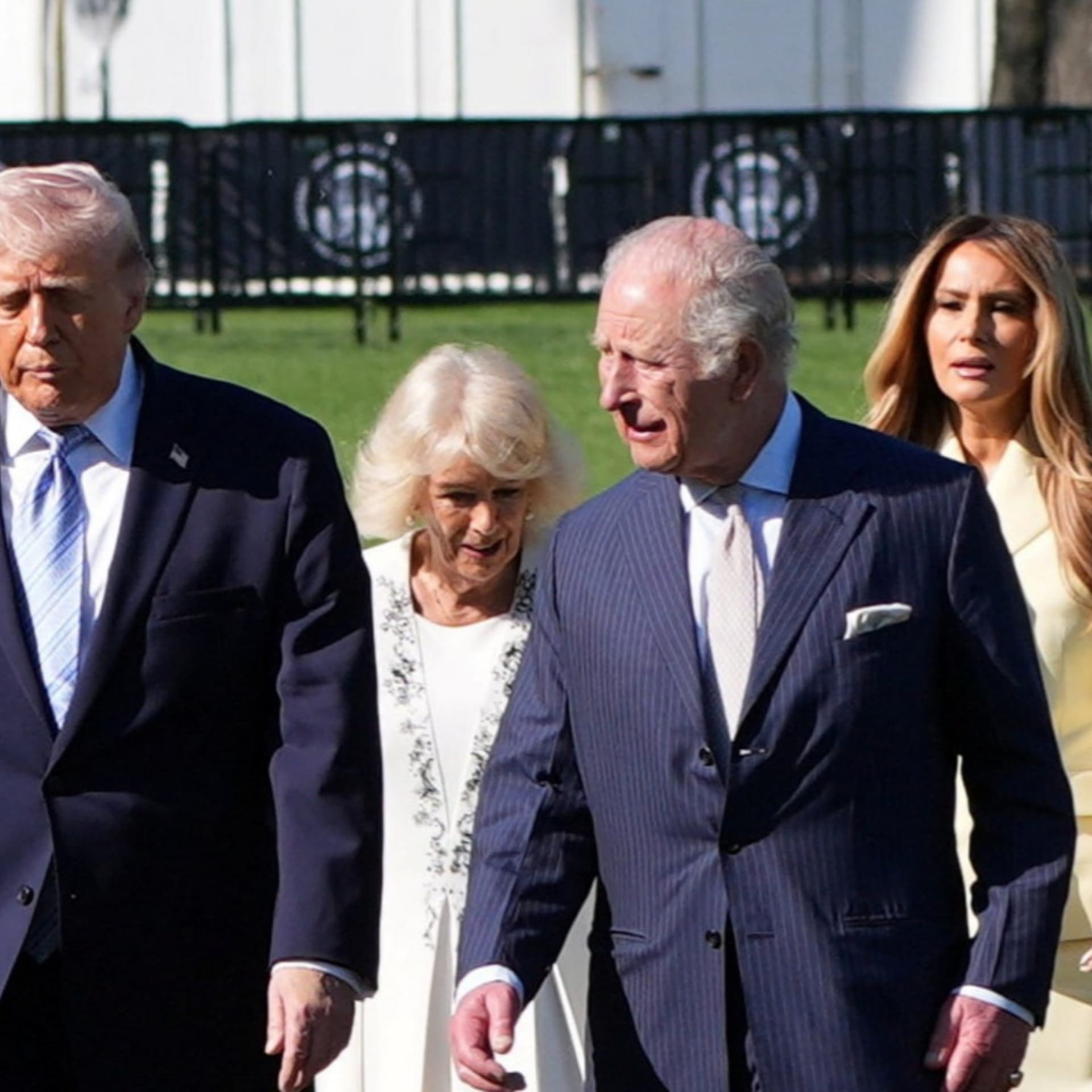
The episode covers: King Charles and Queen Camilla’s four-day US visit aimed at easing strained UK-US relations; the attempted assassination of President Trump at the White House Correspondents’ Dinner; Mexico’s crackdown on the Jalisco New Generation cartel; Mexico City’s World Cup airport and stadium readiness; insurgent advances in Mali; and Iran-US war diplomacy with Russia’s role, plus Sir David Attenborough’s 100th birthday gorilla encounter.
Guests
Neda Taufik (BBC North America correspondent) and Shaima Khalil (BBC North America correspondent) report on the royal visit and the court case; Luis Farjado (BBC Monitoring Latin America specialist) discusses the cartel capture; Will Grant (BBC correspondent) covers Mexico’s World Cup infrastructure; Barry Marston (BBC Monitoring) and Tim Franks (interviewed) discuss Mali; Paul Adams (diplomatic correspondent) and Steve Rosenberg (Russia editor) cover Iran talks; John Sparks (Attenborough’s producer) appears in the gorilla story.
Key claims/examples
Trump and Charles share good rapport despite policy disputes (Iran war, immigration, climate). Buckingham Palace rejects meeting Epstein victims to avoid jeopardizing legal process. Cole Allen (31) faces charges including attempted assassination; alleged targeting document sent to family. Mexico captured “Audia Flores” (“the Gardner”) after El Mencho’s killing; “kingpin strategy” debated. Benito Juarez airport and Azteca Stadium are being rushed for the World Cup. Mali’s jihadist/separatist alliance is advancing; Bamako faces coup risk. Iran’s foreign minister says the US asked for more talks; Russia offers mediation. Attenborough describes being inspected by a mountain gorilla and a belch “conversation.”
Written by AI. May contain mistakes. Listen to the episode to check what was said.
Chapters
Tap a time to open that second in VOMain Stories Overview
0:42 to 1:44
Overview of the main stories covered in this episode.
“I'm Celia Hatton, and in the early hours of Tuesday, the 28th of April, these are our main stories.”
King Charles's Visit to the US
1:44 to 2:18
Insights into King Charles's visit and its significance for US-UK relations.
“Where King Charles and Queen Camilla have arrived for a four-day visit that began with a ceremonial welcome at the airport.”
Public Opinions on the Visit
2:18 to 3:02
Public reactions and sentiments on King Charles's visit to the US.
“After landing, the royal couple went for tea at the White House with President Trump and the First Lady Melania, where sandwiches and cakes were served.”
The Relationship between Trump and King Charles
3:02 to 5:30
Discussion on the personal relationship and friendship between King Charles and President Trump.
“Our North America correspondent is Neda Taufik.”
Concerns Surrounding Jeffrey Epstein's Victims
5:30 to 6:15
Issues raised about King Charles meeting Jeffrey Epstein's victims during his visit.
“In the midst of the Iran war, after the White House correspondents' dinner shooting, this is the optics that President Trump loves, the pomp and circumstance, the showmanship.”
Attempted Assassination of President Trump
6:15 to 8:01
Details on the attempted assassination of President Trump by Cole Allen.
“So this has been one of those issues threatening to overshadow this visit.”
Community Response to the Dinner Incident
8:01 to 8:41
An uplifting story following the dinner incident involving President Trump.
“Officers investigating the attack say a document allegedly written by the suspect appears to include plans to target Trump administration officials and likely the president himself.”
Drug Cartel Developments in Mexico
8:41 to 11:00
Recent developments regarding drug cartels in Mexico, including arrests and tactics.
“She sat next to Donald Trump at Saturday's dinner.”
Challenges of Anti-Drug Strategies
11:00 to 13:14
Exploration of the effectiveness of anti-drug strategies in Mexico and their implications.
“Part of or an important part of that strategy has been to go after the top leaders of the cartels, the kingpins.”
Mexico's Airport Preparations for the World Cup
13:14 to 14:00
Update on the construction and challenges of Mexico City's airport ahead of the World Cup.
“Staying in Mexico, the FIFA Men's World Cup begins in Mexico City in just six weeks time.”
Show all 16 chapters
Renovations at Benito Juarez Airport
14:00 to 16:45
Learn about the ongoing renovations and challenges at Mexico's Benito Juarez Airport ahead of the World Cup.
“have endured constant construction noise, in addition to the sound of airplanes landing and taking off.”
Fan Experience at Azteca Stadium
16:45 to 17:49
Explore how renovations are shaping the fan experience at the iconic Azteca Stadium for upcoming matches.
“Still, the stage is set for the first match, Mexico versus South Africa within weeks.”
Conflict and Crisis in Mali
17:49 to 22:00
Understand the escalating conflict in Mali as insurgents gain ground against government forces.
“She twisted my head so she could look straight at my eyes and put a finger in my mouth and then made this belch vocalisation.”
Diplomatic Efforts Amidst US-Iran Tensions
22:00 to 25:08
Get insights into the diplomatic maneuvers surrounding the US-Iran conflict and Russia's role.
“Now to the ongoing diplomatic efforts to end the US-Israel war with Iran.”
David Attenborough's 100th Birthday Reflections
25:08 to 28:01
Hear Sir David Attenborough's reflections on his groundbreaking experiences with mountain gorillas.
“Since its release in 1979, it's estimated around 500 million people have seen that series' most famous moment, Sir David's encounter with mountain gorillas.”
Reflections on the Making of Life on Earth
28:01 to 29:08
Explore the insights of Sir David Attenborough and his producer on their experiences.
“Which was a very uncharitable thing to think.”
Transcript
Automatic transcript. May contain errors.0:00This BBC podcast is supported by ads outside the UK.
0:30listen to The Global Story on BBC.com or wherever you get your podcasts. This is the Global News Podcast from the BBC World Service. I'm Celia Hatton, and in the early hours of Tuesday, the 28th of April, these are our main stories. The UK's one special relationship with the US is under strain. Can a visit from King Charles repair things? The UK is one of our strongest allies, so we have to make sure that we keep that going strong. We'll hear how the king and the president are getting along so far. And a man has appeared in court in Washington charged with trying to assassinate President Trump at a dinner for White House journalists on Saturday.
1:14Also in this podcast, a leading figure in a prominent Mexican drug cartel is captured by security forces. And staying in Mexico, workers are desperately trying to finish the Capitol's new airport before the start of the Men's Football World Cup this summer.
1:33We start in the United States.
1:44Where King Charles and Queen Camilla have arrived for a four-day visit that began with a ceremonial welcome at the airport. The US and UK, two major economies and once the closest of allies. But as we'll hear, things have changed and political tensions are high. So could the UK's head of state, the King, use his personal relationship with Donald Trump during this visit to restore cross-Atlantic ties? Those ties have taken a battering, most recently over Britain's refusal to take part in the US war with Iran. After landing, the royal couple went for tea at the White House with President Trump and the First Lady Melania, where sandwiches and cakes were served.
2:26Later, there were more sandwiches at a garden party at the British Embassy in Washington. But elegant menu aside, this is an important diplomatic moment for both countries, as these people on the streets of Washington told the BBC. It's natural for human beings to disagree, especially with, you know, somebody like having President Trump as an ally. But I think that, you know, we all have to stick together. And we know that, you know, Britain, UK is one of our strongest allies. So we have to make sure that we keep that going strong. I think it's going to be great. I think it's going to be a historic, a great visit, and hopefully they'll lay some common ground together and move forward.
3:02So how's the visit going so far? Our North America correspondent is Neda Taufik. It was a very ceremonial welcome when the royal flight touched down at Joint Base Andrews. All smiles, White House official and as well as the British ambassador greeting the king and queen. a very sweet moment where two kids of British families from the military who are stationed here in the U.S. gave them flowers and then the country's national anthems were played. So just by looking at the pictures, you would never know that there's any strain in relations at all between the U.S. and the U.K., a very celebratory mood to mark the celebration of the 250th anniversary of American independence.
3:43All smiles, as you say, Netta. But here's the key question. President Trump has been very critical of the British Prime Minister Keir Starmer recently. Could this trip help repair the relationship between the U.S. and Britain? Well, it's interesting because the BBC asked President Trump that question, and he said, sure, sure it could. And he had very glowing words about King Charles. And we've always known that President Trump has a deep affection for the royals. He views the U.K. government very differently. There are differences on everything from the Iran war and perceptions that the UK prime minister hasn't supported the US enough to issues on immigration, for example, and climate change.
4:28I mean, the list goes on and on and on. So King Charles is here on this mission to go on this charm offensive, to use his soft power, to use those private moments with President Trump to soften some of those tensions. Neda, is there any personal friendship between the president and the king? President Trump recalled in his book The Art of the Deal being a six-year-old watching Queen Elizabeth's coronation with his Scottish mother and how that kind of set up his love of showmanship and pomp and circumstance. And so he has always had this fascination with the royals. He has always invited King Charles when he was a prince to his wedding with Melania, for example.
5:11He has at times at Palm Beach, you know, tried to socialize with him. And he speaks very highly of King Charles. And despite the fact that they are almost polar opposites in terms of their demeanor, but also their values, the two do seem to get on quite well when they are together. We certainly know that President Trump does value King Charles's time in having the opportunity to put on a spectacle like this. I mean, think about it. In the midst of the Iran war, after the White House correspondents' dinner shooting, this is the optics that President Trump loves, the pomp and circumstance, the showmanship.
5:48Netta, there were calls from some Democrats for the king to meet with some of Jeffrey Epstein's victims during this visit. A nod to the fact that the king's brother, Andrew, is under investigation for his links to the late sex offender. How has the palace responded to the situation? Well, Buckingham Palace has said that even a symbolic meeting, in their view, there is a serious concern that that could jeopardize the legal process. So this has been one of those issues threatening to overshadow this visit. But that is one where the survivors are literally here in D.C., very nearby, holding these interviews and trying to continue to push for a very short private meeting, saying it would be a grand gesture.
6:32Neda Taufik. Ahead of the royal visit, there was talk about increasing security for the trip. That was prompted by a gun attack in Washington on Saturday evening at a dinner for White House correspondents, as Netta mentioned, which President Trump and other top officials were attending. A suspect was arrested at the scene, and on Monday, he appeared in court. Cole Allen, who's 31 and from California, has been charged with trying to assassinate the president. Her North America correspondent, Shaima Khalil, was at the courthouse. The courtroom fell silent as 31-year-old Cole Thomas Allen was brought in by law enforcement officers.
7:09Wearing a blue jumpsuit and a wristband, he appeared calm as the judge read him his rights. When asked about his education, he replied, a master's degree. Besides being charged with attempting to assassinate President Trump, Allen also faces two other charges. The interstate transportation of firearms to commit a felony and the discharge of a firearm in a crime of violence. He did not enter a plea. Jeanine Pirro, the U.S. attorney for the District of Columbia, who was in court, later said in a press conference that there were likely to be more charges. Make no mistake, this was an attempted assassination of the President of the United States, with the defendant making clear what his intent was.
7:49And that intent was to bring down as many of the high-ranking Cabinet officials as he could. Cole Allen will be detained until the next hearing, which is expected on Thursday. when the court will decide whether the suspect will be remanded in custody pending trial. The 31-year-old, who describes himself online as a mechanical engineer, game developer and teacher, traveled by train from Los Angeles to Chicago, then to Washington, D.C., where he stayed at the Hilton Hotel in the days leading up to the White House Correspondents' Dinner. Officers investigating the attack say a document allegedly written by the suspect appears to include plans to target Trump administration officials and likely the president himself.
8:28On Saturday, the document was reportedly sent by the suspect to his family, who alerted the police. Sharma Khalil. And we have an uplifting postscript to the story from the CBS journalist and president of the White House Correspondents Association, Weijia Jiang. She sat next to Donald Trump at Saturday's dinner. She says the Washington Hilton Hotel has donated the 2 ,600 dinners they couldn't serve after the event was abruptly halted. The hotel freeze-dried the steak and lobster and has now given the food to two shelters for abused women and children. To Mexico now. Two months ago, the Mexican security services killed El Mencho, the leader of the Jalisco New Generation drug cartel, one of the country's fastest-growing and most powerful criminal organizations.
9:18Now, in the latest move against the drug traffickers, a second man, a top commander from the same cartel, has been captured during a shootout in the west of the country. Audia Flores was nicknamed the Gardner. He was detained by Mexican special forces. The cartel's operations stretch well beyond Mexico's borders to South America, including Colombia and Ecuador. And in recent years, the Jalisco cartel has been trafficking synthetic drugs like fentanyl to the United States. So who is the captured man known as the Gardner? Luis Farjado is our Latin America specialist from BBC Monitoring in Miami.
9:58There was a$5 million U.S. government reward for his capture. And some people talked about him as a potential successor, as a leader of the Jalisco cartel after the killing of alias El Mencho a few months ago. Some people have even said that since he played an important operational role, he was a leader in the western part in the Pacific Coast region of Mexico for this cartel, that his arrest may even have a bigger effect on the cartel day-to-day operation than even the killing a few months ago by the security services of the top leader of the Jalisco cartel. So in all, it seems to be a substantial action and a substantial success for the Mexican government security forces.
10:46I mean, as you say, it comes just about two months after the killing of the cartel's top leader. Tell us more about the authorities' tactics against the cartels, the so-called kingpin strategy. Part of or an important part of that strategy has been to go after the top leaders of the cartels, the kingpins. Of course, this is not entirely new. This is something that has been occurring in Latin America since the 1990s, when the U.S. government helped the Colombian government go after the top leaders of the Medellin cartel, people like Pablo Escobar. And critics of this policy would say that after several decades of going after these top leaders, and in many cases killing them or incarcerating them, what has happened is not a reduction in actual drug trafficking activity, but sometimes even more instability within these cartels, within these organized crime groups, as other lower-ranking figures try to occupy those places that have been left vacant and start infighting within these criminal organizations.
11:50So a lot of dispute about how effective it is, But still, the Mexican government is going to show this as an important proof of their continuous efforts against drug trafficking. They will certainly make the point with the Trump administration that they have continued to fight drug trafficking and they have this to show once again. And what has been going on since the killing of the top leader in the past few months? Has violence been going up? Violence, of course, in Mexico has been recurrent and it's a longstanding problem. There has been also a lot of diplomatic controversy about the role of the U.S.
12:26in these anti-drug efforts. Of course, just a few days ago, two U.S. citizens were killed in what was described as an accident. And it later emerged that they seem to have been security agents participating in anti-drug activities in Mexico, which in theory would go against the policies of the Mexican government. So there's a lot of discussion, serious domestic discussion in Mexico about the extent of U.S. participation and how this drug trafficking issue remains a very, very thorny issue in the bilateral relations between the U.S. and Mexico. Nobody really expects drug trafficking or the drug cartels to be a problem to be solved in the short term.
13:07There are continued efforts and certainly there's going to be continued discussions about how effective these policies have been. Luis Farjado. Staying in Mexico, the FIFA Men's World Cup begins in Mexico City in just six weeks time. But with hundreds of thousands of football fans heading to the capital for the tournament, the main airport still isn't ready. It's been beset by problems for years. One president proposed a new facility in 2014, only for the plan to be shelved by his successor to the tune of billions of dollars in wasted contracts. An army of construction workers has been working round the clock at the airport, and another at the Azteca Stadium, site of the opening game, in a race to finish both buildings before kickoff.
13:53Our correspondent Will Grant reports from Mexico City. For the past year, passengers at Mexico City's Benito Juarez International Airport have endured constant construction noise, in addition to the sound of airplanes landing and taking off. However, the noise of Benito Juarez is the least of its problems.
14:18One of the busiest hubs in the world, the experience for most is less than ideal. Outdated, insufficient infrastructure and long queues at passport control, luggage carousels and taxi ranks. on social media travelers have posted videos of broken ceiling tiles exposed electrical cables and leaking roofs during downpours mid-renovation i was given a tour of the airport by its director admiral juan jose padilla olmos who admits he inherited a facility on the brink of collapse this isn't just aesthetic he tells me we're in the guts of the airport fixing the drainage air conditioning and fire systems, the whole sanitation works.
15:03This is not just a quick fix. Admiral Padilla says that there was a chronic lack of investment in Benito Juarez by successive administrations. Benito Juarez fell into disrepair. Under President Claudia Sheinbaum, the airport is finally undergoing a major overhaul before the FIFA World Cup. Admiral Padilla is confident they'll be finished on time. Some passengers, though, aren't convinced. Do you think they're going to get it ready in time for the World Cup? I'm not sure. If it hasn't been ready for a long time, why is it going to be ready in a couple of months or less than a couple of months? The services are not where it should be and what Mexico represents internationally.
15:53Of course, the issues don't end when the football fans come out of the airport either. In recent weeks, there have been protests by taxi drivers over the role of ride-sharing apps like Uber and Diddy. And there are real questions about whether the city's hugely oversaturated public transport system, from metro lines to buses, can cope.
16:20Beyond the airport, taxis and public transport, once fans reach the stadium, the authorities believe they'll have one of the most memorable experiences in world football. The iconic Azteca Stadium in Mexico City, site of Maradona's infamous hand of God 40 years ago this summer, has also been revamped ahead of the first ball being kicked, and was recently unveiled with a friendly between Mexico and Portugal.
16:48Most fans agree the Azteca looks resplendent with refurbished facilities on and off the pitch from changing rooms to seats from new floodlighting to a new name It's now officially the Banorte Stadium after a Mexican bank But even this temple of football has prompted criticism Its capacity shrank from 110 ,000 spectators to under 90 ,000 and some have complained of more emphasis on hospitality suites than ordinary fans.
17:22Still, the stage is set for the first match, Mexico versus South Africa within weeks. Security is another headache altogether for the Mexican government in this unusual World Cup, stretched out as it is across the nations of North America. But in terms of ironing out any kinks in the new infrastructure, and now into the final moments before kickoff. Will Grant in Mexico City. Still to come in this podcast... She twisted my head so she could look straight at my eyes and put a finger in my mouth and then made this belch vocalisation. So I did my best to respond. As nature broadcaster Sir David Attenborough prepares to turn 100, he reflects on his incredible encounter with mountain gorillas.
18:36to the United States who knows a thing or two about getting on the wrong side of President Trump. For more, listen to The Global Story on BBC.com or wherever you get your podcasts.
18:51This is the Global News Podcast. We're going to head to Mali in East Africa, where insurgents are reported to be making gains at the expense of government forces and Russian-backed paramilitaries providing extra security for the military junta that's been in charge for the past five years. The insurgents, made up of Turek separatist fighters and a jihadist group, which is allied to al-Qaeda, are reported to have made further advances. Barry Marston from BBC Monitoring has been following developments closely since the attacks began on Saturday morning. He's been talking to Tim Franks. Things are moving incredibly fast.
19:29Two days ago on Saturday, when this kicked off, There were attacks by the jihadists across the entire country, right from Bamako, the capital in the south, up to more than a thousand kilometres away, cities up in the north of the country. What we have seen over the last 24 hours is the fighting appearing to coalesce to the northern Sahara half of the country, with a succession of bases and positions seemingly falling into the hands of this alliance of jihadists and separatists. Very similar, actually, to a situation we saw in 2012 when similar forces came together and pushed the government out of the entire top half of the country for many months.
20:12And this is an alliance, presumably, entirely of convenience. I mean, it's difficult to see them being ideologically connected. It is somewhat, yes. There have been reports of them cooperating in the past, but both sides have tended to strenuously deny it because it undermines each of them. So the fact that they have come together in this fight is quite remarkable. On one hand, you have al-Qaeda aligned for very much committed to hardline version of Islamic law in the country and nominally committed to the vision of global jihad aligned with Tuareg separatists. What we have seen is al-Qaeda side sort of claiming that they now all share this vision for an Islamic state.
20:56But yeah, as I mentioned, we saw this in 2012 and it ultimately all fell apart when the two sides ended up fighting each other. French-supported troops were able to take back the country by the sort of middle of 2012. I mean, how far do you think that the authorities in Bamako are really facing a particularly grave threat? I would still say that if they went head to head with each other, you tend to find that the jihadists would not be able to meet the army in a straight fight. What we saw in the capital Bamako on Saturday was they were able to make incursions and stage quite audacious attack, but they were quite quickly pushed out of the capital.
21:33The biggest threat to the regime may be a further coup, because that's what's happened on several occasions when they've come under pressure from rebel forces. Parts of the military have staged a succession of coups, which inevitably on several occasions has had the effect of weakening the country and making matters worse. And certainly there have been rumours that we could see a similar scenario this time around. Barry Marston of BBC monitoring on that developing situation in Mali. Now to the ongoing diplomatic efforts to end the US-Israel war with Iran. President Trump is reported to have met his national security team on Monday to discuss Iran's latest proposals.
22:17Iran's Foreign Minister Abbas Aragchi says the US has asked for further negotiations about the war. Mr. Aragchi made the comments during a visit to Russia, where he thanked President Putin for his country's support. More from our diplomatic correspondent, Paul Adams. With direct talks to end the war on hold, Iran's foreign minister has been on the move for several days, visiting Pakistan twice and Oman before arriving in Russia. Speaking in St. Petersburg, Abbas Aragchi blamed the US for the lack of diplomatic progress and said Iran was standing up to the world's greatest superpower. He said Washington had asked for more negotiations.
22:58His host, Vladimir Putin, praised Iran for fighting, in his words, courageously and heroically for its independence and sovereignty. His spokesman, Dmitry Peskov, said Moscow was ready to mediate. Earlier, the news website Axios said Iran might be willing to reopen the Strait of Hormuz in return for postponing talks on its nuclear programme. There's been no official confirmation of this from any of the parties or mediators involved. With a ceasefire still in place and the White House saying it's not in a hurry, it seems clear that diplomacy has not yet run its course.
23:35Earlier, speaking to students in his constituency, the German Chancellor Friedrich Merz said he couldn't see what exit strategy the US was choosing. The Iranians, he said, were stronger than previously thought and negotiating very skilfully. Paul Adams with that report. So what's at stake for Moscow in its latest interactions with Iran? Here's our Russia editor, Steve Rosenberg. In recent times, Russia has been losing global influence. And that is partly because its allies around the world have been losing power. Maduro in Venezuela, Assad in Syria, Orban in Hungary. For Moscow, though it is vital that this doesn't happen too in Iran, so that it can demonstrate that Russia is still a key player in such a strategically important region as the Middle East.
24:25Hence talks in St. Petersburg between President Putin and Iran's foreign minister. It feels like the Kremlin wants to show the United States that Russia has the power to escalate or de-escalate this conflict, that it could provide its strategic partner Iran with additional military support, or it could help negotiate a diplomatic resolution. In other words, that Russia either way has influence. How receptive Washington is to such messaging is far from clear. In the meantime, Russia is benefiting financially from conflict and instability in the Gulf. High oil prices mean additional revenue for Moscow from its energy exports.
25:10Steve Rosenberg. And last, the world-famous wildlife writer and broadcaster Sir David Attenborough celebrates his 100th birthday next week when a BBC documentary has been made that tells the story of the making of the series Life on Earth, which gave many of us a better understanding of our planet. Since its release in 1979, it's estimated around 500 million people have seen that series' most famous moment, Sir David's encounter with mountain gorillas. 50 years after filming began on the series, Sir David Attenborough and his producer, John Sparks, have been looking back at that remarkable chance encounter.
25:55After months of planning, we travelled to Rwanda for one of the last shoots of the series. We had no idea what we were about to witness There's one ape, however, that spends nearly all its time on the ground It lives here, 10 ,000 feet up, on the flanks of the volcanoes of Central Africa on the borders of Rwanda and Zaire The gorilla I was responsible for the 12th programme in the series which was about the innovation that primates had with the opposable thumb, which enables a precision grip and also enables monkeys to hang on to branches. They only had the expectation of filming David with mountain gorillas in the background.
Read the full transcript
26:44And so, in a sense, the situation there was quite unlike what I expected because far from just getting a shot with mountain gorillas in the background and David in the foreground, and suddenly you could be in a situation where you're surrounded by them. In a clearing, there was this big female having her lunch and I told David if he could crawl a little bit closer to her so he could get a nice two shot. Next thing we know is that her two youngsters come out and actually sit on him. And my jaw dropped. I mean, everyone's jaw dropped. Didn't expect this at all. and I was just about to start talking about the opposition of the thumb and the forefinger when I felt a hand come out on my head and it was an adult female and she twisted my head so she could look straight at my eyes and looked inside my mouth and put a finger in my mouth and then made this belch vocalisation so I did my best to respond.
27:55And you saw her look into one of his eyes and then into his other arm. And I thought, by God, his head's going to come off and we haven't finished the series yet. Which was a very uncharitable thing to think. You don't stare at a gorilla. That's a challenging thing to do. Say you keep your head down and you make these belch vocalisations all the time. and that's a sort of conversational acknowledgement that you're in their presence
28:31there is more meaning and mutual understanding in exchanging at once with a gorilla than any other animal I know they're so similar their sight their hearing, their sense of smell are so similar to ours that we see the world in the same way as they do.
29:06Extraordinary, really. I mean, it was one of the most privileged moments of our life, really. Mesmerising. Sir David Attenborough and his producer John Sparks are reflecting on the making of life on Earth. Sir David turns 100 a week on Friday, the 8th of May. And that's all from us for now. If you want to get in touch, you can email us at globalpodcast at bbc.co.uk. You can also find us on X at BBC World Service. Use the hashtag Global News Pod. And don't forget our sister podcast, The Global Story, which goes in-depth and beyond the headlines on one big story. This edition of the Global News Podcast was mixed by Nick Rendell.
29:50The editor is Karen Martin. I'm Celia Hatton. Until next time, goodbye.
30:02Can a royal visit help fix the so-called special relationship between the US and the UK? This week, King Charles is visiting America. but it's a tense moment for the US and the UK. I'm Tristan Redman. And I'm Asma Khaled. And we host the Global Story podcast from the BBC. We speak to the former British ambassador to the United States who knows a thing or two about getting on the wrong side of President Trump. For more, listen to the Global Story on BBC.com or wherever you get your podcasts.
From the publisher
King Charles and Queen Camilla arrive in the US to smooth over frayed relations between Washington and London. President Trump hosts afternoon tea at the White House. We'll look at whether the royal visit will make a difference. Also in this podcast: the man accused of trying to assassinate President Trump at a dinner for journalists appears in court. We report on the arrest of a boss of a Mexican drug cartel, how construction work for the men's football World Cup this summer is behind schedule, and the latest efforts to secure peace in the war with Iran. And we hear about one of naturalist David Attenborough's most memorable moments - an encounter with a group of gorillas.
The Global News Podcast brings you the breaking news you need to hear, as it happens. Listen for the latest headlines and current affairs from around the world. Politics, economics, climate, business, technology, health – we cover it all with expert analysis and insight. Get the news that matters, delivered twice a day on weekdays and daily at weekends, plus special bonus episodes reacting to urgent breaking stories. Follow or subscribe now and never miss a moment. Get in touch: globalpodcast@bbc.co.uk



