In short
Global News Podcast Episode Summary
Episode Title King strips Andrew of 'prince' title amid Epstein scandal
Episode Date October 31, 2023
Episode Overview This episode of the Global News Podcast discusses significant current affairs, including King Charles's decision to strip his brother Andrew of his title amid ongoing controversy related to Andrew's connections to Jeffrey Epstein and sexual assault allegations. The episode further covers various global news stories, such as relief efforts in Jamaica following Hurricane Melissa, Australia's landmark treaty with Indigenous peoples, and scientific findings related to brain fog.
---
Key Topics Discussed
- Stripping of Titles from Prince Andrew
- Context: King Charles has begun the process of revoking Prince Andrew's "prince" title and has instructed him to vacate the Royal Lodge in Windsor.
- Allegations: The action follows allegations of sexual assault by Virginia Giuffre, who accused Andrew of misconduct linked to Jeffrey Epstein.
- Family Response: Giuffre's family expressed that her courage helped expose the truth about Andrew, despite her passing.
- Historical Significance: This is noted as a significant moment in the royal family, reminiscent of past instances where titles were stripped for misbehavior.
- Relief Efforts in Jamaica Post-Hurricane Melissa
- Impact: Hurricane Melissa resulted in at least 44 deaths across the Caribbean, with Jamaica being notably affected.
- Current Situation: Residents in devastated areas are struggling to recover, and military efforts are underway to provide aid to cut-off communities.
- Challenges: The episode includes personal accounts highlighting the struggles of locals to clear debris and rebuild.
- Victoria's Treaty with Indigenous Peoples
- Historic Legislation: Victoria becomes the first Australian state to approve a treaty with Indigenous peoples, establishing a consultative body for shaping policies affecting them.
- Significance: This treaty is seen as a step towards reconciliation and addressing inequalities faced by Aboriginal communities.
- Political Repression in Russia
- Context: Reports highlight Russians voicing dissent against political repression under Putin's regime.
- Personal Stories: Individual accounts from citizens facing legal repercussions for their peaceful protests against the government's actions.
- Ceasefire Developments in Gaza
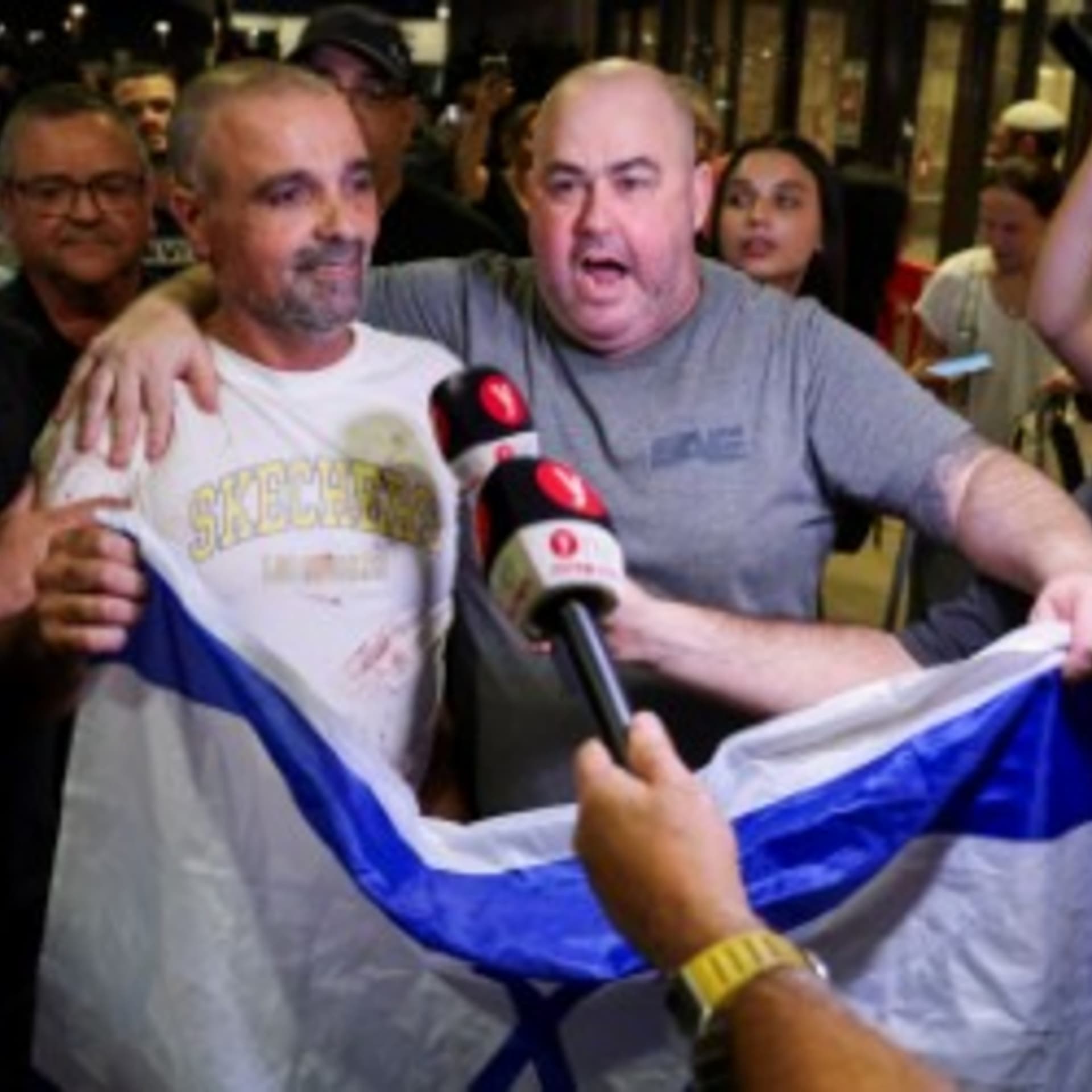
- Current Status: Hamas returned the bodies of two hostages to Israel, with ongoing negotiations regarding the broader ceasefire agreement.
- Challenges Ahead: Long-term stabilization and disarmament plans are still unresolved.
- Changes to U.S. Refugee Policy
- Policy Announcement: The Trump administration announced a significant reduction in the number of refugees admitted to the U.S., focusing on specific demographics.
- Reaction: This controversial move has raised concerns among refugee advocates regarding fairness and humanitarian impacts.
- Brain Fog Research
- Scientific Findings: Research from MIT revealed that brain fog may stem from disrupted cerebrospinal fluid flow during sleep deprivation.
- Implications: Understanding the biological basis of brain fog can contribute to better cognitive health strategies.
- Discovery in the Deep Sea
- Research Expedition: Scientists have identified new species, including a carnivorous sponge and zombie worms, emphasizing the need to protect the unique Southern Ocean ecosystem.
---
Key Takeaways
- The royal family's actions reflect a stringent stance on public image and accountability in light of scandals.
- Natural disasters continue to highlight the disparities in recovery efforts across different regions.
- The push for Indigenous rights in Australia signifies a growing recognition of historical injustices.
- Ongoing political repression in Russia represents a climate of fear and dissent.
- Developments in refugee policy underline the complexities of humanitarian efforts amidst changing political landscapes.
- New scientific insights into brain function reinforce the importance of sleep for cognitive health.
---
Conclusion This episode of the Global News Podcast encompasses a wide range of current global issues, from the implications of royal family decisions to grassroots movements for justice and rights, while also delving into scientific discoveries that affect our understanding of health and the environment. The discourse illustrates the interconnections of political, social, and scientific narratives shaping our world today.
Written by AI. May contain mistakes. Listen to the episode to check what was said.
Transcript
Automatic transcript. May contain errors.0:00This BBC podcast is supported by ads outside the UK. If journalism is the first draft of history, what happens if that draft is flawed? In 1999, four Russian apartment buildings were bombed, hundreds killed. But even now, we still don't know for sure who did it. It's a mystery that sparked chilling theories. I'm Helena Merriman, and in a new BBC series, I'm talking to the reporters who first covered this story. What did they miss the first time? The History Bureau. Putin and the apartment bombs. Listen on BBC.com or wherever you get your podcasts. You're listening to the Global News Podcast from the BBC World Service.
0:47Hello, I'm Oliver Conway and we're recording this at 4.30 GMT on Friday 31st October. The British royal family loses a prince. Andrew is stripped of his title over his links to the sex offender Jeffrey Epstein. Relief efforts are stepped up in Jamaica, with soldiers travelling on foot to reach areas devastated by Hurricane Melissa. And a landmark moment in Australia as the state of Victoria approves the first treaty with indigenous peoples. Also in this podcast, the Russians refusing to be silent in the face of Putin's repression.
1:26They told me that I discredited our soldiers. How? By calling for peace? And what causes brain fog?
1:41Three days after he was heckled over Prince Andrew's relationship with Geoffrey Epstein, King Charles has taken action against his younger brother. Andrew is being stripped of his titles. He'll no longer be able to call himself a prince or his royal highness and forced to leave his huge mansion near Windsor Castle. Eighth in line to the British throne, he had already agreed to give up his title of Duke of York, but he has now in effect been banished from public life. Here's historian Anthony Seldon. In some ways you go back to the abdication, or indeed back to 1917, the last time that princes had their titles stripped from them.
2:19For misbehaviour in that case, it was fighting on the German side in the First World War. So we haven't seen something like this for 100 years. It is a huge moment in the royal family, but I think it will be a turning point. The scandal erupted when Virginia Dufresne accused Andrew of sexual assault and sued him in a New York court. He denied the claims but agreed to pay her a reported$15 million settlement. She took her own life six months ago, but her explosive memoir was published last week. Today, her family said an ordinary American girl from an ordinary American family brought down a British prince with her truth and extraordinary courage.
3:01Her brother and sister-in-law spoke to the BBC. It's a bittersweet moment. We feel like it's a very vindicated moment for our sister, but it's also very surreal. It is surreal that she's not here and that she didn't get a chance to see this in her lifetime. But it's amazing and everything that she fought for was not in vain. It truly is a moment for her and all survivors. The former prince will now be known simply as Andrew Mountbatten Windsor. For someone said to have been Queen Elizabeth's favourite child, it is a humiliating loss of status. Robert Hardman is a royal biographer. He took these things very seriously.
3:40I mean, he always liked to have the Duke of York KG on all his stationery. I mean, he was a great one for the use of titles. Even when somebody just referred to the Queen Mother, he got very cross and said, don't you know it's Queen Elizabeth, the Queen Mother? You know, he stood on the ceremony. And it is, I think, a rather stark illustration of the old adage, be nice to people on the way up because you'll need them on the way down. And it doesn't look like there's anyone there on his way down. Our UK correspondent Rob Watson told me what he made of it all. The first thing to note about it is just how astonishingly ruthless King Charles has been in dealing with his younger brother, a stripping away of his title, and secondly, banishment.
4:20I mean, he's being sent from the very large 30-room mansion that he has in the grounds of Windsor Castle just outside London to Sandringham, which is in Norfolk in the east of England, a long way away from London, where presumably we're hardly ever going to ever see him again. Yeah, ruthless in contrast to his mother, Queen Elizabeth. But there had been some suggestion that he could have acted a bit sooner, the king. Why has he done it now? Well, I think the reason why he's done it now is because he is extremely anxious to stop any contagion from Andrew to the broader standing of himself and his reign as King Charles, but also the monarchy and the wider royal family.
5:02I don't think there's any secret that King Charles has been very unhappy with Andrew for some time. I mean, it was undoubtedly pressure from King Charles and from his son and heir Prince William that forced Andrew to drop the title, if you remember, of Duke of York and certain other titles. But I think looking around, King Charles decided this couldn't go on. The scandal wasn't going to die down. People would not only ask questions about Andrew, but yes, would ask questions. Well, why didn't Queen Elizabeth do more? Why hasn't King Charles done more? and I think he decided enough is enough. So out of sight, out of mind, but could there still be some lasting damage to the royal family?
5:40They'll be hoping not. Interestingly, it doesn't seem to have affected the personal popularity of the leading members of the royal family, including King Charles, his wife Queen Camilla, his heir Prince William, and his wife Catherine. I think the problem is more for Andrew himself because any idea that somehow either this or the move two and a bit weeks ago, Oliver, where he got rid of being called the Duke of York, was somehow going to say, OK, let's not look at Andrew anymore. That just doesn't seem to be working out that way. There's all of the Epstein files material is still in the hands of the United States Congress.
6:15Presumably some of that is going to be published and people will just keep digging and digging because, you know, this is a story of our age, the idea of the rich, the powerful and privileged who've been alleged to have been taking advantage of young women. And I just don't see that public interest in that and investigative interest in that is going to die down. Of course, in his younger days, Andrew was seen as a hero in the Falklands War, something of a dashing prince. How did he allow himself to become embroiled in this situation? It's a very good question. And I guess his critics will say it's partly his personality that he was born into privilege.
6:54and some people just end up being more entitled than others. So they would say it's partly a personality flaw. And I guess others would point to something, again, that you've seen over the last thousand years of the British monarchy, and that is, what do you do when those siblings are not going to become king? What do you do to the spares, as they're known, Oliver? And it's always been difficult over the ages to give those who are not going to inherit the crown something useful and meaningful to do. And Andrew has clearly really struggled with that. ever since leaving the military, whether it was his efforts as a trade envoy.
7:29You know, he was always seen as on the lookout for money, being dazzled by other people who were powerful and who had large financial means. Rob Watson. Hurricane Melissa has been picking up speed as it moves past Bermuda, though it's expected to weaken in the next few hours. At least 44 people died as the storm swept across the Caribbean, most in the impoverished nation of Haiti. Jamaica was the first to be hit when Melissa was at its most powerful, and the death toll there has risen to 19 as relief efforts have stepped up. Two days on from the storm, residents in flip-flops have been struggling to patch up their roofs and clear fallen trees with machetes.
8:07I spoke to our correspondent, Neda Taufik, in the town of Santa Cruz in the west of the country. Jamaica very much feels like two different islands. We landed in Kingston, and it's pretty much unscathed. The airport was open, everything felt normal, And as we drove, you know, the roads just became more and more destroyed. More and more trees were downed, power lines down. You could see just where the floodwaters were before they receded. And here where I am now in Santa Cruz, you know, people are literally still cleaning out the thick mud from their shops. They're trying to put the zinc roofs back on their bored homes.
8:45Those lucky enough that still had homes after the storm swept through here. And one of the women I spoke to in her shops, she's on a generator, of course, because there's no power. She just spoke about how she was just absolutely stunned that she could have never prepared herself for the intensity of the hurricane and that she is concerned in the coming days. She said she doesn't expect that they will get massive help, that that will go to those who are much more in need. And so she is just trying to conserve, she says, the gas for her generator and the supplies that her and her family will need.
9:20Yeah, I was going to ask you about help. Are people actually getting it at the moment or are they still waiting? Well, aid hasn't come in any meaningful form yet to this area. We actually on our flight into Kingston, there were a few aid groups on that flight. They also had a cargo plane coming from Florida. We actually have a BBC team who was also on another cargo flight with aid from Florida landing in Kingston. And then, of course, the U.N. and others have supplies coming from Antigua, Dominican Republic, other countries. But it will take some time. They're hoping later today, tomorrow, that aid will finally get to these areas where it's needed because you still have 13 ,000 people in shelters.
10:04As I mentioned, there are areas that are just completely cut off further west of here. You have officials saying the military going on foot to try to clear roads and clear a path to get to those communities to be able to deliver aid when it arrives. And also the death toll. Officials expect that to rise. And the Jamaican defense forces are actually sending out helicopters to survey and locate any potential bodies. Now, I know you're on your way to some of those even more badly hit areas. But from what you've seen so far, how long will it take to rebuild those destroyed structures and get life back to normal?
10:44You know, it's so difficult because I was speaking to one resident who said, what if we just fix up these board homes and another hurricane comes? So there is a real question about how to prepare for the future. You know, we've heard estimates that it could take a decade altogether. Now, certainly, power will come together. One woman was telling me she expects to get power within three weeks, hopefully, because keep in mind that two-thirds of the island is still without power, and the Prime Minister has said the priority is trying to get utilities back up and running for people. But if you look at the infrastructure and the destruction, the financial hit as well will really impact Jamaica's ability to recover.
11:25Neda Taufik in Santa Cruz. Australia's first treaty with its indigenous peoples has passed the Victoria State Parliament to cheers and tears in the public gallery. The legislation will be signed in the coming weeks, giving Aboriginal communities the power to shape policies and services affecting them. I heard more from our Sydney correspondent, Katie Watson. This will establish a body called the Gullung War Body and it will be consulted on laws and policies that affect indigenous people, But it's also going to include a truth telling body and an accountability body. So what that will mean is that the government will have to commit to what's known as closing the gap.
12:05This is a government initiative. It's a national agreement aimed at reducing inequality for Aboriginal and Torres Strait Islander people. So, you know, it's a significant treaty. That's the issue. It's the first state to adopt a voice, a treaty and truth. And these are pillars of reform that were requested from the Uluru Statement from the Heart, which was back in 2017, which called for more to be done to be able to realise Indigenous rights. Now, two years ago, we saw Australia vote against creating a national body for Indigenous people. So does what we've seen today, does that mark a change in attitudes in Australia?
12:45I think after what we saw back in 2023, I mean, there's certainly been a wider push across Australia to engage in the reconciliation process with Aboriginal and Torres Strait Islanders. It's certainly a very political issue, but there is growing pressure to do more to address the issues and this issue of closing the gap and drawing down the inequalities with Indigenous people here in Australia. Certainly, it's a positive, certainly a massive step in doing that. And what concrete changes would these communities like to see as a result of this? I think if you look at all the indicators, there are clearly huge inequalities.
13:24So when it comes to health, when it comes to education, when it comes to political representation, all of these things are issues. So in terms of picking out the top, I mean, health and education are clearly priorities, but I think this is about reducing those inequalities across the board and having that representation, having Indigenous people have a voice when it comes to policies that will affect them. Casey Watson, do you ever suffer from brain fog in the morning, the feeling of being confused, distracted or forgetful after a bad night of sleep? Scientists from the Massachusetts Institute of Technology in the US say they found out why we get it.
14:03Our reporter Stephanie Prentice told us more. Scientists took a group of people and essentially deprived them of sleep in a lab, then let them have a good night's sleep, tested them both times to monitor their cognitive functions. So let's put ourselves in their shoes for one of these tasks. We're tired. We haven't slept. We have to watch a screen and press a button when a cross turns into a square or press a button when we hear a beeping sound. Unsurprisingly, those tired people didn't do well. But in the background, scientists were monitoring a few things, including the flow of something called cerebrospinal fluid or CSF.
14:42And this fluid, they say, holds the key to this kind of brain fog. So during sleep, the CSF fluid is flushing out waste products from the brain without sleep or proper sleep. That process just isn't finished by the time people wake up. The body then continues on and tries to keep flushing out the brain while you are awake. And that, scientists say, is when people get that fogging feeling, that sort of zoning out. So in the cross-example I just mentioned, the scientists saw a flux of CSF out of the brain, just as those lapses in concentration occurred. After each lapse, when attention recovered, CSF flowed back.
15:22So our brains need to do this sort of deep cleaning. Some studies have actually called it vital. And some scientists say it has an important role in our long-term health. One of them, in fact, had a very neat little phrase. They called it refreshing cellular housekeeping. Stephanie Prentice. And still to come on the Global News podcast. It's a pretty incredible specimen and it is a series of ping pong balls on stems. We learn about the death ball sponge discovered in the deep sea.
16:03If journalism is the first draft of history, what happens if that draft is flawed? In 1999, four Russian apartment buildings were bombed, hundreds killed. But even now, we still don't know for sure who did it. It's a mystery that sparked chilling theories. I'm Helena Merriman, and in a new BBC series, I'm talking to the reporters who first covered this story. What did they miss the first time? The History Bureau. Putin and the apartment bombs. Listen on BBC.com or wherever you get your podcasts.
16:41Russia has been remembering the victims of the Soviet dictator, Joseph Stalin. Hundreds of thousands of people were killed in what's known as the Great Terror. But the annual commemoration comes at a time of growing political repression inside Russia today, as Steve Rosenberg reports. In a forest near St Petersburg, they're gathering to remember.
17:10And to pray for the souls of the dead. So many souls. Buried here are believed to be at least 20 ,000 victims of Joseph Stalin's great terror. Possibly as many as 45 ,000 people denounced as enemies of the state, shot and then dumped in mass graves. This killing field is a reminder, a warning of what state terror can lead to.
17:47It's a timely warning. In Russia, repression is on the rise.
17:57In a St. Petersburg courtroom, a judge finds 18-year-old music student Diana Logineva guilty of discrediting the Russian armed forces with a song about a soldier.
18:18You're a soldier, Diana had sung, and whatever war you're fighting, I'm sorry, I'll be on the other side. Diana is lead singer with the band Stop Time. Her boyfriend, Alexander Adelov, is the guitarist with Vladislav Lyontiev on drums. On the streets of St Petersburg, Stop Time had been attracting crowds of young fans and attention from the authorities.
18:50Some of the songs they'd been performing were written by exiled Russian artists who were critical of the Kremlin and of the war in Ukraine. Earlier this month, the three band members were arrested. The discreditation conviction, that ended in a fine. It was another charge that put the three of them in jail. Organisation of a public gathering, violating public order.
19:21I'm surprised how things have been exaggerated, Diana tells me. We've been accused of lots of things we never did. All we were doing was bringing the music we like to a mass audience.
19:38Across town, 84-year-old Lyudmila Vasileva is cooking dinner. Like Diana, Lyudmila too has been convicted of discrediting the Russian armed forces. A survivor of the Nazi siege of Leningrad, this year Lyudmila took to the streets to protest against Russia's war in Ukraine.
20:02They told me that I discredited our soldiers, Lyudmila recalls. How? By calling for peace? Lyudmila believes that increasing authoritarianism is the result of those in power fearing the public. People are scared, she admits, but the authorities are more scared. That's why they're tightening the screws. That report by our Russia editor, Steve Rosenberg. Hamas has returned the bodies of another two hostages to Israel as part of the ceasefire agreement. It means 13 dead captives still remain in Gaza. Frank Gardner reports from Jerusalem. Phase one of the Trump-brokered ceasefire plan is still in process.
20:48For Israel, it's very important that those dead hostages are handed back. They're saying it's very late. They think that Hamas is deliberately dragging its feet over it. Hamas say, look, hang on, it's rubble. We've got to be able to clear the rubble and we need more time to excavate it and we need to get equipment in. All of this, though, is this is tactical. The big strategic picture is still a long way off being resolved. So under the Trump plan, the idea is to get this big international stabilization force into Gaza. It hasn't even been formed yet. They haven't worked out what the rules of engagement are.
21:25We are told that there have been very sensitive discussions about that, which probably means trying to encourage some countries to join that force. Then Hamas needs to disarm according to the plan. That's not going to be easy. They may not want to give up all their guns. And then finally getting a new technocratic government into Gaza and rebuilding it. All of that, though, is still a long way off. Frank Gardner. The Trump administration has announced it will limit the number of refugees admitted to the United States to 7 ,500, the lowest level on record and a dramatic cut from the 125 ,000 allowed under Joe Biden.
22:03There was no reason given for the cut, but a notice published online said it was justified by humanitarian concerns or is otherwise in the national interest. Bernda Musman at the White House has this assessment. It is a very, very controversial move. In the document which was published on the website of the Federal Register, they said explicitly that of those 7 ,500 refugees, the vast majority would be white South Africans. Over the last few months, we've seen repeatedly, including in an Oval Office kind of encounter with South African President Cyril Ramaphosa, the Trump administration repeat claims, which they provided no evidence that white South Africans are facing genocide in their country.
22:45Already, refugee advocates who have seen this move coming for quite some time have said that this is very unfair to other persecuted minorities around the world. Even former US allies in Afghanistan and the Middle East, they're essentially not allowed to come as refugees. And the Trump administration has opened the door very specifically to this one group of refugees from South Africa. For almost three decades, Radio Free Asia has been an independent voice throughout the region. particularly in countries where governments try to control the media. Once a beacon of US soft power, the service has been starved of funding by President Trump and had already scaled back its operations.
23:26Now it says it's suspending all news production. Our global affairs reporter Anbarasan Etirajan spoke to Ankar Desai about the role that Radio Free Asia has played. This is one of the important voices of information for people living beyond communist or very autocratic countries in Asia, particularly in China, in Vietnam, Myanmar, Cambodia. So this was kind of a lifeline for many of these exiled communities, even Tibetans. And it was started in 1996 under this U.S. agency for global media, like Voice of America and other outlets. Now, what happened, as you all know, after President Trump assumed power, He cut down funding for many of these public institutions and Radio Free Asia was one of the victims.
Read the full transcript
24:16And they cut down most of the staff in the U.S. for the last few months. Now, because of this shutdown by the U.S. federal government, because of the ongoing tussle between the Congress and President Trump, especially Democrats. Now, the funding has been cut down totally. So now the Radio Free Asia is saying they're ending all their operations from Friday onwards. And many people have expressed that disappointment and sadness. They had about 60 million listeners a week in different languages. Is there anything that can replace it? It is an end of an institution where, for example, like many people point out, when the Uyghur population, more than a million people were put on internment camps in Xinjiang in China.
24:57It was Radio Free Asia was one of the first to report on that. And then the rest of the international media picked it up. And also during the anti-Junta protests in Myanmar against the military in 2021, again, Radio Free Asia played a crucial role. And people are pointing out, many of the American diplomats and analysts point out at a time when Russia and China, they're investing billions of dollars promoting their own media, put forward their own views. And then whereas the Western world going in a reverse mode. Is this something that can get challenged or could there be a U-turn in the future?
25:35And there have been court cases regarding this funding model. And we don't know when these court cases will come to an end. But they've been struggling to run. Already they cut down 90 % of the US-based staff. Now, if you look at the other broadcasters like the BBC, BBC has got language services in Burmese and many other languages or the Deutsche Welle. So these are some of the services that can replace that model. But even many of the international broadcasters like the BBC are also facing funding constraints. So how to reach out to the people in countries like in Myanmar, that will be a big, big challenge.
26:13And Marasan Atirajan talking to Anka Desai. The death ball sponge, zombie worms, colossal squid. Scientists have discovered dozens of new species deep in the Southern Ocean, one of the most remote parts of the world. Dr Michelle Taylor led the expedition and told Rebecca Kesby about her findings, starting with the carnivorous sponge that's covered in tiny hooks. It's a pretty incredible specimen and it is a series of ping pong balls on stems, so it is quite distinctive. And sponges generally don't eat animal flesh. They normally just filter feed all of the little particles that are in the water.
26:51So this is a very unusual section of the kind of sponge taxa, in that they actually capture small amphipods, like little crustaceans. They have very sharp hooks. So on a really tiny scale, they're covered in hooks. And these animals get caught in the hooks and then are slowly enveloped over a period of time until all of the nutrient is kind of squeezed out of them into the sponge. Oh, that sounds grisly, but absolutely fascinating. So it sort of absorbs the creatures that it catches then. Yeah. Tell us about your research down into the depths because the environment down there is so hostile to most life forms, including scientists, no doubt.
27:32Tell us about some of the challenges involved. I'd argue that there's some evidence that life began in deep sea areas and it's definitely been around for millions and millions and millions of years. So the animals down there are quite happy in that environment. It's just something that's so different for us. it's incredible pressure super high pressures and that means that when we send equipment down for example like cameras and such like it has to be able to withstand all of that pressure which is why it's so rare because it's expensive it's very specialized by the time you get down to about a thousand meters depth not even a photon of light can be seen from the surface but there are obviously a myriad of animals wandering around with eyes so eyes must still be useful for some things.
28:15And it's believed that actually bioraluminescence and that beautiful blue shine that animals sometimes emit could actually be the most common form of communication on the planet. Either, you know, get away from me or don't eat me or, oh, look, I'm over here and I'm very attractive. Come and find me. So the other beautiful, amazing things we found down there include some pretty grisly things like zombie worms. And these are worms that live on the skeleton of dead animals, usually dead mammals. Wow. Just coming up to the COP summit again, and one of the big issues is going to be plastics and waste in our seas.
28:53Is that something you've also been looking at? And does that impact the deep sea? Antarctica is one of the only places where we haven't found big chunks of plastic in the environment. Every other deep sea exploration that I've done, we've found one form of human influence or another, which I think really goes to show him how rare the Southern Ocean remains because it is so challenging, it's so cold. The areas that we went to took eight days of steaming on a ship to get there and then eight days to get back. The closest human beings were on the International Space Station. Yeah, it's incredibly isolated.
29:27And those places are really precious and should be protected because there is very few of them left. Michelle Taylor from the Ocean Census Expedition. And that's all from us for now, but the Global News Podcast will be back very soon. This edition was mixed by Zabihullah Karouche and produced by Stephanie Zacherson, our editors Karen Martin. I'm Oliver Conway. Until next time, goodbye.
29:57If journalism is the first draft of history, what happens if that draft is flawed? In 1999, four Russian apartment buildings were bombed, hundreds killed. But even now, we still don't know for sure who did it. It's a mystery that sparked chilling theories. I'm Helena Merriman, and in a new BBC series, I'm talking to the reporters who first covered this story. What did they miss the first time? The History Bureau, Putin and the apartment bombs. Listen on BBC.com or wherever you get your podcasts. Hitschili café
From the publisher
Britain's King Charles has begun the process of removing his younger brother's "prince" title and told him to vacate the Royal Lodge in Windsor. It comes as controversy swirls over Andrew’s friendship with the late child sex offender, Jeffrey Epstein, and allegations of sexual assault by Virginia Giuffre. In a statement, Giuffre's family call her "an ordinary American girl who brought down a British prince". Andrew has denied, and continues to deny, all allegations made against him. Also: relief efforts are being stepped up in Jamaica following Hurricane Melissa; Victoria becomes the first Australian state to approve a treaty with its Indigenous peoples; the BBC speaks to Russians refusing to be silent in the face of Putin's repression; Hamas returns the bodies of another two hostages to Israel under the Gaza ceasefire deal; President Trump caps refugee admissions with priority given to white South Africans; a squeeze in US public broadcasting funding forces Radio Free Asia off the air; what causes brain fog; and the bizarre deathball sponge lurking on the deep sea floor. The Global News Podcast brings you the breaking news you need to hear, as it happens. Listen for the latest headlines and current affairs from around the world. Politics, economics, climate, business, technology, health – we cover it all with expert analysis and insight. Get the news that matters, delivered twice a day on weekdays and daily at weekends, plus special bonus episodes reacting to urgent breaking stories. Follow or subscribe now and never miss a moment. Get in touch: globalpodcast@bbc.co.uk