
In short
The BBC Global News Podcast episode covers: early Wednesday Russian ballistic missile attacks on Kyiv, killing at least one and wounding 20+; and the war’s use of drones, including a “human safari” video from Kherson where a drone chased and exploded on a street vendor, Yuri, who survived. It also discusses US hopes to reopen the Strait of Hormuz, noting past failed promises and risks from Houthi disruption in the Red Sea (including the sinking of India’s MSV Faizé Nouré Awliya; 14 crew rescued). In Kenya, at least 15 elephants died in a month; Kenya Wildlife Service is investigating theories including pesticide poisoning from nearby tomato farms, intentional poisoning, and disease. Guests/backgrounds: Vitaly Shevchenko (BBC Monitoring, Kyiv updates), Paul Adams (BBC, in Kyiv), Shaima Khalil (North America shipping/Red Sea), Thomas Mukwana (Africa, Kenya elephants), Aini Wells (South America, Brazil-US visa spat), Megan Patterson (UK misogyny campaign), Henry Winter (FIFA/Infantino criticism), Andy Swiss (sports), Ellie Gibson (Atari gaming revival). Key claims/examples: attacks came without warning; drones are piloted from Russian positions; pesticides may be linked to elephant paralysis; US-Brazil tensions escalated via visa revocation; UK girls report rape lists at school; Atari’s profit rebound via retro remasters like Pong/Asteroids.
Written by AI. May contain mistakes. Listen to the episode to check what was said.
Chapters
Tap a time to open that second in VOOverview of Current Events
0:00 to 0:37
A summary of key news stories affecting Ukraine and beyond.
“This BBC podcast is supported by ads outside the UK.”
Overview of Current Events
1:15 to 2:17
A summary of key news stories affecting Ukraine and beyond.
“I'm Charlotte Gallagher and in the early hours of Wednesday the 5th of August these are our main stories.”
Russian Missile Attack in Kyiv
2:17 to 3:41
Details on the missile strikes in Kyiv and their immediate impact.
“As we record this podcast, the city authorities are saying at least one person was killed and more than 20 wounded.”
Drones Used in Ukrainian Conflict
3:41 to 7:00
An account of a drone attack on a civilian in Kherson and its implications.
“But we're going to talk now about another attack that's highlighted the use of drones in the war.”
Strait of Hormuz Tensions
7:00 to 11:28
An update on potential openings of the Strait of Hormuz and related geopolitical tensions.
“Washington says it's hopeful a deal to reopen the Strait of Hormuz could be done in the coming days.”
Elephant Deaths in Kenya
11:28 to 14:36
Discussion on the alarming number of elephant deaths in Kenya and possible causes.
“In Kenya, at least 15 elephants have died in a month in what experts are calling an unprecedented loss of life.”
Young Women Campaign Against Misogyny
14:36 to 14:47
Discover how young women in the UK are challenging misogyny through film.
“Young women want their film to be shown across the UK.”
Upcoming Campaign on Misogyny
14:47 to 15:00
A brief teaser about a campaign by young women to combat misogyny.
“They're hopeful that if it can be shared more widely, they can play their own part in challenging these behaviours.”
Upcoming Campaign on Misogyny
15:35 to 16:03
A brief teaser about a campaign by young women to combat misogyny.
“Investing with Schwab is like spending a Saturday at a great farmer's market.”
US-Brazil Diplomatic Tensions
16:20 to 20:44
Examine the escalating diplomatic tensions between the US and Brazil over election interference.
“It ignited a political storm in Europe and even here in the US.”
Show all 14 chapters
Misogyny in UK Schools
20:44 to 21:35
Explore the campaign by UK girls addressing misogyny and its impact at school.
“The US seems to be signalling that they are willing to change course if there are negotiations to resolve some of their differences.”
FIFA Leadership Crisis
21:35 to 25:34
Discuss the challenges faced by FIFA's Gianni Infantino amid criticism of his leadership.
“A group of teenage girls in the UK who say they experience extreme misogyny at school have sent a campaign film to the Prime Minister, Andy Burnham, calling for change.”
Atari's Comeback Story
25:34 to 28:00
Learn about Atari's resurgence in the gaming industry and its nostalgic appeal.
“I think he'll probably try and bolster his support.”
Atari's Nostalgic Revival Strategy
28:00 to 29:48
Learn how Atari is leveraging nostalgia and old franchises for success.
“turning virtual table tennis into an addictive hit.”
Transcript
Automatic transcript. May contain errors.0:00This BBC podcast is supported by ads outside the UK.
0:30business needs in one place, saving you time, headaches, and serious money. Stop paying for missing pieces. Go to odoo.com. That's O-D-O-O dot com to learn more. Choiceology, an original podcast from Charles Schwab, is a show about the psychology and economics behind our decisions. Join host Katie Milkman, an award-winning behavioral scientist and author of the best-selling book, How to Change, as she shares true stories from Nobel laureates, authors, athletes, and everyday people about why we make the choices we do and how to make better ones to help avoid costly mistakes. Listen to Choiceology at schwab.com slash podcast or wherever you listen.
1:14This is the Global News Podcast from the BBC World Service. I'm Charlotte Gallagher and in the early hours of Wednesday the 5th of August these are our main stories. How a Russian drone chased a man down a Ukrainian street in what's been called a human safari. We'll also get the latest on heavy attacks in Kiev overnight. Washington claims the Strait of Hormuz could soon be fully reopened. But we've heard this multiple times throughout the conflict. So what's really going on? And? I've been working with elephants for more than 30 years. I have never seen elephants dying in numbers like this. And some information has been released to the public, but it's not adding up.
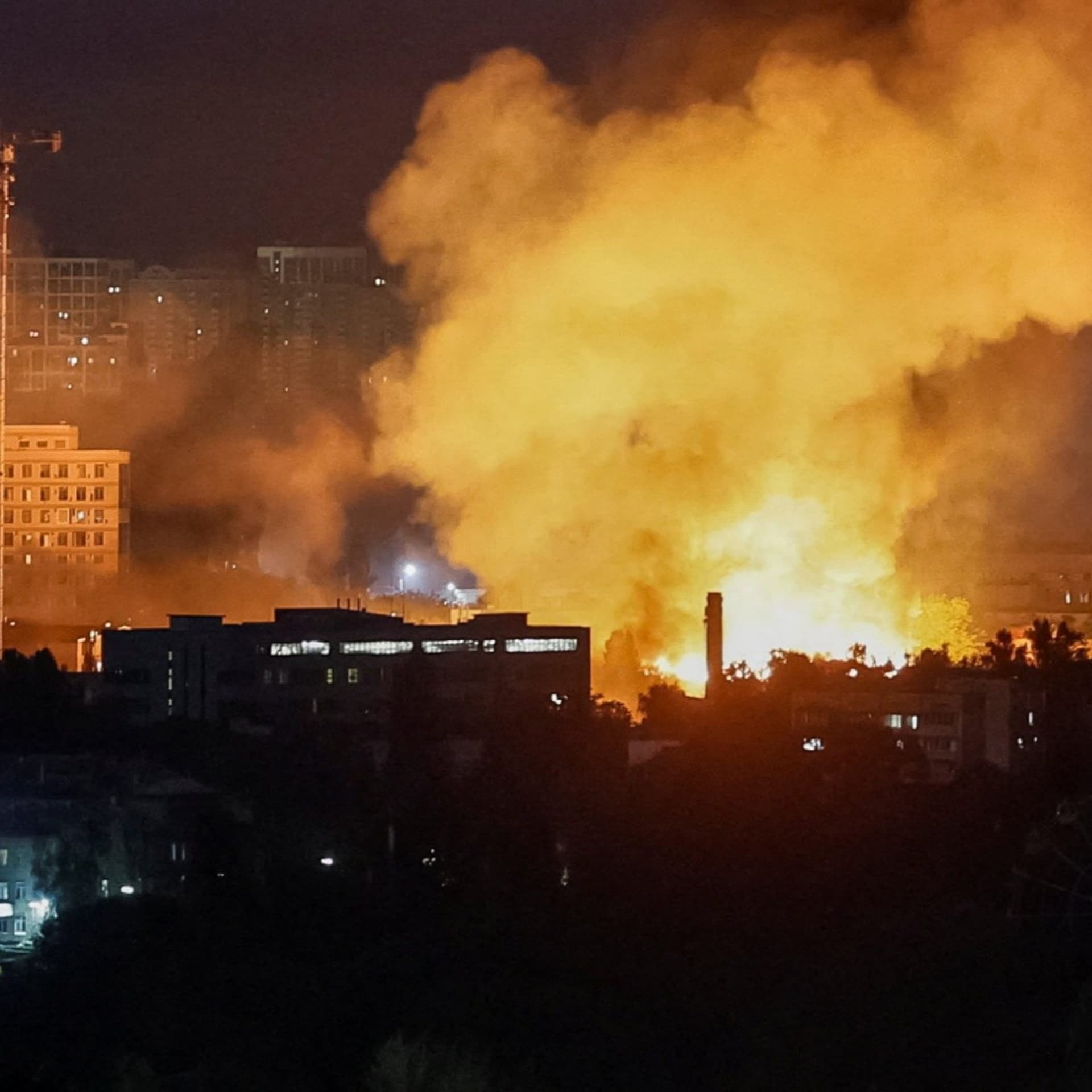
1:56Why are elephants dying in Kenya? Also in this podcast, a growing diplomatic spat as the US State Department revokes the visa of Brazil's ambassador to Washington and why Atari games have gone from bust to boom. We start in the Ukrainian capital, Kiev, which was bombarded by Russian ballistic missiles early on Wednesday. As we record this podcast, the city authorities are saying at least one person was killed and more than 20 wounded. Vitaly Shevchenko from BBC Monitoring gave me this update. Immediately after midnight local time, there were about 20 explosions and they were followed by reports of numerous fires across the Ukrainian capital.
2:49The mayor, Vitaly Klitschko, says that An office building was hit, a number of warehouses, one private house, which means it's a smallish kind of building, collapsed because of the attack. And there were fears that people were buried under the rubble. The local authorities also say that two people were pulled out alive from a collapsed warehouse. And there are also reports of a DIY building supermarket completely destroyed in the Ukrainian capital. Now, importantly, just like several previous attacks on the Ukrainian capital, this one also came without warning, which means that residents of the Ukrainian capital had no time to take cover in proper shelters or in the Ukrainian capital's metro system.
3:40Vitaly Shevchenko with the situation in Kiev. But we're going to talk now about another attack that's highlighted the use of drones in the war. President Zelensky shared a video on social media which showed a Russian drone chasing a street vendor in the Kherson region of Ukraine. Our diplomatic correspondent, Paul Adams, who's in Kiev now, told me more about what happened. This is one of the most graphic examples that we've seen so far of what the Ukrainians call Russia's human safari. Now, that's when civilians, not soldiers, but civilians are hunted down and attacked by drones being piloted from nearby Russian positions.
4:16and it really is pretty disturbing. You see a man called Yuri. He's a vegetable seller in Herson. He's setting up his stall when a drone arrives and starts pursuing him. It literally chases him around his van. He tries to get away. The drone won't let him go and eventually it drops onto him and explodes. Now, amazingly, he survived with shrapnel wounds and concussion. His car is damaged as well. So he's pretty lucky to escape with his life. And it sounds like these drones are so sophisticated if they can literally chase someone on a residential street. Actually, in a funny kind of way, they're not that sophisticated because anyone who's ever flown a recreational drone will know that you can pilot the thing.
5:00It's got a little camera, you can see where it's going, and that's essentially what happens. Someone sitting across the river from Kherson in Russian positions is flying this thing, he's seeing where he's going, the drone has a small explosive device attached to the bottom of it and he can release that at any point. And I should say that this is by far, you know, not the first time we have seen this tactic, particularly in Kherson. Ever since the Russians were forced to withdraw from the city at the end of 2022, the people of that city have faced this threat throughout the subsequent years. And in fact, last year, the UN documented the tactic, saying that Russian forces, quote, recurrently killed and injured civilians using drones.
5:40President Zelensky, not surprisingly, has chosen to highlight this particular video. And he says that the world needs to see that, in his words, Russian soldiers enjoy killing and tormenting people. How much of an impact have drones had on this war? An absolutely colossal impact. Everything from these small first-person drones, as they're called, with crude explosives attached to them, to the kind of long-range drones that Ukraine is using now every day to attack targets inside Russia. And of course, Russia is also using drones, but these are much bigger. The Russians use the Shahed drones, which were originally supplied by Iran.
6:19Some of them now are jet powered. They can travel for hundreds of kilometers. The Ukrainians have developed their own whole network of drones, which are also capable of traveling great distances and delivering very, very sizable explosive charges. Listeners may recall that just yesterday, there was footage of a Ukrainian drone, obviously having been intercepted and falling down on a beach on the eastern Black Sea, where Russian holidaymakers were enjoying a day by the beach and seven people were killed there. So drones feature in almost every aspect of war now, from the front lines to deep inside each country, and they have utterly transformed the appearance and the feel of this war.
6:59Paul Adams in Kyiv. Washington says it's hopeful a deal to reopen the Strait of Hormuz could be done in the coming days. The news has sent oil prices tumbling on the promise of increased shipments in the vital waterway. But it's something the US has talked up before without a deal being delivered. Iran has continued to deny it's in talks with the US, but says it has had positive talks with Oman over the running of the Strait of Hormuz. Here's the US Treasury Secretary Scott Besant speaking about a potential deal. We've seen President Trump last week threatened what would have been one of the largest military campaigns or the largest military campaign since World War II against the Iranians.
7:47Because of that, we are in talks with the Iranians and I think there is a chance we may have a deal today or tomorrow to open the strait and move towards a more normalized position in this conflict. In an effort to bypass the Strait of Hormuz, some vessels have been using different shipping lanes. But that has dangers too. An Indian merchant ship has been attacked and sunk off the coast of Yemen in the Red Sea. Our North America correspondent Shama Khalil has been telling me more. We've heard from India's shipping minister who said that the commercial vessel, the MSV Faizé Nouré Awliya sank in the Red Sea and it was hit by a projectile.
8:27That's all we know at this point about what attacked it or what hit it. He also added that all 14 crew members were rescued by the Yemeni Coast Guard. 13 of those are Indian nationals. They've been taken to the port of Almoha in Yemen. Now, we also heard from Yemen's transportation ministry. And remember, There are two entities in charge of Yemen. There is the Saudi-backed, internationally recognized government, of which the transportation ministry is part. They're accusing the country's Iran-backed Houthi movement of carrying out this attack. And what they said is that they used an explosive-laden boat.
9:05We do not have confirmation on that because we haven't heard from the Houthis yet. But what I can tell you is that the Red Sea traffic off the coast of Yemen has been disrupted for months now by the Houthis. And lately, they've threatened to blockade Saudi exports. Saudi, of course, being a massive oil export, a big U.S. ally. And they've threatened the crucial Bab el-Mendab Strait, another chokehold waterway that they control. And I think what that also means is that it has expanded the U.S.-Iran conflict. What it also will do is complicate already very complicated talks with the US and mediators.
9:46The US are sounding positive at the moment about the Strait of Hormuz and it potentially being fully reopened. But I mean, we've been down this road so many times now, and nothing ever seems to progress. I think I've counted them. It's four or five times now that we've been down this road. And I would say it's the US Trump administration that's sounding positive. But it is part of a pattern that we've seen in the past few months since Donald Trump called this attack on Iran with Israel back in February, which is that Donald Trump would threaten military action. He would pull back saying that they want to do a deal, they meaning Iran, and he would cite diplomatic efforts.
10:23Iran would then deny. The reality is in the middle, which is, yes, there are talks that are going on, not necessarily directly with the United States, with mediators like Oman. The latest lines that we're getting is that Iran is talking to Oman about a potential agreement, two-way controlled line into the Strait of Hormuz, which means that vessels can go in through a channel controlled by Iran. They can then go out through a channel controlled by Oman. A crucial bit of that detail is that there would be service fees. America doesn't like the word tolls. And so now they're using service fees, whichever way you spin it.
10:59Iran, if this deal goes through, would be paid to open the Strait of Hormuz. And mind you, they're saying that none of this will go through before the United States eases its blockade on Iran. So despite this optimism that we're hearing from the U.S. government about talks taking place, these are extremely difficult talks. And a lot of it, even if do result in the opening of the Strait of Hormuz, if Iran sees that it's getting rewarded, that is going to give it big leverage. And that is something that will not go down well with the Trump administration. Shaima Halil. In Kenya, at least 15 elephants have died in a month in what experts are calling an unprecedented loss of life.
11:41Most were found paralysed before dying a few days later. So what's happening? Our Africa correspondent Thomas Mukwana reports from southern Kenya. The vultures are circling this carcass of an elephant. It's a 32-year-old female elephant here in Kimana Ranch. The rangers found it about seven days ago, and there's a strong stench of decomposing flesh. The tasks have been cut off by the Kenya Wildlife Service. Authorities say that some of the elephants showed signs of paralysis before dying within one or two days. Almost all of them were females and their cows. The Kenyan Wildlife Service is the agency ultimately responsible for protecting Kenya's wildlife.
12:25So we've also had a meeting with pest control. Its top vet, Dr Isaac Lecolol, told me that the pesticides on tomato farms could be to blame. It could be unintentional. Maybe people are trying to do some controls of pests on their crops. And that could have been maybe a source. And that's what we tend to see if the elephants manage to pick from that site. These tomato farms are all around the National Park area. We went to visit one just minutes away from where we saw an elephant carcass. In the distance we can see men in protective gear spraying what looks like pesticides on these plants. Elephants love tomatoes.
13:08It's the reason they invade these farms in these areas. The human-world life conflict is particularly exacerbated by tomato plants. And organizations within this area have tried to put up fences around these farms. But the elephants are too strong and too big. for the fences to keep them out. Stephen Michael has been a tomato farmer here for years. He says he's in a constant struggle against elephants and other wildlife. The last time the elephants came, they destroyed cabbages and tomatoes. I lost cabbages worth almost 200 ,000 Kenyan shillings. That doesn't include tomatoes. I might start crying if I count that.
13:50But not everyone buys the theory that pesticides are to blame. We can't just assume it's the cyanide because... Paula Kahumbu is a world-famous conservationist. She and others say there's more to this than the official explanation. I've been working with elephants for more than 30 years. I have never seen elephants dying in numbers like this. And some information has been released to the public, but it's not adding up. Because elephants will have to eat a huge amount of tomatoes to actually consume enough to kill them. The Wildlife Service is still working with a number of theories, including intentional poisoning and disease.
14:24They're expected to release their findings in the coming weeks. As the uncertainty continues, worries grow over what could endanger humans and wildlife alike. Thomas Mekwana reporting from Kenya. Still to come in this podcast. Young women want their film to be shown across the UK. They've sent it to the Prime Minister. They're hopeful that if it can be shared more widely, they can play their own part in challenging these behaviours. The British girls who've launched a campaign to combat misogyny in the classroom.
15:17Sunkissed metals to personalized pieces ready to be engraved with your summer mantra. Each design moves with you from beach days to golden nights and every memory in between. Shop Pandora Jewelry's new summer collection in-store or online at Pandora.net and let your summer unfold. Investing with Schwab is like spending a Saturday at a great farmer's market. You can fill your reusable tote with a bit of everything. Maybe you go for some free-range self-directed investing. Or perhaps you pick up a few farm-fresh trades while you peruse. You can even get help from a dedicated advisor. That's full-service wealth management.
15:53Mix, match, and change your mind whenever you want. Because at Schwab, you can invest your way. No matter your goals or appetite for investing, Schwab has everything you need all in one place. Visit schwab.com to learn more. President Trump has described the surge of migrants into Spain as an invasion. But what really happened in the tiny Spanish enclave known as Ceuta? I'm Asma Khaled, and I host the Global Story podcast on the BBC. Last week, tens of thousands of migrants from Morocco streamed into Ceuta. It ignited a political storm in Europe and even here in the US. But who's really to blame?
16:30For more, listen to the Global Story on BBC.com or wherever you get your podcasts. Ever wonder why we make the choices we do? And how to make smarter ones? Introducing Choiceology, an original podcast from Charles Schwab Join Wharton Professor Katie Milkman, an award-winning behavioural scientist and author of the best-selling book How to Change as she shares true stories from Nobel laureates, authors, athletes and everyday people about why we do the things we do and how to make better choices to help avoid costly mistakes Each episode covers the latest research in behavioural science and dives into themes like the power of self-control, shaping your mindset for success, navigating new beginnings, and why starting over can feel so hard.
17:19Listen to choiceology at schwab.com slash podcast or wherever you listen.
17:31This is the Global News Podcast. Tensions between the US and Brazil have been escalating over the past few months. But things got a lot worse after Brazil refused to grant visas to two US State Department officials over fears they would meddle in the upcoming presidential election. Now the US has responded by revoking the visa of Brazil's ambassador to Washington. Our South America correspondent, Aini Wells, has been telling me more. This diplomatic spat, I think, has really ratcheted up in the last couple of months for two reasons. Firstly, back in June, Donald Trump nominated his pick to be the new U.S.
18:09ambassador to Brazil, Daniel Perez, who's a representative from Florida, a close ally of U.S. Secretary of State Marco Rubio. They did so without really asking the Brazilian government, which in diplomatic terms is not really seen as the usual etiquette. And Brazil's government felt quite disrespected by that. And they have since not approved that nomination to be the ambassador, something which has really irked the U.S. government. So there's that context. Then two State Department officials were due to be coming to Brazil at the end of July to meet with reportedly electoral authorities, but also with the leading right wing candidates in Brazil's elections, Flavio Bolsonaro.
18:46And it came just after Flavio Bolsonaro had been meeting with foreign diplomats in Brazil and telling them falsely some claims about Brazil's electoral system, including that its voting machines were of the same origin as Venezuela's, something which the electoral authorities have said is categorically not true. Now, as a result, Brazil's government was worried that essentially these two US State Department officials were going to come to Brazil and try to interfere in the elections, or as Brazil's president put it, meddle in our elections, which the US said was baseless. But I think all of that has caused the US to be pretty annoyed diplomatically with Brazil.
19:22And this seems to be their retaliation. And Donald Trump and Flavio's father, Jair Bolsonaro, have been close in the past. Really close. The reason many listeners may remember the name Bolsonaro is because Flávio Bolsonaro is the son of the former right-wing president of Brazil, Jair Bolsonaro, is currently serving a 27-year prison sentence for plotting a coup after losing the last presidential election in Brazil. He and Donald Trump were close allies when he was president, but also that continued after his presidency. Notably, last year, you may remember that the US decided to impose tariffs on Brazil.
19:58and one of the reasons they cited for doing so was the coup trial of Jair Bolsonaro, which Donald Trump said was a witch hunt, was politically motivated. Similar lines there to what Jair Bolsonaro himself had said about the trial. So, as you say, the Bolsonaros and Donald Trump have been close allies, really, for many years and I think there are fears about what the US administration under Donald Trump may do when it comes to Brazil's elections in October. And as you explained there, relations have been deteriorating. How serious do you think this spat is now? Well, I think it could potentially escalate further.
20:31The ambassador to the US hasn't been expelled from the US, although at the moment, because she's had her visa revoked, essentially what that means is that if she left the country, she may not be guaranteed to get back in. The US seems to be signalling that they are willing to change course if there are negotiations to resolve some of their differences. But what they seem to be communicating is that if this isn't resolved, or if they could potentially choose to take further action, which could even involve the expulsion of the ambassador. But I think from Brazil's perspective, the main concern is if these tensions continue to escalate, what does that mean for US involvement in the presidential election in October?
21:10Lula da Silva, who is the main left-wing candidate in that election, has made Brazil's sovereignty a really key part of his election campaign. He has been essentially saying that it is for Brazilians to decide the future of, it's not for foreign powers or governments to intervene. And I think that sends a very clear message to the United States that he sees any attempt to politically intervene as foreign interference in their elections. Ioni Wells in Brazil. A group of teenage girls in the UK who say they experience extreme misogyny at school have sent a campaign film to the Prime Minister, Andy Burnham, calling for change.
21:46In the short film, Shot in a Classroom, the girls from the north-east of England hold placards with comments boys have made about their bodies, as well as threats of violence and explicit abuse. Some of them told the BBC how disturbed they were after finding a rape list written up by the boys in their class. Well, there was a rape list that was made, just boys ordering girls who, like, want to rape the most and then the least want to rape. It makes you just feel worthless. It's just not a nice feeling. I think it's quite worrying as well that they were thinking about that. It's not really a normal thought.
22:26Like, why? It's like about your mouth. Who brought you up to be like that? Our reporter Megan Patterson has been speaking to these girls and told Janat Jaleel more about their film. It's a really powerful film, and in it, the young women from Tyneside in the north-east of England, They can be seen holding placards in front of their faces and on those posters written in marker pen in their own handwriting are the words, the phrases and the comments that these young women hear in school and online frequently. And what follows are comments made by boys and young men. As you mentioned, it ranges from comments about their appearance to abusive, violent language, sexualised remarks and threats of rape.
23:08It's an uncomfortable watch. It's shocking. And when I've shown it to other people, everyone's had the same response. Everyone has kind of shuddered and gone, oh, gosh, that's awful. But interestingly, when I've shown it to younger women in particular, there has been a sort of sad, knowing nod that this isn't just happening to one group of girls in one school or one area. It's a much bigger problem across the UK and in fact, globally, too. And Megan, is this something that's relatively new? How much of this is down to the influence of figures like the self-proclaimed misogynist Andrew Tate and social media in general?
23:41Academics have told us that misogyny, sexism, abusive language has always been an issue. It's not a new thing. But what they would say is that there is a void which social media and influencers can fill with perhaps questionable, bordering on toxic at times we know, attitudes and information if there is space to fill. Domestic abuse charities in the north-east of England say that it's crucial that these misogynistic attitudes are challenged, not just online but in schools too, because they can leak into early relationships and lead to abuse between young people. One of the charities working in the North East told us that they know of 13-year-old girls being raped by 13-year-old boys because the young people lack clear understanding of what is acceptable behaviour.
24:26What's the reaction been from the government and what are the girls hoping the reaction will be? The government has said it's taking bold and decisive action against violence against women and girls and it described this misogynistic behaviour as one of the most pressing challenges facing our society. From September, here in the UK, teachers will begin to add a focus of healthy relationships, looking at harmful behaviours, focusing on attitudes online, looking at misogyny and how influencers can spread messages which are not healthy. They're going to have a special look at that in schools going forward.
25:00The young women want their film to be shown across the UK. They've sent it to the Prime Minister. They're hopeful that if it can be shared more widely, they can play their own part in challenging these behaviours. Megan Patterson. The beleaguered head of football's world governing body, Gianni Infantino, has summoned FIFA's senior leaders to a meeting in Morocco on Wednesday after he faced further criticism of his failed plan to sell stakes in the World Cup to private investors. The British football journalist, Henry Winter, said Mr Infantino may try and shore up his position. I think he'll probably try and bolster his support.
25:37I mean, it's no surprise he's gone to Morocco, who are a country who are supportive of him. Obviously, they're one of the co-hosts in inverted commas for the 2030 World Cup. The African nations, many of them, although they haven't really necessarily individually shown their hand, it's a heartland of support for Infantino because of the grants, effectively, that FIFA give out through the profits from their tournament. Separately, FIFA's head of global development, Arsene Wenger, has said he wasn't involved in the sell-off proposal. In a statement, the former Arsenal football club manager said the decision to scrap the idea had been absolutely necessary.
Read the full transcript
26:18Here's our sports correspondent, Andy Swiss. After so much criticism from his opponents, today it was the turn of some of Gianni Infantino's colleagues. Arsene Wenger has worked at FIFA since 2019, but he said he only learnt of Mr Infantino's plans to sell off stakes in the World Cup through media reports. He added the decision to scrap the project was absolutely necessary and beyond question, stressing he believed firmly in an independent FIFA that served the game with commitment, transparency and integrity. There were also strong words from FIFA's Secretary General Matthias Grafstrom, a man regarded as a close ally of Gianni Infantino.
26:57In an internal memo to staff, he referred to a sad and reproachable series of events which was difficult to comprehend and accept. Meanwhile, the head of Jordanian football has issued a statement claiming during the World Cup he was told that if he endorsed Mr Infantino's re-election, it would go a long way to helping his FA out. Prince Ali bin al-Hussein said he did not endorse him before and he certainly will not now. FIFA has yet to comment. Andy Swiss. And finally, it was a pioneer in arcade games and home video consoles, helping to define the gaming industry in the 1970s and early 80s. Only Atari makes the world's most popular home video games.
27:44The only Space Invaders. The only Asteroids. The only Pac-Man. Sounds so 80s, doesn't it? Well, Atari released its first game, Pong, in 1972, turning virtual table tennis into an addictive hit. But competition from Nintendo, Sony and later Microsoft meant that Atari hasn't been doing well for years. It filed for bankruptcy a decade ago, but this year it's turned its highest profit since then, up by 66 % year on year by reviving old franchises such as Pong and Asteroids. Games journalist and streamer Ellie Gibson told us why their strategy is working. I think Atari has realised what they have going for them, and that is the history and the heritage.
28:36And the thing about games is it's an evolving medium still, and it's quite a young medium. If you compare something to like music or films, we're used to nostalgia, We're used to everyone going on about Citizen Kane and Pong is the Citizen Kane for games. And just as kids aren't watching that, they don't necessarily want to play that. It is the older people. You know, we're now moving into an area where it's all about nostalgia and retro. But they are, you know, giving them whizzy new graphics. What Atari have also done is they've released these sort of modern versions of the old consoles. So they've released a sort of version of the Atari 2600 that you can plug into your telly with a HDMI cable and play these classic games just like the olden days.
29:13And again, in terms of economics, that makes huge sense for them because it costs so much money to develop a big AAA blockbuster game like an Assassin's Creed, whereas those games, the R &D has already been done. So the margin is very high. And these machines they're releasing don't cost too much to produce because you don't need a lot of power to run the games. If you look at someone like Nintendo, one of the biggest games companies in the world, they've been churning out Mario games for decades and will continue to do so because these things are popular. That was Ellie Gibson. And that's all from us for now.
29:50If you want to get in touch, you can email us at globalpodcast at bbc.co.uk. You can also find us on X at BBC World Service. Use the hashtag Global News Pod and don't forget our sister podcast, The Global Story. This edition of the Global News Podcast was mixed by Stephen Bailey and the producer was Emma Joseph. The editor is Karen Martin and I'm Charlotte Gallagher. Until next time, goodbye.
From the publisher
Russia has again attacked the Ukrainian capital Kyiv with ballistic missiles, killing at least one person and injuring more than 20. Earlier President Zelensky shared video on social media of a drone hunting down a man in the southern city of Kherson, saying it showed an instance of a "safari" attack against civilians. Also: while diplomatic efforts continue to re-open the Strait of Hormuz, an Indian merchant ship is sunk in the Red Sea after being hit by a projectile. Conservationists in Kenya cast doubt on official explanations that 15 dead elephants were accidentally poisoned by farmers' pesticides. The US revokes the visa of Brazil's ambassador to Washington as diplomatic tensions between the two countries escalate. A group of British teenage girls who say they experience extreme misogyny at school have sent a campaign film to the British Prime Minister calling for change. Gianni Infantino has summoned FIFA's senior leaders to a meeting in Morocco on Wednesday. And reviving old franchises puts the video game developer Atari back in profit after more than a decade in the doldrums.
The Global News Podcast brings you the breaking news you need to hear, as it happens. Listen for the latest headlines and current affairs from around the world. Politics, economics, climate, business, technology, health – we cover it all with expert analysis and insight. Get the news that matters, delivered twice a day on weekdays and daily at weekends, plus special bonus episodes reacting to urgent breaking stories. Follow or subscribe now and never miss a moment. Get in touch: globalpodcast@bbc.co.uk Photo: Smoke rises in Kyiv during a Russian missile strike on August 1st. Credit: Reuters