
In short
The episode is a BBC World Service Global News roundup led by the war in Ukraine. Topic: Russian bombardment of Kyiv, Ukraine’s air-defense shortfall, and the knock-on effects for recruitment and prisoner exchanges; plus separate international stories.
Key claims
Kyiv was hit overnight by dozens of Russian missiles, including ballistic missiles, and Ukraine says it lacks Patriot interceptors to stop them; Russia is paying men tens of thousands to fight but recruitment is harder due to high casualties.
Notable examples
a BBC visit to a POW camp in western Ukraine included Donbass-born prisoners describing being recruited via cash promises and then facing heavy losses; Ukrainian officials prioritize swapping POWs, but Donbass fighters are low on Moscow’s list. Other segments: Hui Kaiyan’s life sentence in China for Evergrande fraud/bribery; removal of ~10,000 coins from Northern Ireland’s Giant’s Causeway; Prince Harry and Meghan reportedly moving back to the UK; a tanker hijacking off Yemen; Erin Patterson’s appeal in Australia; and China’s hit homemade animated “baby cow” film.
Guests
Alexei Honchorenko (Ukrainian MP in Kyiv), Dan Johnson (BBC Ukraine correspondent), Sarah Rainsford (BBC), Stephen McDonnell (BBC China correspondent), Dr. Kirsten Lemon (World Heritage, Giant’s Causeway restoration), Barbara Platt-Usher (BBC Africa correspondent), Noor Nanji (BBC royal correspondent), Katie Watson (BBC Australia correspondent), Meng Chen Zhang (BBC Global China Unit).
Written by AI. May contain mistakes. Listen to the episode to check what was said.
Chapters
Tap a time to open that second in VOKiev Under Attack
0:42 to 1:39
Overview of the Russian bombardment in Kiev and its devastating impact.
“I'm Celia Hatton, and at 14 hours GMT on Thursday, the 20th of August, these are our main stories.”
Witness Accounts from Kiev
1:39 to 4:06
Descriptive accounts from Ukrainian survivors and reporters in bombed areas.
“and the devastating impact of Russian bombardment in the capital Kiev overnight.”
Russia's Recruitment Challenges
4:06 to 5:09
Discussion on Russia's struggle to recruit soldiers amidst war escalations.
“And Dan, Ukraine is constantly pleading with the United States and its allies for more interceptors.”
Prisoners of War Insights
5:09 to 8:13
Insights from Ukrainian soldiers captured fighting for Russia and their experiences.
“Russian soldiers captured recently in Ukraine have confirmed that and also talked of a high casualty rate.”
Hui Kaiyan's Fall from Grace
8:13 to 12:32
Exploring the sentencing of Hui Kaiyan and its implications for China's economy.
“For me, 15 years in prison was too much.”
Conservation Efforts at Giant's Causeway
12:32 to 14:00
Efforts to preserve the Giant's Causeway amid tourist damage and restoration work.
“The Giant's Causeway in County Antrim in Northern Ireland is one of the world's most striking landscapes and one of the most visited sites in the UK.”
The Giants Causeway: Nature's Marvel and Human Impact
14:00 to 16:18
Explore the geological wonders of the Giants Causeway and the issues caused by tourists.
“But we have volcanic activity in other places or have had in the UK.”
The West Bank's Tipping Point
16:19 to 16:53
Discussing the rising violence in the West Bank and its implications.
“AI could definitely make this in like 10 seconds, maybe even faster.”
Hijacking Incident Near Yemen
17:22 to 20:10
An armed hijacking of a tanker off the coast of Yemen and its implications.
“Maritime authorities say six armed men boarded the vessel, seized control and diverted it towards Somalia.”
Prince Harry's Surprising Return to the UK
20:11 to 24:30
Details on Prince Harry's planned move back to the UK and its background.
“The UK woke up to a royal surprise today.”
Show all 13 chapters
Updates on the Mushroom Murders Trial
24:31 to 26:35
The latest developments in the trial of Erin Patterson regarding mushroom poisoning.
“In Melbourne, an appeal hearing for Erin Patterson, the Australian woman convicted of killing three people by feeding them a beef Wellington lunch laced with poisonous mushrooms, has come to a close.”
Unexpected Success of a Homemade Film in China
26:36 to 28:03
A look into the popularity of a crude animated film about a baby cow in China.
“And last, a crudely animated homemade film about a baby cow has become an unlikely success at the box office in China.”
Exploring Unique Animation Styles in Film
28:03 to 29:19
Discusses the surprising popularity of a uniquely animated film created by a non-professional team.
“And what's most interesting about this mother's sound duo is they are having zero background and professional training in animation or filmmaking.”
Transcript
Automatic transcript. May contain errors.0:00This BBC podcast is supported by ads outside the UK. Is President Trump snubbing South Korea to reignite his friendly relationship with Kim Jong-un? I'm Asma Khaled, and I host the Global Story podcast from the BBC. The U.S. and South Korea have been close allies since the 1950s. But this week, Trump announced that the U.S. will substantially reduce joint military exercises with South Korea. He cited his very good relationship with North Korea's Kim Jong-un. For more, check out The Global Story on BBC.com or wherever you get your podcasts. This is the Global News Podcast from the BBC World Service.
0:42I'm Celia Hatton, and at 14 hours GMT on Thursday, the 20th of August, these are our main stories. Kiev comes under bombardment from Russia as Ukraine continues to plead with its allies for more air defense missiles. Disgraced property tycoon Hui Kai Yan, once Asia's richest man, is sentenced to life in prison in China. And a surprise announcement from Prince Harry and Meghan. They're moving back to the UK. We get reaction. Also in this podcast, we hear about the efforts to preserve a geological marvel in Northern Ireland, removing the coins that tourists wedged into the rocks. We've actually engaged the services of a local stonemason.
1:24and he's literally gone at it a bit like a dentist, removing material from within the little joints in the rocks, taking one out painstakingly one by one.
1:38We begin this podcast in Ukraine and the devastating impact of Russian bombardment in the capital Kiev overnight.
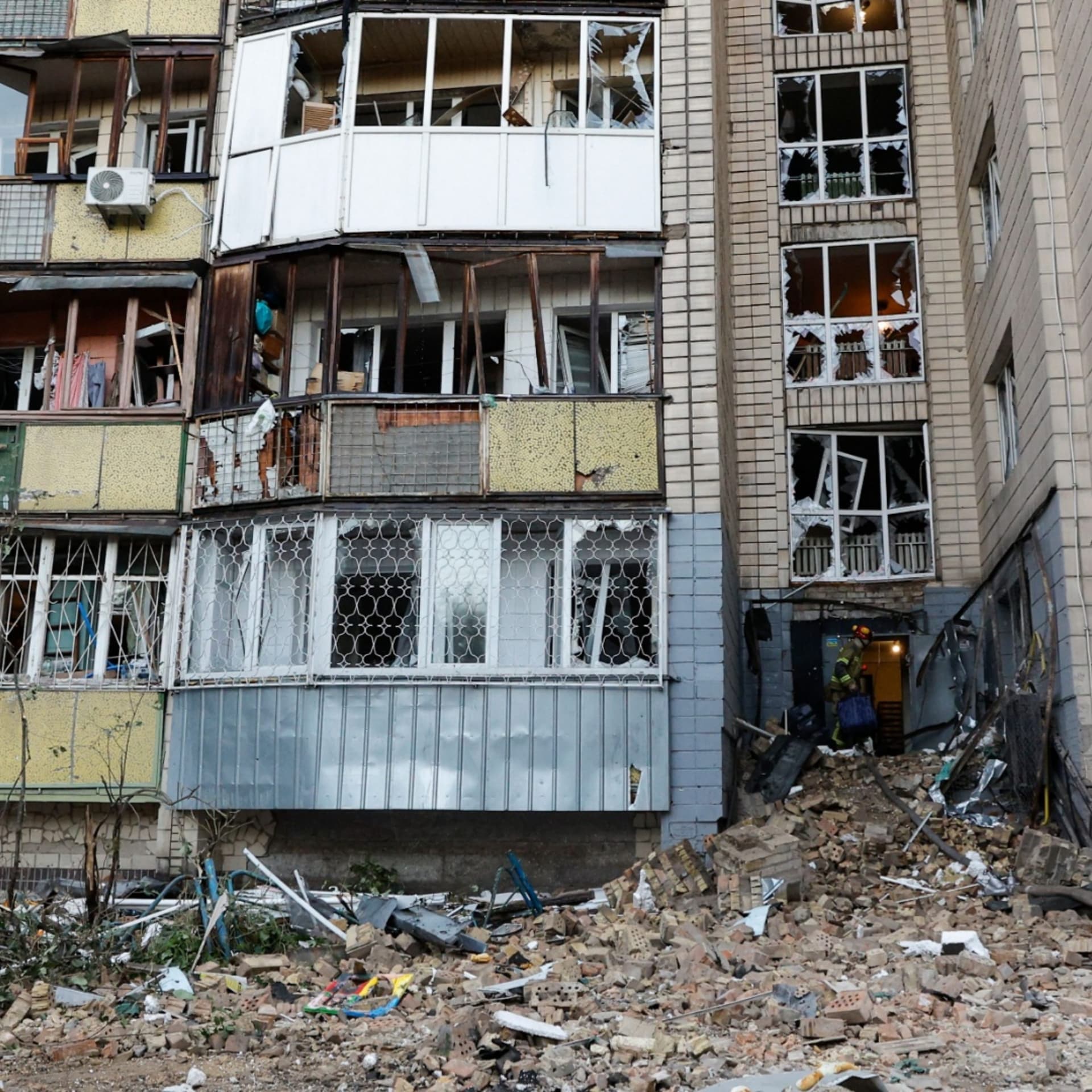
1:50At least 13 people were killed when a school, apartment blocks, and a children's hospital were hit. The Ukrainian MP Alexei Honchorenko, who's in Kyiv, spoke to the BBC. That was a heavy night, really difficult one. Dozens of Russian missiles, ballistic missiles, other types attacked the city. We have a big problem that we don't have missiles interceptors for Patriot systems. We can't intercept ballistic missiles. We can intercept drones, different type of Russian drones, part of Russian missiles, but ballistic missiles are a very serious threat. And for the moment, we are absolutely unprotected from them.
2:34Our Ukraine correspondent Dan Johnson spoke to us from one of the bombed buildings in Kiev. There are tower blocks here that have been totally destroyed by the waves of Russian missile strikes that hit this city around midnight, 1 a.m. There were a number of locations that were hit, but here we've got about four or five eight-storey buildings that are almost totally destroyed, still standing somehow. But the recovery teams were showing me pictures from the roof that show where the missiles actually went straight in through the roof and then essentially destroyed these flats from the inside out.
3:07The recovery teams are going through this wreckage. The noise you can hear is them throwing bits of rubble down as they try to clear their way through these apartments, searching for the bodies of those who are believed to have been killed here and checking if there is anybody else trapped. There are lots of evacuated residents who are gathered here just really stunned by what they experienced last night and what they're witnessing now in terms of the devastation of their homes. They're counting the cost. They're considering what their future is, whether they can ever potentially return to live here.
3:37It looks unlikely. I've been in one of the ground floor flats just around the corner. There was a huge shard of glass that was actually embedded in the wall. The owner of that flat, Valeria, doesn't have a bomb shelter. She was telling me how they were cowering in the corridor in the hallway last night. But if she'd stayed in her bedroom, that shard of glass may have cost her or her 13 year old daughter their lives. They'd actually moved to Kiev, having been bombed out of their home in Mykolaiv. Now they're considering whether they even have a safe future at all in Ukraine. And Dan, Ukraine is constantly pleading with the United States and its allies for more interceptors.
4:13This is proof, I imagine, that it's still not getting what it needs. Yes, absolutely. The intense barrage of Russian ballistic missiles that hit this city last night were able to get through and cause this damage and destruction because of the lack of American-made Patriot missile interceptors. They are key in defending these skies against the fast-moving ballistic missiles that Russia has. Ukraine has been successful in shooting down Russian drones, but in terms of defending itself against ballistics, the plea from the president, from the mayor of Kiev, from everybody in Ukrainian politics is for greater supplies of those interceptors so they can try to stop this devastation and loss of life.
4:53Dan Johnson. Staying with this conflict, Russia offers men tens of thousands of dollars to join its military and be sent to fight in Ukraine. But as the war escalates with no end in sight, there are increasing signs that despite the financial incentives, it's finding it harder to recruit the numbers it needs. Russian soldiers captured recently in Ukraine have confirmed that and also talked of a high casualty rate. The BBC visited a prisoner of war camp to see the conditions and meet some of the men waiting to be sent home in the next exchange of soldiers. But not all of them are Russian, as Sarah Rainsford reports.
5:30In western Ukraine, behind layers of locked gates, there's a camp full of soldiers captured fighting for Russia. But I went there to meet the Ukrainians who went to war against their own country. So just come into the prison yard, coils of barbed wire and cameras everywhere. There are a few dozen prisoners of war in navy blue uniforms and with caps. They've just all headed for the shadows because it's baking hot here. Speaking to men in captivity is complicated. But when there's no access to soldiers in Russia itself, it does help reveal the dynamics of this war, and it helps explain what drives the people fighting it.
6:14But anyone who agreed to speak, I interviewed far from any guards and without a camera.
6:23Anton was born in eastern Ukraine, a part of the Donbass that's been controlled by Moscow since 2014. The year that Vladimir Putin escalated to a full-scale invasion, Anton turned 18 and he signed up to fight immediately for Russia. I don't regret my choice. I went to defend my land. So did all his friends. They all went to different units. then you get the SMS messages. Dead, dead, dead. Other prisoners tell me the same, that everyone they went to fight with has been killed, and that fewer men are now volunteering to replace them. When Ukrainian-born soldiers like Anton are captured, they're tried for treason.
7:12But Anton doesn't see himself as a traitor. An entire generation has now grown up in occupied areas, with Russian schooling and with media controlled by the Kremlin. Anton has absorbed all of it, and like Russia, he calls the government in Kiev Nazis. He also thinks Vladimir Putin should keep pushing to control the whole Donbass, even though hundreds of thousands have already been killed trying. Of course, I think it could have cost a lot less, but war is war. It could have been ended, but no one wanted to do that.
7:53In the prison hospital, there was another man from the Donbass, wrapped in bandages. Atom signed up to fight on the promise of a big cash bonus, but he never got it. And now he has a body full of shrapnel.
8:12I've stepped inside a workshop here in the prison camp and I've just seen what these men are making These Russian prisoners of war are mass-producing wooden coffins
8:29In the next workshop, I met a drug dealer making artificial Christmas trees Konstantin said he had one reason only for going to fight. It got him out of jail. For me, 15 years in prison was too much. I know it probably doesn't excuse me, but it's a fact. But he would be killing Ukrainians, I said, fighting the country he was born in. I see nothing good in any war, and in a war like this, there can be nothing good, by definition. Ukraine's real focus is on these men's practical value, because potentially they can be swapped to bring Ukraine's own soldiers home. Only when it comes to the negotiations, it turns out that the men from the Donbass, who risked everything for Russia, are way down Moscow's priority list.
9:24Constantine says only a handful of them have been swapped so far, and he thinks they'll be the very last to leave here. Sarah Rainsford in Ukraine. Now for news that just a few years ago would have been unimaginable in China. The sight of Hui Kaiyan, once Asia's richest man, in a courtroom, flanked on both sides by police, being sentenced to life in prison.
9:52Chinese television broadcast the sentencing as headline news. A court in the southern city of Shenzhen also issued a$1.3 billion fine to Hui's company Evergrande for multiple crimes, and a sister company was fined another$1 billion. It was once a rags-to-riches story. Hui emerged from poverty and built a property giant, Evergrande, from the ground up. He turned it into a global real estate company that was worth$50 billion on the Chinese stock market, commandeering a sizable chunk of the Chinese economy. So when Evergrande collapsed, it hit the real estate sector hard. A lot of ordinary Chinese people lost money.
10:33In April, Hui pled guilty to embezzlement and bribery. His company is guilty of concealing debt and falsifying records to make it look like its investments were healthier than they were. Our China correspondent Stephen McDonnell is following the story. People already knew that Hoi Kaya had been found guilty, but now that he's received this life sentence, it's really sinking in. And you only have to go back a few years to see him as the darling of the property sector here. I mean, his company Evergrande was one of the key pillars of the economy here. and with properties right across the country, when it finally all came unstuck, the impact has been huge and the collapse of this company alone has been a key factor in starting the property crisis here.
11:25Now, all of China's real estate developers, basically, they were building stuff in places where there wasn't enough demand. Then when the creditors came after them, that is the banks, the way they decided to tackle this was to build even more to try and stay ahead of the creditors. Now, Evergrande did all of this and more. So according to this judgment, Hoi Kyan is pled guilty to bribery, but also issuing documents which inflated the health of the economy, fraudulently raising money on the basis of this. And now he and 56 others from the company, including two of his sons, have been given custodial sentences, plus more than$2 billion US worth of fines to pay.
12:13I mean, it's just such an enormous turnaround for this company, which was sort of the pride of the nation at one stage. It was heralded as such a mighty sort of a giant of the Chinese economy. And now here we are. Stephen MacDonald in Beijing. The Giant's Causeway in County Antrim in Northern Ireland is one of the world's most striking landscapes and one of the most visited sites in the UK. Over the years, tourists have taken to jamming coins between the columns and into cracks, either for luck or for love. But as the coins rusted, they started causing physical and chemical damage to the rocks.
12:56A conservation project was begun and now, with the help of volunteers, the equivalent of 10 ,000 coins, weighing more than 20 kilograms, have been removed. James Kamarasamy spoke to Dr. Kirsten Lemon from World Heritage, who's helping to restore the site. The Giant's Causeway is quite an enigmatic site when it comes to geological features. So if you imagine, it is approximately 40 ,000 rock pillars that are all interlocking and are jutting out into the Atlantic Ocean on the north coast of Northern Ireland. so not only is it I suppose inspiringly beautiful because of where it is but these really unusual hexagonal features really are quite prominent when it comes to looking at that whole coastline.
13:39I mean I've been there, you stand on and you look down and you scratch your head don't you? I mean how on earth could they have just all popped up like that? Yeah the regular nature of the rocks themselves are I think one of those things that makes that site so interesting but we now know after scientific research over the past hundred or so years that the Giants Causeway formed as a result of volcanic activity just under 60 million years ago. But we have volcanic activity in other places or have had in the UK. What makes the Giants Causeway special is that the lava that flowed from these volcanoes, it actually pulled into valleys.
14:14And because it cooled down really slowly, if you like, the valley sides acted like a big thermos flask. So the lava cooled down slowly and as it cooled, it cracked and it cracked into those really regular patterns that we see. So created by this activity on a giant scale, but it's been activity on a much smaller scale that's been causing problems with these coins. Absolutely. So over the past, I suppose, maybe 10, 15 years, we've seen an increase in the number of tourists that have come along to the site and have put coins into the cracks, these natural cracks within the rocks, and it's those that are causing the problems.
14:51and an operation then was needed to get rid of them. How straightforward has that been? Well, I suppose what it really started out with is that myself and colleagues from the British Logical Survey, what we did was we undertook a survey to assess the damage that the coins were doing in the first place. We suspected there was damage, but we weren't entirely sure. So by looking at the coins, where they are, what's happening around them, as you've already mentioned, we were able to assess that there was physical and chemical damage to the causeway itself. So what's been happening since then is that we've had a pilot programme to try and remove those coins.
15:28And I think the sheer scale of what we've been able to remove and the depth of which they've been stuck into the causeway has really, I suppose, surprised us all. And what about that process, removing them without damaging the rocks? How have you gone about it? Well, it's been a very laborious process. So we've actually engaged the services of a local stonemason who is very familiar with working with this kind of stone. And he's literally gone at it a bit like a dentist, removing material from within the little joints in the rock. So we basically use picks and taking one out painstakingly one by one.
16:01We've got around about, we think, about 10 ,000 of the coins out in total. And it is only in one area because there are coins actually all across the Giants Causeway and the Causeway Coast World Heritage Site. So we've got a long road to go, but we've taken them out from the most obvious place. Dr. Kirsten Lemon. Still to come in this podcast. It was like so bad. It's so good. AI could definitely make this in like 10 seconds, maybe even faster. It's because it's not perfect. It's good. It shows how human it is. A homemade animated film about a baby cow that's become a surprise hit in China.
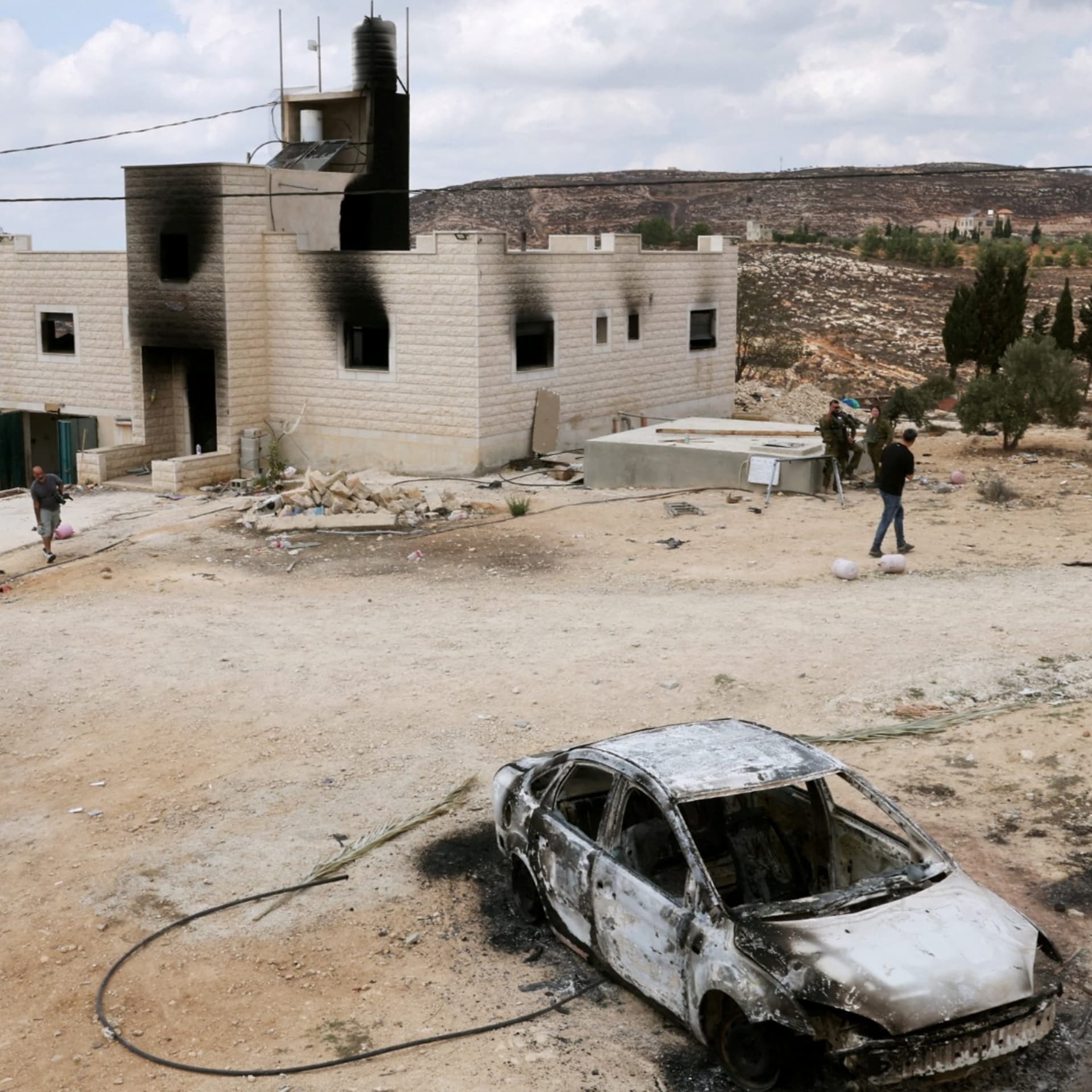
16:46Is the West Bank reaching a tipping point? I'm Asma Khaled, and I host the Global Story podcast from the BBC. For more than a week, homes in the village of Qusra have been under siege, including one of a Palestinian-American man from Ohio. It's just the latest to draw attention to the rise of settler violence in the West Bank, which the UN says is higher than at any point in the last 20 years. For more, listen to the Global Story on BBC.com or wherever you get your podcasts.
17:19This is the Global News Podcast. A tanker has reportedly been hijacked off the coast of Yemen. Maritime authorities say six armed men boarded the vessel, seized control and diverted it towards Somalia. The condition of the crew is currently unknown. Our Africa correspondent Barbara Platt-Usher is following developments. The UK Maritime Security Agency says that this happened 136 nautical miles off the coast of Yemen in the Gulf of Aden. As you mentioned, six armed men boarded the vessel and then redirected it towards Somalia, which is on the other side of the Gulf. We don't have any information about the state of the crew.
18:01We don't have any further information about where the ship has ended up or what kind of flag it was carrying. What I can say is that there has been a resurgence of Somali piracy over the past couple of months. since about March or April, a number of vessels have been hijacked. And this was after quite a long period of the security, much better security in the Red Sea in the Gulf of Aden, given how big a problem Somali piracy was about 10 years ago. And this is also happening at a time, of course, when there are threats to maritime shipping, not just in the Gulf of Aden, but also especially in the Strait of Hormuz, as well, threats to the possibility of security in the Red Sea, which empties into the Gulf.
18:46So it means that you have quite an unstable situation. Barbara, what's fueling that surge in piracy? Are the Houthis behind all of it? Well, the surge in Somali piracy is partly because of domestic issues. So you've got, according to reports, fishermen who are angry at international trawlers, illegal trawlers that are decimating the fishing industry. And so they have taken to piracy again to get money, basically. But there are some defense analysts that suspect that perhaps Houthi rebels are coordinating with the Somali pirates. There was one report of that a couple of weeks ago that there had been some coordination.
19:29It wasn't clear why and how that ended up. But what everybody is thinking about, of course, is that Iran has threatened to ask its Houthi allies in Yemen to block shipping in the Red Sea, which flows into the Gulf of Aden because of the threats around the Strait of Hormuz. Iran had also wanted to take control of the Strait of Hormuz. The U.S. has blocked shipping there. And so there's been some question about whether that would also happen in the Red Sea. And also, I would say there's just more traffic around Somalia at the moment because of the closure of the Strait of Hormuz and the problems and threats in the Red Sea.
20:04There's more traffic in the Indian Ocean, which is just out of the Gulf of Aden, so you have more access to shipping. Our Africa correspondent, Barbara Platt-Usher. The UK woke up to a royal surprise today. Prince Harry, his wife Meghan and their children are reported to be planning to move back to England over the next few weeks. They won't be living in a royal residence, but it will be close to London. Their two young children, Archie and Lilibet, have been enrolled in schools for the new term. Harry and Meghan left for the United States six years ago. Ailsa Anderson, a former press secretary to the late Queen Elizabeth, says an earlier visit to the UK this year may have prompted Harry's return.
20:41We know there's been an ongoing issue with security. He has said until this is rectified he won't be coming back to the United Kingdom. But clearly now he's had a change of heart and he wants to come back to his motherland. And I wonder, because of the trip that he made earlier and going back to his sort of his late mother's ancestral home in Northamptonshire, whether that's made a sort of a shift in his views. And he really wants to come back because he's missed his life here for the last six years. Our royal correspondent Noor Nanji stood outside Buckingham Palace in London and told us more about the decision.
21:15It's a really surprising announcement. I think a lot of people were not expecting this and there are a lot of unanswered questions. What we do know is that Harry and Meghan and their two children, Archie and Lilibet, will be moving back to the UK. And the children are enrolled in a British school over here. So they will be starting school in September. So, as I say, it took a lot of people by surprise. What's driven it? That's one of the big questions. Why now? Why have they decided to do this? Well, we've been speaking to some people close to the couple who say that the decision to move back to the UK was taken relatively recently.
21:52It's understood that that trip that they made in July with the family to the UK played a part in that. We know that, of course, Harry, Prince Harry, Meghan and the children spent time with the king and queen at Highgrove and also with the Spencer family, the Princess Diana's family at the estate in Althorpe. And that they really enjoyed that. And so it's understood that that has played a part in all of this. Also, we understand that Harry and Meghan are keen to educate their children over here. And of course, Harry has spoken extensively about his how much he misses the UK. He said that as much in a BBC News interview last year, talks about how much he likes the idea of bringing his children back to his country of birth.
22:39And so all of those factors we think has played a part in this. It's interesting, Noor, because he said in that same BBC interview that he couldn't anticipate returning to live in the UK. So something has changed. What's been the reaction inside the UK today? Well, I think it's a really good point in terms of, you know, one of the reasons he expressed about not being able to return here, he said, was around, it was all couched around the issue of security, because we know that that's been a real sticking point for Prince Harry for some time. He's been quite angry about the way that his and his family's security has been handled here in the UK ever since they have moved to the US.
23:17And so the security arrangements and how that is handled when they move back here is going to be a really interesting thing to watch. We know that the Sussexes have a private security team in the US that they hire. Whether that team will then move to the UK, it is not known. It's also not known if Prince Harry has now resolved his long-running dispute with the Home Office over the security issues. But as I say, with the family due to move here relatively shortly, we imagine all of this will come out into the open quite soon. And in terms of reaction, I mean, we have heard this morning, for example, from the Education Secretary, Lucy Powell here, who said that she welcomed their decision to move here.
23:55And I think there will be a lot of interest in that side of things too, where the children will be educated. We know that, of course, their cousin, Prince George, is going to be starting at Eton pretty soon in a couple of weeks. Where Archie and Lilibet go to school will be of a lot of interest. It won't most likely be in London, because we know that the family will not be living in London, but it could well be where they decide to locate. And we think the rumours are that they could decide to set up in the Cotswolds or sort of Northampton area, close to all of the Spencer family estate. Our royal correspondent Noor Nanji.
Read the full transcript
24:30To Australia, where there have been more developments in the mushroom murders trial. In Melbourne, an appeal hearing for Erin Patterson, the Australian woman convicted of killing three people by feeding them a beef Wellington lunch laced with poisonous mushrooms, has come to a close. While her lawyers have been trying to overturn her conviction on the grounds of an unfair trial, The prosecution say she should never have been allowed to leave prison. Our Australia correspondent Katie Watson has the details. Two days of hearings have now wrapped up in Melbourne. This was a double appeal. Erin Patterson was trying to overturn her conviction and the prosecution was appealing against the sentence.
25:10Now, much of Wednesday and today was spent going over Erin Patterson's case for appeal. seven grounds for appeal, including issues with evidence, the actions of the prosecution and the jury and her team going over in quite granular detail using previous cases to argue why they don't think that she had a fair trial last year. Now, the last two hours of today was the prosecution's turn to argue why they think the sentence handed out to her, that's 33 years minimum before being allowed a chance for parole, They think that that is too lenient. They argue that the sentencing judge made a mistake in saying that she would face tough conditions inside prison because of her notoriety and would be spending quite a considerable amount of time in the foreseeable future in solitary confinement.
26:03Now, the prosecution argues that's not necessarily the case. Evidence didn't point to that. an outline that she has access to a prison lounge, an exercise yard, and to activities such as crocheting. Now, at that point, the triple killer who was watching the hearing via video link closed her eyes and shook her head. Now, we won't have a decision on this for a while. They've reserved the decision, the appeal judges, so it could take a matter of weeks or even months. Katie Watson. And last, a crudely animated homemade film about a baby cow has become an unlikely success at the box office in China.
26:44Niu Lai was made on a low budget by a mother and son over five years. As of today, Thursday, it's grossed the equivalent of more than$4 million. This 25-year-old American musician working in Beijing summed up why he liked the film. It was like so bad. It's so good. AI could definitely make this like in like 10 seconds, maybe even faster. It's because it's not perfect. It's good. It shows how human it is. It's not serious, but I feel like life has become so serious. So like to see some things like this that we can just laugh at, you know, it's beautiful. Meng Chen Zhang from the BBC World Service's Global China Unit told us more about the film.
27:25The film is like something you would never expect to be seen on a big screen. The theatre is very good. It's like a 2D animation almost. You can make it from a flash. It's nothing like Spider-Man or any other fancy film I have seen. And tell me about the mother and the son who teamed up to make this film. Yeah, that's one really interesting thing people want to know. Who are the people behind the film? So the director, Xing Yu Meng, he's someone in his 30s. and his mother, who was born in the 60s. They are the main crew and the cast behind the whole film. And the mother even sing the final song in the movie, and she's also dabbing a lot of the characters.
28:05And what's most interesting about this mother's sound duo is they are having zero background and professional training in animation or filmmaking. The sound from what we've seen in Chinese reporting that he studied garden design and architecture design. So that has nothing to do with actual filming and animation. And the mother, we haven't seen much reporting about her, but she's not from a professional background either. I love the fact that they worked on this together and it took them five years to make it. How do you explain the popularity of this film? Is it a rejection of things looking too polished these days and AI being used too much, do you think?
28:46I think that's definitely a very important factor why people are getting this surprise. like you have seen a lot of AI animated film on your phone. That's even better than what we've seen on the big screen. So that's a very big surprise element there. And the other thing is while AI is developing so fast, like Chinese AI software, Seedense, they can make almost like real people. And when you see such simple animation that's purely made by human, you can see there's a very different contrast that you can actually feel the human story. Meng Chen Zhang from the BBC World Service's Global China Unit.
29:49The editor is Karen Martin. I'm Celia Hatton. Until next time, goodbye.
30:24For more, listen to The Global Story on BBC.com or wherever you get your podcasts.
From the publisher
Russia launched a big attack on the Ukrainian capital Kyiv overnight, striking blocks of flats, a school and a children's hospital. Ukraine has appealed to its allies for more ballistic missile interceptors. The Ukrainian air force implied that none of the missiles was shot down. Also: captured Ukrainian-born soldiers tell the BBC why they fought for Russia. Disgraced property tycoon Hui Ka Yan - who was once Asia's richest man - is sentenced to life in prison in China and fined billions. We hear about the efforts to preserve Giant's Causeway in Northern Ireland by removing coins that tourists wedged into the rocks, and why a crude, cheap animated Chinese film about a baby cow is a success at the box office.
The Global News Podcast brings you the breaking news you need to hear, as it happens. Listen for the latest headlines and current affairs from around the world. Politics, economics, climate, business, technology, health – we cover it all with expert analysis and insight. Get the news that matters, delivered twice a day on weekdays and daily at weekends, plus special bonus episodes reacting to urgent breaking stories. Follow or subscribe now and never miss a moment. Get in touch: globalpodcast@bbc.co.uk Photo: A bombed apartment block in Kyiv. Credit: EPA