
In short
Global News Podcast Episode Summary
Episode Title
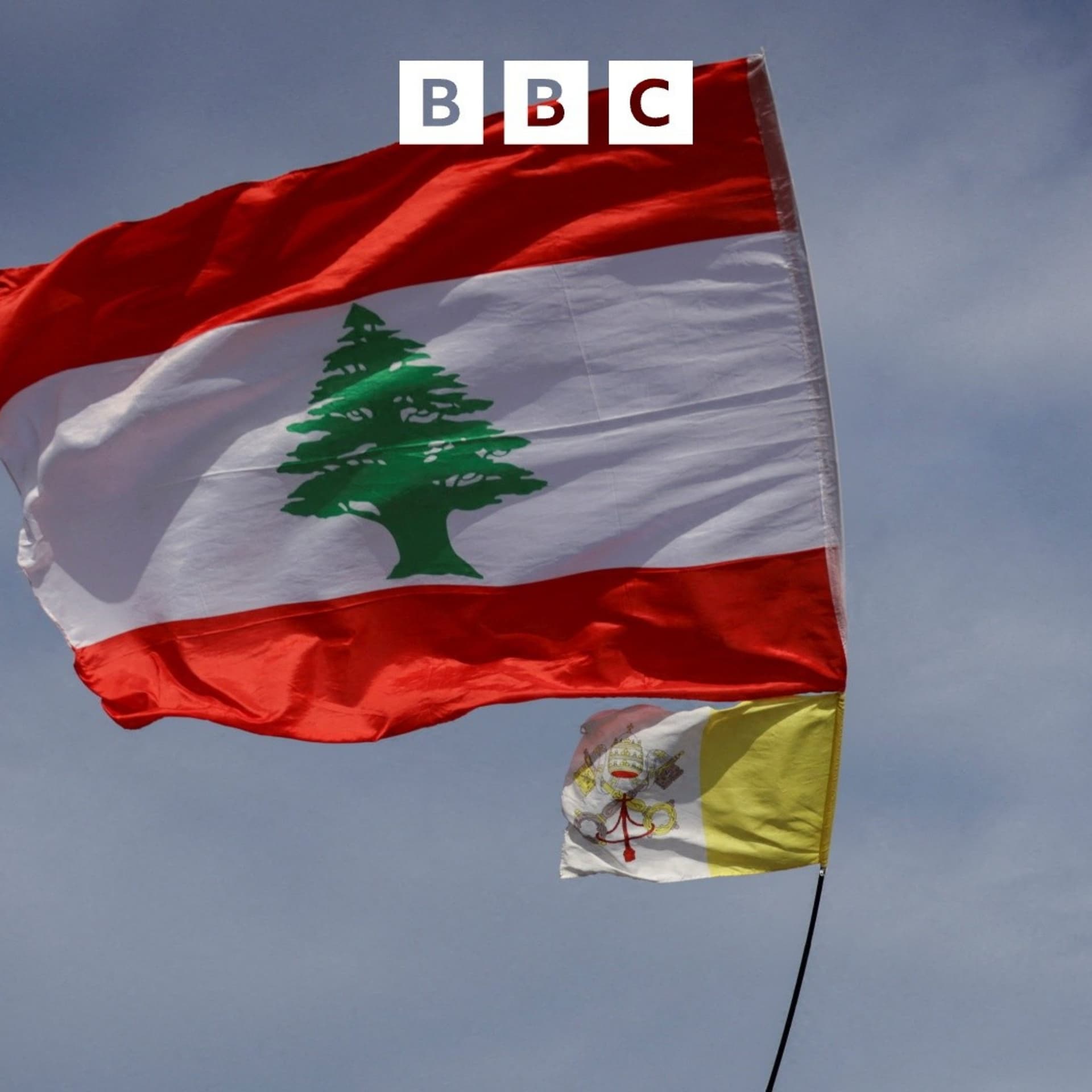
Lebanon Completes First Phase of Plan to Disarm Hezbollah
Date
January 8, 2025
Overview In this episode of the Global News Podcast, host Julia McFarlane covers significant global events, highlighting Lebanon's military achievements in disarming Hezbollah, protests in the U.S. over an immigration-related shooting, President Trump's withdrawal of the U.S. from several international organizations, and advancements in humanoid robotics showcased at the Consumer Electronics Show.
---
Key Stories
- Lebanon's Efforts to Disarm Hezbollah
- The Lebanese military announced the completion of the first phase of its plan to disarm Hezbollah in Southern Lebanon.
- Hezbollah has historically dominated this region, which borders Israel.
Developments
- Cabinet Decisions:
- The Lebanese cabinet commended the military's actions and plans further operations beyond the Litani River.
- Israeli Response:
- Israel views the Lebanese efforts as insufficient and continues its operations against Hezbollah.
- Hezbollah's Position:
- Hezbollah refuses to disarm without reciprocal actions from Israel, indicating ongoing tensions.
- Protests in Minneapolis
- Protests erupted following the fatal shooting of Renee Nicole Good by ICE agents.
- The community reacted strongly, expressing anger and grief.
Key Points
- Incident Details:
- Good was shot when attempting to flee the scene after immigration officers confronted her.
- Public Response:
- Vigils and protests emerged, with community members and politicians calling for accountability.
- Political Context:
- The incident has drawn parallels to previous protests in Minneapolis, particularly those following George Floyd's death.
- U.S. Withdrawal from International Organizations
- President Trump signed a memorandum to exit 66 international organizations, including several UN bodies.
Implications
- Many of these organizations focus on climate change, peace, and democracy.
- The move may face legal challenges and raises concerns about the future of international cooperation on crucial global issues.
- Advances in Humanoid Robotics
- Humanoid robots took center stage at the Consumer Electronics Show in Las Vegas, showcasing capabilities like folding laundry and efficient movement.
Insights
- Hyundai's Atlas Robot:
- Designed to operate in human environments, showcasing advanced movements and functionality.
- Expert Opinions:
- Technology editor Zoe Kleinman emphasized the need for practical applications and the challenges of real-world environments.
---
Additional News Highlights
- Cambodia Extradition Case:
- A billionaire businessman accused of a cryptocurrency scam has been extradited to China, raising questions about legal proceedings and political connections.
- New Botanical Discoveries:
- Nearly 200 new plant species have been named, with some at risk of extinction, highlighting the need for biodiversity conservation.
- Continued Protests in Iran:
- Protests have spread across Iran with a political focus, sparked by economic issues, marking a significant escalation.
---
Conclusion The Global News Podcast presents a comprehensive overview of critical global issues ranging from military developments in Lebanon to social justice protests in the U.S. and technological advancements in robotics. Each story reflects broader themes of political tension, humanitarian concerns, and the impact of international policies on local communities.
For further discussions or to provide feedback, listeners can reach out via email at [globalpodcast@bbc.co.uk](mailto:globalpodcast@bbc.co.uk).
Written by AI. May contain mistakes. Listen to the episode to check what was said.
Chapters
Tap a time to open that second in VOIntroduction to the Episode
0:05 to 0:42
An introduction to the podcast and its main stories.
“If journalism is the first draft of history, what happens if that draft is flawed?”
Lebanon's Disarmament Plan
0:42 to 1:24
Discussion on Lebanon's completion of the first phase of disarming Hezbollah.
“I'm Julia McFarlane and at 16 Hours GMT on Thursday 8th January, these are our main stories.”
Military Operations and Ceasefire
1:24 to 3:00
Overview of military operations in southern Lebanon and the ceasefire deal.
“You still need to see what it does when things aren't smooth.”
Hezbollah's Political Role
3:00 to 3:51
Insights into Hezbollah's deep-rooted political influence in Lebanon.
“The Israelis say they are targeting Hezbollah military infrastructure.”
Community Response and Protests
3:51 to 5:50
Details on community reactions and protests following a shooting incident in the U.S.
“Has what Lebanese army, what they've announced today, do you think that's done enough for the Israelis to maybe halt their operations?”
Shooting Incident Analysis
5:50 to 9:50
In-depth analysis of the shooting incident involving ICE agents.
“There's a new story available every day.”
Impact of Immigration Enforcement
9:50 to 11:58
Discussion on the implications of ICE's actions in Minneapolis and community tensions.
“Nada Taufik is our correspondent in Minneapolis, and she's been speaking to Tim Franks.”
Trump's Withdrawal from International Organizations
11:58 to 14:01
Overview of President Trump's memorandum to withdraw from multiple international bodies.
“I think people absolutely are in the sense that let's not forget this was just a few blocks, in fact, from where George Floyd was killed by police.”
Impact of Trump's Withdrawal from Global Organizations
14:01 to 15:18
Explore how Trump's actions are affecting international climate efforts and organizations.
“climate change and promote peace and democracy, as Danny Eberhard reports.”
Advancements in Humanoid Robotics at CES
15:18 to 17:58
Learn about the latest developments in humanoid robots and their potential applications.
“Human-inspired robots, aptly named humanoids, have been doing all sorts at the annual Consumer Electronics Trade Show in Las Vegas this week, everything from pouring the coffee to folding laundry.”
Show all 16 chapters
New BBC Podcast on Journalistic Accountability
17:58 to 19:13
Discover insights from a new series discussing flaws in historical journalism and accountability.
“It has these arching leaves on a stem that can be as much as 15 metres tall.”
Iran Protests: Political and Economic Roots
19:13 to 23:12
Analyze the ongoing protests in Iran and their evolution from economic to political demands.
“Protests in Iran are now entering their 12th day, and there are reports they are spreading to towns and cities that haven't been affected until now.”
Cambodia's Extradition of Crypto Scam Mastermind
23:12 to 26:14
Examine the extradition of a businessman linked to a major cryptocurrency scam in Cambodia.
“Qin Zhou was one of three Chinese nationals arrested on the 6th of January following a joint investigation with the US into transnational crime.”
Discovery of New Plant Species at Kew Gardens
26:14 to 28:01
Understand the significance of newly named plant species and their conservation concerns.
“Scientists at the world-renowned Botanic Gardens at Kew here in London, along with their collaborators, have named nearly 200 new plants and fungi in 2025.”
Discovering New Plant Species and Their Local Names
28:01 to 30:06
Learn about the process of classifying new plant species and the importance of local knowledge.
“we actually didn't know where to fit it in the broader palm family.”
The Importance of Biodiversity and Environmental Concerns
30:06 to 30:24
Explore the challenges of biodiversity loss and the emotional toll on scientists.
“But I remain optimistic and I will never stop.”
Transcript
Automatic transcript. May contain errors.0:00This BBC podcast is supported by ads outside the UK. If journalism is the first draft of history, what happens if that draft is flawed? In 1999, four Russian apartment buildings were bombed, hundreds killed. But even now, we still don't know for sure who did it. It's a mystery that sparked chilling theories. I'm Helena Merriman, and in a new BBC series, I'm talking to the reporters who first covered this story. What did they miss the first time? The History Bureau, Putin and the apartment bombs. Listen on BBC.com or wherever you get your podcasts. This is the Global News Podcast from the BBC World Service.
0:47I'm Julia McFarlane and at 16 Hours GMT on Thursday 8th January, these are our main stories. The Lebanese government says it's completed the first phase of a plan to disband armed groups in the south of the country, the traditional heartlands of Hezbollah. Protests and fury erupt in the US city of Minneapolis after a 37-year-old mother was shot dead by immigration agents. And President Trump withdraws the US from dozens of UN groups, including a climate change treaty and bodies to advance peace and democracy worldwide. Also in this podcast... You still need to see what it does when things aren't smooth.
1:27You know, when it's bumbling around in the dark, when there's a tear in the carpet? Can it avoid those trip hazards? Can it still do all the computing, if you like, that we do in our everyday lives? Humanoid robots unveiled at a trade show capable of folding laundry. Is it progress or a dystopian nightmare?
1:47The Lebanese military says it has successfully completed the first phase of its plan to embed across the south of the country disarming local armed groups under the control of the Shia militant organization Hezbollah, who for decades have dominated the area, which also borders Israel. The cabinet in Beirut had earlier taken the decision for the move, and the information minister, Paul Morkos, said further operations were planned. The cabinet reviewed the army command's report and commended the efforts of the Lebanese army in the region south of the Litani River to impose operational control over the area.
2:27It also called for drawing up a plan for the region north of the Litani River, based on a general assessment currently being prepared by the army command, which will be presented and discussed in the next monthly report to be submitted by the army commander to the cabinet in February. The efforts follow a ceasefire deal between Israel and Hezbollah that was brokered by the United States back in 2024. However, towns and villages across the south have continued to face heavy and regular Israeli bombardment ever since. The Israelis say they are targeting Hezbollah military infrastructure. The BBC's Karin Torbay, who's in Beirut, told me what the Lebanese officials have been saying.
3:08What they say is basically that they have completed phase one of a disarmament plan that aims to disarm all illegal armed groups across the country. Phase one is basically related to the area south of what is known in Lebanon as the Lithonia River, which is a river that separates the south of the country between the areas that are very close to Israel, border towns, and areas that are further inside the country. So what it is saying is basically that it has full control now of the area between the river and the border with Israel. Karine, there has been a ceasefire agreed between Israel and Lebanon since last year, but there has continued to be Israeli operations in the south.
3:59Has what Lebanese army, what they've announced today, do you think that's done enough for the Israelis to maybe halt their operations? Today we heard from the office of the Israeli prime minister that said that basically what the efforts that the Lebanese army and the governments are doing are an encouraging beginning, but they are not enough. They're not sufficient. And Hezbollah has said that in the absence of any measure taken by Israel to do something in return of what Lebanon is doing, it is not going to cooperate any further or to disarm themselves. Right. And I mean, they're more than just an armed group, aren't they, Hezbollah?
4:42They've been deeply embedded into Lebanon for decades. Is it even possible for the Lebanese government to truly dismantle this organisation? Well, Lebanon says it is adamant that it will not accept any presence of any armed groups anymore. But as you said, Hezbollah is not just a paramilitary group or a militia in the country. Hezbollah is also a very important political group with a very large base. And it has been quite popular among a large community in Lebanon, especially the Shia community within the country. So what the government is saying is basically that all it wants is basically the disarmament of the group.
5:24On the political level, the group is an active group in the country. It is in the parliament. It is in the government. And no one wants it to be outside this political system because it is an integral part of it. But the efforts of the government are mainly about disarming groups and making the Lebanese government the only entity in the country that is capable of deciding of peace and war. Karine Torbay in Beirut. And for more on this story, you can go on to YouTube, search BBC News Global Podcast. There's a new story available every day. Protests have broken out in Minneapolis and several other US cities a day after a 37-year-old woman was shot dead by a federal agent from ICE, the Immigrations and Customs Enforcement Agency.
6:11People gathered around a makeshift shrine of flowers and candles, and hundreds of Minnesota residents held a vigil for the victim, who has been identified as Renee Nicole Good. Videos of the incident posted on social media show immigration officers ordering a person to get out of a car in a residential part of Minneapolis as one of them tries to open the driver's side door. The vehicle can then be seen reversing and beginning to drive away. Seconds later, several gunshots are fired and the vehicle crashes into a parked car. President Donald Trump reacted to the shooting on social media, saying the ICE agents had acted in self-defence.
6:51Speaking later at a press conference, the Homeland Security Secretary, Kristi Noem, said the woman had tried to use her car to run over the officers and called it domestic terrorism. But the high-profile Democratic politician, Alexandria Ocasio-Cortez, said Ms. Goode had been murdered whilst fleeing for her life. What we need to see is this incident prosecuted. What we saw today was a criminal, a criminal murder a woman and shoot her in the head while she was trying to escape and flee for her life. And I think what we saw today was a manifestation of every American's worst nightmare. Lynette Rainey-Grandel was there at the site of the incident.
7:36She told the BBC she tried to intervene after realising that someone had been shot. I started trying to run over to the vehicle and at that point ICE agents were around and preventing us from getting close to the vehicle and threatening us. They had guns out. It was very scary looking. They didn't point them at me but they had them raised in the air so it was certainly threatening and they had their tear gas canisters or whatever that is ready to go so they had those kind of poised ready to spray us and they were pushing us back. They wouldn't let anybody go to her aid, as far as I could tell.
8:14Speaking to the BBC's US partner CBS News, the Minneapolis police chief, Brian O 'Hara, said law enforcement officials are trained to avoid situations where the use of deadly force may be required. In my years of experience as a police officer over the last 25 years, I can tell you police officers have been training more and more as time has gone on to try and avoid these situations in the first place, especially the last few years. There's been a very strong emphasis on trying to deescalate situations whenever possible. But certainly for many years, professional law enforcement training has been to try and avoid using tactics that place officers in a situation with an unarmed motorist where deadly force may be necessary.
9:01So, Chief, it sounds like what you're saying is that this, what we see on that video is not the protocol your police officers would have followed in that situation? I think the overwhelming majority of city police departments in this country have been training to try and avoid putting officers in situations where deadly force may be necessary, particularly when there is no underlying serious criminal threat. In this case, it appears that this woman was not the target of any pre-planned law enforcement investigation and that the initial reason for approaching the vehicle was because she was blocking the street.
9:38So that being in mind, certainly everything that we do in law enforcement, we are trying to be proportionate and reasonable. So what more do we know about this woman whose youngest child, aged six, also lost their father three years ago? Nada Taufik is our correspondent in Minneapolis, and she's been speaking to Tim Franks. Renee Nicole Good lived just blocks from where she was killed. So the people in that area had known her. They said she moved from Colorado to the Twin Cities and lived with a partner, and they described her as a caring, generous person. In fact, her mom was reached, and her mom said that what happened, the way she was killed, was stupid.
10:21She said her daughter must have been so afraid that her daughter is not someone who would have been seeking to confront ICE agents in any way. She said she was the kindest person that she knew. So by all accounts, you know, she is a beloved member of the Minneapolis community. And so that just really adds to this conflicting narrative of what put Renee Nicole Good in that situation and whether she was in fact trying to confront ICE agents or to help those in the community in that area. You know, ICE had been raiding neighborhoods and business areas for some days after the Trump administration declared that they were going to launch the largest immigration enforcement operation ever in this city.
11:12And residents had kind of gone out blowing whistles, blaring their car horns whenever they saw ICE agents out in the community to warn their neighbors. So it was already a tense situation. and then you see in the video just how that escalated. You mentioned that it's a tense situation and I know that there was a protest, impromptu protest last night. There are, I think, further vigils planned for today. I mean, one never wants to predict trouble, but Minneapolis is, of course, the city where there were big protests following the killing of the unarmed black man George Floyd back in 2020. I mean, are people drawing parallels just in terms of how tense the place is?
12:02I think people absolutely are in the sense that let's not forget this was just a few blocks, in fact, from where George Floyd was killed by police. And the fact that this city was still healing. You had an overhaul of the police department. But nevertheless, you know, with the kind of arrival of ICE agents in the city, we have seen this new feeling of it is the community against an overzealous federal government. That has been the feeling. And Minneapolis officials in the press conference, including the police chief, talked about how they warned this could happen, that the arrival of immigration enforcement officers was not going to help keep the city safer, that it was only going to sow fear and chaos because it was going to pit the community against federal agents.
12:59And not just that, that federal agents weren't cooperating with state officials. And so despite the kind of efforts of officials last night to tell residents, if you aren't peaceful, you're really playing and taking the bait of the Trump administration because they want to use that as a reason to further militarize Minneapolis. That's what the officials here in Minneapolis believe would happen. Despite that, I think there is another fear, which is if ICE doesn't leave the city, and by all indications, Christine Oem is saying they will get to those 2 ,000 ICE agents in the Twin Cities, then what happens?
13:38It's not just the fear of protests, but it's also the fear of more incidents like these happening. Neda Taufik in Minneapolis. President Trump has signed a memorandum ordering the withdrawal of the United States from 66 international organisations, nearly half of them UN bodies. He's deemed them as operating contrary to the interests of the United States. Many of those organisations were founded to combat climate change and promote peace and democracy, as Danny Eberhard reports. Donald Trump has already stripped many multilateral organisations he dislikes of funds. Now, following a review he ordered at the start of his second term, is pulling the US out from dozens of bodies he sees as being globalist, inefficient or ineffective.
14:25Many deal with the environment. Most strikingly, the UN Framework Convention on Climate Change, the treaty that underpins all international efforts to combat global warming, and the IPCC, the expert body that assesses climate science worldwide. Other UN organisations affected include those working on family planning, maternal and child health, peace building and sexual violence in conflict. Mr Trump's action may well face legal challenges. A member of a US-based non-profit advocacy group, the Union of Concerned Scientists, described the step as a new low. Rachel Cletus told the French news agency AFP it was another sign that an administration she described as authoritarian and anti-science was determined to sacrifice people's well-being and destabilise global cooperation.
15:18Danny Eberhard. Human-inspired robots, aptly named humanoids, have been doing all sorts at the annual Consumer Electronics Trade Show in Las Vegas this week, everything from pouring the coffee to folding laundry. One company, the Hyundai Motor Group, says it will roll out humanoids in its factories from 2028. Jack Joukowsky is a vice president at the Hyundai-owned Boston Dynamics. He introduced the new electric Atlas humanoid robot in Las Vegas. We've also been at this robotics thing for a while, and we've learned that there's more to it than just copying nature. We can pick the best parts of what nature has to offer and do better in others.
16:01So as you can see, Atlas here has joints that can move 360 degrees. This lets Atlas move even more efficiently than humans, particularly in manufacturing environments where every second counts. We've also designed Atlas's head and face very purposefully. We want folks working with Atlas to know that Atlas is a helpful robot, not a person. well Zoe Kleinman is our technology editor she told us about the possibilities of humanoids I think the audience gasped and actually I gasped as well when I saw Atlas take to the stage because I've never seen a humanoid move so smoothly traditionally humanoids have been really quite clunky machines you've got to bear in mind though this was a demo it was programmed it was on a clear stage the argument for humanoids you know why do robots need to look like us is that if they're going to operate in an environment that's designed for a human, you know, your house or a factory or an office, they've got to be able to get around it in the same way that we have, therefore having the same kind of physique that we do.
17:04But if you think about it mechanically, every roboticist I've ever spoken to says, do you know what? Legs are really hard. There's a lot of hardware. There's a lot of joints. There's a lot of things that could go wrong. Wheels are actually more efficient and don't even get them started on why humanoids don't need heads. However, the tech bros in the last year have really been bigging this up. There's been a huge push towards making humanoids happen and getting them out there into the world. You know, this idea that they can multitask and do a number of jobs. Again, not something that traditional robots have been able to do very well.
17:35They're usually primed to do one thing in particular. But this is the vision. And as we saw on stage with Hyundai's Atlas, it does seem to be getting a little bit closer to reality. But you still need to see what it does when things aren't smooth. You know, when it's bumbling around in the dark, when there's a, I don't know, a tear in the carpet, can it avoid those trip hazards? Can it still do all the computing, if you like, that we do in our everyday lives to get around without falling flat on our faces? Zoe Kleiman. Still to come in this podcast. It's an incredibly elegant palm. It has these arching leaves on a stem that can be as much as 15 metres tall.
18:14And the leaflets are really stiff. They're absolutely spectacular. And then when it flowers and fruits, it produces these cascading bunches of bright red fruits. Scientists here in Britain name nearly 200 new plants and fungi, but some are already at risk of extinction, despite only just being discovered.
18:41If journalism is the first draft of history, what happens if that draft is flawed? In 1999, four Russian apartment buildings were bombed, hundreds killed. But even now, we still don't know for sure who did it. It's a mystery that sparked chilling theories. I'm Helena Merriman, and in a new BBC series, I'm talking to the reporters who first covered this story. What did they miss the first time? The History Bureau, Putin and the apartment bombs. Listen on BBC.com or wherever you get your podcasts.
19:22Protests in Iran are now entering their 12th day, and there are reports they are spreading to towns and cities that haven't been affected until now. On Wednesday, two police officers were killed in the western town of Lordagan. At least 36 people have been killed since the protests began over worsening economic situations. Paham Gabadi from BBC Persian told James Copnall more. We would hear the name of the cities from, you could say, All four corners of Iran, people were protesting. And the difference this time is that we see the number of the small towns, the crowd, the sheer crowd in the small towns, thousands and thousands of people have gathered on the street.
19:59I mean, we've been covering the protest last time back in 2022. Yes, it was also nationwide. It was all across Iran. But the sheer number of the people on the streets, and especially on a small town, it's as if the entire, in some towns, it's as if the entire town is on the streets, you know. So that is one of the differences this time. And the other thing is that Iranians, it seems that this time they are having a leader at the helm of the protest, unlike the previous one in the Woman Life Freedom movement back in 2022. This time, many people across Iran are shouting and calling for Reza Pahlavi, who's the son of Iran's last shah.
20:38That is an interesting development. So then it would be right to say that these protests, at least now, are overtly political, even if they may have started on economic grounds. That is absolutely correct. So they started off because of the devaluation of Iran's currency against US dollar. But then later on, it turned into immediately turned into political. And we could hear people on the streets of Tehran and other cities chanting slogans like death to the dictator. And they want an end to this regime. But the reformist government of Masoud Pazeshqian at the very beginning tried to adopt a more conciliatory approach and tone towards the protesters saying that we recognize your protest, we understand that and we try to have a talk with the representative of these people at the Grand Bazaar of Tehran because it's where it all started.
21:30However, after a few days after protests spread to other cities in Iran and became more anti-government, riot forces started using more force. They started shooting in the protesters and more videos emerged on social media of protesters being killed and being injured and wounded. And the number of casualties rose immediately. And also Iranian head of judiciary has said that because of the American support and because of the Israeli support, this time around, we have no mercy. This dimension of some people calling the name or supporting Reza Pallavi, the exiled son of the Shah, what do they want exactly?
22:10For him to return in a political guise or to return almost as a royal figure? What are people calling for? So he hasn't made it clear. He says that I want to step in as a transitional figure to help the transition into a democracy. He says that this is what he says. He says that I want everything to be determined, you know, at a ballot box so people can vote whether they want a constitutional monarchy or they want, for example, a republic. That's what people are going to choose. But I'm going to step in as a person who's going to help that transition. What people want is that it's not clear what they want.
22:48They're just shouting his name on the streets. We don't know if all of them want a constitutional monarchy. All of them want him to return as a monarch. Or the reason they're calling him is because that nobody has his political weight and leverage. So they are choosing him for the transition, only for the transitional period. So that is not clear yet. And I think we have to wait and see for that. Paham Gabadi. Cambodia says it's extradited a billionaire businessman from China who's accused of masterminding a vast cryptocurrency scam in which trafficked workers were lured to labour camps and forced to defraud victims around the world.
23:29Qin Zhou was one of three Chinese nationals arrested on the 6th of January following a joint investigation with the US into transnational crime. Our Southeast Asia correspondent Jonathan Head told me what he knows about the case. This is a bit of a surprise because when the US and UK authorities really put him in the headlines in October last year with this description of this incredible network, they confiscated more than$15 billion of crypto and property and detailed Chen Zhe heading this amazing sort of network of scam operations all across Cambodia with shell companies in many other parts of Asia.
24:07The Cambodian authorities at the time were very standoffish about it. I mean, he was a very well-connected man. They didn't say they knew where he was. They didn't say anything about the allegations against him. They simply said they hoped that the US and UK authorities had their evidence. Well, you know, almost three months later, suddenly we're told he's actually been extradited to China, which has also been investigating. We know that. But it's interesting they've chosen China and not the US. I strongly suspect that is because the trial in China will be largely kept out of public view and the Chinese will help avoid embarrassment in Cambodia about any possible revelations that would have come out in, let's say, a trial in the US because he was very well connected to the very top leadership in Cambodia.
24:51And that would indeed have been deeply embarrassing. So we expect that the Chinese authorities will announce charges at some point. And we have no idea when, but he will certainly be going on trial in the next few months. Jonathan, last year you reported in nearby Myanmar from this booming city which was also being accused of enriching itself from these types of scams. Why are these cyber fraud empires really booming in Southeast Asia in some of the poorest countries in the region? Largely because of poor law enforcement, entrenched corruption and the hunger for local elites to make money easily.
25:25In Cambodia, we think the scams may now account for around 60 % of the economy. If you go over into Myanmar near the Thai border, this is a war zone where there are very few sources of income, few ways of making money. People are very poor. And the local warlords who are fighting each other and fighting the military government need to raise funds. And this is one of the easiest ways of doing it. It's also because China's enormous sort of footprint, which has spread into Southeast Asia over the last 20, 25 years, of course, with that has come incredible investment technology. but it's also brought China's enormous criminal underworld, who are highly regulated in China, but realise that Southeast Asia is a place they can bring their practices and make huge amounts of money, and they're only just being reined in now.
26:10They're still a very powerful force. This will not be stopped easily. Jonathan Head. Scientists at the world-renowned Botanic Gardens at Kew here in London, along with their collaborators, have named nearly 200 new plants and fungi in 2025. The list includes some of the weirdest new finds in the plant world, including a zombie fungus from Brazil, a blood-stained orchid from Ecuador, and a fiery plant named after a Studio Ghibli character. But despite only being recently discovered, some are already at threat of extinction. Professor William Baker, a senior research leader at the Royal Botanic Gardens Kew, told Tim Franks about some of the new plants.
26:50A new species of Christmas palm, which is found only on the island of Samar, which is one of the 7 ,000 islands in the Philippines. It's an incredibly elegant palm. I've only ever seen cultivated specimens of this, but it has these arching leaves on a stem that can be as much as 15 metres tall, and the leaflets are really stiff. They're absolutely spectacular. And then when it flowers and fruits, it produces these cascading bunches of bright red fruits. Hang on, you said that you've seen it cultivated and yet you are naming a... Is this a sort of new subspecies or what? No, it's a completely new species.
27:31It was discovered in 2013 and written about a little bit and very quickly leaks into horticulture, which is a bit concerning, right, because that means those seeds have likely been illegally collected and entered horticulture. That is something we have to be very careful of when we describe new things that may have various kinds of appeals to a broad audience. But the process of actually naming this took some time because while we knew it was a new species, there was nothing else like it, we actually didn't know where to fit it in the broader palm family. And that required my fantastic colleagues at Kew to help our Filipino counterparts who'd actually done the discovering part.
Read the full transcript
28:12We had to do DNA work, kind of quite deep genomic work to place it in the broader palm tree of life and say, well, OK, you know it's a new species, but you can describe this new species in this particular taxonomic box. I mean, that is extraordinary. I mean, is this something that you describe, you do the DNA sequencing where you decide exactly what this plant is, but presumably there are locals who have known about this for eons. That is a very important point. Thank you for raising that. I mean, most, I would dare to say, of the new plants that we find and describe as new to science, and I stress new to science, they very often have local names already.
28:54Our Christmas palm in Samar in the Philippines was already known by the name Amaring in the local language. You know, when we assert newness, it's important for us to be clear in our own heads and people we share this information with that this isn't to say no-one has ever seen this before, no one has owned this thing before until scientists came along and fixed it. And I suppose one of the purposes of you doing this is not simply of this naming and you sharing it with us and also coming up with rather grabby names like the blood-stained orchid and a zombie fungus and a demon flower and so forth.
29:30It's to remind us that this biodiversity is at risk. We think, for example, that in the case of plants, probably three quarters of the species that we describe as new now are already threatened with extinction. And, you know, it's very hard to exactly monitor whether a plant has become extinct. But, you know, we do our best. And it's a weird thing about my job. It's a huge privilege to do what I do. I'm incredibly fortunate. But we also have to deal with this kind of background grief of the things you're working on, the places you've been to disappearing all the time. But I remain optimistic and I will never stop.
30:10You know, with everything else going on in the world, we must not lose sight of the fact that if our nature is lost, we're all done for. Professor William Baker. And that's all from us for now, but there will be a new edition of the Global News Podcast later. If you want to comment on this podcast or any of the topics covered in it, you can send us an email. The address is globalpodcast at bbc.co.uk. You can also find us on X at BBC World Service. Use the hashtag Global News Pod. This edition was mixed by Sydney Dundon and the producer was Oliver Belau. The editor is Karen Martin. I'm Julia McFarlane.
30:51Until next time, goodbye.
31:18I'm Helena Merriman, and in a new BBC series, I'm talking to the reporters who first covered this story. What did they miss the first time? The History Bureau, Putin and the apartment bombs. Listen on bbc.com or wherever you get your podcasts.
From the publisher
The Lebanese military says it has completed the first phase of its plan to disarm Hezbollah, but Israel has warned far more needs to be done. The army in Lebanon says the south of the country is now free of non- state weapons. The area had long been dominated by Hezbollah. Also: President Trump has signed a memorandum ordering the withdrawal of the United States from 66 international organisations -- nearly half of them UN bodies. Cambodia says it has extradited a billionaire businessman from China, who is accused of masterminding a vast cryptocurrency scam. And human like robots - aptly named humanoids - take centre stage at the annual consumer electronics trade show in Las Vegas.
The Global News Podcast brings you the breaking news you need to hear, as it happens. Listen for the latest headlines and current affairs from around the world. Politics, economics, climate, business, technology, health – we cover it all with expert analysis and insight. Get the news that matters, delivered twice a day on weekdays and daily at weekends, plus special bonus episodes reacting to urgent breaking stories. Follow or subscribe now and never miss a moment. Get in touch: globalpodcast@bbc.co.uk



