
In short
The BBC Global News Podcast covers: Luigi Mangione’s guilty plea in the Dec 2024 shooting of UnitedHealthcare CEO Brian Thompson in Manhattan. Mangione’s lawyer Karen Friedman Agnifilo says years of severe back pain and failed navigation of healthcare/insurance drove him; prosecutors seek life in prison. Police Commissioner Jessica Tisch calls him a killer, not a hero. Mangione told the court he planned the attack, researched it, and used a 3D printer to make a gun; Thompson was described as a father of two. The episode also reports Cambridge professor Jason Arday’s 2023 plagiarism controversy, his denial of plagiarism but admission of errors, and his unexpected death in London amid alleged harassment. It adds Trump’s claim about declaring the Strait of Hormuz a US territory, Bezos buying a stake in Liverpool, Ukraine’s long-range drone effects on Russia, BBC findings on Instagram-facilitated migration to Ceuta, and a study on men’s overconfidence about Olympic performance.
Guests
none directly interviewed; named experts include Simon Baron-Cohen (commented on Arday), and behavioural-science host segments reference Choiceology’s Katie Milkman.
Written by AI. May contain mistakes. Listen to the episode to check what was said.
Chapters
Tap a time to open that second in VOLuigi Mangione's Guilty Plea
0:46 to 1:51
Discussion on Luigi Mangione's confession to the murder of Brian Thompson.
“This is the Global News Podcast from the BBC World Service.”
Public Perception and Legal Reactions
1:51 to 5:20
Exploration of public opinions on Mangione's actions and legal implications.
“dead outside a hotel in Manhattan in December 2024.”
The Impact of Healthcare Frustrations
5:20 to 6:34
Analysis of how frustrations with the healthcare system contribute to public support for Mangione.
“Look, I think any American you speak to can share their own stories of frustrations with the health care industry.”
Tragic End for Jason Arday
6:34 to 10:30
Coverage of the allegations against Jason Arday and the circumstances of his death.
“He was at the heart of a culture war in Britain.”
Trump's Claims on the Strait of Hormuz
10:30 to 14:00
Discussion about President Trump's statements on the Strait of Hormuz and implications for US-Iran relations.
“Our heartfelt sympathies go to Jason Arde's family and friends at this incredibly difficult time.”
Jeff Bezos Invests in Liverpool FC
14:00 to 16:07
Learn about Jeff Bezos' recent investment in Liverpool FC and its implications.
“President Trump seems to be continuing with this messaging that this is just a short-term pain that Americans are going to have to endure.”
Jeff Bezos Invests in Liverpool FC
17:03 to 17:25
Learn about Jeff Bezos' recent investment in Liverpool FC and its implications.
“And that's with Kyle Smith-Bino joining us.”
Russian Perspectives on the Ukraine War
18:20 to 22:58
Hear firsthand accounts from Russians reflecting on the ongoing war and its impact.
“As Russia continues to bombard Ukraine, Kiev is responding with its own campaign of long-range strikes.”
Instagram Influencing Migration to Ceuta
23:03 to 24:56
Examine how social media is influencing migration patterns from Morocco to Ceuta.
“Following the surge of migrants to the Spanish North African territory of Ceuta, the BBC has identified dozens of Instagram profiles promoting positive content about crossing there from Morocco.”
Men and Confidence in Sports
24:57 to 28:04
Explore a discussion on men's confidence in their athletic abilities and related studies.
“We end this podcast with a question about sporting prowess from our reporter Stephanie Prentice.”
Show all 11 chapters
Gender Differences in Estimation
28:04 to 28:24
Explore findings on how gender influences self-estimation abilities.
“A quick point worth noting, a British team that looked into gender differences in estimating ability, that was last year, it did find that men tend to overestimate themselves, but women tended to underestimate.”
Transcript
Automatic transcript. May contain errors.0:00This BBC podcast is supported by ads outside the UK.
0:30an award-winning behavioural scientist and author of the best-selling book, How to Change, as she shares true stories from Nobel laureates, authors, athletes and everyday people about why we make the choices we do and how to make better ones to help avoid costly mistakes. Listen to choiceology at schwab.com slash podcast or wherever you listen.
0:53This is the Global News Podcast from the BBC World Service. Hello, I'm Oliver Conway. This edition is published in the early hours of Saturday, the 15th of August. High-profile murder suspect Luigi Mangione admits killing a healthcare boss in New York. Jason Arde, the Cambridge professor who resigned over accusations of plagiarism, is found dead. And President Trump says he will soon declare the Strait of Hormuz a US territory. Also in this podcast. People drive around at 150 kilometres per hour, even though the speed limit on most roads is 90, because it's believed that driving that fast can reduce the probability of a drone hitting your car.
1:35How the war against Ukraine is affecting daily life in Russia. And Jeff Bezos buys a stake in English football.
1:47But first to a case that has gripped America. Health insurance boss Brian Thompson was shot dead outside a hotel in Manhattan in December 2024. Now the high-profile suspect, Luigi Mangione, has confessed to the killing in a New York court. The case has divided opinion in the US, highlighting the anger some Americans feel about the trillion-dollar healthcare industry. Some called Mangione a hero who took a stand. This was how his lawyer, Karen Friedman Agnifilo, defended his actions outside the court. As Luigi explained in court today, he endured years of severe debilitating pain following a broken back while struggling to navigate our health care and health insurance systems.
2:33Like the thousands of people who have reached out since this tragedy to share their own experiences, he believed that the system had failed him and destroyed his life. For others, though, he is a criminal who stalked and murdered an innocent man. This was New York Police Commissioner Jessica Tisch. To those who idolise Luigi Mangione, I say this. Violence is not a cause, murder is not a message, and a killer is certainly not a hero. Our correspondent, Neda Taufik, was in court in New York. She spoke to my colleague, Charlotte Gallagher. I was a few rows back from where Luigi Mangione was seated with a direct view of him as he entered that plea of guilty.
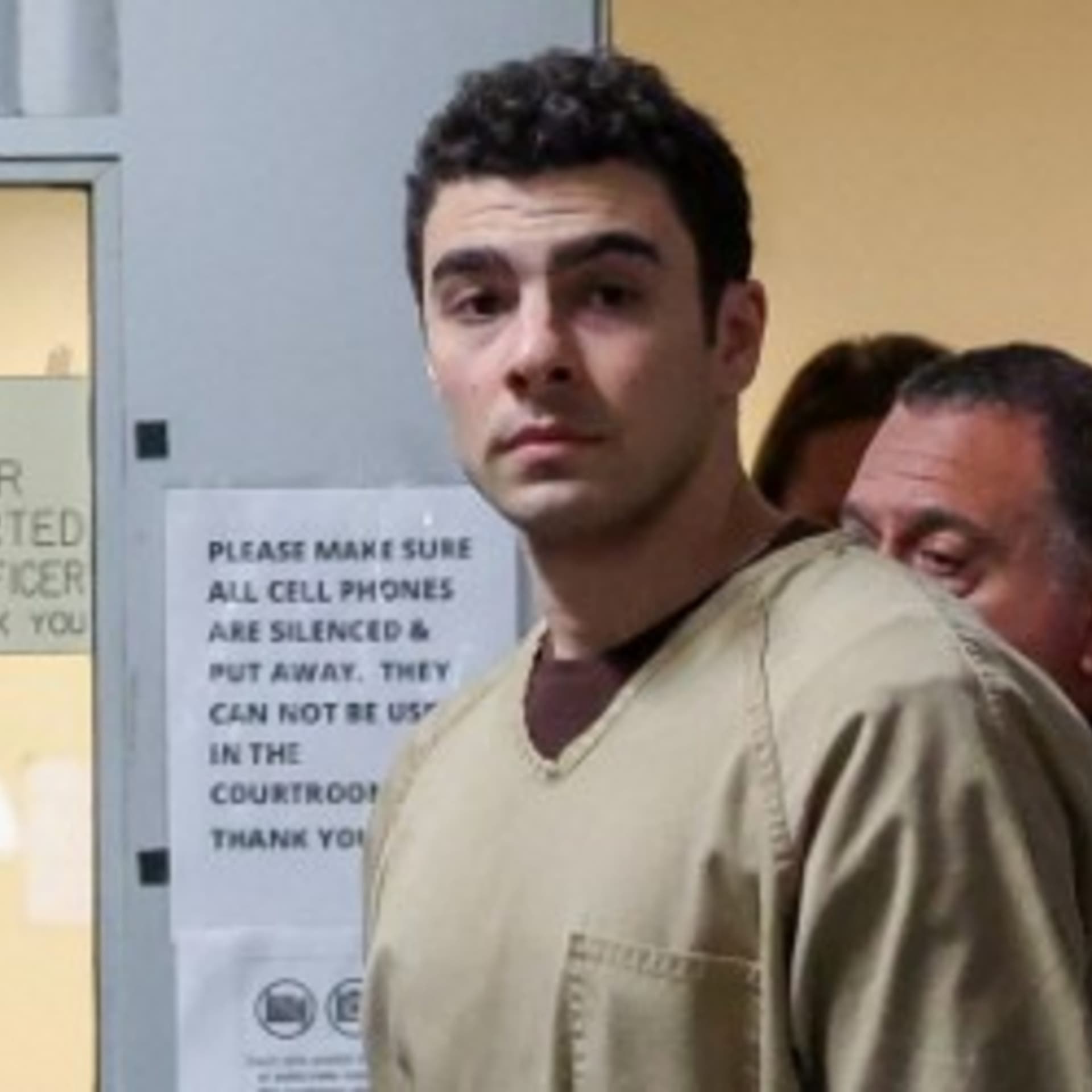
3:16And the judge, after asking him a series of questions about whether he understood that he was waiving his right to a trial, asking if he was competent to make this decision and whether he understood that he could be facing life in prison. And after he answered all those questions very calmly, she then asked him to describe in his own words why he was guilty. And that was some of the most dramatic moments of this hearing, because he began speaking still seated in a tan prison uniform, saying that he had killed Brian Thompson in Manhattan and that he had planned to do it. And he said, I knew what I was doing.
3:59He described how, you know, after enduring years of back pain and navigating, trying to navigate the insurance industry without any luck, that he began researching and planning to go to this UnitedHealthcare annual investor conference that he used a 3D printer to make a gun and that he had the full intent to go there and to kill Mr. Thompson, a father of two. So to hear Luigi Mangione set it out in that way in court with Mr. Thompson's family right there, emotional and listening to this was quite a moment in court. You know, the judge then made sure he understood that she would decide on December 18th during sentencing how long he would spend in prison.
4:47We already know from prosecutors that they plan to seek life in prison. The defense are hoping that he gets less than that. But this was really, of course, a dramatic moment in this legal process because it's not just this federal case. This now impacts the state trial that was due to begin in just a few weeks on September 8th. The reaction to this case has been really polarizing, with some believing Mangione is a folk hero almost. Does it underline how unhappy people are in the U.S. with corporations? Look, I think any American you speak to can share their own stories of frustrations with the health care industry.
5:32It is a very difficult system to navigate, very expensive. So nobody denies that it is a system that needs reform. And I think this does underline just how much people's sense of inequality. You know, people talk about often how they feel corporate interests are trumping those of ordinary people in today's society. I think all of this is certainly something that plays into why there's this surprising level of public support for Luigi Mangione. And what we've seen and we heard there with the clips you played is this attempt by public officials to reiterate that that does not justify murder. that at the end of the day, Luigi Mangione, and he has pleaded guilty to that today, has taken the life of a father of two, a CEO, in a brazen killing in New York, and that he should not be justified as a modern-day vigilante taking justice into his own hands.
6:33Nader Taufik in New York. He was at the heart of a culture war in Britain. Now he is dead. The appointment of Jason Arday as the youngest ever black professor at Cambridge University in 2023 was celebrated at the time as a progressive moment. I was diagnosed with autism at the age of three. I learned to speak just before the age of 12, so I was 11. I learned to read and write when I was 18 years of age. Those milestones became quite significant. Twelve years off learning to read and write, I gained a PhD and then I ended up becoming one of the youngest professorial chairs in Cambridge's history.
7:08Jason Arday talking to the BBC three years ago after joining Cambridge at the age of 37. But it all came crashing down last week when he resigned following allegations of plagiarism and doubts over some of the claims he'd made about his life. He denied plagiarism but admitted errors in his work and stepped down after the university announced an investigation. On Friday, Jason Arday was found dead at a home in London. Police said his death was unexpected but is not believed to be suspicious. Professor Simon Baron-Cohen from Cambridge was in contact with him in the hours before he died. He was being subjected by both social media and traditional media over the last few weeks since the plagiarism allegations came to national news and then international news.
8:00He was being subjected on an hourly basis to ridicule, humiliation. He told me this morning that he couldn't leave his home because his face was now so well known, his name was so well known, that he was a figure of shame. Jason Arde's family have condemned what they called a campaign of harassment against him, saying he'd been subjected to sustained abuse by people who would leave no stone unturned in their quest to undermine him. Our correspondent, Elena Wilkinson, told us more about Jason Arde and the scrutiny he'd faced in recent weeks. He appeared regularly in the media, speaking about a number of subjects from his personal journey into academia and to societal debates.
8:47There were recent allegations of plagiarism and questions about some of his achievements. He denied those claims. He did admit errors in his work, but he said he had faced an unrelenting level of public scrutiny and personal attack. And he also said he was not a liar. When he resigned from his post, he talked about that intense public scrutiny that was on him. And he said the relentless accusations in a statement, speculation and public commentary have taken a profound toll on me, he said, and on those I love. and that is why he said he felt like he had to step back. He stressed that his resignation should not be mistaken for an acceptance of the narratives that have surrounded me.
9:35That is what he said in a statement. Some critics have said the treatment of him had been motivated by racism but others said the claims of plagiarism were legitimate. There will be a number of questions following the news that Jason Arday was found dead. Let me just bring you the statement from the Metropolitan Police who said that they had been called to an address in South London. Emergency services found a man to be unresponsive, a 41-year-old man. At this time, they say his death has been treated as unexpected but is not believed to be suspicious. But yes, there will be a huge number of questions now.
10:18there is that independent investigation that Cambridge University are carrying out and Cambridge University Vice-Chancellor Professor Deborah Prentice has said we are desperately saddened to hear this tragic news. Our heartfelt sympathies go to Jason Arde's family and friends at this incredibly difficult time. Helena Wilkinson. Peace talks between the US and Iran appear to be going nowhere at the moment, with the Strait of Hormuz remaining a key sticking point. But that hasn't stopped President Trump saying the waterway could soon come under American control. And after we finish defeating Iran, which is being very badly defeated, pretty soon I'll be declaring the Hormuz Strait a territory of the United States.
11:09Well, Iran's deputy foreign minister responded by saying the strait would remain under Iranian authority. Its closure has already had a big impact on US petrol prices. But President Trump said Americans should accept paying a tiny bit more for gas. I heard more about that from Daniel Bush in Washington. But first, he gave me his assessment of Mr. Trump's claim that the Strait of Hormuz could become U.S. territory. This is a president who likes to throw out lines like this at political rallies. Of course, there is no sort of concrete policy behind this. It's unclear how the United States would even go about doing that.
11:46The Strait of Hormuz is an international waterway that's controlled partly by multiple different countries in the region. So how the U.S. would even do that remains unclear. And of course, before all of that, there is still this war that The U.S. has not won. President Trump is struggling to figure out how to get Tehran back to the negotiating table. There is a Navy blockade, which is still in place there. There is no end in sight to this war. So this is a president speaking about a moment that could be months from now without a lot of sort of concrete policy behind how it is that he might do that.
12:21And this is in the context of a political rally where President Trump often likes to throw out these kinds of lines to test them, if you will, with his base to see if they're popular, to see if they'll get applause lines. It's not the first time also that President Trump has made some of these claims with the war in Iran and specifically around the strait. A couple of months ago, he said that he might consider naming the strait of Hormuz the strait of America months later. That has not been the case. One of the other lines he threw out was Americans will have to pay a tiny little bit more for gasoline to stop Iran getting a nuclear weapon.
12:55How will that go down among his base and the wider American public? Not so well. Gas prices have been high for months now as a result of this war. And President Trump on multiple occasions has said very explicitly that he's not very concerned about that. He's not concerned about the midterms, that he's not taking those things into his calculations when he decides how to go about this war with Iran. So that's something else that him and other senior administration officials have said multiple times, that, you know, American consumers will pay a slightly higher price for gas now, but that in the long run it'll be worth it because of the safety for Americans, the national security improvements for the region, for U.S.
13:36allies in the Middle East. But Republicans, Ali, in the United States here, who are very focused on their reelection prospects, have not liked this rhetoric. Prices at the gas pump are first and foremost a top concern for voters. And so Republicans would like to see President Trump's rhetoric shift on this, would like to see him acknowledge a little bit more the economic sacrifices that the country is making for this war effort. But with a couple of months left, President Trump seems to be continuing with this messaging that this is just a short-term pain that Americans are going to have to endure.
14:06Daniel Bush in Washington. The founder of Amazon, Jeff Bezos, has bought a share of the Premier League football club Liverpool as part of a consortium. He's the latest American billionaire to invest in English football, despite the sport not being that popular in the US. Jane Dougal has the details. We have confirmation from Fenway sports groups that they have agreed to sell around a third of the club to this consortium, which includes the billionaire Amazon founder Jeff Bezos. Now, Fenway said in a statement they'd entered into a definitive agreement and that the deal supports Liverpool's long term growth ambitions, but that FSG will retain majority ownership and operational control of Liverpool.
14:46Although it is suspected that this could be the catalyst for the American owners to gradually step away after 16 years in charge. But let's take a look at the consortium itself. It's led by British Indian millionaire businessman Amat Bhatia and also includes the billionaire Facebook co-owner Eduardo Saverin. But it's Bhatia who's going to be the football brains of this consortium. Let's not kid ourselves though here. Bezos is not investing because he grew up watching Kenny Dalgleish. He is investing because they're looking for a return. Liverpool is said to be valued at£5-6 billion. They recorded£703 million in revenue in their title-winning season 2024-25.
15:27They've got a global audience of 200 million followers across all social media platforms. Let's put that into perspective for an American investor like Bezos. The LA Lakers, the NBA franchise, that's expected to be purchased by Josh Kushner and Bob Igler. The Lakers look set to be purchased for a reported£9.3 billion, twice the amount that Liverpool is said to be worth. And the NBA team generated around£407 million, half of what Liverpool generated. So you can see the attraction, can't you? And also there are 26 million supporters in the US. they have the fastest growing fan base of any Premier League club in the country.
16:06Jane Dougal. And still to come on the podcast. I think men fancy themselves that they can do anything. There's this confidence that I see in a lot of men, which just means that they think that everything is easy and that they can just do it. Why two in five men think they'd be good enough to compete at the next Olympics.
16:55No matter your goals or appetite for investing, Schwab has everything you need all in one place. Visit schwab.com to learn more.
17:24And that's with Kyle Smith-Bino joining us. And then we'll be learning about Francis Galton and the racist, discredited pseudoscience of eugenics with Desiree Birch. We'll meet many medieval saints in their bone boxes with Rachel Parrott. So if that sounds like your sort of thing, listen to You're Dead to Me wherever you get your podcasts. Thank you. Bye. Choiceology, an original podcast from Charles Schwab, is a show about the psychology and economics behind our decisions. Join host Katie Milkman, an award-winning behavioural scientist and author of the best-selling book How to Change, as she shares true stories from Nobel laureates, authors, athletes and everyday people about why we make the choices we do and how to make better ones to help avoid costly mistakes.
18:10Listen to choiceology at schwab.com slash podcast or wherever you listen.
18:20This is the Global News Podcast. As Russia continues to bombard Ukraine, Kiev is responding with its own campaign of long-range strikes. Ukrainians have had more than four years of this, but for many Russians the war now feels closer than ever before. Our correspondent James Beardsworth has been speaking to people across Russia. Their names have been changed to protect their safety.
18:50In the city of Electrostel, 60 kilometres east of Moscow, a Ukrainian drone crashes into a warehouse of the Russian retailer Wildberries. The explosions and resulting fires, which burnt for three days, so large they could be seen from space, destroyed tens of millions of dollars' worth of goods. The warehouse burned down and we were told that all of our products, everything we had stored there, was lost. Margarita owns a small business selling confectionery across Russia. The strikes on the electrostyle plant cost her business thousands of dollars. Wildberries became one of our main sales channels.
19:33Our sweets can be shipped to different cities across Russia and to neighbouring countries. But now we need to change our approach due to recent events. The strikes on the retailer, Russia's equivalent of Amazon, are part of a recent Ukrainian campaign of long-range drone strikes targeting critical infrastructure deep inside Russia. A plan, President Zelensky says, that is aimed at bringing the war back to Russia. Often thousands of kilometres from the front lines, The drone attacks have disrupted daily life and remind Russians of a war that Moscow launched over four years ago. Polina is a teacher in Moscow.
20:17Now that we know that a drone can hit our apartments, we feel scared for us, for our lives, for our relatives, you know. And we feel that the war is closer than ever. Though the strikes are much less frequent than Russia's daily drone and missile attacks across Ukraine, where civilian deaths in July were at their highest since the first few months of the war, Polina said the situation in the Russian capital is becoming more and more difficult. In Russia's Kursk region, closer to the Ukrainian border, the situation is far more perilous. People drive around at 150 km per hour, even though the speed limit on most roads is 90, because it's believed that driving that fast can reduce the probability of a drone hitting your car.
21:06Nikolai is a Kurs resident and lives just an hour's drive away from the Russia-Ukrainian border. There, communications are heavily restricted, he says. And until recently, getting fuel had become a real struggle. I stood in line for two hours to get fuel. There were also limits on how much you can get. Then later they introduced a different restriction based on license plate numbers. If your plate ends in an even number, you can fill up on even number days. odd number than on odd number days. Ukrainian drones have struck nearly all of Russia's major oil refineries, sparking a fuel crisis across the country.
21:44The attacks also have led to price rises, Polina says. Everything is becoming more and more expensive, so people have to save money. People I know, they used to travel abroad, but now they go somewhere to Krasnodarstv, for example, because they don't have money. Travel too has become more problematic. Mira, a St. Petersburg resident, remembers a trip she took to the southern Russian city of Sochi late last year. Due to the drones, the situation in the air wasn't safe. So in the end, I spent a sleepless night at the airport waiting for another flight to Sochi. Basically, this is our reality now.
22:25But rather than point fingers, the people I spoke to said that most are quietly adjusting to what is quickly becoming a new reality. Nikolai again. People have already gotten used to things. At this point, nothing can really surprise them. A sentiment also shared by Mira.
22:46Everyone knows what's causing the issue, and everyone knows that it's not going to end tomorrow. So I think we've reached a certain stage of acceptance. First is denial, then anger, then depression. Well, I think we've reached the depression stage. That report by James Beardsworth. Following the surge of migrants to the Spanish North African territory of Ceuta, the BBC has identified dozens of Instagram profiles promoting positive content about crossing there from Morocco. Some of them offer assistance to migrants in exchange for a fee and suggest further attempts will be made this weekend. Our disinformation correspondent Marianna Spring has been investigating.
23:29Mohamed wants to travel from Morocco to the neighbouring Spanish territory of Souta, on the northern tip of Africa. He's a Moroccan man in his 20s and wants to emigrate to Europe, not least because he's been seeing lots of videos on Instagram that make the trip look easy. He's contacted several of the Instagram accounts and one replies, claiming to have helped many people and offering him advice on how to cross for hundreds of pounds. Except Mohamed isn't real. He's a dummy account the BBC set up to investigate a network of interconnected Instagram profiles that are helping to drive the influx of migrants to Souta.
24:03Last month, roughly 78 ,000 people crossed from Morocco by sea into Souta in a matter of hours, scores of whom died in the attempt. The crisis has calmed since, but it sparked tensions between EU nations who share open borders. There's also been criticism of the Spanish government. The BBC's top comment podcast has identified dozens of Instagram profiles that portray the short swim around the Morocco Souter border fence as safe and easy. The accounts also wrongly portray Souter as a viable route to mainland Europe. The BBC's research suggests these accounts have contributed to the influx, alongside other factors such as misinformation about changes to Spanish immigration law and allegations about weak border controls.
24:45Meta, which owns Instagram, told the BBC that it removes content that violates its policies, including content that offers to provide, facilitate or seek human smuggling services. Mariana Spring. We end this podcast with a question about sporting prowess from our reporter Stephanie Prentice. Oli, so tell me, if you started training with a professional coach tomorrow morning, could you compete in the 2028 Olympics in Los Angeles? I don't think I could. I'm not a big fan of athletics. I'm not very good at running or long jump or any of those things. My sport is football, but even there, I think I'd struggle to match the professionals.
25:27Why are you asking? Well, there is a reason for this. So a new piece of research, it surveyed 2 ,000 people in the UK, and it found almost 40 % of men thought they could compete in the next Olympics if they had professional training and a strict regime. More than a quarter of those men also said they could not only compete, but they could beat a professional in their chosen sport if they tried. Not unlike you, a lot of them selected football as an area they could shine. That was followed by tennis, so far so British. And 12 % of them backed themselves to do the 100 metre sprint in under 15 seconds.
Read the full transcript
26:07Now, people were more cautious on thriving in sports like gymnastics and diving. But overall, a third of those asked said that confidence would be more important in achieving success than natural ability. There is a related psychological term for this. It's the Dunning-Kruger effect. It's basically a bias where people with low ability or knowledge kind of overestimate their competence. So we put this to the test. We asked some people in and around the BBC whether they could make it to the next Olympics if they had that dedicated training. I think I could, yeah, especially someone, like you said, who's a professional coach.
26:43I think I could, yeah. What would you choose to compete in? Probably 100 metres, 100 metres. How quickly could you do the 100 metres, you reckon, after all that training? Under 12, yeah, under 12 seconds. I always think that Olympians and sports people make it look easy. And so, no, I think it takes a lot longer than that to get good at something. Well, of course, if I have time and if I have the right training, then probably yes they can. I think men fancy themselves that they can do anything. There's this confidence that I see in a lot of men which just means that they think that everything is easy and that they can just do it.
27:17Probably depends on the sport. I definitely couldn't beat a professional sprinter. Anything you back yourself in? 2028 Olympics in Los Angeles. Hot. I don't do well in the heat. So a mixture there but as you mentioned this is all about misplaced confidence. It is. And it's not the first time we've seen that. So there have been other studies where men in particular report feeling confident in their ability to do arguably quite difficult tasks. In the US in 2021, there was a study that found that 22 % of men surveyed thought they could be a chimpanzee in a fight. Another one that you might remember, it went quite viral in 2023, it found that half of men surveyed in the US said they could land a commercial plane in an emergency.
28:05A quick point worth noting, a British team that looked into gender differences in estimating ability, that was last year, it did find that men tend to overestimate themselves, but women tended to underestimate. So there could be something to be said for having a bit more confidence sometimes, though maybe not, we can argue, when it comes to fighting a chimpanzee. Stephanie Prentice. And that is all from us for now, but the Global News Podcast will be back very soon. This edition was mixed by Paul Mason. Our editor is Karen Martin. I'm Oliver Conway. Until next time, goodbye.
From the publisher
The man accused of killing an American health insurance executive has confessed to the crime in court. Luigi Mangione pleaded guilty to two federal counts of stalking resulting in death. He shot the UnitedHealthcare CEO Brian Thompson on a New York street in 2024. Mangione will be sentenced in December; prosecutors say they will seek life in prison.
Also: Jason Arday - the Cambridge University professor who resigned over accusations of plagiarism - has been found dead at his home in London. President Trump says he will soon declare the Strait of Hormuz a US territory. The founder of Amazon, Jeff Bezos, has become the latest American billionaire to invest in English football, after buying a share of the Premier League club, Liverpool. As Russia continues to bombard Ukraine, Kyiv is responding with its own campaign of long-range strikes. Following the surge of migrants to the Spanish North African territory of Ceuta, the BBC has identified dozens of Instagram profiles promoting positive content about crossing there from Morocco. And with the right training, could a normal man compete in the 2028 Olympic Games in Los Angeles? Four out of 10 seem to think so.
The Global News Podcast brings you the breaking news you need to hear, as it happens. Listen for the latest headlines and current affairs from around the world. Politics, economics, climate, business, technology, health – we cover it all with expert analysis and insight. Get the news that matters, delivered twice a day on weekdays and daily at weekends, plus special bonus episodes reacting to urgent breaking stories. Follow or subscribe now and never miss a moment. Get in touch: globalpodcast@bbc.co.uk
Photo: Luigi Mangione in a previous court appearance in New York City in September 2025. Credit: REUTERS/Mike Segar