
In short
The episode is a BBC World Service Global News Podcast covering multiple stories. Main topic: Manchester City have been found guilty of repeatedly breaking financial rules, with the biggest disciplinary case in English football; almost all of 115 charges were upheld. Possible sanctions discussed include points deduction, financial penalties, or removal from the Premier League, with points deduction seen as likely.
Key claims
the club was accused over nine seasons of inaccurate financial information, issues with player/manager payment details, non-compliance with UEFA/Premier League rules, and failure to cooperate.
Notable examples
City’s 2008 ownership by Sheikh Mansour; potential “domino effect” compensation claims from other clubs; Burnley receiving £35m from Everton after a PSR-related relegation.
Guests
Dan Rowan (sports editor), Dale Johnson (football correspondent), Neda Taufik (UN correspondent), Jacob Evans (global affairs reporter), Joe Tidy (cyber correspondent), Matt Britton (BBC Director General), Laura Koonsberg (interviewer), Alim MacBall (religion editor), Jane Perlez (former NYT Beijing bureau chief), Rebecca Casby (interviewer), plus Ioni Wells (North America correspondent).
Written by AI. May contain mistakes. Listen to the episode to check what was said.
Chapters
Tap a time to open that second in VOMain News Highlights
0:50 to 1:52
Overview of key news stories including Manchester City's verdict.
“This is the Global News Podcast from the BBC World Service.”
Manchester City Found Guilty
1:52 to 4:22
Discussion on Manchester City's financial rule breaches and reactions.
“The team that lit up television screens and dominated the Premier League for 10 years under Pep Guardiola, Manchester City has been found guilty of repeatedly breaking financial rules.”
Potential Consequences for Manchester City
4:22 to 6:20
Exploration of possible punishments and implications for other clubs.
“So what next for Manchester City and what could be the wider consequences for the English Premier League?”
Iran's Proposal to the U.S.
6:20 to 8:08
Iran offers a deal to reopen the Strait of Hormuz amidst diplomatic tensions.
“Our football correspondent Dale Johnson.”
Controversy Over Refugee Scheme
8:08 to 10:40
Discussion on the U.S. refugee scheme for South African Afrikaners.
“But this deal would now just shorten that timeline to seven days.”
Increase in Sudanese Refugees
10:40 to 13:20
Report on the rise of Sudanese refugees fleeing to Chad due to conflict.
“But there is friends of my husband, people that lived around us that were not fortunate not to be harmed.”
Refugee Crisis in Sudan
14:00 to 15:55
Learn about the ongoing humanitarian crisis in Sudan and its impact on refugees.
“Around 400 people are crossing the border every day.”
AI in BBC Programming
15:55 to 18:15
Discover the BBC's perspective on the role of AI in media and programming.
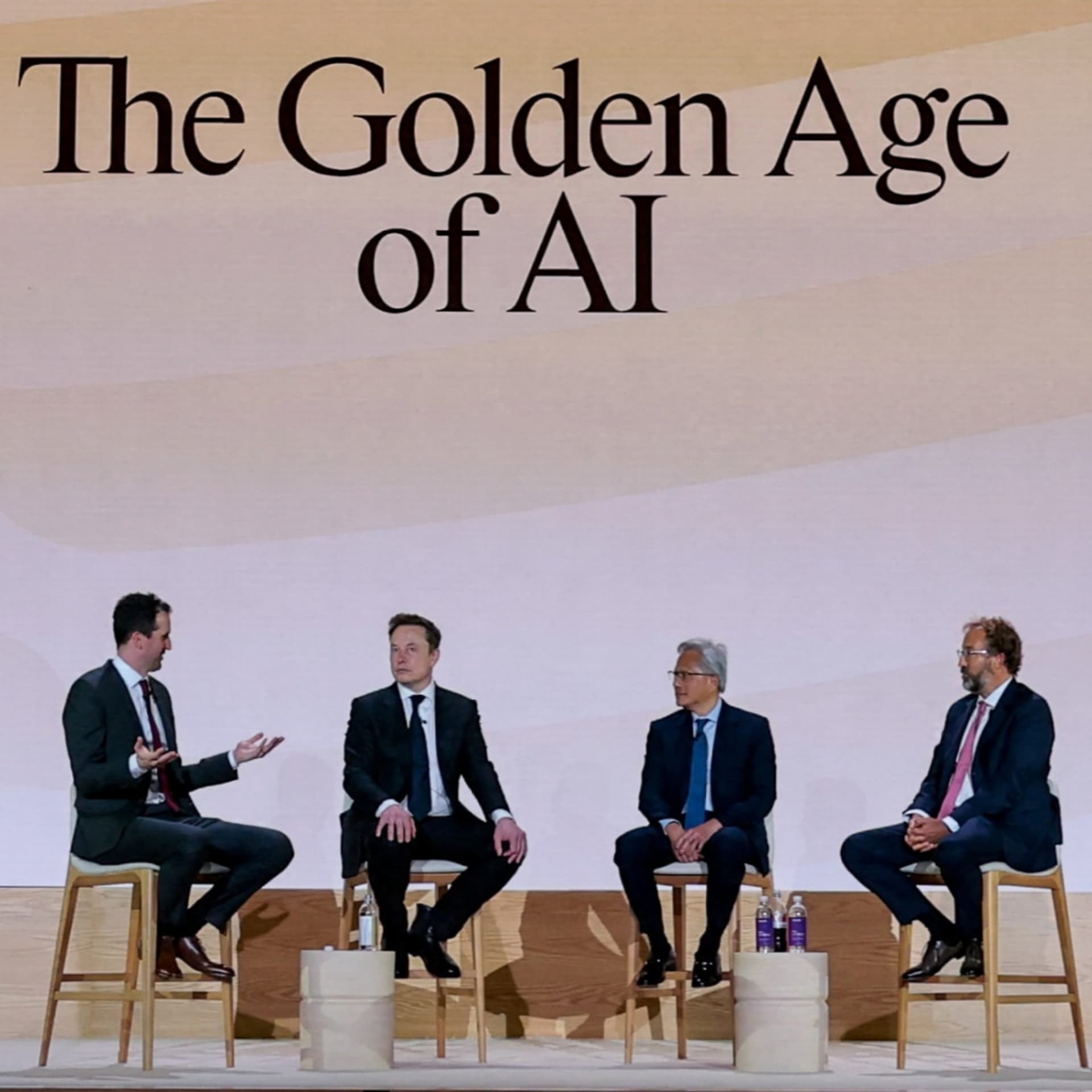
“the boss of the BBC says artificial intelligence could be used to create and present programmes in the future.”
Pope Leo's State Visit to France
18:15 to 22:06
Understand Pope Leo's messages about AI and humanity during his visit to France.
“Now he's been speaking to the BBC's Laura Koonsberg about AI and how the corporation could be better placed to deal with its potential.”
Xi Jinping's Visit to the US
22:06 to 26:02
Examine the dynamics of Xi Jinping's recent visit to the US and its implications.
“It's rebuilding after devastating fire, a celebration of human endeavour.”
Show all 12 chapters
Xi Jinping's Visit to the US
27:13 to 28:00
Examine the dynamics of Xi Jinping's recent visit to the US and its implications.
“John Deere is putting in work and putting up highlights.”
Understanding Market Influences
28:00 to 28:28
Learn about various factors affecting investors and market dynamics.
“Mike and his guests offer their perspective on how policy changes could affect what you do with your portfolio.”
Transcript
Automatic transcript. May contain errors.0:00This BBC podcast is supported by ads outside the UK.
0:50This is the Global News Podcast from the BBC World Service. Hello, I'm Ankur Desai and in the early hours of Saturday the 26th of September, these are our main stories. One of the world's richest football clubs, Manchester City, is found guilty of dozens of breaches of financial rules. Iran offers a deal to the US to reopen the Strait of Hormuz within seven days, linked to an end to all fighting in the region. And the UN says there has been a sharp increase of Sudanese refugees fleeing the country's civil war for neighbouring Chad. Also in this podcast, FBI agents tell the BBC of their shock, fear and anger, following a hack that threatens to expose highly sensitive personal data.
1:35And we're in Paris.
1:40For day one of four of a state visit by Pope Leo, who warns followers against the dangers of artificial intelligence.
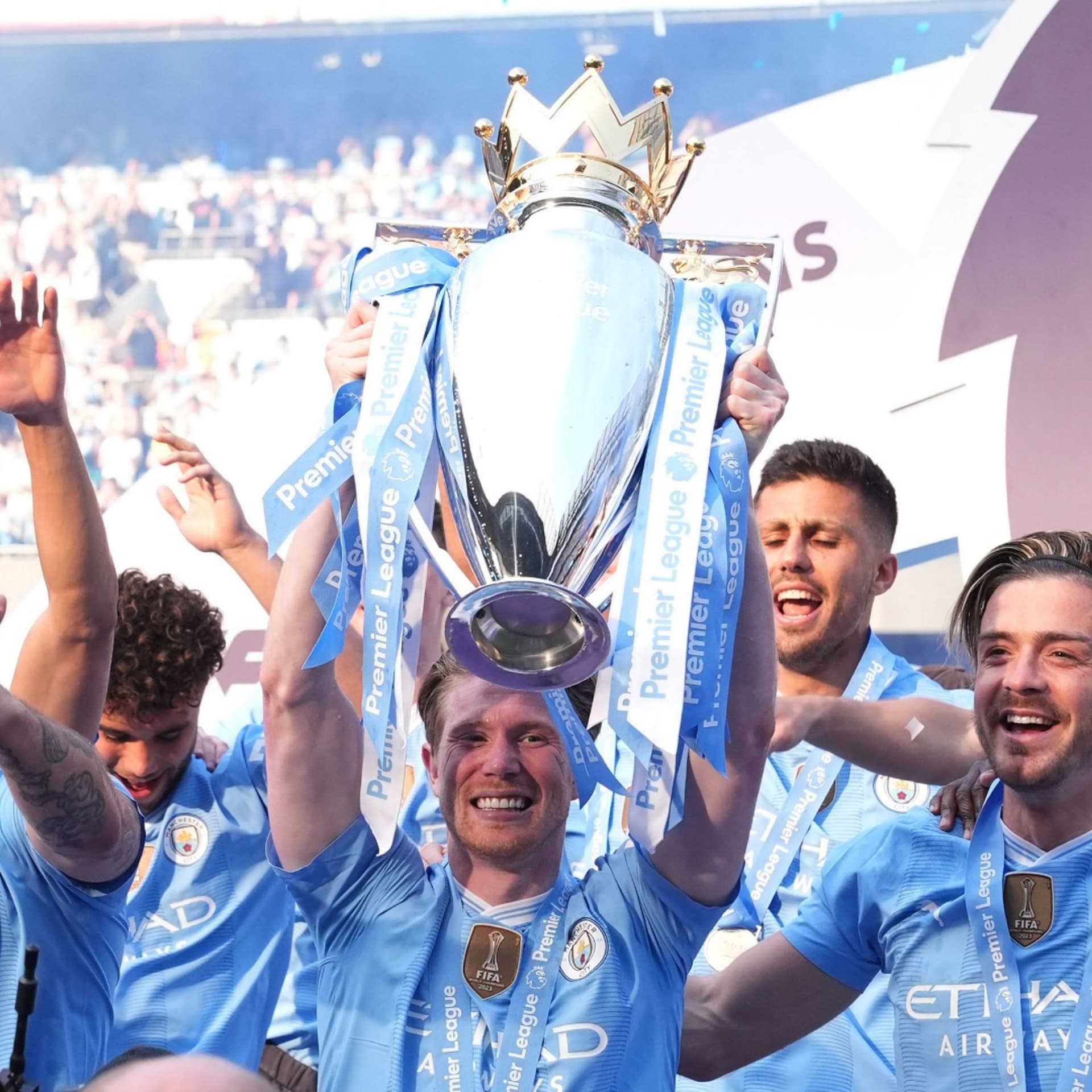
1:51We start the podcast with the bombshell verdict that has rocked the world of English football. The team that lit up television screens and dominated the Premier League for 10 years under Pep Guardiola, Manchester City has been found guilty of repeatedly breaking financial rules. It marks the biggest disciplinary case in the history of the sport, with the club found guilty on almost all of the 115 charges against it. With more, here's our sports editor, Dan Rowan. Over the past decade, Manchester City have enjoyed an era of unprecedented success. The only English club in history to have won the top division title four times in a row.
2:31But for years now, a cloud has hung above the Etihad. City accused of a catalogue of financial rule violations by the very competition they dominated for so long. And today, finally, came seismic news. City found guilty of the majority of 115 charges. In a statement, the club said, The Premier League process remains ongoing, with significant elements to be completed. The club has diligently respected due process for eight years, on the basis that the Premier League board and executive would behave as an independent, impartial and fair-minded regulator, free from partisan influence. This, the reaction of fans outside the Etihad.
3:09Regardless of what happens, we're City fan first and foremost. Do I agree with the rules? No. But if they broke the rules, then they broke the rules. I don't want to say something's being tainted when we're not at the bottom of this. There's still, you know, things to go on in the background. It's a big club. They've got the infrastructure to fight it. They've got the money. I think it'll be all right. So how did we get here? In February 2023, City faced a catalogue of alleged breaches of the Premier League rulebook. 54 charges over a failure to provide accurate financial information across nine seasons and 14 more over a failure to provide accurate details for player and manager payments over the same period.
3:48They were also accused of 12 counts of failing to comply with both UEFA and Premier League financial rules and 35 charges of failing to cooperate with the Premier League's investigation. The saga began back in 2008 when City's fortunes were transformed after it was bought by Sheikh Mansour, a billionaire member of Abu Dhabi's ruling family. His wealth secured some of the world's best players and a first Premier League title in 2012. Finally, football appears to have one of its biggest ever results, but with no news of a sanction and City set to appeal, the saga is far from over. So what next for Manchester City and what could be the wider consequences for the English Premier League?
4:29I asked our football correspondent, Dale Johnson. So this is going to be a severe punishment. is an absolutely seismic case. It goes across nine years of continual misconduct if it is indeed proven and they don't win an appeal. So there are a few things that are open to the disciplinary panel. It's a points deduction, financial penalties, or removal from the Premier League. Now, removal from the Premier League sounds unlikely, but a points deduction, because of the gravity of this and because they have failed to comply throughout, it seems highly likely there will be a heavy points deduction that will be meted out from the Discipline Commission.
5:05And Dale, I guess the domino effect could be that once the formal process is done, there could be wider implications with other clubs wanting to, I guess, settle some scores. They might feel as though they've missed out on titles or income if they didn't qualify for Europe or maybe loss of money because they got relegated into another division. Floodgates could essentially open. Yeah, this is going to be absolutely massive because if you look at two years ago, several Premier League clubs said that they would reserve the right to take action to get financial compensation should Manchester City be found guilty.
5:37Now, we're not just talking here about Manchester United and Liverpool who missed out on the Premier League title in the three years that Manchester City won it in this period. It's about the teams that finished just outside the Champions League places, the teams that missed out on Europe, and as you mentioned, the teams that were relegated. There are so many implications here. And when you consider that early this year, Burnley were awarded£35 million from Everton because they got relegated in one year when Everton had a PSR breach and that was just a few points and that's one team. Can you imagine the potential size of compensation Manchester City might have to pay out if this does turn out as it seems to be with them being filed guilty and having to face these claims for compensation?
6:22Our football correspondent Dale Johnson. Iran's foreign minister says his country has proposed a deal to the U.S. to reopen the Strait of Hormuz within seven days if certain conditions are met. The closure of the waterway has caused oil and gas prices to soar, causing hardship for millions of people around the world. Abbas Arachi, speaking at the UN in New York, said the choice now rests with the United States. Iran has conveyed to the United States, through Qatar, a concrete seven-day plan. If the necessary conditions are met, the strait can be reopened, a normal maritime passage restored within seven days.
7:06The choice now rests with the United States. Iran does not accept coercion, threat or intimidation. and Iran will not surrender its sovereign rights under pressure. We got more on the plan from our UN correspondent, Nedd Taufik. To cap off this busy week of diplomacy, Iran's Foreign Minister Abbas Arakji delivered a statement to the press saying that Iran had delivered a concrete plan through Qatari mediators to the United States to get the Strait of Hormuz open within seven days. And he said if the US was serious about diplomacy, that everything was now prepared. Now, in reality, it's not much different than the original memorandum of understanding that was reached between Iran and the U.S.
7:53before that initial ceasefire broke down. Iran says that if their assets are unfrozen, if the naval blockade in the strait is lifted, and if a ceasefire includes Lebanon, that they are ready to open the Strait of Hormuz from their end. But this deal would now just shorten that timeline to seven days. It's unclear at the moment how the United States will respond to this. For the Iranian delegation, they are hoping that the upcoming midterm elections will provide an incentive for Donald Trump to declare some kind of deal and victory. But President Trump has already told this assembly that he won't be swayed by the election.
8:32And he still believes that kind of that crippling economic pressure will ultimately help the U.S. with leverage. Neda Taufik. Almost all refugees going to America are now white Afrikaners from South Africa. The U.S. State Department says more than 17 ,000 could be admitted next year. It comes as a result of Donald Trump creating a refugee scheme for white Afrikaners after claiming there is a genocide against them in South Africa. But South Africa's new ambassador to Washington says there is no genocide against white Afrikaners like himself and is pushing for the scheme to be scrapped. A North America correspondent, Ione Wells, sent this report.
9:15In St Helena Bay on South Africa's west coast, the houses have an enviable view of long sand beaches, blue skies, a gentle swell of waves. The most important thing is your birth certificate. But this resident, S.U. Devinaja, wants to pack it all up and, in his words, flee. South Africa is a terrible country to live in for everybody at this stage, not just the Afrikaners. But the reality is that there's a political drive towards killing white people and killing the farmers on the farms. And that movement is a political-driven agenda to wipe us out. Data shows most victims of farm violence in the country are black, not white.
9:58and farm attacks, while they do exist, only make up a small fraction of murders. And these are people that are officials and they're saying that kill the white farmer and take their land. The data hasn't stopped US President Donald Trump seizing on this narrative and claiming white South Africans are victims of genocide. He made this accusation to South Africa's President Cyril Ramaphosa at the White House last year and created a refugee scheme for white South Africans. We had three times, three separate occasions where people came into the house. Lili, not her real name, moved her family to Texas through the scheme a year ago, leaving their farm and lives behind in South Africa.
10:37Nothing was stolen. We weren't harmed. But there is friends of my husband, people that lived around us that were not fortunate not to be harmed. They were brutally attacked with pangas and hammers, and that was very close to us. I'm working on my green card. In the last 10 months, nearly 13 ,000 refugees were admitted to the U.S. All but three of them were South African. To qualify for the U.S. program... Larry Bartlett, the former director of the U.S.'s Refugee Admissions Programme, fears they're taking refugee places reserved for those fleeing persecution. It frankly would be laughable, except for the fact that we are now denying legitimate refugees an opportunity to come to the United States.
11:25And instead, what the Trump administration has chosen to do is to focus on a population of white people who, frankly, under U.S. law, unlikely qualify for refugee status. And they're taking scarce and precious places for people who have a real need to relocate, for people who have fled war, for people who fled ethnic cleansing. It's wrong and I think it's probably unlawful. South Africa's new ambassador in Washington, Rolf Mayer, negotiated an end to apartheid on behalf of the party responsible for it. Now he wants to negotiate an end to this scheme. The notion of a mass attack on the Afrikaner was misrepresented by those that might have conveyed the message.
12:20I mean, I'm an Afrikaner from South Africa myself. I can say that I've never experienced something of that kind. So the source is misrepresented, unfortunately, something that just doesn't exist. I made the point several times publicly that I would like to see the executive order being lifted. But here in Washington, D.C., pressure on the South African government is increasing. The U.S. has announced visa restrictions targeting people it accuses of discriminating against South Africa's white minority. The number of those arriving here keeps growing, with some, like Lili, encouraging more to join her.
12:56My entire life's changed. What I call the American dream, OK, is we both have jobs. We live in a safe neighborhood. This is home for me now. This is home for my family. Lili has no desire to go back, but it's not clear if a future government, after Donald Trump, would continue to recognize her status here. That report from Ioni Wells. The United Nations says there has been a sharp increase this week in the number of Sudanese refugees fleeing the country's civil war for neighboring Chad. It said the number of people crossing the border is around 20 times the usual rate. And that eventually could mean more refugees trying to get to Europe.
13:35Here's our global affairs reporter, Jacob Evans.
13:42At the dusty and dry processing centre in Adre, desperate refugees keep arriving from the Sudan border just a few kilometres to the east. For the last few years of the gruelling civil war, almost a million Sudanese refugees have fled here for a chance of safety. But the UN's refugee agency says this week has seen a marked rise in arrivals. Around 400 people are crossing the border every day. People who have witnessed and lived through countless atrocities. Mamadou Dianbalde is the UN's refugee coordinator for the region. I was able to witness the arrival of new refugees, people who tell us that they flee the conflict, they flee the aerial bombardment, they flee the drone attacks, they free the persecution, they flee the violence, and people who are also getting more vulnerable because of the impact of climate shocks.
14:35The ongoing power struggle between the Sudanese armed forces and the paramilitary rapid support forces is into its fourth year. It's left millions dead and injured. The UN estimates more than 33 million people in Sudan need humanitarian assistance, coupled with at least three and a half million Sudanese refugees living in neighbouring countries. However, Mr Balde says the necessary aid is not available. The international community have given them around 20 % of the needs that are required, but it means less food, it means less capacities for people to be relocated to safer areas, it means less capacities to shelter themselves, and it also means people who remain in very dire and vulnerable situations.
15:19The consequences of declining support extend beyond the immediate region. Latest analysis shows the overall number of refugees travelling to North Africa's Mediterranean coast to try and reach Europe has decreased, but the number of Sudanese arrivals by sea has risen significantly. Over 14 ,000 were recorded in 2025, more than treble the previous year. Many of these new arrivals in Chad have a difficult dilemma. Do they stay in small, overrun camps, try to return to war-ravage Sudan, or do they attempt the perilous journey to Europe? Jacob Evans. Still to come in this podcast, the boss of the BBC says artificial intelligence could be used to create and present programmes in the future.
16:02We want to experiment with this technology and understand what it can and can't do. I don't think anything we do should be replaced by AI. I think there are lots of places where AI can help us to make license fee go further, but also help us in our decision-making and in our creativity. but it's not a substitute for humans.
16:47private and sensitive data if their demands are not met. Our cyber correspondent Joe Tidy has been speaking to concerned staff. So far, the FBI has said very little about this potentially dangerous hack. It's refusing to respond to reporters, instead issuing a short statement online saying it is aggressively investigating. But inside the FBI community, there is a loud chorus of shock, anger and fear. Former and current agents I've spoken to are extremely concerned about this highly sensitive data set to be published on the dark net for any criminal with a grudge to download. That is likely to happen in four days' time, as the hackers, shiny hunters, have been threatening.
17:29We are particularly worried about our undercover agents, one insider told me. The stolen tranche contains not only the personal contact details of tens of thousands of agents, but also thousands of documents showing medical exams and test results of a private nature. How did this happen and why wasn't this information better protected is a feeling many agents expressed. Anger at the agency for not having better cyber defences. But inside the FBI there is a concerted effort to find and arrest this prolific hacking group. The Bureau will make these criminals suffer was a warning I heard repeatedly.
18:05Joe Tidy. The boss of the BBC says artificial intelligence could be used to create and present programmes in the future. Matt Britton, a former executive at Google, took up the role of Director General of the BBC in May. Now he's been speaking to the BBC's Laura Koonsberg about AI and how the corporation could be better placed to deal with its potential. She asked Mr Britton if he would allow a BBC programme to be made by AI. I would do within guardrails. And I think what we want to do is we want to experiment with this technology and understand what it can and can't do. but I think I'm here because I believe in human creativity.
18:43I don't think anything we do should be replaced by AI. I think there are lots of places where AI can help us to make license fee go further but also help us in our decision-making and in our creativity but it's not a substitute for humans. The BBC and our apps and services should be the antidote to the algorithm. Everywhere you go is driven by some commercial interest, you know, watch more shows, sell more advertising or take your data and give it to somebody who's building other things. And we're also in this moment where AI is in takeoff. So I think there's a danger that six companies will control access to information in future and the creation of information and misinformation.
19:23Six companies, none of them European, let alone British. In that world, here's the BBC. It's the most trusted organisation. So you want the BBC to be a rival to those other big platforms, but also the BBC content is going on to those platforms. Do you trust the other big tech platforms? I think what I'd say is we have to be where the audiences are. So I was responsible for YouTube. That's not the question. Do you trust them? There's a lot of platforms out there, so I wouldn't trust any platform innately. And I think what you do is you keep under a view how those things work and whether your content can show up in the right place and fulfil its mission.
19:57Matt Britton. Pope Leo has finished day one of his four-day state visit to France, speaking to thousands of young Catholics at an evening service.
20:12At earlier engagements in Paris, he was advocating for their future, warning against the dangers of artificial intelligence and the risks of losing our humanity amid a paradise of machines. Our religion editor, Alim MacBall, reports. The bells of churches across France rang out in concert. to signal the arrival of Pope Leo. A striking welcome for a man visiting the country with a stark message. Greeted by Emmanuel and Brigitte Macron, he started his four-day trip with a short visit to the Elysee Palace. His next stop, the headquarters of UNESCO. The visit of an American pope, a boost for the UN agency at a time when the American president has pulled the US out of the organization.
21:05His keynote speech there filled with warnings about the dangers of AI. While intelligence is attributed to computational systems, we struggle to recognize the inalienable dignity of human persons whose lives are judged according to the criterion of efficiency and when deemed no longer productive, they're rejected and discarded. He's long talked of the threats posed by AI, including in the significant teaching document he published this year. In it, he warns of AI enslaving humanity through algorithms that commodify us, of it putting huge amounts of power in the hands of very few and of reducing war to something like a video game.
21:56He's brought those messages to France, reminding people what it means to be human, to interact, to come together. He visited Notre Dame Cathedral. It's rebuilding after devastating fire, a celebration of human endeavour. The result, he said, was a place that felt like it was where heaven and earth met.
22:20Alim Makhboum reporting. The Chinese President Xi Jinping has ended his first visit to the US in more than a decade. Despite little in terms of concrete policy announcements, there was a visible friendly atmosphere between him and Donald Trump on his three-day visit that featured a series of lavish events. One of them was a private tea party that Trump's hosted for President Xi and his wife, Peng Leong. Until recently, it wasn't common for a Chinese leader to be accompanied by a spouse. and some have described Bung Leuen or Mrs Xi as China's secret soft power weapon. She's a well-known singer in her own right.
23:00Here she is singing the song Everest at the annual Chinese New Year Gala back in 1997.
23:15So is Bung Leuen a soft power super weapon? Jane Perlez is former Beijing bureau chief for the New York Times, and she's been speaking to Rebecca Casby. Well, I don't know about Superweapon. I think she's quite a power. She's a wonderful singer. She's recognised all across China as an amazing voice and presence because she's appeared on practically every New Year television gala for the last decades. So she's a recognisable figure with a great voice, and now she's accompanying Xi Jinping on his trips abroad, which is quite unusual, as you mentioned, for Chinese leaders to take their wives. Before Xi Jinping, they were not seen and not heard, except occasionally from Mao's wife, who was quite rambunctious and not something that you'd really want to take abroad.
24:06Well, he didn't go abroad anyway. But Pang Nguan is really exceptional in that sense. She's also fluent in English too, isn't she? Well, I haven't spoken to her, so I can't testify to that. but the Chinese press was all gaga because she said a few words in English without a translator when she got off the plane when she spoke to Melania Trump. I think she speaks relatively good English but how much practice she gets I don't know. So as you say she's played a role in this meeting that we've had over the past few days. I mean it's all been smiles and you know nice words from both sides but what has come out of this state visit, do you think?
24:44Not very much. That's why a lot, particularly the Chinese media, is focusing on her, because not a lot has been accomplished. Nothing on AI that we know of, nothing on Iran, a very feeble two-month extension of a trade truce, Taiwan not mentioned. We really don't know what, if anything, went on, but it seems pretty clear that there was nothing substantial. So that gave the Chinese a good chance to showcase the First Lady. She and the Trumps and, of course, Xi Jinping went on two museum visits, not just one. They had a tea together this morning at the White House. And interestingly, they went to the National Archives and I think they looked at the Declaration of Independence.
Read the full transcript
25:31But whether they looked at documents about human rights or individual rights, I'm not quite sure about that. And briefly, will both sides actually be quite happy with that? Well, I think President Trump is quite happy with it, but I'm not sure that even many of his senior officials are that happy with it. And I think a lot of people who care and know about China are not very happy about it because it means that there's been very little progress on extremely tendentious issues that affect us all. Jane Perlaz, former Beijing bureau chief for The New York Times. And that's all from us for now. If you want to get in touch, you can email us at globalpodcast at bbc.co.uk.
26:13You can also find us on X at BBC World Service. Use the hashtag Global News Pod. And don't forget us is to podcast the global story, which goes in depth and beyond the headlines on one big story. This edition of the Global News Podcast was mixed by Derek Clark and the producers were Alfie Habishan and Ruby Gleeson. The editor is Karen Martin and I'm Ankur Desai. Until next time, goodbye.
27:06www.smart.com so you can invest your way. Visit schwab.com to learn more. John Deere is putting in work and putting up highlights. Oh man, look at those passes. Tillage, planting, harvesting. Three years in and these pre-owned machines are still at the top of their game. We're talking reliability, performance and long-term potential. And get this, these veteran machines can pick up the latest precision tech with ease. You know it and fans ready to add John Deere certified pre-owned equipment and more options to their lineup can shop at machinefinder.com. Decisions made in Washington can affect your portfolio every day.
27:47But what policy changes should investors be watching? Listen to Washington Wise, an original podcast for investors from Charles Schwab to hear the stories making news in Washington right now. Host Mike Townsend, Charles Schwab's Managing Director for Legislative and Regulatory Affairs, takes a non-partisan look at the stories that matter most to investors, including policy initiatives for retirement savings, taxes and trade, inflation concerns, the Federal Reserve, and how regulatory developments can affect companies, sectors, and even the entire market. Mike and his guests offer their perspective on how policy changes could affect what you do with your portfolio.
28:27Download the latest episode and follow at schwab.com slash Washington Wise or wherever you listen.
From the publisher
One of the world's richest football clubs, Manchester City, is found guilty of breaching dozens of financial rules and could face compensation claims from rivals. Also; Iran extends a new offer to the US to reopen the Strait of Hormuz within a week; Pope Leo warns against the dangers of AI on a state visit to France; The head of the BBC, Matt Brittin, says AI could be used to create and present programmes in the future; South Africa's new ambassador to the US rejects President Trump's claims of mass violence against white Afrikaners like himself; FBI agents tell the BBC of their shock, fear and anger after hackers access the private and personal information of the agency's entire workforce; And we profile China's first lady, Peng Liyuan, the wife of President Xi as the couple end their state visit to the US.
The Global News Podcast brings you the breaking news you need to hear, as it happens. Listen for the latest headlines and current affairs from around the world. Politics, economics, climate, business, technology, health – we cover it all with expert analysis and insight. Get the news that matters, delivered twice a day on weekdays and daily at weekends, plus special bonus episodes reacting to urgent breaking stories. Follow or subscribe now and never miss a moment. Get in touch: globalpodcast@bbc.co.uk Photo: Kevin De Bruyne lifts the Premier League trophy with team-mates. Credit: PA