In short
The episode is a BBC Global News roundup. Main topic: a 7.1 earthquake near Kumamoto, Japan, with many people trapped after a shopping-centre collapse, plus fires/explosions and widespread infrastructure damage; Japan mobilized over 1,600 security-force personnel.
Key claims
shallow quake depth worsened impact; preparedness reduces deaths but not all casualties.
Notable examples
witness accounts of seconds-long shaking; mall facade collapse; reports of power lines cut, train overturned, and fires.
Guest backgrounds
no named podcast guests; it uses BBC correspondents/interviewees. Interviewed/featured people include Felix Umland (German photography student witness), Jake Kwan (BBC correspondent), James Landale (diplomatic correspondent), Ola Guerin (BBC senior correspondent), and Nelson Chamiza (Zimbabwe opposition leader). Also covered: Zelensky/Trump and Netanyahu/Trump meetings, Spain/France wildfires, Zidane appointed France coach, Ecuador cartel violence, J&J talc cancer settlement, and Big Ben clock apprenticeship.
Written by AI. May contain mistakes. Listen to the episode to check what was said.
Chapters
Tap a time to open that second in VOJapan Earthquake Overview
1:45 to 2:44
Details on a powerful earthquake in Kumamoto, Japan, and its immediate effects.
“Japan assesses the damage after a strong earthquake hits the coastal city of Kumamoto.”
Witness Accounts and Emergency Response
2:44 to 6:25
Hear eyewitness accounts of the earthquake's impact and details on rescue efforts.
“Witnesses say there was an explosion and fire at the mall.”
International Relations: Zelensky and Netanyahu
6:27 to 10:15
Discussion on the meetings of Zelensky and Netanyahu with President Trump amid geopolitical tensions.
“for important talks with President Trump.”
Wildfires in Spain and France
10:20 to 12:44
Updates on ongoing wildfires in Spain and France, including evacuations and conditions.
“There's a new story available every weekday.”
Zinedine Zidane's New Role
13:16 to 14:00
News on Zinedine Zidane's appointment as manager of France's national football team.
“To football next, Anne France's national team has a new manager.”
Zinedine Zidane's Return to Coaching France
14:00 to 16:12
Discussion on Zidane's coaching challenges and potential impact on the French team.
“Our sports correspondent Manny Jasmy gave me the details.”
Ecuador's State of Emergency Due to Drug Violence
16:12 to 16:46
Overview of the ongoing drug violence crisis in Ecuador and its implications.
“A vacancy to work on perhaps the world's most famous clock.”
On the Ground Report from Ecuador
16:46 to 21:25
A harrowing report from Ecuador highlighting the impact of drug gangs on local communities.
“Ecuador has one of the highest murder rates in the world and has become the gateway for about 70 % of the cocaine reaching the US and Europe.”
Nelson Chamiza's Vision for Zimbabwe's Future
21:25 to 22:38
Nelson Chamiza discusses his plans to build a citizens' movement for democracy in Zimbabwe.
“Zimbabwe's opposition leader, Nelson Chamiza, says he's building a citizens' movement to respond to what he calls the country's dictatorship.”
Johnson & Johnson's Legal Settlement Overview
22:38 to 26:37
Exploration of Johnson & Johnson's proposed settlement over talc-related lawsuits.
“Well, we have not been missing in action, particularly myself.”
Show all 12 chapters
Big Ben's Apprenticeship Opportunity
26:37 to 28:25
An insight into the apprenticeship for clock maintenance at Big Ben.
“Big Ben is among London's most photographed landmarks and a must-see tourist attraction.”
The Joy of Working with Big Ben
28:25 to 28:54
Explore the unique experiences of working with the iconic Big Ben and its significance.
“I mean, we get to work with the Great Clock, a.k.a.”
Transcript
Automatic transcript. May contain errors.0:00This BBC podcast is supported by ads outside the UK. This advertisement feature is paid and presented by GoTurkiye. Everyone takes the ferry in Istanbul. It's how the city gets from one side to the other. But stay on board a little longer and you arrive at the Prince's Islands. A cluster of nine islands southeast of Istanbul in the Sea of Marmara. Once places of exile for royals, today they're something else entirely. and on the island of Byukada local businesswoman Meena Akhtar and her family have been enjoying the unique pace of life here for generations. Byukada is a place where time stands still and as soon as you step onto the island you feel at peace and you feel relaxed.
0:46Walking around exploring different beaches I think it's just wonderful for anyone who's interested in beautiful places. Just an hour from the hustle and bustle of the city yet a world away the Prince's Islands are a place where doing less somehow feels like more. Plan your next detour at goturkia.com today. This is Jonathan Goldstein from Heavyweight. If your finance team spends more time finding data than using it, if there's one entity here and one here and one here and one here, if scaling your business feels like starting over, You need the Intuit ERP. Intuit Enterprise Suite is the AI-native ERP solution that's powerful, painless, and proven.
1:33Learn more at intuit.com slash ERP. This is the Global News Podcast from the BBC World Service. I'm Charlotte Gallagher and at 15 hours GMT on Tuesday the 28th of July, these are our main stories. Japan assesses the damage after a strong earthquake hits the coastal city of Kumamoto. Many are trapped in a collapsed shopping center. The leaders of Ukraine and Israel are in Washington. What can we expect to come out of those meetings with Donald Trump? Also in this podcast, how drug cartels in Ecuador are ruining lives and communities. How many people have you killed?
2:21Well, until now, about eight, I think. I don't remember well. And it's a long-awaited homecoming for Zinedine Zidane, who will now manage France's national football team.
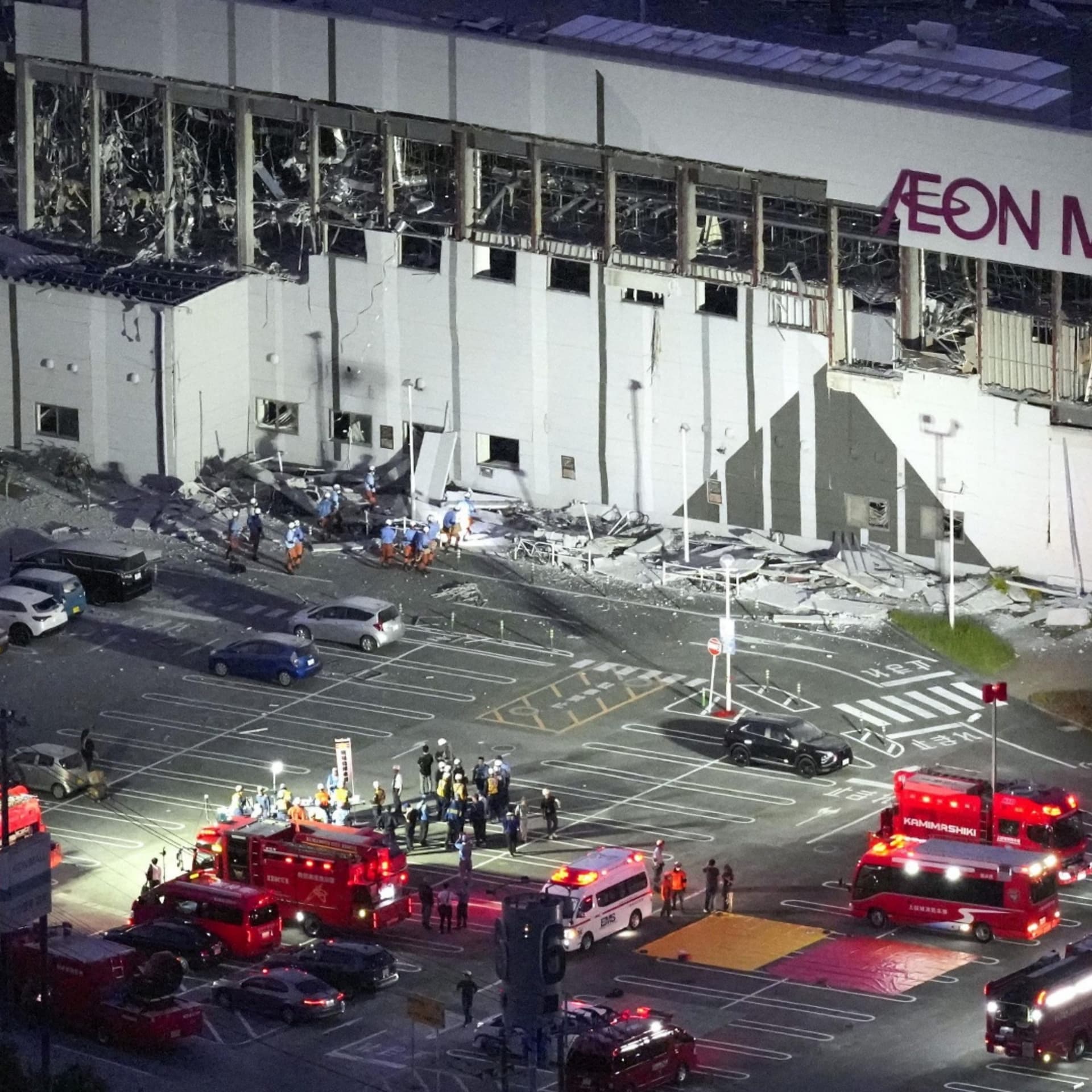
2:38We begin in Japan, where many people are trapped in a shopping centre following a powerful earthquake. The 7.1 magnitude tremor shook the southwestern city of Kumamoto. Witnesses say there was an explosion and fire at the mall. The walls surrounding a 15th century castle were also pulled down by the quake and some roads were damaged. 175 kilometres away in the town of Kagoshima, effects of the quake were felt. Felix Umland, a German photography student, was on the 13th floor of a hotel. My phone just started blaring an earthquake warning. Or generally all phones around, but it was just me and two other people of staff up there.
3:18and I was just looking at my phone thinking, okay, I don't know what to do now. And you don't really get much warning with earthquakes. It's about like, I think five seconds maybe. It felt a lot longer, but like five seconds later, just everything started shaking. It feels like the building beneath you kind of turns into a liquid. It's a very surreal feeling that literally feels like you're standing like at the top of a rubbery snake or kind of a liquid. I got this update from our correspondent in the region, Jake Kwan. The local fire department has confirmed that there are multiple people, many people trapped inside this shopping centre.
3:55And the images we've seen, you know, the facade of the mall has collapsed. There is debris and dust kind of flung all over the parking lot. And we have the witness report saying that they've seen explosion and fire after the tremor before the second floor of the mall had collapsed. and what the authorities are fearing, that there may be many people injured or even possibly dead inside. And we have seen the fire department and the rescue workers going into the building to assess the situation and possibly rescue people. And how have the authorities responded to this? Have they been sending teams to the area?
4:30What we heard from Prime Minister Takahichi is that they have mobilized more than 1 ,600 800 personnel out of their self-defense forces. This is Japan's security force to help with the disaster relief. And they understand this is a critical situation and they will try to save human lives first. But right now, I think they're still in that phase of assessing the situation and what kind of damage and injury that may have happened. Earlier, we had this report of more than 50 people who have been brought to the local hospital. Prime Minister has also said that, The power lines has been cut, roads and bridges are destroyed, the freight train has been overturned.
5:09And we are seeing reports of fires and collapsed buildings. So we're expecting not only the human damage, but the infrastructure damage to be quite extensive. I mean, disasters like these are unpredictable, but Japan does have more earthquakes than some other countries. So are the authorities prepared for things like this? Japan is certainly no stranger to earthquakes and tsunamis, and they have extensive regulation to make sure that the buildings are built to withstand any damages. They're resistant to tremors. You know, whenever these earthquakes happen, we not only look at the location, whether it's close to population centers and the magnitude, but we also look at the depth.
5:51And 10 kilometers that we've seen today is quite shallow. If this were anywhere else on the planet, it would be quite devastating. Look at Venezuela. That was 10 kilometers, too. And we saw thousands of people death reported so far. But this being Japan, because their level of preparedness, the death toll tends to be smaller. Having said that, Japan still experiences these major earthquakes that you cannot prevent human death by human will. And last time this area had this level of tremor in 2016, they had more than 200 people killed by the tremor. And this is what we're fearing. Jake Kwan. As we record this podcast, Ukraine's President Volodymyr Zelensky is at the White House for important talks with President Trump.
6:34Mr. Zelensky is hoping to firm up commitments to bolstering Kiev's anti-ballistic missile defences. After that, President Trump will also meet Israel's Prime Minister Benjamin Netanyahu. Both leaders are in Washington to attend the funeral of the Republican US Senator Lindsey Graham, who died earlier this month. So what can we expect from those meetings. First, President Zelensky, a relationship that has changed considerably over the last few months, as Sarah Montagu heard from the BBC's diplomatic correspondent, James Landale. The last Oval Office meeting was February last year, famously rumbustious and aggressive.
7:12Things have now changed. And in part because, famously, Donald Trump said at that meeting that President Zelensky had no cards to play. Well, President Zelensky and Ukraine have utterly proved that to be false. They now have cards to play. And so they are playing them. That doesn't mean that Zelensky is not coming there with a wish list. You know, he desperately needs two things. One is interceptor air defense missiles, in other words, things to fuel the Patriot missiles. That is Ukraine's chief vulnerability at the moment. Zelensky cannot defend his cities from Russia missiles. And secondly, he will want, if he can, America simply just to re-engage, which make his war more relevant.
7:52Trump has been distracted or focused on Iran. And I think Zelensky will say, look, we just want you to focus on us a bit more. Now is an opportunity to put more pressure on the Russians. Ukraine is on the up. It has the wind in its sails. Let's use this moment to see if there's any diplomatic movement or action that can be made. One idea being floated is an aerial ceasefire, things like that. But those ideas are out there. And I think that's what the agenda that Zelensky will bring to today's meeting. And any evidence he's going to get what he wants? Well, I think there's certainly evidence that Trump is warming.
8:22There's much less hostility. And also remember, look, Donald Trump is under domestic political pressure. He got himself caught up in a very unpopular war in Iran. He's facing elections this autumn. He's looking for wins. He's looking for gains. And so if Trump feels that he can make some diplomatic advance on the Ukrainian side rather than the Iranian side, then that might play into Zelensky's hands. OK, well, President Zelensky obviously wanted him to end a war. Two hours after that meeting, in comes Benjamin Netanyahu, who is presumably arguing that the attack on Iran continues. Yeah, I think Benjamin Netanyahu, again, a man facing elections this autumn, does not want to be left in a position where the Americans cut and run, where they pull out and they essentially leave Iran emboldened, empowered, more ideological, still armed with its ballistic missiles, the nuclear threat still there.
9:14and instead he's facing an America that is essentially saying, is there any kind of deal that can be done over managing the Strait of Hormuz and getting out as quickly as possible because there's so much political pressure on Donald Trump at home to cut and run and to get out. OK, we've talked about the improvement in relations between Zelensky and Trump. What's happened to relations between Netanyahu and Trump? Well, remember, I mean, this war over Iran began shortly after a meeting between Mr Netanyahu and Mr Trump in the White House And they were clearly at one. They were both speaking in the same language, on the same hymn sheet.
9:47Since then, this war is now about to enter its sixth month. And both sides are at odds. As I said, the Americans are looking for a way out. They're frustrated by the lack of success. And yet there is a certain amount of political pressure on Netanyahu from people living in Israel who are saying, look, you know, is this war going to end with us Israeli citizens feeling more vulnerable to the Iranian threat than it did before? And that is a difficult question for Mr Netanyahu to answer. James Landale. And we have more on this on our YouTube channel. Search for BBC News on YouTube and you'll find the Global News podcast in the podcast section.
10:23There's a new story available every weekday. The Spanish Prime Minister, Pedro Sanchez, says firefighters are starting to see the light at the end of the tunnel in their battle against some of the worst forest wildfires in the country's history. But he's warned the coming days will be complicated, with temperatures expected to increase. Meanwhile, a huge fire is still burning in the Gironde region in southwestern France. In total, more than 210 ,000 people have had to flee their homes. The latest evacuation is from the beach resort of Locarno. Captain Remy Lassaret is from the Gironde fire department.
11:02In the first time, we are afraid about possible reactivation of the northwest edge of the fire in the direction of Lakanos. But right now, we are monitoring with aerial devices, with teledetection, with satellites, with radars. But at this moment, the situation is relatively under control. The mayor of Bordeaux, a city of 1.4 million people, says he's preparing for all eventualities. Although the authorities say the city is not in danger, Chris D 'Agbro has decided to leave. The air was quite smoky, was quite difficult to breathe. The smell of burnt was, you know, pretty much all around the city.
11:54The situation is almost surreal, especially knowing that, you know, at the moment, I think they said last night in the news that the fires were like around 10 kilometres from the perimeter of the city. It's actually very worried because we've got basically a green area because of all the parks and all the trees. So the fire would get really, really close. Our correspondent in Bordeaux, Gwynne Loder, gave us this update. It's a bright sunny day here in Bordeaux, which will be bad news for the emergency services who are still fighting these fires. There was some good news overnight. The situation remains stable, but has improved to the south where fires had been burning near the city of Bordeaux.
12:34I'm told the situation now is under control in that area. Hearing reports too that residents who live there may be allowed to return to their homes today even. So that really does seem like good news. To the west of us in the Gironde wildfire area, not so good news. We're hearing that the fires, they are still out of control, but the situation hasn't worsened overnight. So it could be worse, of course. The fear, though, is that we're now under a yellow heatwave alert here. We are expecting those temperatures to rise up to possibly the early 40s degrees Celsius today and tomorrow especially. So the fear is, of course, that the fires could once more take hold and move towards the city.
13:14Gwyn Loda in Bordeaux. To football next, Anne France's national team has a new manager. He's the footballing legend Zinedine Zidane. As a player, he was in the French team, which won the World Cup in 1998. And as a coach, he won three Champions League titles for Real Madrid. He told journalists his new job is a great source of pride.
13:42Today for me it's just a continuity, in a way a dream, because the French national team for me is the only thing I wanted to do and I'll give everything so that this team continues to win. That's the only thing that drives me, to be able to work for this French team and for it to continue winning. Our sports correspondent Manny Jasmy gave me the details. For many, he's France's greatest ever player. His achievements at club level really burnished the name of French football at a time when France were not one of the biggest nations in the world. but this is a completely different challenge for him he hasn't coached for five years that was Real Madrid the only club he's coached in two spells he won three Champions Leagues in a row first time a club had done that for 40 years but yeah five years without coaching he said he received plenty of offers in that time but he was waiting for France and I think it's fair to say that for a long time.
14:46France has been waiting for Zidane and finally they've met. France, they were a hot favourite at the World Cup, but they lost in the semi-finals against Spain. So what will they be hoping that he can bring to this team? Well, he does have a challenge. I mean, they've got so many good players. So on the face of it, you think, OK, well, he's walking into a pretty straightforward and comfortable position. But by the next World Cup, A lot of France's best players, like Kylian Mbappé and Usman Dembele, defenders like Deo Meccano and Jules Koundé, will all be in their 30s, in their early 30s. So, you know, it's not like they won't be playing in the tournament.
15:30But he will have the challenge of finding new blood in the next four years. And more immediately than that, two years' time is the European Championship, which is when we'll see what his France are like. I mean, the players of France have had one coach for the last 14 years. So his is a new voice in the ears of the players. And we'll have to see what his approach is. Because when he was at Real Madrid, he basically let the stars get on with it. Lots of stars at France, of course, but he may have to do a little bit more than that tactically. That was Manny Jasmi. Still to come in this podcast.
16:22A vacancy to work on perhaps the world's most famous clock.
16:34This is the Global News Podcast. In Ecuador, a state of emergency is in place as the authorities battle local drug gangs with links to international cartels. Ecuador has one of the highest murder rates in the world and has become the gateway for about 70 % of the cocaine reaching the US and Europe. The drug isn't produced there, but floods in from neighbouring Colombia and Peru, the two biggest cocaine producers in the world. Our senior international correspondent, Ola Guerin, spent a week in Ecuador and sent this report. We just arrived at the scene of a killing. There are four police cars, about a dozen or so armed police officers here.
17:23There are some local people standing, looking on. and just in front of me there's a motorbike on the ground and beside it the body of a man.
17:48We've met one local man here who is willing to speak. In fact, he says he wants to speak on behalf of the community but he doesn't want to be identified because of fears of retaliation. His words are spoken by a BBC colleague. We're used to this by now because it happens every day here. You might just step outside and catch a stray bullet. You can't go out and chat like before. Do you think the situation here will ever change, will ever get better? It's a lost cause. Criminals are like ghosts. They just pop up wherever they please.
18:34The police are moving forward now quickly. They all have their weapons at the ready. They've identified this house before. They believe there are weapons hidden and they want to get hold of them. All they found was some ammunition and two handguns, one of them rusty. The police captain leading the search is John Charles Bustamante. He says he can only trust the officers right beside him. We've had many, many bad people inside our unit, inside the state, inside the politics. We've had many, many guys that are corrupt. And they're in the pay of the gangs? They are paying the gangs. For you, for your officers, how risky is it to go to a place like this?
19:26It's hard work. We have to fight against people with many weapons, with much, much money than the state. What happens to local people if they speak out against the gangs? They kill them. They kill them? Yes, they kill them.
19:51I'm sitting inside a narrow one-room breeze block house with tin on the roof and I'm with a gang leader who has told us to call him Jonathan he says he's 37 years old four of his gang are here with him they're all armed some with short barreled semi-automatic rifles. We're sitting here and you have a handgun, which is actually pointed in my direction. How many people have you killed?
20:23Well, until now, about eight, I think. I don't remember well. So you think you've killed eight people, but you're not sure about the number? No, I'm not really sure. He tells me the police are not a problem. He has four of them on his payroll.
20:49Whenever they're going to do an operation, they call me. They tell me to hide things and to get out of here. When they arrive, they find nothing. Do you have to pay a lot for that?
21:01Of course we pay a monthly rate. It depends. You pay$1 ,500 or$2 ,000 a month. The cocaine that you're selling is killing people. Do you ever think about that? You can't really hide the truth. As you know, drugs kill, they hurt humanity, and most of all they hurt teenagers. How can we root out something that cannot be rooted out? Ola Guerin. Zimbabwe's opposition leader, Nelson Chamiza, says he's building a citizens' movement to respond to what he calls the country's dictatorship. He's in London meeting members of the Zimbabwe diaspora. He says to build a consensus on the restoration of democracy.
21:43Nelson Chamiza resigned from the opposition party he founded, Citizens Coalition for Change, in 2024, saying the party had been contaminated and hijacked by the ruling ZANU PF government. And Soy spoke to him about his ambitions for his new movement. What is clear is that Zimbabweans at home and abroad have a common clarion core. They want to see change. They want Zimbabwe to be back into the family of nations. They want to see democracy in Zimbabwe. They want to see prosperity and their pride restored. And they are determined to contribute to that effort, particularly building the citizens movement that we are building with a new citizens movement that we are building to respond to the challenges of dictatorship in Zimbabwe.
22:30And there's a lot of excitement, there's a lot of interest, and a lot of hope too, that we'll be able to fix and fix our problems back home. There has been criticism back home in Zimbabwe, that you've been largely missing in action at a time when the country needed you to oppose that parliamentary push to amend the constitution to increase or to extend the terms of the president and parliamentarians. Well, we have not been missing in action, particularly myself. I've been their action on the ground, providing guidance and leadership in terms of the response that is needed. Of course, the amendment of the Constitution is a sad and heavy, tragic blow to democracy in Zimbabwe, because this is what we had as a problem with Mr.
23:15Mugabe. But we seem to have jumped from a frying pan into the fire with the current administration under Mr. Munangagwa. He seems to have learned nothing and forgotten nothing, literally copying lock and stock and barrel what Mr Mugabe was doing. So it's dictatorship 2.0. Well, you have been in the opposition for some time. What are you hoping to do differently? Look, what we're going to do differently is to make sure that we move away from just focusing on the institutions to focusing on the desire and the goal of the people of Zimbabwe on the ground, building a movement as a possibility, building a party.
23:56Because what we need is to fight with a broader base that is not alienating, dividing, but a base that unites and the movement is the best approach. It is also an opportunity as the people of Zimbabwe to make sure that we come together so that there is unanimity and unity in action to achieve a new national consensus for freedom, justice and democracy. Nelson Chamiza. The US consumer goods group Johnson & Johnson has offered to pay as much as$5.5 billion to resolve tens of thousands of lawsuits, which allege that its baby powder and other products containing talcum cause ovarian cancer. Here's our business reporter Ijeoma Ndukwa.
24:41This case has plagued Johnson & Johnson for over a decade now. We've all heard of Johnson & Johnson. It's a major US consumer goods company worth hundreds of billions of dollars and its products are found in households around the world. Now, the company is hoping that this proposed settlement of 5.5 billion US dollars will finally put an end to this long-running legal battle. The company has been facing more than 69 ,000 lawsuits And all of these include claims about talcum-based products, which consumers allege cause cancer. Now, talc is a natural mineral. It's mined from the earth and it's found in places close to asbestos, which is a material known to cause cancer.
25:29So consumers and their survivors are claiming that Johnson & Johnson's talc products cause cancer due to this contamination with asbestos. And it hasn't helped the company that in 2024, the World Health Organization classified talc as probably carcinogenic to humans. Now, Johnson & Johnson maintains that there is no evidence whatsoever that talc causes cancer. But it stopped selling talc-based baby powder in the US in 2020 and then worldwide in 2023, announcing that it was transitioning to cornstarch-based baby powders. So on Monday, they announced that they would be settling the lawsuits and the firm's vice president of litigation, Eric Haas, repeated the company's longstanding position that allegations are meritless.
Read the full transcript
26:19And he says the proposed resolution will allow the company to put this matter behind it. But if accepted, the proposed settlement will cover 95 % of these ovarian cancer claims and it will include the firm paying£3 billion next year. Ijeoma Ndukwe. Big Ben is among London's most photographed landmarks and a must-see tourist attraction. The name Big Ben actually refers to the massive bell inside the large clock tower in the Houses of Parliament. It first rang out in 1859 and the UNESCO site is now looking for someone new to learn about unique clock-making skills. Our reporter Graham Satchell spoke to Andrew Strangeway about it.
27:02Andrew is custodian of perhaps the most famous clock in the world.
27:11So to wind it properly, it's about 60 turns on here, so it's over 7 ,000 turns on the handle. Did people actually do that by hand? That was that for the first roughly 60 years of the clock's life, that was how it was done. The Palace Estate has advertised for a new apprentice. It wants to pass on clock maintenance skills to the next generation. It's a very traditional UK craft. The UK and London in particular did used to be one of the clock-making centres of the world. It's ensuring that those skills are maintained for the future. There are not many places that you could train that will be like this and it's not an opportunity that's going to come up very often.
27:50We head up to the belfry with extraordinary views across London and Big Ben, the bell that has given the clock its nickname. We wait for the top of the hour.
28:25It's a great job. I mean, we get to work with the Great Clock, a.k.a. Big Ben. We get to work on the estate. it's a fantastic place to work. We get to be involved with things like Remembrance Sunday and New Year's Eve celebrations, which are, you know, they're amazing things we part of too. We leave Andrew winding more clocks. It is a skill he wants to pass on to safeguard against the inexorable march of time. I don't know about you, but I think that sounds like an amazing job. That was Graham Satchell reporting from central London.
29:00And that's all from us for now. If you want to get in touch, you can email us at globalpodcast at bbc.co.uk. You can also find us on X at BBC World Service. Use the hashtag Global News Pod. Don't forget our sister podcast, The Global Story. This edition of The Global News Podcast was mixed by Resenwyn Dorrell and the producers were Marion Straughan and Stephen Jensen. The editor is Karen Martin. I'm Charlotte Gallagher. Until next time, goodbye.
29:31Thank you.
From the publisher
Japanese firefighters say many people are trapped inside a shopping centre after a powerful earthquake in the southern prefecture of Kumamoto, on Kyushu island. Witnesses say there was an explosion and fire at the mall after the magnitude 7.1 earthquake. Also: French firefighters have likened efforts to contain wildfires there as a David versus Goliath struggle, despite some progress tackling blazes ravaging parts of France and Spain. We report from the front line of Ecuador's war against drugs. The French football star, Zinedine Zidane, has been appointed as the coach of the men's national team. And how to become a Big Ben apprentice. The Global News Podcast brings you the breaking news you need to hear, as it happens. Listen for the latest headlines and current affairs from around the world. Politics, economics, climate, business, technology, health – we cover it all with expert analysis and insight. Get the news that matters, delivered twice a day on weekdays and daily at weekends, plus special bonus episodes reacting to urgent breaking stories. Follow or subscribe now and never miss a moment. Get in touch: globalpodcast@bbc.co.uk Photo: Aerial view showing the damaged Aeon Mall shopping centre, after the earthquake in Japan's Kumamoto prefecture Credit: Kyodo via Reuters