In short
Global News Podcast Episode Summary
Episode Title
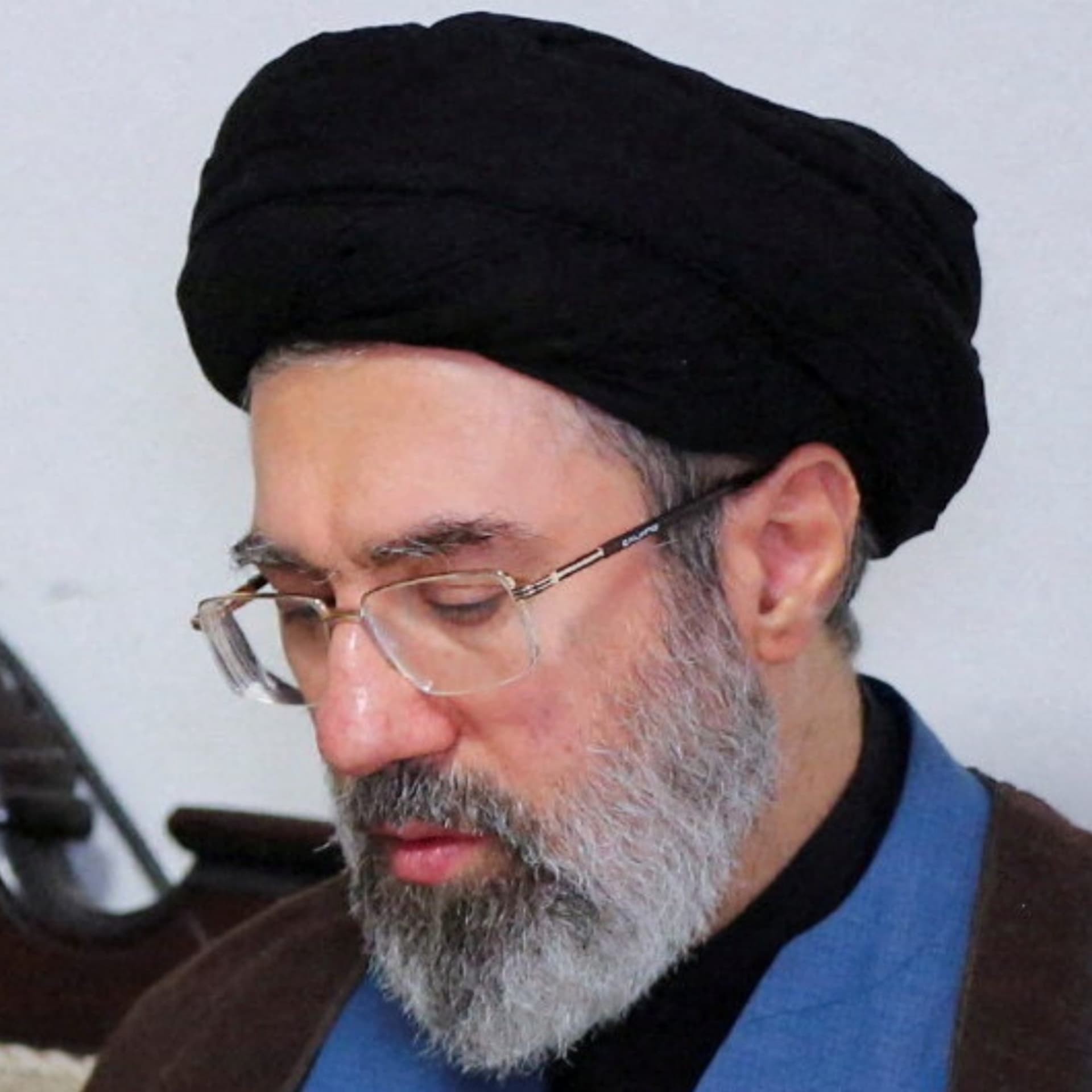
Mojtaba Khamenei Named as Iran's New Supreme Leader Release Date: March 9, 2023 Host: Alex Ritson
---
Episode Overview In this episode of the Global News Podcast, the selection of Mojtaba Khamenei as Iran's new supreme leader following his father, Ayatollah Ali Khamenei's death in US-Israeli strikes is discussed. The episode covers the implications this change holds for Iran’s domestic and foreign policies, the ongoing conflict in the Middle East, and other global news events, including developments in Colombia and scientific discoveries in the Caribbean.
Key Topics and Discussions
- Mojtaba Khamenei's Selection
- Background: Mojtaba Khamenei is the son of the late Ayatollah Ali Khamenei. His accession follows significant turmoil, including missile and drone attacks on Israel and other Middle Eastern targets.
- Political Context: The selection process is described as being highly political, despite the theoretical notion that Iran's supreme leader is chosen by divine will.
- Public Reaction: Supporters of the regime celebrated his appointment, despite international skepticism about his ability to change Iran’s hardline policies.
- Immediate Consequences of Leadership Change
- Military Actions: Following the announcement, Iran intensified its missile and drone strikes, injuring at least 32 people in Bahrain.
- Economic Impact: Crude oil prices surged above $100 a barrel, driven by fears of disrupted oil supplies due to the war, particularly in the Strait of Hormuz.
- International Reactions
- U.S. and Israel's Stance: Both countries expressed concern over Khamenei’s leadership, emphasizing that Iran's aggressive policies would remain unchanged. Israeli officials stated that any regime member involved with terrorism would remain a target.
- Analysis of Iranian Dynamics
- New Leadership Challenges: Jeremy Bowen, the international editor, provides insights into the challenges Mojtaba Khamenei faces in establishing authority, suggesting he may lack the clout his father had built over decades.
- Iran’s Strategy: There is ongoing speculation about whether Iran will continue its aggressive military strategy or seek negotiation, amidst pressures from the U.S. and Israel.
---
Other Global News Highlights
- Colombian Politics
- Elections Update: President Gustavo Petro's left-wing coalition has won the most votes in the Senate elections but will not gain a majority, complicating his ambitious reform agenda.
- Political Tensions: The elections are overshadowed by Trump’s threats of military action against Colombia, which have polarized local political opinions.
- Scientific Discoveries in the Caribbean
- New Sea Creatures: Scientists have discovered potentially hundreds of unknown species while surveying the seafloor off the Caribbean, indicating rich biodiversity in underexplored regions.
- Environmental Hope: The findings suggest some coral reefs may be less affected by climate change, offering hope for future conservation efforts.
---
Conclusion and Closing Remarks The episode concludes with a reminder of the ongoing conflicts and challenges in Iran, as well as updates from Colombia and environmental discoveries that highlight the complexity of global dynamics. The podcast encourages engagement through social media and email for listener input and feedback.
For further details, listeners are encouraged to subscribe to the podcast for regular updates on global affairs.
---
Contact Information
- Email: [globalpodcast@bbc.co.uk](mailto:globalpodcast@bbc.co.uk)
- Social Media: Follow on X at BBC World Service using the hashtag #GlobalNewsPod.
Production Credits: Mixed by Lewis Griffin, produced by Daniel Mann, and edited by Karen Martin. Host: Alex Ritson
Written by AI. May contain mistakes. Listen to the episode to check what was said.
Chapters
Tap a time to open that second in VOMojtaba Khamenei Becomes Supreme Leader
0:44 to 2:36
Discussion on the appointment of Mojtaba Khamenei and its implications.
“The son of Ali Khamenei takes over from his father to become Iran's new supreme leader.”
Israel's Response and Regional Tensions
2:36 to 4:59
Analysis of Israel's reaction to Khamenei's appointment and ongoing tensions.
“Danny Danon, Israeli ambassador to the United Nations, gave his reaction.”
Analysis of Iran's Political Landscape
4:59 to 7:00
Jeremy Bowen discusses the political dynamics in Iran post-appointment.
“clearly, facing some of the greatest challenges they'll ever face in their whole lives.”
US Policy and Trump's Objectives
7:00 to 10:41
Exploration of US policy regarding Iran and Trump's stance on the new leader.
“And he wants an unconditional surrender.”
Impact on Global Oil Markets
10:41 to 13:19
Discussion on how the new conflict affects global oil prices and markets.
“And a few days ago, he was speculating that this conflict might last for four to five weeks.”
Impact of Israeli Airstrikes on Iran
13:19 to 14:00
Reporting on the aftermath of Israeli airstrikes and public sentiment in Tehran.
“or do the markets fear that the war in Iran is going to go on for some time?”
Mojtaba Khamenei Takes Charge
14:00 to 16:40
Learn about the implications of Mojtaba Khamenei's assumption of leadership in Iran amidst ongoing conflict.
“The 56-year-old cleric Mojtaba Khemenai takes over a nation still under heavy attack from the Israelis and the Americans.”
Iran's Oil Depot Attack
16:40 to 18:01
Understand the recent Israeli attacks on Iran's oil facilities and their impact.
“Mushtaba Khamenei is Iran's new supreme leader.”
Ukraine's Drone Technology
18:11 to 23:11
Explore how Ukraine is adapting drone technology to combat threats from Iran.
“And President Zelensky has said Ukrainian drone experts will arrive in the Middle East this week to help Gulf states under attack from Iran.”
Colombian Politics and Challenges
23:11 to 26:13
Gain insights into Colombia's political landscape and the challenges ahead for its leadership.
“Colombia's left-wing president, Gustavo Petro, will soon be leaving office, but before he does so, he wants to rewrite the Constitution.”
Show all 14 chapters
Deep Sea Discoveries in the Caribbean
26:13 to 28:00
Learn about new marine species and discoveries made in the Caribbean's unexplored depths.
“And this has gotten him respect from a sector of Colombian politics, which, as is the case in many other countries, is very, very polarized.”
Marine Discoveries and Hope
28:00 to 28:50
Learn about the surprising marine discoveries in remote areas and their implications.
“that they appear to be unaffected by climate-related diseases plaguing the Caribbean.”
Iranian Women's Football Team's Struggles
28:50 to 30:14
Explore the challenges faced by the Iranian women's football team during the Asian Cup amid war.
“Let's end this podcast with the war in Iran.”
Fans Support Amidst Political Tension
30:14 to 31:16
Understand the fans' support for the Iranian team and the political implications of their actions.
“Yes, we were telling them that if they want to stay in Australia, we would support them.”
Transcript
Automatic transcript. May contain errors.0:00This BBC podcast is supported by ads outside the UK.
0:30bbc.com and the BBC app. Visit bbc.com slash docs to learn more. This is the Global News Podcast from the BBC World Service. I'm Alex Ritson and in the early hours of Monday the 9th of March, these are our main stories. The son of Ali Khamenei takes over from his father to become Iran's new supreme leader. Already, Moshtaba Khomeini's regime has renewed rocket attacks on Israel and across the Middle East. The physical threat to oil supplies propels the price of a barrel of crude to above$100 for the first time in four years. Also in this podcast. I know training can take long, but I think Ukraine is an absolute champion in doing things quickly and rapidly adapting.
1:22And that's exactly what we can teach our allies. Ukraine's top experts in anti-drone technology who want to help Gulf states under attack from Iran.
1:34In theory, the supreme leader of Iran is chosen by God. In practice, it's a highly political decision. And the nation's hardline clerics, the Assembly of Experts, have picked the son of the assassinated Ayatollah Ali Khamenei, Mojtaba Khamenei. According to the Iranian authorities, his wife died in the attack that killed his father. Majtabah Khamenei previously kept a relatively low profile and has never held public office in Iran. The announcement was made on state television.
2:11The Islamic Republic's religious and political leaders have called on Iranians to pledge allegiance to the new supreme leader, who is close to Iran's hardline revolutionary guards. President Trump previously said that Mojtaba Khamenei would be unacceptable as Iran's leader, and Israel has said it will target any successor. The choice appears to signal that there will be no change in Iran's determination to resist US and Israeli attacks. Danny Danon, Israeli ambassador to the United Nations, gave his reaction. It really doesn't matter if it is the father or the son. You have to look at the policy, and the policy of this regime is the same policy, to promote terror, to sow chaos, to acquire nuclear capabilities so they can actually assemble it on the ballistic missiles.
3:00Anyone who is involved with this terror regime is a legitimate target and will continue to target the IRGC and all of those who are collaborating with this regime. Shortly after Mojtaba Khaymenei was named successor, Iran again fired missiles and drones at Israel and Gulf neighbours. The state news agency in Bahrain said at least 32 people had been injured in a drone attack. The Iranian security chief, Ali Larajani, thanked the country's clerics for defying US threats and selecting a new supreme leader despite the bombing of their council chamber in the war. I spoke to our international editor, Jeremy Bowen, and began by asking him if the timing of the Assembly's announcement is significant.
3:46The thing to think about is, first of all, there is a man already running the war, Ali Larijani, who's the secretary of the Supreme National Security Council. And he has been the key man, it appears anyway, in the decision making. He's somebody who in the past has been seen as actually something of a pragmatist. the new supreme leader, Mojtaba Khamenei, will not have the same clout that his father built up over, well, so many years, practically 40 years. So while no doubt he will have to try and referee between factional disagreements within the leadership, the leadership that's still alive, you know, as a question mark, the degree to which he will be told what to do by Larry Jani, or maybe he'll try and tell him what to do.
4:34So we'll see if it makes any difference. We'll see, as you say, whether he lives. For the Iranians, and I realise that you can take this question more than one way, is he a good choice? I don't think they've got many good choices at the moment. Whatever happens, they are in, whichever way you look at it, the regime, the opponents of the regime, people who don't want to get involved in politics, just trying to live their lives. Everybody in Iran right now is in a tremendously difficult position. clearly, facing some of the greatest challenges they'll ever face in their whole lives. There are so many uncertainties about the way ahead.
5:11At the moment, the Iranian strategy, recognizing that, of course, they can't outgun the Americans and the Israelis, is to spread the pain and hope that second and third order consequences caused by attacks on Kuwait or the UAE or Qatar or Saudi Arabia or others, or on the oil industry through squeezing exports going out through the Strait of Hormuz. Their hope would be that they get to a place where Donald Trump will declare victory while they still survive. And if they survive at the end of it, they will declare victory too. But that's quite a way off potentially. I mean, we don't know because at the moment, no side is suggesting, neither side is suggesting that they want to buckle on this one.
5:52Mojitada Khomeini is said to be a right winger, although not many people seem to know a lot about him. Well, he's never had an official position. He's been talked about as a potential supreme leader for some years. But I think they were wary about looking too much like a dynastical succession, like a dynastic succession like the Shah. You know, at the moment, the son of the late Shah, who's now a man in his 60s, is going around touting himself as a potential future leader, not with a great deal of success, it has to be said, of course, outside Iran. So looking at the senior leadership of Iran has always been a lot of analysis mixed with a lot of guesswork.
6:31And you can read analyses coming from very well qualified people that completely contradict each other. But what I would say right now is that I think one of the major questions is whether Iran will stick to this strategy that it's got of trying to hit allies of the US, trying to spread the war, trying to spread the pain, or whether they will decide that they might need to try to make some kind of a deal. But I think the kind of deal that the Americans would have in mind is not the one that they would want. And let's not forget Donald Trump has said he needs to choose the supreme leader. Well, he didn't.
7:04And he wants an unconditional surrender. And that's something they won't give. So while both sides are locked in those positions, this goes on. Does President Trump have a plan and is it working? President Trump has oscillated all over the place in terms of his objectives, as stated by him. When he was being dismissive about Britain possibly sending an aircraft carrier to the Mediterranean, He said the war's been won. He's also spoken about everything from a decapitated dictatorship like Venezuela to the fall of the regime to a whole new beginning for the Iranian people, though it's up to them to try and make it happen.
7:40I mean, he's going all over them. He gives every impression of being a guy who's making things up as he goes along. I suspect that he had hoped that they would be able to move to a pretty swift victory after Hamaní was killed. and they didn't give a great deal of thought about what happens if that didn't do it, that Iran is not a one-man show and therefore that the war was going to go on. I think there is no evidence that they did a great deal of deep thinking about the future before they went into this. Perhaps I'm wrong, but there's no evidence that's emerged that that is the case. Israel, very different.
8:08They're much more clear-eyed about what they want, which is the destruction of the regime. Not necessarily its replacement by democracy, but the destruction of the regime. And I don't think they're that bothered if it leads to chaos in the country or even among its neighbors. What they want is the regime to go because Netanyahu has believed for 40 years that Iran wants to destroy Israel, wants a nuclear weapon to kill Israelis. And he has been waiting for this day, as he said himself, for his whole career. So this for him potentially, he can see his lifetime's ambitions within sight. And he would argue securing Israel for generations.
8:42Again, it's a gamble like Trump's intervention. So we'll see. Our international editor, Jeremy Bowen. The announcement regarding Moshtar Bar Khamenei is bound to annoy Donald Trump. The US president said he personally wanted to approve the next supreme leader, which has been ignored by the Iranian government. Mr. Trump told the Times of Israel newspaper that any decision on ending the war would be made with Israel's Prime Minister Benjamin Netanyahu. A seventh US service member has died in the war after succumbing to injuries sustained in an Iranian attack in Saudi Arabia last Sunday. Our North America editor, Sarah Smith, gave her thoughts on how Mr Trump will take the announcement of the new supreme leader.
9:27He had already dismissed him as a lightweight and said he would be an unacceptable choice to be the new supreme leader, while at the same time President Trump was insisting that he should have a say in who the next leader of Iran is and that anybody who was chosen who hadn't been approved by him wouldn't last very long because he doesn't think this is somebody with whom he can do business. And Donald Trump does repeat again and again. He wants to make sure that Iran cannot develop nuclear weapons anytime soon, but not for the next five years, next 10 years, ideally not for a generation. And that requires putting somebody in charge of Iran who isn't going to pursue a nuclear weapons program.
10:03And Donald Trump very much does not think that Mochabab Khomeini is that person. But it's difficult to say where we go next because of the very confused objectives that there seem to be from the U.S. administration, which, when we hear from Donald Trump daily, vary from destroying Iran's nuclear program and its conventional weapons capability to complete regime change and demanding unconditional surrender. So there is a lack of clarity around exactly what he wants to achieve. And we've even heard from him that he's thinking about putting US troops into Iran, about putting American boots on the ground in order to try and seize the stock piles of enriched uranium that there are inside that country.
10:40So that's yet one more thing he hadn't contemplated when he told us he had launched this action just over a week ago. And a few days ago, he was speculating that this conflict might last for four to five weeks. some of the objectives he's talking about now would take considerably longer to achieve. Sarah Smith. As the conflict grinds on, so do the ripple effects. In the last few hours, there's been a huge surge in the price of oil, while the stock markets in Asia are suffering more big losses. Trading was again suspended on South Korea's main stock exchange. Our business correspondent in Singapore is Nick Marsh.
11:15Well, last week, the price of oil rose by about 20 % in the space of a week. This morning, it's risen by 25 % in the space of a morning, Alex. Things looked like they were starting to stabilise by the end of last week. Traders may be thinking, look, let's wait and see. Let's see what the weekend brings. It looks like they've seen enough. I mean, we saw those dramatic images over the weekend of oil and gas depots in flames across the Gulf in Iran itself. You've got big oil producers basically saying, look, it's not worth producing all of this oil because it's not going past the Strait of Hormuz.
11:54Iran is still very much in control of anything that passes through there. I was just looking at Iraq in particular. Oil production has gone down by 70 % there in the space of just a few days. And then you had what, you know, Jeremy and Sarah were talking about there, you know, the naming of the successor of of the Ayatollah, his son, another hardliner. No indication that this is going to come to an end anytime soon. So trading here, reflecting that very much so. Barrel of Brent crude, for example, now touching$115 a barrel, a really remarkable surge. And quite a stock market route in Asia too.
12:33Yeah, unsurprisingly, just looking now, the Nikkei index in Japan down around 7%. The KOSPI in South Korea down around 7 % as well. They had to put in an emergency circuit breaker to suspend trading there, actually. The reason's very simple. About 90 % of that oil and gas that's stuck near the Strait of Hormuz is bound for Asia. South Korea, for example, needs a huge amount of gas to generate electricity. China imports a lot of oil. Japan imports a lot of oil. Vietnam as well. So when there's this big choke on the supply and this big spike in the price, it's going to really affect economies in this part of the world.
13:10So we're just seeing some more of the losses that we're seeing last week and those ripple effects, like you say, are threatening to get bigger and bigger every day. Nick, is this just short-term pain or do the markets fear that the war in Iran is going to go on for some time? Well, I think what we've seen this morning implies that, yes, the markets do fear that this is going to go on for some time. Things, like I say, had calmed down a little bit by the end of the week But now, given the combination of factors that I outlined earlier, it does seem that this is going to go on for quite some time.
13:42And don't forget, Alex, the longer that the price of oil goes up and the price of gas goes up, the more likely it is that people are going to be paying much more for their petrol, but also much more for their food, because transportation costs become higher, even things like fertiliser becomes higher. Everything, in short, becomes higher. Nick Marsh in Singapore. The 56-year-old cleric Mojtaba Khemenai takes over a nation still under heavy attack from the Israelis and the Americans. In Tehran, a huge clear-up operation is underway after an oil depot was hit by Israeli airstrikes on Saturday night.
14:16BBC Persian has been hearing from people in the Iranian capital about the attack. Their messages have been recorded by actors, as you're about to hear in this report from our chief international correspondent, Lise Doucette. Hell on earth. That's how someone living in this dark described it. Tehran was on fire at the Sharon oil depot in flames. One of 30 Israel said it bombed across Iran. The biggest attack in this war on the country's oil facilities. The lifeblood of its economy. Fire tore through the streets, towards shops and homes. into ancient water channels. They're meant to irrigate the trees, cool the city, not burn it.
15:07Hassan had been heading to the depot at dusk when the first missile struck. I turned the truck around on the street so it would be away from the danger. But then when they fired the first missile, two more struck right afterwards. Then the gasoline started flowing towards the residential areas. Tehran was shrouded in toxic smoke. When the rain came, it was black too. Some residents spoke of their suffering in messages sent to the BBC's Persian service. They have blown it up. Oil depot, Hesar and Pakistan areas. It was as if the night had suddenly turned into day. The city is really covered in smoke.
15:47You can smell the burning. I can't see the sun. There is a horrible smoke. It's still there. I'm very tired. I've been indoors the whole time. The port city of Boucher in the south was also targeted. Satellite images show the impact at its naval base, including a capsized vessel at its jetty. The airbase was hit too. Iran is still hitting back. Fragments of an intercepted missile struck Tel Aviv. The emergency services say eight people were injured in waves of missile barrages. Some managed to get through. Israel's prized air defenses. But Israel and the U.S. say their campaign is succeeding faster than expected.
16:36And now there's a new target. State TV made the long-awaited announcement. Mushtaba Khamenei is Iran's new supreme leader. He assumes his father's mantle in his mold, a hardliner, close to the powerful Islamic Revolutionary Guards. The man President Trump didn't want, the leader Israel says, is in their sights. The commander-in-chief in charge of Iran's existential battle. Lise Doucette. Still to come in this podcast. We are impatiently waiting to return. Personally, I would like to return to my country as soon as possible and be with my compatriots and family. The war in Iran causes difficulties for the country's women's football team.
17:51upheaval alongside threats of intimidation and imprisonment. Our man in Moscow. Watch with a subscription to bbc.com and the BBC app. Visit bbc.com slash docs to learn more.
18:08This is the Global News Podcast. Other news now. And President Zelensky has said Ukrainian drone experts will arrive in the Middle East this week to help Gulf states under attack from Iran. He said they would be able to provide assistance immediately. Some air defences in the region have struggled to cope with Iran's Shahid drones. But Ukraine has spent four years inventing cheap but effective ways of defending their skies from similar Russian strikes. Our diplomatic correspondent James Landale is in Ukraine and has been to see the latest anti-drone technology the country has to offer. we're standing in a field in the middle of the ukrainian countryside and it's a place where people come to test drones we've come to look at a drone called a bullet they're putting it together in front of us and it looks like a very strange weapon a hybrid weapon half quadcopter drone half plastic shell and it's the latest technology the latest design that the ukrainians have come up with to destroy lethal Russian Shahhead drones that attack Ukraine almost nightly.
19:26The bullet's just taken off, rising on its four propellers, and then suddenly, whoosh, away it goes. It tips on its side, rockets away, and now it's just a small speck on the horizon. Its top speed is well over 300 kilometres an hour.
19:49This is one of Ukraine's newest and fastest interceptors, and the idea behind it is very simple. The pilots launch the bullet and use a first-person camera simply to crash it into an incoming drone. They're deadly, and the pilots know they could be just as effective against similar Iranian Shahid drones, causing havoc across the Middle East. This drone pilot, callsign Draka, thinks Ukraine has much to offer. Honestly, we have enough work here. But we understand that this war is spreading across the world and that Iran is an ally of Russia. So I think we could find the resources to send our instructors to train people who are fighting the same enemy.
20:35We've come now to the factory where the drones are made. There are rows and rows of men and women soldering, assembling, fixing, sorting. And there are piles and piles of these drones. You really get a sense of just how relatively simple it is to make these drones and why they're so cheap. Stanislav Grushin is co-founder of the General Cherry Drone Company. Are you surprised that it has taken this amount of time for the rest of the world to wake up to the importance of this? Speaking honestly, I'm really surprised. It seems that every country is preparing to the past wars, but not the ongoing ones.
21:19Have any countries come to you? Have you had extra demand requests in the last week? Yes. A lot of state agents from different countries from all over the world, not just Arabic ones who are already facing the threat from Iran. They understand now how it may be. The request is pretty high and very urgent. President Zelensky says Ukrainian experts will arrive in the Gulf this week to offer immediate help with drone defences. But he's clear nothing should damage Ukraine's own, and he's looking to swap interceptors for more Patriot missiles. It's also about more than just selling drones. Allies would also need training in how to use them.
22:07Victoria Honchoruk works for the Snake Island Institute, a defence think tank, and believes Ukraine can teach the world a great deal. I know training can take long, but I think Ukraine is an absolute champion in doing things quickly and rapidly adapting, and that's exactly what we can teach our allies. That's one. Second is rapid integration of interceptors in the air defence because it is quite new for allies. Just one thing important to remember is that it should be a partnership. Ukraine gives something, Ukraine needs something in return, right? We're happy to close the sky, but let's also close the sky over Ukraine, finally.
22:43The war in the Middle East poses risks for Kiev. Rising oil prices fueling Russia's war machine distracted allies turning their attention elsewhere. But Ukraine's hard-won expertise in interceptor drones gives President Zelensky an opportunity. not just to win new friends and funds in the Gulf, but also to keep his war from being forgotten.
23:11James Landale. Colombia's left-wing president, Gustavo Petro, will soon be leaving office, but before he does so, he wants to rewrite the Constitution. The outcome of legislative elections on Sunday could help him, although the result could also mark a right-wing comeback. a recent trend in other Latin American countries. Colombian politics remains in the shadow of powerful cocaine gangs and the decades-long civil war. More recently, President Trump has threatened military action in Colombia. I got the latest from Luis Fajardo, BBC Monitoring's Latin America specialist. Results are kind of indicating a similar situation to what we had in Colombia in the previous four years, that is no party dominating Congress.
23:57Now, that could be significant for whoever becomes the president of Colombia in the elections that are happening in late May, because during the last four years, left-wing president Gustavo Petro, who had a very ambitious agenda of reform, he couldn't manage to pass a lot of these initiatives through Congress. And presumably, the person who takes over could be facing a similar situation given the initial preliminary indications of the elections in Colombia where no party has appeared to gain a commanding advantage in Congress. Yes, because President Petro still has hugely ambitious plans really before he leaves office in August.
24:36Certainly. I mean, he proposed a very substantial number of social reforms, which to a large extent have not occurred. People in realistic terms are not expecting him to pass a great amount of them in the few months that he has left in office. What he has tried very openly to do is to make sure that a left-wing presidential candidate manages to succeed him. You're mentioning that he is not allowed to run for office again, but the candidate who's favoured by the government is a left-wing candidate called Ivan Cepeda, has promised to fulfil a lot of these pledges. And Petro is trying very ambitiously to promote the election of him.
25:16He also, as you mentioned, he's talking about a constitutional reform that he claims would make it easier to implement all these ambitious reforms. To what extent has President Trump and his threats against Colombia overshadowed these elections? They have been certainly an important part of the electoral debate. Colombia has traditionally been a very close ally of the U.S. And many people in Colombia, particularly conservative Colombians, were shocked to see the level of confrontation that occurred at a political level between Colombia and the U.S. The conservatives, very quickly, they say that Petro was endangering Colombia's interests by fighting or presenting a confrontational attitude towards Trump.
25:58While Petro's followers, however, say that his position has been a position of defending ideals. And in the process, he has become a voice of opposition to Trump when many other leaders in the region were obviously moving in a different direction. And this has gotten him respect from a sector of Colombian politics, which, as is the case in many other countries, is very, very polarized. And no one is expecting it to become much, much less polarized in the next few months. Louis Fajardo. Although more than two-thirds of the Earth's surface is covered by ocean, less than 10 % of the deep sea has been properly explored.
Read the full transcript
26:36Now, scientists in the Caribbean have discovered potentially hundreds of unknown sea creatures and a whole lot more by surveying almost 26 ,000 square kilometres of seafloor. Chantal Hartle reports. The waters off the glittering coastlines of Britain's overseas territories in the Caribbean have long been a mystery. The seafloor in this region is too deep and remote for divers to map it. Instead, scientists in Anguilla, Turks and Caicos and the Cayman Islands used advanced cameras and sonar equipment to capture data at depths of up to 6 ,000 metres. Working with British researchers, they collected more than 14 ,000 specimens over six weeks.
27:18Some of the More impressive finds include a fish with tubular eyes that point upwards to see the silhouettes of its prey, an eel with a glowing pink tail that flashes red to lure in food, and a dragonfish with a glowing rod under its chin. There was also a bright orange sea cucumber, initially thought to be the rare headless chicken monster species, as expedition leader Dr James Bell explains. We still don't know what it is, but the closest relative that we can find of it that's been reported in the past was half the world away. But the discoveries didn't stop there. Using their data, the team made 3D maps of an underwater mountain range and surrounding the steep slopes were coral reefs so deep that they appear to be unaffected by climate-related diseases plaguing the Caribbean.
28:06Things like ocean acidification and climate change, but also a disease called stony coral tissue loss. Both of those are causing huge problems, but in these kind of offshore, more remote areas, those are apparently absent and that gives us real hope for the future and that's vital information. Scientists also found black coral that could be thousands of years old, making them some of the oldest ever recorded. And they were surprised to find a huge crater, a blue hole, that formed when a cave collapsed inwards. They liken this to taking an ice cream scoop out of the sea floor. The team will now review more than 300 different types of marine creatures to determine if they are new species, a process that will take some time.
28:48Chantal Hartle. Let's end this podcast with the war in Iran. The conflict has provided some difficult moments for the Iranian women's football team taking part in the Asian Cup in Australia. The players have just lost their third and final match of the tournament against the Philippines and are now expected to head home. Last week, before their first match with South Korea, they declined to sing Iran's national anthem, a move that led to criticism at home. They were described by the Iranian state TV as traitors during wartime. Marzea Jafari, the Iran team coach, spoke to reporters after the final match.
29:30We are impatiently waiting to return. Personally, I would like to return to my country as soon as possible and be with my compatriots and family. Our Australia correspondent Katie Watson was at the match on the Gold Coast. After last week's silence, they sang and saluted. The football was almost incidental. Politics took over. This was a chance for fans of the Iranian team to chant against the Islamic Republic while also backing its players. There's growing concern that by choosing not to sing the anthem last week, there could be repercussions for the players and their families when they return to Iran.
30:09With three losses, Iran is now out of the tournament. But for the team's fans, the fight continues. What are you telling the women? Yes, we were telling them that if they want to stay in Australia, we would support them. But I think, well, I'm sure of that, that they're being threatened with their family's safety in Iran. That's why they refuse to answer back to us. We're here to just support them. We can't do much other than just chanting for them, to be The team has been put in a very difficult situation here in Australia. During the match there was very little interaction with the supporters.
30:42One player, when receiving medical treatment on the sidelines, did blow a kiss to the crowd to huge cheers. It was a bit of a statement. But at the end of the match, when the Filipino players were thanking their supporters, the Iranian team just walked out. As the players left the stadium, they became the silent stars in this drama unfolding in the rain. The players returned to their hotel in the end, their fans thwarted in their efforts to stop them. The team's expected to fly out of Australia soon. Katie Watson on the Gold Coast. And that's all from us for now. If you want to get in touch, you can email us at globalpodcast at bbc.co.uk.
31:30You can also find us on X at BBC World Service. Use the hashtag Global News Pod. And don't forget our sister podcast, The Global Story, which goes in-depth and beyond the headlines on one big story. This edition of the Global News Podcast was mixed by Lewis Griffin and the producer was Daniel Mann. The editor is Karen Martin. I'm Alex Ritson. Until next time, goodbye.
32:04I'm Steve Rosenberg, the BBC's Russia editor. In Our Man in Moscow, I'll show you what it's like being a news correspondent in Russia as the Russian authorities wage war on Ukraine and try to silence dissent. The sound of war has reverberated around Ukraine for three years. Dramatic geopolitical upheaval alongside threats of intimidation and imprisonment. Our Man in Moscow. Watch with a subscription to BBC.com and the BBC app. Visit bbc.com slash docs to learn more.
From the publisher
Supporters of the Iranian regime have taken to the streets to celebrate the selection of the country's new spiritual leader, Mojtaba Khamenei. He will replace his father, Ayatollah Ali Khamenei, who was killed in US-Israeli strikes on the first day of the war. Shortly after the announcement, Iran launched a fresh wave of missile and drone strikes at targets in Israel and across the Middle East. The price of crude oil has surged above $110 a barrel - a four-year high - as the Strait of Hormuz remains closed because of the war. In other news, the left-wing coalition of the Colombian President, Gustavo Petro, is projected to have won the most votes in Senate elections - but will not gain a majority. And scientists in the Caribbean say they've discovered previously unknown sea creatures.
The Global News Podcast brings you the breaking news you need to hear, as it happens. Listen for the latest headlines and current affairs from around the world. Politics, economics, climate, business, technology, health – we cover it all with expert analysis and insight. Get the news that matters, delivered twice a day on weekdays and daily at weekends, plus special bonus episodes reacting to urgent breaking stories. Follow or subscribe now and never miss a moment. Get in touch: globalpodcast@bbc.co.uk