
In short
Global News Podcast Episode Summary: "More Questions About Swiss Fire"
Episode Overview In this episode of the Global News Podcast, hosted by Charlotte Gallagher, significant global developments are reported, including a tragic fire at a Swiss ski resort, protests in Iran, migration from the US to Russia, Argentine economic issues, advancements in AI safety, and the latest on tennis star Venus Williams.
Key Headlines
- Swiss Ski Resort Fire
- Event: A deadly fire at a bar in the ski resort of Cran, Montana.
- Casualties: 40 people died and 119 were injured, with victims primarily being teenagers.
- Cause: Investigators focus on sparklers placed on champagne bottles as the ignition source, which were too close to the ceiling.
- Ongoing Investigation: Safety measures, bar capacity, and adherence to fire codes are under scrutiny. DNA tests are being utilized to identify victims due to severe burns.
- Iranian Protests
- Situation: Mass protests in Iran over economic issues, primarily related to a currency collapse and rising food prices.
- US Involvement: Former President Donald Trump warns that the US would intervene if protesters face violent crackdowns.
- Government Response: Iranian officials issue warnings against US intervention, amid a backdrop of ongoing unrest and repression within the country.
- Migration to Russia
- Trend: A small number of Westerners, particularly Americans, moving to Russia, citing dissatisfaction with life in the US.
- Case Study: The Hare family from Texas describes their migration as a search for traditional values against what they see as American decline.
- Official Perspective: Maria Butina, a Russian lawmaker, claims 200 US citizens have migrated under a new fast-track pathway for those sharing common ideological values with Russia.
- Argentine Economic Challenges
- Financial Crisis: An estimated $250 billion is believed to be hidden in mattresses and offshore accounts.
- Innocent Tax Law: Newly ratified legislation aims to encourage citizens to deposit their money in banks with reduced scrutiny on the origins of funds.
- Public Distrust: Historical government actions during financial crises have led to a pervasive distrust of the banking system among Argentinians.
- AI Chatbot Developments
- Issue: The AI chatbot Grok is reported to have generated inappropriate content, leading to an announcement of improvements in content safeguards.
- Public Reaction: Concerns about the ethical implications of AI-generated content and user privacy are raised, with experiences of users highlighting the risks associated with AI technologies.
- Venus Williams' Australian Open Entry
- News: Venus Williams, at 45, receives a wildcard entry to the upcoming Australian Open.
- Expert Insight: Sports commentator Ricky Macy reflects on her enduring love for competition and the impact of her participation on the sport, regardless of her current competitive edge.
Conclusion The episode encapsulates a range of significant global issues, from local tragedies to international protests and evolving technological landscapes. It reflects on the human stories behind the headlines, emphasizing the interconnectedness of global events and the diverse challenges faced by individuals and societies.
Key Takeaways
- The investigation into the Swiss fire underscores the importance of safety regulations within public venues.
- Iranian protests highlight the complex interplay of domestic issues and international responses.
- Migration stories reveal personal motivations that can drive individuals to seek life in contrasting political climates.
- Argentina's economic strategies aim to rebuild trust in financial systems while navigating historical distrust.
- The development and usage of AI technologies continue to raise ethical concerns that need urgent attention.
- Venus Williams' participation in the Australian Open serves as an inspiration, reflecting resilience and passion beyond age-related challenges.
For feedback or further discussion, listeners are encouraged to reach out via email at [globalpodcast@bbc.co.uk](mailto:globalpodcast@bbc.co.uk) or follow the podcast's social media updates.
Written by AI. May contain mistakes. Listen to the episode to check what was said.
Chapters
Tap a time to open that second in VOSwiss Ski Resort Fire Investigation
2:38 to 4:00
Investigate the deadly fire at a Swiss ski resort and its causes.
“I'm Charlotte Gallagher and in the early hours of Saturday the 3rd of January these are our main stories.”
Eyewitness Accounts and Aftermath
4:00 to 7:18
Hear firsthand accounts and the ongoing efforts to identify victims.
“A fire which killed 40 people at a bar in the Swiss ski resort of Cran, Montana appears to have been caused by sparklers placed on champagne bottles that were too close to the ceiling during the New Year celebrations.”
Fire Safety Regulations and History
7:18 to 9:06
Explore the historical context of fire safety regulations and their implications.
“A chilling photo shared with the BBC of partygoers holding up flaming champagne bottles appears to have been taken seconds after the fire started.”
Iranian Protests and U.S. Response
9:06 to 12:07
Understand the current protests in Iran and President Trump's reaction.
“you can go on YouTube, search for BBC News, click on the logo, then choose Podcasts and Global News Podcast.”
AI Ethics and Content Safeguards
12:07 to 14:08
Discuss the ethical implications of AI-generated content and safeguards.
“Traditionally, the usual response from the authorities to any internal dissent has been repression.”
US-Iran Tensions and Trump's Strategy
14:08 to 14:49
Explore the current US-Iran relations and the potential strategies of Trump amidst accusations from Iranian officials.
“Something they have said would be on his terms, basically a capitulation.”
The Hare Family's Journey to Russia
18:21 to 19:11
Follow the Hare family's decision to move to Russia and their experiences adapting to a new culture.
“since the start of Putin's full-scale invasion of Ukraine in 2022.”
Asylum and Ideological Alignment in Russia
19:11 to 20:06
Discover the Hares' experience with asylum in Russia and its ideological implications.
“That whole thing to me is just the degradation of everything that I believe in.”
Migration as a Propaganda Tool
20:06 to 21:01
Examine how migration is used as a political tool by governments and its impact on public perception.
“Maria Butina is a lawmaker with President Putin's United Russia Party.”
Hares' Challenges and Future in Russia
21:01 to 22:14
Learn about the challenges the Hare family faces in Russia and their views on the future.
“They can herald the fact that folks want to flee from their adversaries.”
Show all 18 chapters
Argentina's Hidden Wealth Crisis
22:14 to 23:25
Explore Argentina's underground economy and the government's attempts to repatriate hidden wealth.
“Leo Herr ending that report by Christina Volk.”
Government Incentives for Bank Savings
23:25 to 24:29
Delve into the Argentine government's measures to encourage citizens to deposit their savings into banks.
“It is not entirely unusual for large real estate transactions, for example, to be done in cash.”
Public Distrust in Financial Systems
24:29 to 26:07
Understand the historical context of public distrust in Argentina's financial systems and its implications.
“authorities are going to be a lot less restrictive about asking where the money came from.”
AI Chatbot Grok's Safeguard Issues
26:07 to 28:00
Investigate the controversies surrounding AI chatbot Grok and the challenges of implementing effective safeguards.
“Users have claimed it has turned pictures of children and women into erotic images.”
Concerns Over Image Consent on Social Platforms
28:00 to 28:59
Learn about the implications of uploading personal images to social media and the risks of non-consensual use.
“But X doesn't seem to have any issue generating requests for people in bikinis.”
Venus Williams' Return to Tennis at 45
28:59 to 29:54
Discover the excitement and challenges surrounding Venus Williams' wildcard entry into the Australian Open.
“which gets underway in just over a week.”
Evaluating Venus's Competitive Edge
29:54 to 30:31
Explore the factors that may impact Venus Williams' performance at the Australian Open.
“Because back in the day, she was formidable and almost unbeatable.”
Ricky Macy's Insights on Venus's Career
30:31 to 31:52
Hear insights from Ricky Macy on Venus Williams' competitive spirit and legacy in tennis.
“you know but when you get on the run she's not going to have the firepower like she did back in the day is there a risk of reputational damage if she doesn't do very well or will people just be pleased to see her.”
Transcript
Automatic transcript. May contain errors.0:00This BBC podcast is supported by ads outside the UK.
0:07This advertisement feature is paid and presented by Poland's Ministry of Foreign Affairs. When you're thinking about where to scale your business, think Poland. As one of Europe's fastest growing economies with a large talent pool, it's the ideal place for your business to grow.
0:26My name is Toma Renault. I'm the CEO of Iliad Group. Iliad is the number five telecom operator in Europe. When we expanded into Poland in 2020, we knew it would be a successful venture. Since then, we have invested over 4.5 billion euros in the Polish economy and become the country's leading mobile operator with Play. Here, we have access to over a million graduates with skilled professionals across IT, software, tech, engineering, and manufacturing. And on top of that, we benefit from favorable business regulations in order to support telecommunication network deployment, in order to push digitalization in the public sector.
1:12We also have direct access to global markets. I like to think of it as the Silicon Valley of Europe. Poland has a culture of innovation and that drives business forward. Poland embraces technology early. Digitalization is progressing rapidly in both the public and private sectors. And that's why we are here. To innovate, to invest, to grow together. Global brands and rising scale-ups alike choose Poland as their base for smart, long-term growth. Poland, the place where scale-ups become standouts. Find out more at polandyourplacetogrow.com
2:01If journalism is the first draft of history, what happens if that draft is flawed? In 1999, four Russian apartment buildings were bombed, hundreds killed. But even now, we still don't know for sure who did it. It's a mystery that sparked chilling theories. I'm Helena Merriman, and in a new BBC series, I'm talking to the reporters who first covered this story. What did they miss the first time? The History Bureau, Putin and the apartment bombs. Listen on bbc.com or wherever you get your podcasts. This is the Global News Podcast from the BBC World Service. I'm Charlotte Gallagher and in the early hours of Saturday the 3rd of January these are our main stories.
2:50The latest on the investigation into the deadly fire at a Swiss ski resort. Everything leads us to think that the fire started from sparkling candles or sparklers which were put on bottles of champagne that was moved too close to the ceiling. Why hundreds of billions of dollars are stashed under mattresses in Argentina. As Donald Trump warns Iran, the US will intervene to protect protesters. There's fighting talk from Tehran. The United States and colonialists are always bullying and plundering the world. We must steadfastly uphold our own policies and unite as one. Also in this podcast. But there was just this flood of emails that I kept getting from people who were like, we want to move to Russia to escape the terrible American tyranny.
3:42I was just like, oh man, guys, the graph would always greener on the other side of the fence. The Americans moving to President Putin's Russia, and US tennis star Venus Williams will compete in the Australian Open at the age of 45.
4:00A fire which killed 40 people at a bar in the Swiss ski resort of Cran, Montana appears to have been caused by sparklers placed on champagne bottles that were too close to the ceiling during the New Year celebrations. Investigations are continuing, with officials saying they're focusing on the bar's safety measures, its capacity and the number of people inside at the time of the fire. Officials said the 119 people injured included 71 Swiss citizens, 14 French nationals and 11 Italians. For those yet to hear of what has become to their loved ones, the wait is agonising. Letitia Brodar has been searching for her son, Arthur.
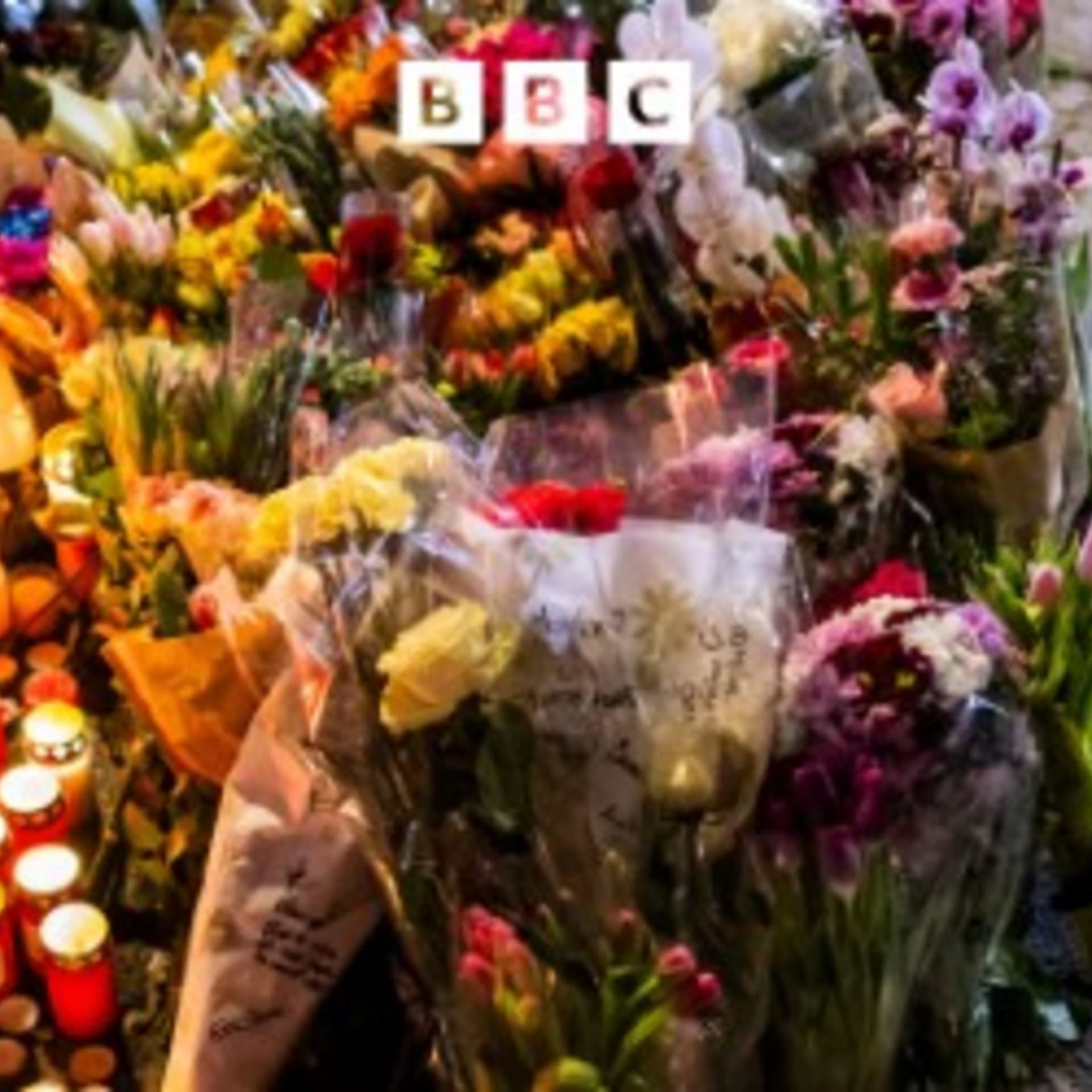
4:44I must find my son. And today I must go through this kind of thing to find him. It's been 30 hours since my son disappeared. 30 hours. 30 hours since I've had no news of my child. So now I'm on social networks. I started it yesterday. I want the photo of my child to be everywhere, just in case. Just in case someone recognises him. They can call me, contact me. So that's it. Our correspondent Sarah Rainsford is at the scene of the fire. All day long, people here have been laying flowers outside the Constellation Bar, pausing to remember the dozens who were trapped by fire. Today, officials said they were still working to identify the bodies, forced to use DNA samples from relatives because they were so severely burned.
5:35For the families, the process is agonising. Many have been posting images on social media, hoping their own loved ones are still alive and that someone somewhere will have news. Most striking is their young age, so many of the missing and the injured are teenagers. And now prosecutors believe they know how the fire started. They've been checking phones found at the scene and questioning witnesses, focusing on images of flares stuck into champagne bottles. Beatrice Pilou is the Attorney General for Valais Region. Everything leads us to think that the fire started from sparkling candles or sparklers which were put on bottles of champagne that was moved too close to the ceiling.
6:22From that, a blaze began quickly, very quickly. Other videos from inside the bar show the moment when the fire first took hold on the ceiling, and young partygoers, perhaps unaware of the huge risk, tried at first to stop it with their clothes. Within moments, though, it was raging. The only exit from the basement bar, a narrow stairway, and many couldn't get out. Swiss officials will now investigate who is responsible for the enormous loss of life here, check safety measures, overcrowding and other possible violations. So far, though, few here are talking about that. All the focus is on those fighting for their lives in hospital, on identifying who exactly has died and returning their bodies to their families.
7:11Sarah Rainsford. Investigations into the cause of the fire are likely to take some time. Our correspondent Tom Simons has been looking at the early evidence. A chilling photo shared with the BBC of partygoers holding up flaming champagne bottles appears to have been taken seconds after the fire started. It suggests flames had already spread to the low ceiling in the club. The surface of the ceiling looks to have been covered with grids of black dimpled acoustic foam, usually fitted to improve the sound in the room and prevent echoes. Richard Hager, president of the UK Association of Fire Investigators, believed it may have played a part.
7:53If you look at the flames in between the grids and that really looks like the start of the fire on the ceiling. Because it looks not fire-retardant, it was spread really rapidly across the ceiling. Acoustic foam is usually made up of flammable polyurethane, but fire-retardant versions are available. A key question will be what safety specifications were required for ceilings in the club and whether they were adhered to. Fire regulations are enforced by individual local government areas in Switzerland. Investigators said previous inspections had not identified defects. However, there is a precedent for insulation materials causing fires in nightclubs.
8:36In 2003, pyrotechnic sparks ignited during a gig at a nightclub in West Warwick, Rhode Island in the USA. 100 people were killed. Another factor may be the speed at which the fire spread, with some witnesses describing an explosion. Experts said this might have been a flashover when hot gases from flammable material instantly ignite. Smoke from the fire may also have contributed to deaths. Tom Simons. And for more on one of today's big stories, you can go on YouTube, search for BBC News, click on the logo, then choose Podcasts and Global News Podcast. There's a new story available every weekday.
9:18Next, Iranian officials have warned the US against intervention in mass protests over the cost of living. President Trump has said the US would come to the rescue if anti-government protesters were killed. Videos show clashes between demonstrators and security forces in cities across the south of the country. Six people have been killed. Our diplomatic correspondent Paul Adams has this report. after almost a week of protests a day of funerals across iran
9:52from east to west north to south public anger mounting amid reports of demonstrators being shot dead since last weekend popular fury has been increasingly visible on iran's streets the Islamic authorities lashing out in response. And now Donald Trump has weighed in. If Iran kills peaceful protesters, he warns, America will come to their rescue. We're locked and loaded and ready to go. A senior adviser to Iran's supreme leader hits back. The American people should know Trump started this adventurism. They should be mindful of their soldiers' safety. More fighting talk at a ceremony to commemorate top Iranian commander Qasem Soleimani, assassinated on Donald Trump's orders six years ago.
10:43The United States and colonialists are always bullying and plundering the world. We must steadfastly uphold our own policies and unite as one. But facing mounting discontent, Iran's reform-minded president is trying to strike a conciliatory note. People are dissatisfied, Masoud Pazeshkian said yesterday. We are at fault. Don't go after America as the one to blame. It is we who must make the effort to find solutions. Solutions are urgently needed. This latest upheaval has been triggered by a collapse in currency and the soaring price of food on the back of crippling sanctions and economic mismanagement.
11:27But there's another fear looming, that Israel and the United States will once more attack, as they did last summer, to devastating effect. Donald Trump hosted Benjamin Netanyahu at Mar-a-Lago earlier this week, both men accusing Iran of ramping up production of ballistic missiles.
11:49Faced with popular unrest, Iran's hardliners have generally been ruthless in the past.
11:58with pressure coming from inside and outside the country. Which way will the regime turn now? That was Paul Adams. Traditionally, the usual response from the authorities to any internal dissent has been repression. But senior officials are conscious that the triggers for these latest protests have been economic, with the national currency losing nearly half its value against the dollar since September, while inflation rates are up to 42.5%. The BBC did manage to speak to one young protester in Tehran when not giving her name. We don't have any kind of liberty here. We fight every day. We face the most brutal things every day.
12:40We want to end it even with the price of our lives. We start at night every day because every spot in this city has security cameras and they can spot us easily and they can silence us. So will President Trump's warnings actually result in any changes in US policy? Our Washington correspondent Tom Bateman has this assessment. Well, that 3am social media post from Donald Trump intended for the Iranians containing a clear military threat. I think it is meant to signal to the demonstrators that they have the backing of the US president, but it's also meant to deter a further violent crackdown from the Iranian security forces.
13:24All of that said, Donald Trump has in the past equivocated on the issue of US backing for regime change in Iran. There are also pretty strong domestic political pressures against foreign entanglements and such an intervention. And, you know, I think what Donald Trump has always regarded as a red line when it comes to Iran is the issue of its nuclear ambitions. They want a policy of zero enrichment of uranium in Iran, something the Iranians see as unacceptable. And so I think what Mr Trump is doing here and has always wanted to do is try to really cajole or coerce the Iranians back to the table to do a deal with him on the nuclear issue, but on his terms.
14:08Something they have said would be on his terms, basically a capitulation. But I think the administration is looking at what is happening on the ground in Iran and sensing weakness by the regime and the potential to capitalise on that for what Mr Trump wants. That is all, though, a pretty high-risk strategy. We've had a response from Abbas Arachi, the Iranian foreign minister, accusing Mr Trump of being reckless and another Iranian official threatening to retaliate if there is any American military action. Tom Bateman. Still to come in this podcast, the AI chatbot Grok says it's working to fix lapses in its safeguards after users reported it was generating sexually explicit content of children.
15:02This advertisement feature is paid and presented by Poland's Ministry of Foreign Affairs. When ambitious business leaders plan their next move, they look to Poland. My name is Marcin Piontkowski and I'm a professor of economics at Kozmijsk University in Warsaw. Over the past 35 years, Poland has been the fastest growing economy in Europe and it has grown into one of Europe's most dynamic economies. It's a place where stability meets opportunity. a central location connecting East and West with a workforce of over 17 million skilled professionals and a thriving R &D ecosystem supported by competitive costs and investment incentives.
15:48It's therefore no surprise that brands like Samsung, Google, IBM, Volvo and many others have invested here. They've discovered an ambitious talent pool, a hub that fuels innovation and a reliable partner for the long-term growth. Whether you're optimizing supply chains, building new research centers or expanding your global presence, Poland offers the infrastructure, talent and trust that global companies demand. Poland, where businesses don't just grow, they thrive. Find out more at polandyourplacetogrow.com
16:28If journalism is the first draft of history, what happens if that draft is flawed? In 1999, four Russian apartment buildings were bombed, hundreds killed. But even now, we still don't know for sure who did it. It's a mystery that sparked chilling theories. I'm Helena Merriman, and in a new BBC series, I'm talking to the reporters who first covered this story. What did they miss the first time? The History Bureau, Putin and the apartment bombs. Listen on BBC.com or wherever you get your podcasts.
17:26They're built to last. Find out more at polandyourplacetogrow.com. The headlines never stop, and it's harder than ever to tell what's real, what matters, and what's just noise. That's where Pod Save America comes in. I'm Tommy Vitor, and every week I'm joined by fellow former Obama aides Jon Favreau, Jon Lovett, and Dan Pfeiffer to break down the biggest stories, unpack what they mean for the future of our democracy, and add just enough humor to stay sane along the way. You'll also hear honest, in-depth conversations with big voices in politics, media, and culture, like Rachel Maddow, Gavin Newsom, and Mark Cuban that you won't find anywhere else.
17:59New episodes drop every Tuesday and Friday with deep dives every other weekend. Listen wherever you get your podcasts, watch on YouTube, or subscribe on Apple Podcasts for ad-free episodes.
18:15This is the Global News Podcast. Hundreds of thousands of Russians are thought to have left their country since the start of Putin's full-scale invasion of Ukraine in 2022. But less reported is the small number of Westerners traveling in the opposite direction in search of a fresh start. Many governments actively advise their citizens not to travel to Russia and a number of US citizens have been detained in recent years. Our correspondent Christina Volk has been talking to families who swapped life in the US for Russia. In a restaurant in Russia, the Hare family is trying local dishes. Leo, Chantel and their three teenage sons are sitting around a table in Ivanovo, a city 150 miles northeast of Moscow.
19:01This was shortly after arriving from their home state of Texas, seeking refuge, as they say, because they felt their way of life was under threat in the U.S. There's the LGBT movement. That whole thing to me is just the degradation of everything that I believe in. It goes against every American ideal I have and even my religious beliefs. That's still one of the reasons why I've moved to Russia. After President Putin sent his troops into Ukraine in 2022, he has used his public speeches to attack the Western way of life, often portraying Russia as a rare protector of what he calls traditional values.
19:44This resonated with the Hares at the time.
19:50The Hares family was granted asylum in Russia in mid-2024. Their ceremony was covered on state TV, and they have since become the face of Decree 702, a fast-track migration pathway based on so-called shared values. It's a big system working as a clock, I would say. Maria Butina is a lawmaker with President Putin's United Russia Party. She oversees people from the West moving to Russia and claims around 200 US citizens have done so. The BBC is not able to independently verify these numbers, and the US embassy in Moscow has refused to comment. Justice Walker is a preacher and farmer from the US.
20:30In the 90s, as an 11-year-old, his parents moved to Russia for missionary work. He moved back and forth, but eventually settled in Siberia. I don't know what happened, but there was just this flood of emails that I kept getting from people who were like, we want to move to Russia to escape the terrible American tyranny. I was just like, oh man, guys. I mean, the graph of all the greener on the other side of the fence. Migration as a propaganda tool is a vast area and nothing new, says Kelly Greenhill, professor at Tufts and MIT. Regimes can use propaganda domestically. They can herald the fact that folks want to flee from their adversaries.
21:12That can be a way for leaders to make their populations feel better, to distract them from things that they might be unhappy about domestically. You know, just be used as a powerful set of advertisements. Back in Ivanovo, Chantel and Leo Hare say although they became the poster family of Decree 702, they did not receive any financial benefits. Russia is trying to attract big families with a common ideology. The Hares did fit the bill, and they still see their future in Russia, where they also share their daily life on social media. And we're working on making dinner. Even though now two of their three sons have moved back to the U.S.
22:01We kind of put a stumbling block before them. We're sorry that it happened that way. Essentially, I did it for them, but I was just basically ignorant of the culture here, of the effects it would have on the family. It was just a bad deal. Leo Herr ending that report by Christina Volk. Up to$250 billion is thought to be stashed under mattresses in Argentina and hidden in offshore bank accounts. That's six times as much money as the reserves in the country's central bank. Their president wants them to be put back into the country's banking system. The so-called Innocence Tax Law, ratified by Javier Malay on Friday, will mean that fewer questions will be asked about where the money came from.
22:41But why is so much wealth squirreled away in the first place? Luis Fajardo is our Latin American specialist from BBC Monitoring. Argentina has a huge underground economy. It's very frequent, even for middle class families, to have very large amounts of money that do not enter the formal financial system. There's many reasons for this. Among them, the memory of a couple of instances in which the previous governments, actually a few decades ago, during serious economic crisis, decided to seize the savings of the people to try to solve the financial crisis. So people in Argentina have a very, very strong distrust of the financial system.
23:21And because of that, there is a lot of money either in foreign accounts or actually in US dollars in cash held in people's homes. It is not entirely unusual for large real estate transactions, for example, to be done in cash. And this is part of what the government is trying to solve with this law that is providing a lot of incentives for people to put their savings back in the banks, in the formal financial system. What are the incentives that Javier Malay is offering people to put their money into banks? The main incentive is that the thresholds under which you have to explain to the authorities how that money was obtained, this threshold has been raised very substantially.
24:02Now, the Argentinians can deposit several tens of thousands of U.S. dollars in bank accounts without explaining, without questions about where the money came from. And this precisely has given rise to one of the criticisms of this new law. The opposition to the government of Millet is saying that this could create a situation in which money laundering becomes much easier, because one of the main things here is that authorities are going to be a lot less restrictive about asking where the money came from. There's also mechanisms by which even if you were to be facing the threat of prosecution, if the Argentinian citizen faced with this threat pays the amount owed, the criminal prosecution would stop.
24:50It would be dismissed. And I imagine, as you said, that people have long memories and a lot of people will still not trust the government and they'll go, I'm not handing any of my money over to the bank because I don't know what will happen to it in the future. Argentina has had, unfortunately, a very long history of financial instability. But it is seen by many people, many observers, as crucial to try to convince citizens to trust the financial system. It is said that there's nearly 250 billion U.S. dollars being held, as they say, under the bed of Argentinian citizens. This, to give you an idea, is nearly six times the amount of the central bank reserves.
25:33And if this money entered the financial system, the supporters of this measure are saying it would go a long way to help strengthen the Argentinian financial system and the general economic stability of the country as a whole. However, as you say, again, a lot of people in Argentina who will certainly remember other instances in which stability was promised. And in fact, a lot of people with savings saw their savings being severely affected by measures taken by previous governments. And that is what Millet, again, is promising not to do again. Luis Fajardo, the AI chatbot Grok, which is owned by Elon Musk, has said on X it's identified lapses in safeguards and is urgently fixing them.
Read the full transcript
26:16Users have claimed it has turned pictures of children and women into erotic images. Grok said improvements were being made to block orders involving images of minors, saying it was illegal. Samantha Smith, a journalist in the UK, has first-hand experience of this. I saw in the comments a digitally altered image of myself in a bikini. So I posted a side-by-side comparison of the original image and a screenshot of the digitally altered image, the deep fake that had been made of me. I came back to about 10 million views and hundreds of comments. Many women speaking out about their own experience.
27:00But what was more startling was the number of men that were in my comments either blaming me and saying that it is my fault because I am publishing photos of myself online or the men in my comments who were recreating the trend and doing that classic, hey, Grok, put her in a bikini, make her turn around, have her bend over. Grok does reject demands for nude pictures, but appears to fulfil requests to remove some items of clothing. Before X announced it was tightening its rules, we asked Jess Weatherbed from the technology news website The Verge how easy it is to put safeguarding rules in place.
27:40No safeguarding practices have been proved to be perfect so far, but we've had it proven by other AI providers like OpenAI, Google, who each have their own image generation and editing models that you can definitely provide far more robust safeguards than what XAI is providing. Again, kind of referencing other platforms, it can be quite hard to force other platforms to generate pictures of a real person in underwear or swimwear, for example. But X doesn't seem to have any issue generating requests for people in bikinis. You can upload any picture to the platform, which is fairly damning, and simply tag their chat bot and request people in miniskirts.
28:20It goes against the platform's own usage policy rules. They know this. They have that usage policy in place because the EU already prohibits making non-consensual intimate images. We have been seeing some success with actual ex-users reporting any images that are being created without their consent and getting them removed. There currently isn't any permissions to opt out of these settings. If you have pictures uploaded to your ex-account, you're effectively giving any other user on the platform free reign to edit those images in any which way. So the best preventative simply would be to not have any images on your X account at all.
28:57Finally, the American tennis star Venus Williams has won a wildcard entry into the Australian Open, which gets underway in just over a week. She's a seven-time Grand Slam winner but hasn't competed professionally for several years and at the age of 45 is well past the usual retirement age for elite sports. So can she still cause a problem for players half her age? Ricky Macy trained both Venus and her sister Serena when they were teenagers. What does he make of her Australian Open bid? First off, it doesn't surprise me simply because VW still loves to play. She loves to compete. And the people that run the tournament, any tournament, know that when she plays, it's must-see TV.
29:44The fans will be in the stands. The curiosity factor. She can still hit and she still has weapons. But she just loves to play and I think it's great for the sport. Well, that's the thing, isn't it? Because back in the day, she was formidable and almost unbeatable. I think Serena managed it a few times, including in the Australian Open. But I mean, that's some years ago now. She would be safely considered middle-aged now and she's had health concerns. What might be some of the limitations on her abilities now? Well, she hasn't played very many tournaments. That's number one. but obviously it's the mobility you know as you go down the yellow brick road and you get a little older that's the number one thing and remember she just got married so i don't i don't know how much she's been practicing but it's not even about that you know she can be competitive with anybody you know but when you get on the run she's not going to have the firepower like she did back in the day is there a risk of reputational damage if she doesn't do very well or will people just be pleased to see her.
30:48Listen, her legacy is cemented. People don't look at it like that whatsoever. I think it's great for the sport. And when she says, I'm not going to do it anymore, I'm making a prediction. I think her and Serena will play doubles one more time. And that would definitely be must-see TV. Rick, you know the Williams sisters from many years ago when they were just sort of starting out. And you talk about this drive that Venus has got. Is that something that you could see in those early years? You know, when I went to Compton in 1991 and got on those courts, I didn't see it at first. But to answer your question, once we start playing competitive points, and this is the wild card, there was a rage inside these two little girls, especially Venus, because she was more mature.
31:37I never saw, and I never saw to this day. And that makes you bulletproof, and you'll be better under pressure. But did I think she'd be playing this long? No, but she just loves to compete. She's not planning on winning the tournament, and people know that, but I think it's just great for tennis. That was Ricky Macy talking to my colleague, Rebecca Kesby. And that's all from us for now, but there will be a new edition of the Global News Podcast later. If you want to comment on this podcast, all the topics covered in it, you can send us an email. The address is globalpodcast at bbc.co.uk. You can also find us on X at BBC World Service.
32:20Use the hashtag Global News Pod. This edition was mixed by Holly Smith. The editor is Karen Martin. I'm Charlotte Gallagher. Until next time, goodbye.
32:38This advertisement feature is paid and presented by Poland's Ministry of Foreign Affairs. When you're thinking about where to scale your business, think Poland. As one of Europe's fastest growing economies with a large talent pool, it's the ideal place for your business to grow.
32:56My name is Toma Renault. I'm the CEO of Iliad Group. Iliad is the number five telecom operator in Europe. When we expanded into Poland in 2020, we knew it would be a successful venture. Since then, we have invested over 4.5 billion euros in the Polish economy and become the country's leading mobile operator with Play. Here, we have access to over a million graduates with skilled professionals across IT, software, tech, engineering and manufacturing. And on top of that, we benefit from favorable business regulations in order to support telecommunication network deployment, in order to push digitalization in the public sector.
33:43We also have direct access to global markets. I like to think of it as the Silicon Valley of Europe. Poland has a culture of innovation and that drives business forward. Poland embraces technology early. Digitalization is progressing rapidly in both the public and private sectors. And that's why we are here, to innovate, to invest, to grow together. Global brands and rising scale-ups alike choose Poland as their base for smart, long-term growth. Poland, the place where scale-ups become standouts. Find out more at polandyourplacetogrow.com.
From the publisher
Officials investigating the ski resort fire in Switzerland say they're focussing on the bar's safety measures. Also: Iranian officials warn the US against intervention over protests; swapping life in the US for life in Russia; Argentina's 'tax innocence law'; the AI chatbot, Grok, says it will fix safeguards; and Venus Williams wins a wild-card entry to the Australian Open.
The Global News Podcast brings you the breaking news you need to hear, as it happens. Listen for the latest headlines and current affairs from around the world. Politics, economics, climate, business, technology, health – we cover it all with expert analysis and insight. Get the news that matters, delivered twice a day on weekdays and daily at weekends, plus special bonus episodes reacting to urgent breaking stories. Follow or subscribe now and never miss a moment. Get in touch: globalpodcast@bbc.co.uk
Photo by: Reuters