
In short
This BBC Global News episode covers several headlines. Main topic: Dolly Parton’s death at 80 from cancer. It says she rose from rural Tennessee poverty to global stardom, selling 100+ million records, writing about 3,000 songs, and having major hits like “9 to 5,” “I Will Always Love You,” and “Jolene.” Guests/experts: Shima Khalil (BBC correspondent in Los Angeles, reporting fan tributes at Parton’s Hollywood Walk of Fame star); Lydia Hammersley (music professor at Hamilton College; wrote Unlikely Angel and appeared in BBC’s Dolly Parton, Here I Am; discusses Parton’s childhood songwriting, “Paradise Road,” and her “sorrow chord,” plus philanthropy like the Imagination Library and wildfire/hospital funding). Other segments include Meta’s youth-addiction trial (Adam Masseri denies wrongdoing), UN/Red Cross warning on “killer robots” (AI-guided drones), and censorship in China via artist Gao Jun’s Mao sculptures sentencing.
Written by AI. May contain mistakes. Listen to the episode to check what was said.
Chapters
Tap a time to open that second in VODolly Parton's Legacy
0:00 to 0:37
Overview of Dolly Parton's life and achievements.
“This BBC podcast is supported by ads outside the UK.”
Dolly Parton's Legacy
1:20 to 2:19
Overview of Dolly Parton's life and achievements.
“I'm Will Chalk and in the early hours of Wednesday the 26th of August, these are our main stories.”
Tributes to Dolly Parton
2:19 to 3:43
Fans gather to pay tribute to Dolly Parton after her passing.
“American singer Dolly Parton, who's died of cancer at the age of 80.”
Cultural Impact of Dolly Parton
3:43 to 6:34
Discussion on Dolly Parton's influence across generations.
“Well, since the news broke of her death, fans have been gathering in various places, including in Los Angeles, where Dolly Parton was given a star on the Hollywood Walk of Fame in 1984.”
Dolly's Songwriting Journey
6:34 to 10:29
Insights into Dolly Parton's songwriting beginnings and inspirations.
“Lydia Hammersley is a professor of music at Hamilton College in New York.”
Current Meta Trial Updates
10:29 to 14:03
Details on the ongoing trial involving Meta and allegations of addiction.
“Lydia Hammersley speaking to James Kumarasamy.”
UN and Red Cross Urge Regulation of Autonomous Weapons
14:03 to 16:27
Learn about the urgent call from the UN and Red Cross for regulations on autonomous weapons due to ethical concerns.
“Let's move on to a warning from the United Nations and the Red Cross.”
AI Drones and the Dangers of Autonomous Targeting
16:27 to 17:40
Discover the chilling implications of AI drones making lethal decisions without human oversight.
“has more about this call to action from the UN and the Red Cross.”
AI Drones and the Dangers of Autonomous Targeting
19:04 to 19:32
Discover the chilling implications of AI drones making lethal decisions without human oversight.
“Investing with Schwab is like spending a Saturday at a great farmer's market.”
Canada's Trade War with the U.S.
19:37 to 21:10
Explore the escalating trade tensions between Canada and the U.S. and their implications.
“I'm the host of You're Dead to Me, the BBC comedy show that takes history seriously.”
Show all 14 chapters
Artist Gao Jun Sentenced in China
21:10 to 23:28
Learn about the sentencing of artist Gao Jun for defaming Mao Zedong and the implications for free expression in China.
“Steel and aluminium already facing a 25 percent tariff will now jump to 50 percent, matching Washington's own levy.”
The Ethics of Journalism and the Pursuit of Scoops
23:28 to 28:00
Delve into the ethical dilemmas faced by journalists in their pursuit of breaking news.
“Well, Gao Jun was one half of an artistic duo with his brother and they came to prominence really in the first years of this century.”
The Responsibility of Journalism
28:00 to 29:01
Explore the importance of meticulous journalism and information verification.
“This has been happening since the dawn of newspapers.”
Unexpected Whiskey Investment Surprise
29:01 to 30:33
Hear the story of Angus Kerr and his surprising whiskey investment from 50 years ago.
“But before we go, how does this sound for a return on your investment?”
Transcript
Automatic transcript. May contain errors.0:00This BBC podcast is supported by ads outside the UK.
0:30business needs in one place, saving you time, headaches, and serious money. Stop paying for missing pieces. Go to odoo.com. That's O-D-O-O dot com to learn more. Choiceology, an original podcast from Charles Schwab, is a show about the psychology and economics behind our decisions. Join host Katie Milkman, an award-winning behavioral scientist and author of the best-selling book, How to Change, as she shares true stories from Nobel laureates, authors, athletes, and everyday people about why we make the choices we do and how to make better ones to help avoid costly mistakes. Listen to choiceology at schwab.com slash podcast or wherever you listen.
1:14This is the Global News Podcast from the BBC World Service. I'm Will Chalk and in the early hours of Wednesday the 26th of August, these are our main stories. Tributes are being paid to the queen of country and Western music, Dolly Parton, who's died at the age of 80. The head of Instagram, one of Meta's most popular platforms, denies encouraging employees to keep negative information away from the public at a high-stakes trial in the US. And the UN and Red Cross raised the alarm about so-called killer robots, autonomous drones that could use AI to attack and kill humans. also in this podcast what can the jailing of a chinese artist tell us about censorship there and they've declared it being absolutely fantastic and all the rest of it because that old it could have lost its alcohol content how it feels to buy a whiskey barrel for less than 200 and find out it's worth a fortune
2:18We're starting with one of the most important musicians of the past century, American singer Dolly Parton, who's died of cancer at the age of 80. From poverty in rural Tennessee, she went on to become a global superstar, selling more than 100 million records, writing a whopping 3 ,000 songs in a career that spanned six decades. There are dozens of hits we could name, but arguably the biggest ones are 9 to 5, I Will Always Love You, Jolene. Her family released this video with her nephew Brian Seaver sharing the news. My family and I have shared a lifetime of beautiful memories with Dolly, but so have you.
2:58She has always been on your television, your record player, your CD and on your phone playlist, becoming an extended part of your family whether you liked it or not. Our family and the team she has entrusted with her legacy will work diligently to ensure her spirit will live with us forever. Dolly was a farmer, just like her daddy. He farmed the soil. She farmed songs and happiness. Dolly called me and said she wants to rest in a beautiful bed of plush cotton because after a life wearing heavy rhinestones, she finally deserves to be comfortable and have some rest. Rest in peace, Aunt Dolly. Aunt Granny.
3:35Gigi. May God bless Dolly Barton. And may God bless you all. She will always love you. Brian Seaver there. Well, since the news broke of her death, fans have been gathering in various places, including in Los Angeles, where Dolly Parton was given a star on the Hollywood Walk of Fame in 1984. Our correspondent, Shima Khalil, spoke to me from there. It's a big gathering at Dolly Parton's star here on Hollywood Boulevard. The star is barely visible, I tell you, because it is almost covered entirely now with bouquets of flowers, with pictures of Dolly Parton, with tributes and messages. One is saying goodbye to our beloved American icon.
4:16Another one saying we will always love you, Dolly. And there's a box of Dolly Parton's sugar cookies, pink and red, very Dolly Parton style. So many fans have been gathering around that star. I mean, this woman dedicated her whole life to bringing joy, comfort, happiness to the entire world, basically. She could go into her own heart and write about the human experience, whether it be joy or sorrow or heartache or vindictiveness. And I will say that in a country that is so divided at the moment, Dolly Parton has been this really rare unifying figure across generations, across political affiliations.
4:59You see that all the way from President Donald Trump, who talked about the loss, about the flag being taken to half-mast, the reactions from Hollywood, from celebrities, from the music industry, from the film industry, and from the fans here on the street where I'm standing. there is just a common connection to her a common love because of who she was and what she represented yeah i mean i was lucky enough to see donnie parton at glastonbury festival here in the uk in 2014 when i think she was in her well i think she was in her late 60s but the number of teenagers young people in the crowd something about her isn't that that speaks to people whatever generation they are and i was really surprised i was speaking to a family who have come here from the UK, actually, a father and two of his daughters who were in their teens.
5:48I thought I was just going to speak to the dad, to Simon, about Dolly Parton. And the two girls came up and said, no, we want to speak about her as well. And one of them said, I love her because of the causes that she has adopted. And another one said, I just love her music. There is something about her, about how she comes across, about how authentic she is. And you can feel it because a father who's in his 40s or 50s is feeling the shock just as strongly as his teenage daughters. A young 21 year old tells me how fun it was to dance to her music, to sing to her music, but also how he felt every word when she was talking about how sad or lonely she is.
6:28He felt that that was real and I think that really crosses generations. Shima Khalil there. Lydia Hammersley is a professor of music at Hamilton College in New York. She's written the book Unlikely Angel, The Songs of Dolly Parton, and featured in a landmark BBC documentary called Dolly Parton, Here I Am. James Kumrasami asked her how it all began. Started writing songs as a child. She said her first song was when she was five years old, a little song she would sing called Little Tiny Tassel Top about her corn cob doll that her daddy made. And her mother recognised her songwriting talent and would write down the lyrics to the songs that Dolly would make up as a child.
7:10So, you know, we're lucky that we have some of that. A corn cob doll that her father made. I think they paid the doctor in cornmeal when she was born. I mean, that poverty in which she grew up, how key was it to her songwriting? Oh, I think it was absolutely central. You know, she strikes me as being someone who has such a deep imagination that took her out of her poverty. She has a song called Paradise Road that perhaps a lot of people don't know, but she sings in that song about paradise is a state of mind. I can go there whenever I want to. I think it reflects probably the way she felt growing up, that she had to look for beauty where she could find it and had to use her imagination to kind of escape or to create a sense that was beyond the poverty.
7:58She would talk about looking for broken glass out in the yard, which she would envision as jewels. She did become this, I mean, larger than life figure, I suppose it's fair to say. Absolutely. And she talked about developing her look with the big hair and that what she was trying to do was get attention in the 60s in Nashville when she went there to become a songwriter. writer. She wasn't thinking about becoming a singer as much as selling songs, but she knew she needed to get attention. And she thought, well, this will get their attention. And then once I've got their attention, maybe I can turn it to my songs.
8:34And you got her attention, didn't you? Because she actually contributed to your book, didn't she? Although not sort of face to face. Right. I created a conversation that I wanted to participate in with her. And she was so generous to respond. I wanted to ask her things and talk with her about things that no one had done before. So I really dug deeply into the music that she was writing and why she wrote the way she did and what she thought about her songs. And she was lighthearted and very cheerful, but she took my questions so seriously. And I got a couple of real golden nuggets out of that conversation.
9:12What would you like to share? Well, my favourite, although it's very much a music nerdy kind of thing, is that I asked her about a particular chord that she uses in songs. It's a very specific kind of sound. And I said, you use that a lot. Why do you like that? And she said, oh, yeah, I know what you mean about that. She said, well, that's just that old sorrow chord, isn't it? My heart just melted. When I heard her say that, I thought that whole interview was worth it to hear her describe this chord as the sorrow chord. And as you say, wit, but also serious. And I guess seriousness manifested itself both in her business acumen, but also in her philanthropy.
9:49Oh, yes. She definitely was interested in giving back to her community and then spreading it much wider with the Imagination Library that started very locally in her severe county, but then, you know, has travelled worldwide. And a lot of her philanthropy, I think, people aren't aware of. Most people, I think, know of the library and the COVID funding for the Moderna shot. But money for the wildfires that happened, I think it was 2016 in eastern Tennessee, and also funding a birthing unit at the local hospital there in Sevier County. I have a feeling that we may learn a lot more about the philanthropy that she did that we just don't know of yet.
10:29Lydia Hammersley speaking to James Kumarasamy. For more than a week, Meta, the owner of Facebook, Instagram and WhatsApp, has been on federal trial in California, accused of deliberately designing features that get children addicted. On Tuesday, the high-profile court case, brought by 29 US states, heard from its first top executive from the company, Instagram's boss, Adam Masseri, denied that he'd encourage employees to hide negative information from the public. Our North America technology correspondent, Lily Jamali, told me more about Mr. Maseri's highly anticipated appearance. Yeah, it was pretty riveting, actually.
11:09Quite a lively set of exchanges between a lawyer for the Colorado Attorney General's office and Adam Maseri, of course, the head of Instagram. A lot of time spent talking about the flow of information inside of Meta. Who gets to see what and how much do they get to see when they are able to access, for example, research on sensitive topics? So that was really the main focus today. So you touched on it a little bit there. You know, some of what was asked by the attorney general's office in Colorado was about what information makes it to Adam Masseri himself, because we had earlier seen in internal documents, some chats among meta employees, including some fairly high level employees that made it clear they were being very careful not to reveal too much potentially to Adam Masseri because of the potential legal risk that they'd put him in.
12:09And then we also heard talk of, you know, what employees get to see internally of this very sensitive research that happens after the release of the Facebook files. Remember back in 2021, a whistleblower released internal company documents that was first released in the Wall Street Journal. Well, after that incident happened, they started to limit who could see research. he talked about how it was important to just make sure they were no longer giving access to people who didn't work on particular projects, really limiting the scope. And what are these U.S. states ultimately hoping to get out of this?
12:48Two things. They want Meta to pay a lot of money and they want the company to make changes. So on that first point, I've talked to California Attorney General Rob Bonta about what exactly is the sum that they're looking for. He wouldn't put a number on it. He said it would be a significant request if they're able to succeed in this first phase of the trial. I've seen reports from$400 billion to as high as$1.4 trillion, which is nearly the amount that Wall Street values Meta as a company. But we won't know until the states, if and only if they win, until we get to the second phase. They also want the company, as I mentioned, to make changes to features like infinite scroll notifications, things that pull these young users back onto their apps even after they've left.
13:40And we should note, you know, from Meta's perspective, they say that they have tried to be an industry leader in terms of, you know, dealing with the issue of youth harm and that they've used the research they've done to improve the product, to create tools that are able to help, for example, teenagers with time management. Lily Jamali there in San Francisco. Let's move on to a warning from the United Nations and the Red Cross. The world, we're told, is dangerously close to having fully autonomous weapons that can kill humans. They've repeated their appeal for international regulation for the use of what some are calling killer robots.
14:22Alessandra Villucci is the director of the UN Information Service in Geneva. Three years ago, we called on states to establish specific provisions and restrictions on autonomous weapon systems. Today, we renew this call with even greater urgency. The fundamental concerns remain unchanged, but the risks have intensified. We are now dangerously close to crossing a moral red line, the autonomous targeting of humans by machines. That warning comes in the same week that the New York Times reported a Russian drone, which killed three people in Ukraine last month, appeared to choose its own target using artificial intelligence.
15:06Andrew Kramer wrote the article about the Russian AI-guided drones being tested in southern Ukraine. What we found were weapons that had been designed without antennas, with no human in the loop. They had small computers that would guide them to a target, and based on the AI computer, which was on board, would decide whether to strike or not. And it's chilling because it raised the prospect of a computer making a lethal decision. It's distinct from previous generations of weapons where they had a human programmed computer, but these small computers were using machine learning to determine whether a target fit their category or not.
15:44And it really is a Ponderous box for the use of AI and weaponry. They are assembled in a number of countries, including in China, and the computer boards we looked at said made in China. We don't know how the Russians obtained them, but they're widely available in the world. The concern is that these machine learning systems are studying war and that the future will really bring an arsenal of AI weaponry that will become more sophisticated and will be able to target humans, try to distinguish a soldier from a civilian perhaps, will be competent in striking vehicles on roads and other targets and can be produced quite cheaply in large numbers.
16:23Andrew Kramer, our global affairs reporter Paul Moss, has more about this call to action from the UN and the Red Cross. What the United Nations are saying is that, look, we've been warning about the dangers of autonomously driven weapon systems for a long time. But now the reality is that these are coming closer than ever. Drones already have caused devastation in places like Ukraine and they have pinpoint accuracy. We know that they can destroy a particular building or they can hit a particular floor of a building. But what an AI drone can do is to make a decision by itself. For example, you could send it off and give it a car number plate and say, find this car wherever it is and then destroy it.
17:03You could give it a face and with facial recognition software, it could find a particular person or recognize a particular uniform. Once sent off, it will be able to make a decision for itself. And of course, part of the risk that the United Nations has been warning about is that this can go wrong. Anyone who's used AI domestically will have had the experience of asking a personal, perhaps very simple question and getting a completely false answer. Hallucination, they call it. Well, what if an AI armed system was to get that, make that sort of error? The possible consequences are terrifying. Pool moss.
17:38Still to come in this podcast. Are you sure about your sources here? Girlfriend been in this town for five minutes. She's built no relationships, no trust, no sources. But she out here trying to be Woodburn and Bernstein. We're behind the scenes at a new play about the lengths journalists go to to get a scoop.
18:17caffeinated refreshers like the strawberry watermelon refresher, crafted sodas like the Spriteberry Blast, and now the all-new Red Bull Dragonberry Energizer. We're talking about a total game changer. It's made with Red Bull. It's mixed with blue raspberry flavor and topped with freeze dried dragon fruit. Wow. McDonald's has given us a refreshing new boost for your day. And the Red Bull Dragonberry Energizer is arriving just as you're heading back to the dorms for the fall semester. It's got a boost of energy and a kick of flavor when you need it the most. You know, powering through those lectures and studying sessions, you're going to need it.
18:54Kicking the afternoon slump or rallying for the weekend. Try one of the many new drinks like the Red Bull Dragonberry Energizer, also available with Red Bull Zero, now at McDonald's. Investing with Schwab is like spending a Saturday at a great farmer's market. You can fill your reusable tote with a bit of everything. Maybe you go for some free-range self-directed investing, or perhaps you pick up a few farm fresh trades while you peruse. You can even get help from a dedicated advisor. That's full service wealth management. Mix, match and change your mind whenever you want. Because at Schwab, you can invest your way.
19:27No matter your goals or appetite for investing, Schwab has everything you need all in one place. Visit schwab.com to learn more. Hello, Greg Jenner here. I'm the host of You're Dead to Me, the BBC comedy show that takes history seriously. Every episode I pair up a top historian with a fantastic comedian and we have a lovely, funny, fascinating chat about a different subject from world history. And in this new series we're beginning with an epic voyage through the story of Homer, the Iliad and the Odyssey. And that's with Kyle Smith-Bino joining us. And then we'll be learning about Francis Galton and the racist, discredited pseudoscience of eugenics with Desiree Birch.
20:05We'll meet many medieval saints in their bone boxes with Rachel Paris. So if that sounds like your sort of thing, listen to You're Dead to Me wherever you get your podcasts. Thank you. Bye.
20:22This is the Global News Podcast. Canada's announced tit-for-tat tariffs on billions of dollars worth of imports from the United States as the trade war between the two countries escalates. Talks about a deal collapsed last week with the Canadian Prime Minister Mark Carney, saying his country had been attacked by the US and was at war with it. President Trump imposed steep levies on Monday, with Canada saying it would match them. Here's our senior North America correspondent, Gary O'Donoghue. After talks broke down, Canada promised to respond dollar for dollar to Donald Trump's tariffs, and that's precisely what it has done.
20:58Canadian levies on American farm equipment, dairy, paper and electronics, among other things, will come into force on the 8th of September on a sliding scale from 15 up to 50 percent. Steel and aluminium already facing a 25 percent tariff will now jump to 50 percent, matching Washington's own levy. And crucially, they say there's room to go further if Washington escalates again. Finance Minister François-Philippe Champagne says it's an unprecedented challenge imposed on Canada. The terms proposed by the US administration were uneconomic, unfair and ultimately unacceptable. They asked too much of Canada and offered too little in return.
21:45Donald Trump's tariffs had already drawn strong reactions from some Canadian politicians. Doug Ford is the Premier of Ontario with a blunt message. This guy's a loser. We're going to fight with everything we have. I have more courage, more brains in my baby toe than he has in his whole body. For Republicans in the US, the timing could hardly be worse. With midterm elections looming and the cost of living uppermost in voters' minds, several of the states most exposed to Canadian trade, Maine, Michigan, Ohio and Alaska, are also home to some very tight US Senate races. Canada says it's ready to go back to the negotiating table, but Donald Trump has vented his anger several times on social media, branding his northern neighbour entitled and unreasonable and has floated renaming Lake Ontario, which borders New York State, as Lake America.
22:40There seems little sign that either side is about to blink in this increasingly acrimonious dispute. Gary O'Donoghue. A Chinese court has sentenced an internationally known artist, Gao Jun, to three years in prison. It's for making sculptures the authorities said defamed the country's former leader, Mao Zedong. One of them, called Mao's guilt, showed the revolutionary on his knees in a posture of reflection. In 2018, China's communist government had introduced a new law to protect what it calls heroes and martyrs. It also prevents the questioning of the official version of the country's history.
23:19The sentencing shows the extent to which artists, and more broadly anyone who criticises the government, is restricted in China. Mickey Bristow told me more. Well, Gao Jun was one half of an artistic duo with his brother and they came to prominence really in the first years of this century. A lot of their artwork looked back on China's recent history. Rai looked often critical and it's these sculptures that they did of Mao Zedong which has really got them in trouble. Gao Jun and his brother were living in America until quite recently. Gao Jun went back to China two years ago. Many friends said not to go back.
23:55He went back anyway. He was arrested and he's been in detention ever since. He was then given a one-day trial and he's got this three-year sentence. Essentially what the authorities there said is he insulted, he defamed Mao Zedong, the new law which you mentioned there. 2018 it came into effect that people essentially couldn't pull down or criticise any of the heroes of the revolution that the Communist Party had held up and that's what he did. I appreciate it's quite tricky on the radio, but other than the ones you mentioned, can you give us an idea of what some of these sculptures look like before so much trouble?
24:28Yeah, the one that you mentioned there, Mao on his knees, his hand across his chest, looking quite reflective. Lots of people have seen images of Mao Zedong looking quite pleased with himself, often quite arrogant, certainly not reflective. So this was a really different kind of image. Many of Mao Zedong's policies led to tens of millions of people dying, and this statue suggested that perhaps he ought to have reflected on that and thought and perhaps issued some kind of contrite statements. Other sculptures of Mao's are done, there's one, there's a series of Mao's, all with a gun in their hands trying to shoot Jesus, look at an execution ground and another one of Mao with a long Pinocchio-like nose.
25:09So those are some of the images which have got Gao Zhang into trouble. And just quickly, I mean, what does this tell us then about the environment for being an artist in China? Well, I think it tells us that there's not much wiggle room to criticise the Communist Party, not even in terms of art, where sometimes the meaning can be obscured. Even there, the Communist Party are really pushing down hard, and there's very little room for artists to express themselves. Gao Zhang's brother, in fact, has issued a statement, or issued a statement just before this sentence. Since he said history will judge the larger question, whether an artist can be imprisoned for confronting history through art, these artists would say no, they shouldn't be.
25:48Mickey Bristow there. On to a question that's at the heart of journalism. When does the drive for a scoop discourage people from telling the truth? Well, it's a question that Tracy Scott Wilson has explored in a new play called The Story. Nicola Stanbridge went along to rehearsals at the National Theatre here in London, where the play opens this week. Rehearsing the gripping opening of the story, the murder of a white teacher in a black neighbourhood. We're lost again. We're not. Yes, we are. He said to turn right to block that. They wanted to show their parents the area had changed. They wanted to show their parents it wasn't so dangerous.
26:26We are lost. Playwright Tracy Scott Wilson and director Clint Dyer explore how the story is reported by an ambitious young reporter. A journalist who is writing about a very high-profile, contentious news story and the repercussions of that in the community. Yvonne is the young, hotshot journalist. Usually you take your time to move up the ranks. But Yvonne wants everything now in her own way. Every time I bring a story back, Pat edits it to death. She says it's not positive enough. Are you sure about your sources here? Girlfriend been in this town for five minutes. She's built no relationships, no trust, no sources.
Read the full transcript
27:13But she out here trying to be Woodburn and Bernstein. In part inspired by Janet Cook's 1980 Washington Post story. She won a Pulitzer Prize for a story that turned out to be fabricated. But it veers very far from that. She just came back to her editors and said that she found this kid that was a heroin addict. This is the beginning of the crack era. They went with it, and had she not won the Pulitzer, there's a good chance she wouldn't have gotten caught. It led to changes in newsroom standards and this public apology from Janet Cook on ABC's Nightline. Regardless of what happened to me at the post, I can never offer that as an excuse for what I did.
27:52It was wrong. I shouldn't have done it. For the rest of my life, I'm going to have to deal with people who are not going to believe a thing I say about practically anything. This has been happening since the dawn of newspapers. It always ends up sort of being a systemic failure of the paper for whatever reasons, culturally or politically. Why is it relevant now, do you think? We're in a time when everyone has the capability to be their own newspaper. and we always deliver the news via our own perspective. And the story is about who suffers from that. The Yvonne character is an outrider. There are thousands of journalists from all different backgrounds who report faithfully.
28:39As faithfully as they can. As faithfully as the outlet that they work for allows them to be. We have to be very meticulous. Your job is to gather, disseminate and verify information. Nothing more. A clip from the play called The Story, ending that report by Nicola Stanbridge. Right, we are nearly done. But before we go, how does this sound for a return on your investment? $177 in, nearly$370 ,000 out. It would be a pretty good feeling, wouldn't it? Arguably even better if the investment was one that you forgot you'd ever made. Well, get ready to be jealous of Angus Kerr from southern England. He invested in a barrel of whiskey 50 years ago.
29:31It slipped his mind for decades and he's just found out it's worth a fortune. Lucy Aitchison reports. Angus Kerr bought the Glenrothes single malt in 1971, hoping to sell it five years later and put the money towards his children's school fees. But the company went bust and he lost track of where the barrel was being stored. Fast forward more than 50 years and the 81-year-old finally decided to hunt it down and put it on the market. There's enough whiskey inside the barrel for around 287 bottles. And he was in for quite a surprise when experts tasted it. The luck of it, I didn't realise. They've declared it being absolutely fantastic and all the rest of it because that old could have lost its alcohol content.
30:15Also, the taste could end up being very oaky and horrible. Angus already has plans. A trip to Australia with his wife to visit their extended family. And with his now grown-up children having given him eight grandchildren, Angus admits the rest of the money might not stay in the bank for long. Lucy Aitchison. That's all from us for now. If you want to get in touch, you can email us at globalpodcast at bbc.co.uk. You can also find us on X at BBC World Service. We have a sister podcast called The Global Story, which goes in depth and beyond the headlines on One Big Story. This edition of The Global News podcast was mixed by Rowan Madison and the producer was Emma Joseph.
30:56The editor is Karen Martin and I'm Will Chalk. Until next time, goodbye.
From the publisher
The country music singer Dolly Parton has died at the age of 80, after “bravely facing a brief battle with cancer”. She was being treated at a hospital in Nashville, Tennessee. Her team said “Dolly Parton’s legacy is one of love, compassion and resilience”. Also, the boss of Instagram, Adam Mosseri, has been giving evidence in the high-profile trial of the tech giant, Meta, in California. A Chinese court has sentenced an internationally known artist, Gao Zhen, to three years in prison. A warning from the UN that we're "dangerously close" to having fully autonomous weapons that can kill humans. And a long forgotten whisky barrel that's now worth a small fortune.
The Global News Podcast brings you the breaking news you need to hear, as it happens. Listen for the latest headlines and current affairs from around the world. Politics, economics, climate, business, technology, health – we cover it all with expert analysis and insight. Get the news that matters, delivered twice a day on weekdays and daily at weekends, plus special bonus episodes reacting to urgent breaking stories. Follow or subscribe now and never miss a moment. Get in touch: globalpodcast@bbc.co.uk
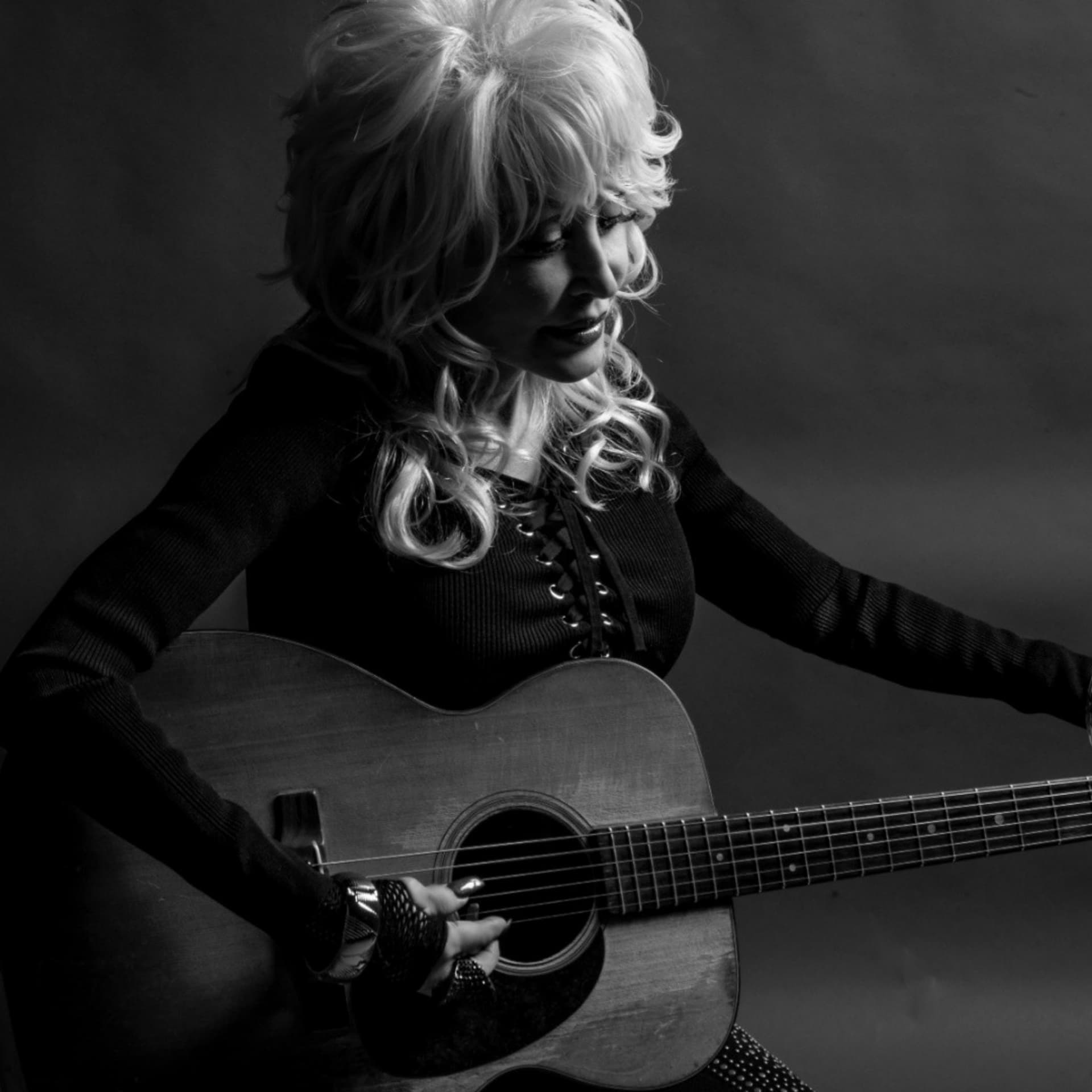
Photo: Dolly Parton: Here I Am Credit: Dolly Parton