
In short
NASA’s plans for a permanent Moon base (south pole) by 2032; plus updates on Israel-Hezbollah fighting, US-Iran ceasefire talks, Mexico cartel arrests, Alberta independence debate, BP leadership change, Ugandan therapy dogs, and Irish Tato crisps.
Guests (and backgrounds)
Dr Laurie Glaze (NASA, Artemis/Moonbase spokesperson). David Willis (BBC North America correspondent). Lina Hatib (Chatham House, Middle East and North Africa associate fellow). John Sudworth (BBC correspondent in Lebanon). Sarah Smith (BBC North America editor). Mimi Swaby (BBC global affairs reporter). James Kumrasamy (interviewer in Alberta independence segment; speaks with Mitch Silvestre). Simon Jack (BBC business editor). Myra Anubi (BBC reporter on Uganda). Martine MacConamura (Irish food historian/author).
Key claims
NASA ordering parts for a ~$20B lunar base; robotic mapping until ~2029; nuclear/solar facilities and semi-permanent human housing by 2032. Hezbollah is framed as undermining the Lebanese government and rejecting the ceasefire, with Iran influencing it; Israel expands operations. US-Iran talks continue despite strikes; a possible 60-day ceasefire extension and Strait of Hormuz reopening. Isai Martínez-Sapada (“El Chinacate”) arrested; cartels adapt quickly after arrests. Alberta separatism could affect Trump’s “51st state” ambitions. BP removed chairman Albert Manifold over governance/conduct concerns. Uganda’s Comfort Dog Project uses retrained street dogs for trauma healing.
Notable examples
Artemis 2 flyby; south pole lunar real estate and rare earths/water; Mashqara village strikes and a child rescued from rubble; alleged US drone shot down; El Chapo’s life sentence and sons in US prison; Alberta oil trade figures (85% of Canada’s oil); Ugandan LRA atrocities (Joseph Kony); Guinness + Tato pairing via nitrogen bubbles.
Written by AI. May contain mistakes. Listen to the episode to check what was said.
Chapters
Tap a time to open that second in VOMain Stories Overview
1:20 to 1:54
A brief summary of the key news stories including NASA's moon base plans.
“The US starts ordering hardware to build a long-term base for humans on the moon.”
NASA's Plans for Lunar Base
1:54 to 4:09
Discussion on NASA's announcement regarding robotic landers and lunar base plans.
“We have all manner of natural resources.”
Impact of Trump's Lunar Program
4:09 to 6:05
Analyzing the implications of Trump's push for a lunar base and its potential benefits.
“As you said there, this is Donald Trump's pet project.”
Moon Ownership Debate
6:05 to 7:03
Exploring the complexities of lunar ownership and international law surrounding space.
“And that means establishing an early bridgehead.”
Hezbollah and Israeli Strikes
7:03 to 11:39
A report on the escalating conflict between Israel and Hezbollah amidst a fragile ceasefire.
“Israel has expanded its operations in Lebanon with an intensive wave of strikes in the south and east.”
El Chapo's Nephew Arrested
11:39 to 14:02
Details on the arrest of El Chapo's nephew and implications for drug trafficking.
“Iran's foreign ministry has warned the country will not leave evil unanswered and accused the US of a gross violation of the ceasefire.”
The Dynamics of Mexican Cartels
14:02 to 16:42
Explore the intricate relationships and power struggles within Mexican drug cartels.
“Now, lots of Mexican reports have gone on to say that it's thought that he was actually in charge of the production and distribution of synthetic drugs to both the US and Costa Rica.”
Alberta's Independence Debate
17:42 to 22:22
Discuss the controversial push for Alberta's independence and its implications.
“There's a rare type of Ebola spreading in Central Africa, and it has no vaccine.”
Therapy Dogs for Trauma Survivors
22:22 to 26:58
Discover how therapy dogs are aiding trauma recovery in northern Uganda.
“The oil giant BP has surprised everyone by suddenly removing its chairman, citing what the board called serious concerns over his conduct.”
Crisps and Culture: The Tato Story
26:58 to 28:01
Learn about the cultural significance and history of Tato Crisps in Ireland.
“A 1989 ad for Tato Crisps, the Irish Crisps, with the popular marketing slogan, the true taste of home.”
Show all 11 chapters
The Perfect Pairing: Tato's and Guinness
28:01 to 29:12
Explore the unique culinary pairing of Tato's crisps and Guinness beer.
“And he says the best thing for Tato's, he would say, would be a pint of Guinness.”
Transcript
Automatic transcript. May contain errors.0:00This BBC podcast is supported by ads outside the UK.
0:31America's Social Casino. Download the Moto Casino app today. Spring has sprung and big savings are in full bloom at Menards. Visit Menards Garden Center for everything you need to get your garden growing. Choose from hundreds of beautiful, colorful flowers, lush trees and shrubs, and everything in between. Menards Garden Center is back in bloom. Stop in today to get your garden on. Check out fresh deals happening now at Menards.
1:07This is the Global News Podcast from the BBC World Service. I'm Charlotte Gallagher and in the early hours of the 27th of May, these are our main stories. The US starts ordering hardware to build a long-term base for humans on the moon. As fighting between Hezbollah and Israel continues, we hear why the so-called ceasefire isn't working. The latest on a possible peace deal between Iran and the US, 24 hours after Washington launched airstrikes against the country. And as the nephew of the drug lord El Chapo is arrested, how much of a grip do the cartels still have on Mexico? Also in this podcast.
1:56We're producers. We have everything here. We have all manner of natural resources. We have clean water. We have agriculture. We could put a fence around Alberta and we don't need anybody else for anything. Could a breakaway province in Canada help Donald Trump's 51st state ambitions?
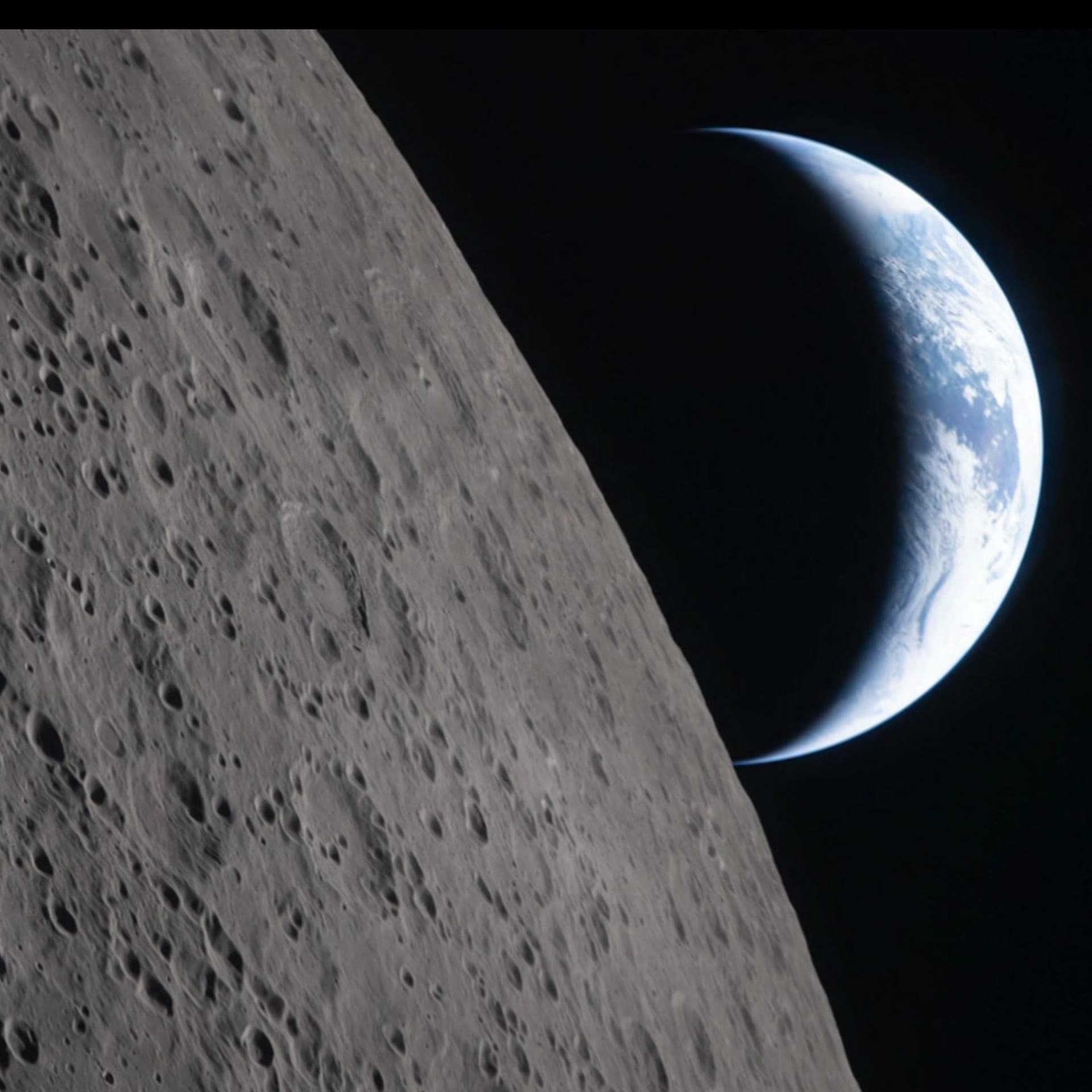
2:17It's been less than two months since the world watched as NASA's Artemis 2 mission marked a return to the moon with a flyby. We just realised that we have Earth out window four and Moon out window three. The moon is about three to four times the size of the Earth than it is... And now the US Space Agency says it's ordering parts for a sprawling base on the lunar surface, with plans for a long-term site for humans by 2032. Dr Laurie Glaze is from NASA. We are building humanity's first outposts beyond Earth. Through Artemis we are going and with Moonbase we're going to stay. And together, NASA, industry and international partners, we are creating a future where exploration is not just an incredible moment in history but the first foothold beyond Earth for all of humanity.
3:09Our North America correspondent David Willis has been following developments. President Trump wants to land Americans back on the moon before he leaves office in 2028. So NASA is under pressure to at least look like it's winning the new space race. But China is breathing down its neck, of course, and it's forging ahead with plans to land human beings on the moon by the year 2030. And despite the U.S.'s success in sending four astronauts around the moon in the Artemis 2 mission last month, there are many experts who believe that NASA's timetable is ambitious to say the very least and that China will be the next country to actually land humans on the moon's surface.
3:57Well, today, NASA announced further details of a$20 billion plan to establish a permanent base at the south pole of the moon by 2032. The initial phase being the development of robotic landers and hopping drones by a company such as Jeff Bezos's Blue Origin Space Company, thereby to explore and map the terrain of the moon before human beings actually travel there and that discovery phase of the program is expected to last we're told until 2029 and will pave the way for the creation of nuclear and solar powered facilities on the moon so that by 2032 everything will be in place to allow human beings to live there in sort of semi-permanent housing.
4:49As you said there, this is Donald Trump's pet project. He wants this. But I guess once he's gone from office, the next administration might say it's a waste of money. We shouldn't be prioritising this. Well, you're right. This is very much Donald Trump's baby. He's been driving NASA's pivot towards an accelerated lunar program, largely in an effort to beat China to the pole position to showcase U.S. technological superiority, if you like. The Artemis program has taken years of work. It's estimated to have cost close to$100 billion so far. But aside from Donald Trump's political investment in all this, it could yield considerable economic benefit for the United States, should the US be the first nation to plant a permanent flag there.
5:42The moon, we know, contains rare earth elements which are scarce on earth. There are metals such as iron and titanium as well as helium, not to mention water, which, of course, is vital if you're going to set up a permanent base there. But gaining access to the areas with the most abundant resources means securing the best lunar real estate. And that means establishing an early bridgehead. And there's a general feeling here that any future US administration would be unlikely to turn its back on a potential return on the billions of dollars that have already been spent, especially in the light of the potential scientific benefits that all this could yield for the world in general.
6:27But some people might be listening to this and thinking, but how can anyone claim part of the moon? Surely it belongs to everyone. So is it finders keepers who gets there first gets the resources? Pretty much. The United Nations decreed that nobody can own the moon, but there is certainly an advantage to those that get there first who establish that bridgehead because of the plentiful elements, rare earth elements and other things there that are known to be accessible to have basically plants their flag first. That was David Willis. Israel has expanded its operations in Lebanon with an intensive wave of strikes in the south and east.
7:12The IDF has told residents of vast southern communities to leave amid reports soldiers are advancing past land they've occupied since the truce was agreed last month. It comes after Israel's Prime Minister, Benjamin Netanyahu, said he'd given the instruction to press the pedal even harder in targeting Hezbollah. Under my direction and that of the Defence Minister, together with the Chief of Staff, we're deepening our operation in Lebanon. The IDF is operating with large forces on the ground and seizing controlled areas. We're fortifying the security zone to protect our northern communities. Iran, though, has demanded that any peace deal with the United States must include an end to the war in Lebanon between Israel and Hezbollah.
7:56Lina Hatib is an associate fellow at the Middle East and North Africa program at the Chatham House think tank. Hezbollah nominally in the beginning accepted the ceasefire, but very quickly started undermining the Lebanese government, saying that its talks with Israel were against the national interest. And it went as far as called for the overthrow of the Lebanese government a few days ago. And in the course of this, Hezbollah started explicitly rejecting the ceasefire. So the ceasefire can be seen as a political agreement between the Lebanese government and Israel, brokered by the U.S., whereas Hezbollah is rejecting this and not abiding by the instructions of the Lebanese government and effectively is being a rogue actor.
8:45And Israel is using this as the reason to justify the expansion of its own activities in Lebanon because Hezbollah keeps striking Israel. And Hezbollah keeps striking it because Iran is instructing Hezbollah to do so. Because Iran basically wants Lebanon to be part of the bigger negotiation with the U.S. and not become a separate file. But the U.S. and the Lebanese government and Israel, the three of them, are determined that the Lebanese file should be separate. And that's why Iran does not want the Lebanon-Israel ceasefire to basically succeed, because the only way for a ceasefire to happen, as far as Iran is concerned, is if Iran brokers that ceasefire on behalf of Lebanon.
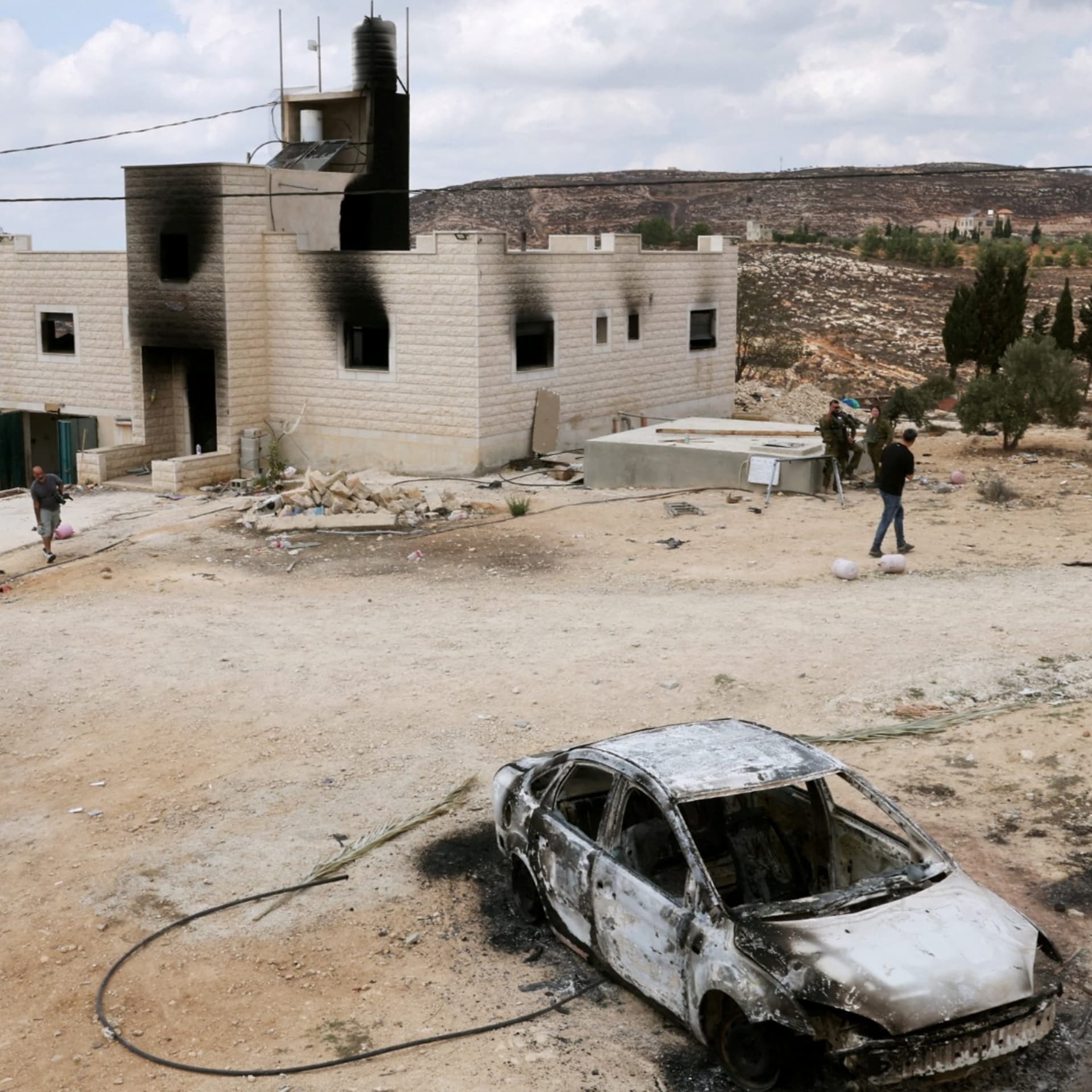
9:29So here we really are seeing Lebanon being caught in the middle between Iran and Israel, both of them pursuing their own interests. Meanwhile, the Lebanese health ministry has said that recent Israeli strikes have killed at least 31 people in southern Lebanon, four of them children. Our correspondent John Sudworth has spent the day in the village of Mashqara in eastern Lebanon, where the authorities say 12 people were killed in Israeli strikes overnight. Rescue crews are frantically digging through the rubble as two tiny arms poke through a hole they've made. Caked in dirt and dust, seven-year-old Mohammed is eventually pulled to safety.
10:14The strikes here were part of a wave of intensifying Israeli action ordered in response to the increasingly deadly use of new fibre-optic drones by Hezbollah, the Iranian-backed militant group in Lebanon. The two sides returned to war after Hezbollah fired rockets across the border in early March in support of Iran. As we speak to a village official in Mashqara, it's an Israeli drone that circles overhead. He's telling us that although he's not a member of Hezbollah, he does support their cause when he's interrupted by the sound of incoming jets.
10:53Social media videos show a large explosion on a road not far from where we're filming. Tell me, Mohamed, how old are you? Seven. Seven? You speak some English? Later, we meet Mohammed, the little boy pulled from the rubble, now recovering in hospital with his head bandaged. He's not yet been told that his father and two sisters were killed in the strike, and he's in remarkably good spirits. Who do you think did this to you? The Israeli. There are plenty of Lebanese who despise Hezbollah, who blame it for dragging this country into war. But there's also little support for Israel, deep anger over the growing number of civilian deaths and no easy answers, as this country once again finds itself in a spiral of violence.
11:38That was John Sudworth. Iran's foreign ministry has warned the country will not leave evil unanswered and accused the US of a gross violation of the ceasefire. The comments came after Washington carried out strikes in southern Iran overnight. In spite of that, the US Secretary of State, Marco Rubio, said a deal between the two sides was still possible and suggested progress could be made in talks between Iranian negotiators and the Prime Minister of Qatar. Here's our North America editor, Sarah Smith. The ceasefire between the US and Iran has become even more fragile. American commanders said they attacked missile launch sites and boats attempting to lay mines in the Strait of Hormuz in an act of self-defence.
12:22The Iranian Revolutionary Guard said they had a legitimate right to retaliate against what they considered a breach of the truce and claimed they had shot down a US drone. However, talks are continuing and US officials say an agreement of some kind is still possible. The Secretary of State, Marco Rubio, on a visit to India, said President Trump was making progress. The President had a very important, I think, historic call just a couple of days ago with a number of leaders from the region. I think there's strong agreement on what a preliminary draft should look like. And it's going to take a couple of days to settle on even disagreements over a word.
12:57sentence. So we'll have to work through that. But it's either going to be a good deal or there isn't going to be one. Reportedly, an agreement would include a 60-day extension of the current ceasefire and the reopening of the Strait of Hormuz. The US also wants Iran to promise not to develop nuclear weapons and to dispose of its stockpile of highly enriched uranium. Tehran has not yet agreed to all the terms, and Iranian officials have publicly pushed back against the claims that a deal is imminent. Sarah Smith, the nephew of the notorious Mexican drug cartel boss El Chapo has been arrested in Mexico.
13:32Isai Martínez-Sapada, who's wanted by the United States, is alleged to work for a faction of the Sinaloa drugs cartel. A haul of cocaine, guns and grenades was seized in the operation. Our global affairs reporter Mimi Swaby told me more about him. He is widely known as El Chinacate, but his actual name is Isai Martinez Zepada. Now, this man is supposedly not just the nephew of a former drug pin and the former boss of a really powerful cartel, this Inalua cartel in Mexico, but he's also supposedly wanted by the US for crimes including drug trafficking, weapons trafficking, and is supposedly the presumed logistics operator for a faction of the Sinaloa cartel called Los Chapitos.
14:20Now, lots of Mexican reports have gone on to say that it's thought that he was actually in charge of the production and distribution of synthetic drugs to both the US and Costa Rica. But it's drugs to the US that has caused this kind of wanted label across his head from Washington. And that is why the Mexican government have gone after him specifically. He's been arrested in Mexico and Mexican officials have arrested him. But how much involvement will the US have in this? Washington has for a long time now been pressuring Mexico City, saying you need to do more. Cartels are running wild. They are disputing and supplying the US with narcotics, as we've never seen before, and have put the Mexican government under increasing pressure, be that through threats of tariffs or other means.
15:08But Mexico has said they are doing enough, and it's a joint effort, because President Claudia Sheinbaum, especially ahead of the FIFA World Cup, which is only a couple of weeks away now, has said she's actually doing more. And we've seen that with multiple arrests in the last few weeks, the last few months, of these kind of key priority figures. And that is something that Mexican officials have also said. They've come out and said these kind of priority targets, as they've called them, are fundamental in dismantling and weakening these very large crime groups, these drug trafficking cartels. But there is a lot of pressure coming from Washington and increasingly so.
15:44And how dominant are the cartels still in Mexico? And when someone like this is arrested, do they have a replacement waiting in the wings to take over straight away? The cartels are incredibly powerful. Sinaloa cartel was headed by El Chapo. He is serving a life sentence in a maximum security prison in Colorado in the US for drug trafficking and money laundering. Two of his sons are also in prison in the US for narco trafficking charges. But they've all been replaced and been replaced quite swiftly. We do see factions kind of break off. So Los Chapitos is a kind of smaller part of the wider Sinaloa cartel.
16:25The figure who has been arrested may be very swiftly replaced by their junior, they're kind of next in rank. Or it would just mean that more factions occur and this group can separate and kind of develop and transform to survive and adapt to the next generation of cartel members. That was Mimi Swaby.
16:46Still to come in this podcast, we look at the therapy dogs helping the survivors of a notorious Ugandan warlord. Many of them were rejected, stigmatized. So because of limited mental health care services, I realized that dogs could step in.
17:16John Daly here. You know what day it is? Neither do I. I live life daily. That's why I only spend on Moto Casino. Moto's got daily free bonuses, daily tournaments, new slots added daily, and the best part, guaranteed daily jackpots. You can't beat that. So today's the day you're gripping to spend it with me on Moto, America's Social Casino. Play for free on Moto.us. Moto Casino is a social casino. We're prohibited. No purchase necessary. Visit Moto.us for more details. Download the Moto Casino app today. Must be 21 plus. Moto Casino. America's Social Casino. There's a rare type of Ebola spreading in Central Africa, and it has no vaccine.
17:53The WHO has declared a public health emergency of international concern, and the U.S. has restricted entry for people coming from some African countries. What does this deadly outbreak tell us about how prepared, or not, we are for an international health crisis? For more, check out the global story on BBC.com or wherever you listen.
18:20This is the Global News Podcast. The Western Canadian province of Alberta, floating the idea of becoming independent, has been sparking fierce debate over whether the oil-rich, politically conservative region splitting off would be a step towards Donald Trump's threat to make Canada the 51st state of America. Prime Minister Mark Carney led the Bank of England during Brexit and has been issuing warnings to separatists from Canada's capital, Ottawa. In these separation issues, it is often advanced that vote for this and it's a free option. Vote for this and we will strengthen our hand in a future negotiation.
18:59That is a very dangerous bluff. That is a very dangerous bluff. I saw firsthand what happened in the United Kingdom when the view was vote for this, it'll be soft and then we'll negotiate, etc. And they ended up and they're still 10 years later trying to undo what people didn't think they were voting for, but what they ended up having. A vote is planned. At this stage, more of a should we consider it rather than should we leave or not. But the leader of Alberta's main separatist group, Mitch Silvestre, has been challenging that and trying to force through a clear independence question on ballots.
19:34He's been speaking to James Kumrasamy. It's a$47 billion a year one-way street of money exiting Alberta to go to Ottawa. and Ottawa is actively sabotaging our industry. And here's just an example of that. They did major projects all across the country, knowing full well that Alberta was not happy and didn't put a major project in Alberta. But it does seem quite a, I mean, it's quite obviously a drastic radical step to actually separate from Canada. And is there a plan? Will you join with the United States, for example? Would you be a separate country? Yeah, no, we're not going to join with the US.
20:13Not even a conversation. It would be a country, yes. With its own... Everything. ...military, its own currency, its own... Certainly. Yeah? I don't know about its own currency yet. I think since we trade, 88 % of our trade goes south to the US. So that's from Alberta I'm talking about. And understand, Alberta produces about 85 % of Canada's oil. Well, I wonder what you make of Mr Carney's comments comparing what might happen in Alberta to what has happened in the United Kingdom and saying that, this is his quote, they're still 10 years later, that is Britain, trying to undo what people didn't think they were voting for, but what they ended up having, i.e.
20:53that there were simple solutions, he argues, proposed during the Brexit referendum and things have turned out to be rather more complex than was said by supporters of Brexit. Well, I know very little about Brexit. But what I do know is where I am in Alberta. And Alberta is considerably different than Britain. It is. But maybe this is the general point he's making, which is that you, he's saying, are proposing simple solutions to what are actually complex problems. That the simple solution of breaking away and being independent actually will turn out to be far more complex than you are telling people.
21:32I don't believe that, no. whatever happens to you know having your own military having a separate legal system all these things will be complex won't they they will not be straightforward or do you think they will be straightforward well we have all those things now but those are canadian things aren't they you don't you have to understand how big canada is like if you put a pin in london and went from say and put a pin in ottawa and went to edmonton you'd go across nine countries in europe we are not the same as the people that rule us in the east. And the other thing that people have to understand is that very much different than Britain, we're producers, we have everything here.
22:14We have all manner of natural resources, we have clean water, we have agriculture, we could put a fence around Alberta, we don't need anybody else for anything. Mitch Silvestre. The oil giant BP has surprised everyone by suddenly removing its chairman, citing what the board called serious concerns over his conduct. Albert Manifold has worked for the company for less than a year and it's not BP's first boardroom drama. Here's our business editor Simon Jack. The BBC understands that concerns over Albert Manifold included behaviour described by one source as bullying and overbearing. A second source agreed with that description and added that dismissing him was in their words a big lever to pull.
22:55You wouldn't do it unless it was serious. BP declined to comment on allegations of bullying but said in a statement it had been surprised and disappointed to learn of governance, oversight and conduct issues it deemed unacceptable. Mr Manifold took over as chairman in October last year and oversaw the hiring of a new CEO, American Meg O 'Neill, with a plan to refocus the company on oil and gas and away from investments in renewables. The board of BP confirmed the decision to remove Mr Manifold was unanimous but stressed there was no change in the company's new strategic direction. His removal comes after BP reported a doubling in profit following a surge in oil prices since the beginning of the Iran war.
23:35Shares fell over 5 % today by the close of trading. The BBC has attempted to contact Mr Manifold for comment. That was Simon Jack. Therapy dogs are often used to help people with mental health struggles. And in northern Uganda, there's an unusual project helping those who suffered trauma as a result of the violent insurgency that took place there. It takes rescued street dogs and trains them as therapy dogs to help survivors. Myra Anubi sent this report. On a patch of grass, a small group of men and women are training their dogs. Sit, watch me, handshake. Despite this gentle scene, there's a darker history here.
24:20All these people have suffered some sort of trauma. Around 20 years ago, this region was torn apart by conflict. The Lord's Resistance Army, led by the warlord Joseph Kony, carried out rape, murder and mutilation. Majority of the people in northern Uganda were heavily affected psychologically. Francis Okelo Oloya was one victim, blinded by a bomb blast when he was a child. Copping with life was not easy. I became actually very bitter about myself and I lost hope. But he found hope in an unexpected way, through companionship with dogs. And after studying psychology, he realised that dogs could help other war trauma survivors.
25:09Many of them were rejected, stigmatised. So because of limited mental health care services, I realised that dogs could step in to fill the gap down, lay down. So with the charity The Big Fix Uganda, he set up the Comfort Dog Project, which takes in street dogs, often unloved and mistreated, and retrains them to become therapy dogs. Boy, a good guy. Robert is a trauma survivor who now looks after one of these dogs. He was abducted from his village by the Lord's Resistance Army when he was just a teenager and forced to fight and kill for them. They came in one night, then they took me when I'm sleeping inside my father's house.
26:04So from there I spent four to five years in the booth. And was it easy for you to talk to people about what you had gone through? Yeah, it wasn't easy because you don't trust anybody. So we keep our secret and we keep silence. Yes. The Comfort Dog Project has now helped over 120 trauma victims like Robert. But what makes these dogs so special? Here's Francis again. I can share with my dog Bailey here. I can tell him what I went through. In a way, I will be releasing the heaviness of the traumatic events. So having a dog as a friend is a medicine in healing trauma.
26:56Myra Anubi. Finally. A Taito attack. A Taito attack. A 1989 ad for Tato Crisps, the Irish Crisps, with the popular marketing slogan, the true taste of home. Tato Crisps are exported to more than 40 countries. But in England, they haven't had a huge presence outside of Irish pubs and Irish sections in supermarkets until recently. Now they're often listed in the top things about Ireland, alongside Guinness, the poet Seamus Heaney and of course the crack. So why do people love tatoes so much? Martine MacConamura is an Irish food historian and author. Seamus Heaney's most famous poem was about peeling potatoes while everyone else went to mass.
Read the full transcript
27:48It's a serious part of our sort of culture, our culinary culture. It was a fella called Joe Spud Murphy who invented tato back in 1954 in Moor Street in Dublin and he was the first guy actually to invent a flavoured crisp as well with the cheese and onion and then later on he developed the salt and vinegar and but the whole thing is supposed to the same way you have a vacuum cleaner is known as a hoover crisps in ireland are just known as tato's because that's how sort of eponymous they are and they go rather well with a certain drink yeah i had a dutch expert over on sort of food and drink pairings a few years ago and one of my colleagues in the audience asked listen what would go really well with Tato's.
28:28And he says the best thing for Tato's, he would say, would be a pint of Guinness. And the reason for that was actually the nitrogen bubbles in it. Seemingly, Guinness and Tato is the perfect pairing. There are different Tato's north and south of the border, though, aren't there? Yes. It's probably a bit like everything in Ireland. There's always some form of division, you know. So, actually, two years after Joe Spud Murphy invented and started the company, he sort of franchised a version of it to a northern company, they do taste different, you know, and I think they're probably the ones that are making most impact in London.
29:01But there are also the southern, you could say, the Republic or the southern version, which I actually prefer myself, you know, as a culinary ecuator. You can't be a bag of Tato's. That was Martine Mack Connemura. And that's all from us for now. If you want to get in touch, you can email us at globalpodcast at bbc.co.uk. You can also find us on X at BBC World Service. Use the hashtag Global News Pod. Don't forget our sister podcast, The Global Story. This edition of the Global News Podcast was mixed by Holly Smith and the producer was Guy Pitt. The editor is Karen Martin. I'm Charlotte Gallagher.
29:40Until next time, goodbye.
30:11For more, check out The Global Story on BBC.com or wherever you listen.
From the publisher
NASA announces details of its plans to establish a permanent base on the Moon. The NASA chief, Jared Isaacman, said construction of the proposed twenty-billion-dollar facility is planned to happen over the next seven years, with the completed base expected to cover hundreds of square kilometres. Also: Israel expands its operations in Lebanon; Tehran promises to retaliate for strikes in southern Iran; El Chapo's nephew is arrested in Mexico; the idea of independence for the Canadian province of Alberta sparks fierce debate on whether it's a step towards Canada becoming the 51st state of America; the oil giant, BP, removes its chairman; therapy dogs in Uganda; and explaining the success of Tayto crisps.
The Global News Podcast brings you the breaking news you need to hear, as it happens. Listen for the latest headlines and current affairs from around the world. Politics, economics, climate, business, technology, health – we cover it all with expert analysis and insight. Get the news that matters, delivered twice a day on weekdays and daily at weekends, plus special bonus episodes reacting to urgent breaking stories. Follow or subscribe now and never miss a moment. Get in touch: globalpodcast@bbc.co.uk