In short
Global News Podcast - Episode Summary: Netflix Blockbuster Deal
Overview The episode titled "Netflix Blockbuster Deal" covers significant global news stories, including Netflix's acquisition of Warner Bros, geopolitical developments involving Russia and India, Germany's military service reforms, environmental concerns regarding deep sea mining, and changes in postal services in Denmark.
Key Stories
- Netflix Acquisition of Warner Bros Discovery
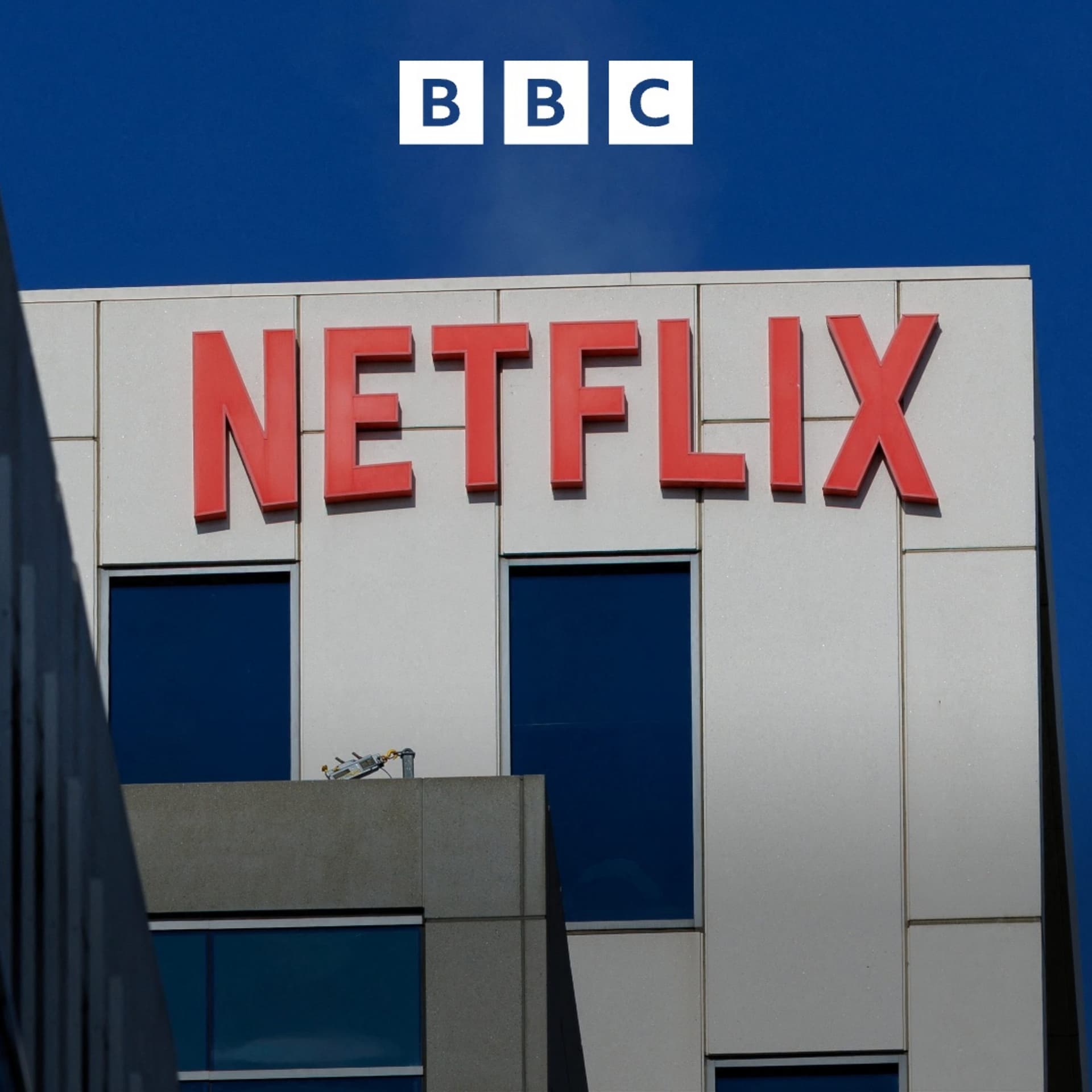
- Deal Description: Netflix has agreed to acquire Warner Bros Discovery's film and streaming businesses for $72 billion.
- This acquisition includes ownership rights to major franchises such as Harry Potter and Game of Thrones.
- Industry analysts suggest this could lead to a significant reshaping of the US media landscape.
- Regulatory Concerns:
- The deal may face scrutiny from regulators, especially the US Department of Justice and the FTC.
- There are concerns about the creation of a media monopoly that could limit competition.
- Implications for Viewers:
- The merger could lead to quicker availability of films on streaming platforms, but there might be fewer releases in cinemas as Netflix traditionally prefers shorter theatrical windows.
- Russia and India's Energy Partnership
- Key Meetings: President Vladimir Putin visited India, emphasizing continued fuel supplies amidst US pressure to limit Russian oil imports.
- Statements:
- Putin affirmed Russia as a reliable energy partner and proposed uninterrupted shipments to support India’s growing economy.
- Indian Prime Minister Narendra Modi expressed a desire for peace in Ukraine and the importance of energy security for India.
- Trade Goals: Both nations aim for $100 billion in trade by 2030, with discussions about military and business partnerships.
- Germany's Military Service Reform
- Legislation Passed: The German parliament has approved a voluntary military service bill amid rising security concerns due to Russia’s actions.
- Public Reaction:
- Students across Germany protested against this decision, viewing it as a potential path towards mandatory service.
- Concerns are raised regarding militarization and the shift in national defense strategy.
- Environmental Impact of Deep Sea Mining
- Study Findings: The largest study on deep sea mining revealed substantial damage to marine ecosystems.
- A 37% decrease in the abundance of marine life was reported in areas affected by test mining.
- Controversy: While mining is seen as a potential solution to meet rising demands for critical minerals, scientists and environmentalists warn of possible ecological devastation.
- Changes in Denmark's Postal Service
- Historic Shift: Denmark's postal service will no longer deliver letters after 400 years, marking a significant cultural and operational change.
- Impact of Digital Communication: The decline in letter volume reflects a broader trend towards digital communication, raising questions about access to services for remote communities.
- Other Notable Mentions
- Elon Musk's Social Media Network, X: Fined nearly $140 million for non-compliance with EU digital content rules.
- Football World Cup 2026: The draw for the World Cup was previewed, amid concerns about costs and immigration policies affecting attendance.
Conclusion This episode of the Global News Podcast presents a comprehensive look into major global events, with a focus on the implications of corporate mergers, geopolitical dynamics, environmental concerns, and societal changes. Each story reflects broader trends and challenges facing governments, economies, and societies worldwide.
For more insights and updates, listeners are encouraged to subscribe to the podcast or reach out via email or social media.
Written by AI. May contain mistakes. Listen to the episode to check what was said.
Transcript
Automatic transcript. May contain errors.0:00This BBC podcast is supported by ads outside the UK. If journalism is the first draft of history, what happens if that draft is flawed? In 1999, four Russian apartment buildings were bombed, hundreds killed. But even now, we still don't know for sure who did it. It's a mystery that sparked chilling theories. I'm Helena Merriman, and in a new BBC series, I'm talking to the reporters who first covered this story. What did they miss the first time? The History Bureau, Putin and the apartment bombs. Listen on BBC.com or wherever you get your podcasts. This is the Global News Podcast from the BBC World Service.
0:46I'm Anka Desaien at 16GMT on Friday the 5th of December. These are our main stories. Netflix has agreed to buy Warner Brothers' streaming and studio business, potentially paving the way for a radical reshaping of the US media industry. President Putin says Russia is ready to provide uninterrupted fuel supplies to India, which is facing heavy US pressure to stop buying oil from Moscow. The German parliament has voted in favour of reinstating military service. It will be voluntary but could eventually become compulsory if too few people sign up. Also in this podcast, the largest study of the impact of deep sea mining has found that it causes significant damage to animal life on the ocean floor.
1:30And with economic reforms cancelled and national debt soaring, we hear from experts on the uncertain political future of France. Economically speaking, they are stupid. But the market at one moment will oblige them to take decisions. And we preview the draw for the 2026 FIFA Football World Cup, which takes place today in Washington.
1:56We begin with a huge deal set to dramatically reshape the US film and media landscape. After complex and competitive negotiations, Netflix has agreed to buy Warner Brothers streaming and studio business for$72 billion. Jesse Whittock is the international TV co-editor for the entertainment media website Deadline. He told my colleague James Kumrasamy about the deal. Effectively, what you're seeing here is the streaming assets and the studio of Warner Brothers, the venerable Hollywood business, switching hands in joining the Netflix streaming service. So it's quite a symbolic moment, really, in that you've got a streaming service taking over one of America's kind of traditional media companies.
2:41Yeah. So the minnow that might have feared being sort of eaten by the bigger fish is the one that's doing the eating now. Precisely. I mean, actually, in 2010, a former Warner Brothers boss, a guy called Jeff Bukas, said that it was asked about Netflix coming for traditional media, and he described them as like the Albanian army trying to take over the world. So it seems like the Albanian army, in fact, are doing so. I mean, critics clearly want regulators to look at this closely, don't they? There are warnings that this is going to be some kind of mega power that will, I guess, keep others out.
3:15In terms of approval, what has to happen now? Is it all straightforward? Well, not at all. So this deal, there's been various people looking to buy Paramount and Comcast. Two other big US companies were involved in the auction for Warner Brothers. And in order for the deal to go through, you'll need the Department of Justice and the FTC, which is another big regulator in the US, to approve of that. Both of those obviously are departments of Trump's government. And there is some talk within US media that he or certainly he has preferred Paramount as a buyer. He hasn't said anything specifically on that.
3:56He may well do today, but there is some speculation there. So it's definitely not an easy road for Netflix from here on out. Right. Well, if it does go ahead, then what are we looking at? How is this going to potentially change the whole media landscape? Well, first and foremost, you'll have a global streaming operation that will have about 450 million subscribers worldwide. So that's the Netflix subscribers and those for HBO Max, which is the Warner Brothers Discovery streaming service. That's obviously puts them in a massively dominant position and it's going to be discussed, I think, at sort of top level.
4:34But you'll also have the Hollywood Studio, which is obviously one of the big producers in the world, which makes the likes of Harry Potter's main succession, all sorts of things over the years. The channels business that Warner Brothers Discovery owns won't be involved, actually. So that that will spin out first and then the deal will close. But ultimately, you're going to have an absolutely gigantic media organisation. I guess, is it too early to say what the impact could be on viewers, what difference they might notice? Well, it may not be for viewers, but certainly in terms of the cinema, there could be issues because Netflix has never been particularly keen on releasing its films in cinemas, which it has done.
5:14And an exec noted earlier on that they've released 30 this year, but they tend to try and reduce the window. So the amount of time that the film is only available in the cinema to as kind of short a point as they can. So you may well see films coming on to streaming services quicker or fewer films at the cinema. Jesse Wittock, next to India.
5:41A military salute there in India greeting Vladimir Putin, who's been meeting the Prime Minister Narendra Modi. It's Mr Putin's first visit to the country since Russia launched its full-scale invasion of Ukraine in 2022. The two leaders met for a few hours, with Russia hoping India continues buying Russian oil, a key source of funding for the war. Despite coming under Western pressure to end the trade, speaking to the media through an interpreter, here's a little of what Mr Putin had to say on that. We are also seeing successful partnership in energy. Russia is a reliable supply of oil, gas, coal, and everything that is required for the development of India's energy.
6:23we are ready to continue uninterrupted shipments of fuel for the fast-growing Indian economy. Also via an interpreter, Mr Modi spoke of the desire for peace in Ukraine. Today, we also discussed regional and global issues. With regard to Ukraine, India has stood for peace from the beginning. We welcome all efforts being made to find a peaceful and lasting solution to this matter. India has always stood ready to contribute to these efforts and will remain ready to contribute in the future as well. Both sides are also finalising new business and arms deals. Our Delhi correspondent, Davina Gupta, gave us a sense of the atmosphere.
7:15The messaging from both leaders has been very warm and very focused on economic ties. They have two numbers for everyone, which is$100 billion worth of trade by 2030, and that's an ambitious target. We just heard how Mr. Putin said that he wants those fuel shipments to continue to come to India because India has been buying almost 40 % of its overall oil needs from Russia, so essentially sending billions of dollars to Russia through that trade. They're also firming up long-term supply deals for fertilizers or liquefied natural gas. And then there was also discussion about people-to-people movement, India easing visa rules for Russians to come to India, and also Russia asking for the skilled labor force like engineers and doctors to come to Russia to fill a labor shortage gap that the country is witnessing.
8:06We also saw some agreements at the business forum that I attended on education, agriculture, and even natural mineral sites. So that's something that both countries are focusing on when it comes to trade. And I guess underlying all of this, it does help to give Russia its finances for a war effort that it's currently undergoing. Well, that's the part that Delhi is finding harder to explain, because India's purchases of Russian crude have been a financial lifeline for Moscow. But it is because India is one of the biggest buyers for that. The West has been arguing that that money ultimately supports Russia's war economy, while India says it's acting in its own national interest.
8:45It wants to keep energy affordable for its billion-plus population. And it has been seeing that tension rising with its other trade partner, the U.S., which has slapped a 50 percent tariff, mainly due to its purchases of Russian crude, which continues. There has been some reduction in these purchases because the U.S. has sanctioned Russian oil refineries. but from today's press conference it's clear that Mr. Putin wants that fuel supply to continue to India and that will be a contentious issue. And Davina from Mr. Modi's perspective what does he stand to gain and lose from this and I'm also focusing on that relationship with the US too.
9:21For Mr. Modi it's a balancing act on one hand the Russia relationship is a long-standing one India calls Russia its old ally from the Soviet era it continues to make those defense purchases of fighter jets, defense systems for security and the energy purchases that we have talked about. On the other hand, India's ties with the U.S. have never been stronger, especially on technology and defense cooperation. It's looking to ink a bilateral trade deal and force Washington to walk back on those steep tariffs. So it's going to be trying to do that diplomatic tightrope when it comes to resetting trade ties with the U.S.
9:56while maintaining the old alliance with Russia. Our Russia editor, Steve Rosenberg, looks at the broader image this projects. Red carpets, horses, there was cavalcade, the multi-gun salute in this palatial surroundings. Judging by the reaction from the Russian media, that went down very well in Moscow, and Vladimir Putin will have loved that because, again, this plays into him portraying himself as a big player on the international stage. You know, if you go back four years, that sort of tsunami of international sanctions imposed by Western countries on Russia after the full-scale Russian invasion of Ukraine.
10:34And the message back then was Russia has to be isolated. Vladimir Putin must be turned into a pariah. The images that we saw in Delhi, the Russians will have loved that because, again, that portrays the Kremlin leader as right there center stage in global politics. Steve Rosenberg. Next, the German parliament has voted to introduce voluntary military service aimed at boosting national defences after Russia's full-scale invasion of Ukraine. But the idea has divided young people. In schools across Germany today, students have been on strike in protest against conscription. Our correspondent Bethany Bell was at a school strike in Berlin when the news of the bill passing was announced.
11:16I asked her how the measure would work. Chancellor Merz of Germany has said that he wants to create Europe's biggest conventional army. This, of course, because of the sea threats from Russia and also pressure from the United States, President Donald Trump, on NATO countries, including Germany, to increase their defence spending. And in future, this law, all 18-year-olds will receive a questionnaire that will gauge their interest and willingness to engage in military service. And then as of 2027, 18-year-olds men will have to take a test, a medical test to see about their suitability as well. And in this way, the army is hoping to boost its numbers of people because at the moment they say they don't have enough soldiers.
12:06And Bethany, why are students protesting if the military service is voluntary? What people here are telling us, they see this as a slippery slope. One 18-year-old told me that today it's voluntary, but this law also foresees the possibility of making it compulsory if not enough people volunteer for the army or if the security situation gets worse here in Germany. There will be the possibility, with the agreement of Parliament, to make military service compulsory. And another young man told me that he didn't think war was the answer. He said we shouldn't be trying to make war. It's about peace.
12:49The world should be moving away from armed struggle, not towards it. Bethany Bell reporting from Berlin. Scientists carrying out the largest study so far of the impact of deep sea mining have found that it causes significant damage to animal life on the ocean floor. Mining for the minerals isn't currently permitted until more is known about the effect of extracting them. Professor Adrian Glover, a scientist at the Natural History Museum and the senior author on the report described the area of the Pacific Ocean that was featured in the study. In the middle of the Pacific Ocean between Hawaii and Mexico is a vast region of the seafloor, with depths 4 ,000 to 5 ,000 metres deep.
13:27It's cold, completely dark, but it's covered with a layer of these potato-sized mineral accretions, rich in the cobalt and nickel and other potential minerals of interest. But it's also a reservoir of biodiversity. It's dominated by little animals such as worms, clams, crustaceans. It's a muddy environment, but on top of that mud is a layer of these potato-sized nodules. Professor Glover described the research and what they discovered. There was a mining company, the Metals Company, in October, November 2022. They did a pretty large-scale test of, effectively, it was a giant vacuum cleaner, if you like.
14:01It drives up and down the seabed, hoovering up these little mineral nodules. And we were able to go in, not only measure the biodiversity before that, but also after that. And that's where we were able to take samples. So, you know, scientists deal in numbers. Essentially, we found that 37 % decrease in the abundance and a 30 % roughly decrease in biodiversity. Our science correspondent, Georgina Renard, told us more. Deep-sea mining is extremely controversial because actually at the heart of it is a really difficult problem. The reason mining companies are so interested in the deep ocean is because of those critical minerals in those potato-sized modules that the professor just described there.
14:41And where this latest research happened in the Clarion-Clipperton zone, it's estimated to hold around 21 billion tonnes of nickel, cobalt and copper nodules. So these are the minerals used in renewable energy technology that, of course, we need to tackle climate change if the world is to move away from relying on fossil fuels. They're used in solar panels, wind turbines, electric vehicles. And there are some predictions that demand could double by 2040. At the moment, you can mine for those minerals on land, but as demand rises, there are concerns we need to look elsewhere, like the deep ocean.
15:14But some scientists and environmental groups are worried that that could cause untold damage. Yeah, just what is the exact impact of mining for them? So that question is why there's still a moratorium, a ban on mining in international waters. The latest team of scientists went on four expeditions. They looked at animal life in that mud, little creatures like worms, sea spiders. that live in the tracks of the mining vehicles. This was just a test mining. And one of the scientists explained it to me as the machine removes the top layer of sediment, which is where the animals live. So if you remove the sediment, you remove the animals.
15:49And they found that the number of animals was reduced by 37 % in the tracks of the machine, either killed or some may have managed to move away. And the number of species was reduced by 32%. So it's quite a significant impact. But I should say they did find that animals living near the mining but not in its path weren't really affected and in the course of the research they found more than 4 000 animals in total around 90 were new discoveries which they say shows the incredible biodiversity in the in the deep ocean but also how much we don't know about it and the research was actually commissioned by a mining company called the metals company they want to know about the environmental impact and in response to this paper they told the bbc that they were encouraged, that it was actually only the track, the animals in the tracks that were affected, rather than all the animals in the vicinity in what's called a sediment plume.
16:43So the findings that shows a significant impact, but in some ways not as big as some had worried. But I think this debate will definitely rage on as we find out more. Georgina Renard reporting. Still to come on this podcast, it's set to be the biggest football World Cup ever next year. but there are concerns that President Trump's immigration policy could deter some fans. We have seen the deployment of the military, the militarization of law enforcement in major cities that will actually be hosting the World Cup. These are things that are happening in our country, while we're supposed to welcome millions of people to the World Cup.
17:26If journalism is the first draft of history, What happens if that draft is flawed? In 1999, four Russian apartment buildings were bombed, hundreds killed. But even now, we still don't know for sure who did it. It's a mystery that sparked chilling theories. I'm Helena Merriman, and in a new BBC series, I'm talking to the reporters who first covered this story. What did they miss the first time? The History Bureau, Putin and the apartment bombs. Listen on BBC.com or wherever you get your podcasts.
18:27Fifth Republic, says our correspondent Hugh Schofield, has the political future of the country look so uncertain. Power having leached away from President Macron in that disastrous election of his 18 months ago, it's now here in the Assemblée Nationale, the Parliament, that politics in France is being played out. Basically, MPs, parliamentarians have discovered that they now have the power to set the rules, to make the laws, to pass the budget, to govern the country in effect. The trouble is they're making a total hash of it.
19:05The pinnacle of the absurd came with a vote on the budget for next year, rather an important vote, you might think, in which not just the opposition benches, but the government benches too voted against. Yes, every single MP, including the Macronites voting against their own budget. Well, actually, there was one vote for Harold Uart, an independent and incidentally very Anglophile MP. It seemed to me totally paradoxical for a parliament to vote unanimously against its own budget, its own text. It's unheard of. There is no precedent, no example in human history of such a disaster. And I cannot understand myself how we arrived to such a result.
19:56Essentially, what's happening is that the beleaguered Prime Minister Sébastien Le Corneau has made a deal with the socialists. They've then inserted amendments into the budget, like the suspension of Macron's famous pension reform, which the centre and right then find that they can't stomach. Another item on the left's wish list is a wealth tax. I'm Gabriel Zachman. I'm an economist and I'm the director. The tax the left would like is named after this man, the Zuckman tax. Very popular in the country, it would impose a minimum of 2 % on people with wealth of more than 100 million euros. To stop the very rich simply moving abroad, France would continue to claim tax on them extraterritorially, a bit like the way the United States taxes its citizens wherever they live in the world.
20:49The underlying problems are the same everywhere. And this is the solution. This is a very simple idea. This is just saying if you have an enormous amount of wealth, and we can debate whether it's 100 million, 1 billion, but if you're super rich, you have to pay a minimum. The reason all this matters is that the state of French public finances is even worse than the UK's. Both countries are exactly in a bad situation, but there is a difference. We are protected by the euro and you are not protected by the euro. And it changed everything. Alain Maink has advised French presidents since François Mitterrand.
21:33He says being in the euro has been a mixed blessing because the shield it provides has exempted France from making the necessary economic reforms. And what he fears now is the arrival of the populists, the hard right, Marine Le Pen. Not so much for the economic damage they'll cause, the markets won't let them, but the other stuff. Economically speaking, they are stupids, but the market at one moment will oblige them to take decisions. But I think that when they are with their back against the wall and when they are obliged to take very difficult economic measures, they will take their revenge internally and they will attack the pillars of the rule of law.
22:23And the people who would suffer in that would be who? All of us. Political analyst Alain Mank ending that report from Hugh Schofield. The social media network X has been fined 120 million euros or$140 million for breaking EU laws. The European Commission says the blue ticks and ad policies used by the site, which is owned by Elon Musk, weren't compliant. Here's our technology editor Zoe Kleinman. There are three main reasons why the European Commission has found after a two-year investigation that Elon Musk's social network X is not compliant with EU law. It said the blue ticks that the network uses are deceptive because they used to be a sign that an account holder had been verified by the platform itself.
23:10And now they're a sign that someone has subscribed. But what the EC says is that anybody could subscribe and then potentially be a scammer or be impersonating someone else. And so they're not a reliable mark of authenticity anymore. It also said that the advertising policies weren't transparent enough. There were blurred lines between content and adverts and it wasn't always clear how the adverts were being targeted. And finally, it said X had not been sharing data with researchers, which is another component of the EU law. We have not yet had a comment from X itself. To them, it's not an awful lot of money.
23:47And it could have been a lot worse, actually. The fine can be up to 6 % of annual turnover. The European Commission says it hasn't gone for that. It's gone for a modest fine that it feels is proportionate. What X has to do now is to start showing that it is prepared to comply with the law. And if it doesn't, it might face further fines down the line. Zoe Kleinman. Now to one of the biggest events in football. The draw for the 2026 FIFA World Cup takes place in Washington a little later. Donald Trump is due to play a prominent role in a star-studded ceremony that will mark out the path to glory for contenders at the first ever 48-team finals.
24:24The matches will be played in Canada, Mexico and the United States, which will host the bulk of the games. Next year's tournament will be expensive for fans, with FIFA introducing dynamic pricing. Rennan Evan is from Football Supporters Europe. This is going to be the most expensive World Cup ever, to the point that currently a lot of fans in Europe are considering whether they can afford to travel to the US. This was always going to be an expensive World Cup because of the distance, because of the cost of life in the US. But the one cost that FIFA had control over, which is the ticket prices, have completely spiraled into unprecedented price.
25:04We're talking now about at least$4 ,500 for anyone that would like to follow their team from the first game of the competition towards the final. There are also concerns that President Trump's immigration policy could deter some fans. Jamil Dakhwar is the director of American Civil Liberties Union. We have seen the deployment of the military, the militarization of law enforcement in major cities that will actually be hosting the World Cup. These are things that are happening in our country, while we're supposed to welcome millions of people to the World Cup. For more on The Draw, here's our sports editor, Dan Rowan.
25:41Taking place here at the Kennedy Center, just a mile away from the White House, there's a real sense that The Draw will be a political as well as sporting occasion, featuring for the first time the awarding of a FIFA Peace Prize, and the expected recipient, no other than the US President Donald Trump himself, who will be among the attendees. He's forged a close bond with FIFA's President Gianni Infantino, but amid an intensifying immigration crackdown and a threat to strip some Democrat-run cities of host status over security issues, there's concern. Despite further fears over the cost of tickets facing fans, organizers insist this will be a welcoming event that boosts the US economy and grows the game.
26:28And after today's milestone, the countdown really will have begun. Dan Rowan reporting. This will be the last year of Christmas cards in Denmark as the country's post office has after 400 years decided to give up delivering letters. It's a decision that reflects the modern shift to digital messaging and sends a chilling message to other national post services. Magnus Rostofta is the director of Enigma, the post and telecommunications museum in Copenhagen. He first shared a brief history of the Danish post office with the BBC's Johnny Diamond. It's more than 400 years old. It was actually 1624, the Danish King Christian IV established the first postal service in the Nordic region, actually.
27:11And that time it was a matter of power and controlling lines of communication and so on. So it was like a huge thing. And it was extremely popular from the start, actually. But now you have seen a collapse in the number of letters being sent and received. That's true. Not more than like 25, 26 years ago, we had like 1.4 billion letters were sent in Denmark at that time. Now it's more, the number is closer to 100 million letters. So it has decreased so fast. And presumably, instead of sending letters, people are tapping away on their phones, on their laptops, on their computers. I mean, you have a very advanced digital infrastructure in Denmark.
Read the full transcript
27:58Denmark is one of the most digitalised countries in the world. And much of our communication with the public authorities, the banks and the businesses, takes place exclusively through the digital mail and digital channels. Denmark is a coastal nation, isn't it? It's got an enormous coast and many, many islands. There must be some extraordinary sort of efforts to get letters to the most far-flung places in Denmark. You're totally right. It's something that we are not quite sure yet how we are going to handle. And I think that in a year or two, I think that a lot of people will probably know exactly what this meant.
28:38And right now, we don't actually know. So I think a lot of us are quite curious about how it's going to develop in the next year or two because I can't see how we can obtain the possibility for people living very far away from big cities to actually receive a letter, even though it's sent as a person. Have you got a last letter in mind, the last letter you might send? I do, actually. For me, it's actually quite important to send Christmas and New Year's letters this year, even more important than it was before, because I know when I send these letters, it will be the last time we can actually receive them at our home, as we were used to for more than 400 years.
29:29So it's quite interesting to write these letters and I think I will actually take some pictures of these letters as well because it's quite historic. Let's see how it will work out in the next couple of years and hopefully we will find a way to still send these letters in a different way. Magnus Rostofta speaking to the BBC's Johnny Diamond. And that's all from us for now on this episode, but there will be a new edition of the Global News Podcast later. If you want to comment on this particular podcast or the topics covered in it, you can send us an email. The address is globalpodcast at bbc.co.uk and you can also find us on X at BBC World Service and you can use the hashtag Global News Pod.
30:11This edition was mixed by Louis Griffin and the producers were Charles Sanctuary and Isabella Jewell. The editor is Karen Martin and I'm Anka Desai. Until next time, goodbye.
30:27If journalism is the first draft of history, what happens if that draft is flawed? In 1999, four Russian apartment buildings were bombed, hundreds killed. But even now, we still don't know for sure who did it. It's a mystery that sparked chilling theories. I'm Helena Merriman, and in a new BBC series, I'm talking to the reporters who first covered this story. What did they miss the first time? The History Bureau, Putin and the apartment bombs. Listen on BBC.com or wherever you get your podcasts.
From the publisher
Netflix to take over Warner Bros Discovery's film and streaming businesses in 72 billion dollar deal, giving it ownership of Harry Potter and Game of Thrones franchises. The acquisition could face resistance from regulators. Also: President Putin says Russia is ready to provide uninterrupted fuel supplies to India, which is facing heavy US pressure to stop buying oil from Moscow. Elon Musk's social media network, X, has been fined nearly a hundred and forty million dollars for breaching EU digital content rules. The largest study of the impact of deep sea mining has found that it causes significant damage to animal life on the ocean floor. Students across Germany are striking in protest at the government's decision to introduce a new voluntary military service. And people in Denmark are sending their last Christmas cards before the postal service ends its letter delivery service. (Credit: Reuters)
The Global News Podcast brings you the breaking news you need to hear, as it happens. Listen for the latest headlines and current affairs from around the world. Politics, economics, climate, business, technology, health – we cover it all with expert analysis and insight. Get the news that matters, delivered twice a day on weekdays and daily at weekends, plus special bonus episodes reacting to urgent breaking stories. Follow or subscribe now and never miss a moment. Get in touch: globalpodcast@bbc.co.uk