In short
This BBC Global News Podcast episode leads with northern Venezuela’s disaster: two back-to-back earthquakes (7.2 and 7.5) struck near Caracas and other states, killing at least 164 (expected to rise), injuring 1,000+, and leaving buildings without power; the metro and Caracas airport were closed. Acting president Delcy Rodríguez declared a state of emergency in La Guaira, describing collapsed buildings and rescue efforts. Journalist Luis Hernández recounted violent shaking and people trapped in fallen high-rises. Experts said the quakes were extremely powerful, close to population centers, and aftershocks could continue for months. The US promised a fast “whole-of-government” response; China, India, and the EU also pledged help.
Guests
Vanessa Buschlutter (BBC Latin America editor), Luis Hernández (Caracas journalist), Marco Rubio (US Secretary of State), William Barnhart (US Geological Survey geophysicist), Hal Griffith (Washington correspondent), Sorinjana Tiwari (business correspondent in Singapore), Jo Hemmings (behavioural scientist), Paul Moss (Hong Kong correspondent), Silvia Bertrametti (World Monuments Fund president), Tim Franks (BBC reporter), Carla Conti (Italian broadcaster reporter).
Written by AI. May contain mistakes. Listen to the episode to check what was said.
Chapters
Tap a time to open that second in VOVenezuela Earthquake Overview
1:44 to 3:17
An overview of the devastating earthquakes in Venezuela.
“In Venezuela, at least 164 people have died after two earthquakes, but experts say the number could rise into the thousands.”
Government Response and Damage Reports
3:17 to 4:50
Details on the government's emergency response and the extent of damage.
“Here she is speaking to the nation during a televised address.”
Eyewitness Accounts and Reactions
4:50 to 6:27
Eyewitness accounts of the earthquake's impact and the public's reaction.
“on in the country right now it's very difficult for us to assess the damage several countries including the U.S., China and India, have offered help.”
Construction Standards and Historical Context
6:27 to 7:50
Discussion on building standards and historical earthquake context in Venezuela.
“because it's not something that happens.”
Geophysical Insights on Earthquake
7:50 to 10:46
Insights on the geophysical aspects and aftershocks of the earthquakes.
“But there hasn't been a democratic government elected.”
US Political Climate and Oil Prices
10:46 to 14:01
Analysis of the political climate in the US and its effects on oil prices.
“And I presume that, you know, once also buildings and other bits of infrastructure have been damaged by the initial quakes, it wouldn't necessarily take a huge aftershock to mean more potentially catastrophic damage.”
Oil Prices Amidst Geopolitical Tensions
14:01 to 16:06
Learn about the recent fluctuations in oil prices due to geopolitical events.
“I got more from our business correspondent, Sorinjana Tiwari, in Singapore.”
Upcoming 250th Anniversary of the U.S.
16:06 to 16:38
Discover plans for a special podcast commemorating America's 250th anniversary.
“marking the anniversary of the adoption of the Declaration of Independence in 1776.”
The Rise of Dopamine Sites
16:38 to 18:51
Explore the concept of dopamine sites and their impact on users, particularly Gen Z.
“It's full of regular visitors like mothers and small children, and this has always been the custom.”
Bookshop Arrests in Hong Kong
18:51 to 22:46
Examine the implications of recent arrests of independent bookstore owners in Hong Kong.
“And then it tells me that we have saved 2 ,480 kilocalories.”
Show all 12 chapters
Vatican Restoration Project
22:46 to 25:54
Learn about the restoration of the Vatican's 16th-century frescoes using modern technology.
“is getting a facelift using laser technology.”
Gender-Separated Beaches in Italy
25:54 to 28:00
Delve into the cultural significance of Italy's only gender-segregated beach and recent controversies.
“Now, you probably know we're in the grip of a heat wave in Europe, and no doubt many will be tempted to the nearest beach.”
Transcript
Automatic transcript. May contain errors.0:00This BBC podcast is supported by ads outside the UK.
0:30The new tropical butterfly refresher from Starbucks. Guava and passion fruit flavors with mango pineapple flavored pearls. Yeah, that feels like summer before you even taste it. Funny how one small stop becomes the best part of the day. Start your summer rhythm with Starbucks. Try the new tropical butterfly refresher from Starbucks. Running a business shouldn't feel like surviving a software group project. One app for accounting, another for inventory, another for sales, and somehow none of them talk to each other. That's where Odoo comes in, an all-in-one business management software that brings every part of your business together, from sales and accounting to inventory and marketing, all in one powerful platform.
1:17No messy integrations, no bouncing between tabs, and best of all, no spreadsheets. Stop managing software and start managing your business with one unified system. Try for free today at odoo.com slash iHeartRadio. That's O-D-O-O dot com slash iHeartRadio. This is the Global News Podcast from the BBC World Service. I'm Andrew Peach and at 15 Hours GMT on Thursday the 25th of June, these are our main stories. In Venezuela, at least 164 people have died after two earthquakes, but experts say the number could rise into the thousands. The United States has promised a quick response. China, India and the EU have also pledged to help Venezuela.
2:04In Washington, Donald Trump locks horns with Republican senators over the war in Iran. Also in this podcast... They haven't paid any financial costs, emotional costs, a low way risk of indulging their imagination. And so the fantasy is more rewarding than the reality. Why South Korea's Gen Zers are finding comfort in apps that do nothing.
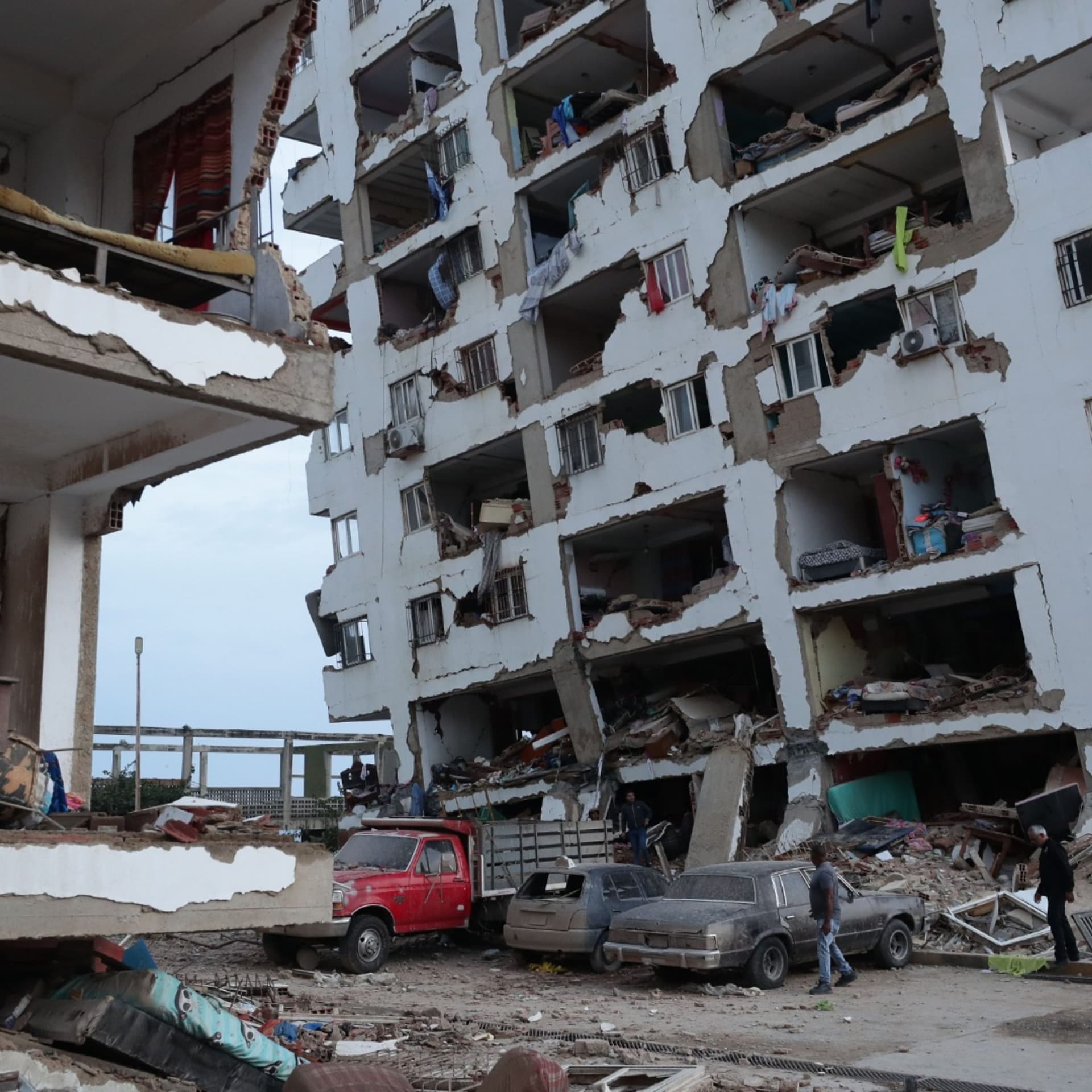
2:32First, a huge rescue and recovery operations underway across northern Venezuela after two back-to-back earthquakes struck overnight. The tremors, measuring 7.2 and 7.5 in magnitude, hit the capital Caracas and several states at around 6 in the evening local time on Wednesday. It could be felt as far away as Bogotá in neighbouring Colombia. That's 1 ,500 kilometres away. 164 people are known to have died. More than 1 ,000 were injured. Those figures are expected to rise. Buildings remain without power. The metro system and the main international airport remain closed. Venezuela was celebrating a national holiday when the quake struck, meaning many people were at home at the time.
3:13Venezuela's acting president, Delce Rodriguez, has declared a state of emergency. Here she is speaking to the nation during a televised address.
3:24I want to inform that the state most affected by this earthquake is Laguera State. There are dozens of collapsed buildings and we are at this moment working very hard in rescue operations to save the lives that God permits us to save. Also, I want to say that it is a true tragedy. From here, our message is of solidarity and to those families who have lost loved ones, we extend our condolences, our support during such difficult hours. We can say that Laguera State is a true tragedy and has become a disaster zone. Luis Hernandez is a journalist in Caracas. The movement was terribly horrifying and I gotta tell you in the 48 years of life that I have, is the first time that I felt such a strong movement in the apartment.
4:13Everything was shaking. There was no safe place to be inside the apartment. So I grabbed my dog and I went downstairs as quickly as I could. Where I am right now, it's a place called Miravila, which is located almost 20 minutes from Caracas. but in caracas there are a lot of buildings that fell down completely people that are buried in the in the structures and the government is trying to get them out as soon as they can but due to the whole difficulties that we have with the crisis that is the economy economic crisis that is going on in the country right now it's very difficult for us to assess the damage several countries including the U.S., China and India, have offered help.
5:04Here's the U.S. Secretary of State Marco Rubio. The Department of War is going to have to play a big logistical role here because they have the ability to land in challenging places. Right now the airport in Caracas is damaged. One of the runways is cracked. But the Department of War has the capability to land in situations like that, so we'll need that. So we have an awful whole of government response. It'll be big, it'll be fast, and it'll be effective. Vanessa Buschlutter is the Latin America editor for the BBC News website. She gave me a bit more about the scale of the damage. What we're seeing is a lot of social media footage of destroyed buildings, of people in anguish looking for their relatives.
5:44As you were saying in your introduction, Andrew, the sun has now come up over Caracas and the environments like Laguaira, the hardest hit area. And it seems of devastation. It's rubble strewn everywhere, buildings just collapsed into dust, really. And I think the death toll will keep rising as the emergency workers search in those buildings for any survivors. But of course, there will also be many who will not have been able to survive the collapse of such high rise buildings. This is the worst earthquake in Venezuela since 1900. that would suggest that the buildings and whatever won't be designed to withstand this kind of thing because it's not something that happens.
6:35That's right. I spoke to one engineer who said that a lot of the buildings are built to withstand earthquakes up to a magnitude of seven. But of course, this earthquake was stronger than that. And especially in La Guayra. La Guayra had another disaster happen in 1999. A huge landslide killed more than 2 ,000 people back then. And back then, a lot of buildings were constructed after that landslide. But we had at that time a shortage of cement. We had shortages in those years after the then president Hugo Chavez took over and nationalized, for example, the cement industry. these shortages led to shortcuts being taken and buildings not always constructed to the strict standards that you would see in countries like Chile, which is, for example, used to earthquakes.
7:30Just a few months since the US military removed Nicolas Maduro from office. So Venezuela was already in a degree of chaos. Can it cope with this from that point of view? That's right. Rather than chaos, I would describe it as a time of uncertainty. After Nicolás Maduro was seized by U.S. forces, his deputy took over. But there hasn't been a democratic government elected. And, of course, this is a thing that many people have been protesting against. And now this earthquake on top of that just creates more and more problems and challenges. Vanessa Bushluter is the Latin America editor for the BBC News website.
8:12You'll find all the latest on the live page there at bbc.com slash news. and also updates on our Spanish language service BBC News Mundo. Now, let's talk about the size and depth of these earthquakes. William Barnhart is a geophysicist with the US Geological Survey based in Colorado. These were extraordinarily powerful earthquakes. A 7.2 earthquake alone would be a catastrophic earthquake in this region, but to immediately follow that only 39 seconds later by a 7.5, that's about three times more powerful than that 7.2 earthquake, leads to a really dire situation. These earthquakes, of course, are so dangerous because not only do they cause intense shaking, but they occurred very close to population centers.
9:03At this time right now, we don't yet know if there was a surface rupture. So did they come up to and break the surface of the Earth? I would say it's probably likely given the style of faulting and where these occurred. But that's something that myself and my colleagues in the U.S. Geological Survey are actively looking into because that plays a very important role in assessing what the impacts of this earthquake are. The closer the earthquake is to people and to population centers, both in terms of distance along the face of the earth, but as well as depth within the earth, the more damaging it can be.
9:40Right, I've got you. And just in terms of, you know, the timeframe now, it's, I think, getting on for about 15 hours since the first earthquake struck. Does that mean that the immediate danger of aftershocks on a similar scale has passed? Or is that still a possibility? That is still absolutely a possibility. Aftershocks are occurring, and they will continue to occur for months to, you know, beyond a year for these earthquakes. Some of those aftershocks could themselves be quite large and damaging. There is always a very small possibility that an even larger or a similarly sized earthquake could happen.
10:26It's an unlikely case, but it is a possible case. Fortunately, as time goes on, the possibility of those large and frequent aftershocks decreases. But people who live in that area or people who are responding to that area should understand that aftershocks are happening and they will continue to happen. And people are likely to feel those aftershocks. And I presume that, you know, once also buildings and other bits of infrastructure have been damaged by the initial quakes, it wouldn't necessarily take a huge aftershock to mean more potentially catastrophic damage. That's always a possibility. And that's why it's important for people who live in these areas to take the advice of local officials on when they should reoccupy structures, when they should reenter or when they should stay away.
11:14William Barnhart from the US Geological Survey talking to Tim Franks from Colorado. Staying in the US, a meeting between Donald Trump and the Republican senators in Washington DC descended into a heated shouting match over the conflict in Iran. This comes as the US president was asking Congress for an extra$80 billion for the war effort, but four senators from his own party joined the Democrats in voting against his request. On his way out of the private lunch, Mr Trump said any disagreements with Republicans were nothing to worry about. I think we had a really great meeting and we're very proud of the party.
11:51We like our leader. We like everybody really in the room. I don't like a few people, but that's OK. I think you know who they are. But we I'll give you I'll give you that information someday. But for the most part, we have a really well unified party. To my correspondent, Hal Griffith, who's in Washington. This all played out behind closed doors, but inevitably news leaks out. Now, we know there was tension beforehand because the senators, branded losers by President Trump, had defied him and voted with the Democrats to back a vote that would restrict his war powers. Now, that vote is largely symbolic.
12:29It doesn't seem to have tempered President Trump's feeling of power and might, but it did put him in a very bad mood and so a loud exchange of views turned into shouting, we understand and while the centres questioned his attitude and why this war had gone on not for four weeks but for four months Senator Bill Cassidy is the man who I think was in the firing line and he has been critical of President Trump recently he, it seems, is not heading towards a very long political career after this if you fall out of favour of President Trump then your prospects long term aren't so good. But it shows you the division, not just within public mood, but within politics now, within the right of politics.
13:13Is America taking the right path? Has this war been worth it? I mean, I've been at a rally where President Trump has been talking about the glorious future ahead, how America is getting healthier and wealthier, but people aren't feeling it. He's promising, you know, gas or petrol at$2.50 a gallon. Well, people are paying an awful lot more at the moment. And even if the price of oil has come down, they are not feeling the benefits of this military action. That's Hal Griffith in Washington. The economy has been another key concern for the White House, particularly the price of oil, which shot up after the US-Israeli war on Iran began earlier in the year.
13:49The Strait of Hormuz was closed, but since the 60-day ceasefire memorandum of understanding was signed between Tehran and Washington, oil prices have fallen steadily. They're now below pre-war levels. A barrel of Brent crude, which had been above$110 at one stage, now trading at around$72. I got more from our business correspondent, Sorinjana Tiwari, in Singapore. The price of oil has fallen to levels not seen before the Iran war started in late February. Global benchmark Brent crude, as you mentioned, has briefly fallen below$72 a barrel, which was the price it was the day before the US and Israel started launching attacks on Iran.
14:33And of course, this comes after energy prices have been very volatile as a result of that military action. And that led to Iran effectively closing the Strait of Hormuz, which is a critical waterway for the world's oil and gas shipment. The supply of oil isn't instantly fixed as soon as the strait is opened. but the price seems to be instantly fixed by it. That's presumably because these are all futures that are being traded. That's right. The supply of oil, the cost of oil is actually a demand and supply game. So it depends on which countries, which governments want the oil and how much supply is reaching the markets.
15:14So this expectation that the oil, that the ships have started moving in the Strait of Hormuz, will start moving, have started moving, and that they will reach their market soon is what's pushing the prices down. But it's also a lot of diplomacy. It's linked to diplomacy. It's linked to messages coming out of those peace talks going on in various parts of the world. As soon as the Memorandum of Understanding was announced on the 17th of June, we saw the cost of crude coming down sharply, going up and down a little bit. It was a bit volatile, given the mixed messages that were coming out of the Middle East.
15:49But certainly this is about these countries, these governments getting the supply of the oil. And there are signs that those ships that are carrying the oil are going to start moving or have already started. Sorinjana Tiwari with me from Singapore. On the 4th of July this year, the United States will celebrate its 250th birthday, marking the anniversary of the adoption of the Declaration of Independence in 1776. In the run-up to those celebrations, we're going to have a special podcast for you looking at the state of America today. So if you've got thoughts or questions on the matter, we'd love to hear from you.
16:26Drop us an email, globalpodcast at bbc.co.uk. And if you can include a voice note, then so much the better. Thank you. Still to come in this podcast? It's full of regular visitors like mothers and small children, and this has always been the custom. That's exactly what's beautiful about this place. Nobody is forcing people to come here. Some people love Italy's only single-sex beach, but not everyone's happy.
17:01There are now websites where you can order food that never comes, track a parcel that never arrives, or smoke a virtual cigarette. They're known as dopamine sites because they're designed to give users a tiny hit of satisfaction without anything actually happening in real life. And they've become very popular in South Korea, particularly among younger people. So you might be thinking, what's the point? Well, my colleague Sarah Montague tried placing an order on a fake food delivery app and spoke to behavioural scientist Jo Hemmings. It is about dopamine. And with dopamine, it's actually less about pleasure, in fact, and more about motivation and expectation.
17:41So that anticipation itself feels simulating. It feels exciting. People are going to hear this and think this is bonkers. Can I tell you what's even more bonkers? Just one second. I'm going to hit pause just because I can see my order's been confirmed. It's been cooked and the curry is on the way with it. It really is mimicking a typical takeaway app very well, isn't it? I suppose I'd relate it to something like holidays for most of us. We book our summer holidays in the coldest months of the year. So we are creating that sense of anticipation. This is a sort of Gen Z equivalent of it. You know, they can abandon that basket, but still have that psychological reward.
18:25They haven't paid any financial costs, emotional costs, a low way risk of indulging their imagination. And so the fantasy is more rewarding than the reality. But it's also about control. I think for a lot of younger people, actually, that online basket does feel like a small act of control in a world that feels economically, politically, socially unpredictable. And this gives them a little bit of agency, a little bit of control. I can tell you, while you've been talking, our food hasn't arrived, although it says rabbit delivery complete. OK. And then it tells me that we have saved 2 ,480 kilocalories.
19:03Yes, an extra reward there. Zero calories for real. So on a health basis and a financial basis, you've had another reward. You've had another dopamine hit. You've had that pleasure and anticipation. Your appetite has been stimulated. You've been excited by what you've seen, but you haven't had any financial costs. You haven't had any health costs. You also, people would say, of course, you haven't had any satisfaction from receiving the goods, but that dopamine hit is much lower. The receipt of said takeaway for a lot of young people is much lower than the placing of the order. That's where they're getting their dopamine hit.
19:43Does it encourage obsessive behaviour? It could do like anything if you continue to keep on doing it and that's your only dopamine stimulus. It wouldn't be healthy. but actually as a coping mechanism for people that have shopping addiction, it's something I would actually recommend. I would say, go in there, put something in your basket, whether it's food, whether it's physical goods from an online store. Now go away and take a walk for five minutes, come back and then think to yourself, do I really want this? And very, very often they don't. Behavioural scientist, Joe Hemmings. Next to Hong Kong, where police have arrested the owners of one of the city's last independent bookshops.
20:22Local media reports say Letitia Wong and her business partner have been accused of selling seditious material and inciting hatred towards the Chinese-appointed government. This comes after years of official scrutiny over Ms Wong, whose Hunter bookstore had already been subjected to tax audits and frequent health and safety inspections. Paul Moss told me more about her. Well, she came to prominence as a politician. She was voted onto Hong Kong's Legislative Council on a pro-democracy ticket. I think she always knew the risks of her activities. I mean, back in 2020, she said to a journalist, I don't know what's going to happen tomorrow.
20:59I always imagine that the police will be at my doorstep the next morning to make arrests. Now, the council, the Legislative Council ceased to be meaningful as far as many pro-democracy people were concerned. Candidates were banned. Some are locked up and driven into exile. So Letitia Wong, what she did was she opened this bookshop called Hunter. and that's because bookshops in general became a sort of last bastion of free expression in Hong Kong when you know the media was censored but there you could find books considered subversive you know 1984 or Brave New World as you said the authorities always hassled Letitia Wong with things like draconian tax audits but then I think things started to change in March when the founder of another independent bookshop was arrested for selling a biography of Jimmy Lai the publisher who'd been arrested himself.
21:49And now it seems Letitia Wong and her colleague are also in custody. And do we have anything from the authorities yet? Well, they said that the material, as you suggested, was inciting hatred against the Hong Kong regional government. They said also the two people arrested are suspected of having received multiple remittances funded by foreign political organisations. I think that's important because, you know, the Hong Kong authorities, China in general, have a particular aversion to what they regard as foreign interference, and they've cracked down hard on anyone who they say is getting money from foreign organisations like human rights groups.
22:24The people arrested, of course, often say it's not true, it's just being used as an excuse to arrest them. I should say that Letitia Wong and her colleague were arrested under Hong Kong's homegrown security law, which was brought in only a couple of years ago under something called Article 23, and I think what these latest arrests suggest is we're going to see a lot more people taken into custody under that law. Paul Moss reporting now one of the most intricately decorated parts of the Vatican is getting a facelift using laser technology. The restoration project will clean up 16th century frescoes in a long corridor in the heart of the apostolic palace which are attributed to the renaissance master Raphael and known as the lodger.
23:04The work will take five years, cost several million dollars and is being done in partnership with the World Monuments Fund. Silvia Bertrametti is president of the Fund in Italy and told Tim Franks about the restoration work. So the Lodge of Raphael is truly one of the world's masterpieces. It lies at the heart of the Apostolic Palace and you can think of it as a passageway which is about 215 feet long and it's decorated with superb frescoes and stucco work by Raphael and his workshop. And what sort of damage has it sustained over the years? It has never been conserved in 500 years. The real innovation of the lodger is the fact that it combines the grotesque style of ancient Rome with biblical images.
23:57A fun fact about Raphael that very few people know is that he was the superintendent for antiquities under Pope Leo X and he was very connected to ancient excavation. So he brought in this grotesque style to his contemporary work. So is it a case that it has been open to the elements? So it's been damaged by weather? Or is it just because, you know, past efforts at trying to preserve the work has been sort of rather ham-fisted, that they've used sort of substances that we would shudder at these days? So for about 300 years, it was exposed to the elements and then it was closed up with windows, but the damage had been done.
24:45If you, you can, you can also think about that this larger was so famous at the time when it was produced, that it was copied by every famous painter who came to Rome. and so they literally put paper on top of the drawings and the frescoes to draw over it and that truly contributed to its deterioration. So tell me a little bit about this special technology that you're going to be using or the restorers are going to be using to try and recover some of the original beauty. So the truth is that until now, the technology really wasn't ripe for a project this important. And as you can imagine, the Vatican wanted to be absolutely sure that this was going to go ahead according to plans.
25:37And so there's something called a dry laser, of which we've rented about eight, which are able to clean up and conserve these wall decorations without touching them. Sylvia Beltrametti with Tim Franks. Now, you probably know we're in the grip of a heat wave in Europe, and no doubt many will be tempted to the nearest beach. If you're in the northern Italian city of Trieste and decide to pop by La La Turna, you might be surprised to know it's the only gender-segregated beach in Europe. And when those rules aren't respected, it causes an almighty row. Carla Conti takes up the story. Locals call it El Pedocin, a tiny municipal beach in Trieste, where for more than a century men and women have sunbathed on opposite sides of a wall.
26:28Not a symbolic one, but a very real barrier, about three meters high, cutting through the beach and even stretching into the water. It dates back to the early 1900s, when Trieste was still shaped by Austro-Hungarian ideas of public decency. Across Europe, beaches like this were once a common feature, but they have since disappeared almost everywhere. El Peducín, however, has not. And that is why every so often, this little strip of coastline becomes a national talking point. The latest argument broke out after a couple of tourists reportedly settled in the wrong section. A local woman reminded them of the rules, men on one side and women on the other.
27:08And then the exchange quickly escalated, with accusations that the beach was sexist, backward and even medieval. But while some, especially outsiders, may see this as a relic from a past that should have disappeared a long time ago, many regulars defend it as part of Trieste's identity. and for some women it offers a rare space of privacy from the opposite sex. This is what one woman told the Italian broadcaster Rai. It's full of regular visitors like mothers and small children and this has always been the custom. That's exactly what's beautiful about this place. Nobody is forcing people to come here.
Read the full transcript
27:47That is the defence you hear again and again in Trieste. If you don't like the wall, there are plenty of other beaches. Rai also asked one man on the beach whether the gender separation bothered him. He answered sarcastically. Very much, very much so. In fact, that's exactly why I keep coming here, because it's the Middle Ages. Men had it good in the Middle Ages. So for now, Pedocino remains exactly what it has been since 1903, a small Italian beach dividing men from women as well as public opinion. Carla Conti reporting. And that's all from us for now. If you'd like to get in touch, drop us an email, globalpodcast at bbc.co.uk.
28:32On X, you'll find us by going to at BBC World Service and using the hashtag Global News Pod. And don't forget our sister podcast, The Global Story, which goes in-depth and behind the headlines on one big story. This edition of The Global News Podcast was mixed by Dapheth Evans, the producers were Alfie Havishan and Mazzafair Shakir, and the editor is Karen Martin. I'm Andrew Peach. Thank you for listening and until next time, goodbye.
29:05It's called soccer. It's called football. Uh, soccer. Football. Domino's best deal ever lets you get any pizza including stuffed crust with any toppings for$9.99. We can agree on that. Yeah, fully. So pineapple? Don't ruin it. Get any pizza including stuffed crust with any toppings for$9.99. Finally something everyone can get behind. And if the refs disagree, that's between them and Domino's. Which means the only thing left to fight over is who's ordering. Domino's. Price is higher for some locations. Excludes XL and specialty pizzas. Select this offer from$6.15 to$7.26. Online only. Size availability varies by crust type.
29:46Max 7 toppings. 6 for pan and New York style crust. Minimum purchase required for delivery. Prices participation delivery area and charges may vary. Hey, it's Ryan Seacrest for Jewel Osco. Earn four times the points on your favorite brands now through July 28th on eligible items like Pantene Moisturizing Shampoo, Gillette Razors and Refills, Secret Clinical Strength Deodorant, Herbal Essences Hair Care, Old Spice Deodorant, Pampers Swaddler's Diapers, and Crest Clean Breath Toothpaste. Enjoy savings on top of savings when you shop in-store or online for easy pickup or delivery. Restrictions apply.
30:17See the website for full terms. Why is it always chaos when we link up? Because nobody plans anything, bro. Good thing the Rogue's ready like that. For real. Rain, dirt, whatever. Available all-wheel drive. Five modes. We still outside. And they got some kick too. That turbo? Torque is crazy. The most in its class. It moves, moves. Rogue doesn't mess around and peep the space. Merch on merch. Gear. Mics. All of it fits. Load up. We out. 2026 Nissan Rogue. Built for all of it. Auto Pacific Segmentation, 2026 Rogue vs. Latest in-market competitors in the ex-SUV mainstream mid-sites class, excluding electrical vehicles based on manufacturer websites.
30:58The future of furniture is here. Why buy ordinary furniture when you can come home to King? Save up to 50 % on selected designs at the King Living Summer Sale. Shop online or visit your nearest King showroom today. As yet another British Prime Minister steps down, is the country still feeling the effects of Brexit 10 years on? I'm Tristan Redmond, one of the hosts of the Global Story podcast from the BBC. Keir Starmer has become the sixth leader to resign since the Brexit referendum. Ever since that vote in 2016, the country's been wracked with political instability. When will it end? For more, listen to The Global Story on BBC.com or wherever you get your podcasts.
31:42you
From the publisher
A huge rescue and recovery operation is under way across northern Venezuela after two powerful earthquakes struck on Wednesday evening, killing more than 160 people and injuring over 1,000. Rescue teams are searching for survivors in Caracas and several other states after the 7.2 and 7.5 magnitude tremors hit during a national holiday, when many people were at home. Also: in Washington, a meeting between Donald Trump and Republican senators descends into a heated row over Iran; oil prices fall back to pre-war levels after the US and Iran agree a 60-day ceasefire; police arrest the owners of one of Hong Kong’s last independent bookshops; the Vatican begins a five-year laser restoration of Raphael’s sixteenth-century Loggia in the Apostolic Palace in the Italian city of Trieste; Europe's only gender-segregated beach becomes the centre of a row between tourists and locals; and why young South Koreans are placing orders on fake delivery apps.
The Global News Podcast brings you the breaking news you need to hear, as it happens. Listen for the latest headlines and current affairs from around the world. Politics, economics, climate, business, technology, health – we cover it all with expert analysis and insight. Get the news that matters, delivered twice a day on weekdays and daily at weekends, plus special bonus episodes reacting to urgent breaking stories. Follow or subscribe now and never miss a moment. Get in touch: globalpodcast@bbc.co.uk Photo: Apartment buildings damaged by the powerful earthquakes in Catia la Mar, Venezuela, 25 June 2026. Credit: EPA/Shutterstock