In short
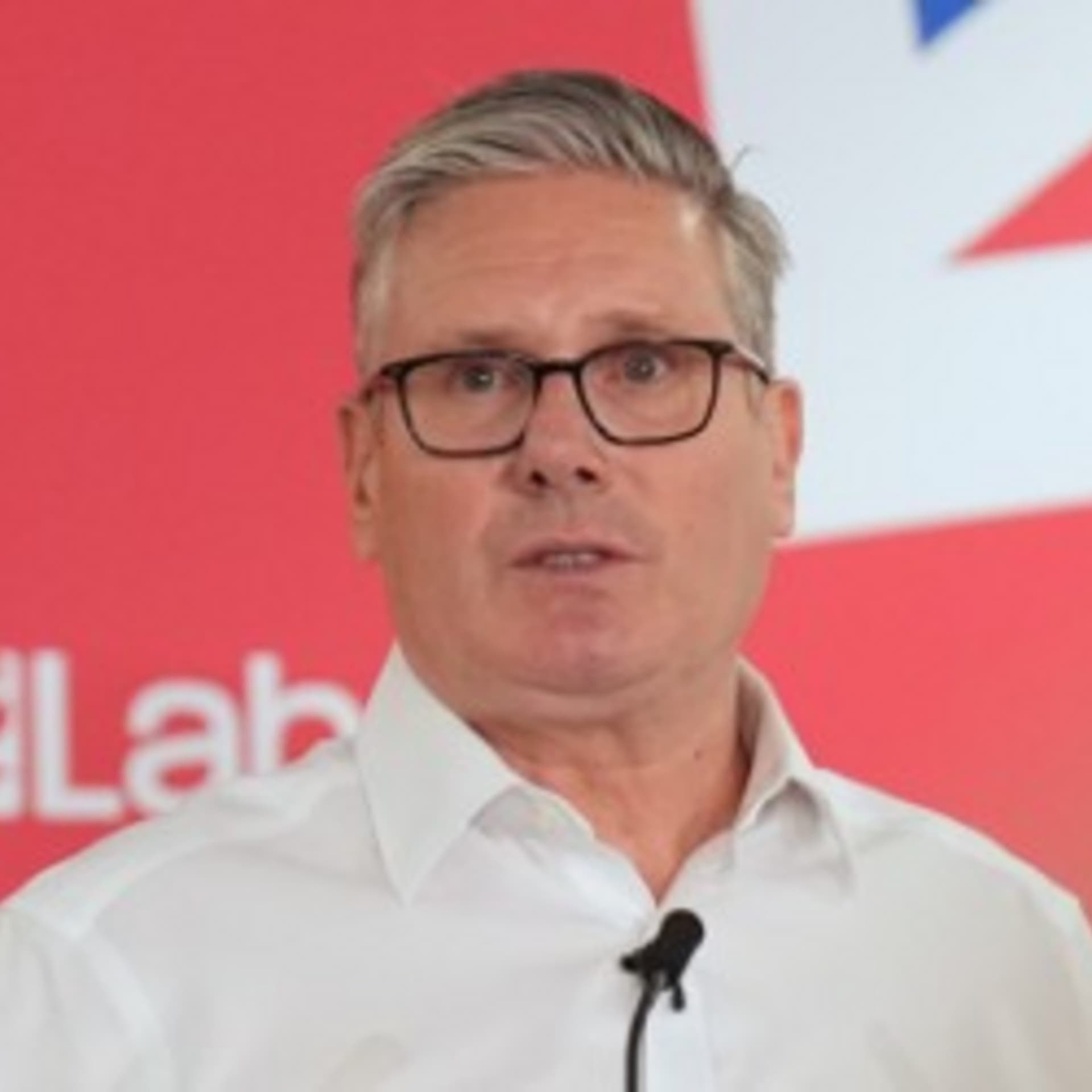
The episode covers four main news stories. In the UK, it reports mounting pressure on Prime Minister Keir Starmer to resign after Labour’s poor local election results; dozens of Labour MPs, including cabinet members, urge him to step down or set a timetable.
Key claims
Starmer’s Monday speech was “tone deaf,” and cabinet is split over whether to push him out or avoid another leadership contest.
Guest
Rob Watson, BBC political correspondent; he argues the landslide was “loveless” and voters feel promised change wasn’t delivered.
Internationally, it discusses US-Iran ceasefire fragility after Trump called it “on life support,” with Iran saying forces are ready to respond.
Guest
Bahman Kalbasi, BBC Persian Service (New York).
It also covers whale risks from increased shipping off South Africa (University of Pretoria) and Khartoum’s slow recovery after Sudan’s civil war (BBC reporter Mohanad Hashim).
Written by AI. May contain mistakes. Listen to the episode to check what was said.
Chapters
Tap a time to open that second in VOStarmer Under Pressure
1:33 to 2:26
Discussion on Keir Starmer's political challenges and calls for resignation.
“Iran says it's ready to respond to any aggression after President Trump said the ceasefire was on life support.”
Local Election Fallout
2:26 to 4:49
Analysis of the recent local election results and their implications for Starmer.
“dozens of MPs in his Labour Party, including a number from his cabinet, publicly called on him to resign or set out a timetable for his departure.”
Is Britain Ungovernable?
4:49 to 6:06
Exploring theories on the governability of Britain amid political turmoil.
“I mean, it does seem very unlikely and it seems that his time in office is drawing to an end.”
Iran and the Ceasefire Situation
6:06 to 11:28
Discussion on the situation in Iran and the fragile ceasefire status.
“Our political correspondent, Rob Watson.”
Whales in Danger Off South Africa
11:28 to 12:55
Scientists warn of increased shipping risks to whale populations in South Africa.
“Scientists are warning that increased shipping off South Africa as a result of vessels trying to avoid the conflict in the Middle East is posing a danger to whales.”
Life in Post-War Khartoum
12:55 to 14:02
Report on the conditions and recovery efforts in Khartoum after the civil war.
“For more than three years, Sudan has been engulfed in a brutal civil war.”
Recovery Efforts in Khartoum
14:02 to 17:00
Learn about the challenges and resilience of people in Khartoum post-conflict.
“Recovery is not a simple task, not just because of the scale of the destruction, but also because of what people endured.”
Virus on Cruise Ship
18:38 to 22:20
Hear about the evacuation of passengers from the virus-stricken MV Hondias.
“AT &T Fiber, limited availability in select areas.”
Impact of AI on Memory Chip Demand
22:20 to 24:12
Understand the effect of AI on memory chip prices and availability.
“There have been plenty of warnings about how artificial intelligence could affect technology of the future, but it's already having an impact on the gadgets we use today.”
Wordle Transitions to Television
24:12 to 27:03
Explore how the popular game Wordle is being adapted into a TV show.
“The hugely popular game app is being turned into a TV show.”
Show all 14 chapters
Cannes Film Festival Highlights
27:03 to 28:00
Get insights on the films and events at this year's Cannes Film Festival.
“The Cannes Film Festival gets underway in the south of France later today.”
Cannes Film Festival Overview
28:00 to 29:32
Exploration of the Cannes Film Festival's current state and key films.
“Spain's Pedro Almodovar, a Cannes regular, has Bitter Christmas, a personal film, touching on filmmaking grief and getting older.”
John Travolta's Directorial Debut
29:32 to 30:09
Discussion on John Travolta's new film and its inspiration.
“But one Hollywood star who will be present in Cannes is John Travolta.”
Impact of UK Films at Cannes
30:09 to 30:56
Analysis of the lack of UK films at Cannes and its industry implications.
“I think the lack of British films in Cannes does represent the shortcomings and the constraints of the industry.”
Transcript
Automatic transcript. May contain errors.0:00This BBC podcast is supported by ads outside the UK.
0:30Make your next financial move with confidence. Follow NerdWallet's Smart Money Podcast on your favorite podcast app. From lashes for days with the Viral Liquid Lash Extensions Mascara to awakening your eyes with lift and color from the brilliant eye brightener, Thrive Cosmetics is the go-to when you want to amplify your everyday look. Plus, every product is 100 % vegan, cruelty-free, and made with clean, skin-loving ingredients that work with your skin. And for every product purchased, Thrive Cosmetics donates to help communities thrive. So every time you use your favorite Thrive Cosmetics product, you're helping communities you care about too.
1:05Amplify your everyday. Go to thrivecosmetics.com slash shine26 for an exclusive offer of 20 % off your first order. That's Thrive Cosmetics, C-A-U-S-E-M-E-T-I-C-S dot com slash shine26. You're listening to the Global News Podcast from the BBC World Service. Hello, I'm Oliver Conway. We're recording this in the early hours of Tuesday, the 12th of May. The British Prime Minister Keir Starmer is under mounting pressure to resign. Iran says it's ready to respond to any aggression after President Trump said the ceasefire was on life support. And scientists say whales are in danger because of an increase in ships off South Africa, triggered by conflicts in the Middle East.
1:53Also in this podcast... It was dangerous to go to the market even for one kilo of rice. You can be arrested, killed, raped, harassed, beaten, humiliated. So people would rather starve, not go out. How life is slowly returning to Sudan's capital Khartoum after the city was battered in the civil war.
2:16It's been a difficult few days for the British Prime Minister Keir Starmer and it could be about to get worse. After a damaging set of results from local elections last week, dozens of MPs in his Labour Party, including a number from his cabinet, publicly called on him to resign or set out a timetable for his departure. One of them, Jonathan Hinder, told the BBC that the Prime Minister's speech on Monday, which was seen as a last-ditch attempt to save his premiership, had been tone deaf. It's time to be real. He's going. No doubt about it. You look at those results last week. We're being swept away in our heartlands.
2:54and to come out in response to that and start talking about Brexit and having free movement again. For that to be the focus, when you're fighting for your life as the Prime Minister, it was absurd. I heard more from our political correspondent, Rob Watson. Well, we see it to be at another moment of peak drama in British politics, Oliver, and the day had started with Keir Starmer hoping that a speech that he was giving would somehow stop the drip, drip, drip of MPs urging him to consider his position. That did not happen. And indeed, as the day went on, things seemed to get even worse. And the day concluded with the BBC understanding that several senior ministers, cabinet ministers had said to the prime minister, look, the game is up.
3:41You seriously need to consider resigning. So a very, very bad day indeed for the prime minister, leaving his grip on power, the prime ministership and the leadership of the party are slipping away. So he is still currently in place, but what might happen in the coming hours on Tuesday? It could be the moment this drama concludes one way or another, because the cabinet are meeting, that's the senior ministers, and we understand at the BBC there is a split in the cabinet. So some have said to him, you need to consider your position. Others take the view that the last thing that Britain needs is another leadership contest after having seen the Conservatives change leadership five times while they were in power.
4:28So there is a movement against it. And I guess what we'll be looking out for is how does that resolve? I mean, do the Cabinet decide in the end that they will get round Keir Starmer? At the moment, things look truly perilous for him because can a prime minister really survive when he's lost that much support? I mean, it does seem very unlikely and it seems that his time in office is drawing to an end. It's only a couple of years since he and the Labour Party won an impressive landslide victory, taking them to power. Where's it all gone wrong? I think the first thing to say, Oliver, that it was a loveless landslide.
5:09I mean, it was absolutely whopping one of the biggest since the Second World War, but it was much more a vote against 14 years of government than it was for Keir Starmer and the Labour Party. But I think it's gone wrong in two ways. One is just an extraordinary animus of the British people towards Keir Starmer. I mean, I think it's quite hard to explain why, but the voters just really don't like him. The second issue is that the voters feel that they were promised change at that election in 2024. And one might say it's unreasonable of the voters, but they feel that that just has not been delivered.
5:46So they're angry. They were angry before the election in 2024. And the last couple of years have just made them even angrier. You mentioned those five conservative prime ministers. Now the Labour prime minister looking to be in a perilous position. Is Britain ungovernable? It's a very good question. I mean, I've seen two theories on this. One is to say, yes, it is ungovernable, and it's ungovernable because the politicians have spent too long not levelling with the voters about difficult choices that need to be made, and that the voters themselves are just unreasonable about the difficult choices that the country faces, both in terms of economics, of immigration, of how you organise society.
6:31The second theory that I've heard is that actually Britain is not ungovernable, but that it has had a succession of leaders who've just not been very good and weren't necessarily fit for high office and who weren't particularly well served by their parties. So those are the two theories. Yes, it is governable. No, it isn't. Our political correspondent, Rob Watson. In March, President Trump announced he was postponing his state visit to China so he could stay at home and oversee the war on Iran. Two months on, with the rearranged trip to Beijing due to start tomorrow, the conflict in the Middle East shows no sign of ending.
7:10In fact, the US leader was reportedly meeting his national security team on Monday to discuss whether to resume strikes against Iran. And surrounded by medics at an event in the Oval Office, He said the ceasefire was like a patient with a 1 % chance of living. Unbelievably weak, I would say. I would call it the weakest right now. After reading that piece of garbage they sent us, I didn't even finish reading it. They said I'm not going to waste my time reading it. I would say it's one of the weakest right now. It's on life support. They understand. These are all medical people. Dr Oz, life support is not a good thing.
7:50Do you agree? Diagnostic. I would say the ceasefire is on massive life support. Well, Iran's parliamentary speaker and chief negotiator, Mohamed Baga Galibaf, responded on social media, saying our armed forces are ready to respond and to teach a lesson for any aggression. And the Iranian foreign ministry spokesman, Esmail Bagai, insisted that Tehran's peace proposals were reasonable. We did not ask for any concessions. The only thing we sought was Iran's legitimate rights. I leave it to you to judge whether Iran's demands are excessive, Iran's calls for an end to the war in the region, its demands that the naval blockade be brought to a halt and its request for the release of assets belonging to the Iranian people.
8:38Are these unreasonable demands? So how close are we to the ceasefire unravelling? A question I put to Bahman Kalbasi from the BBC Persian service in New York. Judging what the president says, obviously, it's not going to be easy to hold the ceasefire. But the problem right now the White House faces is that there are no good options. Restarting the war has its own consequences economically. And for the security of the region, countries in the Persian Gulf will obviously be hit again. And so those consequences are obviously weighing heavily on the decision makers at the White House. Preserving this status quo is also, as the president says, is very hard to see possible because sooner or later Iranians would want to increase the cost of this blockade.
9:28and accepting the deal that the Iranians are proposing is also very difficult because it's very hard to sell a deal that is not very different fundamentally from what Barack Obama achieved in the JCPOA or famously known as the Iran deal back in 2015. So none of the options before the president are desirable. Nevertheless, he may have to lean towards one or the other to break the stalemate, but it's not clear any of them will. Looking at the various proposals that have been winging their way from Iran to the US and back, have we seen either side soften its position at all? On one key issue Iran has, and that is the fate of the enriched uranium, 400 kilogram of enriched, highly enriched uranium.
10:18They had previously said we would not send any of it outside of Iran. But apparently, the new proposal that they sent that the president rejected has the possibility of half of it being sent to a third country and the rest being diluted. So that's one step they've taken. But they also have asked for sanction relief and release of all the Iranian assets frozen in foreign banks up front, because they don't trust Donald Trump to actually lift sanctions later on if they give up their leverage. So that's probably one of the reasons that the White House is very unhappy with the Iranian proposal. Very briefly, President Trump going to China this week, no doubt Iran will be a top talking point.
11:03It will be, even though the White House officials have been saying that it will not be the number one issue or the overwhelming discussion around it. But they also said they're going to ask Chinese to help with this matter and pressure Iran. Obviously, the Chinese government will ask for something in return. So this is not going to be the desirable environment that the president wanted to go to China under. Bahman Kalbasi of the BBC Persian Service in New York. Scientists are warning that increased shipping off South Africa as a result of vessels trying to avoid the conflict in the Middle East is posing a danger to whales.
11:42Experts from the University of Pretoria say there is a heightened risk of collision because the seas off the southwest coast of the country support significant whale populations. Here's our Africa correspondent Mayeni Jones. South African researchers say this issue has been ongoing since 2023, when more ships started rerouting around South Africa after Houthi rebels hijacked a British vessel near Yemen. But further attacks and the ongoing war between the US, Israel and Iran has led to more ships travelling through the Cape of Good Hope, exacerbating the problem. The lead researcher of the University of Pretoria's whaling unit told the BBC their aim isn't to point a finger at anyone, but rather to draw attention to the issue in order to reduce the risk of future collisions.
12:25Professor Els Van Mullen says it's hard to quantify how many whales have been struck as more data is needed. Most collisions between whales and ships tend to happen deep offshore, leading to the animals sinking to the bottom of the ocean rather than washing up on the coast. This makes it difficult to estimate how big the problem is. Until they have more data, solutions are hard to recommend. But Professor Vermeulen says they could include tweaking shipping routes as well as reducing the speed at which vessels travel at certain times of the year. My Annie Jones. For more than three years, Sudan has been engulfed in a brutal civil war.
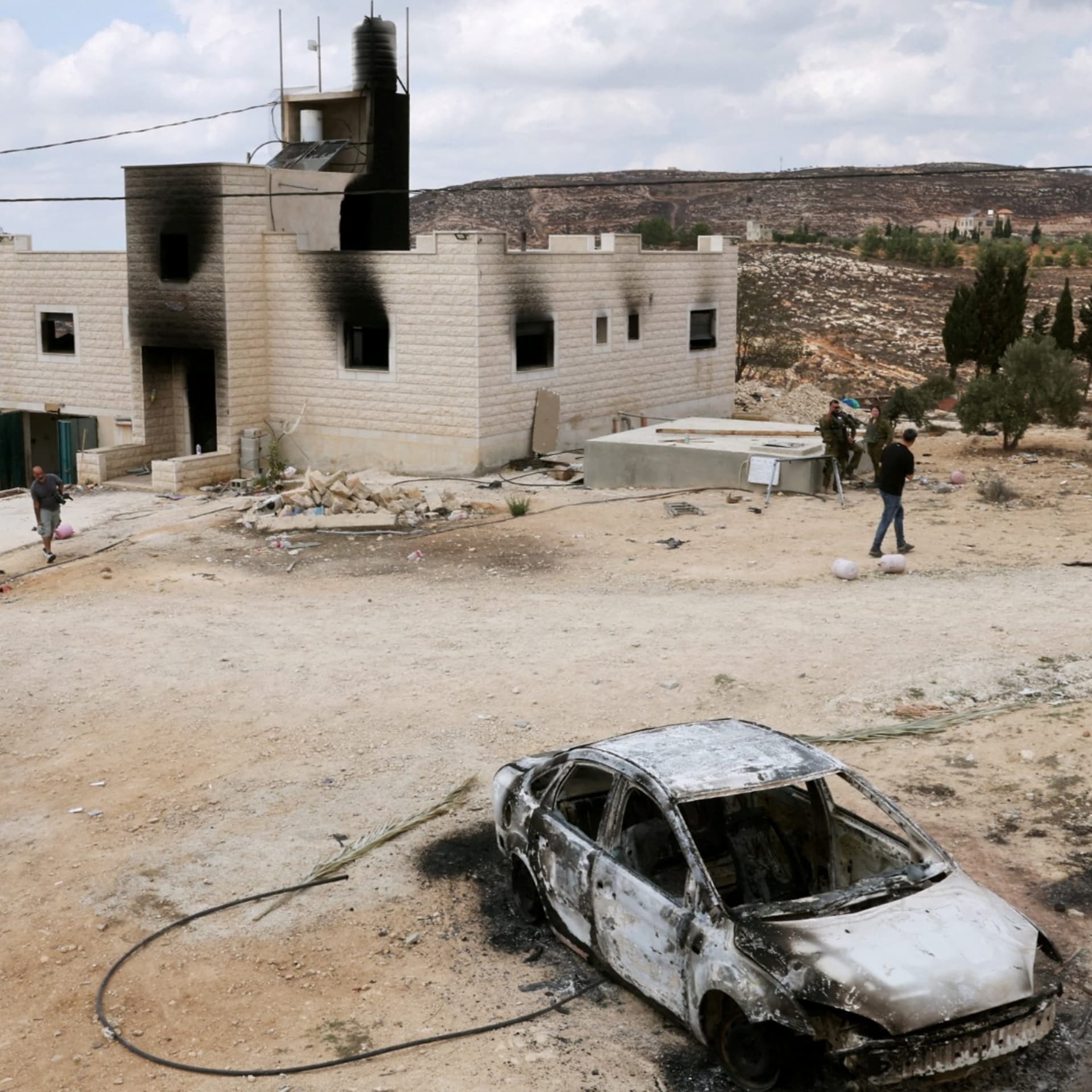
13:00At least 150 ,000 people are thought to have been killed, possibly many more, while millions have been displaced. The war began as a power struggle between the Sudanese military and the powerful paramilitary group the Rapid Support Forces. In the early days, the RSF seized much of the capital Khartoum before the army regained control of it in March 2025. One year on, BBC reporter Mohanad Hashim has returned home to the battered city to see how people there are getting on. These are the major avenues, and all the buildings we're looking at have shrapnel, have signs and marks of shelling, the scale of it.
13:43This would have been some of the oldest parts of Khartoum, and everywhere is destroyed. It's been a year since the Sudanese military managed to recapture the city from the powerful paramilitary force, the RSF. The war is far from over. There are still occasional drone strikes on the city. But here, at least, people are starting to pick up the pieces. Recovery is not a simple task, not just because of the scale of the destruction, but also because of what people endured. We know it was going to be over at some point, but we did not expect that we were going to live and see it. I did not sleep for two years.
14:19Dua is an artist and a pro-democracy activist. While millions fled, she decided to stay under RSF occupation to help others in her neighborhood. She says the last months of the RSF occupation were the most dangerous, especially for women. They started doing the looting, rapes. It was catastrophic. It was dangerous to go to the market, even for one kilo of rice. You can be arrested, killed, raped, harassed, beaten, humiliated. So people would rather starve, not go out. What was the reaction when the army arrived here? The first thing I did that I slipped. From day one, one of the main tasks has been to clear the remnants of war from this vast city, removing bodies, rubble, burnt-out vehicles.
15:01Just by the banks of the Nile, near the shattered remains of the Hilton Hotel, we found a team of deminers at work. We cleared projectiles, mortars, rockets, hand grenades, fuses, small arm, ammunitions, anti-personal, anti-tanks. Juma 'a Hamdan is a deminer with Jasmar, a Sudanese NGO funded by the EU and the UK. His team is clearing one block of land near the river. You go down, that's the minefield. But is that in the bushes down there? Yes, by the right side. So after you cut the grass up to a certain level, you sweep with the detector, then you move on? Yes, and you move. That's very risky.
15:39So you have to be very careful. Alongside the cleanup, people have been assessing the damage and starting repairs. Large parts of the city remain without electricity and running water. The government estimates the cost of reconstruction for Khartoum alone is more than$100 billion. Before the RSF left, they stripped much of the city bare. Not just furniture, appliances and belongings were looted, but wall sockets, electrical wiring, even pipes, taps and sinks. The cost of restoring what's lost is beyond most Sudanese. But each day, more people are returning. Slowly, slowly, he says a lot of people are doing maintenance work and hopefully people will eventually come back.
16:21Hussam and his workers are doing final repairs to his old office. He had a car rental business. When the war started, he fled to Egypt. All his cars were looted, but he's come back to try to start again.
16:36Our homes, our businesses, our houses, everything is here and there is no work for us in Egypt. The war is not over, but with this moment of peace here, you get glimpses of what the city could become again. People are back at the banks of the Nile, sipping cups of sweet tea and hibiscus, while kids swim in the river. Mahana Tashim reporting from the Sudanese capital, Khartoum. Still to come on the podcast... I guess we see people like Nicole Kidman and the debut of any great film. Maybe the best event in France. Fans gather for the Cannes Film Festival.
17:39the original best blanket ever.
17:49Chicago talks a lot. Hold on. Let me step over here. People are talking too much. We debate about food, deep dish, tavern style, who's got the best beef. We yell across rooms, across blocks, across generations. Yes, nice earrings, Grammy. And now we're doing it on our phones too. Video calls from the L train, group chats that never shut up. Neighbors texting you the score before your TV catches up. Get a load of this guy. Catch up on a dog. Yeah, we've got thoughts. Because nothing here gets built without conversation. Nothing moves without connection. So if you think you know AT &T, it might be time to rethink that.
18:27Because their network has improved, like a lot. Which means Chicagoans can keep speaking their mind with the top rated fiber internet in the city. Chicago won't stop talking. Our improved network backs it up. AT &T, connecting changes everything. AT &T Fiber, limited availability in select areas. Top rated and fastest internet. AT &T Fiber, based on analysis by Ooclops, Pitas Intelligence, data 2H 2025.
18:54You're listening to the Global News Podcast. The virus-stricken cruise ship, the MV Hondias, has left the Spanish Canary Islands following a complex two-day evacuation of the passengers. There are 27 people left on board, including crew members and a doctor and nurse from the World Health Organization. The vessel is heading to Rotterdam in the Netherlands, where it will dock for disinfection. Spain's health minister is Monica García.
19:22Mission accomplished. We have just successfully completed the operation. Between Sunday and Monday, we have evacuated all 125 passengers from 23 countries. They are either back in their home countries or are currently being transported there. The WHO chief Tedros Adhanom Ghebreyesus had this message for those who'd left the ship. You're now in good hands. We were very worried if you stayed longer in the ship, the situation could have been difficult. You heard about the passenger from France who is in a very critical situation. imagine if she stayed longer in the ship. And evacuating them or repatriating them is the right thing because all the passengers will get the necessary support.
20:10Most of the passengers have returned to their home countries or are quarantining before they can continue their journeys. 18 have gone back to the US with 16 taken to the University of Nebraska Medical Centre. Here's their epidemiologist, Dr H. Deli Davis. Each of the rooms is like a hotel room where we can have them. They have exercise equipment. They have Wi-Fi and monitors to be able to communicate with their loved ones while they're here. They're all healthy. They all feel well. But they're within that incubation period where they could become sick. So we keep them in those rooms and their symptoms are monitored.
20:47And if they were to get sick, then they get moved to a biocontainment center, which is more of a hospital room where we can take care of them and make sure that we meet all there. health-related needs. They could stay here for the whole six weeks. However, we're going to be doing some intensive talking to them to try and get a sense of what the best guess is for when they may have been exposed last, which may mean that some people have slightly different times at which there's comfort level in letting them go. We will be testing some of them, but the ones that develop the symptoms are the ones that actually, at least from what we understand with these diseases, the ones who are much more likely to be infectious.
21:26So typically, once you get the fever and the muscle aches and the headaches and the diarrhea and maybe fatigue, that's usually when, at least for this particular hantavirus, they're more likely to be infectious. This is a virus that's actually not that easy to spread. You have to be in really close contact with someone. And also, when it's in the environment, it's pretty fragile. It doesn't really stay and hang ground that long. And so we do a lot of work to disinfect and get rid of it. But it's nothing like COVID, which was obviously very, very infectious. And fortunately, with a low mortality rate, but with so many people getting infected, of course, a lot of people die.
22:08This is sort of an opposite type of a virus where the ability to spread is actually quite limited. Now, if you do get it to the point of getting symptoms, then the death rate is higher than COVID. Dr H. Dele Davis. There have been plenty of warnings about how artificial intelligence could affect technology of the future, but it's already having an impact on the gadgets we use today. AI data centres are hoovering up the supply of memory chips, leaving less for things like smartphones, computers and cars. Sony and Nintendo have already hiked the price of their games consoles, and tech journalist Brittany Nguyen told us that other companies are likely to do the same.
22:50AI is pretty directly responsible. There's a lot of demand on the AI side because as these AI models are getting larger, they're able to answer more complex questions. They depend on more memory to be able to quote-unquote remember these conversations. So there was a report earlier this year from Counterpoint Research that said prices had risen just between the last quarter of last year and the first quarter of this year, 80 to 90 percent. There are some figures, you know, saying that prices have risen 171 percent. There's three main memory chip makers, and they are Micron in the U.S., Samsung, and SK Hynix in South Korea.
23:32And Samsung does make its own chips, and TSMC in Taiwan is a chip manufacturer as well. These three companies have really benefited from this imbalance of supply and demand, again, because they have a lot of pricing power in this environment. And another thing that's impacting consumer electronics makers is that companies like NVIDIA and Google and these AI chip makers who are driving all this demand, they can really afford to take on these price hikes, unlike consumer companies. and this memory supply shortage is expected to last through this year, 2027, even maybe 2028. This crunch will last.
24:14Brittany Nguyen of MarketWatch. Now, are you a fan of Wordle? The hugely popular game app is being turned into a TV show. The New York Times has users solved the Wordle puzzle 4.4 billion times last year. so how will it translate to television? Our global affairs reporter Joanna Keane told me first how Wordle works. Players get six chances to guess a random five-letter word. Now if they get a green tile it means you've got the right letter in the right place, a yellow tile means right letter, wrong place. So to give you an example, the word clear, okay, you might get a yellow for the A and the R, so you've got to think of a different place to put those.
24:55So your second guess could be a door. This time, the R is green, so it's in the right place. But you've got an ADO, a yellow. So you've got to keep guessing. Now, lots of people play this on their phones. How are they going to turn it into a TV show? Well, NBC have been quite clever here because this game is much loved. Massive surge in popularity. It was actually created by a software engineer called Josh Wardle. He launched it in 2021. Now, don't forget that was during the COVID-19 pandemic. He said he got messages with people saying, look, it's uniting distant families. It's also provoking friendly rivalries.
25:33So after this surge in popularity, it was acquired by the New York Times in 2022. Undisclosed seven-figure sum. We don't know exactly how much. So ever since then, it's been really popular. So NBC have come along and thought, right, let's turn this into a game show. They describe it as a battle of smarts, speed and fun, whatever you make of that. It's going to be aired next year. There'll be teams of three players going head to head to win cash prizes. Now, we also know it's going to be hosted by the NBC news anchor Savannah Guthrie. She's recently been in the public eye because her mother was very sadly abducted at the end of January and she's been appealing for information.
Read the full transcript
26:13And it'll be produced by a company belonging to the NBC host, Jimmy Fallon. So some really high-profile figures involved here. For NBC, this makes sense because Wordle's loved by so many, it's going to make it into a popular game show. For The New York Times, it reflects its ambition to expand its content beyond traditional news. You said a popular game show. Are people excited about this idea? Well, NBC are hoping that they'll get excited, but a bit of a mixed response on social media from fans. I mean, some are saying, great, we get to play at home, we get to shout at the TV, love that party atmosphere.
26:52Others are saying there's already a similar game show out there and some are actually a bit worried that the thoughtful, calm nature and sort of personal nature of this daily puzzle could be lost. Joanna Keane. The Cannes Film Festival gets underway in the south of France later today. It's one of the biggest events in the world of cinema and has built a reputation for launching films that go on to win major awards. The BBC's Tom Brook is there. On the French Riviera, the film world is gathering in Cannes for 12 days for what is commonly regarded as the mother of all film festivals. In the days leading up to the festival, enthusiastic fans have been stopping to take selfies in front of the Palais, the heart of the festival.
27:37The top French stars Marion Cotillard and Léa Seydoux and actors John Travolta and Julianne Moore, as well as filmmakers Steven Soderbergh and Peter Jackson and expected to be present, there's a lot to get excited about. I guess we see people like Nicole Kidman and see their fashion and the debut of any great film. Maybe the best event in France, so yes, for sure. This year, the festival is heavy on films from arthouse directors with their own distinct style. Spain's Pedro Almodovar, a Cannes regular, has Bitter Christmas, a personal film, touching on filmmaking grief and getting older. Then Polish director Pavel Pawelkowski has fatherland, centred on German novelist Thomas Mann and his daughter on a Cold War-era road trip in Germany.
28:22Also eagerly awaited is Japanese filmmaker Hirokazu Koreeda's Sheep in the Box, a sci-fi tale in which a couple mourning the loss of their son adopt a humanoid robot to replace him.
28:39But the Cannes Film Festival feels a bit different this year because there is no major US blockbuster picture being launched here. In previous years, Hollywood franchise films like the sequels to Top Gun and Mission Impossible, when they've arrived at Cannes, have created a lot of excitement. When you speak to the man in charge of the festival, General Delegate Thierry Framot, he says the reason why there is an absence of Hollywood movies this year is because of structural changes in the industry. It's a moment of transition. When you have such a transition, they don't have the project to produce a lot of films, but I'm sure that it will come back.
29:18There is also the view that the studios are staying away because they've learned that Cannes can be an expensive and less-than-friendly platform for launching their films, particularly because independent-minded movie critics can create negative spin. Welcome aboard. But one Hollywood star who will be present in Cannes is John Travolta. The actor is making his directorial debut with a film called Propeller One Way Night Coach. Travolta has a long association with the festival, coming here in the 1990s, first with Pulp Fiction. His new film is inspired by a children's story he wrote of a young boy and aviation enthusiast, like Travolta himself, with his mother on a trip across the United States.
30:00It's not just US studio films that will be absent this year from Cannes. No UK pictures have been selected for the coveted competition slots. The British presence at Cannes is minimal after a strong showing last year. Film critic Nicholas Barber. I think the lack of British films in Cannes does represent the shortcomings and the constraints of the industry. In Britain, it is hard for art house films to get made. It is hard for political dramas to get made for the big screen. And that's the kind of films that Cannes wants. Last year, Cannes launched the Norwegian film Sentimental Value, the Brazilian picture, The Secret Agent, and the Iran-set movie It Was Just an Accident, all featured in the Oscars race.
30:43Despite industry-wide uncertainty and the absence of US studio pictures this year, festival-goers fervently believe that Cannes will live up to its reputation in the coming days to deliver some must-see cinema that will go on to engage movie audiences around the world. Tom Brook in Cannes. And that is all from us for now, but the Global News Podcast will be back very soon. This edition was mixed by Derek Clark and produced by Mazzafra Shakir. Our editor's Karen Martin. I'm Oliver Conway. Until next time, goodbye.
From the publisher
More than 70 MPs from Britain's governing Labour party have publicly called on the prime minister Keir Starmer to stand down, following disastrous local elections results. Several senior ministers have urged him to set a timetable for his departure. Earlier Keir Starmer insisted he would not quit, and would fight any leadership challenge.
Also: Iran says it is ready to respond to any aggression, after President Trump dismissed its latest peace proposals and said the ceasefire was on "life support". Researchers are warning that increased ship traffic off South Africa, due to the closure of the Strait of Hormuz, is causing dangers for whales. Our correspondent returns home to Khartoum, which was battered during Sudan's civil war. The last remaining passengers are evacuated from the hantavirus-hit cruise ship, as the crew sets course for the Netherlands where it will dock for disinfection. We look at how AI centres are causing a shortage of memory chips, pushing up prices of tech products. The hugely popular online puzzle Wordle is being turned into a TV game show. And we're at the Cannes Film Festival with the inside track on movies to look out for this year.
The Global News Podcast brings you the breaking news you need to hear, as it happens. Listen for the latest headlines and current affairs from around the world. Politics, economics, climate, business, technology, health – we cover it all with expert analysis and insight. Get the news that matters, delivered twice a day on weekdays and daily at weekends, plus special bonus episodes reacting to urgent breaking stories. Follow or subscribe now and never miss a moment. Get in touch: globalpodcast@bbc.co.uk