
In short
Global News Podcast Episode Summary
Episode Title
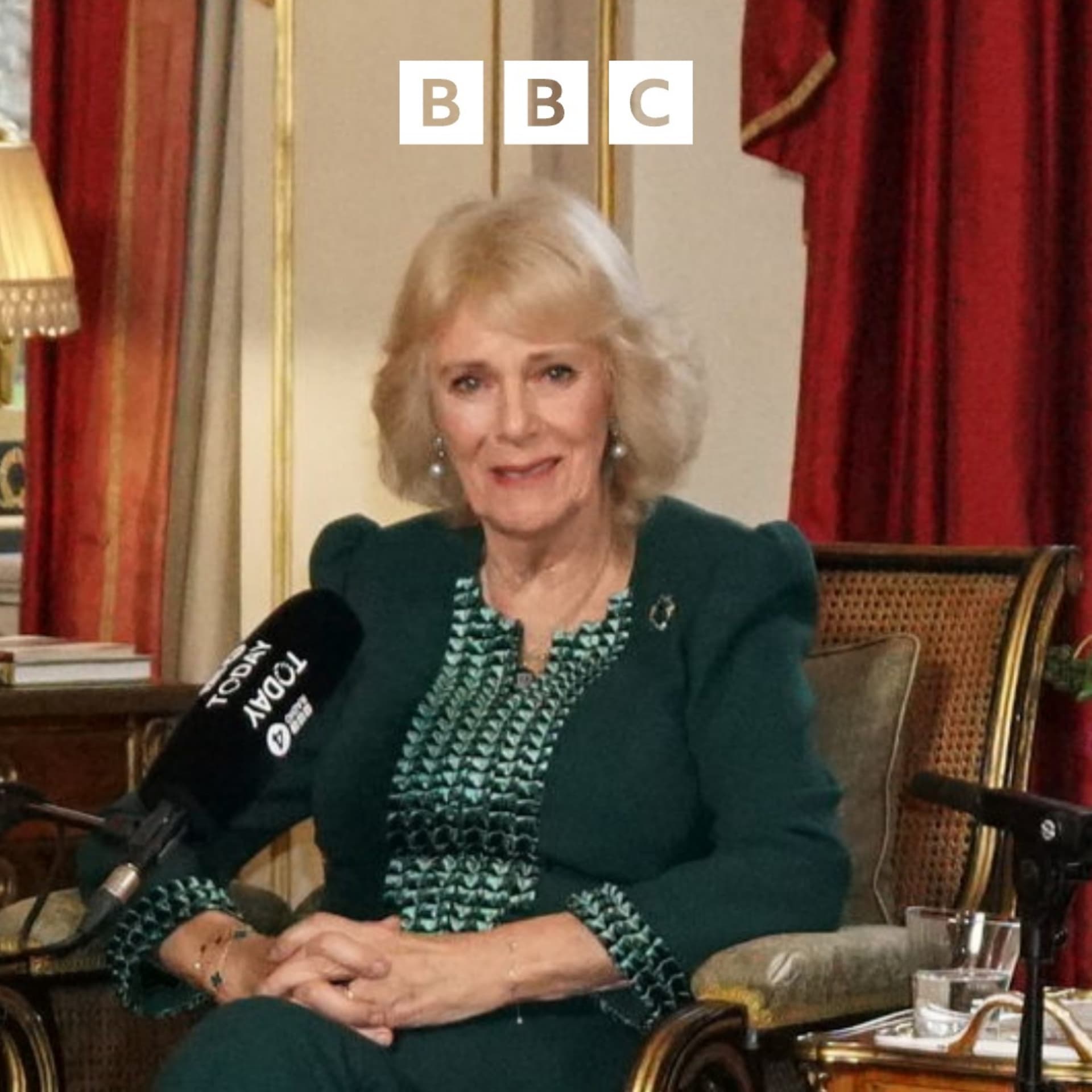
Queen: I was assaulted on train
Episode Overview In this episode of the Global News Podcast, Queen Camilla discusses her experience of an attempted indecent assault as a teenager, marking her first public revelation on the subject. The episode also covers various global news stories, including a strike by delivery workers in India, significant gains in gold and silver prices, advancements in space manufacturing, the plight of albatrosses in South Africa, and the growing popularity of Spanish-language music in America.
---
Key Segments
- Queen Camilla's Experience
- Personal Testimony: Queen Camilla recounts being assaulted on a train during her teenage years, sharing feelings of anger and the long-term impact of the incident.
- Significance: Her testimony is seen as pivotal in raising awareness about violence against women, particularly during discussions around domestic abuse.
- Public Perception: The taboo surrounding discussions of assault and violence against women is highlighted, emphasizing the importance of breaking the silence.
- Delivery Workers Strike in India
- Context: Tens of thousands of app-based delivery workers in India went on strike, demanding better wages and working conditions.
- Demands:
- Minimum monthly salary
- Insurance coverage for injuries
- Industry Impact: The strike coincided with New Year's Eve, aiming to draw attention during one of the busiest times for delivery services.
- Gold and Silver Market Insights
- Market Performance: Gold and silver are projected to have their biggest annual gains in decades, with gold increasing by over 60% in 2025.
- Factors Influencing Prices:
- Geopolitical tensions and economic uncertainty
- Increased demand as a safe haven investment from central banks and individual investors
- Future Projections: Analysts suggest that while prices may remain elevated, there are concerns about potential market bubbles.
- Space Manufacturing Advancements
- Company Highlight: Spaceforge, a UK-based startup, is moving towards manufacturing materials in space, specifically targeting semiconductor production.
- Process: The company plans to create high-purity materials in zero-gravity environments and bring them back to Earth for further processing.
- Environmental Considerations: Claims are made that the process could reduce carbon emissions and energy costs in semiconductor manufacturing.
- The Plight of Albatrosses
- Conservation Efforts: BirdLife’s Albatross Task Force has successfully reduced the number of albatrosses killed unintentionally by fisheries by 90%.
- Challenges: Albatrosses are particularly vulnerable due to their breeding habits and the fishing practices that threaten them.
- Community Involvement: The initiative also supports local communities by employing disabled individuals to help build bird-scaring devices.
- The Rise of Spanish-language Music in the U.S.
- Cultural Shift: Spanish-language music has seen a significant rise in popularity, with artists like Bad Bunny and Rosalía leading the charge.
- Industry Insights: Streaming services have facilitated this growth, allowing diverse music styles to reach a broader audience.
- Consumer Behavior: Fans are increasingly learning Spanish to engage with the music, marking a shift in cultural dynamics within the U.S. music industry.
---
Key Takeaways
- Personal Narratives Matter: Queen Camilla’s openness about her assault can empower others to discuss their experiences with violence and advocate for change.
- Labor Rights: The strike by delivery workers underscores ongoing issues related to gig economy labor rights and the need for fair compensation.
- Investment Trends: The surge in gold and silver prices reflects broader economic anxieties, yet caution is advised regarding potential market instability.
- Innovation in Space: The exploration of space-based manufacturing could signify a new frontier in technology and environmental sustainability.
- Conservation Impact: Effective conservation strategies can lead to significant improvements in wildlife protection, showing the importance of community involvement in these efforts.
- Cultural Integration: The success of Spanish-language music demonstrates the increasing influence of diverse cultures within mainstream media, reshaping listener engagement and industry trends.
---
Conclusion This episode of the Global News Podcast showcases a blend of personal stories and broader societal issues, reflecting on themes of vulnerability, resilience, and change across various sectors globally. Listeners are encouraged to engage with these topics, whether through personal reflection or public discourse.
Written by AI. May contain mistakes. Listen to the episode to check what was said.
Chapters
Tap a time to open that second in VOIntroduction to the Mystery of Russian Bombings
0:05 to 0:36
Exploring the unresolved mystery of the 1999 Russian apartment bombings.
“If journalism is the first draft of history, what happens if that draft is flawed?”
Main Stories Overview
0:42 to 1:34
A brief overview of today's significant news stories including Queen Camilla.
“I'm Anka Desai and at 1600 GMT on Wednesday the 31st of December, these are our main stories.”
Violence Against Women - A Persistent Crisis
1:34 to 1:53
Discussion on the ongoing human rights crisis regarding violence against women.
“We then bring that starter back to Earth, basically put it into semiconductor-grade ovens, more ingredients and we bake loaves and loaves of semiconductors.”
Queen Camilla's Personal Story
1:53 to 2:45
Queen Camilla shares her experience with an attempted assault as a teenager.
“and under-addressed human rights crises, with very little progress in two decades, according to the World Health Organization and the United Nations.”
The Role of Discussion in Addressing Violence
2:45 to 3:47
Examining the importance of openly discussing violence against women.
“I remember something that had been lurking in the back of my brain for a very long time.”
Impact of Queen's Revelation on Society
3:47 to 4:51
Analyzing the societal implications of Queen Camilla discussing her assault.
“who spoke later of the significance of her talking candidly about the attempted assault.”
Delivery Workers Strike in India
4:51 to 5:32
Exploring the demands and significance of the delivery workers' strike in India.
“The conversation really took in some of the things that people might not know, especially at the festive period, which can be a really high risk point for women.”
Conditions of Delivery Workers
5:32 to 6:20
A closer look at the challenges and conditions faced by delivery workers in India.
“They deliver goods and groceries for platforms such as Amazon, Uber and Zomato.”
Space Manufacturing and Innovation
6:20 to 6:50
Discussing a UK company's advancements in manufacturing materials in space.
“But on the other hand, imagine the condition of those who have to go up to deliver just one parcel.”
Production of Semiconductors in Space
6:50 to 9:19
Explaining how the unique conditions of space can enhance semiconductor production.
“So what they say, they want a minimum monthly salary, number one.”
Show all 18 chapters
Future of Generation Beta
9:19 to 10:38
Speculating on the future of those born into Generation Beta and technological impacts.
“He insists the highest greenhouse gas emissions is the engineers' transatlantic flight to put the microwave-sized factory onto a rocket for takeoff and then flying them back home again.”
Generational Perspectives on Technology
10:38 to 14:03
A discussion on how technology influences the lives of younger generations.
“That's anyone born between 2025 and 2034.”
Impact of AI on Future Generations
14:03 to 15:33
Explore the concerns surrounding AI's influence on Gen Z and Gen Beta.
“And the biggest example I can think of at the moment is the job market.”
Preview of Upcoming Segments
15:33 to 16:30
A brief overview of upcoming stories including endangered seabirds.
“Jonathan Haidt and Chloe Comby speaking to Sarah Montague.”
Rise of Precious Metals in 2025
16:44 to 19:34
Understand the driving factors behind the surge in gold and silver prices.
“It's been a blockbuster year for precious metals.”
Conservation Efforts for Albatrosses
19:34 to 24:28
Learn about the successful initiatives to protect albatrosses from fishing.
“In fact, just on a personal note, Even I invested some bit in gold during this festive season two months ago, and I'm seeing a fair bit of return, although it wasn't quite a lot of money that I put in there.”
The Growth of Spanish Language Music
24:28 to 28:02
Discover the factors behind the booming popularity of Spanish music in the U.S.
“to ensure these majestic birds can keep reproducing for years to come.”
The Rise of Spanish-Language Music
28:02 to 29:10
Explore the growth and acceptance of Spanish-language music in the industry.
“And Mario's guitars are up on the big stage with him.”
Transcript
Automatic transcript. May contain errors.0:00This BBC podcast is supported by ads outside the UK. If journalism is the first draft of history, what happens if that draft is flawed? In 1999, four Russian apartment buildings were bombed, hundreds killed. But even now, we still don't know for sure who did it. It's a mystery that sparked chilling theories. I'm Helena Merriman, and in a new BBC series, I'm talking to the reporters who first covered this story. What did they miss the first time? The History Bureau, Putin and the apartment bombs. Listen on BBC.com or wherever you get your podcasts. This is the Global News Podcast from the BBC World Service.
0:47I'm Anka Desai and at 1600 GMT on Wednesday the 31st of December, these are our main stories. In an interview with the BBC, Queen Camilla has shared publicly for the first time her own experience of an attempted indecent assault. Tens of thousands of app-based delivery workers in India are holding a day-long strike demanding better pay and conditions. And gold and silver are on track to record their biggest annual gains in 46 years.
1:16Also in this podcast, we asked what the future might look like for those born into Generation Beta between 2025 and 2034. and a UK company says it's close to manufacturing materials in space by sending a microwave-sized factory into orbit. What we do in space is we effectively make the sourdough starter. We then bring that starter back to Earth, basically put it into semiconductor-grade ovens, more ingredients and we bake loaves and loaves of semiconductors.
1:49Violence against women remains one of the world's most persistent and under-addressed human rights crises, with very little progress in two decades, according to the World Health Organization and the United Nations. Today, for the first time publicly, Queen Camilla has been speaking about her own experience of an attempted indecent assault as a teenager. She talked about the incident during a discussion on violence against women. A lot of people, myself included, do not know how bad it is out there. The majority of people actually don't want to know. It's been a taboo subject for so long. People haven't talked about it.
2:28You mentioned that everybody says, shh, let's change the subject. Did you feel that that was part of your role to try and help move that? Well, I wanted to. I thought, well, if I've got a tiny soapbox to stand on, I'd like to stand on it. And that's not a lot I can do except talk to people and get people together. I remember something that had been lurking in the back of my brain for a very long time. that when I was a teenager, I was attacked on a train. And I'd sort of forgotten about it, but I remember at the time being so angry. It was anger, and I thought, why is this sort of boy? I thought it was an old man, was probably not a great deal older than me.
3:06Attacked in what way? On a train. You were on a train? On a train. Somebody I didn't know, I was reading my book, and this boy, man, attacked me, and I did fight back. and I remember getting off the train and my mother looking at me and saying, why is your hair standing on end and why is the button mitting from your coat? Gosh, so it was physical. I was being attacked. But I remember anger and I was so furious about it and it sort of lurked for many years. And I think, you know, when all the subject about domestic abuse came up it's something that I feel very strongly about. Queen Camilla was being interviewed there by Emma Barnett who spoke later of the significance of her talking candidly about the attempted assault.
3:52The Queen has been a long-time campaigner around this now, shining light on what is happening to women and girls in this country every day. How significant do you feel that moment was when the Queen revealed that? Well, issues around domestic violence, charities of domestic violence, they have not typically been those with royal patronages in the past. It's only starting to come out of the shadows now, these issues, and yet they are present all the way through our lives. It's just we can't see them easily, we can't hear about them easily. And I think having the Queen talk about the fact that when she was on a train, she managed to fight off someone who was trying to indecently assault her, so much so her buttons came off on her coat, her mother noticed how she was, and that she'd sort of still felt that anger now.
4:41it is something to bring it out much more into the public and I think just hearing her talk about it does do an enormous amount. A lot of women have a story and like the Queen, they may have not thought about it for years but the fact you can now move through train carriages, the fact that you can go on social media now and see CCTV footage afterwards, things have moved and yet things are not moving still in the right direction when it comes to protecting women and girls. And what else did she have to say? The conversation really took in some of the things that people might not know, especially at the festive period, which can be a really high risk point for women.
5:21Emma Barnett speaking to Lucy Hawkins. A minimum salary and insurance, those are just some of the demands by delivery workers in India who've gone on strike today. They deliver goods and groceries for platforms such as Amazon, Uber and Zomato. The day for the strike, New Year's Eve, was chosen to coincide with one of the busiest days of the year for delivery drivers. I got more details from our global affairs reporter, Ambarasan Ethirajan. You have to imagine the way these delivery workers have transformed the way people consume things, not only in India but also across the globe, where at the press of a few clicks you get a chicken curry or television set to your home or grocery items.
6:06In fact, many people, when I was in Delhi, they don't even go to the shops. If you're living on a 25-story building in an apartment block, just a few clicks, even for one packet of curry leaves, they can just do this without even having to step out of the house. That saves a lot of time. But on the other hand, imagine the condition of those who have to go up to deliver just one parcel. So we're talking about tens of thousands of people taking part in the strike today. And this industry has grown phenomenally in India, more than 10 million people now. And also they're expecting the number to go up by at least to 20 in the next five to six years, what they call a gig economy.
6:41Now, these workers, however, they say they are at the receiving end. You know, you see them in the, you know, 45 degrees in Delhi, crisscrossing the heat and humidity with this two-wheeler bikes or even bicycles going to various places to deliver and also on time. So what they say, they want a minimum monthly salary, number one. Number two, they want insurance, as they're talking about some people who got injured. They never got any compensation. Other workers had to put in some money to help his family. For protection, yeah. For protection. And also, they also introduced a new system, like 10 minutes.
7:13So when I was there and somebody's house asked me, do you want something? I said, like, maybe it takes time. No, he said, no, 10 minutes, because now they introduced a new system. Because these apps are competing with each other to deliver faster. So they come to the neighborhood and have smaller warehouses. So that puts these workers under further stress. You know, you have to go faster. That means not safe. And also you have to go up and the lift come down. And they also say sometimes when people cancel orders, the fee was taken from their money, their salary, because, you know, they went late or something.
7:44So these are some of the issues, even the government says they are working out plans for the welfare. But they are going through difficult times. And we are hearing that orders may be delayed today. There is absent. So only one union is striking, but still it is bringing attention to the plight. Ambarasan Etirajan, a start-up company based here in Britain, is a step closer to its goal of manufacturing materials in space. Taking advantage of the unique zero-gravity environment and the absence of atmospheric gases, Spaceforge hopes to produce next-generation semiconductors for cutting-edge electronics.
8:19But how on earth does it all work? The newsroom's David Lewis has been finding out. We live in a time of globalisation. When a company can produce goods cheaper elsewhere, they'll often move countries. But now, one British company is moving out of this world. Spaceforge have sent a 1 ,000 degrees Celsius furnace into space. Their plan is to manufacture material for semiconductors, which can be used back on Earth for things like 5G phone masks, communications infrastructure and computing. So why are they passing on our planet? Well, the company insists conditions up there are ideal. The atoms needed line up better in the weightless environment, plus the vacuum of space means contaminants can't sneak in.
9:01In fact, the company argues that semiconductors are 4 ,000 times purer in space than it currently makes on Earth. It also said they could more than halve energy bills in future, and in turn, slash carbon emissions. Talking of the carbon footprint, isn't there's a whopper? Not so, says chief executive and co-founder Josh Weston. He insists the highest greenhouse gas emissions is the engineers' transatlantic flight to put the microwave-sized factory onto a rocket for takeoff and then flying them back home again. It was launched on a SpaceX probe earlier this year. Since then, the team has been testing the systems from its mission control in Cardiff, Wales.
9:39Mr Weston told the BBC Space Forge's role is a bit like baking bread. What we do at Space Forge is we only do one keystone step in the production of semiconductors with respect to the part that we undertake in space. The best way I can describe it is what we do in space is we effectively make the sourdough starter. We then bring that starter back to Earth, where we then basically put it into semiconductor-grade ovens, more ingredients, and we bake loaves and loaves of semiconductors. That's how we scale it. But this isn't their final frontier. The team is now looking at expanding the space factory.
10:14That could see them making semiconductor material for 10 ,000 chips. They're also bringing the old world into the new. Space Forge's engineers are now planning to use a heat shield named Pridwen after the legendary shield of King Arthur to protect the spacecraft from the intense temperatures it will experience as it re-enters the Earth's atmosphere. David Lewis reporting. This year has been the first year of generation beta babies. That's anyone born between 2025 and 2034. So after Gen Z and Gen Alpha, what do we predict for the future of this generation, particularly with reference to technology.
10:52Jonathan Haidt is a social psychologist and the author of The Anxious Generation. Chloe Comby is a writer and author of Generation Z, Their Voices, Their Lives. They have been speaking to Sarah Montague, who asked about what the future looked like for those born into Generation Beta, beginning with Chloe. What's very obviously emerging is that either the future is completely dominated by a kind of an online existence and AI and synthetic friends and sort of jobs being done artificially. Or I think as the parents of Jen Beeter and Generation Alpha, who were kind of the products of growing up online themselves and have a greater understanding of, I think, the negative impact of that and are veering much more towards wanting to pull that back a bit and give their children back a kind of a childhood that's lived in the real world.
11:46But I think we really are at Crossroads. Right, because partly because Gen Z was so scarred by the online world, they'll be much stricter with their children. Absolutely. To some extent, I think generations of the kind of the unwitting participants in an experiment they didn't really give permission to. So I think because of that, they're going to be much more conscious about what they let their children consume and look at. Right. Jonathan, when you consider the world that Generation B are sort of coming into, how do you see it? Well, I'd like to step back a bit and ask why we have these different generations.
12:16What most of us thought in the 20th century was it's big events like World War II. That gives us the greatest generation and that gives us the baby boomers are born right afterwards. But I think what Jean Twenge has shown in her book Generations is that technology is at least as important. And nowadays, I'd say much more important. And so it's very clear that Gen Z is different from the millennials. If you're born after 1995, it's amazingly sharp, the increase in mental illness. So we have a pretty good beginning for Gen Z. That begins 1996 or 1997. Social media and the smartphone, I think, is what damaged Gen Z and reduced their life chances and their mental health.
12:54But what's the next technology? Is it TikTok or is it AI? I think we can be confident AI is going to be much bigger and more destructive and change brains much more than any previous technology. You have no doubt about that. Oh, yes. AI is much more powerful. It's going to hook kids much more. It's going to make it impossible to know truth much more. So a lot of the things that Chloe just mentioned are going to get much more severe for Gen Beta, for sure, and for Gen Alpha. So I think what we're going to see, we're going to see parents copying what we call in America the Amish model, which is to say, let's separate ourselves and let's try raising our kids in a separate world.
13:30I don't know that that's the right thing to do, but I think that we're going to see more people trying. I just heard a podcast of how the Amish and the Orthodox Jews in Brooklyn and the Mormons are doing it. And I think those religious communities have a chance of raising their kids with a sense of meaning and purpose in life. I think secular families are going to have a much harder time. Are there not going to be some good things that flow from AI that will benefit this generation? I would say one of the really interesting things talking to Generation Alpha in particular is that they're already viewing AI, lots of them quite negatively.
14:02And they're viewing AI as something that's benefiting a very, very small minority and already flowing down and having quite negative effects on the majority. And the biggest example I can think of at the moment is the job market. It's profoundly panicking younger Gen Zs and Gen As. But I think the positive is they don't view AI quite as romantically as people viewed, I think, lots of online things 10 years ago. OK. And Jonathan, isn't that, I mean, we're talking about Generation Beta, and so I know it's some distance in the future. Won't a lot of the challenges have worked their way through, just as there's been a pushback on social media?
14:39I don't think so. In the past, technological change brings all kinds of benefits, and then there are growing pains. And over time, we adapt, and it takes a few decades. But things are moving so fast now. It takes us decades to understand what's happening to us, but the pace of change is now so fast. And I'd like to make another point. Technology helps us achieve our goals. Technology helps us do things more quickly and easily. So there are many uses of AI for adults. But children need to do hard things. They need to do them thousands and thousands of times. They need to do them every day. And when we give kids as many servants as they could possibly generate, they don't have to do anything for themselves.
15:15Just ask any college professor. The fact that our students don't read books, they can just get an AI summary. The fact that we can't have them write papers, they just have AI write it. So children need to do hard things. and in the age of AI, Gen Beta will not be asked to do anything hard, which means that by the time they're adults, they may not, in the extreme, they may not know how to do much of anything. Jonathan Haidt and Chloe Comby speaking to Sarah Montague. Still to come on this podcast. Of all of the groups of birds in the world, the seabirds are one of the most endangered. And within that, there's only 22 species of albatrosses globally.
15:5015 of those are threatened by fishing activity. Conservationists battling to save albatrosses being killed by fishing.
16:04If journalism is the first draft of history, what happens if that draft is flawed? In 1999, four Russian apartment buildings were bombed, hundreds killed. But even now, we still don't know for sure who did it. It's a mystery that sparked chilling theories. I'm Helena Merriman, and in a new BBC series, I'm talking to the reporters who first covered this story. What did they miss the first time? The History Bureau, Putin and the apartment bombs. Listen on bbc.com or wherever you get your podcasts.
16:43This is the Global News Podcast. It's been a blockbuster year for precious metals. Gold is up more than 60 % in 2025. Silver hit an all-time high on Monday, and both are on track to record their biggest annual gain since 1979. Arichina Shukala is our business reporter in Mumbai. She told me what's been driving up the numbers. Well, it's kind of both fear and fundamentals to really go by. Gold and silver, these precious metals, are really seen as safe haven investments by investors, even central banks, especially in times of geopolitical tensions and uncertainty. And 2025 had everything full of it, right?
17:21the tariff uncertainty, there were wars, etc. And that is where many central banks also bought a lot of gold as safe haven. When prices started going up, investors realized that they should also lap it up. And you know, in many countries, especially like India, where culturally gold is seen as a safe haven investment, there also the demand for gold went up quite a lot. And that's one of the big reasons why gold actually soared almost 66 % this year. It's a record high. It's the highest metal has seen in nearly four decades. The same thing happened for silver. But on another front, U.S. designated silver as a critical mineral, which means the demand from industries went up and nearly 50 percent of the demand for silver is industrial demand.
18:03And that is where supply was constrained and the demand was high and the metal price actually shot up 168 percent this year. In fact, silver really is what turned its destiny around. It's given bigger returns than even gold for many investors this year. So can this be sustained heading into 2026? Most analysts say that the prices are going to be elevated at least in the next few months, because this uncertainty around geopolitics continues and the central banks are still looking at gold as an investment option. But many analysts have also indicated that there are signs that there could also be a bubble.
18:40So prices have already gone up. So it's already at a premium, quite a high premium. So investors should also be wary and should maybe spread out their investments instead of just buying in bulk. I know being a South Asian heritage myself, we gift each other a lot of gold, especially on occasions like weddings and birthdays. But now I'm seeing a lot of people investing just for savings purposes for themselves rather than just for gifting as well. Well, in India, there has been a marginal change in this trend. And you're right. You know, India is the second biggest consumer of gold. And a lot of it is also by women here who buy gold jewelry.
19:16But this year, in fact, a lot of people have also bought paper gold or gold bonds, literally seen as investment option for gold going up. And actually, this yellow metal has not disappointed investors, disappointed people. It's actually seen a big rally over the last few years and has given returns. In fact, just on a personal note, Even I invested some bit in gold during this festive season two months ago, and I'm seeing a fair bit of return, although it wasn't quite a lot of money that I put in there. Archana Shukla. Now to South Africa, where a conservation group has achieved a 90 % drop in the number of albatrosses unintentionally killed by the fishing industry.
19:55Globally, 100 ,000 of the seabirds are killed by fishing equipment every year, including 10 ,000 in South Africa. To tackle this issue, the charity BirdLife set up an Albatross task force. It's been attaching colourful streamers to fishing boats that scare birds away from baited hooks and fishing nets. Our Africa correspondent Maoni Jones travelled to Cape Town to find out how the initiative works and speak to those involved in the project.
20:24That's a Neniela Nose that just flew past us. Neniela Nose going back there. This one here above? We're on a small boat in the Atlantic, about 27 nautical miles or 50 kilometres away from Cape Point. This tour boat takes bird watchers from a port in Cape Town to see endangered seabirds, including albatrosses that are hard to find on the mainland. Indian yellow nose? Yeah. Brilliant. Atlantic, sorry. Atlantic. Sorry. Don't worry. We are very close to a fishing vessel that's attracted hundreds of birds, and that's because they've learned to associate these boats with food. They come here hoping that as fish gets processed by this fishing boat, their head and guts, etc., will be discarded.
21:17And they also dive in occasionally into the net, hoping to catch smaller fish. But looking for food in this way can cost these seabirds their lives. My name's Tim Appleton. I'm from the UK. I've been in nature conservation all my life. And why is it that the albatross in particular is an important bird to preserve, you think? They were getting caught on what they call long lines. Some of these long lines that go out the back of fishing boats are 100 kilometres long. I mean, can you believe that? They have 4 ,000 hooks on them. Every 4 ,000 hooks are baited with a little bit of squid or fish or something like that.
21:54And of course the birds just see it. They got caught on the hooks, dragged under and drowned. Albatrosses spend almost half of their life on the high seas, making them particularly vulnerable to being injured or killed by fishing boats. One way to prevent this is the use of bird scaring lines. They're essentially nautical scarecrows, keeping the birds away from the nets and fishing lines.
22:24I'm in a workshop by the organisation BirdLife and there are about six of their workers here putting together these bird scouring lines and in this workshop they've got yellow tubes made out of plastic they've got yellow ropes that they attach the tubes to and these hang above the fishing nets and above the fishing lines to stop birds from getting caught in them. This is a workshop that has been in action for at least 20 years and they work with disabled members of the community who help build these scouring lines. BirdLife says it wants to benefit the community as well as protecting albatrosses.
23:03Andrea Angel leads the organisation's Albatross Task Force, which has been working to stop the seabirds from being killed by fishing trawlers. Of all of the groups of birds in the world, the seabirds are one of the most endangered and within that there's only 22 species of albatrosses globally 15 of those are threatened by fishing activity and albatrosses because they roam the seas and they live exclusively on either squid or fish or things that they catch in the ocean so most of their lives are spent at sea which means that they encounter fishing vessels more than any other bird. She adds that albatrosses mating habits also make them more prone to extinction.
23:46Albatrosses mate for life and only lay one egg every two years. The parents share responsibility for feeding their chick so when one of them dies there's a higher chance of the chick also passing away. What's in it for the fishermen in using these bird scaring lines? Fishermen would rather catch a big tuna than a bird. A tuna is worth around ten thousand dollars and a bird is worth nothing. So the economic incentive for them is huge.
24:15Since the Albatross Task Force was set up in 2004, it's seen a 90 % reduction in the number of the seabirds killed by Southern African fisheries. The hope is to replicate its success in other parts of the world to ensure these majestic birds can keep reproducing for years to come. our africa correspondent mynie jones reporting from cape town now when it comes to american pop music taylor swift may get all the publicity and beyonce reports suggest has just become a billionaire but the fastest growing sector in the u.s music industry is actually spanish language songs stars like rosalia from spain itself and bad bunny from puerto rico have been driving a force behind this success.
Read the full transcript
25:00Fans have even started to learn Spanish to understand the lyrics of their favorite songs. But while this music may be wowing modern day listeners, some of it takes its lead from older, more traditional styles, as Cristobal Vasquez has been finding out. Music, please.
25:24The musicians these days are very open to play different styles. This is Mario Oretea. He plays guitar music together with his brother Jose in their band Duende Camarón. The brothers are originally from Bolivia. Mario now lives in the U.S., just outside Washington, D.C. This is where many dreams come true. In a makeshift workshop in his garage, he builds guitars for top musicians around the world and has started to adapt them to changes in the industry. Many of our artists actually play several different styles. With just one guitar, they can jump into having flamenco or having some bossa nova.
26:21This mixing in rhythms has sent stars like Rosalia from Spain to the top of the charts in 2025. Leila Cobo is from Billboard magazine and is surprised by the success Spanish language music has had this year. It's been an extraordinary year. Consumption is bigger than it has ever been. The main reason is that streaming came along. This has allowed people in different places to access music that they couldn't access before. Last year, Spanish language music generated 1.4 billion U.S. dollars in revenue. 98 % came from streaming platforms sometimes making very regional, very local music styles internationally popular
27:12Bud Bonny, the Puerto Rican singer was Spotify's most streamed artist surpassing even Taylor Swift he became the first artist in Spotify's history to do so four times
27:30But the big stars of 2025 are not the first ones to mix genres. Rosalia, she did her thing a little more modern than us, actually. It's Catalan. She did a lot of pop. That was pretty advanced. Tonino Baleardo is one of the founders of the Gypsy Kings. They are a Catalan band from the south of France and sell out arenas all over the world. They are blending salsa with flamenco and pop.
28:02And Mario's guitars are up on the big stage with him. Tonino Gualiardo says he is excited about the change in the industry. I think the future is going to be good because it goes back to salsa. It's Latin, it's gypsy, it's Spanish. So yes, I think it's going to grow more and more.
28:26The new Spanish-speaking stars break in one record after another. Rosalía's album impressed critics and listeners alike. And fans are even learning Spanish to understand Bud Bunny's lyrics when he will perform singing only in Spanish at next year's Super Bowl. Leila Cobo from Billboard says Spanish-language music is just getting started. Things like the Bad Bunny album, for example, the Rosalia album. I think that those two albums have shown us that it's OK to wait and produce really high quality recordings and people will consume it voraciously.
29:10That report by Cristobal Vazquez. And that's all from us for now, but there will be a new edition of the Global News Podcast later. If you want to comment on this episode or the topics covered in it, you can send us an email. The address is globalpodcast at bbc.co.uk. And you can also find us on X at BBC World Service. Use the hashtag globalnewspod. This edition was mixed by Chris Lovelock and the producer was Paul Day. The editor is Karen Martin. I'm Anka Desai. Until next time, Happy New Year and goodbye.
29:49If journalism is the first draft of history, what happens if that draft is flawed? In 1999, four Russian apartment buildings were bombed, hundreds killed. But even now, we still don't know for sure who did it. It's a mystery that sparked chilling theories. I'm Helena Merriman, and in a new BBC series, I'm talking to the reporters who first covered this story. What did they miss the first time? The History Bureau, Putin and the Apartment Bombs. Listen on BBC.com or wherever you get your podcasts.
From the publisher
Queen Camilla tells the BBC that as a teenager, she was the victim of an attempted indecent assault on a train journey. She says she fought off her attacker and felt furious about the experience for many years afterwards. The Queen has been a long-standing campaigner against sexual violence. Also: delivery workers go on strike in India; why it's been a bumper year for gold and silver; how to create a factory in space; the peril of the albatross in South Africa; and why American music fans can't get enough of Spanish-language tunes.
The Global News Podcast brings you the breaking news you need to hear, as it happens. Listen for the latest headlines and current affairs from around the world. Politics, economics, climate, business, technology, health – we cover it all with expert analysis and insight. Get the news that matters, delivered twice a day on weekdays and daily at weekends, plus special bonus episodes reacting to urgent breaking stories. Follow or subscribe now and never miss a moment. Get in touch: globalpodcast@bbc.co.uk