
In short
The episode of the BBC World Service Global News Podcast covers: a rapid genomic test for brain tumours that can cut diagnosis to about two hours; US-Ukraine talks on producing Patriot missile interceptors; the pardon of Filipino domestic worker Mary Jane Veloso in Indonesia; Ebola strain on Congo’s health workforce; Nepal’s glacier-collapse flood and climate implications; calls to regulate skincare/makeup marketed to children; and Pope Leo XIV’s warnings about AI during a France visit.
Guests
Fergus Walsh (BBC medical editor) reports on the UK brain-tumour trial; Dr Simon Payne (Nottingham neuropathologist) and neurosurgeon Stuart Smith (Queen’s Medical Centre Nottingham) discuss the test; Sasha Schlichter (global affairs reporter) covers Ukraine missiles; Jonathan Head (Southeast Asia correspondent) covers Veloso; Dr Rupa Nara (Médecins Sans Frontières) describes Ebola work in Butembo; Navin Sinkhadkar (global environment correspondent) reports on Nepal; Nina Blissett (BBC reporter) and Ashton Collins (Save Face founder) discuss children’s beauty regulation; Hugh Schofield (Paris correspondent) covers the Pope’s AI stance. Key claims/examples: the test uses ultra-rapid nanopore sequencing of tumour DNA from surgery samples; it reclassified a patient’s tumour to grade 4 glioblastoma while he was still on the operating table, enabling faster chemo/radiotherapy and potential trial access. Zelensky says US will license Ukraine to produce Patriot interceptors, but production may take up to two years. Veloso was sentenced after 2.6 kilos of heroin were found in her suitcase lining; she says drugs were planted and she was pardoned after prisoner-transfer negotiations. Ebola cases in DR Congo rose 73% in three weeks; WHO warns of health-worker shortages. Nepal’s flood killed at least 1,400; scientists cite glacier collapse. Save Face cites ingredients like retinols/acids causing skin damage and mental-health harms; children list products from TikTok/YouTube. Pope Leo XIV warns AI must be ethically controlled and reiterates church opposition to assisted dying.
Written by AI. May contain mistakes. Listen to the episode to check what was said.
Chapters
Tap a time to open that second in VORapid Test for Brain Tumors
1:08 to 2:01
Discover how a new test can drastically reduce brain tumor diagnosis time.
“We're recording this at 14 hours GMT on Friday the 25th of September.”
Inside the Operating Room
2:01 to 3:39
Follow the process as surgeons use the rapid test during an operation.
“It means surgeons can get results even while they're operating.”
Breakthrough Diagnosis
3:39 to 4:55
Hear how a two-hour diagnosis helps make surgical decisions and treatment plans.
“They're bagged up and taken to the pathology labs.”
Ukraine's Missile Production
4:55 to 6:28
Learn about the latest developments in Ukraine's ability to produce Patriot missiles.
“Stuart Smith says it's an extraordinary medical advance.”
Mary Jane Veloso's Journey
6:28 to 11:40
Explore the story of Mary Jane Veloso and her long legal battle in Indonesia.
“In July, Donald Trump told Vladimir Zelensky to make them yourself, only to then change his mind.”
Future of AI and Human Dignity
11:40 to 14:01
Pope Leo discusses the intersection of artificial intelligence and human dignity.
“Yeah, and how did she end up on death row in Indonesia?”
Dr. Rupa Nara's Experience in Congo
16:34 to 18:39
Dr. Nara shares her challenging experiences treating Ebola in Congo.
“Dr Rupa Nara has worked for Médecins Sans Frontières for many years and says nothing compares to what she witnessed while working for six weeks in Butembo, a city in northern Congo.”
Hope Amidst the Struggles
18:43 to 19:51
Discussion on the resilience of Congolese staff and success stories of cured children.
“I think we lost between 80 to 90 % of these kids while I was there.”
Nepal's Catastrophic Floods and Climate Change
19:53 to 20:51
Reports on the devastating floods in Nepal and their connection to climate change.
“The catastrophic flood in Nepal last month killed at least 1 ,400 people, with more than 6 ,000 still missing.”
UN General Assembly Speech on Climate Action
20:55 to 22:44
Analysis of the Prime Minister of Nepal's speech at the UN regarding climate change.
“Of course, there are debates that the delivery might have been better, but the message is what matters, they say, many people.”
Show all 13 chapters
Impact of Social Media on Youth and Beauty Standards
22:45 to 24:58
Discussion on the effects of beauty products and social media on children.
“they're trying their best to cut through the road.”
Pope's Remarks on AI and Ethics
25:17 to 28:01
Coverage of Pope Leo's visit to France and his comments on AI and dignity.
“Although it's a secular state, France remains a nominally Catholic country, albeit with a low church attendance.”
Papal Influence on Assisted Dying in France
28:01 to 28:45
A discussion on the Pope's views and influence regarding assisted dying laws in France.
“These are things which the church has a very strong and known position about.”
Transcript
Automatic transcript. May contain errors.0:00This BBC podcast is supported by ads outside the UK.
0:30and more options to their lineup, can shop at machinefinder.com. Booyah!
0:38Everybody wants a shot. A chance to show the world what they got. Nick Cannon presents Wildin' Out Live, the next generation tour. Bringing back the all-star cast you know and love and introducing the next generation of rookies. Featuring the famous Wildin' Out roast battles, plus your chance to get on stage and be part of the action. Live across North America. Get tickets now at livenation.com. This is the Global News Podcast from the BBC World Service. Hello, I'm Oliver Conway. We're recording this at 14 hours GMT on Friday the 25th of September. A new test for brain tumours can slash diagnosis time to just two hours.
1:24President Zelensky says the US will allow Ukraine to produce Patriot missiles, despite a previous U-turn. And a Filipino maid who narrowly escaped execution in Indonesia has been pardoned. Also in this podcast... Toner, face wash, bronzer. Blush and contour. Mascara. Lip glosses and lip balms. Campaigners call for better regulation of skincare and make-up for children. A new rapid test for brain tumours can slash diagnosis time to just two hours, meaning patients no longer have to wait weeks for news. It means surgeons can get results even while they're operating. Hospitals in the UK are trialling the test, as our medical editor Fergus Walsh reports.
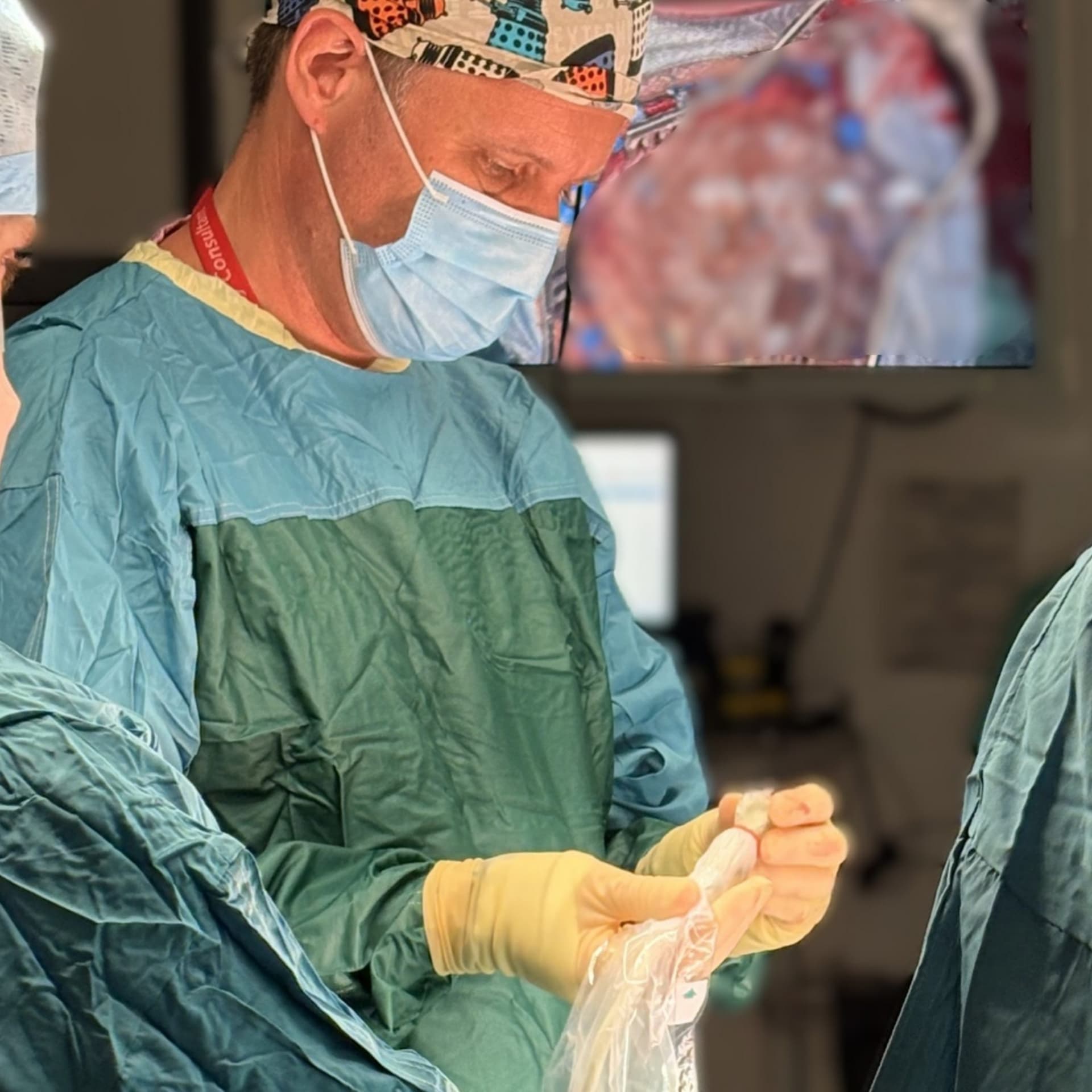
2:14Steve Palmer is being wheeled to the operating theatres at Queen's Medical Centre Nottingham in the heart of the UK. The 55-year-old collapsed a few weeks ago and was diagnosed with a brain tumour. It is being prepped for surgery. Hopefully all of it removed would be great. Then it can get on with recovery and whatever comes next and then it's getting back to hopefully some normality. So this is the scan of Stephen's head made by the computer system. In theatre, neurosurgeon Stuart Smith is reviewing MRI scans. This is the right frontal lobe where the white area represents the tumour within his brain that we're going to be operating on today.
2:56How big is that? This tumour is about five or six centimetres across in total. More than 12 ,000 people a year are diagnosed with a brain tumour in the UK alone. There are more than 150 different types and a thorough genetic analysis means a definitive diagnosis can take six to eight weeks after surgery. Not this time. Once Steve's tumour is exposed, the surgeons carefully select tissue samples. Damaged by any of the surgical techniques. This all looks viable. It doesn't look necrotic. And then chop right. These contain all the genetic information needed to grade and diagnose his tumour. They're bagged up and taken to the pathology labs.
3:43The rapid genomic test was developed by scientists at the University of Nottingham in partnership with hospital clinicians. And what we're hoping to have in 90 minutes or so will be a confident, comprehensive molecular classification. The samples are fed into an ultra-rapid sequencing machine the size of a shoebox. Molecules of DNA pass through a nanopore, or tiny hole, which reveals the tumour's unique genomic fingerprint. The nanopore is running now. It's been running for about 20 minutes. Dr Simon Payne, consultant neuropathologist at Nottingham University Hospitals, phones the operating theatre with the results.
4:30Given the bigger picture and those copy number changes, I think this would be most in keeping with the glioblastoma. Neurosurgeon Stuart Smith has taken the call. Yeah, I think we've probably done as much as we can into taking out the visible tumor. Yeah. Great, well, thank you very much. That's really helpful and that will help us finish up the operation. A definitive diagnosis has taken just two hours, with Steve Palmer still on the operating table. Stuart Smith says it's an extraordinary medical advance. It seems almost magical that you can do things that quickly, but this adds a whole new level of information that will guide the surgeon, allow us to make more accurate decisions about how much surgery we do, how extensive that operation is.
5:18Hi, Stephen. How are you? I'm OK. Neurosurgeon Stuart Smith is able to feedback the results and a treatment plan to Steve within days rather than many weeks. I'm afraid it's not great news in terms of what type of tumour it is. It is one of these grade four tumours, and the name for that type of tumour is glioblastoma. But it does mean chemo and radiotherapy can start sooner. The other benefit of getting all the genetic diagnosis means that we have a full genetic profile of the tumour, and that hopefully will open the door to clinical trials for you. There's a national programme being released.
5:59Obviously it wasn't what I wanted to hear, but for me getting that quick diagnosis, let's get on to the next phase of treatment and recovery and get on to fighting whatever I've got to fight. So it did help remove potentially weeks of anxiety? Oh God, yeah, absolutely. Ukraine has been hit hard by Russia's current air campaign. Another three people were killed in Kiev this afternoon. Part of the problem is a lack of missile interceptors, such as the US-supplied patriots. In July, Donald Trump told Vladimir Zelensky to make them yourself, only to then change his mind. Now, though, the Ukrainian president says the US leader has made a final decision to give Ukraine licences to produce them.
6:46Sasha Schlichter told me more. I think President Zelensky is keeping his fingers crossed because we know that Donald Trump can change his mind in one day. several times. So his latest opinion, according to Mr. Zelensky, is that the final decision has been made, and there will be permission for Ukraine to produce its own missiles, its own Patriot interceptors. But it's funny that in July, Mr. Trump was so keen, he said it would be pretty cool to grant Ukraine the licenses. Three weeks later, he said America should be very careful before granting Ukraine authorization without any reference to the fact that he was very enthusiastic.
7:34So what happened between these two events? Who knows? Maybe Mr. Steve Witkoff had a conversation with his friend Vladimir Putin, and Mr. Putin gave him another history lesson and said that interceptor missiles in the hands of that Nazi. He calls him Nazi. Zelensky is a very dangerous thing. And Mr. Wietkopf, of course, reported this straight to Mr. Trump. So it's all, you should be very, very sure-footed. And of course, Mr. Zelensky should be very careful not to antagonize Mr. Trump. So he never recalled him flipping over this issue. He's just said it as it is. But if and when Ukraine get these licenses, it won't be a magic bullet.
8:20No, it takes months and months, up to two years to set up production, you know, the building, the engine, the rocket itself. The systems are there. It's just the rockets that are depleted. And of course, even if it wanted to, Washington couldn't supply Ukraine now with ready-made rockets because its stocks have been depleted in the Middle East. And it's a very, very costly weapon, really costly weapon. It costs billions and billions. And they used it on nothing in the Middle East because they were so keen to show that it is such a victorious war on Iran. So now the Pentagon has its own stocks depleted.
9:02So all it can do is give a license to Ukraine to produce. But I must say that the war has changed completely. Zelensky has said today that Ukraine is working on its own anti-ballistic system, which is called Freya, with the participation of several European countries. Our global affairs reporter, Sasha Schlichter. Mary Jane Veloso spent nearly 15 years on death row in Indonesia in a case that highlighted issues over the treatment of Filipino domestic workers abroad. The former maid narrowly escaped execution by firing squad after being found carrying heroin through an airport. She says she was tricked into it, and she's now been pardoned by the Philippine president.
9:47Philippine Congresswoman Sarah Elago said justice had finally been done. The granting of absolute pardon to Mary Jane Veloso is a victory of the People's Movement, who for the past 15 years have tirelessly fought and stood with her for justice. I got the details from our Southeast Asia correspondent, Jonathan Head. It was always likely she was going to be pardoned. There were long negotiations between the Philippines government and Indonesia over her case, going right back to when she was first sentenced to death. President Marcos finally agreed on what you might call a prisoner transfer arrangement, which hadn't existed between the two countries back in 2024.
10:30And that allowed her to be moved back to the Philippines to serve the rest of her sentence. It was commuted from a death sentence to a life sentence because the Philippines didn't have the death penalty. But given the enormous amount of sympathy for her in the Philippines, it was kind of inevitable that after a decent interval that the president would pardon her. Widely expected is also a popular thing to do for a president who lacks popularity at the moment. I mean, inside the Philippines, I mean, she was seen very much as a victim of human trafficking. There are the people who actually arranged her journey to Indonesia have been themselves sentenced to life imprisonment in the Philippines for people trafficking.
11:10and of course she's always said that the drugs were planted in the suitcase. I mean, she came from a very poor background and her situation as a migrant worker, desperately seeking employment in other countries, resonates in a country, the Philippines, which sends millions of people overseas every year to work. It's part of the economy. Everyone's used to it, but they also know that these people are very vulnerable to being exploited or being trafficked. And so I think everyone knew this decision was coming and President Marcos has done it basically after a decent number of months after her return from Indonesia.
11:46Yeah, and how did she end up on death row in Indonesia? She arrived in Jogja Kasa, the Indonesian city, in April of 2010 and the customs officers there found 2.6 kilos of heroin sewn into the lining of her suitcase. Now, she'd been overseas to work before. She was desperately looking for work and she said the job had been arranged for her. In fact, she thought she was going for a job in Malaysia. And then the people organising it suddenly said to her, go to Indonesia. She always said that the suitcase was simply given to her because she didn't have one to put some more clothes into. The Indonesian court was unsympathetic.
12:22At the time, Indonesia was running a very harsh anti-drugs campaign under President Joko Widodo. The court, frankly, was a very unfair trial. She didn't speak Indonesian. She didn't understand a lot of what was happening. But the appeals against her death sentence failed. And she was, in fact, scheduled to be executed in 2015, along with eight other defendants, convicts, including two Australians. They were executed. She wasn't. But partly because there was also an anti-drugs campaign at the Philippines at the time. President Duterte said for many years that he wouldn't intervene in her case. It's only recently that the new government, what has become the new government of the Philippines, has really pushed to get her released.
13:07Our Southeast Asia correspondent, Jonathan Head. Still to come in this podcast. As we look into a world where humans think the human thought is being replaced by machines, it is so important that the conditions of human dignity must be respected and be at the forefront. On a visit to France, Pope Leo gives his thoughts on artificial intelligence.
13:58can pick up the latest precision tech with ease. You know it, and fans ready to add John Deere certified pre-owned equipment and more options to their lineup can shop at machinefinder.com. Booyah! Do we all need to be detoxing ourselves? Before I go asking, how can I detox? I have to look inward. Okay, what am I doing? Can I identify at least three ways that my body detoxes and ways to support that? I promise if my message was more dramatic like that, I would have millions of followers and make millions of dollars. But I cannot sleep at night trying to sell someone something that their body already does naturally.
14:36We're living in a crazy world now. I think it's a lot of people fear a lack of control. And as a result of this, this is the way of them trying to make sense of the world and try to take control over their own bodies. So by actively doing something, I'm going to detoxify things. Therefore, I'm going to feel better, I think is absolutely one of the reasons that, you know, detoxifying has become so popular. Listen to the full episode of Health vs. Hype with the American Medical Association on the iHeartRadio app, Apple Podcasts or wherever you get your podcasts.
15:12Everybody wants a shot. A chance to show the world what they got. Nick Cannon presents Wild and Out Live. The Next Generation Tour, bringing back the all-star cast you know and love and introducing the next generation of rookies, featuring the famous wild and out roast battles, plus your chance to get on stage and be part of the action, live across North America. Get tickets now at livenation.com. Hey, it's Ryan Seacrest for Jewel Osco. Fall is coming, which means cough and cold season is almost here. Get ahead by stocking up on all your favorite cough and cold essentials now through September 29th.
15:51Shop in-store and online to save on products like Allegra tablets, Hulls Drops, Mucinex Kickstart, Zyrtec Allergy Relief Tablets, Tylenol Liquid Gels, One-A-Day Men's Health, and Vicks Dayquil and Nyquil Combo Packs. Offer ends September 29th. Restrictions apply. Offers may vary. Visit julesosco.com for more details.
16:14This is the Global News Podcast. The World Health Organisation has warned that the Democratic Republic of Congo is running short of health workers to treat the continuing Ebola outbreak there. Cases have surged by 73 % over the past three weeks in northern Kivu province, and there have now been more than 3 ,700 deaths. Dr Rupa Nara has worked for Médecins Sans Frontières for many years and says nothing compares to what she witnessed while working for six weeks in Butembo, a city in northern Congo. Six weeks doesn't sound like a long time for me. Normally my missions are about six months, but I will say this.
16:53Those six weeks felt like six years at times. It was probably the most difficult thing I've ever done in my life. And luckily I had incredible Congolese staff and colleagues to work with. But it was a very challenging experience. So in Butembo, we have a 30-bed, a bullet treatment unit, isolation area. And out of those beds, at least 20 % to 30 % of those cases were pediatric cases. And most of these were children that were quite young. Most of them were children under five years of age. on average one and a half years when you looked at all the kids we were receiving, including newborns. And it was incredibly challenging.
17:43One patient in particular that comes into my mind was a young woman with her child. And she had one sandal on and none of her papers of her or her name or where she's born or her child because she had just fled conflict in another area. And she lost a lot of her family members to this conflict. And she came in and both her and her child had Ebola. And to think about what this poor population is suffering, it's impossible to understand and realize the pain, the suffering, but also the resilience in this incredible population. And unfortunately, we did lose that child of hers. That baby died and the woman did survive.
18:36But every day was, it felt impossible. We lose a lot of those children. I think we lost between 80 to 90 % of these kids while I was there. It's incredibly challenging. I was mainly there to work both as a pediatrician, but also train our Congolese colleagues in pediatric management and critical care. And that was my silver lining because I had really incredible staff that was risking their life every day. And although it was a very challenging six weeks, I just got home and I received several messages from my staff over the last two days because we had four kids admitted when I left. And two of those children have left cured.
19:33One was a two and a half year old, one's a seven year old. and the two other children that were confirmed, one's a 15-month-old and the other one's another two-year-old, are actually stable and doing well. And it's really nice to hear and see my staff see some hope. Dr Rupa Nara. The catastrophic flood in Nepal last month killed at least 1 ,400 people, with more than 6 ,000 still missing. Scientists say it was caused by a glacier collapse. Nepal contributes less than 0.1 % to greenhouse gas emissions, but the disaster is a reminder that the effects of global warming aren't limited to the biggest polluters.
20:16Here's the Prime Minister Belendra Shah at the UN General Assembly. Four weeks ago, the world saw shocking images of catastrophic floods that swept away Nepal's mountain communities. It was a warning to the world, and I ask you today, have we really heard that warning? Nearly three years ago, standing in the shadow of our Mount Everest, the Secretary General of the United Nations warned humanity about the madness and impending climate disaster. That cry from the rooftop of the world was not heard enough loudly. We in Nepal heard it. Our communities heard it. But will his comments make any difference?
20:50I asked our global environment correspondent, Navin Sinkhadkar. The way it has been drafted, that speech, many are saying it was quite powerful. Of course, there are debates that the delivery might have been better, but the message is what matters, they say, many people. What they say is he's kind of really, really brought this thing up that the world knows about it. But global leaders who are there now for the UN General Assembly, they haven't acted. That's the point he's hammering. And then he's also talking about this financing mechanism, how difficult it is to get money. One quote I'll read for you, what he says is, when the house is burning, we do ask the family to complete forms after forms, meaning it takes time, takes lots of energy.
21:38You just act. That is what he is trying to say. In fact, the foreign minister has been saying the same thing there at the same venue. Regarding the Himalayan climate resilience mechanism, I'm still trying to gather what are those things. Well, he's talked about satellite information, early warnings, and then post-disaster, transboundary cooperation, and so on and so forth. But I think we haven't yet seen the real blueprint. What is that? What level? What's the timeframe? And most importantly, has India and China been consulted? Have they been discussed? Because we haven't seen any response from them.
22:17Unless these two giants of the region, unless they cooperate, nothing is going to happen. And also quickly, we know that the Himalayan region between China and India has actually been a flashpoint. We have reported this in the past. So how will that change into cooperation? That's a Himalayan task. I believe it happens. Then it's a big, big achievement. And what is happening on the ground in that area that was hit by that wall of water and mud? It's a very slow thing. We are seeing pictures and videos set by people on the ground. they're trying their best to cut through the road. Imagine still we see three, four-storied houses buried.
22:57So digging through that is a massive thing, and that's where the money thing comes. Money is still not there, and that's what they're complaining about. Navin Sinkadkar. Beauty products like skincare and makeup have become a big part of young people's lives in recent years, often driven by social media. In some cases, children may even be harming themselves. BBC reporter Nina Blissett asks some children what they use. Toner, face wash, bronzer. Blush and contour. Mascara. Lip glosses and lip balms. Stuff for my eyebrows. Cleanser, moisturiser. Blush and eyeshadow. Blush, maybe a bit of concealer and obviously mascara.
23:37Where do you see all these make-up and skin care products? A lot of people post about it, their morning routines. Idols, the public, social media, I would say. I just saw it around TikTok and YouTube and stuff, and I just thought, why not try it? Well, Save Face, a British organisation that runs a register of approved beauty professionals, is calling for better regulation. Its founder is Ashton Collins. It's becoming a huge, huge problem, and it's only going to get worse, and that's why we're calling for this urgent intervention to have clear labelling on products to inform parents and the children and retail staff that actually these are harmful ingredients for children and they're not suitable for people under 18.
24:20Powerful active skincare ingredients like retinols and certain acids, they work by speeding up the skin cell turnover and so they're exfoliants. And for young skin whose barriers are really sensitive, it damages their skin and damages it long term. And so it can cause things like burning and contact dermatitis and eczema the long term and not just the physical impacts it has on our young children it's also the mental health impact telling children as young as eight that you need these extensive skincare routines or you need to improve the way that you look I think is really harmful we probably naively thought that once these companies realized the impact they were having on young children's health and their mental health they would step up to the plate and actually you know do that voluntarily but that isn't the case, which is why we're now calling for government back in to better regulate social media companies and influencers in terms of how they target young children with these types of products.
25:18Ashton Collins from Save Face. Although it's a secular state, France remains a nominally Catholic country, albeit with a low church attendance. And there was a warm welcome for Pope Leo today.
25:35The bells of Notre Dame rang out as the pontiff landed at the airport to be greeted by President Macron and a military band. The highlight is expected to be a giant mass attended by more than half a million people in the centre of Paris. But in his first engagement of the four-day trip at the Elysee Palace, he issued a warning about AI. As we look into a world where human think, the human thought is being replaced by machines. It is so important that the conditions of human dignity must be respected and be at the forefront. It is our questions of ethics to know what morally is good or not. So what are we to make of that?
26:20I asked our correspondent Hugh Schofield in Paris. We know that he holds AI as a theme very close to his heart. He's issued his first ever encyclical, that is, papal pronouncement on this subject in May. So he named himself Leo XIV after Leo XIII, who was the Pope 100 years ago, who made some very important pronouncements about changing society then, industrialisation, the proletariat, the need for human input into the changes then. He wants the same now. He wants human beings to consider very deeply the impact of AI. And that's the burden of his speech here in Rome, all over the place. Not unusual, they should say it here, because he's got an audience now of France and the world, and he's again insisting that AI in itself may not be immoral, but it is a dangerous thing which needs to be brought under control, and the people who are in control of it need to be themselves ethically very, very conscientious.
27:18Now, in that speech in front of President Macron and assembled guests in the Elysee, he reiterated the church's opposition to assisted dying two months after France approved euthanasia for those with incurable diseases. How might that message go down? It's the Church's message. It doesn't vary a jot from everything that the Church has said since this debate burst forth many decades ago about assisted dying and so on. So it is perfectly natural that the Pope would say this in France in front of his audience, that the Pope's position, the Church's position is opposition to assisted dying, opposition to anything that detracts from this essential tenet of the sanctity of human life.
Read the full transcript
28:00He made the same point about surrogacy, the buying of organs as well. These are things which the church has a very strong and known position about. So it's not surprising that he said it here. It was listened to politely. The state, France, has a different view. It's passed a law, as you say, which allows some assisted dying in certain circumstances. It's simply a stating of sides, and that's important but of course the Pope only has so much influence in France. He says what he has to say, some people listen, some people don't. Yeah, I mean how popular is he in France? As things stand he's very, very popular.
28:34I mean obviously the faithful are extremely excited about him but on the left as well people are generally anti-clerical. I think they approve of a lot of what he's had to say about poverty, migration and of course AI. Hugh Schofield in Paris. and that is all from us for now if you want to get in touch email us at globalpodcast at bbc.co.uk you can watch our episodes in full by searching for the global news podcast on youtube this edition was mixed by mike campbell and produced by rebecca wood our editor is karen martin i'm oliver conway until next time goodbye
29:15It felt like everything I believed in was suddenly collapsing. This is the story of an Islamic boarding school in Indonesia with a dark secret. Of the school's head teacher. This was someone I respected above anyone else. And the investigation led by students he's trying to silence. If this is leaked to the media, I'll be destroyed. This is World of Secrets, catching my teacher. Listen on BBC.com, the BBC app, or wherever you get your BBC podcasts.
From the publisher
A rapid new test for brain tumours can slash the time it takes for an accurate diagnosis from up to eight weeks to two hours. It means surgeons can get results even while they are operating, and patients are spared weeks of uncertainty whilst being able to start their treatment sooner. Also: Ukrainian President, Volodymyr Zelensky says that President Trump has made a “final decision” to give Ukraine licences to produce patriot missiles. Indonesia pardons a former Filipino maid, who was sentenced to death after being found carrying heroin through an airport. We hear the latest about the Ebola outbreak from a doctor who spent six weeks in Northern Congo. Nepal’s Prime Minister, Balendra Shah, says flooding in his country “was a warning to the world” and calls for cooperation to deal with climate change. An organisation in the United Kingdom says better regulation of beauty products is needed as young children continue to use skincare and makeup. And Pope Leo visits Paris for a mass, but his first engagement gives a warning about artificial intelligence and assisted dying.
The Global News Podcast brings you the breaking news you need to hear, as it happens. Listen for the latest headlines and current affairs from around the world. Politics, economics, climate, business, technology, health – we cover it all with expert analysis and insight. Get the news that matters, delivered twice a day on weekdays and daily at weekends, plus special bonus episodes reacting to urgent breaking stories. Follow or subscribe now and never miss a moment. Get in touch: globalpodcast@bbc.co.uk Photo: Neurosurgeon Stuart Smith in operating theatre Credit: Nottingham University Hospitals