
In short
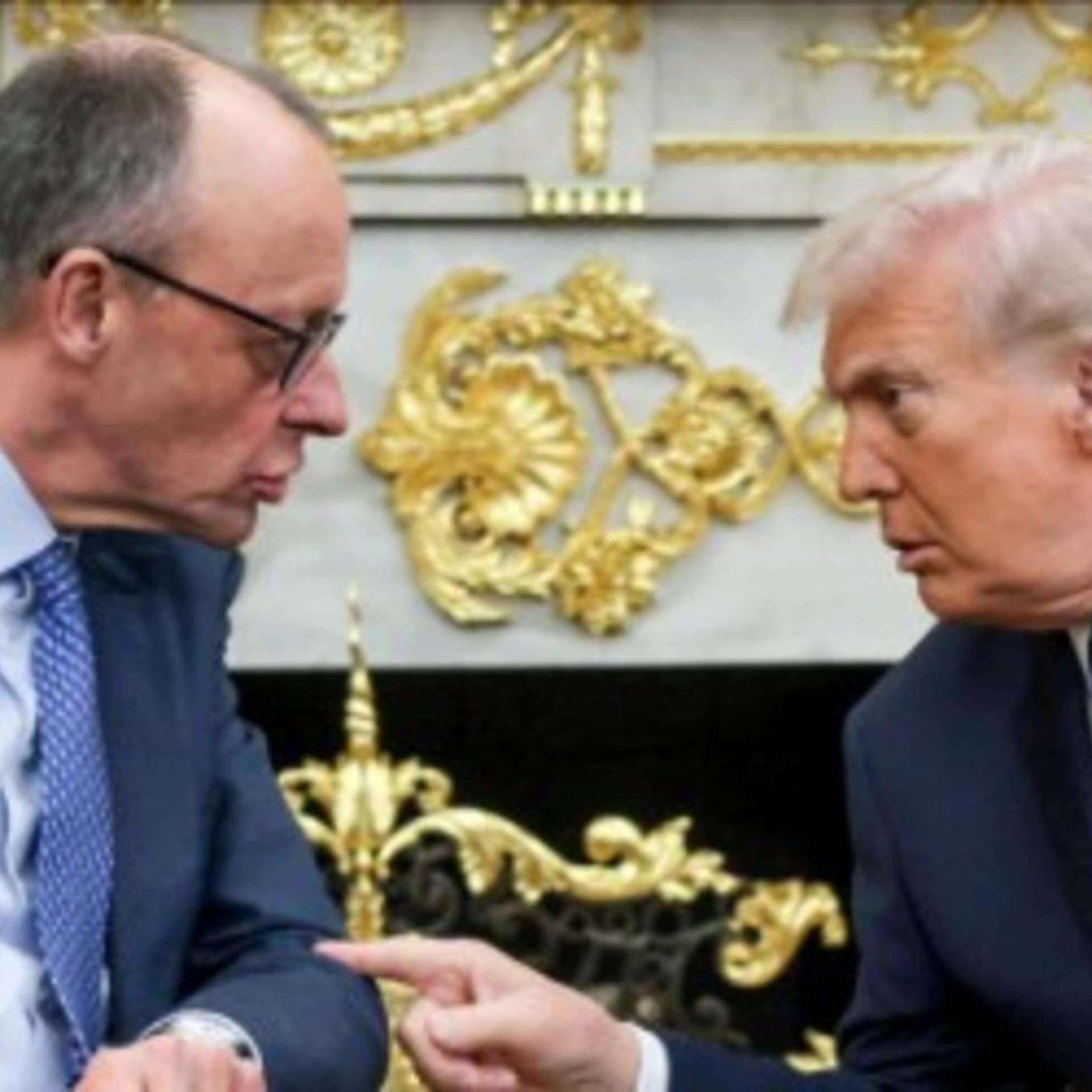
The episode covers: Trump’s plan to withdraw more than 5,000 US troops from Germany, UK debate over banning some pro-Palestinian marches after the stabbing of two Jewish men, a shaky Israel–Lebanon ceasefire, FIFA’s rule change allowing Afghan women’s footballers to compete without Taliban approval, Russian deserters fleeing to Armenia, Mali’s escalating attacks by the al-Qaeda-linked JNIM and Tuareg separatists, and the death of Italian Paralympian Alex Zanardi.
Guests/backgrounds
Retired Lt Gen Douglas Lute (former US ambassador to NATO); Michael Gahler (European Parliament CDU); Peter Bowes (North America correspondent); Dal Babu (former Met Police chief superintendent); Harry Farley (political correspondent); Wira Davis (Jerusalem correspondent); Fatima Haddari and Manoush Nouri (Afghan Women United footballers); James Beardsworth (reporter); Karine Dufka (Sahel analyst); Joe Linsky (sports reporter).
Key claims/examples
Republicans (Roger Wicker, Mike Rogers) say withdrawal signals weakness to Putin and urge Congress coordination; Germany’s bases (e.g., Ramstein) and Landstuhl hospital likely remain. UK: banning marches is rare; “globalise the Intifada” chants cited. Israel: strikes on Hezbollah; buffer zone “yellow line” about 10km but deaths reported outside it. FIFA: Afghan women can play internationally; players in Italy/Australia. Armenia: deserter Mikhail says he deserted after being paid for contracts and regrets. Mali: JNIM-led alliance shows recruitment/logistics and threatens Bamako; militants seek concessions. Zanardi: after losing both legs, won Paralympic gold in cycling and returned to racing.
Written by AI. May contain mistakes. Listen to the episode to check what was said.
Chapters
Tap a time to open that second in VOTrump's Troop Withdrawal Announcement
1:20 to 2:10
Discussion on Trump’s plan to withdraw US troops from Germany amidst concerns.
“It was really big news for us, not only for Afghanistan, for all the girls.”
Republican Concerns and Reactions
2:10 to 3:36
Examination of Republican leaders' concerns about troop withdrawal and NATO implications.
“Donald Trump has doubled down on his plan to withdraw US troops from Germany, despite criticism by senior figures in his own party.”
Implications for U.S. and NATO
3:36 to 5:28
Analysis of the implications of troop reductions for U.S. foreign policy and NATO's strength.
“This statement is by the Senate Armed Services Committee Chairman Roger Wicker and Mike Rogers, his counterpart in the House of Representatives.”
European Responses to Troop Cuts
5:28 to 8:14
Insights from European politicians on the potential impacts of troop withdrawals.
“testy at the moment and is there a fear that it's only going to get worse?”
Pro-Palestinian Marches and Political Reactions
8:14 to 10:40
Discussion on the political implications of pro-Palestinian marches in the UK after violence.
“Here in the UK, the Prime Minister Keir Starmer has suggested there may be a case for banning some protests following calls for a suspension of pro-Palestinian marches.”
Ceasefire in Israel-Lebanon Conflict
10:40 to 13:33
Overview of the fragile ceasefire between Israel and Lebanon amid ongoing tensions.
“with the Iran war threatening to send inflation soaring.”
Afghan Women's Football Team's Hope
13:33 to 14:03
The impact of FIFA's decision on Afghan female footballers' ability to compete internationally.
“Women and girls in Afghanistan have been subjected to wide ranging limits on their freedom since the Taliban government seized power almost five years ago.”
FIFA's Decision and Its Impact on Afghan Women
14:03 to 16:43
Learn about the significance of FIFA's decision for Afghan women in sports.
“It was really big news for us, not only for Afghanistan, for all the girls, especially back home and girls in all the world.”
Reflections on Alex Zanardi's Life
16:44 to 17:40
A look back at the life and achievements of Paralympic gold medalist Alex Zanardi.
“The feeling which would emerge way above all the others was just joy.”
Russian Deserters in Armenia
18:50 to 22:58
Insight into the experiences of Russian deserters finding refuge in Armenia.
“tens of thousands of Russian soldiers are believed to have deserted from the front lines.”
Show all 12 chapters
Mali's Security Crisis and Jihadist Threat
22:59 to 28:03
An analysis of the growing jihadist threat and its impact on Mali's stability.
“in connection with the coordinated attacks by Tuareg separatists and a local Al-Qaeda affiliate, Jinim, which have rocked the West African country.”
The Inspiring Journey of Alex Zanardi
28:03 to 29:48
Learn about Alex Zanardi's remarkable career and resilience following a life-changing accident.
“Our sports reporter, Joe Linsky, looks back at his life.”
Transcript
Automatic transcript. May contain errors.0:00This BBC podcast is supported by ads outside the UK.
0:31America's Social Casino. Download the Moto Casino app today. Spring into deals at Lowe's. Shop select 1.5-gallon annuals hanging baskets, two for$15, for the perfect addition to Mom's Garden. Plus, get three free bags of Miracle-Gro.75-cubic-foot garden soil when you buy three. Our best lineup is here at Lowe's. Lowe's. We help. You save.
1:07This is the Global News Podcast from the BBC World Service. I'm Charlotte Gallagher, and in the early hours of Sunday, the 3rd of May, these are our main stories. Senior US Republicans and German politicians expressed concern after President Trump says he will withdraw more than 5 ,000 American troops from Germany and controversy in the UK as some pro-Palestinian marches could be banned following the stabbing of two Jewish men in London. Also in this podcast, the growing influence of the al-Qaeda-linked group behind the current unrest in Mali and a glimmer of hope for female Afghan footballers whose dreams of sporting careers have been hit by the Taliban.
1:56It was really big news for us, not only for Afghanistan, for all the girls. That means we can still hope we can play an international tournament.
2:10Donald Trump has doubled down on his plan to withdraw US troops from Germany, despite criticism by senior figures in his own party. The president said the number of soldiers will be cut way down, a lot further than the 5 ,000 initially announced. He gave no further details. NATO is seeking clarification from Washington. But in a statement, top Republicans have warned a withdrawal sends the wrong signal to Russia's Vladimir Putin. Retired Lieutenant General Douglas Lute, a former U.S. ambassador to NATO, thinks the Republicans should go further than just words. Senior Republicans have talked a good game in terms of reminding the president and their constituents that NATO is important and that they value NATO.
2:56But frankly, they haven't acted to actually push back and serve as the Constitution would have them serve, which is as a break on executive overreach, providing checks and balances. And this would have to do with restricting funding and so forth, which will be needed. if this withdrawal is actually to take place. The move comes amid a rift between Donald Trump and the German Chancellor due to the US and Israel's war against Iran. Friedrich Mertz said Tehran had humiliated Washington. The US president responded by telling him he didn't know what he was talking about. So how influential are these Republicans and their statement?
3:35I asked our North America correspondent, Peter Bowes. This statement is by the Senate Armed Services Committee Chairman Roger Wicker and Mike Rogers, his counterpart in the House of Representatives. They're both Republicans. They both control committees. And so what they say carries weight. And this is a significant rebuke of the Pentagon from two leaders from the president's own party. And just to break down what they've said, they say they are indeed very concerned about this move to take troops away from Germany. They say it's sending the wrong signal to Vladimir Putin. Presumably they're talking about it sending a signal of weakness to Russia.
4:17Acknowledging that Germany, they say, has provided what they call seamless access, basing and overflight for US forces in support of Operation Epic Fury, the war in Iran. they say Germany has stepped up. They say rather than withdrawing from Europe, it is in America's interest to maintain a strong deterrent on the continent by moving troops to the east. So there's concern, but I guess the crucial question is, will President Trump and the Defence Secretary Pete Hegseth listen? And that is an obvious concern. And it's what they're thinking because it's highlighted in their statement in which they point out that any significant change to the US force posture in Europe warrants, as they put it, a deliberate review of process and close coordination with Congress and our allies.
5:07So not for the first time. This is an appeal to the White House and the Pentagon in this case to engage principally with the oversight committees in Congress. And they say in the weeks ahead, especially looking at the implications for US deterrence and transatlantic security it's important that that dialogue occurs. The relationship between Europe and the US is pretty testy at the moment and is there a fear that it's only going to get worse? We need to see what happens next and what the next move is as far as the United States is with US troops overseas and I think we'll be looking to other countries namely Spain which Mr Trump has strongly criticised over the war in Iran and its attitude, its perceived lack of support, and Italy.
5:52And if the US announces further troop reductions for those countries or elsewhere, which the president hasn't ruled out, then I think this rift will very much be seen as getting worse and surely with broader consequences for NATO and the alliance. That was Peter Bowes. American troops have maintained a continuous presence in Germany since the end of the Second World War in 1945. The country is still the main hub for American military presence in Europe. So if the Pentagon does go ahead with the move, what will that mean for global security? Michael Gahler is a member of the European Parliament for Chancellor Mertz's conservative CDU party.
6:33I think it's definitely not in the US interest, but the major political impact, I would rather say, is that Mr. Putin is happy in Moscow because he sees there is a rift in NATO. There is a physical reduction of NATO's defense posture in Europe. And that is something that will definitely please him. On the substance now, the technicalities, I would definitely say the Americans will definitely not abandon their main air bases like Rammstein and others. They will not abandon their largest military hospital abroad in Landstuhl, where, by the way, soldiers from the Middle East are now treated. They will not abandon their headquarters for Europe and Africa and the NSATU support for Ukraine that is all based in Wiesbaden.
7:22So these structures will stay. And when you go from 39 ,000 to 34 ,000, there's still a substantial presence there. But still, and I agree when everybody says we ought to do and ought to have done it earlier, have more investment in our own defense. This is another signal. Let's upgrade our efforts. And I think it also promotes, hopefully, the inner US debate. I think also such reaction now is also directed partly at least to the domestic audience. Look, we are doing more for us. We are not defending them. but it's also in their interest to have a presence in Europe. Putin is happy that we are at loggerheads with each other, but we will overcome this period.
8:07And in the meanwhile, we Europeans are getting our acts together and doing far more for our own defence. That was Michael Gala. Here in the UK, the Prime Minister Keir Starmer has suggested there may be a case for banning some protests following calls for a suspension of pro-Palestinian marches. His comments follow the stabbing of two Jewish men in North London. Some parties argue the organisers of pro-Palestinian marches encourage anti-Semitism, something the organisers deny. Former Met Police Chief Superintendent Dal Babu says it's very rare to ban marches in the UK. It's a high bar to ban marches.
8:48There's only been two marches that have been banned in the last 40 years. One was a far-right march and one was more recently the Al-Quds march, a pro-Palestinian march. Any attempt to ban would be challenged in the court. It's very much an operational decision. The police need to show serious public order if they are going to be able to ban a march. Keir Starmer's comments come as he's facing big questions over his leadership ahead of local elections. Our political correspondent, Harry Farley, is following developments. In the next few weeks, the government will publish a review of the powers to control or prohibit demonstrations.
9:23It's a complex balance between public order and the freedom of speech and assembly. The Prime Minister was asked if he wanted tougher policing of language used during marches or to stop some protests altogether. Certainly the first and I think there are instances for the latter. I do think, I don't want to get involved in operational policing, but I think when you see, when you hear some of those chants, globalise the interfad with the one that I would pick out, then clearly there should be tougher action in relation to that. Sources stress the Prime Minister is not pre-empting the outcome of that review, but it is his strongest indication yet that he would be open to tougher laws around protests.
10:02That is likely to be controversial. The Greens, Zach Polanski, said it would be the worst response to the attacks in Golders Green and would just produce more division. The Liberal Democrats said protests must not be hijacked by anti-Semitic abuse. But Reform UK said the Prime Minister's words were too late. And the Conservatives' Kemi Badenoch said she would support banning the marches. Anyone saying globalise the Intifada or chanting from the river to the sea knows exactly what they're doing. They are trying to let people know that there is support for harming Jews. We need to make sure that that is stopped completely.
10:37For the Prime Minister, there's dangers at home and abroad, with the Iran war threatening to send inflation soaring. His pitch to voters and to those in his party questioning his future is this is no time for more instability. Harry Farley. The ceasefire between Israel and Lebanon is now in its third week, but it's regarded as shaky at best, with Israeli forces and Hezbollah still fighting, just at a lower intensity. Israel says it hit dozens of Hezbollah targets, including a religious building on Saturday. Hezbollah, the Iran-backed group in Lebanon, says it launched several attacks against Israeli troops, saying they were in response to ceasefire violations.
11:21Our correspondent, Wira Davis, is monitoring events from Jerusalem. It is a ceasefire in name only, even though much of the heavy Israeli bombing we saw towards the end of the recent conflict that hit towns like Beirut, Tir, other parts of southern Lebanon. That has effectively stopped. Israel continues to attack southern Lebanon. Reports from the end of the week just gone say that 30 people have been killed in Israeli bombing, including many civilians, women and children. Israel says it is targeting Hezbollah positions from where Hezbollah is firing rockets. Israel has declared a buffer zone, an exclusion zone, a so-called yellow line, which is roughly 10 kilometers or six miles inside Lebanon.
12:11But some of the evacuation orders that Israel has been issuing have included towns and villages well outside this exclusion area. And people in these areas have been reportedly killed in Israeli airstrikes. Now, Israel says the ceasefire is holding, but it reserves the right to attack Hezbollah positions to stop them, of course, firing towards Israel. Amid all of this is what should happen next. There are some elements in Lebanon, including the president, Joseph Aoun, who are said to be in favor of some sort of dialogue and negotiations with Israel. We've seen that messaging from the Americans.
12:50They want the Israelis and the Lebanese to get around the table and talk. But it's much more complicated than sitting down and talking. Of course, there are several factions within Lebanese society who support Hezbollah and its positions. One of their main demands before they would talk is that Israeli troops should leave southern Lebanon, where they've been for several weeks now. But Israel is not about to do that, while it still sees many of these towns and villages in the south as potential places from where Hezbollah could target Israel. So the feeling here for now is that this very fragile ceasefire, if you can call it that, is holding.
13:27But it is fragile and it could break at any moment. Weira Davis. Women and girls in Afghanistan have been subjected to wide ranging limits on their freedom since the Taliban government seized power almost five years ago. But this week, FIFA, world football's governing body, approved a rule change that would allow them to compete in international matches without Taliban approval. Many of the players are now living in other countries. The captain of Afghan Women United, Fatima Haddari, is based in Italy and the team's forward, Manoush Nouri, lives in Australia. James Kumrasami asked them about the importance of FIFA's decision.
14:06It was really big news for us, not only for Afghanistan, for all the girls, especially back home and girls in all the world. It means a lot to us. It means we can still hope we can play in international tournaments, which is great for us. Fatima, how would you describe this decision? Yeah, it was the most beautiful news of my life. I've seen reactions from different parts of the world and it was really, really great for us. You talk about around the world, your entire team, of course, are around the world. What has it been like since you left the country in terms of playing the game that you love and representing your country?
14:51Fatima? I left Afghanistan because I wanted to be free as a woman, as a girl. And when I got here in Italy, in Florence, I started playing football. I came with another team, but I hope for playing for Afghanistan. We thought that it is not existence. So we tried our best, like all of us, with the help of Harida and with the help of FIFA. But yeah, it happened. Fatima, as a captain, there's already responsibility, but you feel this extra responsibility for those who are still in the country. Yes, of course, I feel they gain the weight of history on my shoulders. So yeah, I feel really responsible for all those girls and women.
15:32And I really hope I can do something for them. And you've also spoken, I think, Fatima, about the boys as well in Afghanistan. I mean, there are boys who are growing up in this country where women are essentially being erased. Yeah, I mean, from the family that I come, they're all open-minded. And I mean, despite Afghanistan is a little bit patriarchal, I could say, and they suffered a lot in all these years that I've been growing up, I felt like they are also having this weight of history. So I think even boys and men are happy at this moment for this news. Manoush, maybe I can turn to the football.
16:10This ruling comes too late for you to take part in the next World Cup, but it does mean you can take part in the LA Olympics, doesn't it? Is that what you're aiming towards? Definitely. All the girls from Afghanistan team, we have a big dream, we have a big goal. So it's just opening the door for us to go forward. So we are just looking forward to that. We're practising how to go to that stage one day soon, hopefully. That was Fatima Haddari and Manoush Nouri.
16:44still to come in this podcast. The feeling which would emerge way above all the others was just joy. I mean, to have lost my legs at that moment was really the last of my problems because I was so happy to be alive. We look back at the life of Alex Zanardi, the Italian Formula One driver and Paralympic gold medalist who's died.
17:16Motocasino, America's social casino. Welcome to Motocasino, where the excitement never ends. With thousands of the hottest free-to-play social casino games, fastest payouts, and the best promotions in the industry. No tricks or gimmicks. Owned and operated in the USA. Motocasino is a free-to-play social casino. No purchase necessary. 21 plus to play. Void or prohibited. Sign up today for a generous welcome bonus. Motocasino, America's social casino. Download the Motocasino app today. Spreadsheets, clunky software, a hundred different logins just to run your business? There's a better way. Odoo.
17:55One simple, connected platform that handles sales, inventory, accounting, and more. So you can focus on growing, not juggling. Make the switch today at odoo.com. That's O-D-O-O dot com.
18:14Another app for inventory, one for CRM. Oh, don't forget accounting. Wait, which login was that? Or you could use Odoo, one fully integrated system that does it all without the hassle.
18:30Ditch the app overload. Get everything your business needs on one platform. Try Odoo free today at odoo.com. That's O-D-O-O dot com.
18:46This is the Global News Podcast. More than four years after Russia's invasion of Ukraine, tens of thousands of Russian soldiers are believed to have deserted from the front lines. A popular destination for those fleeing is Armenia, which doesn't border Russia or Ukraine, but lets Russians in without a visa and has looser requirements on passports. James Beardsworth met one former soldier who'd fled the fighting. I'm wandering through a park just on the outskirts of Yerevan, the capital of Armenia. In the past four years, ever since Russia launched its full-scale invasion of Ukraine, this city has become home to tens of thousands of Russians.
19:31Some more footloose and not willing to work under sanctions. others fleeing political persecution while others literally are fleeing the war. According to rights groups, there's hundreds if not thousands of Russian deserters who have made home in Yerevan. And I'm here to talk to one 20-year-old, Mikhail.
19:59When did you arrive in Yerevan? I arrived here almost a month and a half ago. I served there one and a half years. I was given a two-week holiday, and I decided to desert. I left Russia, as I'm now facing criminal charges there. Tell me, what did you see on the front lines? I saw two people die. I was also wounded twice, and then I worked at headquarters. us.
20:28We're now walking up the steps to a large sports complex. To our left we can see Mount Ararat, still covered in snow. So why don't we have a sit down on this bench here and we can have a chat. Russian soldiers are accused of committing war crimes in Ukraine. Were you aware of that before you signed the contract? Before I signed the contract, I knew nothing about the war, and I wasn't even interested in it at all. Propaganda appeared. I just saw that they give you a lot of money if you sign up. And why did you decide to sign a contract?
21:09I was 18 years old at the time, and I needed money. My mother needed surgery. I worked a shift job for a little less than six months, and I couldn't raise the large amount I needed. In the end, I decided to sign a year-long contract. On the front lines, do Russian soldiers believe that they're fighting for the right thing? The people there are there just for the money and don't care about much else. You can sign a contract in the army up to 65 years old. A lot of the people there, they cannot even walk normally, but sign contracts because of money. There is not people there behind the idea of war who share these higher values of it all.
21:54What was your role in the army? I was at an air surveillance post in the machine gun crew and we shot down drones. Then after I received my injuries, after hospital, I went into the communications. Do you regret signing the contract and going to the war? Absolutely. Everyone there regrets signing a contract. We had a funny joke with each other where you would ask each other, oh, are you glad you signed a contract? Everyone, of course, jokingly said yes. But no, everyone regrets it. Absolutely everyone. Everyone who is there, they are ready to work any job at all, even for free. just so they don't have to stay there.
22:43What do you think of Yerevan? Do you think it's a safe place for people like you? I feel safer here than I felt in Russia. They won't deport me from here and that's enough for me. That was James Beardsworth. A military court in Mali says several soldiers have been arrested in connection with the coordinated attacks by Tuareg separatists and a local Al-Qaeda affiliate, Jinim, which have rocked the West African country. The Malian defence minister was killed in last Saturday's initial assault. The militants have since blocked off several routes into the capital, Bamako, posing a huge challenge to the military junta, which came to power after the 2021 coup and the Russian forces, which have been giving them support.
23:30On Friday, rebel forces reportedly captured a military installation in the north of the country. American businessman Jeff Dorsey has lived in Bamako since 2009. People are limiting their travel. There are six main access roads to Bamako. Three of the six roads had been blocked. This is already having some kind of an impact in terms of the local market. It's not a full siege yet. And I don't think the coalition of the JNIM and the Tuareg rebels is enough to really threaten the entirety of Bamako. So I think personally I'm pretty much OK. If they start kidnapping random foreigners at that point, then I'd start being very worried for myself.
24:17Karine Dufka is an analyst on the Sahel region. So how does she view what's currently unfolding in Mali? She spoke to my colleague James Kumrasami. These dramatic, unprecedented events in Mali of the last week are important for a few reasons. First, it laid bare the Al-Qaeda affiliate JNIM, or Support for Islam and Muslims. It laid bare their formidable operational, logistical and recruitment capacity, and the extent, really, to which over the last decade they have taken root in Mali's vast rural areas, as well as the centre, the north and the south-west, to the point where they can now, and they have now, hit at the very centre and heart of power in Bamako.
24:58And this alliance they have with the Tuareg separatists, what do you make of that? Well, what's really important to understand is that this is an Al-Qaeda affiliate-led operation. There is a symbiotic relationship between this Al-Qaeda affiliate and the Tuareg, but the ones who are really leading the show are the Al-Qaeda affiliate. And does that mean it is a far more threatening turn of events for the military leadership? Well, the military has never been as threatened as they are now. And I think one of the other important dynamics is that the events of the last week have illuminated the weaknesses, both intelligence and operational of not only the Malians, but also their international partners, which are now the Russian and to a lesser extent, the Turks, who have now sort of or are joining the, you know, the long list of international partners who have failed to help Mali rout the jihadists.
Read the full transcript
25:47Yes, I mean, they replaced the French essentially, didn't they? And they, what, they are now finding the same challenges that the French had? Yes, they have. I mean, there has been an almost inverse relationship between all of these international efforts to rout the jihadists and the extent to which the jihadists have taken root in Mali. That red line, the Nogo area, has gone from the north to the centre to the southwest and now, of course, is threatening some of the countries that surround Mali. Inside Mali itself, the fact that they were able to kill the defence minister and to, at the moment, as we understand it, block quite a few of the routes into the capital, Bamako, how precarious would you say things are?
26:29Well, the situation is precarious indeed. Molly has never faced this kind of challenge. But I think it's really important to understand who the jihadists are. Now, years ago, they were primarily Algerian. They engaged in soft target attacks. But at present, they are trying to distance themselves from Arcata, drop the terrorist label. And the people I speak with who are in areas controlled by them say they speak a lot more these days about politics and governing than they do about global jihad. So I think the strategy here of the jihadists is to push the government to make concessions, and that would mean to push them to the negotiating table.
27:07Talks rather than overthrowing. I believe that they recognise they cannot take a town like Bamako, especially because they are now spreading themselves thinly. They've taken the northern town of Kidal, a few other towns in the north, and are moving in to take some towns in the centre. But it's important to understand that the jihadists are already governing in large swaths of Mali. The Tuaregs have primarily taken Kidal in the north and the jihadists are looking to take towns in the centre, which would put them at a stronger position to be able to push the government to make concessions. That was Corrine Dufka.
27:41Finally, the Paralympic gold medalist Alex Zanardi has died at the age of 59. Once a Formula One driver, the Italian racer is known for refusing to end his sporting career and turning to paracycling after losing both his legs in a high-speed crash. Italy's Prime Minister, Giorgio Malone, said the country had lost an extraordinary man. Our sports reporter, Joe Linsky, looks back at his life. Alex Zanardi went through the greatest setback and yet took it in his stride. At two straight Paralympics, he became a cycling champion. It wasn't the sport he'd set out to conquer. And out of the race goes Alessandro Zanardi.
28:24In 1991, he broke through in F1, eventually moving to the US to compete in IndyCar racing. In the late 90s, he won back-to-back titles, but in 2001, everything changed. When I was told from my wife what had happened, the feeling which would emerge way above all the others was just joy. I mean, to have lost my legs at that moment was really the last of my problems because I was so happy to be alive. The crash led to the amputation of both of his legs, but he just looked for the next challenge. At London 2012, he took to the road race on the same Brands Hatch track he'd driven on before. He won two gold medals and did the same four years later.
29:08Today, the IPC said Alex was a pioneer, icon and legend of the Paralympic movement. His performances were truly out of this world, engaged new fans and showed the world anything was possible. Zanadi found room for even more talents, racing the Ironman in a world record time for a disabled athlete. He even returned to the racetrack in a specially adapted car. In 2020, Alex Zanadi was struck by a vehicle during a paracycling relay. He was seriously injured and not seen again in public. In Italy, his nation rallied behind him. It was the mark of a man who kept on inspiring. The fact that you are certificated as disabled because you've lost something does not stop you to do things in an alternative way and to display your talent if you think you have some.
30:01That was Joe Linsky reporting. And that's all from us for now. If you want to get in touch, you can email us at globalpodcast at bbc.co.uk. You can also find us on X at BBC World Service. Use the hashtag Global News Pod. Don't forget our sister podcast, The Global Story. This edition of The Global News Podcast was mixed by Martin Baker and the producer was Marion Straughan. The editor is Karen Martin. I'm Charlotte Gallagher. Until next time, goodbye.
From the publisher
President Trump is criticised by senior figures in his own Republican Party, as he doubles down on a plan to pull out more than 5000 US troops from Germany. What will a withdrawal mean for global security? Also: Britain's Prime Minister suggests banning some pro-Palestinian protests; JNIM militants launch a large-scale operation in Mali; we meet a former Russian soldier who's fled the fighting in Ukraine; FIFA allows female Afghan footballers to play in international competitions; and the Paralympic gold medalist, Alex Zanardi, dies.
The Global News Podcast brings you the breaking news you need to hear, as it happens. Listen for the latest headlines and current affairs from around the world. Politics, economics, climate, business, technology, health – we cover it all with expert analysis and insight. Get the news that matters, delivered twice a day on weekdays and daily at weekends, plus special bonus episodes reacting to urgent breaking stories. Follow or subscribe now and never miss a moment. Get in touch: globalpodcast@bbc.co.uk



