In short
The episode is a BBC Global News roundup covering: (1) Colombia’s presidential election, where right-wing candidate Abelardo de la Esprilla claims victory; (2) early Iran–US talks in Switzerland, described by Pakistani and Qatari mediators as making “encouraging progress”; (3) Bolivia’s blockade crisis ending after six-plus weeks; (4) UK political speculation about Prime Minister Keir Starmer’s imminent resignation; (5) European heatwave alerts and preparedness; (6) a “prepper”/bug-out industry report; (7) research on fatherhood’s effects on men’s brains; and (8) World Cup match updates, highlighting Cape Verde’s first-ever World Cup goals.
Guests/backgrounds
No recurring studio guests; interviews are with BBC correspondents/reporters (Ankur Desai, Aoni Wells, Jess Parker, Joanna Keane, Rob Watson, Stephanie Prentice, David Harper, Paul Henley, Darby Saxby, Paul Njie, plus survival expert Tom Blakey, prepper expert Kim Birknell, and Australian survival expert Kai Furneau).
Key claims/examples
De la Esprilla’s hard-line security plan (aerial bombardment, coca fumigation, mega prisons; Trump endorsement) and disputed results (Petro and rival Ivan Zepeda challenge verification). Iran–US talks: roadmap to a lasting agreement in 60 days and a Lebanon fighting mechanism. Bolivia: protests began after land reform announcement; fuel subsidies/austerity/constitutional backlash; roads cleared via state of emergency and bulldozers. UK: Labour support “draining” and Starmer’s unpopularity; Trump posts about immigration/energy. Heat: France bans alcohol at a festival; schools close; “new normal” extreme heat. Prepper: courses cost about $200; 72-hour food kits marketed as “food insurance.” Fatherhood: “Dad Brain” says brain streamlining/shrinking grey matter but improved efficiency; higher mental-health/sleep risks. World Cup: Cape Verde draw Uruguay 2-1 after first-ever goals; Vosinho’s mother traveled after US State Department/US Congressman help.
Written by AI. May contain mistakes. Listen to the episode to check what was said.
Chapters
Tap a time to open that second in VOColombian Election Results
1:22 to 5:30
Discussion on the victory of right-wing candidate in Colombia and implications.
“The right-wing candidate, Abelada de la Esprilla, has claimed victory in Colombia's presidential election.”
Iran-US Talks Update
5:30 to 7:48
Insights into the ongoing talks between Iran and the US in Switzerland.
“in Switzerland have ended with encouraging progress made.”
Bolivia Protests and State of Emergency
7:48 to 10:10
Analysis of the protests in Bolivia and the government's response.
“Protesters were blocking roads across the country with rubble and logs.”
UK Political Landscape
10:10 to 14:00
Discussion on the potential resignation of UK's Prime Minister and political implications.
“Some people in Bolivia have been giving their reaction.”
The Benefits of Nature
14:00 to 14:55
Explore how nature enhances our lives and the importance of outdoor activities.
“Still to come in this podcast, research that suggests men with children have better performing brains.”
The Benefits of Nature
14:56 to 15:25
Explore how nature enhances our lives and the importance of outdoor activities.
“For timeless style that still feels fresh and modern, Tuckernuck has become a favorite shopping destination.”
The Benefits of Nature
16:02 to 16:29
Explore how nature enhances our lives and the importance of outdoor activities.
“For you, save days are here now through June 23rd.”
Extreme Heat in Europe
16:29 to 19:20
Discussing the impact of extreme heat waves across Europe and government responses.
“It's been a hot weekend in many European countries, but temperatures are set to spike this week and governments are taking action.”
The Rise of Prepper Culture
19:20 to 23:08
Examining the growing trend of prepping and survival training in modern society.
“In recent years, we've witnessed major conflicts in the Middle East and Ukraine, a widespread power outage across Spain and Portugal, and of course, the Covid pandemic.”
The Science of Fatherhood
23:08 to 26:54
Exploring research on how fatherhood alters men's brains and their roles.
“And you can hear more of David's reports by searching for BBC Business Daily, wherever you get your BBC podcasts from.”
Show all 13 chapters
Cape Verde's Historic Football Moment
26:54 to 28:01
Celebrating Cape Verde's first World Cup goal and the team's achievements.
“Egypt defeated New Zealand despite going a goal down.”
Cape Verde's Historic World Cup Journey
28:01 to 29:50
Learn about Cape Verde's surprising performance in the World Cup and its impact on national pride.
“Now you can hear our correspondent Paul Njie there at the watch party in Cape Verde.”
Personal Stories from the World Cup
29:50 to 30:27
Discover the touching story of goalkeeper Vosinho and his mother's attendance at the World Cup.
“Vosinho, who was a superstar in that first game when he managed to keep Spain from scoring, the goalkeeper said that he wished that his mother could come over.”
Transcript
Automatic transcript. May contain errors.0:00This BBC podcast is supported by ads outside the UK. There's never been a better time to get outside and experience the benefits of nature. Discover nearby trails and explore the outdoors with AllTrails. Download the free app today and find your outside. What's up, y 'all? Summer's got a different tempo. Everything's a little looser, brighter. One plan turns into another. You hear something, you stay a little longer. Next thing you know, you're somewhere you didn't plan to be. It's those in-between moments. That's where the ideas hit. Conversations stretch out. Little memories sneak up on you.
0:40Sometimes it's just about what's in your hand. That color. That chill. The new tropical butterfly refresher from Starbucks. Guava and passion fruit flavors with mango pineapple flavored pearls. Yeah, that feels like summer before you even taste it. Funny how one small stop becomes the best part of the day. Start your summer rhythm with Starbucks. Try the new tropical butterfly refresher from Starbucks.
1:11This is the Global News Podcast from the BBC World Service. Hello, I'm Ankur Desai and in the early hours of Monday the 22nd of June, these are our main stories. The right-wing candidate, Abelada de la Esprilla, has claimed victory in Colombia's presidential election. Pakistani and Qatari mediators say the first round of Iran-US talks in Switzerland have ended with encouraging progress made. And reaction from Bolivia, where police and soldiers used bulldozers to clear roads blocked by anti-government protesters for more than six weeks. Also in this podcast, the clock is ticking on the future of the British Prime Minister.
1:55Reports suggest he will set out a plan to step down on Monday. and more World Cup history.
2:05Cape Verde scored their first ever goals at the World Cup, but did they hold on against Uruguay?
2:19We begin in Colombia, where the right-wing candidate, Abelardo de la Esprilla, has claimed victory in the presidential election.
2:30This is the night that marks the beginning of a new story for the nation, the night when a new era begins, a change of course, the homeland of miracles. Mr De La Sprea, who was endorsed by President Trump, is on course for a narrow win with nearly all the votes counted. Both candidates had promised to tackle the widespread violence by illegal armed groups, which has marred Colombia for the past decades. But Mr de la Spria put forward a more heavy-handed approach. President Trump responded to the result, writing on social media he won big. Just before recording this podcast, I spoke to our South America correspondent, Aoni Wells, in Barranquilla in northern Colombia, who began by explaining why the results are being disputed.
3:18Here in Barranquilla, he addressed supporters who were cheering him on, all of them wearing the yellow Colombian national football shirt. and he said that this was a new chapter for the country and that this would be a win not just for Colombians who voted for him but also those who didn't vote for him. Now his left-wing rival, Ivan Sepeda, and the current president, Gustavo Petro, both have said that this result is not yet official. What they're referring to there is how this is essentially the initial count. There is then a process of verification which is already pretty much underway. Quite a lot of the votes have already been verified.
3:56and so Esprea has already had the recognition from many other world leaders but I think certainly it looks like Ivan Zepeda and the current president Gustavo Petro are planning to challenge the results if they can. It looks like Gustavo Petro himself is already sowing doubt accusing some polling stations of being compromised although he hasn't provided any evidence of that yet. And what more do we know about him and what's he promising to do if he does become president? Well, Esprea really defined his campaign by taking a very hard-line approach when it comes to security. He said that he would scrap the current government's policy of prioritizing negotiation with armed groups and cartels in Colombia, instead saying that he would introduce a very tough military crackdown, including aerial bombardment campaigns, fumigation campaigns over coca crops, the crops that produce cocaine, but also working more closely with the United States, for example.
4:54He's also pledged to build mega prisons in Colombia's jungles for some of the country's highest offending criminals as well. He has certainly in that sense modeled himself, I think, on the security policies of other right-wing leaders in the region, including El Salvador's President Bukele, President Noboa in Ecuador as well. This is part of a wider trend, really, of Latin America shifting to the right. He is the latest in a stream of elections that have seen countries in this region shift to the right, much to the pleasure of Donald Trump in the White House, who has very much endorsed these security policies.
5:27Ioni Wells in Colombia. Pakistani and Qatari mediators say the first round of talks between Iran and the U.S. in Switzerland have ended with encouraging progress made. In a joint statement, they said the parties had agreed a roadmap to a lasting peace agreement in 60 days and a mechanism to end the fighting in Lebanon. The Vice President J.D. Vance struck an upbeat note as he arrived for the talks. What the President has asked us to do is turn over a new leaf to transform our relationship with the people of Iran into extended outstretched hand that says to the people of Iran that if your leadership is willing to give up being a driver of regional instability, if they are willing to give up nuclear weapons ambitions for the long term, then the United States is willing to fundamentally transform our relationship with that country.
6:18For more from the meeting in Lusanne, here's our correspondent Jess Parker. The US is clearly trying to push for some resolution on a number of issues, not least of all getting the Strait of Hormuz open, although that didn't seem to get off to a very good start. Following ongoing clashes between Israel in Lebanon and the Iran-backed militia Hezbollah, Iran reacted by saying it was going to close the strait again although according to our colleagues at BBC Verify some vessels have made it through. But then there's also what is going to happen with Iran's nuclear programme. It's worth bearing in mind that the last time a nuclear deal was reached which was under the administration of former US President Barack Obama that took around 20 months to actually formulate a deal on that best part of two years.
7:16Now, Donald Trump, during his first term of office, he withdrew from that deal. But now the suggestion seems to be that maybe they can pull together in terms of moving this preliminary agreement, as it is now this memorandum understanding to some sort of final deal on these issues within 60 days. Now, both sides have said that that could be potentially extended if needs be. To Bolivia now, where a series of blockades that have paralysed the country have been cleared after more than six weeks. Protesters were blocking roads across the country with rubble and logs. Major cities, including the capital, La Paz, have suffered shortages of fuel, food and medicine, and the economy has lost billions of dollars.
8:02On Saturday, Bolivia's president Rodrigo Paz declared a state of emergency and deployed soldiers and bulldozers to clear the roadblocks. I spoke to our global affairs reporter Joanna Keane about what sparked these protests. They actually started the end of April when the president announced a land reform. Critics said it would make it easier for big landowners to buy up small properties. Now that reform has actually been scrapped, but since then we've had farmers, miners, other groups all joining the protest, calling for fuel subsidies to be reinstated, also calls for a rollback of austerity measures and a backlash to propose changes to Bolivia's constitution.
8:41And there have been calls for the resignation of President Paz, who was actually only elected in October. Now, he's argued he needs to open up the economy to private investment. He says the crisis is an organised attempt to destabilise the country. And he's actually accused the left-wing former president, Evo Morales, of orchestrating the protests. Now, Evo Morales does remain an influential figure, especially among indigenous groups. But orchestrating these protests is something that he's denied. And I guess this has had a big impact on Bolivia, this blockade. Absolutely. Well, during the protests, these roads have been blocked.
9:19I mean, they've used everything, rubble, logs, debris. and it's actually really strangled the economy because it's severely disrupted transport, which has actually pushed food prices up and it's left hospitals struggling to find critical supplies. Now, several people have died in these protests, hundreds have been arrested and rights groups are now saying that people have actually died because they couldn't get medicine to them in hospitals. What's changed over the past few days then, Joanna, that's led to this sudden clearing of the blockade? Well, President Paris actually reached a deal with the main trade union, the Bolivian Workers' Confederation.
9:53He didn't reach a deal with groups from mainly rural areas and some of them have vowed to fight on. But after the deal was reached, he declared a state of emergency. Now, that basically means the military have broader powers to clear the roadblocks. They can go onto the streets to stop the protests. The president said it would mean freeing the country's roads and getting things back to normal. And that's what we've been seeing. Some people in Bolivia have been giving their reaction. For me, it's a good measure, because many of us in the city of La Paz have suffered from hunger, from a lack of food, and from the high prices of necessities.
10:33I have been somewhat frightened by these 50 days of threats from the people carrying out the blockades. But with this state of emergency, the president is opening our eyes. Now we can breathe again after all the suffering we have endured. It was about time for the president to make this decision. It was necessary because the population is very tired and upset with all these road blockades. Now as the blockades are removed, trucks carrying fuel are starting to arrive in La Paz and other major cities and is the first sign that things are starting to move again. Joanna Keane. Now is the UK about to get its seventh prime minister in 10 years?
11:12Donald Trump certainly thinks so. He's been on True Social posting Keir Starmer will resign as rumours that the UK's leader will make an announcement about his future on Monday have intensified. The Labour government's business secretary has been speaking to the BBC and said that Keir Starmer had been reflecting on political realities over the weekend. Our political correspondent Rob Watson has also been speaking to Labour politicians and told me what's being said behind closed doors. The expectation is that Sir Keir Starmer's time in office is nearing an end and that an announcement of his resignation could come within hours and days and it's certainly not anchor because Sir Keir Starmer wants to leave.
11:55Absolutely not. He doesn't think anybody else would do any better. Essentially what has happened is that support for the Prime Minister within the governing Labour Party has just been draining and draining away. And if you haven't got the numbers, you just can't stand and fight. He's been unpopular for quite some time now. We've even had Donald Trump saying that, well, Keir Starmer's failed on things like immigration and energy. What does it boil down to? Are there just too many factors and reasons? Firstly, it was a loveless landslide that Keir Starmer and Labour won two years ago. There was never much love for him or for Labour.
12:28It's just that the voters were sick of the then governing conservatives after 14 years. But since then, you know, two things have really happened. Number one, that the voters, and people might say this is utterly unreasonable, have developed a visceral, I mean, a visceral dislike of Keir Starmer. They tend to think him as being unauthentic, as cold, bureaucratic, you name it, a very negative view of the man as an individual. But then secondly, and again, one might think perhaps this is just unreasonable, But the voters have decided that they were promised change two years ago. They haven't had it.
13:03All they've had is a whole lot of policy U-turns. And therefore, his popularity is absolutely in the basement. We've had so many prime ministers over the last few years in the UK. We don't know who might replace him. But the job they inherit is not going to be an easy one. Is there a chance that the next leader will succumb to a similar fate? Although the man considered the most likely successor, and that is the outgoing mayor of Greater Manchester, Andy Burnham, is one of those politicians who loves the H word, hope. I mean, understandably, there is a vast amount of scepticism in this country about why on earth would Prime Minister No.
13:417 do any better than the other six in lifting what has essentially been a pall of gloom and pessimism over this country. So he is really, really up against it. And obviously that question is out there. why on earth, what might it be about him that would enable him to succeed, where six others have so palpably failed. Rob Watson. Still to come in this podcast, research that suggests men with children have better performing brains. The brain actually shrinks. So it's a streamlining or a reshaping of the brain.
14:25We all belong outside. We're drawn to nature. Whether it's the recorded sounds of the ocean we doze off to or the succulents that adorn our homes, nature makes all of our lives, well, better. Despite all this, we often go about our busy lives removed from it. But the outdoors is closer than we realize. With AllTrails, you can discover trails nearby and explore confidently with offline maps and on-trail navigation. Download the free app today and make the most of your summer with AllTrails. This is Kristen Davis from Are You a Charlotte? For timeless style that still feels fresh and modern, Tuckernuck has become a favorite shopping destination.
15:06From elevated classics like denim, striped tees, and crisp button downs to chic looks for weddings, vacations, and everyday life, Tuckernuck makes getting dressed effortless. Plus, they curied an incredible mix of brands with new arrivals dropping daily. Visit tnut.com and use promo code IHEART for 15 % off a first purchase. Hey, it's Ryan Seacrest for Jewel Osco. This summer, stock up on your favorite brands for both you and your home. Now through June 23rd, get big deals on everyday essentials from Procter & Gamble. Shop in-store or online for savings on items like Swiffer Power Mop, Febreze Plug Warmer, Herbal Essence Shampoo, Old Spice 2-in-1, Crest Scope Toothpaste, Secret Deodorant Spray, and Head & Shoulder Shampoo.
15:54Get these deals before they're gone. Offer ends June 23rd. Restrictions apply. Offers may vary. Visit Jewelosco.com for more details. Hey, it's Ryan Seacrest for Jewelosco. For you, save days are here now through June 23rd. Find hot deals throughout the store and earn four times a point. Look for in-store tags to earn on eligible items from Triscuit, Quaker, Reese's, and Dots Pretzels. Then clip the offer in the app for automatic event-long savings. Stack up those rewards to save even more. Enjoy savings on top of savings when you shop in-store or online for easy pickup or delivery. Restrictions apply.
16:28See the website for full terms and conditions.
16:34This is the Global News Podcast. It's been a hot weekend in many European countries, but temperatures are set to spike this week and governments are taking action. Around half of France is under a red heatwave alert, with highs of more than 40 degrees predicted. That's around the same as Spain and Italy, which also have alerts in major cities. And the UK, traditionally milder, could hit as high as 38. Stephanie Prentice told me more. So those sort of temperatures would have been exceptional a decade ago, but now the narrative we're hearing from scientists is that extreme heat and extended spells of it will become the new normal.
17:16Now France is doing well. They're taking a very structured approach. They're treating heat like a public health issue, not just weather. They actually took a big step this weekend and banned alcohol at a major music festival as it was in one of their red alert zones. Hundreds of schools are set to be closed this week too. In Paris, they're keeping parks and gardens open at night and they're opening these things called cool rooms in major cities for people to go inside. Actually, let's take a listen to one German tourist who was in Paris this weekend. You have to be careful and stay in the shade.
17:52We're walking around outside, but we stop and try to cool down in places that have air conditioning, get refreshed with some ice cream, and otherwise we're not making any grand plans. We're taking it rather easy, in a bit of a slower rhythm. So that's interesting because it shows that shift in human behaviour because of that heat. People are having to adapt to keep safe. Over in Spain and Italy, they're more built for heat, but they're still feeling the rises. We're seeing shifts more in urban planning, more green spaces. Also lifestyle shifts. So a screening of Spain's football World Cup match in Madrid was cancelled because of temperatures.
18:27In Germany, similar thing. The Berlin Open tennis tournament was suspended. And actually, the UK is seen as one of the least prepared European countries. there have been recent warnings from an independent committee saying it's built for a climate that no longer exists. So Steph, are these weather patterns or climate change? In short, it's a bit of both. So there is a weather pattern that's moving across Europe and that has always happened. But due to global warming, those familiar weather patterns now just produce more extreme outcomes. So the intensity of the heat waves we're seeing, the frequency of them, and crucially, the consequences of them are something scientists say Europeans have to get used to, and crucially, they have to prepare for.
19:11So while this year is set to be one of the hottest on record, it's still likely to be one of the coolest we will experience during our lifetimes. Stephanie Prentice reporting. In recent years, we've witnessed major conflicts in the Middle East and Ukraine, a widespread power outage across Spain and Portugal, and of course, the Covid pandemic. And it's against that backdrop that more people appear to be adopting a prepper mindset, stocking up on emergency supplies and learning how to fend for themselves. But how much are they spending on kitting themselves out? And who's profiting from the growing demand?
19:47David Harper reports, beginning at a survival training centre in rural Wales. Hi there everyone and welcome to the Prepper and Bug Out course. My name's Tom, I'm ex-parachute regiment, I've served for 25 five years and I've seen what can actually happen when things go. Well where better to find out than in the middle of nowhere? In a forest deep in the middle of Wales I caught up with Tom Blakey. He's a survival expert and an instructor on the UK's only bug out course. A term used by those in the know for surviving out in the open if things have turned bad and you can't stay at home. Following all this we'll actually go through a live bug out and then live outdoors overnight in a scenario based exercise.
20:23Tom is keen to stress that the most important thing here is knowledge. One of his courses will set you back around$200. And come to think about it, if he's the expert, what does he carry around with him? So in the very top then I've got a trauma kit and there's a little handle here. I can literally just drag that out. A pair of trauma shears to expose an injury if it's below clothing. That sort of everyday carry is becoming more and more popular. A selection of essentials that you always have with you that can get you out of some scrapes. There's a lot of stuff to stockpile. And where there's a need, there's usually a company willing to sell it.
20:55Prepare today for peace of mind tomorrow. Be ready. Be wise. If you've got clean water sorted and some useful gadgets, you'll need food. And the days of emergency rations consisting of some cans slowly rusting on a shelf have gone. My name is Kim Birknell. I established RadioVision UK about four years ago to provide everyday preparedness for private homes, institutions, corporates and NGOs. Primarily food products, free-strived emergency food meals that can last up to 25 years. What you've got in front of you is a 72-hours emergency kit that basically includes breakfast, lunch and dinner for one person for three days.
21:38What sort of people are buying this? It's a very broad range of people. Emergency food has become mainstream. What we see now is the emergence of pandemics. Wars in Ukraine has become nearby. People are getting anxious. We're seeing flooding, power cuts in Spain, wildfires in Greece. A lot has suddenly happened that we haven't been used to. And people are now becoming aware that having a food insurance is not very dissimilar to have a car insurance or a house insurance. It just makes common sense. I think as we're seeing more extreme weather events, It's unsettled politics. People are feeling a little bit more nervous in their everyday life.
22:19Kai Furneau is an Australian survival expert, TV presenter and, believe it or not, a former Hollywood stunt performer. The majority of people that we've spoken to have been men. Is this still a thing that perhaps women don't consider as much as they should? Women tend to be a little bit more nervous about the family future and wanting to be more proactive about it. Whereas, you know, men can sometimes think, well, I'll be all right. We'll just wing it, heading out without it. But the idea of going into the wilderness and trying to get by, I think, does appeal to more men than women. I saw a Dexter cartoon and it seems to suggest at the end of the world, the best thing women could do was run to the nearest man.
23:01And at that moment, I was like, I have to be the one to prove that women have a spot in the survival space. Kaifono ending that report by David Harper there. And you can hear more of David's reports by searching for BBC Business Daily, wherever you get your BBC podcasts from. Sunday was Father's Day in many countries across the world, including the United States, India, Canada and the UK. And it's a day for celebrating and honouring fathers. And there's a new book out by Darby Saxby, outlining how fatherhood might have a positive effect on men physically, psychologically and emotionally. The book is called Dad Brain, the new science of fatherhood and how it shapes men's lives.
23:46She's been speaking to my colleague, Paul Henley. It's an interesting irony because the majority of biomedical research actually focuses on men. And yet, if you dig into the parenting research, you see the opposite trend. So when I looked for studies on fathers, I found almost a nine to one ratio of studies on mothers versus fathers. And if I were to summarise your findings, could I say that fatherhood is mentally all really good news for a male? It's actually a bit of a mixed bag. So we find that the brain actually shrinks. It loses grey matter volume across the transition to fatherhood. That is something we see in mothers as well.
24:28And it's theorized to increase efficiency and make us process information more quickly. So it's a streamlining or a reshaping of the brain. We know that in later life, when men have had more children, the brain actually looks like it is younger. People who have had more children have younger looking brains. But we also see heightened risk for mental health problems and sleep deprivation. And there may be some costs for men's health. Right. Physical decline is part of fatherhood. Dad bod is a thing. But broadly speaking, dad mind is pretty much a wonderful thing. Yes, it is a mind that can be more empathetic and that can process social information more efficiently.
Read the full transcript
25:14So dads are more attuned to the needs of their children when they're getting more practice in parenthood and their neurobiology is adapting to suit their new role. Can I suggest why there might be less attention given to fatherhood than there is to motherhood? And that's because overwhelmingly men still do the minority of the work. Yes, but that is changing surprisingly quickly. So there's really been a revolution in how men spend their time. And if you look at just over the last 50 years, time diary studies where men are reporting what are they doing from hour to hour, men's time in childcare has actually tripled or almost quadrupled within that time.
25:58So in many dual earner couples, which are increasingly the largest share of couples in both the US and the UK, men are doing much more of the child rearing. Is there still an extent to which men take their pick of the best bits of fatherhood, the trip to the park on a Saturday, the fun bits? Yes, men are often called the fun parent. And it's true that if you look at day-to-day child rearing tasks like bathing, feeding, dressing, Mothers are still doing the majority of those tasks, but even those time use patterns are changing such that men are taking on more of that. And in part, I don't want to disparage men's role as the fun parent too much because there's evidence that the way that fathers play, which is often active and physical and exploratory, is really valuable for kids.
26:45That's Darby Saxby, author of the newly published book, Dad Brain, The New Science of Fatherhood and How It Shapes Men's Lives. At the Football World Cup, another action-packed day. Egypt defeated New Zealand despite going a goal down. They came out on top in the end 3-1 thanks to a goal and an assist from their superstar Mohamed Salah. Their first ever win, would you believe, at the World Cup after 92 years of waiting. Iran managed a goal of straw against Belgium to keep alive their hopes of the knockout phase. But it's that remarkable story of Cape Verde who continue to defy the odds and shake up the tournament.
27:22as they scored their first ever goals in the competition. They took the lead in this one against Uruguay, but the two-time champions fired back to take a 2-1 lead before the nation, with a population of just over half a million, drew level and secured a 2-1 draw. Now, this is the moment they scored their first ever goal and the ecstatic reaction at a fan party in the capital of Prea. Goal! Goal! That's a goal! That's a goal! Goal! All one! The Cape Verde has broken. He has made history tonight. Scoring a left goal, yeah. And you can see Marcelo working. We pass it to the next phase. History. We are going to the next phase.
28:05What do you make of that goal? We are leaving everybody wrong. Cabo Verde is going to a long man. Now you can hear our correspondent Paul Njie there at the watch party in Cape Verde. And I caught up with him after the game ended. Anka, it was so surreal to realise that the same moment we were doing a live hit, Cape Verde scored its very first ever World Cup goal. I was interviewing a supporter and he helped me as though prompting me to join in this celebration. So it was a really profound moment both for me and for all the supporters that were out here tonight. They've managed to draw with the two-time champions of the world, Uruguay, and they managed a shock draw with Spain, many people's favourites, and again, of course, previous winners of the World Cup.
28:50What is the feeling in the country about what these players are achieving? I think you can just hear around me, there's music playing, people are celebrating, dancing, chanting, jubilating. In fact, it's a historic moment. So people in the country believe that Cape Verde is not to be minimised, not to be undermined. They came into the tournament as one of the minos, but they have said to many that care to listen that they are not just here to participate, they are here to compete. Cape Verde, as you did mention, is a very small country of just about 500 ,000 people, but they are outsmarting their opponents, according to some people here, and are delivering world-class football.
29:24It's a moment of immense pride, and I think it's going to reshape the image of Cape Verde across the world. If people only knew Cape Verde for tourism, now they have another reason to look deeper and see the football exploits that this team is garnering. Of course, people believe that Cape Verde still has much to do in terms of football development, but their participation at the World Cup could just be a leverage to boost local football. A wonderful story as well to finish on. Vosinho, who was a superstar in that first game when he managed to keep Spain from scoring, the goalkeeper said that he wished that his mother could come over.
29:58She was able to come over and watch her son play in another incredible game. Just talk to me about that process and what that must mean to the family. I mean, it was a dream come true for Vosinho playing in the presence of his mum. She was cheering him on from the stands. Initially, she didn't watch his first game because of visa constraints, but after the intervention of US Congressman Hakim Jeffries and also the US State Department, they facilitated her travel to the United States and she participated in this game, which was quite historic for Vosinia, who's participating in his first ever World Cup at the age of 40.
30:30And just finally, where is the party tonight? Can I come? The people in Praia. You certainly can come. Indeed, somebody just gifted me a muffler of the Keverian national team. Some people are already going to nearby bars to celebrate nearby clubs. Big moment for them tonight. Paul Injia reporting from Cape Verde.
30:52And that's all from us for now. If you want to get in touch, you can email us at globalpodcast at bbc.co.uk. You can also find us on X at BBC World Service. Use the hashtag Global News Pod. And don't forget our sister podcast, The Global Story, which goes in-depth and beyond the headlines on One Big Story. This edition of the Global News Podcast was mixed by Tom Bartlett, and the producer was Emma Joseph. The editor is Karen Martin, and I'm Ankur Desai. Until next time, goodbye.
31:37your world. On this week's episode, we look at the UK's teen social media ban and ask, what happens next? Why are AI companies so interested in nuclear fusion energy? And will the new iPhone AI update mean that Siri will finally be good? Listen on bbc.com or wherever you get your podcasts.
From the publisher
Abelardo de la Espriella claims to have won the tight presidential race in Colombia against left-wing rival Ivan Cepeda. It's estimated only a few hundred thousand votes separate the two candidates. Mr de la Espriella, who's backed by President Trump, wants to use force to combat drug cartels and rebel groups.
Also: Pakistani and Qatari mediators say the first round of Iran-US talks in Switzerland have ended with encouraging progress made. Reaction from Bolivia, where police and soldiers used bulldozers to clear roads blocked by anti-government protestors for more than six weeks. Is the UK about to get its seventh Prime Minister in ten years, as Donald Trump posts about rumours that Keir Starmer is set to resign? Europe braces for a prolonged heatwave as temperatures approach 40 degrees Celsius and are forecast to rise during the week. We look at how fatherhood might have a positive effect on men. Plus, Cape Verde continue to defy the odds, scoring their first ever goals at the World Cup.
The Global News Podcast brings you the breaking news you need to hear, as it happens. Listen for the latest headlines and current affairs from around the world. Politics, economics, climate, business, technology, health – we cover it all with expert analysis and insight. Get the news that matters, delivered twice a day on weekdays and daily at weekends, plus special bonus episodes reacting to urgent breaking stories. Follow or subscribe now and never miss a moment.
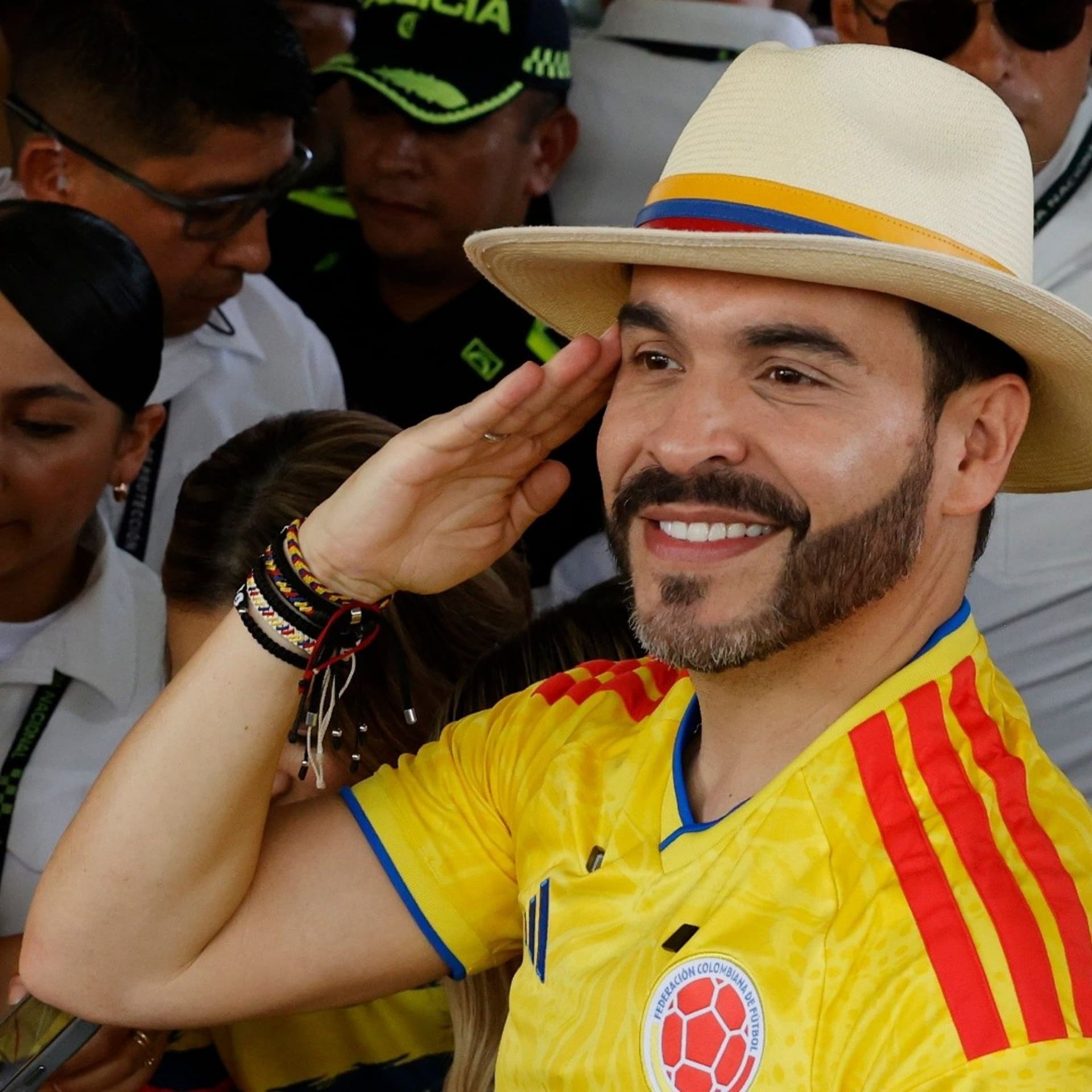
Get in touch: globalpodcast@bbc.co.uk Photo: Colombia's right-wing presidential candidate Abelardo de la Espriella arrives to vote in the runoff election in Barranquilla, Colombia, 21 June 2026. Credit: Photo by Mauricio Duenas Castaneda/EPA/Shutterstock