In short
This episode of BBC Global News Podcast covers multiple stories. Topic: US reassessing NATO ties amid the Iran war; Turkey protests after closure of a liberal private university; Ebola outbreak in DR Congo and Oxford vaccine work; personal accounts from Iran during the war; plus sports and entertainment items (Enhanced Games doping controversy, The Late Show finale, Spotify AI music tool, Pep Guardiola leaving Man City).
Guests/backgrounds
Tom Bateman (BBC State Department correspondent, at NATO meeting in Sweden with Rubio). Hilkin Buran (BBC reporter in Istanbul covering Bilgeo University closure). James Menendez (BBC colleague interviewing Oxford’s Prof Andrew Pollard). Prof Andrew Pollard (Oxford Vaccine Group director; helped develop AstraZeneca COVID vaccine). Caroline Hawley (BBC World Affairs correspondent presenting “When Shiraz Calls” interviews). Janelle Riley (showbiz journalist on Colbert’s finale). Joel Gunter (North America correspondent on political context of Colbert’s cancellation). Will Chalk (reporter on Spotify AI music tool). Sam Ryder (health/fitness journalist on Enhanced Games). Patrick Geary (sports reporter on Guardiola’s legacy).
Key claims/examples
Rubio says NATO value to the US must be argued; bases/logistics matter; force posture and contributions progress will be reviewed for Ankara leaders meeting. NATO Secretary-General Mark Rutte says US freedom-of-navigation in Strait of Hormuz is “not acceptable” being trampled; Rutte cites thousands of European support instances (bases, refuelling). Turkey: Birgit University closure decree; protests inside campus; students fear diplomas; no prior disputes; investigations included money laundering. Ebola: WHO reports 750 suspected cases/177 suspected deaths; risk raised to “very high” nationally; Oxford uses COVID-era tech (viral vectors/RNA-like approaches) to develop Bundiburgio strain vaccine; possible deployment in 2–3 months for field trials. “When Shiraz Calls”: sisters describe missile fear, regime tightening, armed pro-government supporters, economic hardship affecting A&E patients’ ability to buy medicines. Enhanced Games: FDA-approved substances allowed (e.g., TRT, HGH, peptides) despite WADA bans; up to ~40–44% prior Olympic-level banned-substance use claimed, though WADA says most are “clean.” Colbert: CBS cancellation framed as financial, but Trump/FCC merger politics noted. Spotify: AI remix tool via Universal Music Group; artists can opt in/out; risk of “butchering” songs raised. Guardiola: 20 trophies in 10 seasons; style/ball possession influence; City’s spending and financial charges mentioned.
Written by AI. May contain mistakes. Listen to the episode to check what was said.
Chapters
Tap a time to open that second in VOUS-NATO Relationship and Current Events
1:38 to 2:22
Explore the reassessment of the US relationship with NATO amidst global tensions.
“The US Secretary of State Marco Rubio says the United States is constantly reassessing its relationship with the NATO military alliance.”
Marco Rubio on NATO and US Presence
2:22 to 3:52
Marco Rubio discusses NATO's value and the US's strategic contributions.
“to have vaccines that could be deployed.”
Impact of the Iran War on NATO Alliances
3:52 to 7:07
Analyze the effects of the Iran war on NATO and its member countries.
“Here's Mr Rubio speaking after it had finished.”
Evolving NATO Force Model
7:07 to 8:07
Understand the NATO force model and recent implications for US allies.
“because there were unconfirmed reports that because of the current sort of frostiness between the two, that maybe the US might not send as many troops if a NATO ally came under attack, for example.”
Protests in Turkey Over University Closure
8:07 to 11:03
Get updates on student protests following the closure of a major university in Turkey.
“Where students at Bilgeo University have been protesting after news that it's been closed by presidential decree.”
Ebola Vaccine Development Efforts
11:03 to 14:05
Learn about efforts to develop a vaccine for the Ebola outbreak in Africa.
“Now to the latest developments with the Ebola outbreak in the Democratic Republic of the Congo.”
Vaccine Development and Deployment Challenges
14:05 to 18:33
Learn about the complexities and timelines involved in developing vaccines during health crises.
“I mean, how long is it going to take to develop this vaccine and start testing it?”
Voices from War-Torn Iran
18:33 to 23:21
Explore the personal experiences of Iranians affected by war and regime repression through recorded conversations.
“The new owner's desire to please Trump could put pressure on late night host and frequent Trump critic Stephen Colbert.”
The End of The Late Show and Its Context
23:42 to 26:39
Examine the cancellation of The Late Show and its implications for late-night television in America.
“The showbiz journalist Janelle Riley gave her assessment of the final show.”
Spotify's Controversial AI Tool
26:39 to 28:00
Understand the potential risks and benefits of Spotify's new AI tool for music remixes and covers.
“has just unveiled its first tool for making AI versions of songs by famous artists.”
Show all 15 chapters
The Debate Over AI in Music
28:00 to 28:33
Listeners will learn about the complexities of AI's role in the music industry.
“But have they struck that right balance, then?”
Guardiola's Departure from Manchester City
28:33 to 29:16
Insights into Pep Guardiola's decision to leave Manchester City after a successful tenure.
“Because it's going to be a paid-for add-on.”
Guardiola's Impact and Achievements
29:16 to 30:24
Exploration of Guardiola's legacy in football, including his tactical innovations.
“I asked our sports reporter Patrick Geary to put into context just how special Guardiola is.”
Assessing Guardiola's Place in Football History
30:24 to 31:32
Discussion on how Guardiola ranks among the greatest football managers.
“Where will he rank, I guess, in the pantheon of greats?”
What's Next for Guardiola?
31:32 to 32:26
Speculation about Guardiola's future career plans after leaving Manchester City.
“I think after he left Barcelona, he just took a year out of the game of sabbatical.”
Transcript
Automatic transcript. May contain errors.0:00This BBC podcast is supported by ads outside the UK.
0:30The new tropical butterfly refresher from Starbucks. Guava and passion fruit flavors with mango pineapple flavored pearls. Yeah, that feels like summer before you even taste it. Funny how one small stop becomes the best part of the day. Start your summer rhythm with Starbucks. Try the new tropical butterfly refresher from Starbucks.
0:55Pool days call for cookouts and lots of laundry. This Memorial Day at Lowe's, save$80 on a Charbroil Performance Series 4 Burner Gas Grill. Now just$199. Plus, get up to 45 % off select major appliances to keep dishes, clothes and food fresh. Having fun in the sun is easy with us in your corner. Our best lineup is here at Lowe's. Valid for 527. While supplies last, selection varies by location. See associate or lowes.com for details. This is the Global News Podcast from the BBC World Service. Hello, I'm Ankur Desai and at 16 GMT on Friday the 22nd of May, these are our main stories. The US Secretary of State Marco Rubio says the United States is constantly reassessing its relationship with the NATO military alliance.
1:46Elsewhere, protests have broken out in Turkey after a university known for its liberal politics was closed by a decree from the president. And Manchester City have confirmed that their manager, Pep Guardiola, will leave the English football club after 10 seasons. Also in this podcast, scientists at Oxford University are working to create a new Ebola vaccine as the number of suspected cases rises to 750. There are various scientific and logistical challenges to get over, but in general terms, it should be possible from a starting gun in two to three months, maybe that sort of timescale to have vaccines that could be deployed.
2:28And? The controversy is huge. I think when it first got launched, most people's instinct is to say that this is not fair, that this is a bit of a farce, a bit of a spectacle. Las Vegas is gearing up for the enhanced games, which will allow athletes to use banned substances.
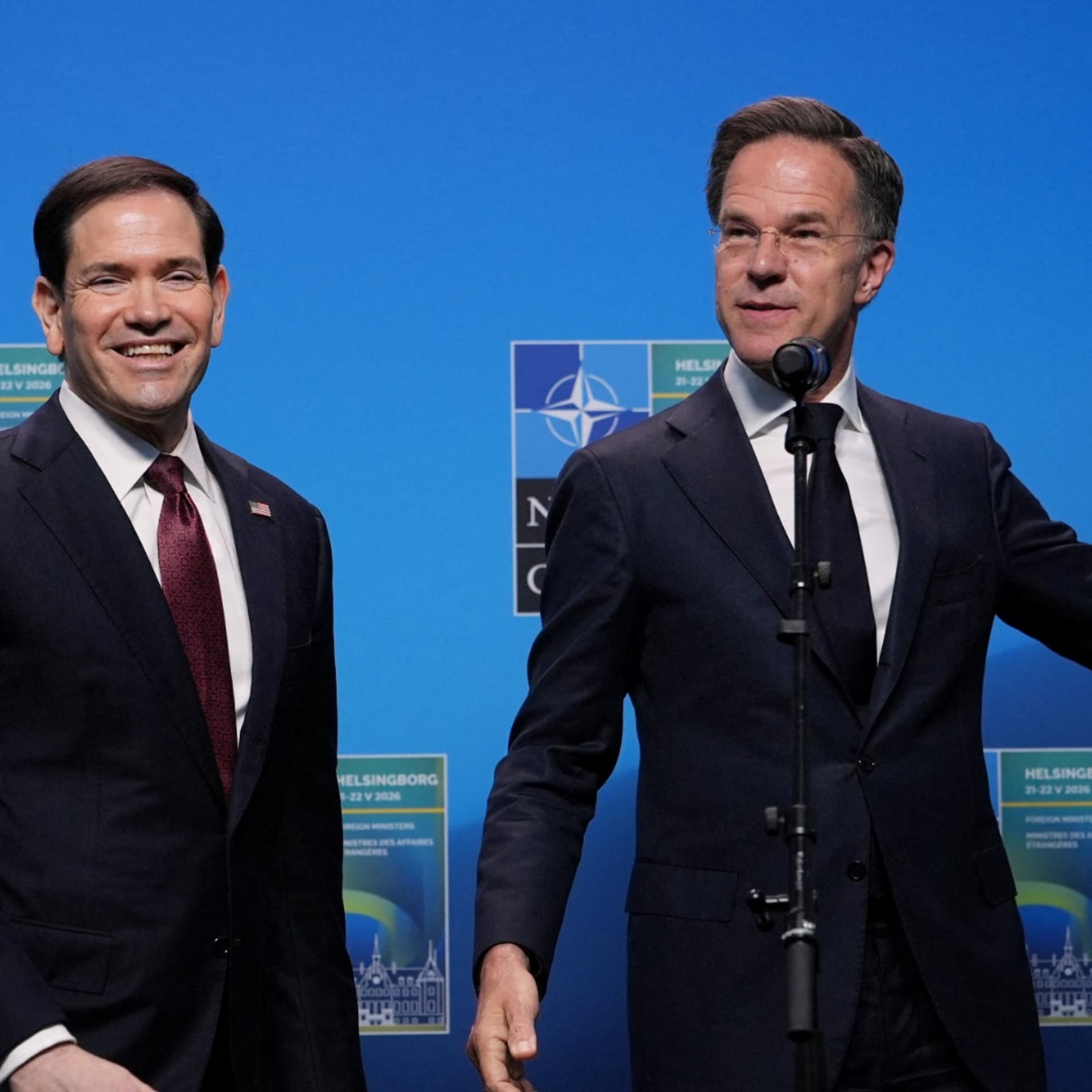
2:47NATO is officially an alliance, but there's a lot right now that its members seemingly aren't aligned on. The US is upset with other nations for not doing more to help during the war with Iran. European countries, though, have had their own concerns, with Donald Trump's pressure to annex Greenland from Denmark. So when foreign ministers met in Sweden today for the first time since the Iran war broke out, there was a lot to discuss. Before the summit, NATO Secretary General Mark Rutte had some praise for the US Secretary of State Marco Rubio. One of the big issues now, of course, is Iran, the Strait of Hormuz.
3:23I hear from many of my colleagues here that it is not acceptable that the freedom of navigation is trampled upon as it is at the moment. And we have to think how we collectively can deal with this. And I think everybody acknowledges that the United States degrading the nuclear capability of Iran, but also the long-range missile capability of Iran is crucial for the Middle East, for Europe, for the whole world. So again, Marco, thank you for being here, for your incredible leadership and being such a staunch supporter of our transatlantic bond. So how did the summit go? And is the alliance any stronger now?
3:59Here's Mr Rubio speaking after it had finished. My job here today was to come and set the stage for what will hopefully be a successful leaders meeting in Ankara in about six weeks. I think we all know what the situation here is. Number one is, like always, and this is not new. I mean, if you go back 30 years, there's never been a time in which there hasn't been a debate in American politics about what our presence and our contribution to NATO should be. And that is always driven by what is the value of NATO to the United States. I understand NATO is valuable to Europe, and it should be. It also has to be valuable to the United States.
4:31So we always have to make that argument. in every administration in every era. And that's what we're in the process of doing now, is explaining. You know, this is the value of NATO to the United States. Related to that is what our force posture is within that alliance, what our contributions are. So obviously one of the things that I've always used, and I've long been an advocate for NATO in my time in the Senate, and one of the arguments I always made was that these bases in the region provided us logistical options that we wouldn't otherwise have. And when some of those bases are denied to you, during a conflict that we're involved in, then you question whether that value is still there.
5:07So that's going to have to be discussed. There's no doubt about it. I think there's also going to have to be some focus on how a year after the meeting at The Hague, how much progress has been made in terms of the increased contributions. There are some countries that have doubled their defence spending over the last few years. There are others that are still lagging. In the end, the goal is to have a NATO that is strong. And the stronger our NATO allies are, the stronger NATO is going to be. Our US State Department correspondent Tom Bateman who was at the meeting after travelling there with Mr Rubio.
5:34I asked him what impact the Iran war has had on the alliance. Well, you know, this has been a significant clash that has really emerged. I mean, not just during the course of the Iran war, but of course for many months beforehand. So, you know, we've seen this relationship deteriorate. And I think Mark Rutter, the chief of NATO, desperately trying to sort of hold things together to do the bidding for European NATO countries, but also to say the kinds of things that will keep Mr. Trump on board with the very concept of NATO. But this is a crisis. I mean, let's be clear about that. After the US-Israeli attacks on Iran, Mr.
6:13Trump described his NATO partners as cowards at one point, saying that they hadn't come to the aid of the Americans, particularly over the issue of trying to reopen the Strait of Hormuz. Now, what you hear from many NATO countries privately is that they say two things. look, the concept of NATO is a defensive pact between these countries. It is not about wars of choice. And they also argue that they weren't consulted over what happened in Iran. And so, therefore, they argue that how could they have helped in many ways. Now, what we heard from Mark Rutter yesterday here in Sweden was he was saying, There have been thousands of instances of NATO countries supporting US operations in Iran through bases in Europe, through refuelling, restocking and so on.
7:03But still, I think the Americans don't think it's enough. Yeah, and I guess the war with Iran has shown more than ever that Donald Trump needs his European partners for refueling and logistics support, because there were unconfirmed reports that because of the current sort of frostiness between the two, that maybe the US might not send as many troops if a NATO ally came under attack, for example. Yeah, I mean, that's exactly the point. I think you hear from Mark Rutter and from other NATO countries is that they say they absolutely have supported the US, that it would have been feasible or possible for them to project this kind of force if it wasn't for the European bases.
7:41On that point about the... This is known as the NATO force model, and what this is is a pool of troops that are available in the event that a NATO country is attacked. Now, there's been unconfirmed reports this week that the Americans could announce that it's prepared to shrink that number of available forces. So there is still this air of punishment, as far as Washington is concerned over some of its NATO allies. Tom Bateman reporting from Sweden. Next to Istanbul.
8:17Where students at Bilgeo University have been protesting after news that it's been closed by presidential decree. The university is private and is known for its liberal politics. The future of its more than 20 ,000 students remains uncertain. A reporter, Hilkin Buran, is in Istanbul and is following the story. He gave us this update. We only know that a presidential degree was published on the official gazette last midnight. And the faculty I've talked to from Birgit University have said that this came as a surprise to them, to students and to the administrators in this college, which is one of the most prestigious private institutions of Turkey.
8:56Is there anything in the sense that there is a reputation for being a liberal university, for its liberal politics? And is that something that goes against maybe the president and his politics? And is that maybe a reason some are using as to why it's been closed down? Those are big question marks. And I think they will remain as question marks for now because we have not heard anything from officials so far. What we know from having spoken to the members of faculty and teachers is that this came as a surprise to them. And one professor I talked to said that the college is not in any financial trouble.
9:32There were no disputes between the government and the college administration prior to this decree. And it has been run by a government-appointed trustee for a number of months before the decree due to a number of investigations, including money laundering. and they have been expressing that there were no prior warnings or disputes with Turkey's high education board. This is the institution that usually rules on universities, especially when it comes to closures and other preventative measures. Now, we heard some of the protests there before you came on. There are some 20 ,000 students there. Do we know anything about what happens next to them?
10:09And have you been speaking or hearing about their reaction to what's been happening? Yeah, I've been in touch with about a dozen of students who are inside the campus who are protesting the decree and the decision as we speak. And they're very concerned. It is total chaos in there right now. They're voicing dismay and concern about their academic future first and most importantly, because they don't know what is going to happen to them. The rules are not clear at this stage. We don't know what's going to happen in terms of the legislation. And one of the students I talked to who say that they're going to graduate in one month, say that they don't know whether they'll be able to get a diploma or not.
10:43And the professors say they have not been notified. There's total confusion in the classrooms. Some professors are trying to continue with their lectures. Others are dismissing classes. It's a total chaos. The atmosphere is very confused in there. The authorities have said that they're taking urgent measures to ensure activities continue and prevent hardship for the students and faculty. Our reporter Hilken Boran reporting from Istanbul. Now to the latest developments with the Ebola outbreak in the Democratic Republic of the Congo. The World Health Organization say there have been now 177 suspected deaths and 750 suspected cases.
11:21The head of the WHO, Tedros Adhanom Ghebreyesus, says the organization has upgraded its risk for Ebola within the DRC to a level which indicates high fatality and high transmission. The Ebola outbreak in the Democratic Republic of the Congo is spreading rapidly. Previously, WHO assessed the risk as high at the national and regional levels and low at global levels. We're now revising our risk assessment to very high at the national level, high at the regional level and low at global level. The DRC's health minister, Roger Kamba, says this outbreak is proving more challenging because this is a different strain of Ebola than the country usually deals with.
12:10The symptoms are less than the symptoms in Ebola. So it can be the symptoms which we can find in other diseases, in malaria, in other diseases. So those two things don't help us very, very well. It didn't help us at the beginning because people were staying at home and they didn't know that it could be a very, very challenging disease. The current outbreak is caused by the Bundiburgio strain, which has no vaccine. Efforts are underway at Oxford University in the UK to change this. My colleague James Menendez spoke to Professor Andrew Pollard, the director of the Oxford Vaccine Group, which also helped develop the AstraZeneca shot.
12:58We're just right at the very beginning of that work. It's led by my colleague Professor Theresa Lamb and what we're doing is using the same technology we used in the COVID-19 pandemic to develop the vaccine and it takes a small protein from the surface of the Ebola virus, this particular strain into the vaccine to then stimulate the human immune system to make responses against the virus. And that was the technique that was used to produce that AstraZeneca COVID vaccine. What are the benefits of that technique, that way of building a vaccine? What we've really seen over the last six years or so is that there are two technologies which allow really rapid development of vaccines.
13:45One is the viral vectors, which is like the Oxford AstraZeneca vaccine for the COVID pandemic. And the other is the RNA vaccines, which Moderna and Pfizer developed. And so both of those types of technologies are likely to increasingly be used in response to unexpected outbreaks like this. And so what is the timescale? I mean, how long is it going to take to develop this vaccine and start testing it? Well, it's very difficult to answer that question at the moment in specific terms, because there are various scientific and logistical challenges to get over. But in general terms, it should be possible from a starting gun in two to three months, maybe that sort of timescale to have vaccines that could be deployed when you haven't got any initial material already produced.
14:33Deployed in the field, what, including clinical trials? So the deployment is clinical trials and the World Health Organization at the moment is working around the clock to plan how those trials might be executed. It's not a licensed product at that point. But in a scenario like this, you have to remember with Ebola that the mortality may be between 30 and 50 percent of those infected. So it's a really high consequence infection compared with something like COVID. So it's a very different scenario that you're dealing with here. Professor Andrew Pollard. It's been nearly three months since the US and Israel launched their war on Iran.
15:13And yet during the heaviest attacks, it was very hard to hear the voices of people in Iran. Now a new BBC podcast has captured what it was like in those most dangerous of times. Two Iranian sisters, one in the UK and one in Iran's city of Shiraz, recorded their conversations and despite the risks, have shared those with the BBC. Our World Affairs correspondent Caroline Hawley presents When Shiraz Calls and she told us more about the women she spoke to. They're young, they're middle class, they are separated by distance, but they are very close. And war often separates families, doesn't it? But you've got the added dimension in Iran of the internet blackout that's imposed by the regime, the fact that communications have been cut, so Iranians abroad can't ring into Iran.
16:02They have to wait for their family to ring them. So you get really the torment of not knowing how someone is reflected in these conversations. And you're going to hear first from the sister in Shiraz, who we're calling Leila, and her words are voiced by an actor. I tried to call you when it was happening, but you didn't answer. Leila, they're saying Shiraz has been really badly hit. Yeah, the missiles were coming. I don't know if it was from jets or launched from another country. I wanted you to hear it. It was so close. You could hear the gap between the missile being launched and it hitting.
16:35And for the first time, I got scared. It was terrifying. Honestly, honestly, I'm so angry. Half my face has gone numb. I swear to God, don't let anything happen to you. So you hear the fear expressed there, but also anger. And what you have is Iranians caught between a damaging war and a regime that many of them hate. And what we hear from Leila is reports of the regime tightening its grip at home. Leila hears pro-government supporters, and some of them are now armed, marching near her house. And she hears about schoolchildren being told to go out and wave flags if they want to get good grades.
17:16And then you also hear of an economic crisis that existed before the war and, in fact, was the spark for the protests in January. The crisis was terrible before the war, but now it's really, really biting. And Leila sees this firsthand because she's a doctor. She works in an A &E department. And she sees patients who have run out of money, who said they haven't been able to afford their medications for a month. I was on shift yesterday. I went into the pharmacy. I needed to enter a few medication codes for someone. A woman came in and said she wanted a thermometer. They'd given her a list of things to get for her child.
17:52Right. She asked the price. They said 200 ,000 tomans. She said, look, can you give it to me and I'll bring the money later? They said no. She genuinely didn't have the money. I'm still buying medicines. With your own money? Yeah, with my own money. You give them for free? Some of them, yeah. I think they're really important conversations because they show the sort of sense of uncertainty that people are now living with. They can't plan ahead. They don't know if a ceasefire is going to hold. And Layla says she's measuring time, not in hours or days, but in the years of her youth that are slipping away.
18:31I found that quite moving. Caroline Hawley reporting. Still to come in this podcast. The new owner's desire to please Trump could put pressure on late night host and frequent Trump critic Stephen Colbert. The major American talk show ends after three decades. But was it cancelled to save money or because the host is a critic of Donald Trump?
19:08Welcome to Moto Casino, where the excitement never ends. With thousands of the hottest free-to-play social casino games, fastest payouts, and the best promotions in the industry. No tricks or gimmicks. Owned and operated in the USA. Moto Casino is a free-to-play social casino. No purchase necessary. 21 plus to play. Void or prohibited. Sign up today for a generous welcome bonus. Moto Casino. America's social casino. Download the Moto Casino app today. I'm Kai Wright. I'm Carter Sherman. Welcome to Stateside with Kai and Carter. We're a new show from The Guardian. We're talking to big thinkers and the best journalists just trying to understand the world through smart conversation and honest reporting.
19:45We don't have billionaires telling us what to say. Stateside with Kyan Carter will come out three times a week, Monday, Wednesday and Friday, starting May 13th. Subscribe on YouTube or wherever you get your podcasts.
20:03This is the Global News Podcast. On Sunday, the world will be introduced to the first ever enhanced games in Las Vegas. Enhanced because the athletes will be allowed to use drugs that are banned in competitions elsewhere. As you might imagine, plenty of people are not impressed. The head of World Athletics, Lord Coe, said taking part would be moronic. The founders of the event reckon they're pushing the boundaries of what superfit humans can achieve. My colleague James Coppnell spoke to Sam Ryder, a health and fitness journalist who's written about the Enhanced Games. In terms of what's allowed, anything that is FDA approved in America is permitted.
20:42However, that includes a lot of things that are very much banned on the WADA list of substances. So you'll have things like TRT, testosterone replacement therapy, human growth hormone, and certainly peptides, which are very controversial in terms of very new to the market. But most of them are still being very regulated. So it's a bit unclear about the kind of legitimacy of some of these medications. Is the argument here that in something like athletics, many athletes are taking drugs, they simply aren't caught. And so therefore, it should all just be brought out into the open. This is one of the kind of main arguments that the people behind it have been championing for the last two, three years.
21:22I mean, there's data that suggests that up to maybe 40, 44 % of athletes at the kind of Olympic level have previously perhaps taken substances that were banned. However, you know, it's very difficult to prove these points. And I think WADA would be very clear that the latest data on athletes at the highest level is almost all of them are very clean. There's two kind of strands to this story. There's the sporting spectacle, which we're talking about now. And then there's the fact that it's a bit of a shop window for the company behind the scenes in terms of them kind of trying to legitimise the use of substances like TRT at this kind of elite sporting level.
22:00Has the Games managed to attract names or high achievers from these various fields of sport? So yeah, I think some of the biggest names that you could see lining up on Sunday are the US 100 metre sprinter Fred Curley, recently won bronze in Paris and then silver in Tokyo before that. So this is one of the fastest men on the planet that you've got lining up here. Then there's British swimmer Ben Proud, who's quite a big name also, a silver medalist at the Olympics. Then you've also got someone such as Hafur Bjornsson, who's the deadlift world record holder, who lifted 510 kilos, I think, last year in Birmingham.
22:37It's going to be pretty controversial, isn't it, all this? The controversy is huge. I think when it first got launched, most people's instinct is to, you know, the gut instinct is to say that this is not fair, that this is a bit of a farce, a bit of a spectacle. And I think the fact that it's in Sin City in Las Vegas on Sunday, it's a one day event rather than a four day event. The number of athletes that they've signed up are perhaps not quite as many as they would have liked to initially. I think you still have a bit of a split between people who really think this could be the future of sport and kind of entertainment and others who just don't want to touch this at all.
23:12So I can think we'll play out. If loads of records get broken on Sunday, that might create a bit more of a stir. So we'll see what happens. Health and fitness journalist Sam Ryder. Now to the end of an era. Welcome, welcome, welcome, friends to The Late Show. I'm your host, Stephen Colbert. After 33 years, the U.S. TV institution The Late Show has broadcast for the final time. The program, which broadcasts from New York, was hosted by David Letterman for more than two decades before being taken over by Stephen Colbert in 2015. The showbiz journalist Janelle Riley gave her assessment of the final show.
23:49I loved how he started it off by saying he didn't necessarily want to do anything special. He wanted to do an ordinary show to some degree. And to that end, he did like a pretty standard monologue. But then so many wonderful guests popping up. Bryan Cranston was there, Ryan Reynolds, Paul Rudd. They were all competing to be, you know, the final guest, who was actually Sir Paul McCartney. It was a little sad in context, but like I thought it really was a celebration and really went off on a high note. Jimmy Kimmel, one of his competitors, was saying that this isn't the way that late night TV used to be.
24:23You know, when it was Jay Leno and David Letterman, it was notoriously combative. They were competing for guests. They kind of like didn't acknowledge each other. But now you have Jimmy Kimmel, Jimmy Fallon and Stephen Colbert all in the same time slots airing against each other. And they took their shows off for the night out of respect for Colbert's last show. The U.S. television network CBS announced it was cancelling the show last July, insisting the decision was based on financial reasons. Just a few days earlier, the host had also taken aim at his corporate bosses at CBS and its parent company, Paramount, saying they'd settled a million dollar lawsuit with President Trump to make way for a Paramount Skydance merger.
Read the full transcript
25:06Paramount's owners are trying to get the Trump administration to approve the sale of our network to a new owner, Skydance.
25:16And some of the TV typers out there are blogging that once Skydance gets CBS, the new owner's desire to please Trump could put pressure on late night host and frequent Trump critic Stephen Colbert. Our North America correspondent Joel Gunter explains the political nature of the show's cancellation. Late night talk shows are, of course, very popular in the US. The Late Show is an institution. Stephen Colbert's run for about the past decade or so has coincided more or less with Trump being in power. Of course, Biden was president there in the middle for a while, but President Trump's administrations have really kind of shaped the show in lots of ways.
26:01And and in some ways, perhaps people will speculate may have led eventually to its being cancelled. Both Donald Trump and his appointed head of the Federal Communications Commission, who has the power to approve that merger, celebrated Colbert's sacking on social media, saying Colbert is finally finished at CBS. You could take any person off of the street and they would be better than this total jerk. Thank goodness he's finally gone. Next, there are plenty of musicians who are outraged about the thought of artificial intelligence getting anywhere near their art. But despite this, the world's biggest streaming platform, Spotify, has just unveiled its first tool for making AI versions of songs by famous artists.
26:46I asked our reporter, Will Chalk, whether this was a risky move. I think it is, and I think it's clear from both what this tool is and how Spotify have launched it that they're very aware that it is. So firstly, what does it do? Well, hopefully it's not been released yet, but their press release does say it will allow fans to create covers and remixes of their favourite songs from participating artists and songwriters. So from the sound of it, you're on Spotify, you have a song you like, there'll be a button you can press and you'll be able to make a remix of it or a new version in a different genre to listen to.
27:20Now, this is a deal that's been struck with Universal Music Group and they're home to some of the biggest artists out there. And what this press release does stress multiple times is that this feature will open up revenue streams for artists. So that is presumably to say that if you use this feature, you press that button and make the remix, the artist will get paid. Now, it also stresses that this is a feature that artists themselves will be able to opt in and opt out of. So to answer your question, Anka, there are clearly some attempts here to strike that balance in an industry that's been up in arms about AI models being trained on music and the fact that musicians themselves often get nothing in return.
28:00But have they struck that right balance, then? Well, to find out, I asked a singer-songwriter called George Gad, who is staunchly anti-AI, and actually he said he could see both sides. I can completely see the innovations that they are trying to make in an age where people are going to gigs a lot less, so you do need that engagement between listeners and artists. That being said, however, I do think that this could potentially be a way of someone butchering one of my songs, for instance, and me not having the final say in it. A sign then that this may not be deeply unpopular within the industry, but I think the question it does beg, given all the fancy things that AI can do, have Spotify, by treading this line, created a tool that people will actually want to use?
28:48Because it's going to be a paid-for add-on. You'll have to spend money on this. And I wonder whether it's going to be a bit like a children's toy and get boring quite quickly. Will Chalk reporting. A football story to finish the podcast from here in the UK. Manchester City have confirmed manager Pep Guardiola is leaving after 10 seasons in charge and 20 trophies. The news was confirmed three days after City missed out on winning the English Premier League title. When asked why he was leaving, Pep Guardiola said there is no reason, but deep inside I know it's my time. I asked our sports reporter Patrick Geary to put into context just how special Guardiola is.
29:27well there are two ways of looking at this really if you just look at it in terms of trophies it's remarkable 20 trophies over the course of a decade Manchester City winning their first ever treble that's the FA Cup the Premier League and the Champions League in the 2022-23 season so so that in itself is remarkable but I think Guardiola goes beyond just weighing it in silver it's about style as well Guardiola's style of play means possessing the ball being comfortable with the ball and that applies to all the players even the goalkeeper and that style of football has gone beyond just Manchester City it's become the prevailing philosophy in much of English football that goes even beyond the Premier League down to lower levels you'll see the goalkeeper passing out from the back it sometimes alarms some fans watching it's quite a risky style of play but that is what Pep Guardiola has brought into English football it makes him such a significant figure and when we talk about legacy as well we can compare him to other footballing greats like Sir Alex Ferguson, who dominated English football for so long, Carlo Ancelotti, the current Brazilian manager and had such great success at Real Madrid.
30:31Where will he rank, I guess, in the pantheon of greats? Well, it's difficult to assess him in a way because there are caveats that people will apply to him. There, of course, has been enormous spending at Manchester City over the course of the decade, well over a billion pounds. There are still the 115 charges which they face on issues around finances. but Guardiola's success and the way that he has achieved it surely puts him up there with some of the greatest managers in English football and he's also he's reinvented his team over that period a bit like Sir Alex Ferguson did with Manchester United it's not just one team he's kept rotating the players he's kept bringing new players through he's used the academy at times so that I think would place him up there with some of the most significant managers that we have seen in English and European football He's, of course, won trophies now in Spain, Germany and England.
31:24So he's achieved pretty much all there is to achieve as a manager. And I think for that reason, he would have to be placed up in the very highest company. And do we know what next for him then? It's difficult to know with Guardiola. He is his own man. I think after he left Barcelona, he just took a year out of the game of sabbatical. So he may do that. I think he's spoken about potentially being an international manager in the future. Perhaps that would come up. But he's a man who enjoys things beyond football. He likes music. He likes cooking. He's spoken about perhaps wanting a bit more time to do some of that.
31:56And of course, being a top class manager for so long does take a lot out of you. It's quite a demanding job. So perhaps a bit of time to himself. And news also if your football allegiances are on the red side of Manchester, because Manchester United have named interim head coach Michael Carrick as their permanent head coach. He's been given a two-year contract after winning 11 of his 16 matches in charge so far. And that's all from us for now. If you want to get in touch, you can email us at globalpodcast at bbc.co.uk. You can also find us on X at BBC World Service. Use the hashtag Global News Pod.
32:36And don't forget our sister podcast, The Global Story, which goes in-depth and beyond the headlines on one big story. This edition of The Global News Podcast was mixed by Pat Sissons and the producer was Helena Burke. The editor is Karen Martin and I'm Ankur Desai. Until next time, goodbye.
32:59I'm Kai Wright. I'm Carter Sherman. Welcome to Stateside with Kai and Carter. We're a new show from The Guardian. We're talking to big thinkers and the best journalists just trying to understand the world through smart conversation and honest reporting. We don't have billionaires telling us what to say. Stateside with Kai and Carter will come out three times a week, Monday, Wednesday, and Friday, starting May 13th. Subscribe on YouTube or wherever you get your podcasts.
From the publisher
At a summit in Sweden, the US Secretary of State, Marco Rubio, says the Trump administration is constantly reviewing its relationship with NATO. The chief of the military alliance, Mark Rutte, insists it has grown closer and will become less reliant on the United States.
Also: students at one of Turkey's oldest private universities protest over its closure; the WHO upgrades its risk for ebola in the DRC; two sisters share their experience of living in Iran during the US and Israeli attacks; the TV programme, The Late Show, is broadcast for the final time in the US; ahead of the Enhanced Games in Las Vegas on Sunday we hear more about which athletes are competing and Manchester City's coach, Pep Guardiola, has confirmed that he's leaving the club.
The Global News Podcast brings you the breaking news you need to hear, as it happens. Listen for the latest headlines and current affairs from around the world. Politics, economics, climate, business, technology, health – we cover it all with expert analysis and insight. Get the news that matters, delivered twice a day on weekdays and daily at weekends, plus special bonus episodes reacting to urgent breaking stories. Follow or subscribe now and never miss a moment. Get in touch: globalpodcast@bbc.co.uk