
In short
Global News Podcast - Episode Summary
Episode Title
Russia Steps Up Attacks on Ukraine's Energy Infrastructure
Episode Description In this episode, the podcast discusses the intensification of Russian attacks on Ukraine's energy infrastructure amid freezing winter temperatures. It also covers significant global news, including police raids in France, social media regulations in Spain, talks between Iran and the US, and humanitarian issues in Gaza.
---
Main Stories
- Intensified Russian Attacks on Ukraine
- Background: President Zelensky accuses Russia of using extreme winter conditions as a tool for terrorizing the Ukrainian population.
- Recent Events:
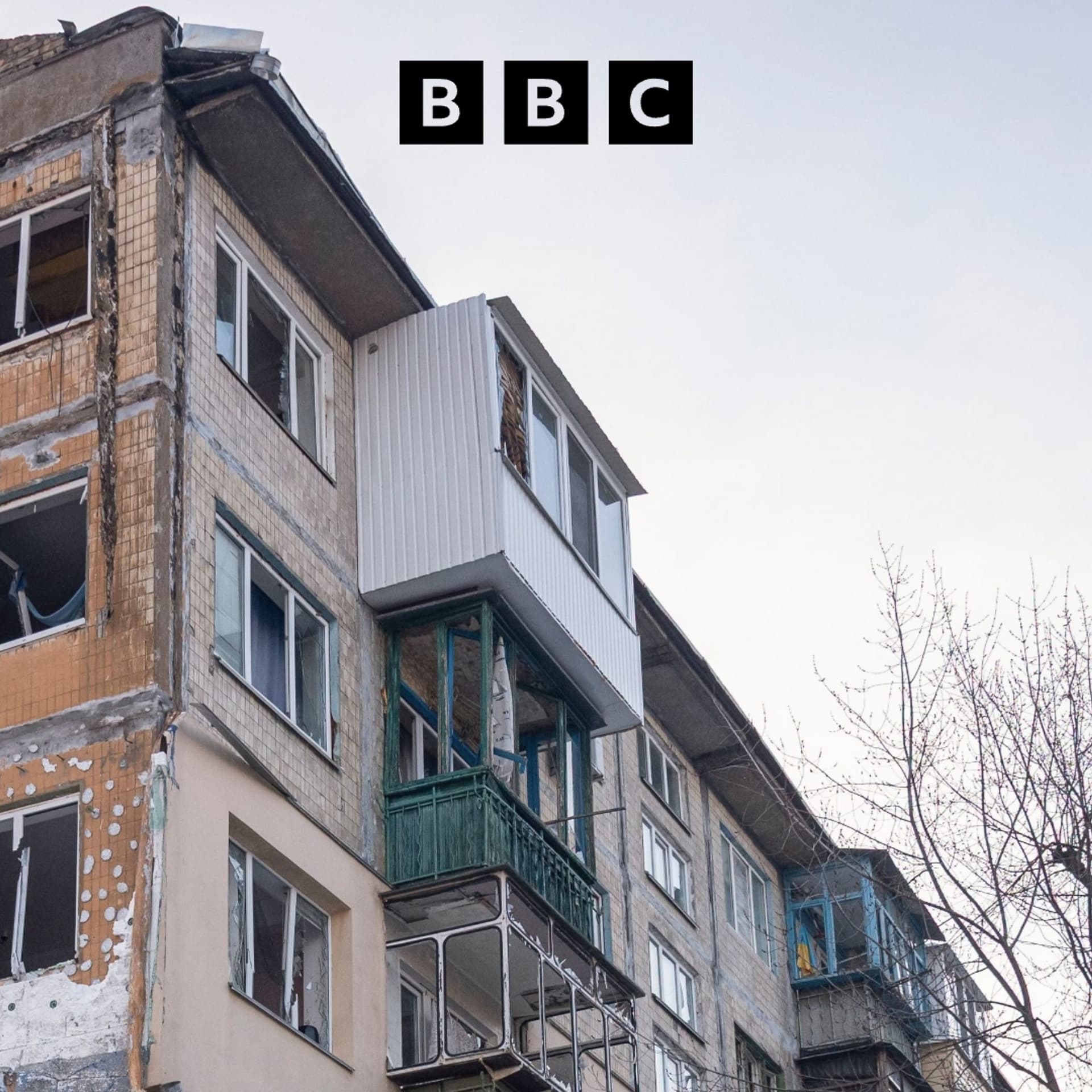
- Overnight missile and drone strikes targeted energy facilities across Ukraine, marking the most significant attacks this year.
- Reports indicate over 70 cruise and ballistic missiles, along with approximately 450 drones, were deployed.
- Significant damage inflicted on power plants in major cities like Kyiv and Kharkiv.
- Public Response:
- Morale remains resilient despite ongoing hardships, with citizens expressing anger towards Russia rather than their own government.
- Police Raid on Social Media Platform X in France
- Details:
- French authorities raided the Paris offices of X (formerly Twitter) regarding algorithmic manipulations and illegal content distribution.
- Elon Musk and former CEO Linda Iaccarino are summoned for hearings amid accusations of facilitating harmful content.
- Significance:
- This event marks a rare instance of a western social media platform facing legal action from its own government.
- Spain's Proposal to Ban Social Media for Children
- Context:
- The Spanish government, led by Prime Minister Pedro Sánchez, is considering legislation to protect minors from the dangers of social media.
- Statements:
- Sánchez emphasized the need for age verification and accountability for social media executives in the face of a "digital wild west" scenario.
- Public Reception:
- There is considerable support among parents for these measures, though pushback from social media companies is anticipated.
- Iran's Willingness to Engage in Talks with the US
- Update:
- Iran's president has stated that the country is open to pursuing negotiations with the US if conditions are favorable.
- Challenges:
- Iran insists that discussions focus solely on nuclear issues in exchange for lifting sanctions, while the US demands broader topics, including regional security.
- Gaza Crossing Reopens
- Humanitarian Situation:
- The Rafah crossing has reopened with only a handful of patients allowed to leave for medical treatment, highlighting severe limitations.
- The World Health Organization reports thousands await treatment as the healthcare system in Gaza remains critically strained.
- Trial of Norway's Crown Princess' Son
- Details:
- Marius Borg Hojbi pleads not guilty to serious charges in a high-profile case that has captivated Norway, drawing attention to the royal family.
- Public Impact:
- The ongoing trial has spurred public discussion regarding the royal family's integrity, especially following resurfaced connections to Jeffrey Epstein.
- Controversy in Italy Over Artwork Restorations
- Incident:
- An art restorer allegedly painted the likeness of Prime Minister Giorgia Meloni onto a historic fresco, prompting an investigation.
- Reactions:
- The situation has generated a media frenzy, with both humor and criticism directed at the Prime Minister and the restorations.
---
Key Takeaways
- Global Tensions: Ongoing conflicts in Ukraine and the Middle East continue to dominate global news.
- Regulatory Actions on Social Media: Countries are increasingly scrutinizing social media platforms to protect citizens, particularly children.
- Public Sentiment: Amidst crises, public resilience and reactions vary significantly based on national contexts.
Final Note Stay updated with breaking news across various sectors, including politics, economics, and humanitarian issues, through the Global News Podcast.
Contact: globalpodcast@bbc.co.uk Follow Us: @BBCWorldService | #GlobalNewsPod
Written by AI. May contain mistakes. Listen to the episode to check what was said.
Chapters
Tap a time to open that second in VOExploring Flawed Journalism
0:05 to 0:42
Discussion on the implications of flawed journalism in history.
“If journalism is the first draft of history, what happens if that draft is flawed?”
Russia's Escalating Attacks on Ukraine
0:48 to 1:30
Overview of Russia's intensified attacks on Ukraine's energy infrastructure.
“Russia steps up its attacks on energy infrastructure in frozen Ukrainian cities ahead of planned peace talks.”
On-the-Ground Update from Kyiv
1:30 to 4:55
Sarah Rainsford reports on the recent attacks and their impact on civilians.
“We start in Ukraine, where overnight on Monday, people had to endure the most powerful Russian strikes on the country's energy facilities this year.”
Elon Musk's X Platform Under Scrutiny
4:55 to 6:46
Discussion on the recent raids related to Elon Musk's social media platform.
“Police in Paris have raided the offices of Elon Musk's social media platform X.”
Spain's Social Media Ban for Minors
6:46 to 9:42
Overview of Spain's proposed ban on social media for children under 16.
“And they're asking the owner of X, Elon Musk, and the former CEO, Linda Iaccarino, to appear for voluntary questioning in April.”
Iran and US Negotiation Talks
9:42 to 12:12
Update on Iran's willingness to engage in talks with the US.
“With no sign of an end to tensions between Iran and the US, several countries have been trying to get the two countries to the negotiating table.”
Norway's Royal Family in Legal Turmoil
12:12 to 14:07
Discussion on the significant trial involving Norway's royal family.
“Now to Norway, where the biggest trial there in years is underway in Oslo.”
Norwegian Reactions to Recent Events
14:07 to 14:40
Explore the shock and questions among Norwegians regarding recent news.
“Yeah, it's been discussed over the weekend, I think, on all socials.”
Art Controversy in Italy
14:40 to 15:09
Discussion on the political and media storm in Italy over an art restoration.
“Still to come in this podcast, the political and media storm in Italy over claims an art restorer painted the face of Prime Minister Giorgia Maloney onto an angel.”
The Nature of Journalism
15:09 to 15:40
Analyzing the implications of flawed journalism in historical narratives.
“In 1999, four Russian apartment buildings were bombed, hundreds killed.”
Show all 19 chapters
Gaza Crossing Update
15:46 to 16:46
Update on the Rafah crossing and medical needs of Palestinians.
“A smaller than planned number of Palestinians managed to cross the border between Gaza and Egypt on Monday as the Rafah crossing reopened for the first time in nearly two years.”
Challenges at the Rafah Crossing
16:46 to 17:44
Discussion on security delays and political implications surrounding the crossing.
“I cannot do simply daily tasks like feeding my daughter, hugging her, dressing her or taking care of myself.”
Future of Gaza's Governance
17:44 to 19:16
Exploring the complexities of governance and reconstruction in Gaza.
“The Palestinian officials who commented on this said it was the stringent Israeli checks at this security checkpoint, particularly for those entering, blamed the Israelis basically for the delays.”
World Health Organization's Appeal
19:16 to 21:04
WHO's urgent request for international support to treat Palestinians.
“You know, how will that actually happen?”
Congo Mine Collapse Reactions
21:04 to 21:39
Rebels' accusations against the government regarding a deadly mine collapse.
“Tarek Djeresevich from the World Health Organisation.”
DRC Government's Response
21:39 to 22:58
DRC's Minister discusses efforts to provide humanitarian aid after the collapse.
“The M23 rebels say last week's landslide was an accident triggered by heavy rains and insist the government in Kinshasa is trying to dodge responsibility.”
Resource Exploitation in DRC
22:58 to 24:08
Discussing Rwanda's involvement in DRC's mineral resources.
“had also banned mining at this site last year.”
Art Restoration Investigation in Italy
24:08 to 24:51
Investigation into controversial art restoration involving Italy's Prime Minister.
“saying that they will take actions to make sure the agreement signed with President Trump is respected.”
Public Interest in the Artwork
24:51 to 27:00
Public and media reaction to the artwork resembling Prime Minister Meloni.
“Both Italy's Ministry of Culture and the Diocese of Rome are looking into the controversy.”
Transcript
Automatic transcript. May contain errors.0:00This BBC podcast is supported by ads outside the UK. If journalism is the first draft of history, what happens if that draft is flawed? In 1999, four Russian apartment buildings were bombed, hundreds killed. But even now, we still don't know for sure who did it. It's a mystery that sparked chilling theories. I'm Helena Merriman, and in a new BBC series, I'm talking to the reporters who first covered this story. What did they miss the first time? The History Bureau. Putin and the apartment bombs. Listen on BBC.com or wherever you get your podcasts. This is the Global News podcast from the BBC World Service.
0:47I'm Alex Ritson and at 18 hours GMT, these are our main stories. Russia steps up its attacks on energy infrastructure in frozen Ukrainian cities ahead of planned peace talks. Paris prosecutors raid the French offices of Elon Musk's ex. The son of Norway's crown princess denies rape as his criminal trial begins. Also in this podcast, Spain's prime minister moves to protect young people from what he calls the digital wild west. Our children are exposed to a space of addiction, abuse, pornography, manipulation, violence. We will no longer accept that.
1:32We start in Ukraine, where overnight on Monday, people had to endure the most powerful Russian strikes on the country's energy facilities this year. Ballistic missiles and drones were used in the attacks across Ukraine, with the air raids lasting several hours. It comes as both sides prepare for a second round of talks. President Zelensky said the work of his negotiation team in Abu Dhabi would be adjusted accordingly since Russia did not take diplomacy seriously. So what's the latest on the ground in Ukraine? I spoke to our correspondent Sarah Rainsford who's in Kyiv. The first explosions were just after midnight, about half past 12 I think.
2:08I heard the first blasts in the distance and then the air raid sirens went off and the alert lasted through the entire night for more than seven hours and there were repeated explosions. It was a massive attack and looking at the numbers given by officials today it's quite clear that there were a lot more missiles included in this barrage than usual. So more than 70 crews and ballistic missiles fired across Ukraine, as well as 450 attack drones, according to President Zelensky. And that is a huge attack. It also is significant, I think, to look at the number of those missiles that actually made it through the air defences.
2:44That is particularly high. Almost half of those missiles, so more than 30 missiles, appear to have hit their targets. And in terms of what they were targeting, well, it looks like the energy infrastructure here wants to gain. So power plants in Kiev, in Kharkiv and in other cities in Ukraine. So a deliberate attempt to knock out the electricity, knock out the heating to people in the depths of a really bitterly cold winter. It was minus 20 overnight and it's barely warmer this morning too. Moscow had said it would pause attacks because of the cold. How is morale in Ukraine? Yeah, I mean, people here were always deeply sceptical about that because there is always a pause between the massive strikes.
3:24It takes a bit of time for Russia to collect its missiles, to load them on the planes and to hit again. So there's always a week or so between these kinds of attacks. And that is basically what happened this time. So even though Donald Trump said Vladimir Putin had been very nice, as he put it, and decided to pause his attacks on the energy infrastructure for a week, it seems to have lasted a couple of days at most, if it ever existed at all, to be quite honest. Power blackouts are very, very significant. The fact that many, many people have again woken this morning with no heating in their houses is hard for people to cope with.
4:01They keep saying there will be an energy ceasefire. Where is the ceasefire? At first, they said it will last for a week, then three days. And now, well, they have hit us hard. What should people do now? Where should they leave? There is always hope. Everybody hopes that maybe the situation will get better, that the war will end. But no, there is nothing like this in the foreseeable future. The Russians use this weather to target the civilian population. They're sleeping in hats, they're sleeping in coats, they're sleeping in multiple layers of clothing and under lots and lots of blankets to try to stay warm.
4:39It is debilitating, it's draining people's energy, but I would say that people are not angry at their own authorities, as perhaps Moscow intends. they're angry at Russia. They believe this is trying to force them into surrender. And I would say that at the moment, people are pretty resilient despite everything. Sarah Rainsford in Kyiv. Police in Paris have raided the offices of Elon Musk's social media platform X. The prosecutor in the French capital said it was in relation to content recommended by X's algorithm, which had been widened to include its controversial AI chatbot, Grok. The prosecutor's office also said that it summoned both Mr Musk and the former chief executive of X to appear for hearings in April.
5:21Our cyber security correspondent Joe Tidy is following the case. It started in January with accusations from French politicians that there was some sort of algorithmic manipulation to affect what people saw and what people said on X. Then that was expanded in the summer to include things like the chatbot Grok, which is the inbuilt chatbot of the X platform, Holocaust denying. and then there were these raids this morning and it's quite stunning because we don't often see this very very rare to see a social network that's western raided by a western authority in a western country we see it elsewhere in parts of the world they haven't actually mentioned any of those previous things they've said it's about complicity in possession or organized distribution of images of children of a pornographic nature infringement of people's image rights with sexual deepfakes fraudulent data extraction by an organized group the other one on the rap sheet that i noticed was that at the end it says administration of an illegal online platform that for me is very reminiscent of what we saw with telegram a different social network a different app and the ceo of telegram in 2024 was arrested in a quite a stunning move from the french as he got off his private jet in paris because they accuse him of not running the platform effectively enough and allowing things like child sexual abuse material and selling of drugs to flourish on that platform So we're seeing a similar action here and similar accusations against X.
6:40The prosecutor's office says that this is all about trying to get X to cooperate with French law. And they're asking the owner of X, Elon Musk, and the former CEO, Linda Iaccarino, to appear for voluntary questioning in April. Joe Tidy. Spain has become the latest country to consider banning social media for children and teenagers under the age of 16. Australia introduced a ban for under-16s in December. Lawmakers in France voted to approve a bill restricting access to social media for those under 15 last week. The Spanish Prime Minister, Pedro Sánchez, said laws would be introduced to protect young people.
7:18Today, our children are exposed to a space they were never meant to navigate alone. A space of addiction, abuse, pornography, manipulation, violence. We will no longer accept that. we will protect them from the digital wild west. Our correspondent in Madrid, Guy Hedgeco, told us more. He has talked about these issues in the past, but of course this is taking things further with a social media ban. He did use some quite strong language today when he was announcing this social media ban. You talk there of the digital wild west that he was talking about, But he also said that social media is an environment where laws are ignored and crimes often go unpunished.
8:09And he said that wouldn't happen in the outside world. His government, he says, wants to introduce a digital environment that is safe, respectful and democratic. Now, we don't have a great deal of detail about this ban. We do know that the government wants to make sure that that age verification introduced by companies is at the centre of it and companies are forced to have effective age verification systems up. But this is part of a package of several measures that Mr Sanchez has announced, all of them aimed at trying to tackle or introduce greater controls in the digital sphere. So this is perhaps the most eye-catching one, but there are other measures as well.
8:50For example, clamping down on the executives and the leaders of social media companies, making them more accountable for the content on their platforms as well. Now we're waiting to hear what the social media companies will say and what, for example, schools and parents will have to say. Certainly in Spain, there is quite a strong movement of parents who are very much in favor of this kind of measure. There has been a lot of talk about it at a grassroots level. Clearly, the government has been listening very carefully to that. But at the same time, I think we can expect quite a strong backlash from social media companies.
9:31We've seen that, for example, when Australia introduced the same measure. Social media companies were obviously not very happy about it. So I think there is going to be a certain amount of tension there. Guy Hedgco in Madrid. With no sign of an end to tensions between Iran and the US, several countries have been trying to get the two countries to the negotiating table. Now, for the first time, the Iranian president, Masoud Pazeshgian, has said his country will pursue talks with the US. President Trump has threatened to intervene militarily to halt Tehran's nuclear ambitions and the recent deadly crackdown on anti-government protesters.
10:08With the latest, here's our correspondent, Barbara Platt-Asher. This is the first official statement from Iran confirming that the talks will go ahead from the Iranian president. It was tentative, actually. He said they should go ahead if the environment is right, if it is free from threats and free from unreasonable expectations. Now, the threats obviously referring to the potential for a U.S. airstrike from that massive military buildup in the Gulf. The unreasonable expectations probably referring to various demands that have been made by the U.S. because the Iranians are saying these talks should focus on its nuclear program in exchange for the lifting of sanctions, whereas the Americans have said they want the deal also to cover Iran's support for militant groups in the region and its ballistic missile program.
10:55The Iranians have said that's just not up for negotiation. So it's not really clear how they're going to square this circle, but we understand they are going to meet. The expectation is on Friday in Turkey. the Iranian Foreign Minister Abbas Arachid and the U.S. Special Envoy Steve Whitcoff. Now, this has been organized, coordinated by regional powers. So Qatar, Turkey, Egypt, Oman have been very active in setting this up. And the Iranian president, in his statement, specifically said they decided to go along, the Iranians had decided to go along with this because they were responding to requests from friendly countries, which really points to this deep distrust that the Iranians have of the U.S.
11:34You remember last June when the Americans bombed Iranian nuclear facilities. They did so just on the eve of a scheduled round of talks. So I think the Iranians think, well, that could still happen this time. And so they've been also warning very strongly that if they are attacked, they will respond swiftly and quite strongly. The top military commander in Iran said they had learned from that experience in June. They had responded too slowly. they had now moved from what he called a defensive posture to an offensive strategy. Barbara Platasha in Doha. Now to Norway, where the biggest trial there in years is underway in Oslo.
12:17Marius Borg Hojbi, the son of Norway's crown princess, has pleaded not guilty to four counts of rape as the public prosecutor read out the charges against him. The case has gripped the nation and comes as his mother, Crown Princess Metta Marit faces growing scrutiny over her relationship with the late US sex offender Jeffrey Epstein. Tone Strom Gundersen is the news editor of Afton Poston. She explained to my colleague Cassia Madeira why the case was so significant. It's very serious charges against the son of the future queen in Norway who is now a Crown Princess. And although he's not part of the monarchy as such, he is still part of the royal family.
12:58And he was also brought into the royal family when he was three, four years old, when his mother got married to the crown prince, who is the future king of Norway. So it is a really big trial and a large story in Norway. This trial is receiving so much media attention, not only from Norway, but also from everywhere else in the world. So the court has made some restrictions, I think, also to protect both the women in this trial, but also to protect Mariusz Balghebi, actually, because of the large attention that this case has gotten. His mother, the crown princess, is herself facing increasing criticism.
13:36What kind of impact is that having on Norway's royal family? I think it was quite shocking, to be honest, to the Norwegians this weekend, because before she has admitted that she had some contact with Jeffrey Epstein. And from the latest documents, it turns out and shows and documents that she has had quite a large contact with him on the emails. But it also turns out that she lived in his house in Palm Beach for four days, even when she knew that he was convicted the first time. Have you sensed a palpable shock from Norwegians from this? Yeah, it's been discussed over the weekend, I think, on all socials.
14:14And also we can see it in our commentary fields on the articles that people are asking a lot of questions. And we have also asked Nepalers to comment on everything that's coming. And Mattamari says that she's sorry, but they haven't really gone into details about what documents are showing and the contact that they had for some time. The news editor of Aftenposten, Tone Strom Gundersen. Still to come in this podcast, the political and media storm in Italy over claims an art restorer painted the face of Prime Minister Giorgia Maloney onto an angel. There's a queue of people going there. I mean, there's more people there at the moment going to see this fresco than people going to see the Caravaggio and Piazza del Popolo.
15:08If journalism is the first draft of history, what happens if that draft is flawed? In 1999, four Russian apartment buildings were bombed, hundreds killed. But even now, we still don't know for sure who did it. It's a mystery that sparked chilling theories. I'm Helena Merriman, and in a new BBC series, I'm talking to the reporters who first covered this story. What did they miss the first time? The History Bureau, Putin and the apartment bombs. Listen on BBC.com or wherever you get your podcasts.
15:46This is the Global News Podcast. A smaller than planned number of Palestinians managed to cross the border between Gaza and Egypt on Monday as the Rafah crossing reopened for the first time in nearly two years. Only five patients left Gaza with their companions and only 12 people were allowed to return. The World Health Organization says around 20 ,000 sick and wounded Palestinians are waiting to leave Gaza for treatment. One of them is Nabal, who lives in Jabalia and is hoping to get out. I was hit by a random artillery shell while I was holding my daughter. As a result, I lost both of my hands, my arms below the elbow.
16:29I also suffered a severe injury to my left leg at risk of amputation. I had serious injuries to my abdomen, including my liver, as well as third and fourth degree burns. parents and I want to leave Gaza because I need medical treatment and the protested clumps that I cannot get here. I cannot do simply daily tasks like feeding my daughter, hugging her, dressing her or taking care of myself. Travelling for treatment is not just about healing my body. It's about restoring my dignity, my independence and my connection with my daughter. I'm only 25 years old. I arrogantly need advanced protestant arms.
17:18I'm young and I want to live. Our correspondent in Jerusalem is Yoland Nell. I asked her how smoothly this process was going. Not very smoothly. I mean, we have been talking about the reopening of the Rafah crossing. We've been talking about this in terms of the progress it shows in the Israel-Hamas ceasefire. But this progress is very slow with the delays, the security restrictions that are going on. It was expected that 50 people would pass in each direction. The Palestinian officials who commented on this said it was the stringent Israeli checks at this security checkpoint, particularly for those entering, blamed the Israelis basically for the delays.
18:00But to go through the crossing, we know that that does require both Egyptian and Israeli vetting procedures. You then have the crossing itself being run by these European Union border patrol officers alongside Palestinian officials. They're inside the crossing, but then there is a separate checkpoint that the Israelis have as well. And there are physical checks for those who are entering into the Gaza Strip. The reopening of the Rafah crossing was a key part of the second phase of the Donald Trump-brokered peace plan for Gaza. Does this trickle of people really qualify as having reopened? You know, this just shows you the end of the first phase, how difficult the second phase is going to be, because already we knew that this second phase, which Washington has already announced has started, has all the more complicated issues involved, installing a new Palestinian committee to govern Gaza.
18:54At the moment, those Palestinian technocrats that have been approved. They have not been able to enter into the Gaza Strip. They're based in Cairo. It's supposed to involve the second phase deploying an international stabilization force. Really no update on that as yet. Ultimately steps to start rebuilding Gaza as well. And this crucial issue, disarming Hamas. You know, how will that actually happen? And we are expecting the US Special Envoy Steve Witkoff to arrive in Israel later. He'll be meeting the Prime Minister, the Israeli military chief of staff, the head of the Mossad Intelligence Agency.
19:30That is really expected to be addressing Iran, but also, of course, looking at these second phase issues, because Steve Wyckoff and also Jared Kushner, another presidential advisor, have been coming repeatedly to Israel to keep pushing this ceasefire deal through to try to keep it on track. Yoland Nell. Meanwhile, the World Health Organization is making a desperate appeal to the international community to share the burden of helping to treat the people now able to leave Gaza. Speaking to the BBC, its spokesperson Tarek Jarasevich said this, along with the re-establishment of local medical facilities to treat patients, was crucial to deal with the medical emergency.
20:11We really need to get countries to step forward and say we are accepting patients. The country that accepted most patients so far is Egypt, by far, that accepted more than 6 ,000 patients since the beginning of the war. After that, United Arab Emirates and Turkey and some European countries. But we need more this acceptance or this willing to accept people. But it's not only a rougher opening. The most cost-effective and time-effective referral pathway is to West Bank and to East Jerusalem, where there are medical facilities that can receive quickly those patients. Now, unfortunately, those referral pathways are still closed.
20:53We need to reduce reliance on medical evacuations. We need to rebuild health system in Gaza so those services are being available in Gaza itself. For example, there are more than 20 ,000 people who need major limb reconstruction. And now Nasser Medical Complex is starting a programme of screening people to see what is needed and what can be done and how we can rebuild those and have those services inside Gaza so people can, instead of waiting, try to get what they need there. Tarek Djeresevich from the World Health Organisation. Rebels in the Eastern Democratic Republic of Congo are accusing the government of politicising the Coltan mine collapse in Rubeya, which killed more than 200 people.
21:39The M23 rebels say last week's landslide was an accident triggered by heavy rains and insist the government in Kinshasa is trying to dodge responsibility. The area has been under M23 control since they seized the town in 2024. International observers say the group is backed by neighbouring Rwanda. Although Rwanda has always denied the accusation, UN experts say there is evidence the minerals from the Democratic Republic of Congo are being exported through Rwanda. BBC's Anne Soy spoke to the DRC's Minister of Information, Patrick Miyaya. Of course we are trying to see with different ministries to see the way we can provide some help with humanitarian organisations especially, because you know, as this part of the country is under occupation and there is a clear will of Rwandan and M23 to dissimulate some of the consequences of this accident, of what happened.
22:38But we are doing our best to see if we can find a way to bring some help to those populations. This is an area that's controlled by rebels. The person they have in charge there, who they're calling a governor, has been to the site. But Kinshasa, the DRC government, had also banned mining at this site last year. But there was no way of enforcing that was there. You know this war, Rwanda is doing this war because they want to loot our mineral resources. They are using our populations to continue to work on those mines. I just want to focus on Rubaya because it's such an important mining site. It accounts for about 15 % of the global output of colton, a mineral that is used in mobile phones and other electronic items.
23:32And you are in Washington also to progress with that discussion about how the U.S. can work with your country to exploit the minerals in that region. You signed a peace deal with Rwanda in December, but it doesn't seem to have made much difference on the ground, has it? The difference is not done yet, unfortunately, because the Rwanda political will is to continue to steal our mineral resources, as I was explaining before. That was one of the main reasons. But I think you have heard from American authorities saying that they will take actions to make sure the agreement signed with President Trump is respected.
24:15what we are doing as DRC. We are doing our part since day one, I think. Today, as the President is coming in the US, it will be one of the questions we're going to put on the table. The DRC's Minister of Information, Patrick Mugaya. To Italy, where authorities have begun an investigation into claims that an art restorer painted the face of the country's Prime Minister, Giorgio Malone, onto an angel in a historic church in Rome. The changes to the artwork at the Basilica of San Lorenzo in Lucina have provoked criticism from opposition politicians. Both Italy's Ministry of Culture and the Diocese of Rome are looking into the controversy.
24:56To hear more, we spoke to a reporter in Rome, Sabina Castelfranco. She has a striking resemblance to our Prime Minister, Giorgia Meloni, who of course is a right-wing and very powerful prime minister in Europe at the moment because she has very strong contacts with both the United States of Donald Trump and European countries. So the fact that this angel in this fresco in the church in central Rome, I mean really bang in the center of Rome along Via del Corso in Piazza Lucina, looks so much like her, has had a lot of people raising their eyebrows. Also at a political level, it's created a political storm in Italy.
25:44And then there's a queue of people going there. I mean, there's more people there at the moment going to see this fresco than people going to see the Caravaggio and Piazza del Popolo. Like, everybody's talking about it. It's on everybody's mouth. I mean, it's a huge story here. It's been all over, you know, the media in Italy. it's been all over the media abroad. The angel really looks like Giorgia Meloni. And, you know, people come out of the church and are all talking about it. But then Giorgia Meloni took the whole thing as a bit of a joke. You know, she posted on Instagram a photo of the fresco looking like her and said, well, I don't really look like an angel.
26:25She's got a good sense of humor anyway. The restorer, who's the guy who originally made that painting, created it, I mean, is now 80 years old, he said he did nothing but, you know, clean it up and it's just like it used to be. But others don't believe that's the case. And now with this investigation being carried out by the cultural ministry, they're going to decide whether something, you know, whether further action and what exactly was done to this Fransco and whether further action is needed or not. Sabina Castelfranco. And that's all from us for now. If you want to get in touch, you can email us at globalpodcast at bbc.co.uk.
27:09You can also find us on X at BBC World Service. Use the hashtag Global News Pod. And don't forget our sister podcast, The Global Story, which goes in-depth and beyond the headlines on one big story, available wherever you get your podcasts. This edition of the Global News Podcast was mixed by Chris Cousares and the producers were Adrian White and Muzaffar Shakir. The editor is Karen Martin. I'm Alex Ritson. Until next time, goodbye.
27:46If journalism is the first draft of history, what happens if that draft is flawed? In 1999, four Russian apartment buildings were bombed, hundreds killed. But even now, we still don't know for sure who did it. It's a mystery that sparked chilling theories. I'm Helena Merriman, and in a new BBC series, I'm talking to the reporters who first covered this story. What did they miss the first time? The History Bureau, Putin and the apartment bombs. Listen on BBC.com or wherever you get your podcasts. you
From the publisher
President Zelensky accuses Moscow of using the coldest days of winter to terrorise Ukrainians, as temperatures drop to -20 degrees celsius. Also: French police raid the Paris offices of the social media platform, X. Spain becomes latest country to consider banning social media for children. Iran's president says he will pursue talks with US. Only five patients cross the border out of Gaza, as the Rafah crossing reopens for first time in nearly two years. And the Italian authorities investigate claims that an art restorer painted the face of Prime Minister Giorgia Meloni on an angel in an historic church.
The Global News Podcast brings you the breaking news you need to hear, as it happens. Listen for the latest headlines and current affairs from around the world. Politics, economics, climate, business, technology, health – we cover it all with expert analysis and insight. Get the news that matters, delivered twice a day on weekdays and daily at weekends, plus special bonus episodes reacting to urgent breaking stories. Follow or subscribe now and never miss a moment. Get in touch: globalpodcast@bbc.co.uk



