
In short
Global News Podcast Episode Summary
Episode Title
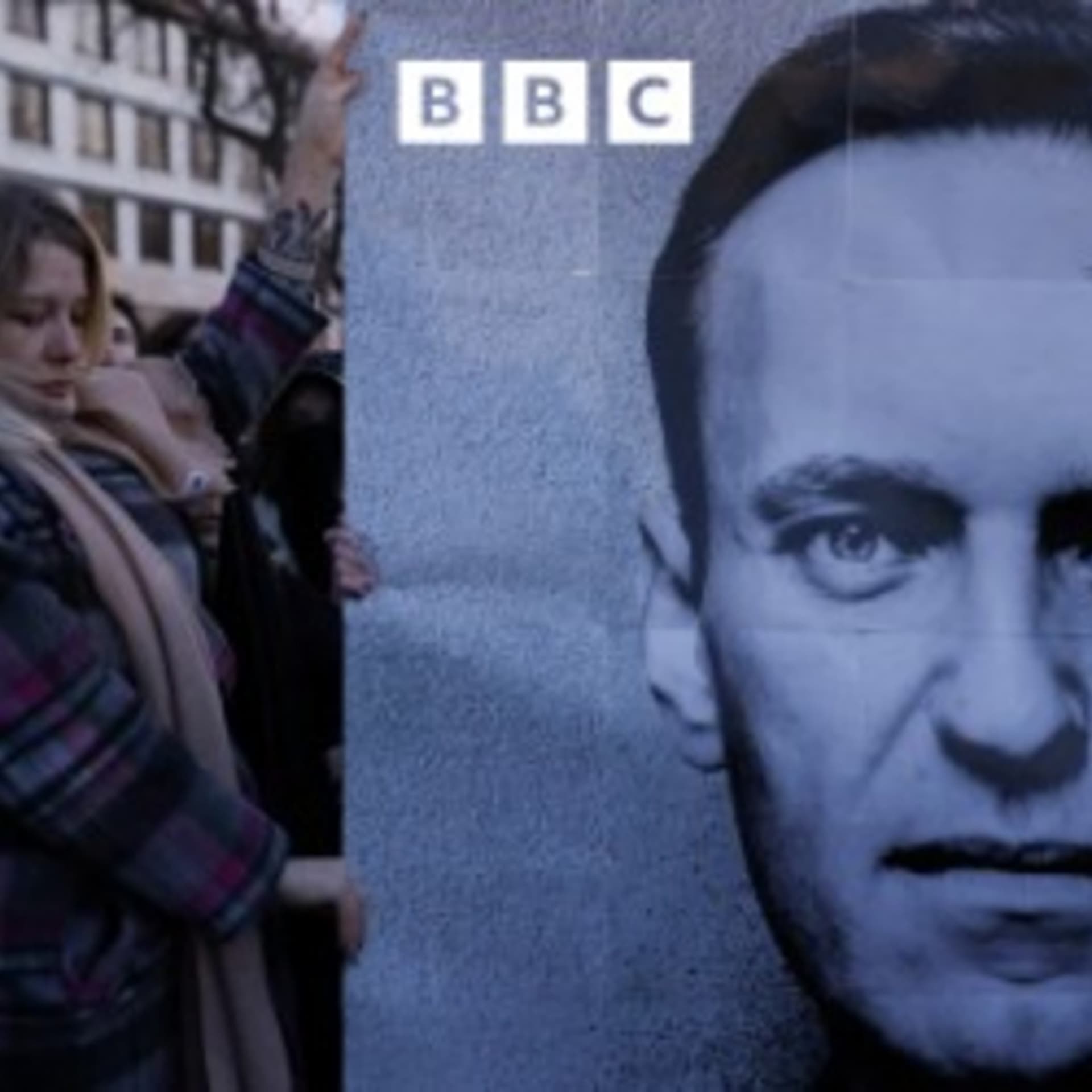
Russia 'used frog toxin' to kill Alexei Navalny Release Date: February 15, 2023 Host: Paul Moss
Overview This episode discusses the recent findings regarding the poisoning of Russian opposition leader Alexei Navalny, who died in prison two years ago. The episode covers various global issues such as geopolitical tensions, protests against the Iranian government, Venezuela's political prisoners, and recent discoveries in paleontology.
---
Key Topics and Discussions
- Navalny's Poisoning
- Accusations Against Russia: European countries reveal Navalny was poisoned with epibatidine, a toxin found in Ecuadorian dart frogs.
- Kremlin's Denial: The Kremlin refutes claims, insisting the accusation is a distraction from Western problems.
- Expert Insights:
- Sergei Guriev: Claims that the evidence points to Vladimir Putin's involvement—"only Russia had the means, motive, and opportunity."
- Dr. Rebecca Tarvin: Discusses the rarity and synthetic possibilities of epibatidine, impacting the credibility of the Kremlin's denial.
- U.S.-Europe Relations at Munich Security Conference
- Marco Rubio's Address: Aims to mend transatlantic ties and emphasizes the importance of the U.S.-Europe relationship.
- Concerns from European Leaders:
- Discontent with past U.S. administrations and the need for Europe to enhance its security measures.
- Proposals for increased American support to pressure Russia regarding Ukraine.
- Global Protests Against Iranian Government
- International Day of Action: Significant protests occur globally, demanding changes to the Iranian regime amidst violent crackdowns on dissent.
- Community Voices: Reports from the Iranian diaspora highlight the call for international support in overthrowing the current regime.
- Hunger Strike by Venezuelan Political Prisoners' Families
- Political Prisoner Advocacy: Families of political prisoners engage in hunger strikes to demand their release, highlighting their innocence in opposition to the Maduro regime.
- Carmen Ortez's Story: Shares the plight of her mother, Xiomara Ortez, who faces mistreatment in detention.
- Decline in U.S. Tourism
- Visitor Numbers: A significant drop of 4.5 million visitors expected in 2026 due to travel restrictions, political backlash, and rising prices.
- Impact on Businesses: Local businesses express concerns over the declining tourism and its effects on their operations.
- Cuba's Cigar Festival Postponed
- Economic Challenges: The cigar festival’s postponement is attributed to a deepening energy crisis caused by U.S. embargoes.
- Healthcare Concerns: Rolling blackouts severely impact healthcare services in Cuba.
- Paleontological Discoveries in Costa Rica
- Fossil Findings: Remains of giant sloths and mastodons discovered, sparking interest in prehistoric biodiversity in tropical regions.
- Importance of Discoveries: These findings fill gaps in knowledge about Ice Age fauna and their interactions with early humans.
- Prison Gardening Program in the UK
- Innovative Rehabilitation: A prison initiative teaches inmates gardening, aiming to reduce recidivism through vocational training.
- Personal Accounts: Inmates share transformative experiences and the therapeutic benefits of engaging with nature.
---
Key Takeaways
- The evidence surrounding Navalny's poisoning reinforces long-standing suspicions regarding the Kremlin’s involvement in political violence.
- Diplomatic efforts are ongoing to restore U.S.-European relations while addressing security concerns regarding Russia and geopolitical stability.
- Global protests against oppressive regimes highlight the struggle for human rights and democratic reforms.
- Economic and social challenges in both Venezuela and Cuba illustrate the broader implications of political decisions on national welfare.
- The exploration of ancient fossils opens new avenues for scientific research and tourism potential in Costa Rica.
---
Contact Information Email: globalpodcast@bbc.co.uk Twitter: @BBCWorldService Hashtag: #globalnewspod
For more in-depth stories, check out the sister podcast, The Global Story, available on all major platforms.
Written by AI. May contain mistakes. Listen to the episode to check what was said.
Chapters
Tap a time to open that second in VOHosts Introduction
0:36 to 1:09
Get to know the hosts and their historical context.
“We explore what was a terrifying moment in history.”
Main Stories Overview
1:09 to 1:21
Overview of the main stories covered in this episode.
“This is the Global News Podcast from the BBC World Service.”
Navalny's Murder Details
1:21 to 2:10
Discussion on the circumstances of Navalny's suspected murder.
“Russia has been accused of murdering the opposition leader Alexei Navalny, using a rare toxin originally found in a South American frog.”
Evidence of Poisoning
2:10 to 3:36
Exploring the evidence surrounding Navalny's poisoning.
“Tests have shown that Russia's most famous opposition leader, Alexei Navalny, was poisoned.”
Toxicologist Insights
3:36 to 6:06
Insights from a toxicologist on the effects of epibatidine.
“In fact, the Kremlin is still denying it was responsible for Alexei Navalny's death.”
Synthetic vs Natural Toxin
6:06 to 6:50
Discussion on the synthetic version of epibatidine and its implications.
“And I'm just wondering, as a toxicologist, does this narrow the possibilities of how it was gathered?”
US Secretary of State's Address
6:50 to 8:09
Analysis of the US Secretary of State's speech at the Munich Conference.
“Is Marco Rubio trying to make friends with Europe again?”
Ukrainian Conflict Discussion
8:09 to 10:33
Discussion about the ongoing Ukraine conflict and Russia's role.
“Kaya Callas was seen as being in the latter camp.”
Protests Against Iranian Government
10:33 to 12:55
Coverage of international protests against the Iranian regime.
“While world leaders gathered for the Munich Security Conference, protesters nearby banged drums and chanted for the overthrow of the Iranian government.”
Political Prisoners in Venezuela
12:55 to 14:01
Discussion on the plight of political prisoners in Venezuela.
“the country released a number of political prisoners.”
Show all 18 chapters
Carmen's Fight for Political Prisoners
14:01 to 15:00
Carmen shares her concerns about the amnesty bill and political prisoners.
“On Friday, 17 more political detainees were freed.”
Prison Gardening Initiative
15:13 to 15:52
Exploring a new gardening scheme in British prisons to help inmates.
“It's learning to garden, which could help to stop inmates re-offending.”
The Global Story and Historical Moments
16:00 to 16:48
Discussion on the Cuban Missile Crisis and its historical implications.
“We explore what was a terrifying moment in history.”
Impact of Travel Restrictions in the U.S.
16:49 to 20:03
Analysis of declining visitor numbers to the U.S. and contributing factors.
“Every weekday, we'll bring you a story from this intersection, where the world and America meet.”
Cuba's Cigar Festival Postponed
20:06 to 21:37
Insight into the postponement of Cuba's cigar festival amid an energy crisis.
“Politics aside, you probably think of salsa music, but also cigars.”
Discovery of Ice Age Mammals in Costa Rica
21:38 to 25:28
Paleontologists discuss the significance of discovering ancient mammals.
“but sometimes ancient and extinct mammals can be just as interesting, not to mention being strange enough to impress those of us who aren't experts.”
Gardening as Rehabilitation in Prisons
25:32 to 28:05
An innovative approach to preventing re-offending through gardening.
“How do you ensure prisoners aren't released, only to return to a life of crime and end up back inside?”
Mary's Journey in the Polytunnel
28:05 to 28:41
Learn about Mary's growth journey and her aspirations for the future.
“I won't be growing anything else there because getting the roots of potatoes out is...”
Transcript
Automatic transcript. May contain errors.0:00This BBC podcast is supported by ads outside the UK. How are weight loss drugs changing our world? In the span of just a few short years, weight loss jabs have become so prevalent in our culture that they've transformed the way we live, move and eat. Restaurants are serving smaller portions and there's more protein rich food in grocery stores. Does all of this speak to a renewed obsession with skinniness? Listen to The Global Story on BBC.com or wherever you get your podcasts.
0:35I am Nina Khrushcheva, the great-granddaughter of Nikita Khrushchev, the leader of the Soviet Union in 1962. And I'm Max Kennedy, the nephew of U.S. President John F. Kennedy. We explore what was a terrifying moment in history. The story of the Cuban Missile Crisis. How close the world came to nuclear war. And what they had to do to pull it back from the brink. The bomb, Kennedy and Khrushchev. All episodes available now, wherever you get your BBC podcasts.
1:09This is the Global News Podcast from the BBC World Service. I'm Paul Moss, and in the early hours of Sunday, the 15th of February, these are our main stories. Russia has been accused of murdering the opposition leader Alexei Navalny, using a rare toxin originally found in a South American frog. We hear about US attempts at the Munich Security Conference to heal wounds in the transatlantic relationship. And why are visitor numbers to the United States significantly lower? Also in this podcast, demands for all of Venezuela's political prisoners to be released. The political prisoners are innocent.
1:52They have no crime. The crime is to be opposition. So they don't really need amnesty for this. They just need to be released. And newly discovered remains of massive ancient mammals, which once roamed what is now Costa Rica.
2:10It was hardly a great shock. Tests have shown that Russia's most famous opposition leader, Alexei Navalny, was poisoned. Mr. Navalny died in prison two years ago, with the Moscow authorities insisting natural causes were responsible. But five European countries have now jointly stated that his body had traces of epibatidine. That's a deadly toxin which can be made in a laboratory, though it occurs naturally in an Ecuadorian species of frog. The British Foreign Office said the poison was highly likely to be what killed him, and that only Russia had the means, motive and opportunity to deploy it.
2:48Sergei Guriev was a friend of Alexei Navalny, and a fellow critic of President Putin. The news is not unexpected, actually, as some of the ministers announcing the news said, we were not surprised, which is pretty scary. It was very likely that Vladimir Putin killed Alexei Navalny. It's just we now have proof coming from five independent sources. So nobody's surprised. It's not the first time when Russia is using illegal chemical weapons against its opponents. So as one of the top global investigative journalists who actually investigated many of those poisonings, Christo Groziv once said, never believe anything until Kremlin denies it.
3:29Kremlin always lies, Kremlin always denies, and we just need to follow the evidence, and the evidence is very clear. Sergei Gureyev. In fact, the Kremlin is still denying it was responsible for Alexei Navalny's death. A spokesman said today's announcement was a planted story designed to distract from the West's problems. But murder by poison is hardly a new allegation to be raised against Moscow. It's been blamed for murdering another dissident, Alexander Litvinenko, with radioactive polonium and using Novichok to try to kill others. But the use of epibatidine seems to be new. It's a substance studied by the biologist Dr Rebecca Tarvin, and she told my colleague Paul Henley what she'd found.
4:12As far as we know, it's only found in one species of frog from Ecuador, and actually that frog doesn't produce it, it acquires it from its diet, and we don't know the the ultimate source of epibetidine. People have tried to adapt it for pharmaceutical use because it was shown that it has analgesic properties, but it turns out that the molecule has such broad, non-specific effects on the body that it causes vomiting and other side effects that just up until now, there's been no success in either developing epibetidine or related chemicals for pharmaceutical use. Tell us the effect it has on the human body and in essence what would have happened to Alexei Navalny?
4:57It's very hard to say because the data that I'm familiar with is from mice and the mice that are given overdoses of this show a range of symptoms from tremors to paralysis of different limbs or the tail. I don't know that there's been any studies that have resulted in death of humans. All I can say is it has these broad effects on the nervous system, and it could have included things like vomiting, dizziness, paralysis. Now, Russian agents weren't necessarily going through the forests of Ecuador. There is a synthetic version of this drug that is producible. Is that correct? That's right. Yes. So epibetadine, the structure was initially described in the 1990s, and chemists were very excited and created a synthetic pathway right after.
5:50There's no way it would have been found naturally in Russia. It's hard to know. I don't know that people have searched for epibetidine in any animal outside of Ecuador or in Russia, for example. But as far as I'm aware, it's only known from this frog in Ecuador. And I'm just wondering, as a toxicologist, does this narrow the possibilities of how it was gathered? Do you think it makes it more or less likely that the Russians use this? In these frogs from Ecuador, the average quantity of toxin is about one microgram, which is quite small. And the amount that is dangerous to humans is probably orders of magnitude higher.
6:31So probably something around half a gram. So in order to collect enough frogs, at least the ones from Ecuador, you're talking hundreds of frogs. So it would be a lot of work, I think. Dr. Rebecca Tarvin from the University of California. Is Marco Rubio trying to make friends with Europe again? The US Secretary of State addressed the high-profile Munich Security Conference on Saturday, and he certainly had a more emollient tone than we've sometimes heard from the current administration in Washington. The US and Europe belonged together, he said. He wanted to revitalise their historic alliance. And yet you could miss one of Donald Trump's pet themes punching through.
7:16His insistence that Europe must do more to take care of its own security. We want Europe to be strong. We believe that Europe must survive. Because the two great wars of the last century serve as history's constant reminder that ultimately our destiny is and will always be intertwined with yours. Because we know...
7:47Because we know that the fate of Europe will never be irrelevant to our own. European leaders remain divided on how to deal with Donald Trump's administration. After he threatened to take over Greenland, some insisted it was still best to work with the US president and his cabinet colleagues, while others argued it was time for Europe to accept it no longer had the US as an ally. Kaya Callas was seen as being in the latter camp. The European Union's foreign policy chief said last month that Europe was no longer Washington's primary centre of gravity. And yet, when she talked to my colleague Frank Gardner, it seemed that today's speech by Marco Rubio had somewhat reassured her.
8:30The Europeans sighed with relief because it was saying that Europe is important, Europe is good, Europe and America are very intertwined and good allies and have been for so long time and will be in the future. There's a but, though, isn't there? Well, I think right now, I mean, everybody is taking this very positive side of it, that clearly the American public is seeing Europe as biggest ally. So, you know, I think Secretary of State Rubio was also giving this speech, giving this assurance that this is the way it is. It's equally important for the American public as it is for the European public.
9:12But, you know, it is also clear that we have different concerns and we also need those concerns to be heard. It wasn't exactly a speech without some pretty tough messages for Europe. But let's talk about Ukraine, because you've been very forward-leaning about this. as Europe's top diplomat, it must be immensely frustrating for you to see Steve Witkoff, the US presidential envoy, going to Moscow time and time again and not going to Ukraine. We would definitely want to see more pressure on the Russian side, because if you want a quick win, of course, it's a quick win if the victim just surrenders and gives everything that the aggressor once, but it is not a formula for long-term peace.
10:00There will be a pause where the aggressor can get its act together again and then move on with a bigger force. We have seen in the past, so that's why we have been focusing on really on the problem side. So who started this war is Russia, who is continuing this war even when Ukraine has agreed to unconditional ceasefire a year ago already, it is Russia. That's why we would also like to see more pressure from the American side on the Russia. Kaya Callas in Munich talking to my colleague Frank Gardner. While world leaders gathered for the Munich Security Conference, protesters nearby banged drums and chanted for the overthrow of the Iranian government.
10:45Thousands of people are known to have been killed in a brutal crackdown on protests by the Iranian authorities last month. On an international day of action called for by the exiled son of Iran's last Shah, the Iranian diaspora took to the streets in cities around the world, including Toronto. People just want their basic human rights. We're not asking for much, but every time there's an uprising, it's like getting worse and worse and they're killing more people. Our voice is very clear. We want to change this dictator regime because terrorism has started with Islamic regime of Iran. Sounds from Canada and there were also rallies across the border.
11:25Kashir Junaidi from the BBC Persian service sent this report from the US. Los Angeles and California are the base for a biggest Iranian diaspora community. But people not only from California, from other parts of the US had came, travelled to Los Angeles to participate in this rally, which was formed according to an invitation by the former Crown Prince Reza Panadi. And on the contrary of the balmy weather here, we had similar numbers reported in Toronto. More than 300 ,000 people also gathered in Toronto, as well as close to similar numbers in Munich. And I have to mention, these are the biggest, so far, the biggest gatherings of Iranian opposition outside of the country since the victory of the Islamic Revolution in the past 47 years.
12:12I don't remember witnessing similar crowds. And I have to say that this was named the International Day of Action by the former Crown Prince, Reza Pahlavi, calling on the international community to support the Iranians topple the regime in Tehran. And the people here I talked to, they were voicing their support for the former Crown Prince as well for the protesters who were brutally confronted by the security in Iran last month. And they were also demanding international assistance for those Iranians who want to remove the regime and establish a form of democratic government in Iran. Kasia Janady.
12:54After Venezuela's president, Nicolas Maduro, was seized by US forces, the country released a number of political prisoners. Critics suggested this was purely cosmetic. an attempt to persuade Washington that a new kind of administration was in charge. Certainly there are many people still behind bars in Venezuela who insist they're there purely because they opposed the Caracas government. And now some of their relatives have gone on hunger strike. Our reporter Mimi Suabi has been speaking to Carmen Ortez. Her mother is among those being held. Xiomara Ortez, a well-known community and opposition activist, was detained by the Maduro government in October last year for opposing the regime.
13:36Her daughter Carmen said her mother had been mistreated and tortured during her detention. My mum is currently arrested in my city, in one police station. She was initially in a place, kind of a torture place, where she was beating. They were putting back in her head. She was also beating in her leg, in her ribs, in her stomach. It was a really bad situation. My mom is 63 years old. They got no mercy with her. On Friday, 17 more political detainees were freed. Yet this week, a vote on a wider amnesty bill, which promises to trigger the mass release of political prisoners, has been postponed, so disagreements within the government can be resolved.
14:19But Carmen told me she is sceptical the amnesty bill will ever be passed. It's not true, you know. They are just selling this to the social media, but they are delaying this another week more. They want to forgive to people who commit a crime, but actually most of the political prisoners are innocent. They have no crime. The crime is to be opposition. So they don't really need amnesty for this. They just need to be released because many people were released before, but they are just delaying this release one by one to give the feeling of the releasing political prisoners. But it's not true. It's not happening.
14:57Carmen's message to her mother is that she's proud of her and that she'll keep fighting for her until she is free. Mimi Swaby.
15:07Still to come in this podcast, we report on a new scheme at a prison here in Britain. We're providing them with an opportunity to say, right, you're a rock bomb. This is your chance to redevelop. It's learning to garden, which could help to stop inmates re-offending.
15:29How are weight loss drugs changing our world? In the span of just a few short years, weight loss jabs have become so prevalent in our culture that they've transformed the way we live, move and eat. Restaurants are serving smaller portions and there's more protein-rich food in grocery stores. Does all of this speak to a renewed obsession with skinniness? Listen to The Global Story on BBC.com or wherever you get your podcasts.
15:59I am Nina Khrushcheva, the great-granddaughter of Nikita Khrushchev, the leader of the Soviet Union in 1962. And I'm Max Kennedy, the nephew of U.S. President John F. Kennedy. We explore what was a terrifying moment in history. The story of the Cuban Missile Crisis. How close the world came to nuclear war. And what they had to do to pull it back from the brink. The bomb, Kennedy and Khrushchev. All episodes available now, wherever you get your BBC podcasts. America is changing. And so is the world. But what's happening in America isn't just a cause of global upheaval. It's also a symptom of disruption that's happening everywhere.
16:43I'm Asma Khalid in Washington, D.C. I'm Tristan Redman in London. And this is The Global Story. Every weekday, we'll bring you a story from this intersection, where the world and America meet. Listen on BBC.com or wherever you get your podcasts.
17:19Songs are like children. They're with you forever. The interview from the BBC World Service. Listen now wherever you get your BBC podcasts.
17:372026 was meant to be a big year for travel to the United States, with the Men's Football World Cup in the summer and celebrations to mark 250 years of independence. But in fact, visitor numbers are already down, with 4.5 million fewer international visits expected this year compared to 2024. And that's from just about everywhere in the world. It's been blamed on increased travel restrictions, uncertainty at the border, rising prices, and also a backlash against President Trump's policies. Here's Rahul Jain, a government official in New York City. Unfortunately, there's been a decent amount of will there or won't they on a number of travel-related, immigration-related items.
18:20We know that there's a list of 75 countries in which visas may not be granted. Brazil is one of those countries. That's a top 10 spender in the city and state. So when countries like that drop out or kind of this friction around, again, getting into the country, obviously we don't expect that to return as quickly. So if we can get to something that's a little more stable in terms of immigration and tariff policy, that might help folks feel comfortable coming over. With a 9 % drop in visitors to the state of California last year, many business owners there are increasingly concerned about whether they'll survive the downturn.
18:54People like Damien Blackshaw, who runs the Real Los Angeles Tour Company. Obviously, what's been happening over the last year has had a massive impact on us here in the US. the early part of the year, we were really growing very quickly. And by April, we were looking at sort of being three to four times busier over the whole year than we were the year before. But then almost really on the day that the announcement of tariffs came out and so on, you sort of went from getting two to three bookings a day to getting a booking every two to three days. It was so dramatic. 50 % of our guests are from the US and the other 50%, more or less, are from everywhere else.
19:35You just can't replace 50 % of your clientele. I've seen other companies shut down, bike shops and so on. I am a little bit hopeful. So one sort of bright light in the sky, if you like, is the World Cup and then the Olympics here in 2028. Luckily, I've started a company in London. It's turned out to be, you know, almost like a lifeline, really. If I hadn't branched out into other cities, I just don't know whether we'd be able to keep going, to be honest. Damien Blackshaw in Los Angeles. What do you associate with Cuba? Politics aside, you probably think of salsa music, but also cigars. In fact, Cuba's annual cigar festival is a major feature of the country's calendar, not to mention being a rather big money earner.
20:21But this year's event has been postponed because of the country's deepening energy crisis caused by US attempts to stop oil getting to the island. Our Central America correspondent Will Grant has the story. The indefinite postponement of one of the highlights in the international cigar aficionado's calendar was almost inevitable. The island is struggling to keep the lights on in every sense. There are rolling blackouts in the capital Havana which last up to 18 hours a day. Hospitals are only accepting emergency cases and the UN says it is extremely worried over the threat the energy crisis poses to the island's stricken healthcare system.
20:59The idea of holding a lavish fare only accessible to the country's elites and wealthy foreign visitors in that environment would have likely been poorly received by those who are struggling to survive. Moreover, the authorities would have found the event very challenging to host. Airplanes cannot refuel in Havana, prompting some carriers to suspend flights to the island. There is also insufficient fuel to ferry the tourists to the island's tobacco fields and factories, a key part of the event. And the expensive gala dinner, culminating in an auction for high-end tobacco products, could well have been plunged into darkness amid the power cuts.
21:36Will Grant. People usually get excited about discovering dinosaur fossils, but sometimes ancient and extinct mammals can be just as interesting, not to mention being strange enough to impress those of us who aren't experts. In Costa Rica, they've dug up the remains of two mammals, a giant sloth and an elephant-like mastodon. Emily Lindsay is a paleontologist at a museum in California which houses the world's largest collection of Ice Age fossils. She explained why this discovery is so important. There have been discoveries of large mammals from the Ice Age in Costa Rica before, but they're relatively rare because the environmental conditions in these tropical, wet regions tend to not be conducive to the preservation of fossils.
22:28Everything from heat and UV light to the acidic rainforest soils can tend to decompose fossils. And there traditionally has not been a great deal of investment in paleontological exploration and research in this region. And so it's exciting and an opportunity to fill in some gaps in our knowledge of the ice age of Central America. So were these accidental discoveries? Were they in exactly the same place? These are two species that are quite often found together. These were probably the largest animals living on the landscape at this time. And so their bones, just by being large and robust, are more likely to preserve and be discovered.
23:11But they also appear to have preferred similar types of habitats and probably eaten similar types of foods. Tell us about these creatures. What did they look like? How did they behave? These are two very different, very distantly related creatures. One is a gonfothyr of the genus Cuvironius. And these would look very much like elephants today, but they're actually quite distantly related. They're separated by about 20 million years of evolution. But they are, you know, very large, four-legged animals. They have long trunks. They have tusks like modern elephants do today. And the other was a ground sloth, similar looking to a sloth that we know today.
23:51But how much bigger? Well, somewhat similar looking, but these sloths were thousands of pounds. These were actually the size of modern African elephants. So just enormous sloths. They obviously didn't live in trees. They would have walked on the ground, but they do share many features in common, similar types of teeth and vertebrae and, you know, long tails. They also, it seems, tended to go about in groups. They may have been social animals. We often find their bones in large accumulations. They also seem to have had an affinity for the water. They're often found in sort of wet areas. They shared their habitat with early humans, which might have been part of the problem when it came to their extinction, right?
24:37Right. So humans entered the Americas towards the end of the Ice Age. And that's a time when you have massive numbers of these very, very large animals. And within a few thousand years, just about all of these large animals disappear. And this is part of a wave of extinctions that we see happening around the world as human populations are growing and spreading. How significant might these fossil discoveries be for modern day Costa Rica, which is very much on the tourist trail? It sounds like, from what I've read, that they are planning on exhibiting these fossils in the National Museum. But I think it could be another exciting thing for tourists to experience when they come to Costa Rica is to see, you know, real fossils of these extremely large, really interesting animals.
25:27Paleontologist Emily Lindsay talking to my colleague Paul Henley. How do you stop criminals from constantly re-offending? How do you ensure prisoners aren't released, only to return to a life of crime and end up back inside? It's a challenge faced by penal systems around the world, including in Britain. Here, one jail's been trying out an innovative approach, giving inmates a glimpse of a different way of life by teaching them how to garden. Peter Goffin has been to see how the programme works, and I should say that the prisoners' names in this report have been changed. It's a chilly afternoon in the English countryside, but I'm protected from the elements in this polytunnel, a kind of greenhouse made of plastic sheeting.
Read the full transcript
26:13Mary is giving me the grand tour. The last time I put in there was green peppers, aubergines, marrow. You could forget, almost, for a moment, that all of this is happening behind the walls of a women's prison. Mary is serving a sentence here. HMP Send, near London, gives inmates the option of working in ornamental and vegetable gardens on site. And it hosts a scheme run by a charity called The Clink that helps prisoners gain professional qualifications in horticulture. Steve Head is the garden manager for the program. We are rebuilding an individual. We are helping them see that this is probably what will be the worst place they're going to be.
26:59And we're providing them with an opportunity to say, right, you're a rock bomb. This is your chance to rebuild and to redevelop. That training, having a vocation and being employable, can mean the difference between leading a successful life after prison and returning to a life of crime. Data from the UK shows that people who found work within six weeks of being released were 50 % less likely to re-offend. We have a lot of individuals in this estate who have mental health issues, They've recovered from addiction. They've been subject to physical, mental, sexual abuse. Our program with the clink, and in particular in clink gardens, we're using horticulture as a therapy.
27:40Students take part in classroom lessons and get hands-on experience designing, planting, tending and harvesting their own gardens. I just remember doing my first lettuce where I'd done it from seed. It grew and I was so happy. Susan has already completed her qualifications with the clink. I think the program is a brilliant idea because I've come down here broken. With the help, support and for your mental health, to be out in the open is a brilliant thing to do. Yeah, it's my potato area. I won't be growing anything else there because getting the roots of potatoes out is... Mary is responsible for everything that grows in this polytunnel, one of 15 at Send.
28:25She's still working towards her qualifications, but she's already thinking about the future. It's certainly a stepping stone for you. I cannot go back to what I was, and this is my way forward. And that report was by Peter Goffin. And that's all from us for now. If you want to get in touch, you can email us at globalpodcast at bbc.co.uk. You can also find us on X at BBC World Service. Use the hashtag hashglobalnewspod. And don't forget about our sister podcast, The Global Story, which goes in-depth and beyond the headlines on One Big Story, available wherever you get your podcasts. This edition of The Global News Podcast was mixed by Martin Baker.
29:13The editor is Karen Martin. I'm Paul Moss. Until next time, goodbye.
29:25How are weight loss drugs changing our world? In the span of just a few short years, weight loss jabs have become so prevalent in our culture that they've transformed the way we live, move and eat. Restaurants are serving smaller portions and there's more protein-rich food in grocery stores. Does all of this speak to a renewed obsession with skinniness? Listen to The Global Story on BBC.com or wherever you get your podcasts. Thank you.
From the publisher
European countries say tests show Russia's Alexei Navalny was poisoned with a substance developed from a toxin found in Ecuadorian dart frogs. But the Kremlin denies killing the opposition leader. Also: Marco Rubio delivers a softer line to America's European allies at the Munich Security Conference; there are more global protests against the Iranian government; families of Venezuelan political prisoners go on hunger strike; the "Trump slump" affects US tourism; Cuba's cigar festival is snuffed out; palaeontologists discover giant sloth and elephant-like mastodon fossils; and we visit the British inmates learning how to garden.
The Global News Podcast brings you the breaking news you need to hear, as it happens. Listen for the latest headlines and current affairs from around the world. Politics, economics, climate, business, technology, health – we cover it all with expert analysis and insight. Get the news that matters, delivered twice a day on weekdays and daily at weekends, plus special bonus episodes reacting to urgent breaking stories. Follow or subscribe now and never miss a moment. Get in touch: globalpodcast@bbc.co.uk