
In short
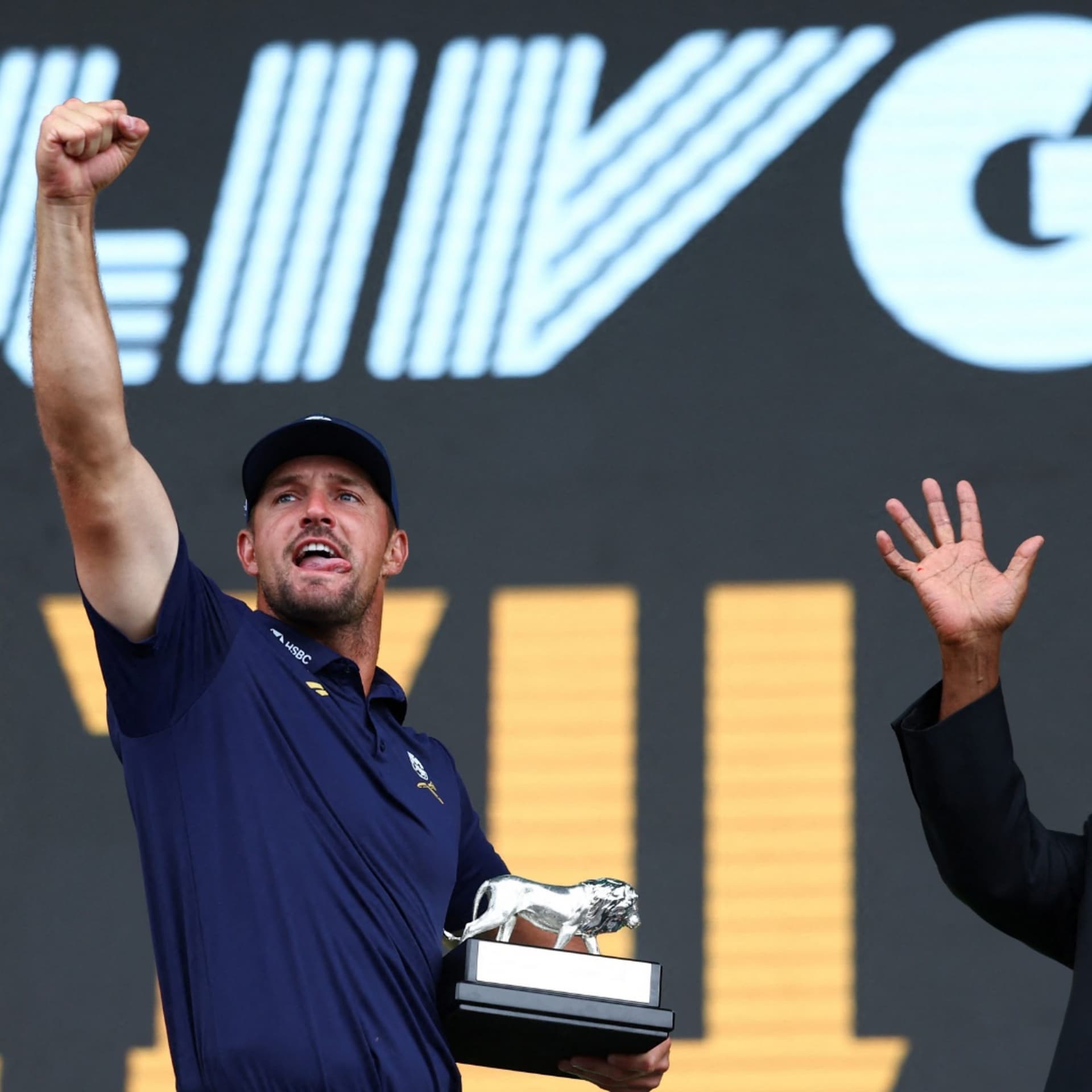
This BBC Global News Podcast episode covers multiple stories. Main topic: Saudi Arabia will stop funding LIV Golf at the end of the season. LIV, launched as a breakaway from the PGA Tour with billions to lure stars (John Rahm, Phil Mickelson, Bryson DeChambeau), is said to have failed to “cut through” on TV and broaden audiences, despite strong atmospheres in places like South Africa and Australia. Key claim: Saudi “sports washing” via Vision 2030 is being recalibrated because projects are too expensive and deliver insufficient returns; some major architecture and resorts are paused. Another factor: regional instability affecting event planning, plus ongoing human-rights concerns. Notable example: reports of agents trying to get players back to PGA/DP World Tour.
Guests/experts
Ian Carter (golf correspondent); Sebastian Usher (Middle East analyst); Paul Moss (global affairs reporter); Yolande Nell (Jerusalem correspondent); Chris Vallance (technology reporter); Christina Criddle (Financial Times, in court); Laura Bicker (China correspondent); Carl Harper (historian); Matt Lyons (sports reporter).
Written by AI. May contain mistakes. Listen to the episode to check what was said.
Chapters
Tap a time to open that second in VOSaudi Arabia's Withdrawal from LIV Golf
1:42 to 2:20
Saudi Arabia will stop funding the LIV Golf Tour at the season's end.
“Saudi Arabia is to stop funding the Live Golf Tour at the end of the season.”
Analysis of LIV Golf's Impact
2:20 to 4:21
Exploration of LIV Golf's formation, challenges, and future prospects.
“Also in this podcast, we hear about workers in Kenya who allege they had to view distressing images captured by Meta smart glasses.”
Saudi Investment Strategy Reevaluation
4:21 to 6:38
Discussion of Saudi Arabia's broader investments and the impact of human rights.
“Sebastian Usher is our Middle East analyst.”
US Troop Presence in Germany
6:38 to 10:10
Examination of the implications of potential US troop withdrawals from Germany.
“the golf players, the footballers all have to face some kind of condemnation for going to play there or to work for the Saudis.”
Israeli Military Interception of Aid Flotilla
10:10 to 13:20
Details on the interception of aid boats heading to Gaza by Israel's military.
“Pro-Palestinian activists say a group of more than 50 boats carrying aid to Gaza were intercepted by the Israeli military in international waters near Greece.”
Meta's Controversial AI Training Practices
13:20 to 14:01
Investigation into allegations against Meta regarding graphic content reviews.
“You can use them to take photos, video, and you can get Meta's AI to answer questions about what is captured.”
Meta's Content Moderation Challenges
14:01 to 15:00
Learn about the challenges faced by Meta regarding content moderation and staff safety.
“by the glasses, that that was something they occasionally encountered.”
Elon Musk's Legal Battle with OpenAI
15:00 to 17:48
Explore the details of Elon Musk's trial against OpenAI and its implications.
“I spoke to one person a while ago, he said he felt doing this work, he'd lost his humanity.”
Musk's Allegations and Trial Outcomes
17:48 to 21:16
Understand Musk's allegations in the trial and what he hopes to achieve.
“So it definitely was a moment and basically the trial centers on Musk's allegation that he was deceived into donating roughly 38 million to OpenAI under the premise that it would remain a nonprofit.”
Drones in China: New Regulatory Challenges
21:16 to 25:05
Learn about new restrictions on drone usage in China and their impacts.
“If he loses, Musk was very inflammatory this morning where he said that it would basically cause the American charity system to fall apart, that it would set a precedent in case law for anybody to loot a charity.”
Show all 15 chapters
Reassessing the Fall of the Roman Empire
25:05 to 28:06
Discover new insights into the gradual integration of barbarian tribes in the Roman Empire.
“The collapse of the mighty Roman Empire in AD 476 may have not been as swift and dramatic as once thought.”
Exploring the Evolution of Sports in the Digital Age
28:06 to 29:06
Learn how social media is reshaping the landscape of sports and fan engagement.
“If you draw a line on a map and say that's where the frontier was, by the later Roman period, that's not a very reliable indicator of where civilization stopped and barbarism began.”
The Rise of Shorter Sports Formats
29:06 to 30:19
Discover new, faster sporting formats designed to capture attention in a digital world.
“We've got a brand new football league that's changing the game.”
The Influence of Celebrities and Gamification
30:19 to 31:29
Explore the role of influencers and gamification in attracting younger sports fans.
“It started in boxing with YouTubers getting in the ring to battle it out against each other.”
Sustainability vs. Trend: The Future of New Sports Formats
31:29 to 32:21
Evaluate whether new sporting trends can achieve long-term sustainability and substance.
“Peter Moore is the former CEO of Liverpool FC and a man who knows a thing or two about innovation and attracting younger audiences from his time as head of EA Sports and overseeing Xbox at Microsoft.”
Transcript
Automatic transcript. May contain errors.0:00This BBC podcast is supported by ads outside the UK.
0:30Get a load of this guy. Ketchup. On a dog. Yeah, we've got thoughts. Because nothing here gets built without conversation. Nothing moves without connection. So, if you think you know AT &T, it might be time to rethink that. Because their network has improved. Like, a lot. Which means Chicagoans can keep speaking their mind with the top-rated fiber internet in the city. Chicago won't stop talking. Our improved network backs it up. AT &T. Connecting changes everything. AT &T Fiber limited availability in select areas. Top rated and fastest internet. AT &T Fiber based on analysis by Ooclops. Speechless intelligence data to age 2025.
1:05Can a royal visit help fix the so-called special relationship between the US and the UK? This week, King Charles is visiting America, but it's a tense moment for the US and the UK. I'm Tristan Redman. And I'm Asma Khaled. And we host the Global Story podcast from the BBC. We speak to the former British ambassador to the United States who knows a thing or two about getting on the wrong side of President Trump. For more, listen to The Global Story on BBC.com or wherever you get your podcasts. This is the Global News Podcast from the BBC World Service. Hello, I'm Ankur Desai and at 15 Hours GMT on Thursday the 30th of April, these are our main stories.
1:48Saudi Arabia is to stop funding the Live Golf Tour at the end of the season. Liv was formed as a breakaway from the long-standing PGA Tour, with billions of dollars offered to lure top players. President Trump has said his administration is considering reducing troops from Germany, appearing to be in retaliation for some critical comments by the German Chancellor Friedrich Metz. Pro-Palestinian activists say a flotilla of boats carrying aid to Gaza has been intercepted by the Israeli military in international waters near Greece. Also in this podcast, we hear about workers in Kenya who allege they had to view distressing images captured by Meta smart glasses.
2:30Sometimes people employed in doing this work encounter extremely graphic content. One person said he felt doing this work, he'd lost his humanity. And? Any idea that the Roman Empire creates a really impermeable frontier that holds its own and then all of a sudden breaks down and gives way to a wave of barbarians isn't credible. A study reveals the collapse of the Roman Empire may not have been as swift and dramatic as once thought.
3:03It was supposed to be a game changer for the game of golf as we knew it. But five years since its launch, is the Saudi investment bubble in the sport set to burst? Saudi Arabia is to stop funding the Live Golf Tour at the end of the season. Live was formed as a breakaway from the long-standing PGA Tour, offering billions to tempt away some leading players in the sport. The tour features some of the biggest names, including John Rahm, Phil Mickelson and Bryson DeChambeau. And with millions invested across other sports, could this be the start of a snowball effect? Our golf correspondent Ian Carter is following the story.
3:37The big problem as far as Liv is concerned is that it has failed to really cut through in a broadcast sense in terms of attracting a wider audience. It has had successful tournaments, particularly in South Africa and Australia, in terms of people turning up to watch and creating a great atmosphere. But it hasn't delivered really on its stated aim of revolutionising the game of golf and the way that it is consumed by people at home. As for the players, we're hearing reports of a number of agents trying to contact the established tours, the PGA Tour and the DP World Tour, to try to find a pathway back for those players to compete there.
4:17Now, how that works out is going to be really fascinating. So why have the Saudis lost interest? Sebastian Usher is our Middle East analyst. I think partly what we were just hearing there, that this hasn't been the big hit that the Saudis wanted it to be. And that's what the Saudis are after. I mean, we've seen it with boxing, we've seen it with wrestling, we've seen it with motor racing, gaming. All of these events now taking place in Riyadh, the capital of Saudi Arabia, huge global events, attracting big audiences, recalibrating not just for sports, but the image of Saudi Arabia. That's been the big thing.
4:50And that's been achieved to some extent. Critics call it sports washing because of Saudi Arabia's human rights record. But from a Saudi perspective, it was trying to reorient the image of a country, its future, a thing called Vision 2030 under the crown prince, Mohammed bin Salman. But I think there has been a recalibration, an assessment and an admission by Saudi authorities that some of these projects aren't really working out. They've become too expensive. They're too pie in the sky. That's going beyond sport. that's looking at these extraordinary sort of sci-fi architectural ventures like The Line, The Cube, which have all been put on hold.
5:27There was a big skiing alpine resort that was being built. Now there is snow in Saudi Arabia, but only for about four or five days a year. That's also being curbed. So it's really looking at the practical side of where the money should go and getting as much return as possible. The investment that they hoped to get for those projects wasn't coming in either. And could the shadow of the conflict in the Middle East also play a role in this in terms of an impact further down the line? I think so, because I mean, these big events taking place in Saudi Arabia, for example, and they need to be in a zone that is relatively stable.
6:00And that has been now knocked sideways. We've seen several high profile events having to be cancelled in Saudi Arabia and in the UAE. So that's a big knock on effect. And, you know, another key element that Saudi Arabia is still focusing on is on tourism. Now, it's been successful to a degree with internal tourism, Saudi spending their money in Saudi Arabia rather than abroad. But aside from the big events and, of course, the pilgrimage every year for Hajj, it hasn't really broken through. So I think that is playing a part as well. Also, as I mentioned, the human rights issues, the shadow that hung over MBS for years over the killing of Jamal Khashoggi, that's dissipated to some extent.
6:38But there's still an issue about that. the golf players, the footballers all have to face some kind of condemnation for going to play there or to work for the Saudis. Sebastian Usher with that assessment. Next, relations between the US and Germany are being tested over the war in Iran. In the last few days, President Trump and Chancellor Meirz have criticised each other for their stance towards Tehran. In his latest social media post, Mr Trump announced that he was considering reducing the number of US soldiers posted in Germany. Mr. Meertz has responded by calling for a reliable transatlantic partnership.
7:13Our global affairs reporter, Paul Moss, told me why there are so many US troops in Germany in the first place. This actually dates back to the Second World War when American troops came to help fight Nazi Germany. But when that conflict ended, it was followed immediately by the Cold War. Germany, of course, the front line between the communist East and the democratic West. At one point, there were half a million American troops in Europe. Now, the end of the Cold War raised the question of why those troops were still there. And in a sense, that question never really went away. But no one has raised that question more than Donald Trump and indeed, the like minded politicians around him.
7:51I mean, last year, his self styled Secretary of War, Pete Hegseth, warned the deployment of American troops in Europe would not last forever. So in a sense, there's nothing terribly new, except that Donald Trump at the moment really is very angry with other NATO countries for as he sees it failing to help the United States in its war with Iran. He's particularly angry, though, at Germany's Chancellor, Mr. Mertz, who said that Iran was currently humiliating the United States in Iran, hence his renewed threat to pull troops out. And what exactly has Chancellor Mertz said about that threat to pull them out?
8:26Well, he was speaking today while he was watching an army exercise, and everyone was waiting with bated breath to see how he would respond to what Donald Trump said. In fact, he didn't address the threat directly. But as you said, he talked about the importance of a reliable transatlantic partnership. And he said that this partnership was important for him personally. And it should be remembered that Friedrich Mertz really means this. He's a man who spent a lot of time in the United States. Unlike a lot of chancellors, he speaks perfect English. He was chairman for 10 years of an organization called the Atlantic Bridge, which brings together American and European politicians.
9:00However, I think that kind of experience and inclination really doesn't cut much ice with Donald Trump. He tends to react to what he sees as provocations, and hence his latest threat. Now, what would it mean for the US if they did pull their troops out of Germany and more so for the future of their relationship? I mean, it would be really huge. I mean, on a practical level, these are the American troops closest to Russia. If there ever were a conflict in Europe, it would be a lot harder to airlift troops from Texas rather than having them wait against Stuttgart or Wiesbaden. Now, Now, no one expects that conflict on land anytime soon, but I think psychologically it would raise again doubts about whether the United States really was committed to NATO and to NATO's key idea that if one nation is attacked, the others will all come to the rescue.
9:46That has already been doubted. Pulling troops out of Germany certainly would. It would, of course, also make Vladimir Putin very happy indeed. I think we'd hear him laughing all around the Kremlin. That said, we shouldn't get too excited. as I've suggested. We have seen these threats before. At the same time, Donald Trump is, sometimes some people say, impulsive. You never know what he's going to do. Paul Moss reporting. Pro-Palestinian activists say a group of more than 50 boats carrying aid to Gaza were intercepted by the Israeli military in international waters near Greece.
10:23The organisers of the trip, the Global Sumed Flotilla, called it illegal, posting footage on X of those on board surrounded and they say they were threatened at gunpoint. Israel says more than 175 people were detained in the operation. I got more details from our correspondent in Jerusalem, Yolande Nell. This is a departure from past protocol where the Israeli Navy intercepted these boats in this flotilla bound for Gaza, deep in international waters, far from the Gaza coast, about 600 nautical miles away, or 1 ,000 kilometres, actually close to the Greek island of Crete. The Israeli foreign ministry is saying on X that 175 activists from more than 20 boats are now, quote, making their way peacefully to Israel.
11:07It's not clear what happens to the other vessels because we understand there are 58 vessels in this flotilla. They set sail some of them from Spain two weeks ago. Others joined from France and also from Italy. And there are activists on board with all different nationalities. The global Samud flotilla is calling this an act of piracy. Israel. It says it jammed communications, abducted civilians and set a lawless precedent in international waters. The Israeli military has been saying that it enforces the naval blockade of Gaza and insists that that is legal. The Israeli foreign ministry is the one that is really commenting here, though, and is accusing the activists who are on this flotilla of being in hands with Hamas and with the aim, they say, of sabotaging President Trump's peace plan and divert attention from Hamas's refusal to disarm in Gaza.
11:59They're insisting that Gaza has been flooded with aid since the ceasefire came into force last October. That is a description that humanitarian organisations would take issue with. And Yolande, this isn't the first time something like this has happened in recent months. No, so actually the Global Samud Flotilla itself had a flotilla of boats back in October that were setting sail for Gaza trying to break the blockade and that was at a time before the ceasefire came into force, a time of a very high tension. That got a lot of media focus. At that point, the Swedish activist Greta Thunberg was on board.
12:33This time, there has been sort of less focus on this flotilla, but it is an extremely large one. And they are making accusations against Israel saying they're deporting people having brought them against their will to Israel. And it does flag up lots of international law issues that the defence Israel has, it seems to say, basically using counter-terrorism laws to justify this. Yolanda reporting from Jerusalem. The technology giant Meta is under pressure to explain why it cancelled a major contract with the company it was using to train AI after some workers alleged they had to view graphic content captured by Meta smart glasses.
13:12The claims were made by some Kenya-based employees of the firm Sama. Our senior technology reporter Chris Vallance has been investigating and spoke to Christian Fraser. This concerns Meta's smart glasses. You can use them to take photos, video, and you can get Meta's AI to answer questions about what is captured. Particularly useful if you're partially sighted, for example, it'll tell you about some of the things that you've seen. Now, in February, in a major scoop, two Swedish newspapers spoke to workers based in Kenya at Meta's subcontractor, SAMA. They were working on improving and training AI.
13:50And they said as part of their work, they'd been asked to review footage captured by the smart glasses. And that included sometimes footage of users on the toilet, users having sex, and also intimate footage of other people that were being captured by the glasses, that that was something they occasionally encountered. Now, Meta said in In response, at the time, that material was private, unless users chose to share it, staff might sometimes review AI content to improve customer experience, which he said was a common industry practice, and this was made clear in its terms of service. So, SAMR has lost the contract.
14:29What does that mean for the workers at the company? Well, about two months later, it became clear that the contract had been cancelled, and SAMA said as a result it was going to make redundant 1 ,108 staff. Meta said this was because SAMA's work was substandard. SAMA said, well, this was news to them as far as they were concerned. They had met the standards that Meta had set. But, you know, really we haven't been able to find out what not meeting Meta's standards meant. Some Kenyan workers' organisations say, really the failure of standards they allege was that workers had spoken out and that was what meta really objected to in a much more generic sense chris and maybe beyond ai in terms of content moderation is there a safeguarding issue here for the workers that are doing this those that are annotating data or those who are training the ai well i mean we talk a lot don't we about the billionaires at the top of the tech industry of course there are whole loads of people and many in outsourced jobs around the world, on whose backs some of those billions are made.
15:37And yes, occasionally, and we have reported on this, and indeed, in Kenya, there is ongoing legal action around this, that sometimes people employed in doing this work encounter extremely graphic content, very disturbing content. I spoke to one person a while ago, he said he felt doing this work, he'd lost his humanity. And then there is a safeguarding issue, I think, for sure, in terms of the employees' safety and mental health. I mean, SAMR say they've put a lot of effort into that. Some of their workers have disagreed. BBC Technology reporter Chris Fallance. Still to come in this podcast, traditional sports are having a makeover to attract younger audiences.
16:20Oh my goodness me! He's won a million dollars! Shorter, sharper and more action-packed. But will it last? These peripheral sports that we're seeing now, they need to have that substance and that longevity. So you've got them year after year. They can't come in and disappear.
16:58And I'm Asma Khalid, and we host the Global Story podcast from the BBC. We speak to the former British ambassador to the United States, who knows a thing or two about getting on the wrong side of President Trump. For more, listen to the Global Story on BBC.com or wherever you get your podcasts. This is the Global News podcast. Next to the ongoing legal battle between two of the world's largest technology firms in a California courtroom. Elon Musk is suing his former friend and co-founder of OpenAI, Sam Altman. Mr. Musk accuses him of abandoning the company's non-profit mission. Mr. Musk has been testifying for a second day.
17:40Christina Criddle is a technology reporter at the Financial Times and was in court. Rob Young asked her what she made of Mr. Musk's performance. This is the first time I've heard him talk at this length in person. So it definitely was a moment and basically the trial centers on Musk's allegation that he was deceived into donating roughly 38 million to OpenAI under the premise that it would remain a nonprofit. And today he called it stealing a charity. Yesterday, his lawyer kind of likened it to having a museum with a gift shop where you wouldn't have a museum gift shop sell Picassos and pocket the profit.
18:17That's the analogy that he used. And then today we saw Elon in cross-examination where OpenAI's lawyer was trying to get him to answer very narrow yes or no questions. And Musk was basically refusing to do so, finding ways out of it, asking for clarification and really pushing back. I mean, at one point he said, your questions are not simple. They're designed to trick me, essentially, and I need to give longer answers because a simple answer would be misleading the jury. and he even used the example of if you ask the question have you stopped beating your wife I can't just answer yes or no and so they were really having this back and forth.
18:56So it got quite tetchy then. Did he persuade the jury in your assessment? What was his performance like? I can't really speak to what the jury thinks but he definitely was able to get his point across in his cross-examination without really giving too much away or giving any howlers that made me think, oh, he maybe shouldn't have said that. So he really made his point very clearly and then didn't really answer the questions where he could have been on the hook for something, at least in my view. We've still got to hear from the boss of OpenAI and the head of Microsoft, which is a large shareholder in OpenAI later on in the trial.
19:34What does Elon Musk want from this case? Yeah, exactly. So we still have to hear from lots more people in this trial. Musk was the first person to take the stand. And so naturally we're hearing lots of his arguments for why he's bringing this case. And we need to hear everybody else's arguments in defence as well. Musk is arguing that OpenAI was founded as a non-profit, which is true, with this mission of ensuring that AI benefits all of humanity. And he's arguing that when he donated this money, he believed it would remain a non-profit. And that by creating this hugely valuable for-profit entity now, which is worth over$850 billion, it's one of the most valuable companies in the world, Musk argues that that means that it's not going to be as focused on its mission of ensuring that AI benefits all of humanity, because instead it's going to be focused on profits.
20:29And so what is potentially at stake in the trial? So if Musk wins, he's pushing for OpenAI to unwind its for-profit, which would make it very hard for OpenAI to then IPO, as it plans to do very soon. He's arguing that he should be having over£130 billion in damages, but he actually said that he wouldn't take that himself. He would donate it to OpenAI's charitable arm. So I think he's saying that to give himself a bit of coverage as well. He's not trying to enrich himself, or at least he's saying he will donate the money. And he's also called for chief executive of OpenAI Sam Altman and OpenAI's president Greg Brockman to be removed from their executive positions.
21:14So that's if Musk wins. If he loses, Musk was very inflammatory this morning where he said that it would basically cause the American charity system to fall apart, that it would set a precedent in case law for anybody to loot a charity. Technology reporter Christina Criddle. For more on what the outcome of the trial could mean for the future of the AI industry, catch up with our technology reporter Mark Chislak on our YouTube channel. Search for BBC News on YouTube and you'll find Global News Podcast in the podcast section. And there's a news story available every weekday. China may be one of the world's largest producers of drones, but actually flying them in the country is set to become much harder.
21:59From today, new restrictions are being brought in, limiting the sale of drones and requiring permits for those who want to fly them. I found out more from our China correspondent, Laura Bicker. If you go to a Chinese tourist site, maybe the Avatar Mountains in Zhangjiajie or you go to Huashan Mountain near Xi 'an, you will hear that familiar buzzing noise above your head as tourists try to get the kind of social media picture and portrait on a drone. And I think, you know, when it comes to the reasons behind this, it has been the fact that drones are becoming more and more popular in Chinese society.
22:39But also, the Chinese government will be eager to track them, to trace them, to know who's flying them, where and when. And just why are they clamping down exactly? No one's given any specific reason. So the Ministry of Public Security has said this is for security and safety reasons. But there's no doubt this is going to hit China's biggest drone supplier, drone maker, DGI, hugely. Here in Beijing, for instance, there's a total ban on all flights. Now, it's already difficult to fly a drone or any kind of aircraft in Beijing. But now there's a total ban on even bringing in drones or components for drones from outside the city.
23:19And there is footage from many of the DGI shops, this famous drone maker, across Beijing. and there is not a single drone in their shop. Outside of Beijing, the restrictions are a little bit easier, but still you have to go to the police station. You have to register with your ID. You have to take a special course to say that you'll be a responsible citizen. You have to download software in order that the authorities can track every single flight in real time. So it makes it even more difficult for anyone to fly a drone. I think the other thing is you can apply for permission, but we're hearing online anecdotally from social media users that even getting permission to fly the drone days in advance is very, very difficult.
24:04And will there be any exceptions? You mentioned earlier people wanted to take that magical photo or video. What about tourists? If they come to visit, would they have to turn up with some sort of a permit or apply for one when they're there? I think you can apply for one, but I think the chances of you getting one, it might be still difficult. No one really knows exactly how this will play out. If you're looking at a major tourist site, will you be able to fly there? And I think that's very, very uncertain right now. I think in terms of where we are with Chinese restrictions, once they put it in place, it's very difficult to even go near the grey area.
24:39There will be people patrolling. And we've already heard from people who are switching on their drones and already getting visits from the police to check that they're complying with the regulations. There are exceptions if the size of the drone, for instance, and of course, if there are areas on the map that are green or white, then you are able to fly them to a certain height. But outside of that, and particular here in the capital, it will be very, very difficult. Laura Bicker reporting from Beijing. The collapse of the mighty Roman Empire in AD 476 may have not been as swift and dramatic as once thought.
25:15That's according to a new German study. It suggests that barbarians' tribes gradually integrated over time rather than overrunning Roman territory. Researchers analysed the DNA of more than 200 individuals buried in cemeteries in southern Germany, starting from about the year 450 CE. They found their genomes pointed to a melting pot of soldiers, farmers and barbarians instead of a single mass migration event from northern Europe. Tim Franks asked Carl Harper, historian at the University of Oklahoma, for his assessment of the study. There's a really exciting new frontier for those of us who work in history and archaeology.
25:55And what this new study does is add another piece of the puzzle that helps us see that any idea that the Roman Empire creates a really impermeable frontier that holds its own until sometime, you know, after 400. and then all of a sudden breaks down and gives way to a wave of barbarians isn't credible. So in other words, scientific backup to theories of history that you and others have been positing for some time, and that sort of end the idea of neat compartmentalization of history, which is so attractive and so misleading. I suppose there are still questions, though, over why and how people from barbarian tribes did spread across Western Europe.
Read the full transcript
26:37Right. And I think that this paper belongs to a wave of studies over the last few years that do indicate that there was a lot of migration. People were moving around. It's just that a lot of that migration predates the breakdown of the frontier. And this does include people from northern Europe who probably speak an ancestor of the German language who are coming into the Roman world. Many of them are probably very highly Romanized. Many of them probably are Romans and certainly probably think of themselves as Romans before the frontier itself collapses. And so it's another reminder that the Roman Empire itself moves people around and creates mechanisms for migration long before the frontier falls.
27:19Do you think that part of the issue here is the word barbarian conjures such sort of pejorative overtones of sort of uncouth, uncultured, aggressive, almost unhygienic, that it lends itself to the idea that they must have been so distinct from the Roman Empire? That's what the Romans want you to believe, I think. So that stereotype goes back a long way. And it's certainly true that there are important cultural and technological and social differences in the way people are living on one part of Europe or another. But those change and those in many ways converge. And by the later Roman period, it can sometimes be amazing how similar culturally and socially people were on what we may think of.
28:06If you draw a line on a map and say that's where the frontier was, by the later Roman period, that's not a very reliable indicator of where civilization stopped and barbarism began. And the genetic studies just give us this amazing new insight on it that's almost from the ground up. And what this paper does is even reconstruct kind of the family history. And you can see people intermarrying. And that's what's so powerful about the human genome is you can retrace the family dynamics down to the individual level. And you can see people who have different ancestry marrying. Kyle Harper of the University of Oklahoma.
28:41Clicks and views, the modern age of social media and sport, they seemingly go hand in hand. In recent years, the world of sport is being reshaped, with new formats emerging for quick, shareable moments online. From influencers managing sports teams to bite-sized versions of traditional games, like three-a-side football, more sports are fighting for the attention of younger fans. But is it working and is it bringing in the money? Matt Lyons has been taking a look. What is Borough League anyway? All right. We've got a brand new football league that's changing the game. Borough League is coming to the UK.
29:14The best part of hockey is going global. Introducing the Three Ice World Cup. From football to ice hockey, cricket to basketball, sports all around the world are now rolling out new, faster, more action-packed versions of their games, all designed to be shorter, sharper and hard to ignore. One of the newest of these formats is Tennis' One Point Slam, an event at the Australian Open where professionals and amateurs play in matches of a single point, with the winner going home with one million Australian dollars. Oh my goodness me! He's won a million dollars! Lawrence Robertson is the tournament director of the event.
29:51We've completely outperformed all of the metrics we set ourselves in terms of community reach, domestic audience reach. As we sit here now in March with nine months to go until next year's Australian Open, we're already in fairly advanced talks with brands and partners about who want to get involved with the one-point slams. And it's not just about shortening the game and making them ideal for TikTok or Instagram. It's also getting names involved who have big social media followings. It started in boxing with YouTubers getting in the ring to battle it out against each other. And now it's moved to football with the Baller League, a six-a-side football tournament pitting non-professionals against each other in 30-minute games.
30:31With the teams managed by the likes of former Premier League greats Alan Shearer and Ian Wright, There's also a host of influencers and YouTubers involved, including KSI and Angry Ginge. Felix Stark is the CEO of the Borla League. Of course, our audience is younger than the Premier League's audience and 80 % of our viewing is between 20 and 35. That's our biggest chunk of audience. Maybe the Premier League right now is losing audience year in, year out, and we're gaining audience year in, year out. I asked Chris Beer, senior data journalist at GWI, to take a look at the numbers for me to see if these formats are attracting new audiences.
31:03Fans of Borla League, Kings League, These are almost all football fans. So I wouldn't say that this is getting new people into the sport, but serving an existing audience in a new way. But is this all just a flash-in-the-pan trend, or does it have a long-term future? I think it's probably necessary innovations as to what they are. If you want to attract a younger audience, you've maybe got to do it in a different way. And the gamification of the experience, which maybe I'm responsible for in my past life, I don't know. Peter Moore is the former CEO of Liverpool FC and a man who knows a thing or two about innovation and attracting younger audiences from his time as head of EA Sports and overseeing Xbox at Microsoft.
31:43Look, if they're built for just clicks, they'll fade and die. Traditional sports are multi-generational. My dad was a red. My granddad was a red in Liverpool. Thank goodness. I had no choice, right? I'm a red. These peripheral sports that we're seeing now, they need to have that substance and that longevity and that sustainability. So you've got them year after year. They can't come in and disappear. You'd like to think some of these shorter formats are going to be around in 10 years, but I'm not sure. Because it just feels sometimes like they're built to be controversial and they're built for TikTok.
32:16They're built for clicks and engagement and they're not built for sustainability and substance. Matt Lyons reporting. And that's all from us for now. If you want to get in touch, you can email us at globalpodcast at bbc.co.uk. And don't forget our sister podcast. It's called The Global Story, which goes in depth and beyond the headlines on one big story. This edition of the Global News Podcast was mixed by Rosenwin Durrell and the producers were Niki Verrico and Oliver Berlau. The editor is Karen Martin and I'm Ankur Desai. Until next time, goodbye.
32:56Can a royal visit help fix the so-called special relationship between the US and the UK? This week, King Charles is visiting America, but it's a tense moment for the US and the UK. I'm Tristan Redman. And I'm Asma Khaled. And we host the Global Story podcast from the BBC. We speak to the former British ambassador to the United States, who knows a thing or two about getting on the wrong side of President Trump. For more, listen to The Global Story on BBC.com or wherever you get your podcasts.
From the publisher
Saudi Arabia will withdraw its multi-billion dollar backing of LIV Golf at the end of the season, plunging the future of the series into further doubt. LIV was formed as a breakaway from the longstanding PGA tour, offering large sums to lure away some of golf's top players. The move was always seen as controversial - human rights groups accused Saudi Arabia of using sports sponsorship to distract from its poor human rights record. LIV says it hopes to attract new sponsors, though it's not clear who might be able to match the billions which Saudi Arabia's oil wealth had made available. Also: Relations between the US and Germany are tested over the war in Iran as President Trump and Chancellor Merz criticise one another; pro-Palestinian activists say at least 22 boats from a flotilla carrying aid for Gaza have been intercepted by Israeli forces in international waters near the Greek island of Crete; China introduces new restrictions on the use of drones, which include a near- total ban on flying them in Beijing; and a DNA study offers new clues on the fall of Ancient Rome.
The Global News Podcast brings you the breaking news you need to hear, as it happens. Listen for the latest headlines and current affairs from around the world. Politics, economics, climate, business, technology, health – we cover it all with expert analysis and insight. Get the news that matters, delivered twice a day on weekdays and daily at weekends, plus special bonus episodes reacting to urgent breaking stories. Follow or subscribe now and never miss a moment. Get in touch: globalpodcast@bbc.co.uk



