
In short
BBC “Stateside with Kai and Carter” episode spanning multiple stories; main segment accuses Shell of knowingly continuing Nigeria pipeline operations despite internal evidence of widespread pollution.
Key claims
secret documents show Shell executives discussed risks to local people/environment yet chose not to shut down a major pipeline; Shell argued spills were mainly caused by oil theft/illegal refining, but “Project Madrid” allegedly mapped leaks and pollution from Shell operations and considered continued production.
Notable examples
2012 sign-off to keep a pipeline pumping for two more years despite not meeting technical standards; 2013 email warning an audit would fail; Project Madrid estimating 100 illegal refineries polluting 9,000 hectares water and 9,000 hectares land; slide asking if executives were comfortable continuing production knowing further environmental damage would occur.
Guests
none in this Shell segment; hosts Kai Wright and Carter Sherman; reporting by Simijola Osho (Nigeria).
Written by AI. May contain mistakes. Listen to the episode to check what was said.
Chapters
Tap a time to open that second in VOShell's Pollution in Nigeria
1:29 to 2:07
Discussion on Shell's operations and pollution in Nigeria.
“that critics said could give payouts to rioters who attack the US capital.”
Impact of Shell's Operations
2:07 to 4:21
Local voices share the impact of Shell's pollution on their livelihoods.
“even though bosses knew it was causing widespread pollution, according to secret internal documents obtained by the BBC.”
Internal Documents and Accountability
4:21 to 5:48
Revelation of Shell's internal documents regarding pollution and accountability.
“A 2013 email chain reveals Shell's then-General Manager for Onshore Assets warned colleagues an audit of Shell's operations in the country would fail.”
Legal and Environmental Context
5:48 to 7:14
The broader environmental and legal context of Shell's operations in Nigeria.
“River is our farm, but now there is no way for us again.”
Political Setbacks for Trump
7:14 to 11:03
Analysis of recent political setbacks for Donald Trump and funding issues.
“Now, they're hoping this case brings answers and accountability.”
Microsoft's Quantum Chip Breakthrough
11:03 to 12:18
Microsoft announces a new quantum chip that promises significant advancements.
“Microsoft has announced a new quantum chip that it says is a thousand times more reliable than its predecessor.”
New Cancer Drug Breakthrough
12:18 to 14:01
Discussion of a promising new cancer drug and its mechanisms.
“Scientists say the pill, known as GRWD5769, caused tumours to shrink by at least 30 % across six different cancers, including cervical, bladder and specific types of lung and bowel cancer.”
Insights on Cancer Drug Trials
14:01 to 15:55
Learn about the effectiveness and future potential of a newly developed cancer drug.
“And that switching the immune system on and off seems to be quite effective because you avoid the cells becoming exhausted.”
Introduction to Stateside Podcast
17:20 to 17:50
Discover the new show Stateside focusing on current events with fresh perspectives.
“Welcome to Stateside with Kai and Carter.”
AI Regulation and Executive Orders
17:51 to 22:24
Examine the implications of the US executive order on AI regulation.
“As artificial intelligence gets into more corners of society, the question of who will regulate it is becoming increasingly pressing.”
Show all 14 chapters
Conflict in Lebanon and Israel
22:25 to 26:10
Understand the ongoing tensions between Israel and Hezbollah amid a ceasefire.
“Israel and the Lebanese militia Hezbollah have continued to exchange fire, forcing people in South Lebanon to flee or seek shelter.”
Police Controversy in the UK
26:11 to 28:01
Delve into the serious issues surrounding police conduct in a tragic case.
“What everybody here says is needed is a long-term negotiated truce between Israel, Lebanon and Hezbollah.”
Debate on Policing and Racial Justice
28:01 to 29:46
Explore the complexities and reactions surrounding a recent police incident in Britain.
“And basically he died as they were handcuffing him.”
Uncovering Secrets of Ötzi the Iceman
29:46 to 31:35
Learn about new findings regarding the ancient bacteria found in Ötzi's body.
“Finally, scientists studying the body of Ertse, the Iceman, who lived more than 5 ,000 years ago, have obtained a detailed picture of the ancient bugs living on and inside his body.”
Transcript
Automatic transcript. May contain errors.0:00This BBC podcast is supported by ads outside the UK.
0:30with clear research-backed insights. No jargon, no misinformation. Make your next financial move with confidence. Follow NerdWallet's Smart Money podcast on your favorite podcast app. I'm Kai Wright. I'm Carter Sherman. Welcome to Stateside with Kai and Carter. We're a new show from The Guardian. We're talking to big thinkers and the best journalists just trying to understand the world through smart conversation and honest reporting. We don't have billionaires telling us what to say. Stateside with Kai and Carter will come out three times a week, Monday, Wednesday and Friday starting May 13th.
1:01Subscribe on YouTube or wherever you get your podcasts.
1:28The Trump administration scraps plans for a$1.8 billion fund that critics said could give payouts to rioters who attack the US capital. And Microsoft says its new quantum computing chip is a thousand times more reliable than its predecessor. Also in the podcast... This new drug actually switches up proteins on the cancer surface so that the immune system can now see the cancer and can then destroy the cancer cells. The pill which has been shown to shrink tumours in six types of cancer.
2:06But first, the British oil giant Shell continued to operate a major pipeline in Nigeria, even though bosses knew it was causing widespread pollution, according to secret internal documents obtained by the BBC. Exchanges between senior executives disclosed during a legal case showed they understood the risks posed by one of the firm's main pipelines to both the local people and the environment, yet chose not to shut it down. Shell has always argued that pollution in the Niger Delta was caused by the theft and illegal refining of oil taken from the pipeline. Our Africa correspondent Simijola Osho reports from Billy.
2:45Decaying and dead mangroves along the banks of creeks are among the most visible signs of the legacy of oil giant Shell here in Bile, where families survived on fishing for generations, like 64-year-old Balafama Bruce, who says oil spills over the last decade have made it increasingly difficult. Before 211, here is a beautiful area. People play here, go to the river here. The pollution has caused me that I have stopped my restaurant business. Because of that, I've become poor. So what do you do now? I eat from hand to mouth. Shell's pipeline that runs near Bilay pumped up to 150 ,000 barrels a day.
3:28It's a part of the country blighted by attacks and organised theft of oil, including hundreds of illegal refineries, many of which caused pollution. The way Shell handled their operation is under the spotlight. And now documents obtained by the BBC show the company kept pumping, despite knowing it was causing widespread pollution. One internal document from 2012 shows how Shell executives signed off to keep a Nigeria pipeline pumping for another two years, even though it didn't meet its usual technical standards. They are not concerned about what happened to you. Their concern is continuous to make profit.
4:10That's Chief Bomadapa, the spokesperson for the Bile Kingdom Chiefs Council. All that has happened in this environment is as a result of negligence. They don't care. A 2013 email chain reveals Shell's then-General Manager for Onshore Assets warned colleagues an audit of Shell's operations in the country would fail. The following month, Shell executives launched a confidential working group codenamed Project Madrid. It unmasked the scale of the oil leaks. 100 illegal refineries polluting 9 ,000 hectares of water and 9 ,000 hectares of land. Shell says its decisions were based on complex factors like security and the environment, and that it cleaned up spills regardless of the cause.
5:01Shell has blamed oil spills here on theft from its pipelines. But the Project Madrid file showed that bosses were considering carrying on pumping from its pipeline, like the one that runs through here, even though they knew it would cause more pollution. One slide in the project posed a stark question. Are we comfortable to continue production knowing that further environmental damage will occur? A spokesperson for Shell told the BBC the documents selected are presented without the critical context of the operating environment in the Niger Delta at the time. He said, in isolation, they do not reflect the challenges of working against the backdrop of widespread organized criminality.
5:48River is our farm, but now there is no way for us again. Periwinkle harvester, 49-year-old Tami Nobuten-Philip, says pollution has transformed the creeks where she once worked. Because when you go to the bush, you will not see Periwinkle again. and the other is like crude. Some places when you go, you will perceive gas. They are collecting our oil every blessed day, but without benefits. Her sentiments are echoed by Chief Bomadapo. Who might not even know the damage it has caused us in terms of health. Who don't have farmland, who are surrendered by a river. Our people's means of livelihood is gone.
6:31I'm back in Lagos, Nigeria's commercial hub. For decades, oil has driven this country's economy, bringing in billions for both Nigeria and the international companies operating here. Shell has repeatedly said pollution in the Niger Delta is largely driven by oil theft, a major issue in the region, with experts once estimating around 100 ,000 barrels a day were being stolen. The company is defending its position. But for the people I met, the impact of spills is visible in their daily lives, in the water, the land and their livelihoods. Now, they're hoping this case brings answers and accountability.
7:20That report from Nigeria by Simit Jolasha. After facing limited pushback in the first year of his second presidency, Donald Trump has suffered a string of defeats in recent months over his tariffs, his planned White House ballroom and his attempt to add his name to the Kennedy Center. Through it all, he's been able to count on the support of Republicans in Congress. Now, however, senators from his party have forced President Trump to back down over his$1.8 billion so-called anti-weaponisation fund, which critics said was a slush fund aimed at giving money to his allies and supporters. including rioters who attacked the Capitol on January 6th.
8:02The climb down was announced by acting US Attorney General Todd Blanche at a congressional hearing. The reasons for the fund is something that President Trump talked about for a long time, which is the fact that there were a lot of people in this country who had their government weaponized against them. The reasons for the fund, I think, remain as important as they were before, but we are not moving forward with the fund. Our North America correspondent, Peter Bowes, told me more. The fund was part of a legal settlement linked to Donald Trump's claims that government agencies had mishandled his confidential tax records.
8:36Now, during negotiations to resolve that dispute, the administration proposed creating a fund worth, as you said, nearly$1.8 billion. The idea was that people who believed that they had been unfairly investigated, prosecutors or otherwise targeted by the federal government could apply for compensation. Supporters of this move described it as a way to compensate victims of what they described as government weaponisation. OK, supporters, but there was quite a lot of criticism and even normally loyal Republicans joined in. What was it that they couldn't stomach about this? Yes, opposition from both Republicans and Democrats.
9:17Republican senators argued that the fund was too broad and that it was unclear who would qualify for compensation. and the particular concern was that people prosecuted over the January the 6th Capitol riot could seek payouts by claiming that they had been unfairly targeted. Democrats were even more critical. They described this proposal as a political slush fund. They argued that taxpayer money could end up benefiting President Trump, his allies, or again, people convicted in connection with January the 6th. Several Democratic senators, in fact, had introduced legislation to try to block the fund.
9:54So faced with bipartisan criticism, the administration has now decided not to go forward with it. However, a separate provision shielding Donald Trump and his family from future scrutiny over their tax affairs will remain in place. Well, with Trump bogged down in Iran on the international front and at home is polling figures continuing to fall, Is there a sense that something has changed after that first year where he seemed invincible? Well, this is certainly a political setback for Donald Trump because it forced him to abandon a high profile initiative after opposition from members of his own party.
10:32But make no mistake, Donald Trump still has a firm grip on the Republican Party across the country. But some in Congress are becoming, I think, more willing to push back when they believe that a policy is politically damaging. This is an election year. The president won't be on the ballot in November himself, but some of the senators who have opposed this will be. And for many of them, I think they're looking at life beyond Donald Trump and the political reality of what it will take for them to stay in office. Peter Bowes in Los Angeles. Microsoft has announced a new quantum chip that it says is a thousand times more reliable than its predecessor.
11:11The firm hopes that Majorana 2 will give it an edge over its competitors when it's released in 2029, as our technology editor Zoe Kleinman explains. The computing power in a quantum machine comes from tiny, delicate units called qubits. They operate in a very fragile state and usually last just a few milliseconds. But Microsoft claims the qubits on its new Majorana 2 chip can survive for 20 seconds, giving them a lot more time to process complex calculations. This has been made possible by substituting aluminium on the chip for lead. Microsoft's using AI in this project, but says the idea came from its human scientists.
11:52The aim is that one day quantum computers will help solve big problems such as how to get rid of microplastics and come up with formulas for new fertilisers to help farmers grow more food. Microsoft says Majorana 2 brings it closer to having a scalable working machine in 2029. This would currently make the tech giant a world leader in the quantum space, unless another company beats them to it. Zoe Kleinman. It might not have a name yet, but a new cancer drug is already showing promising results. Scientists say the pill, known as GRWD5769, caused tumours to shrink by at least 30 % across six different cancers, including cervical, bladder and specific types of lung and bowel cancer.
12:38The findings have been presented at the American Society of Clinical Oncology. Among those testing the treatment was Professor Fiona Thistlethwaite from the Christie Cancer Research Centre here in the UK. She told Evan Davis how it works. We know that our normal healthy cells and the immune cells talk to each other all the time. And one of the ways they do this is the normal cells have proteins on their cell surface that send out signals to the immune system saying, I'm normal, leave me alone. And when a cell becomes cancerous, those proteins change. And what should happen is that the immune cells come along, see this abnormal proteins and kill that cell.
13:17So when someone develops cancer, something's gone wrong with that. The immune cells don't see the cancer. So this new drug actually switches up those proteins on the cancer surface so that the immune system can now see the cancer and can then destroy the cancer cell. So for this trial, what we've done is we've combined that increasing the visibility of the cancer with another drug, a standard immunotherapy drug that boosts up the immune system. So we've got that kind of two-pronged attack, boost the immune system, let it see the cancer more easily. And this is particularly exciting as this therapy seemed to work in some patients, we should stress, not all by any means, but on a wide variety of different cancers.
14:00Yeah, the drug is given, it's a tablet, three weeks on, three weeks off. And that switching the immune system on and off seems to be quite effective because you avoid the cells becoming exhausted. You give them a kind of burst of activity and then they can rest for a bit and then a new burst of activity. So that's the kind of principle behind what we've been doing with this trial. But actually one of the really good things about this drug is it seems to be really well tolerated. So there aren't very many side effects. And I think for the future, that's something that's quite exciting. because it means you can start to potentially think about, could you combine it with different drugs that overcome some of those other mechanisms of resistance?
14:38Now, the drug was developed in Oxford. It's been tested at the Christie Centre in Manchester. What stage would you describe it as at? When does it become available? So this is still the phase one trial. We're seeing really interesting results, but we need to move on to the second phase and then later on to third phase, where you start to treat perhaps hundreds or even thousands of patients. It'll be several years before it becomes hopefully available more widely. So there's still a lot of work to be done. But to have a drug that's showing this much promise this early is really good. Yeah, I mean, it's interesting.
15:12It feels as though this year there's been more going on than perhaps usual. Yeah, I think there's been some really exciting data presented this year. We're starting to really unpick what's happening in cancer. So there's still a long way to go. But we're understanding the biology of what goes wrong and how we can then intervene. So some of the targeted agents are actually attacking cancers where things have gone wrong, where we've really struggled to nail that previously, particularly for things like pancreatic cancer that has been traditionally thought of as a really difficult tumour type to treat.
15:44I think that comes down to understanding the biology of what's going wrong when cancer develops. Professor Fiona Thistlethwaite. And still to come in this podcast... We still find bacteria the Iceman had during his lifetime in his gut, which is very important to compare this maybe to modern gut microbiome. The microbes that have survived inside a body frozen in ice for 5 ,000 years.
16:17We all can agree that housing is expensive. Rent, mortgage, it doesn't matter which one you're paying, it stings every month. But Built can make you feel a little better. Let me explain. Built started out rewarding members on their rent. Now, as of 2026, Built members can also earn points on mortgage payments wherever they live. Every housing payment earns you points you can use toward flights with top travel partners like United & Hyatt, Lyft rides, Amazon.com purchases, and so much more. And here's what you might not expect. Built members can also get access to a neighborhood concierge. It can make restaurant reservations, book fitness classes, and find new local spots, all while being rewarded at more than 45 ,000 merchant partners.
16:59It's like having a personal assistant baked into where you live. It's simple. Being a renter and now owning a home is better with Bilt. Join the membership for where you live at joinbilt.com slash podcasts. That's J-O-I-N-B-I-L-T dot com slash podcasts. Make sure to use our URL so they know we sent you. I'm Kyra. I'm Carter Sherman. Welcome to Stateside with Kai and Carter. We're a new show from The Guardian. We're talking to big thinkers and the best journalists, just trying to understand the world through smart conversation and honest reporting. We don't have billionaires telling us what to say.
17:32Stateside with Kai and Carter will come out three times a week, Monday, Wednesday, and Friday, starting May 13th. Subscribe on YouTube or wherever you get your podcasts.
17:49You're listening to the Global News Podcast. As artificial intelligence gets into more corners of society, the question of who will regulate it is becoming increasingly pressing. The US president, who generally favours a hands-off approach, has now signed an executive order to try to mitigate AI security threats. Under the scheme, firms will be asked to submit their most powerful models for government testing 30 days before they're released to the public. But it's voluntary and the testing window is less than the 90 days originally planned. So what does business make of it? Here's George Conboy of Brighton Securities in New York.
18:27And first, California tech investor Christy Pitts. I do think that the tech companies are receiving this new executive order favourably. Primarily, that's because it is voluntary and the time frame for review is 30 days. So that is much shorter than what was previously put forth. The voluntary aspect of the exec order seems not to bother anybody. It's not going to change a thing. The tech industry is likely to comply just to play nice because they're not being compelled. Nobody's got a gun to their head. Sure, we'll play nice with you. There's no reason not to. Our North America technology correspondent, Lily Jamali, is in San Francisco.
19:04She told me how the new order follows concerns raised by the release of Anthropics model Mythos. The relationship between the Trump administration and Anthropic, which makes Claude, was on the rocks up until Mythos was released a couple of weeks ago. So Mythos is billed as this very powerful AI model. It's really good at finding bugs in software, among other things. So that can be a very powerful thing in the hands of people fighting to protect us from bad cybersecurity actors. It can also be very helpful to those who are hacking and trying to get into these systems. So Anthropic decided to release it only to a certain group of organizations, not to the public.
19:46And I think that's where a lot of this regulation is going to rest with the companies, even after this executive order. You know, they have been this Trump administration has been on a sort of anything goes regulatory path. And Mitho sort of made them reassess that. But this executive order seems pretty symbolic. It's a lot less interventionist than this other executive order that was expected to be signed up until just a few weeks ago before it was scuttled. And what are the advantages of the government having these 30 days to test this stuff? It gives them the chance to touch and feel these tools.
20:23I think when you look at an AI model like Mythos, real organizations, real corporations are actually using it to find bugs in their own software, bugs that have been, in some cases, latent, sitting there for decades in a couple of cases that I've read about. And I think they want to have major agencies in the federal government, like the Department of Defense and the Department of Treasury, to be able to experience these models. But again, I think most of the real work is going to be done by the AI developers themselves, because they're a lot more familiar with how these models work than somebody who works in the Treasury Department, for example.
21:07So I have to think that there's going to be quite a bit of partnership more than sort of a confrontational relationship between the so-called regulators in this case and the companies that they are overseeing. And what does this say about the administration's approach to AI? President Trump loathed to curb America's ambitions, but many Americans are skeptical about it. They really are. And we saw it at these graduation ceremonies where students coming out of college were booing speakers who talked about AI in ways that were favorable, in ways that were almost like, you know, you're going to have to contend with this when you get out into the workforce.
21:49Graduates did not like that very much. And there's also a lot of communities where they're seeing these data centers being built. Many people just don't want them in their neighborhoods, in their communities. This administration has really bought the AI industry line about how important it is for the American industry to compete with China. And I think that's why there really was such a hands-off approach up until very recently. The fact that they're doing this at all shows that mythos has sparked a bit of a shift. That really was an inflection point. Lili Jamali in San Francisco. Israel and the Lebanese militia Hezbollah have continued to exchange fire, forcing people in South Lebanon to flee or seek shelter.
22:33The Lebanese health ministry says at least five people were killed in strikes on Tuesday, including medical staff at a hospital. Israel says it's acting in response to Hezbollah's violations of the ceasefire that was brokered by President Trump in mid-April. And despite the fighting, Lebanese and Israeli envoys have met in Washington for direct talks. Our correspondent Wirra Davis has been to Israel's northern border with Lebanon, an area targeted by Hezbollah rockets. In more peaceful times, this is one of the most beautiful parts of Israel, arguably the entire Middle East. this is the top end of the Hula Valley you can look across at the mountains of the Galan Heights to my left is Lebanon and I'm in the Kibbutz of Miscav Am this place has been hit repeatedly by Hezbollah drones and rockets over the last few years and even though there's meant to be a ceasefire that hasn't brought much peace to places like this but for residents like Alisha Morduk she's sceptical about the hopes of another ceasefire between Israel and Hezbollah.
23:45The term doesn't really mean anything to me because I've been living through a ceasefire for the past two months and it hasn't changed anything. You can hear the drone ahead. We heard the jets this morning. You said even though this is relatively calm, there are still sirens every night. What is it like living here with young kids, especially at night, under this constant threat of attack? I have a child who wakes up to night terrors. The second you wake up, one of us is sprinting over to my three-year-old's room to make sure he doesn't wake up alone to the sound of a siren. It's a lot of actions and mannerisms that you don't even realize that you're picking up.
24:19To say, when you go sit on the sofa after a long day, when the kids are asleep, you're putting your slippers in a specific position so that you can slide them on your feet as you're running to your kids. Things that in my day-to-day, I don't even think I realize how much I've changed my life. life, but it's completely all-consuming. We've now come down to the village of Metula, which is even closer to the Lebanese border. Israel Lishansky's great-grandparents established a hotel here 90 years ago. They were some of the first Jewish pioneers even before the creation of the state, and his family has witnessed many wars here.
24:59If there is a real plan, if there is like a cooperation between Lebanon and Israel against Hezbollah. If there is going to be an agreement that Lebanon and Israel can deal with it, then it might work. But to continue this situation, nothing really will change. It is quite something standing here looking across the Lebanese border, only 300 yards away, looking at those destroyed Lebanese towns of Kafarkila and Adese. In the distance, I can also see the captured Crusader fort of Beaufort and what appears to be an Israeli flag flying above it. Israel says it still has military operations to conclude inside southern Lebanon.
25:54And that is why, despite Donald Trump's declaration of this temporary ceasefire, many people here believe it will not hold. Because as long as Israeli troops continue to occupy and operate inside Lebanon, Hezbollah says it will have a reason and a right to attack Israel. What everybody here says is needed is a long-term negotiated truce between Israel, Lebanon and Hezbollah. Weira Davis reporting from northern Israel. There's been an angry reaction in the UK after police footage was released of a student being put in handcuffs as he lay dying. Henry Novak was falsely accused of racially abusing the man who stabbed him, a British Sikh, Vikram Digwa.
Read the full transcript
26:43He has been jailed for a minimum of 21 years. Protests have taken place in the city of Southampton where the murder happened. In the police footage, Henry Novak can be seen saying, I can't breathe, but police refused to believe he was the victim. His family said his treatment was inhumane and degrading, but added they didn't want his death to cause division. The British Prime Minister, Keir Starmer, said there were searching questions for the police to answer. Our UK correspondent, Rob Watson, spoke to Charlotte Gallagher. This is an immensely serious story, and perhaps some people listening will have looked at some of the footage or maybe they would choose to look at it after hearing us speak.
27:24And I should say, before they do that, it is pretty grim stuff. This happened at the end of last year, December, where a British Sikh man of 23 years, his family had called to say he had been the victim of a racial attack. It was completely the opposite way round. He had murdered an 18-year-old white man called Henry Novak. And essentially what has emerged after a court case in which Vikram Digwar was sentenced to life in prison is this horrendous footage from the police as a body camera showing that the guy was dying of knife wounds. He said he'd been stabbed and that he couldn't breathe, but they handcuffed him.
28:01And basically he died as they were handcuffing him. And exactly the row that's erupted is really where the British policing has swung from being, I'm putting this all very crudely, Charlotte, from being essentially over the years, you know, a bit racist, that you wouldn't get the same kind of justice if you weren't white as if you were white, to going completely the other way. And that is that, you know, the biggest concern the police had in this case and another case, the argument goes is, oh, my goodness, we don't want to be accused of being racist. And all the politicians have piled in. So you've got the prime minister, Keir Starmer, saying it's incredibly important that this should be reviewed properly.
28:37You've got the senior interior minister, Shabana Mahmood, who is of Pakistani heritage, saying we mustn't allow this to have white British people pitted against non-white British people. And then you've got the leader of the populist right of centre reform party, Nigel Farrow, saying that this is clear evidence of two tier policing and that essentially white people are the victims here. And he urged people to have pure cold rage. Do you think this is one of those stories that's going to have knock on consequences? I think it's bound to in the sense that there's going to be an independent review into this incident.
29:16But I think it has sparked a debate about policing in this country and how to avoid having either a form of policing that discriminates against non-white people or discriminates against white people. So I do think there's going to be an awful lot of soul searching amongst the police and the politicians. I mean, the question, it seems to me, Charlotte, is can you do this without, you know, having a horrible political row and making things worse, which is what the government fears. And that was Rob Watson talking to Charlotte Gallagher. Finally, scientists studying the body of Ertse, the Iceman, who lived more than 5 ,000 years ago, have obtained a detailed picture of the ancient bugs living on and inside his body.
30:00And they think some of the microbes may still be alive. The details from Helen Briggs. In 1991, two German hikers discovered a body in the snowy Alps on the border between Austria and Italy. The perfectly preserved 5 ,000-year-old mummy named Ötzi has been kept frozen in a museum ever since. And scientists from the research institute URAC in Bolsano in Italy are slowly unravelling his secrets. Now, a new analysis of tissue and skin samples shows he's not just a frozen relic. His body hosts a complicated mixture of microbes, some of which might still be alive. Dr Frank Meixner told me how this will help us understand how so-called friendly bacteria, important for optimal health, have evolved.
30:52First of all, we see that we still find bacteria the Iceman had during his lifetime in his gut, for example. So this is still present, this information, which is very important to compare this maybe to modern gut microbiome, for example. So we see this presence by analysing their DNA. We have, however, also here still microbes, in this case, fungi, yeast, which we could cultivate. The scientists say these resilient, cold-loving microorganisms which have survived for so long might have future applications in science and industry. And it's important to keep monitoring them carefully to make sure Ötzi's body remains well preserved and is available for future generations to study.
31:35Our science correspondent, Helen Briggs. And that is all from us for now, but the Global News podcast will be back very soon. This edition was mixed by Martin Baker and produced by Paul Day and Stephanie Zacherson. Our editor is Karen Martin. I'm Oliver Conway. Until next time, goodbye. Thank you.
From the publisher
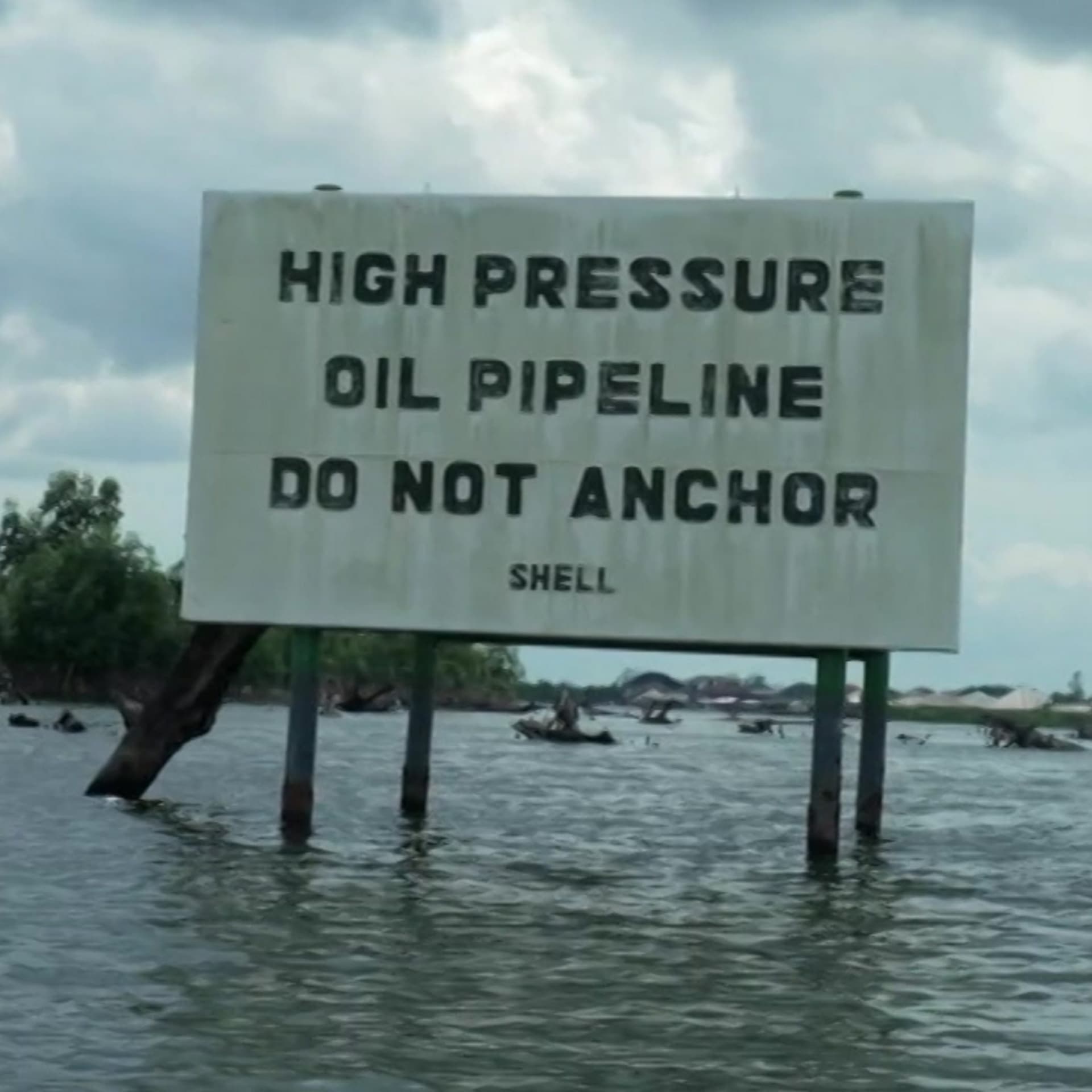
British oil giant Shell continued to operate major pipeline in Nigeria even though bosses knew it was causing widespread pollution, according to secret documents obtained by BBC. Shell has always rejected the accusations, blaming the theft and illegal refining of oil taken from the pipeline. Also: the Trump administration drops plans for a fund to compensate people claiming to be victims of politicised prosecution after a backlash from Republicans; Microsoft announces a new quantum chip that it says is 1,000 times more reliable than its predecessor; promising results for new cancer pill which caused tumours to shrink by at least 30%; anger in the UK following the case of a student who was murdered and falsely accused of racially abusing his attacker; and could microbes still be living in a body frozen in ice for 5,000 years? The Global News Podcast brings you the breaking news you need to hear, as it happens. Listen for the latest headlines and current affairs from around the world. Politics, economics, climate, business, technology, health – we cover it all with expert analysis and insight. Get the news that matters, delivered twice a day on weekdays and daily at weekends, plus special bonus episodes reacting to urgent breaking stories. Follow or subscribe now and never miss a moment. Get in touch: globalpodcast@bbc.co.uk Photo: Shell sign for pipeline in Bille, southern Nigeria, that's been causing widespread pollution for years. Credit: BBC