
In short
BBC Global News reports on the forced return of more than six million Afghan refugees from Pakistan and Iran over the past three years, focusing on the Torkum/“Zero Point” border crossing and UNHCR claims that deportations violate international principles. It also covers the Taliban’s stance on Western relations and women’s rights, alongside brief updates on Gaza, Ukraine, Norway’s new king, and other unrelated segments.
Guests/backgrounds
Lise Doucette (BBC chief international correspondent) reports from the Pakistan-Afghan frontier; Charlie Goodlake (UNHCR spokesperson in Kabul) comments on scale and reintegration; an unnamed deported former police officer (Taliban-era government ousted) describes fear after being deported twice; Amir Khan Moutaqi (Taliban foreign minister) speaks to Doucette.
Key claims
UNHCR says returns at this level are unprecedented; Pakistan temporarily exempts 16,000 Afghans after UN appeals; rights groups warn returners face Taliban risks; Goodlake says Taliban can’t absorb millions; Moutaqi argues drug cultivation is “zero” and security exists, and frames women’s education as compatible with Afghan values.
Notable examples
families crossing with goats, suitcases, and children carrying chickens/roosters; a deported man who says he can’t go outside and distrusts Taliban amnesty.
Written by AI. May contain mistakes. Listen to the episode to check what was said.
Chapters
Tap a time to open that second in VOCross-Border Movements in Afghanistan
0:32 to 0:48
Explore the significant refugee crisis involving Afghan families returning home.
“This is Danielle Robay from Bookmarked by Reese's Book Club.”
Cross-Border Movements in Afghanistan
0:51 to 1:05
Explore the significant refugee crisis involving Afghan families returning home.
“Cars.com has the tools and expert advice to help you find your dream car.”
Cross-Border Movements in Afghanistan
1:19 to 2:26
Explore the significant refugee crisis involving Afghan families returning home.
“We report from the Pakistan-Afghan frontier on the biggest cross-border movement anywhere in the world.”
Life at the Torkum Border Crossing
2:26 to 4:00
Witness the emotional stories of families crossing back into Afghanistan.
“It's the main crossing between Pakistan, about 50 metres away, and Afghanistan.”
Challenges Facing Returnees
4:00 to 5:38
Understand the complexities and challenges faced by deported Afghans.
“Then from here, those who have documents can go on to the United Nations and then they'll be given a refuge.”
The UN's Role and Taliban's Isolation
5:38 to 7:03
Discuss the UN's involvement and the Taliban's international relations.
“We're heading now to see someone who was deported twice.”
Women's Rights Under Taliban Rule
7:03 to 10:01
Examine the severe restrictions on women and girls in Afghanistan.
“Well, among the many criticisms of the Taliban government are its severe restrictions on the lives of women and girls.”
Norway's New King and His Oath
10:01 to 14:00
Learn about the swearing-in ceremony of Norway's new king and its significance.
“The Taliban Foreign Minister Amir Khan Mutaki talking to Lise Doucette.”
Ceremony of King Hawken VIII
14:00 to 16:50
Learn about the formal oath-taking ceremony of Norway's new king and its significance.
“So during this oath, the new king pledged to uphold the constitutions.”
Challenges for the New King
16:50 to 17:40
Explore the immediate challenges facing King Hawken VIII in restoring public trust.
“We looked at patients receiving predominantly immunotherapy, whether the circadian rhythm or the body clock has an impact on the immune system.”
Show all 16 chapters
Upcoming Health Research Topics
17:40 to 18:28
Overview of upcoming discussions surrounding the impact of treatment timing on cancer survival.
“So, you know, what aspects of creatine contribute to that versus how many times am I going to the gym?”
Upcoming Health Research Topics
18:33 to 19:56
Overview of upcoming discussions surrounding the impact of treatment timing on cancer survival.
“but the new drink lineup, I mean, it takes things to another level.”
Recent Attacks in Ukraine
21:25 to 27:33
Detailed report on the recent escalation of Russian attacks in Ukraine's capital.
“At least 12 people died, including seven in a railway depot.”
Circadian Rhythms and Cancer Treatment
27:33 to 28:00
Discussion on the effects of treatment timing on cancer patient outcomes and research findings.
“Researchers have found that the time of day at which cancer patients get their treatment can have a significant effect on survival rates.”
Impact of Treatment Timing on Cancer Outcomes
28:00 to 30:56
Learn about how the timing of immunotherapy treatments may influence patient outcomes.
“And there are many possible reasons for that, the type of cancer, the type of treatment, their own immune system.”
Impact of Treatment Timing on Cancer Outcomes
31:12 to 32:07
Learn about how the timing of immunotherapy treatments may influence patient outcomes.
“Betterment's tech and expert-built portfolios handle that for you automatically.”
Transcript
Automatic transcript. May contain errors.0:00This BBC podcast is supported by ads outside the UK. Decisions made in Washington can affect your portfolio every day. But what policy changes should investors be watching? Washington Wise is an original podcast from Charles Schwab that unpacks the stories making news in Washington right now and how they may affect your finances and portfolio. Listen at schwab.com slash Washington Wise. That's schwab.com slash Washington Wise. This is Danielle Robay from Bookmarked by Reese's Book Club. A new car is kind of like a new book. It takes you places you never thought you could go. What will you drive into the next chapter of your life?
0:45It's fun to dream about your next car, but when you're done dreaming, you need to head to cars.com. Cars.com has the tools and expert advice to help you find your dream car. Their advanced search filters allow you to explore 2 million new and used cars so that you can find the perfect car. Start your search with Cars.com. Where to next? You're listening to the Global News Podcast from the BBC World Service. Hello, I'm Oliver Conway. We're recording this at 14 Hours GMT on Tuesday, the 1st of September. We report from the Pakistan-Afghan frontier on the biggest cross-border movement anywhere in the world.
1:25Israel says it's captured a senior member of Hamas in Gaza as Palestinian medics say two children and a woman were killed. And Russia hits Ukraine for a sixth day in a row, killing at least 12 people, including railway workers. Also in this podcast... I promise and swear that I will govern the Kingdom of Norway in accordance with its constitution and laws. Norway's new king is sworn in in Parliament.
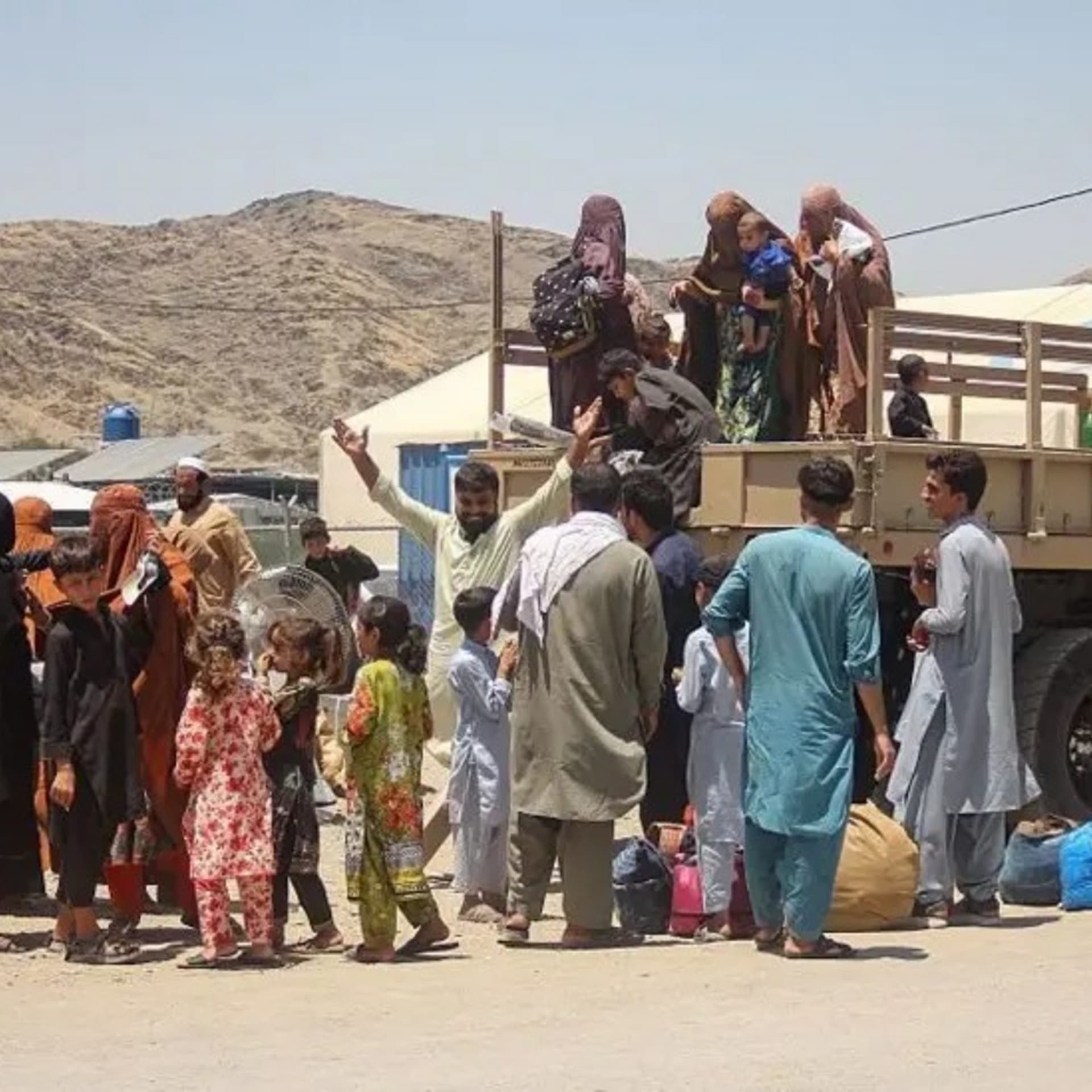
1:57For decades, people fleeing war, poverty and repression in Afghanistan have crossed into Pakistan and Iran. Over the past three years, more than six million of them have been sent back. But following appeals from the UN, Pakistan has now temporarily exempted 16 ,000 Afghans from deportation. Rights groups say many are at risk if they return to Taliban-ruled Afghanistan. Our chief international correspondent, Lise Doucette, has just visited the Torkum border crossing. They call this Zero Point. It's the main crossing between Pakistan, about 50 metres away, and Afghanistan. And there's a tide of Afghan families coming through these metal gates.
2:39A woman with a goat on a rope, a man with a huge suitcase on his head, and three little girls, each of them carrying a rooster or a chicken. Entire families, many generations, who've grown up on the other side, spending decades there and coming back to a country many have never even been to before.
3:05The journey was very difficult. My husband had been deported 20 days earlier and I had to borrow money from several people to make the journey. What do you say to the Pakistanis? We spent many good years there and lived well, but this year the Pakistanis caused us a great deal of hardship. They would not allow my husband to work. There was work available, but he was afraid to go because the police might arrest him. Every Afghan family we speak with speaks about being mistreated by the Pakistanis. We can't confirm that right here. But Pakistan has been saying that it's given refuge to millions of Afghans for decades, through all of its wars, and it's time for the Afghans to go home.
3:59We're looking into this makeshift office, Taliban flags everywhere. Then from here, those who have documents can go on to the United Nations and then they'll be given a refuge. The UN hopes for just a few days in a tented village nearby.
4:18Assalamu alaikum. Assalamu alaikum. Namah ta 'an, chief. What's your name? My name is Sabir. How many in your family have been forced to come back to Afghanistan? Talvez. I have seven brothers, my sister-in-law, their children, my children, all of us. And what about your future? Can you start over again here? The problem here is that there are no business or job opportunities in Afghanistan these days. However, I will do whatever work I can find. Over the past three years, more than six million Afghans have been forced to come home in circumstances like this, either from Pakistan or from Iran on the other border.
4:59But forcing people to go home is a violation of international principles. Charlie Goodlake is the spokesperson in Kabul for the United Nations Refugee Agency, the UNHCR. We haven't seen returns on this level anywhere in the world in recent history. This is almost a medium-sized country that is coming back to Afghanistan and having to reintegrate and to reabsorb. The Taliban authorities are facing crises of their own. Could they do this, respond to the needs of these people on their own? I do not believe that they can do this. I don't think there's many countries in the world that could receive 6 million people on their own.
5:38But let me be also very clear, we're also here to raise challenges with them, where we have disagreements, and those are on very clear issues about girls going back to school, about our national staff being able to come back to UN offices. We're heading now to see someone who was deported twice. He's not just worried about being here, he's terrified. He used to police the streets for the government ousted by the Taliban. We can't reveal his location, his identity. Tell me what your life is like now. I feel that my life is under threat and I can't even go outside. I spent all my day at home. The Taliban authorities have offered an amnesty.
6:25You don't believe them? I do not believe in their amnesty at all. I have no trust in it because many of my friends were killed. Did you try to find a way out? I tried, but I do not know where I can go. I am afraid to travel because something might happen to me. I live with these fears all the time. The biggest forced return in the world shows no sign of stopping. And a world preoccupied by so many other crises seems to take little notice. Lees Doucette. Well, among the many criticisms of the Taliban government are its severe restrictions on the lives of women and girls. Only Russia has formally recognised the Taliban's return to power in Kabul.
7:15But the group's foreign minister, Amir Khan Moutaqi, has called on Western countries to develop closer diplomatic and economic ties with Afghanistan. He spoke to Lise Doucette. After this, we can divide the world into two parts. One is Asia and the other Europe, or one is East and the other is West. Our relations have developed a lot with regional and Eastern countries. In terms of economy, politics, relations, investment, we have good achievements. And with European countries as well, there are developments. In some countries, our representative offices have opened and our diplomats have arrived.
7:58You're still isolated from the West. Is it a priority to try to fix that? We shouldn't call all Europe the world. We have good relations with the world countries and there are developments with the European countries. One of the biggest issues, blocking better relations with the West, is how the Taliban government treats the rights of women and girls. Doesn't it concentrate your mind on the urgency of improving that? The conduct with the women shouldn't be looked at from the Western culture and traditions glasses. Here, the Afghan values should be looked at. But there are other developments in Afghanistan to look at.
8:44The cultivation of drugs in Afghanistan is zero. There is security in Afghanistan. Groups that could harm other countries, they are destroyed. There's a lot that we can have collaboration with the world. You know that even Islamic officials from Saudi Arabia, from Qatar, from Indonesia, from so many Islamic countries the world over gave you the same message. It's not an issue of a Western idea, educating women and girls and letting them work. Yes, these issues have been discussed by various countries and international organizations. And I express that we have a lot of female students in religious madrasas that they study until the end.
9:30In those madrasas, there are modern subjects too. and there are more than 3 million female students under class 6 in schools who study. The UN says 2.4 million Afghan girls are now being deprived of a secondary education. If that continues, there won't be any Afghan women doctors, teachers and many more. Is that the kind of country you want to represent? This really is a problem and it will be considered. The Taliban Foreign Minister Amir Khan Mutaki talking to Lise Doucette. Despite a 10-month ceasefire between Israel and Hamas, violence is still the reality in the devastated Palestinian territory of Gaza.
10:14Today, Palestinian medics had two children and a woman were killed in Israeli airstrikes during a security operation, while Israel's defence minister says a senior member of Hamas has been captured. We got the latest from Yolande Nell in Jerusalem. them. Well, there's a medical source at Gaza City's Shifa Hospital who's identified the woman who was killed in the last few hours as the wife of the head of Hamas Colonel Moa 'in al-Arabid. So there is an assumption, although it's not at all been confirmed, that perhaps he could be the Hamas commander, the senior security official that Israel says it has now arrested.
10:53We don't really have too many details here. A lot is very murky. We don't know if this is a raid that involved Israeli special forces going in on the ground or whether it was just an Israeli-backed militia or whether it was both of them acting together. There are media reports that say all different versions. Certainly Israel Katz, who was visiting Amoshav next to the Gaza Strip, he'd been meeting Israeli citizens and leaders of that community. He said that there were Israeli forces who were continuing all the time to work at the same time as he was announcing that there had been this arrest that had taken place.
11:33But he gave no details of where it had been or who it was. Now, we have seen plenty of video footage. It's not been verified yet, but this is from inside Gaza with people showing a white van and cars completely mangled by Israeli airstrikes, motorcycles which they're claiming were used in this raid close to the American hospital in the west of Gaza City. It's a neighbourhood that is really packed with displaced people. And then you can see in some of the footage that there was this, what people say was very unusually heavy bombardment. They say that there were several Israeli warplanes overhead, that there were Israeli drones that were being used.
12:14And there have been reports, initial reports at least, suggesting that this was a raid that went wrong, that a cover was blown off those special forces on the ground and that then Israel went in there with its air support. And briefly, how common are Israeli raids in areas where lots of Palestinians are gathered? We haven't heard of a raid exactly like this, certainly for some time. What is unfortunately common is to have on a near daily basis strikes continuing to take place. There was also another child who was killed by Israeli fire in the centre of the Gaza Strip earlier. We were told by Palestinian medical sources at least five people killed in the past day on top of all of this.
12:59So that is why people in Gaza will say to you that despite the ceasefire that is supposed to have been in place since last October, they don't feel that there is a ceasefire on the ground. Our Jerusalem correspondent Jolande Nell. Norway's royal family traces its roots back to King Harald Fairhaire more than a thousand years ago. The latest in the long line of monarchs, King Horkon VIII, has today pledged an oath of allegiance in Parliament. He inherited the throne when his father, King Harald V, died on Friday at the age of 89. Today, the new king pledged to uphold Norway's constitution. I promise and swear that I will govern the kingdom of Norway in accordance with its constitution and laws.
13:45So help me God, the Almighty and Omniscient. King Håkon was driven from the royal palace to the Storting, or parliament, in an open car. as we heard from Mimi Swaby. So this is the latest in a series of ceremonies marking the passing of the crown from King Harald V to his son, King Hawken VIII. So during this oath, the new king pledged to uphold the constitutions. But this oath also marks the limits of the king's powers. He is a constitutional monarchy, so he doesn't have any formal political power. After the oath, the president of parliament, the Storting, took to the floor and delivered a memorial speech for his late father.
14:24That was followed by a minute of silence. And then we've seen lots of people now passing through the palace chapel, paying their last respects to the late king whose body, whose coffin is lying in state there. His funeral is going to be on the 9th of September. So we've got a few days now for the public, who he's immensely popular with, to pay their last respects. But today marked the kind of formal ceremony. King Hawken took the crown automatically when his father died on Friday. This however is in place of a coronation. There is no coronation in Norway. That was abolished in practice in 1908.
15:02Usually the queen, so Metamarit, would have accompanied and be by the side of the new king. However she had a lung transplant in June and due to complications of that she was unable to attend the swearing in or taking the oath. So he was accompanied by the side of him was his daughter, Princess Ingrid, who was the first female heir to the throne in Norway. She was wearing a mourning veil standing by her father's side as he took that very formal oath, swearing his allegiance to Norway. As you say, a constitutional monarch, so doesn't have loads of political power, but presumably plays an important role for the people of Norway.
15:42What are the tasks facing him immediately? So the first task is essentially getting public trust back. The Crown has had a tumultuous time, especially due to scandals related to King Hawkins' immediate family. His wife, it came out earlier this year in January that she had links to the late US sex offender Jeffrey Epstein, something she's come out and said she apologises for and wishes she never met him. His stepson has been convicted of two rape charges and has been sentenced to four years in prison. He's currently on house arrest, but has appealed the sentence. So these are things that didn't perhaps tarnish the late king, who was very popular with Norwegians.
16:20The royal family, broadly speaking, still is. But gaining public trust as these scandals got closer to the crown is something the new king will have to contend with. In the immediate future, he will be trying to continue the legacy of his father. His father was a unifying figure during times of need for the country, during times of mourning, during times of grieving, during times of uncertainty. And that is something that many think and hope the new king will also embody, also with a modest lifestyle that has become accustomed of the Norwegian royals. Our global affairs reporter Mimi Swaby. Still to come on this podcast.
16:56We looked at patients receiving predominantly immunotherapy, whether the circadian rhythm or the body clock has an impact on the immune system. Can the time of day of treatment affect survival rates for cancer patients?
17:35Am I losing muscle mass? No. Am I building it? Maybe a little here and there. So, you know, what aspects of creatine contribute to that versus how many times am I going to the gym? You know, who knows? Therein lies the rub, right? You want to think that you're doing something good for your body, but I don't know how to measure that. Could this work for endurance? Could it work for a muscle mass maintenance in the elderly? Could it work for brain health? These new research studies coming out have really triggered a lot of interest because now you're taking a well-studied supplement and saying, well, what if it did these other things?
18:12And that's exciting for folks. Listen to the full episode of Health vs. Hype with the American Medical Association on the iHeartRadio app, Apple Podcasts, or wherever you get your podcasts. Hey, this is Kevin. This is Joe. And Nick Jonas from Hey Jonas. This episode of Hey Jonas is brought to you by the all-new drink lineup at McDonald's. I don't have to tell you that there are already so many great drink options at McDonald's, but the new drink lineup, I mean, it takes things to another level. They've got delicious caffeinated refreshers like the strawberry watermelon refresher, crafted sodas like the Spriteberry Blast, and now the all-new Red Bull Dragonberry Energizer.
18:51We're talking about a total game changer. It's made with Red Bull. It's mixed with blue raspberry flavor and topped with freeze-dried dragon fruit. Wow. So McDonald's has given us a refreshing new boost for your day. And the Red Bull Dragonberry Energizer is arriving just as you're heading back to the dorms for the fall semester. It's got a boost of energy and a kick of flavor when you need it the most. You know, powering through those lectures and studying sessions, you're going to need it. Kicking the afternoon slump or rallying for the weekend. Try one of the many new drinks like the Red Bull Dragonberry Energizer, also available with Red Bull Zero, now at McDonald's.
19:27Hey, it's Ryan Seacrest for Jewel Osco. Now through September 29th, save on all your favorite personal care essentials and earn four times the points. Shop in-store or online for items from your favorite brands like Native, Pantene, Crest, Always, Gillette, Oral-B, and Tampax and earn four times the points. Points can be redeemed for discounts on future purchases on groceries and gas. Get these deals before they're gone. Offer ends September 29th. Restrictions apply. Offers may vary. Visit JewelOsco.com for more details. This is Matt Rogers from Las Culture East. That's with Matt Rogers and Bowen Yang.
20:02This is Bowen Yang from Las Culture East. That's with Matt Rogers and Bowen Yang. You know when people try on new food and suddenly it's like, wait. That's the reaction a lot of people are having when they first try Kewpie mayo. It's the one with the red cap and the little baby on the bottle. You've probably seen it in the grocery store before. And if you've ever just walked past it, some people would say that's a huge mistake. Because this mayo is different. Most mayonnaise uses whole eggs. Kewpie only uses egg yolks, which gives it this rich umami flavor. It's smoother, deeper, and almost buttery.
20:34Once people try it, they start putting it on everything. Egg sandwiches, fries, burgers. Some fans even swear by dipping pizza crust in it. And once you notice it, you start seeing it everywhere. Chefs use it. Restaurants use it. People who really care about flavor use it. Never tried it? Grab the bottle with the red cap next time you're at the store. Put it on just about anything. Then you'll understand. QP, the original Japanese mayonnaise.
21:25surrounding area. At least 12 people died, including seven in a railway depot. This man is a resident of an apartment block in the capital that was hit. There were a lot of shrapnel injuries. There's a crater about two metres deep. Half the wall has been destroyed. The blast just tore everything apart. The entire entrance collapsed and the balcony was blown away. We got an update from our diplomatic correspondent in Kiev, James Landau. This is the sixth consecutive day of attacks by Russian forces on the capital, Kiev. So clearly that is the result of a deliberate strategy by the Russian side.
22:05And what we've seen in recent days is primarily wave after wave of attacks by drones, especially the new and faster drones. And what's been interesting about it is it hasn't been just overnight. It's been during the day as well, causing substantial death and disruption. But what we had in the early hours of this morning here in Kyiv was an attack that also included substantial number of ballistic missiles. And most of those seem to have been targeted, as far as we know, against a railway depot where seven people died. But there were also some strikes in the east of the city in residential areas as well, and other people died there as well.
22:46But primarily, again, another focus by the Russians on trying to put more pressure on the people and the authorities here in the capital. And what do Russia's tactics appear to be in terms of the targeting? If you think about it, Russia's tactics change over time during the winter and they tend to focus more on energy targets. How it's been interpreted here is that instead of just targeting infrastructure, air defences on the perimeter of the city, there is a clear strategic aim now by the Russians to target distribution centres for warehouses, postal offices, factories where toys are being made, chocolates are being made, disrupting supermarkets and things like that, as well as disrupting daily life.
23:32because in the last week or so there's been a huge increase in the number of air raid alerts that have had to take place here and when that happens there are protocols that take place and that means that some businesses have to close some schools have to relocate their pupils this causes a huge amount of disruption to the economy to schooling it causes fear it causes anxiety it means people are tired and i think people are seeing it as an attempt by russia to try and bring this city to its knees, you know, after four and a half years of very, very intensive war. And briefly, is Ukraine still able to hit back at Russia?
24:10Oh, yeah, Ukraine is still able to hit back at Russia and is doing so. It's continuing its deep strikes, targeting Russian oil refineries and its own military targets. But as ever, the key vulnerability for Ukraine at the moment is interceptor drones to be able to take out the ballistic missiles that fly across these skies, but also to the newer and faster attack drones, which is getting much harder to intercept. James Landau in the Ukrainian capital. Founded in China in 2008, Xi 'an swiftly became one of the biggest clothes retailers in the world, churning out fast fashion at ultra low prices through a vast network of Chinese factories.
24:52With a near$100 billion valuation, it had Wall Street in its sights. But its long-awaited stock market debut in Hong Kong has turned out to be something of an anti-climax, as I heard from our Asia business correspondent, Arshana Shukla. Well, it wasn't really the debut that Shane would have wanted or expected. It was a disappointing start. As they started trading, shares slided nearly 10%. And later on, recovered a bit. They've closed around 4 % lower than their initial public offering price. But clearly, the investor concerns were visible in trade on day one. And this is also coming after their multiple attempts to list in different markets.
25:33They wanted to list in New York, in London, and eventually landed up in Hong Kong. And the valuation that you spoke about,$100 billion, right now it's almost just a quarter of that at about$26 billion. So certainly the general public does not seem to be as enthused. And why has Shein struggled to live up to those early expectations? Well, only multiple reasons, you know, from regulatory to business. Costs have gone up. Competition has become very fierce. You know, what made Shein so popular among young people was, you know, they would predict, they would use AI to predict demand and they would quickly turn around fashion for younger people at ultra low prices.
26:15That is something that other brands are also doing now. Plus, two of their biggest markets, US and the EU, have removed the tax breaks that they gave for small parcels. That is hitting Shane really at their business angle, which is the ultra low prices. Add to that, there are regulatory concerns about labor practices in their Chinese factories, as well as environmental concerns and sustainability of fast fashion. All of this put together has really put a lot of question marks on the business and the growth prospects for Shane. It's now based in Singapore. Is Xi 'an still seen as a Chinese success story?
Read the full transcript
26:50It is, right? You know, just moving headquarters won't change the nature of the company. Their company is entirely sourcing from the vast network of factories in China. That is where their employees are based. And they've just moved their headquarters before the IPO bid. A reason why they wanted to try in New York and in London, but did not survive, because most of the Western exchange markets are not seeing Chinese companies with the same eyes as they were earlier. And that is where also the trade tensions come into picture. The US-China relationship would also kind of affect their business model at this point in time.
27:28So certainly moving headquarters is not taking away the tag of being a Chinese company. Arshana Shukla in Mumbai. Researchers have found that the time of day at which cancer patients get their treatment can have a significant effect on survival rates. Those who had morning sessions could survive for nearly twice as long as those treated in the afternoon. Professor Paul Lorigan from the Christie Cancer Hospital in Manchester is a senior author of the study. He spoke to Anna Foster. We looked at patients receiving predominantly immunotherapy. Immunotherapy has revolutionised the treatment of cancer, but not everybody benefits from it equally.
28:05And there are many possible reasons for that, the type of cancer, the type of treatment, their own immune system. But one of the things we looked at was whether the circadian rhythm or the body clock has an impact on the immune system. And so we looked at over 2 ,500 patients treated in Manchester with a range of different cancers and a range of different types of immunotherapy. And what we found was that patients treated earlier in the day had, in general, a better outcome than patients treated later in the day. Now, it varied from cancer type and it varied with treatment type as well. And how confident are you that this is a real theme, if you like?
28:50Because there was a, people might remember, there was a similar study earlier this year, which was then retracted. is this something that you are confident is happening? No, absolutely. I mean, what I think we're seeing here is a strong signal. What you're referring to is a study from China in lung cancer, and that was withdrawn because of problems with the data. What we've looked at here is what's called a retrospective study. And there are many possible explanations for why this might be and that we haven't actually been able to see in our trial. So it might be that people arriving for treatment later are less well, are more frail, are relying on hospital transport, etc.
29:30So we really need to look at this more systematically. And as a result, with colleagues in Southampton and in Cardiff, we've designed a trial to test this properly to see if this is real, and if it is real, why it's real, to understand why the immune system might be more receptive at specific times of the day. Is it the sort of thing, and we're going further down the line now, or if it does turn out that there's something in it, that the system could cope with everybody wanting their treatment at the same time of day? No, that's a very good question. And I mean, what we see is that the people who get the best outcome with immunotherapy get it early on.
30:12And so it's most likely it's just important for the first two or three or four cycles of treatment. And for a big centre who's treating individual patients for up to two years, it would be quite possible just to give the first three or four cycles of treatment first thing in the morning and then all the rest of the treatments would be given at a later time. And the potential benefits here, if it comes up to prove the sort of difference we've seen, we don't see that when we're trying to improve our treatments. we're adding in new drugs, more expensive drugs, causing more side effects. But this would be essentially cost neutral.
30:48It's just quite a, if it works, a significant benefit just based on giving the treatment at a different time of the day. Professor Paul Lorigan. And that is all from us for now, but you can watch our episodes in full by searching for the Global News Podcast on YouTube. This edition was mixed by Louis Griffin and produced by Vanessa Heaney. Our editor is Karen Martin. I'm Oliver Conway. Until next time, goodbye.
31:38Betterment's tech and expert-built portfolios handle that for you automatically. Worried about surprise tax bills? Audible. Keep your cool and more of your potential returns with Betterment's tax-saving tech, like tax loss harvesting or a tax impact preview before you trade. Think you need three different platforms for your money? Audible. No one has time for all that. Betterment is one easy and simple app where you can see your total net worth, all your accounts, and your returns. Over a million people trust Betterment to help build their wealth with confidence. And if you're not one of them, it's time you call an audible, too.
32:07Get started at Betterment.com or download the app.
From the publisher
Afghans in Pakistan and Iran face an uncertain future under the Taliban amid a huge deportation drive. We have a report from the Torkham crossing, known as "zero point". Millions of Afghans have fled across the borders to Pakistan for decades. Also, we hear from the Taliban foreign minister who has called on western countries to develop closer diplomatic and economic ties with Afghanistan. Israel says it's captured a senior member of Hamas in Gaza - as Palestinian medics say two children and a woman were killed. Norway's King Haakon pledges an oath of allegiance to the constitution as his father lies in state. A Russian drone and missile barrage kills at least 12 in the capital of Ukraine. Researchers say cancer treatment in mornings could double survival time.
The Global News Podcast brings you the breaking news you need to hear, as it happens. Listen for the latest headlines and current affairs from around the world. Politics, economics, climate, business, technology, health – we cover it all with expert analysis and insight.
Get the news that matters, delivered twice a day on weekdays and daily at weekends, plus special bonus episodes reacting to urgent breaking stories. Follow or subscribe now and never miss a moment. Get in touch: globalpodcast@bbc.co.uk
Photo: Afghan returnees deported from Pakistan arriving at the Torkham crossing Credit: AFP via Getty