
In short
The episode is a BBC Global News roundup covering: a SpaceX rocket stage likely crashing into the Moon near Einstein crater; the live-stream shooting death of Mexican influencer Cesar Gastelum in Sinaloa; Moroccan migrants crossing into Spain’s Ceuta, including Ayub’s account of swimming and seeing deaths; Tour de France Femmes aerodynamic “cheating” via objects/padding behind shirts, explained by aerodynamics research; South Korea and Japan heatwaves and El Niño’s risk of worsening food shortages; and a study that people prefer AI-written stories.
Guests
Keith Cowing (NASA Watch editor); Rodrigo Palomino (Paranal Observatory telescope operator); Libby Jackson (Science Museum space head); Mimi Swaby (reporter on Gastelum); Ayub (23-year-old Moroccan migrant); Bert Blocken (Heriot-Watt aerodynamics professor); Jake Kwon (Seoul heatwave correspondent); Paul Moss (WFP/El Niño reporter); Dan Johnson (Ukraine correspondent); Ella Bicknell (AI stories reporter). Key claims/examples: impact detection is brief and needs calibration; Gastelum was shot in the head during a live stream; migrants faced chaos, hunger, and violence; cyclists may reduce air resistance by several percent with padding/bottles; El Niño plus wars could drive acute hunger; AI stories were rated easier to read and higher quality.
Written by AI. May contain mistakes. Listen to the episode to check what was said.
Chapters
Tap a time to open that second in VOThe SpaceX Rocket Crash
0:30 to 1:49
Discussion on the SpaceX rocket believed to have crashed into the moon.
“For more, listen to The Global Story on BBC.com or wherever you get your podcasts.”
Impact Analysis and Scientific Insights
1:49 to 5:22
Experts discuss the implications of the rocket's impact on lunar studies.
“The four-ton section of spacecraft is believed to have smashed down on the lunar surface near the Einstein crater.”
Influencer Murder Investigation
5:22 to 8:14
Details surrounding the murder of influencer Cesar Gastelum during a live stream.
“So scientists like Libby Jackson and particularly NASA are keen to emphasise there will be a positive outcome from this crash.”
Moroccan Migrant Journey
8:14 to 10:59
Ayub shares his traumatic experience crossing into Ceuta.
“and Culiacan, where this happened, is very much a hotspot for it.”
Cheating in Women's Cycling
10:59 to 14:00
Discussion on the implications of aerodynamic cheating in women's cycling.
“The battle for marginal gains in elite sport has now apparently extended to bras.”
Warnings Against Modifications
14:00 to 14:12
A discussion on the caution against modifications in writing.
“and really strictly warning teams and the writers not to engage in this kind of modifications.”
AI in Writing
14:12 to 14:28
Explores new research on people's preferences for AI-written stories.
“It doesn't really belong in a human process.”
Civilians Affected in U.S.-Israel Conflict
14:28 to 14:53
Details on the aftermath of a deadly civilian strike in Iran.
“Experts say the evidence indicates it was American forces that hit the school, but the U.S.”
Heatwave Impact in East Asia
14:59 to 16:00
Report on the extreme heatwave affecting East Asia and its consequences.
“A deadly heatwave is gripping parts of East Asia, triggering the hottest temperature on record in South Korea and complicating earthquake recovery efforts in Japan.”
Earthquake Recovery Efforts in Japan
16:00 to 17:47
Discussion on Japan's recovery efforts amid a heatwave post-earthquake.
“Yeah tell us more about the impact on people there.”
Show all 16 chapters
El Nino's Threat to Food Security
17:47 to 19:11
Analyzing the impact of the El Nino weather pattern on global hunger.
“The El Nino weather pattern, meanwhile, could push tens of millions more people into acute hunger.”
Conflict and Food Prices
19:11 to 20:57
Exploration of how global conflicts impact food prices and availability.
“It's not just these weather patterns that are an issue though.”
Missile Strikes in Ukraine
20:57 to 22:58
Coverage of recent missile strikes in Kyiv and their consequences.
“I think a lot of those appeals may fall on deaf ears.”
AI-Generated Stories Study
22:58 to 24:51
Summary of a study comparing AI-generated and human-written stories.
“A study has found that people prefer AI-generated stories to those written by humans.”
Listener Email and Citizenship
24:51 to 25:17
Acknowledgment of a listener's email and their journey to citizenship.
“Just before we go, time for a quick email from Lucas.”
Revisiting the U.S.-Israel Conflict
25:46 to 26:15
A recap of the civilian strike in Iran and its implications.
“Experts say the evidence indicates it was American forces that hit the school.”
Transcript
Automatic transcript. May contain errors.0:00This BBC podcast is supported by ads outside the UK. It's been five months since the deadliest civilian strike of the U.S.-Israel war in Iran. 120 children killed at a school. Experts say the evidence indicates it was American forces that hit the school. But the U.S. government has not admitted responsibility. I'm Asma Khaled, and I host the Global Story podcast on the BBC. The BBC has now visited the site of the school and spoken to Iranians about what they saw. For more, listen to The Global Story on BBC.com or wherever you get your podcasts. This is the Global News Podcast from the BBC World Service.
0:42Hello, I'm Oliver Conway. We're recording this at 15 hours GMT on Wednesday the 5th of August. A SpaceX rocket is believed to have crashed into the moon at seven times the speed of sound. Police in Mexico are investigating why a social media influencer was shot dead during a live stream and a warning that the El Nino weather pattern could leave nearly 50 million more people dangerously short of food. Also on the podcast, we hear from a 23-year-old Moroccan who crossed into the Spanish territory of Ceuta last week. I swam for about one kilometre. That was probably the most traumatic experience I've ever had in my life.
1:25And they're sticking objects behind their shirt in order to deviate the airflow around their body and that actually reduces the air resistance of the cyclist by a few tens of percent. Women cyclists face checks to make sure they're not using their bras to cheat at the Tour de France.
1:48Now, it wasn't supposed to end like this, but a SpaceX rocket that went astray is thought to have crashed into the moon. The four-ton section of spacecraft is believed to have smashed down on the lunar surface near the Einstein crater. Keith Cowing, editor of the NASA Watch blog, says it's not the first time the moon has been hit. Funny thing, some of the stages that we did this same thing with back in the Apollo era are still orbiting the sun. And every now and then, one of them gets sighted and the astronomers can't decide if it's an asteroid or a rocket stage. And they eventually, you know, have to analyze the spectra.
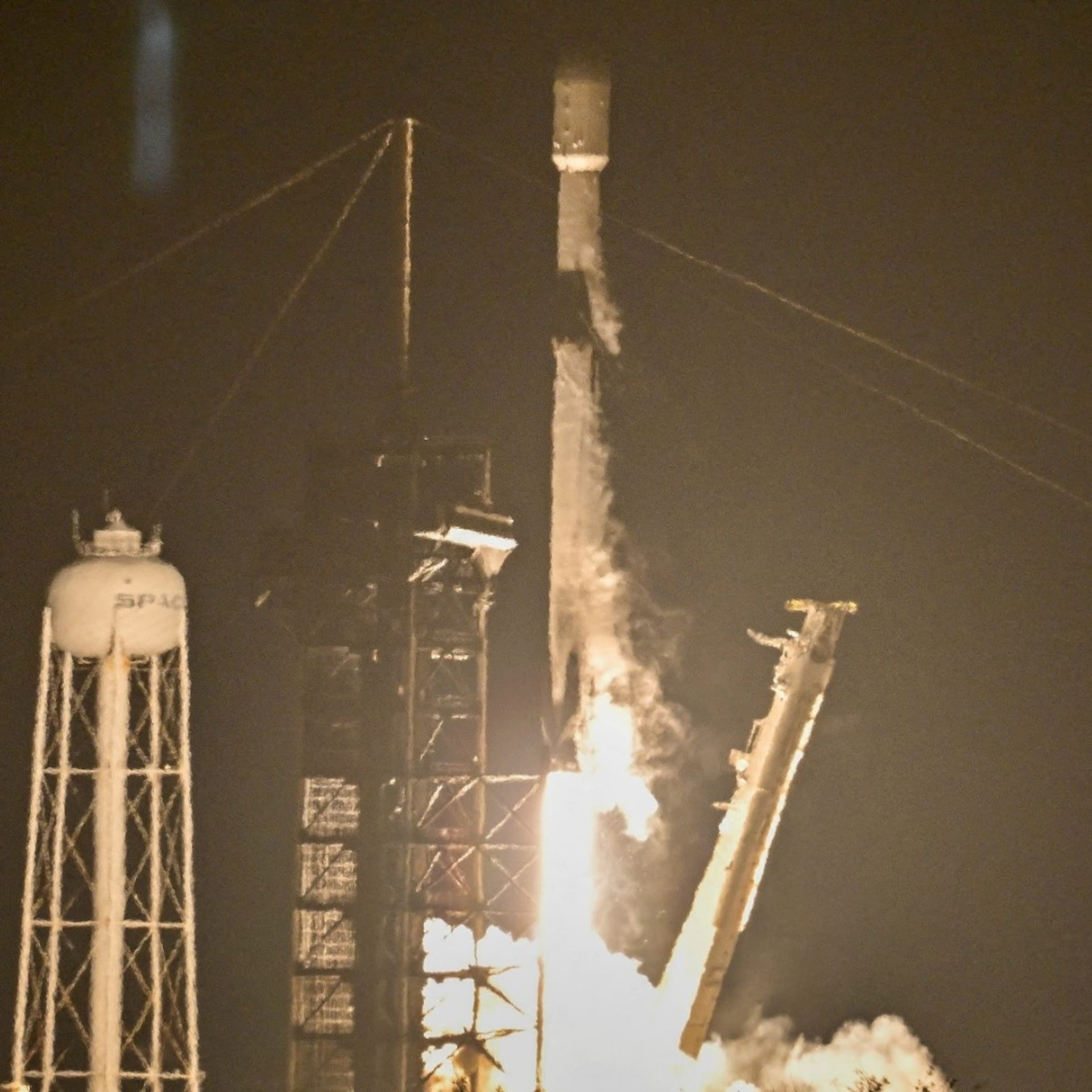
2:27And they say, oh, we can tell that that's titanium paint. That must be the Apollo whatever it is stage. So it's a bit of a hunt and seek game sometime. But if nothing else, you know, it's kind of cool to watch things smash into a planet. Our reporter Richard Hamilton explains what happened. Back in January last year, this SpaceX, it was a US-Japanese mission to send equipment to the moon, including lunar landers. There were two parts to this rocket. The booster returned to Earth, but the upper stage went into orbit and strayed off course. And scientists say this was a mixture of solar activity and gravitational forces that put it on a path towards the moon.
3:12So they were expecting a very spectacular display, a vast sunlit plume of rubble and debris coming out of the moon's surface. Of course, this would only have been observed through powerful telescopes, not through the naked eye. But the BBC spoke to Rodrigo Palomino, who's a telescope operator at the Paranal Observatory in Chile. You get the best view of the moon from the Americas. And he said, we did not obtain an obvious detection of the impact, but that's not unexpected. The event itself is very brief and the lunar surface is illuminated, which makes it more difficult to identify a clear signal.
3:57However, our instruments did record a measurement that suggests something happened at the expected time and location. The data indicate that an event may have occurred, but we now need to calibrate the observations and carry out a detailed scientific analysis. So basically, not as spectacular perhaps as they were hoping, but they will still be able to analyse the data and find out more. And once they've carried out that detailed analysis, what will they be able to learn from this? Well, since NASA wants to establish what they call a sustained presence on the moon, they're hoping to learn more about the composition of the planet itself and what effect an impact like this might have.
4:40We heard more from Libby Jackson, who's a space exploration expert and the head of space at the Science Museum in London. The scientists will have a lot more information as they study the debris that they hope that will be ejected from the collision. By studying the light that is reflected from that material, scientists can analyse the light and determine the composition of the material, which helps them understand the composition of the moon in the impact site. And that's great for the scientists who want to understand how the moon was developed, what it's made of, its history, potentially its future, and how planetary systems, how the moon, how the Earth and the moon system evolved and were formed billions of years ago.
5:22So scientists like Libby Jackson and particularly NASA are keen to emphasise there will be a positive outcome from this crash. But other people are warning that this is a sign of how much space debris is out there. For example, 54 ,000 objects are thought to be in space larger than 10 centimetres. And since the space age first began, 17 ,000 tonnes have been launched into space. Richard Hamilton. The Mexican influencer Cesar Gastelum was known for his comedy videos and he had nearly 600 ,000 followers on TikTok. On Tuesday he was shot dead while live streaming outside a restaurant in Sinaloa state.
6:06The motive is not known. Mimi Swaby has been following the story. Cesar Gastelum was really well known for his comedy sketches impersonating El Padre, the Pope or other figures. He also was very well known for live streaming. And it was during a live stream on Tuesday that him and two friends were approached by two individuals on a motorcycle. And thousands of followers who are watching saw his death live, which is a really harrowing thought. The two individuals on a motorcycle were both wearing a helmet, so you couldn't identify them very easily. They approached the group outside a KFC restaurant in Culiacan in Sinaloa State.
6:46Now, according to video from different angles, it's very clear that he was shot directly in the head by a person from the motorcycle. The other friends remained unharmed. Interestingly, earlier the motorcycle had passed around them and one of the group had said, those guys scare me, which is very ominous and alluding to what happened next. But there was multiple footage because many were live streaming, all three there, and also CCTV cameras at the KFC restaurant. And this death has been linked to the murder of another influencer. Yeah, it echoes a case of the murder of a beauty influencer, Valeria Marquez, who was also live streaming when a man stormed into the salon where she worked and opened fire, killing her.
7:31That was in Jalisco State last year. Her death, however, was investigated under femicide protocol. Actually, in July, Mexican authorities announced the arrest of a man who they identified as the leader of a criminal cell linked to the Jalisco New Generation cartel. And they linked him to the murder of Marquez and also linked him to a murder of a mayor last year as well. So that case seems to be coming together with criminal proceedings taking place there. But in this case, there is no open thread or public thread of where the investigations are going at this point. Interestingly, there have been at least 10 influencers killed in Sinaloa State since the term influencer came well known and understood.
8:13Sinaloa State is an epicentre of violence, which is often linked to struggles between organised crime groups. and Culiacan, where this happened, is very much a hotspot for it. Mimi Swaby. Last week, we reported on the sudden rush of Moroccans overwhelming the border with the Spanish territory of Ceuta. The BBC has now spoken to one of the many thousands who took to the sea to get around the frontier. Ayub is a 23-year-old administrative assistant from the Moroccan port city of Casablanca. His words are spoken by a translator. I had a call from my friends and they told me that there is a live on social media.
8:51When we opened that live, we saw a lot of people trying to cross the borders. So when we went there, we had the thought of actually trying to go as well. On our way, we found a lot of authorities blocking the road and trying to stop the people from going where they're going. Eventually, we went there and we went through some mountains. We were trying to get through. I swam for about like one kilometer or something like that. That swim was probably the most traumatic experience I've ever had in my life. I've seen people dying around me. I've seen people get beaten up. There was a lot of chaos. There was a lot of deaths.
9:32There was a lot of violence. I just felt like I was going to die at that moment and I was going to die drowning. Once we got there, at the time, it was very chaotic. It was almost like in an emergency state where everyone was out there, everyone was trying to save themselves. It was chaotic. People were also a bit furious. There was no food, there was no water, there was no shelter. We were trying to hide because the authorities were scouting the place all over. However, in the second day, we actually went out to find some food because we couldn't withstand the pain of hunger. But eventually, we tried to go somewhere.
10:14We actually went somewhere that is pretty calm and pretty nice. And honestly, it was actually beautiful the way people treated us. They treated us like we were their own, their sons and daughters. So it felt good. We had shelter, we had food, we had everything. The reason why I went there is mainly because of unemployment, you know, because our country is suffering from unemployment and it's suffering from a lot of economical misfortune, to say the least. And I was hoping I'd go there, I'd find a decent life, I would find a job, I would be appreciated, I would meet other cultures and I just wanted to be free.
10:54The words of 23-year-old Moroccan man Ayub from Casablanca. The battle for marginal gains in elite sport has now apparently extended to bras. Riders at the Tour de France Femme, the women's version of cycling's most famous race, have had their clothing checked to make sure they're not using padding to make themselves more aerodynamic. Nick Robinson heard more about the alleged cheating from Bert Blocken, professor of aerodynamics at Heriot-Watt University in Scotland. What they are doing actually is sticking objects behind their shirt, so at the chest, in order to deviate the airflow around their body while on the bicycle and thereby reducing the pressure on the pelvis and on the upper thighs.
11:40And that actually reduces the air resistance of the cyclist by a few tens of percent, which could be enough to gain several seconds in a typical time trial. So you want the airflow to go round the body rather than down where the legs are pumping, is that right? Yes, down and more in between the legs, so to actually flow in between the legs rather than to impinge directly on the upper thighs and the pelvis and create overpressure there. But you've measured that, you can actually put a number on the difference it makes. Yeah, so the reason why we started investigating this is also because it has been used in triathlon, where actually riders have been stucking entire bottles behind their shirts.
12:20So not even the typical drink bottles that are used in sports, but even 1.5 litre bottles. So huge objects and thereby actually getting four to five percent less air resistance even. Which at this level of sport really matters, that sort of percentage difference. But what's interesting hearing you describe this is they're using tricks to get around the rules. In other words, they're using water bottles or they're using sometimes radio equipment, aren't they, which they're allowed to carry on them. But they're using it deliberately to change the shape of their body. Indeed. In 2023, 2024, male riders have indeed been using radio communication to put that at their chest and sometimes even putting bubble wrap around it to actually increase the volume.
13:02and then at some point UCI has started to check that and now actually we've also seen female riders doing that and actually increasing their cup size to actually amplify this aerodynamic benefit. This rather reminds me of the time that people had padded crotches during the Winter Olympics in order to enhance their speed or reduce their air resistance when they were ski jumping. Yes indeed, and that was actually more related to an increase of the frontal area and therefore the lift force. While here, actually, the mechanism is a little bit different. But yeah, it's all about these marginal gains, as we call them these days.
13:39I think it's a continuous struggle to keep up to date with the tiny modifications that are going around in the peloton. And the riders and performance managers are always looking for these marginal gains at the UCI, trying to remain on top of that. And it's not easy. I just think it requires the UCI to sometimes send out communiques like they did now and really strictly warning teams and the writers not to engage in this kind of modifications. Professor Bert Blocken. And still to come in this podcast. Being a writer as a career is kind of at stake. It doesn't really belong in a human process. New research finds that people prefer stories written by AI.
14:27It's been five months since the deadliest civilian strike of the U.S.-Israel war in Iran. 120 children killed at a school. Experts say the evidence indicates it was American forces that hit the school, but the U.S. government has not admitted responsibility. I'm Asma Khaled, and I host the Global Story podcast on the BBC. The BBC has now visited the site of the school and spoken to Iranians about what they saw. For more, listen to The Global Story on BBC.com or wherever you get your podcasts. This is the Global News Podcast. A deadly heatwave is gripping parts of East Asia, triggering the hottest temperature on record in South Korea and complicating earthquake recovery efforts in Japan.
15:12More than 43 ,000 people in Japan have been hospitalised owing to heatstroke this summer, while South Korea has issued its first ever severe heatwave warning. So just how hot has it been? Jake Kwon is our correspondent in the South Korean capital, Seoul. It's hard to overstate really how unusual this heat wave has been. There's a lot of firsts here. I mean, when you see the numbers 4-0, it almost feels surreal. But that has been the temperature in the south of the region. The southern city of Yangsan reached 42.5 degrees Celsius. And that is the highest temperature this country had ever recorded in modern history.
15:48and South Korea's capital Seoul city area had for the first time in history its most severe heat warning issued and that comes when the temperature goes above 35 degrees for more than two days and the feels like temperature which takes into account the humidity goes above 38 degrees celsius so imagine trying to sleep when the temperature doesn't go below 30 degrees celsius I mean this has been very unusual summer. Yeah tell us more about the impact on people there. Well, Korea's disease prevention agency said that thousands of people have already sought medical attention for heat-related illness.
16:25At least 19 people have died across the country from the heat. And a lot of these people are in the south, in the rural area, where farm work is essential. And a lot of people in these rural regions also are quite old. And the government is now warning that this death might continue. Last year, around this time, the same number of people had died over the entire summer. We're still halfway through the summertime. We heard from South Korea's president, Lee Jae-myung, saying that this is a national disaster. And he directed the government to do everything it can to respond. We also just heard that the professional baseball games this week are all cancelled.
17:01And Japan also affected a week after it was hit by that powerful earthquake. Exactly. I think the Japanese government had already warned the public that although their priority has been to recover any missing people, to evacuate people as well. But they said the other priority was keeping people cool, especially when thousands of rescue workers are outside trying to help these people and the wet bulb temperature goes really high. And a lot of these places were missing electricity. In the second day, tens of thousands of homes were cut from power, no AC. We saw the Japanese troops being mobilized to deliver generators as well as the AC to really prevent any further death and destruction after the earthquake.
17:46Jake Kwon in Seoul. The El Nino weather pattern, meanwhile, could push tens of millions more people into acute hunger. That's the warning from the World Food Programme. It says Central America and Southern Africa could be among the worst affected regions. Our global affairs reporter, Paul Moss, has the details. I think first I should explain to people just a little about what the El Nino is. It's a natural phenomenon that comes every few years, and it means that the Pacific is warmer than usual, and that affects temperatures all around the world. As you've said, this year's El Nino phenomenon is likely to hit Southern Africa and Latin America the worst.
18:25I think one thing that's important to explain also is that El Nino affects different areas differently. Those warmer temperatures in some areas can cause drought, but in other areas it can mean there's heavy rainfall and flooding, which unfortunately has the same effects. It tends to wash away the crops. What the World Food Programme says is the El Nino phenomenon is really going to get going next month in September. It will last until December. But as always, the effects will be felt further down the line. It's 2027 they're really worried about. Crops planted this year or failing to thrive will know about it when the harvest comes.
19:00Now, what they're saying also is the good thing about El Nino is it does unfold slowly. You can spot where the problems are going to be. the question is whether anything will be done about it. It's not just these weather patterns that are an issue though. The chief economist of the Food and Agriculture Organization has been talking about the risks from the wars in Russia and Ukraine and the Middle East. Yeah, you have to excuse me if I use a cliche, but we are talking about a perfect storm here. Yes, Ukraine, there's a reason why it was always known as the breadbasket of the world. Russia has recently been focusing particularly on hitting its ports on the Black Sea, making it very difficult for them to export any wheat.
19:40And that's particularly tragic because Ukraine actually had a bumper harvest this year. They can't get it out, though. A lot of the shipping not daring to go into the Black Sea. The big problem, though, as you suggest, of course, is the conflict in the Gulf, the Strait of Hormuz, which is preventing oil and gas getting out. Oil and gas prices are a major component of food prices. Sometimes that's for obvious reasons. The food that's delivered to your shop is going to cost more. If the lorry is delivering, it'd have to pay more for their fuel. But in fact, fuel price finds its way into everything, into packaging.
20:10And crucially, the gas price going up makes fertilizer much more expensive. And this is already hitting farmers. And not, by the way, just in poor countries. In the United States, for example, the organization which represents farmers says they're going to lose$32 billion next year. Some farmers are actually switching away from crops which need fertilizer. Once again, all of these effects will be delayed. There'll be the delay because it's next year's crop that will be affected. Also, when commodity prices go up, what you tend to find is that there's a delay of three to six months before it hits the retail price, the price that you and I pay.
20:47Next year, we're going to see lots of appeals for money needed to help people who face food poverty. The trouble is it's a time when budgets are stretched and when foreign aid budgets are stretched. I think a lot of those appeals may fall on deaf ears. And that was Paul Moss. President Vladimir Zelensky says lives were lost in Ukraine on Tuesday night because of a lack of missile interceptors. 17 people were killed in Russian airstrikes in and around the capital, Kiev. Ukrainian defences apparently failed to shoot down a single one of the 24 ballistic and four cruise missiles launched during the attack.
21:22This resident said she was terrified. Last night was just awful. For the first time, the lack of anti-ballistic defences was felt so strongly. the house was shaking. I don't just want to hide in some basement. I want to leave Kiev as soon as possible. So this horror, this nightmare will end. Our correspondent Dan Johnson sent this report from the site of one of the attacks. We're at the place where at least one Russian missile hit last night. This is a rural railway station where people were waiting for a train. That's why eight people were killed here when this missile exploded. There's already an enormous clear-up job here to recover the bodies of those who lost their lives, but also to fix the railway lines and the electricity wires in order to get the trains running again.
22:08It's not clear why this station would have been hit, but there is a couple of distribution warehouses not far from here that we've seen smouldering. They were on fire last night and there were more casualties linked to those attacks. There were 28 ballistic missiles fired by Russia last night, none of them intercepted by Ukrainian air defences. Is that because they've run out of interceptors? Is it because they're having to ration their supplies so carefully given the shortage? We've had no clear answer from the Ukrainian air forces who are usually open in discussing their failures and their successes.
22:43The president has given the strongest signal that he could, that without more Patriot missiles interceptors to bring down the Russian strikes, we will see more of this devastation, destruction and loss of life across Ukraine. Our Kyiv correspondent Dan Johnson. A study has found that people prefer AI-generated stories to those written by humans. Researchers from Cambridge University here in Britain said participants in the study rated the AI stories better because they were easier to read, as Ella Bicknell reports. The research published in the Journal of Judgment and Decision Making asked more than 1 ,600 adults to read one of six fictional stories.
23:24Three were by human authors and taken from published collections. The others were generated by ChatGPT. Readers rated the AI-generated stories as easier to understand, more engaging, and overall of higher quality. In a second study, participants were shown two similar stories, one written by a human and one generated by AI. Most were unable to identify which was which, although those with experience of using AI were slightly better at spotting the difference. Researchers also found people rated stories more highly when they believed that they had been written by a human, regardless of whether that was actually true.
24:03Similar studies have examined AI-generated poetry, artwork, advertising copy, and even student essays, as artificial intelligence becomes more widely used in creative fields. But its growing use has also drawn criticism. Being a writer as a career is kind of at stake. It doesn't really belong in a human process. During the 2023 Writers Guild of America strike, protections against AI were a key demand.
24:36Last week, the veteran Japanese voice actor Megumi Ogata, best known for her work in anime, said an unauthorised AI clone of her voice was heartbreaking and called for stronger legal protections for all performers. Ella Bicknell. Just before we go, time for a quick email from Lucas. He says he's been listening every day since 2012 and appreciates our analysis of world events. But he admits he initially turned to the podcast to learn English. Little did I know, he says, this was the beginning of a long journey to becoming British. I now live in London and yesterday I officially became a British citizen.
25:17Well done from all of us at the Global News Podcast, Lucas, and thanks for listening. And that is all from us for now, but the Global News Podcast will be back very soon. This edition was mixed by Holly Smith and produced by Nikki Verrico. Our editor is Karen Martin. I'm Oliver Conway. Until next time, goodbye.
25:45It's been five months since the deadliest civilian strike of the U.S.-Israel war in Iran. 120 children killed at a school. Experts say the evidence indicates it was American forces that hit the school. But the U.S. government has not admitted responsibility. I'm Asma Khalid, and I host the Global Story podcast on the BBC. The BBC has now visited the site of the school and spoken to Iranians about what they saw. For more, listen to The Global Story on BBC.com or wherever you get your podcasts.
From the publisher
Scientists believe the upper section of a SpaceX rocket has crashed into the surface of the Moon at seven times the speed of sound. Also: police in Mexico are investigating why a social media influencer was shot dead during a live stream. The World Food Programme warns that the current El Niño weather phenomenon could leave nearly 50 million more people at risk of severe hunger. We hear from the 23 year old Moroccan man who crossed into the Spanish territory of Ceuta last week. Women cyclists using padded bras to get ahead in the Tour de France. And new research finds people prefer stories written by AI.
The Global News Podcast brings you the breaking news you need to hear, as it happens. Listen for the latest headlines and current affairs from around the world. Politics, economics, climate, business, technology, health – we cover it all with expert analysis and insight. Get the news that matters, delivered twice a day on weekdays and daily at weekends, plus special bonus episodes reacting to urgent breaking stories. Follow or subscribe now and never miss a moment.
Get in touch: globalpodcast@bbc.co.uk
Photo: The SpaceX Falcon 9 rocket lifts off carrying two moon landers from the Kennedy Space Centre Credit: Reuters