
In short
US Supreme Court rulings expand President Trump’s power over independent regulators, but block parts of his agenda; other segments cover Venezuela earthquake response, Peru’s presidential election, a German mass shooting, invasive pufferfish in Greece, WhatsApp usernames, and Wimbledon prize-money disputes.
Guests (and backgrounds)
David Willis (BBC North America correspondent) explains the Supreme Court decisions. UN’s Gianluca Rampola (UN in Caracas) describes earthquake coordination. Will Grant (BBC correspondent in La Guaira) reports on rescue efforts and local anger. Luis Fajardo (BBC Monitoring) covers Peru’s election and Keiko Fujimori’s political background. Marine biologist Dimitris Karavellas (WWF Greece) discusses pufferfish impacts. Technology editor Zoe Kleinman explains WhatsApp username changes. Tennis reporter Hannah Mullane covers Wimbledon prize-money debate. Sports finance professor Rob Wilson comments on prize-money economics. Journalist Joanna Keane reports the German shooting.
Key claims
Supreme Court expands presidential removal power for regulators but exempts the Federal Reserve; mail-in ballot counting after election day is allowed; court won’t hear Trump’s appeal of E. Jean Carroll’s $5m civil judgment. Venezuela death toll nears 2,000; US aid doubled to $300m; rescue surge continues amid tropical-wave rains. Keiko Fujimori wins Peru narrowly (~50%) despite fraud claims. German shelter shooting involved a custody-dispute suspect; victims were staff. Greece pufferfish costs fishers about €8,500/year; toxin makes it unsafe to eat. WhatsApp will hide phone numbers via usernames. Wimbledon players want 16% of revenue; Wimbledon says increases must balance other investments.
Notable examples
Firing independent regulators case (nearly 100-year precedent overturned); Federal Reserve governor Lisa Cook exception; mail-in ballots in ~30 states; E. Jean Carroll $5m verdict; Venezuela’s La Guaira port repair; Ogilchallis housing complex search; Stade youth welfare centre shooting; silver-cheeked pufferfish first recorded off Turkey ~20 years ago; WhatsApp username limits (<35 chars) and no searchable directory; Wimbledon prize pot ~$85m and protests after French Open; Irina Sabalenka and Serena Williams referenced.
Written by AI. May contain mistakes. Listen to the episode to check what was said.
Chapters
Tap a time to open that second in VOTrump's Supreme Court Win
1:23 to 2:04
Discussion on the Supreme Court's decisions impacting President Trump's powers.
“The number of dead from Venezuela's earthquakes rapidly approaches 2 ,000 as a desperate search for survivors continues.”
Regulatory Powers and Mail-in Voting
2:04 to 3:00
Overview of the Supreme Court's rulings on regulatory powers and mail-in ballots.
“Monday was a dramatic day at the US Supreme Court with the justices handing President Trump a big win, greatly expanding his powers by allowing him to fire independent regulators.”
Trump's Legal Challenges
3:00 to 3:40
Exploration of legal challenges and rulings against President Trump.
“Hakeem Jeffries who says it's always been part of the democratic process.”
Earthquake Impact in Venezuela
3:40 to 4:59
Update on the devastating earthquakes in Venezuela and international aid response.
“And the court's decision amounts to what's been called a dramatic expansion of presidential power.”
Search and Rescue Efforts
4:59 to 6:51
Details on ongoing search and rescue operations in Venezuela post-earthquake.
“But of course, hanging over that whole case was the were the particulars of the dispute being that Donald Trump had disagreed with recent decisions by the Federal Reserve not to lower US interest rates.”
Political Context of the Crisis
6:51 to 10:41
Discussion on the political factors surrounding the earthquake response in Venezuela.
“As we record this podcast, it's now more than 1 ,700, and the UN has warned it could rise much higher as it sends thousands of body bags to Venezuela.”
Peru's Presidential Election Results
10:41 to 14:00
Analysis of the results from Peru's presidential election and implications.
“I mean, that civilians have been doing a lot of the legwork in terms of going in and trying to dig out their loved ones.”
Political Instability in Peru
14:00 to 15:14
Learn about the political climate and changes in leadership in Peru.
“over a left-wing candidate and is poised to be the next president of Peru.”
BBC Global Story Podcast
16:42 to 17:56
Learn how the US built its soft power empire through innovation.
“with the help of some tiny metal objects?”
Shooting Incident in Germany
18:00 to 19:42
Details surrounding a tragic shooting at a welfare center in Germany.
“in the German town of Stade, close to Hamburg.”
Show all 15 chapters
The Pufferfish Invasion
19:42 to 21:44
Explore the impacts of the invasive pufferfish on Greek waters and economies.
“Now, its teeth are razor sharp, its flesh deadly and its powerful jaw can bite through practically anything, even metal.”
Research on Pufferfish Toxins
21:44 to 22:58
Discuss the dangers of pufferfish toxins and ongoing research for its use.
“because that's one of the most important things.”
WhatsApp's New Username Feature
22:58 to 24:28
WhatsApp introduces usernames to enhance user privacy and security.
“WhatsApp's messages may be encrypted, but the app itself isn't completely anonymous as it collects data for its owner, Meta.”
Wimbledon Prize Money Discussions
24:28 to 28:01
Examine the ongoing debates about player prize money at Wimbledon.
“and as you may have heard in our previous edition, the 23-time Grand Slam singles champion Serena Williams is poised to return after four years away from the top level.”
Prize Money Increases in Tennis
28:01 to 28:49
Learn about the recent increases in prize money across major tennis tournaments.
“so that they can pay the players in the next 10, 20, 30, 40, 50 years and they're not completely destabilising the sport.”
Transcript
Automatic transcript. May contain errors.0:00This BBC podcast is supported by ads outside the UK.
0:29Snapdragon. That's how. Running a business shouldn't feel like surviving a software group project. One app for accounting, another for inventory, another for sales. And somehow, none of them talk to each other. That's where Odoo comes in. An all-in-one business management software that brings every part of your business together. From sales and accounting to inventory and marketing, all in one powerful platform. No messy integrations. No bouncing between tabs. And best of all, no spreadsheets. Stop managing software and start managing your business with one unified system. Try for free today at odoo.com.
1:08That's O-D-O-O dot com. This is the Global News Podcast from the BBC World Service. I'm Janet Jaleel and in the early hours of Tuesday the 30th of June, these are our main stories. The US Supreme Court hands President Trump a big win by expanding his powers to fire independent regulators. The number of dead from Venezuela's earthquakes rapidly approaches 2 ,000 as a desperate search for survivors continues. Also in this podcast, as Wimbledon begins, tennis stars say prize money needs to be shared more fairly. As the world number one, I feel like I have to stand up and to fight for lower level players, for players who are coming back after injuries, the upcoming generation.
2:04Monday was a dramatic day at the US Supreme Court with the justices handing President Trump a big win, greatly expanding his powers by allowing him to fire independent regulators. That was really a big case because it gave strength to presidents and strength to the presidency, a very important case. It's been going on for almost 100 years, think of that, and this was the ruling that really topped everything by a lot today. But the judges said this didn't apply to the US Central Bank, the Federal Reserve, reaffirming its independence from President Trump's much-vaunted goal of lower interest rates.
2:45and the court also declined to hear a case in which he was found guilty of sexual abuse and blocked his attempts to stop Americans voting by mail which he has said without proof allow fraud. The judge's decision on mail-in ballots was welcomed by the senior Democrat Hakeem Jeffries who says it's always been part of the democratic process. Voting by mail has never been a partisan issue until Donald Trump decided to peddle conspiracy theories related to his own failures to win back in 2020. Donald Trump has decided that they're going to try to cheat to win. And the Supreme Court dealt a big blow to Donald Trump's scheme to rig the midterm elections.
3:32Our North America correspondent, David Willis, told me more about these latest Supreme Court rulings, starting with that important victory for Mr. Trump. The Supreme Court justices scrapped a ruling by the court dating back nearly 100 years, Jeanette, that the President of the United States doesn't have unchecked power to replace supposedly independent regulators, that's commissioners on regulatory agencies set up by Congress. And the court's decision amounts to what's been called a dramatic expansion of presidential power. It'll give Donald Trump, and indeed all future presidents come to that, the power to remove and replace regulators from dozens of key government agencies with whom those presidents disagree.
4:19But the Supreme Court has blocked Mr. Trump's attempt to fire a Federal Reserve governor, Lisa Cook. Cook. That's right. They drew the line, making the US Federal Reserve an exception, if you like, when it came to President Trump's efforts to remove a member of the Federal Reserve Board of Governors. It was a five to four decision by the conservative leading court. And this sent a lawsuit over Donald Trump's attempt to fire Lisa Cook from the Federal Exchange Board back to a lower court, basically allowing her to remain in position whilst that litigation plays itself out. It's alleged by Donald Trump that Ms.
5:03Cook committed mortgage fraud. But of course, hanging over that whole case was the were the particulars of the dispute being that Donald Trump had disagreed with recent decisions by the Federal Reserve not to lower US interest rates. And the judges also ruled against the Trump administration's attempts to stop mail-in ballots. Yes, by a majority of five to four, they rejected Donald Trump's attempt to bar state election officials from counting mail-in ballots that arrive after election day. And this is seen as a crushing defeat for Donald Trump. He's argued incessantly, albeit without evidence, that mail-in voting is susceptible to election fraud, responsible, he claims, for rampant election fraud indeed.
5:54That ruling impacts about 30 states, but was especially closely watched here in California, where many Democrats, I think, will be breathing a sigh of relief tonight. And finally, another blow for Mr Trump, with the court refusing to hear a case in which he was fined$5 million for sexually abusing and defaming the writer E. Jean Carroll. Yes, the court declined to consider the president's attempt to overturn that 2023 civil judgment holding Donald Trump liable for the sexual abuse and defamation of E. Jean Carroll. That verdict forced him to pay her a$5 million judgment plus interest. Now, Mr.
6:36Trump is also planning to appeal its thought against a verdict by a different jury, which awarded nearly$84 million to E. Jean Carroll following a second defamation trial. David Willis. The number of dead from last week's earthquakes in Venezuela continues to climb relentlessly. As we record this podcast, it's now more than 1 ,700, and the UN has warned it could rise much higher as it sends thousands of body bags to Venezuela. At the same time, though, international rescue efforts are intensifying. The US has doubled the amount of aid it's pledged to$300 million. Its military says it's repaired a major port in the worst-hit state, La Guayra, which is now being used to deliver supplies.
7:2627 countries are helping, 2 ,000 international rescuers in Venezuela, and with people still being pulled alive from the rubble, the search for survivors continues. Gianluca Rampola from the UN in Caracas outlined the latest coordination efforts taking place. What we are focusing on in terms of coordination and support of the rescue teams is reaching the buildings that have not been assessed yet and searching for people alive. And at the same time, we have to cater for those that did survive and that are in a situation of vulnerability and extreme need. So the reality is that rescue surge continues 24-7.
8:08And at the same time, we need to cater urgently for thousands of people that are left with every possible type of need. Also considering that there is a tropical wave approaching Venezuela and that will bring rains. I spoke to our correspondent, Will Grant, who's at one of the worst hit places, Playa Grande, in La Guayra. I'm witnessing a call for silence among the search and rescue teams on one building. They've just literally asked for silence, which is why I'm speaking quite quietly. They need as much silence as they can get amid this chaos to try to listen out for the possibilities that there are still people alive in the crushed, the completely concertina building I'm looking at.
8:53It was 12 stories high. It was the same part of a housing complex, the Ogilchallis housing complex. There was one next to it that has been completely ruined, completely gutted. So it is a very, very bleak situation in this particular housing complex. As you've been telling us over recent days, the scale of this disaster is vast during the hardest hit part of the country. but there is a growing global humanitarian response. Is that making a difference? It is. I mean, we could just go a few hundred metres, to be fair, a couple of kilometres maybe up the road, and we would see all of this international effort around one specific building where a security is believed to be trapped, not believed, they've been speaking to it, trapped beneath several layers of rubble because he was in an underground office at the time.
9:47He looks like he was protected by his chair when all of these things came down on top of him and he has a little airspace, he says, so he can move very, very minimally, but they are in touch with him. Now, because there's somebody known to be alive there, they have sent rescue workers from all of the different teams, as far as I can see. We saw teams from the United States, El Salvador, obviously, of course, from Venezuela, from Mexico, Portugal, Costa Rica, Chile. Now, everybody in Venezuela hopes they're successful. But the truth is, there are plenty of people also asking, well, hang on, where was all that support for my daughter or for my son or for my parents?
10:26And so there is that background anger towards the authorities about how this response has been handled from the very start. There has been criticism that the Venezuelan military hasn't really been pitching in the way that civilians have been? That's definitely the case. I mean, that civilians have been doing a lot of the legwork in terms of going in and trying to dig out their loved ones. In fact, a young man who I was speaking to who's looking for his 23-year-old cousin, his uncle and his aunt, the building that he is scrabbling around in and trying to pick concrete away with a pickaxe is very precarious.
11:02It looks like it can come down at any minute. There are military watching on at the same time and directing traffic. And that image has angered people to a great degree. And on top of this, you've got tens of thousands of people left homeless, many injured, health facilities damaged by the earthquakes, overwhelmed with patients. And this all comes after years of economic turmoil and political strife. That's right. This isn't happening in a vacuum, is it? I mean, it's happening with the political strife of this year alone, where there were airstrikes on the city of Caracas by the United States and that the sitting president was forced out of power in his pajamas by US troops.
11:41And of course, Venezuela has moved on from that moment to an extent, was in conversations with the Trump administration. It looked like there was a new page being turned with Del Cis Rodriguez and Donald Trump. And yet a moment like this shows that it's not been exactly full of close cooperation. There has been$300 million promised by the Trump administration to Venezuela, but it's a drop pin the ocean over what's needed. And of course, where are the major heavy machinery, the sends of military that people hoped perhaps that Washington after the events of January would set in a scent. Will Grant in Venezuela.
12:18Let's turn now to Peru, where after a long drawn out vote count, the daughter of the late authoritarian president Alberto Fujimori, Keiko has been declared the winner of the country's presidential election. She secured a wafer thin victory of just over 50%. But despite the ballots being reviewed over several weeks, her left-wing opponent, Roberto Sanchez, has made accusations of fraud without providing evidence and said he would not recognise her government. But despite that rejection, President-elect Fujimori spoke of the need for compromise.
12:59The doors to dialogue will always be open to Roberto Sanchez and to all the other political leaders of the various parties represented in Congress, as well as to those politicians who participated in this most recent election. What matters here is working for the future and the development of the Peruvian people. Luis Fajardo from BBC Monitoring told me more about the winning candidate. Keiko, as you were saying, is the daughter of a very big figure in Peruvian politics. Alberto Fujimori was the president at the last years of the past century, And he was known for his hardline security policies and market economic policies that for a while seemed to be taking Peru on a direction of prosperity.
13:43But he resigned in disgrace. For many years, Keiko Fujimori, the daughter, has been trying to restore the Fujimori family brand to power. She has been attempting, this was her fourth attempt at the presidency, and she has obtained a very, very narrow victory, as you said, over a left-wing candidate and is poised to be the next president of Peru. And she'll be the ninth president in a decade. That is true. Peru has experienced a very substantial amount of political instability. In many cases, presidents were elected who did not have a very substantial support in Congress. As a result, they frequently were forced to resign and the presidency was left in the hands of caretakers who did not have a lot of political power.
14:32Some people hope that Fujimori, who has a somewhat stronger backing in Congress, will manage to change this trend and manage to stay in office for the full period, which has not been the case for many of her predecessors. And her victory is part of a wider right-wing shift across Latin America. Certainly in many places, places like Chile recently in Colombia, we've seen right-wing candidates winning the election, in many cases echoing the ideas and the policies of Donald Trump. So this will be seen as another example of this right-wing movement gaining more political power across Latin America.
15:14Luis Ferrado.
15:18Still to come in this podcast... The puffer fish is actually a perfect example of how climate change and biological invasions are creating new challenges for both nature and for local economies. We hear about the deadly fish with human-like teeth wreaking havoc in the waters of Greece.
15:43Take the leash off your laptop with the processor that gives you long battery life Work on the go Jump between back-to-back calls Stay locked in from brewing morning coffee to burning the midnight oil Get maximum performance even when unplugged Finally, the freedom to move across the room or across the world is here. Snapdragon, that's how. Psst, I have a secret that's about to seriously upgrade your downtime. Mistplay is always running these massive sweepstakes, from major cash prizes to top brand bundles to thousands of dollars in gift cards for Amazon, Visa, Target, and more. You just play your favorite mobile games, earn points, and you cash out those points for entries.
16:32Mistplay is 100 % free. No deposit, no subscription, no hidden fees. Download Mistplay today and start winning. How did the United States build the largest soft power empire in the world with the help of some tiny metal objects? I'm Tristan Redmond, one of the hosts of the Global Story podcast from the BBC. To mark 250 years of the United States, we speak to Roman Mars of 99 % invisible. This soft power, this influence, was an incredible invention. For more, listen to the global story on BBC.com or wherever you get your podcasts.
17:31And new heroes have emerged. This country's caught the fever. Casual fans are now diehard fans. And the More Than The Score podcast is bringing you the stories beyond the scorelines. More Than The Score from the BBC World Service. Listen now wherever you get your BBC podcasts.
17:56This is the Global News Podcast. Six people have been shot dead at a centre for mothers and children in the German town of Stade, close to Hamburg. The victims, four women and two men, were all staff members at the facility. A 45-year-old German man with Turkish heritage, who'd been in a child custody dispute, was arrested. Two other people were also detained. Joanna Keane has been following the story. Well, the first we heard of it was just after midday in Germany. Shots were fired at a youth welfare centre. Police cars, emergency workers rushed to the scene and the area was cordoned off. We quickly heard that five people had been shot dead in Stade, four women and a man.
18:39And a six-person, a man, died later in hospital from his injuries. Now, the main suspect, the gunman, tried to flee in a car, which was driven, we know now, by a 65-year-old woman. Police shot at it. They were then captured after a short chase. and the suspected gunman is 45 years old, born in Germany and he was involved in a custody dispute over his three-month-old daughter. They say the victims were actually people that worked at the shelter. They weren't residents there and the gunman had an appointment with them to talk about custody of his baby daughter. Police say they were shot in a brutal manner and a seventh person was also injured and is in a stable condition.
19:21We've also learnt the suspect was known to police but not regarded as a violent individual. We don't know how he got the weapon. You do need a licence in Germany to carry a firearm. The reasons might include for sport or for hunting. So we know that mass shootings are pretty rare in Germany but they're not unheard of. Joanna Keane reporting. Now, its teeth are razor sharp, its flesh deadly and its powerful jaw can bite through practically anything, even metal. It's the silver-cheeked pufferfish, a relatively recent and rather unwelcome arrival in the waters of Greece. It's also an expensive headache for fishermen, destroying the nets they use and eating other fish that they hope to catch.
20:08The Greek government is working with the fishing community to cover some of their financial losses as a result of this invasive species. The marine biologist Demetres Karavellas is head of the WWF in Greece. he told Sean Lay more about this terrifying fish. It's one of the fastest spreading invasive species, marine species in the Mediterranean. It was first recorded about 20 years ago off the coast of Turkey. It's now established across much of the eastern Mediterranean and continues to expand westwards, aided by, as you can imagine, warmer seas. The pufferfish is actually a perfect example of how climate change and biological invasions are creating new challenges for both nature and for local economies.
20:51The Hellenic Centre for Marine Research estimated it's costing everyone who fishes in the region about€8 ,500 in damages and lost income every year. Now, the Cypriot authorities, I think, had been subsidising the fishing community off their waters to actually go out and try and kill as many pufferfish as possible. Is that now the sort of thing that Greek fishing communities expect their government to do? Yes, the Greek authorities are announcing that they're also going to be doing a similar compensation system. I'd like to just stress here that this is more about supporting the fishers themselves than solving the problem.
21:34The problem is a complex problem. It needs to be studied carefully, researched into possible commercial uses that would safely avoid the toxics that these species have. because that's one of the most important things. This is a species that actually contains a deadly neurotoxin that is actually very dangerous if someone were to eat the fish. That's the only way that we could actually be exposed to that toxin, which means that it's an invasive species that we really cannot use as a source of protein. And finally, of course, we need to try and address the root causes. Ultimately, it's about slowing climate change, improving the resilience of Mediterranean ecosystems, including restoring healthy predator populations.
22:14because one of the reasons this species has spread so quickly is that it really has very, very few natural predators out there. You mentioned in the course of that answer possible alternative uses for the puffer fish. I mean, there are parts of the world, aren't there, where it is regarded as something of a delicacy. This particular species is not used anywhere in the world. It's considered too toxic to be eaten, and so that is very dangerous. I know there is research underway to see whether that toxin could be neutralised in a way so that perhaps the species could be used for fish meal or something like that.
22:51But it's still in the exploratory phase. And that's why I say it's more important to really intensify our research efforts and look for innovative ways to address this. Marine biologist Dimitris Karavellas. WhatsApp's messages may be encrypted, but the app itself isn't completely anonymous as it collects data for its owner, Meta. Now, though, it's preparing to allow its 3 billion users to chat to each other without having to reveal their phone number, a feature that's already available on platforms like Signal or Telegram. Here's our technology editor, Zoe Kleinman. What's going to happen is from this week onwards, you'll start getting a notification inviting you to choose a username for WhatsApp.
23:33And that means from now on, when you meet someone, if you don't want to give them your actual phone number, you'll just be able to give your username and they'll be able to contact you by that. and WhatsApp says once it's rolled this out completely, phone numbers will no longer be visible on WhatsApp. So you will only see the username. Interestingly, there don't seem to be a huge amount of restrictions on what you can have. It's got to be less than 35 characters. I think it can be a little bit naughty if you want it to be. They are going to restrict, they said, very high profile officials and celebrities' names.
24:04The point, they say, is that lots of people say, especially now we get added to large group chats and we don't know everybody that's in the group chat and we don't necessarily want them to have our phone number because it's linked to so many other things as well, isn't it? But there won't be like a yellow pages, if you like. There won't be a directory you can search to find people. They'll only have your username if you give it to them. Zoe Kleinman. The Wimbledon tennis tournament is well underway and as you may have heard in our previous edition, the 23-time Grand Slam singles champion Serena Williams is poised to return after four years away from the top level.
24:40And in the men's singles, Novak Djokovic battled China's Wu Ji-Bing to win his first round at Wimbledon in his latest bid for a record 25th Grand Slam title. But it's not just the all-time greats making headlines. Some players are unhappy about the share of revenues that they're getting, despite the prize money having been increased by 20 % this year, the biggest rise in Wimbledon's history. Hannah Mullane has this report. The prize pot at Wimbledon this year is almost$85 million. It's a lot of cash, but it's still$9 million short on what the players were asking for. They want 16 % of the tournament's revenue to be given to players in prize money.
25:22Players are no longer opting to protest at the event after constructive talks with bosses, but the pressure for more prize money is still very much front and centre. Here's the Wimbledon chief exec, Sally Bolton. We've made a significant increase to prize money this year. That's a reflection of our belief that the athletes very much deserve to share in the growth of the championships. We're very happy to make that increase. It's an important part of what we do. But what we have to recognise is that the consideration of what gets invested back into players has to be balanced. So back into British tennis and supporting tennis globally with some of the other investments we make.
26:01Players did protest at the French Open, where women's number one Irina Sabalenka had this to say. The whole point here is not about me. It's about the players who's lowering the ranking, who's suffering. And as the world number one, I feel like, you know, I have to stand up and to fight for those players, for lower level players, for players who are coming back after injuries, the upcoming generation. One of the primary reasons tennis players are demanding more prize money is to support lower-ranked competitors who struggle with the heavy financial costs of travelling globally. Noah Rubin is a former professional tennis player and believes the sport needs more financial security.
26:43In other sports, for example, you sign a contract at the start of the season and you know you have money coming in. In tennis, you lose a match and your income is immediately impacted. You know, I think about NBA, I see these guys, you know, they lost by 40 points. It's a, you know, a normal regular season game, but they know they're OK, right? They know their family's OK, they have their contract. But, you know, you go to even a challenger, it's a gladiator match every time. It's potentially giving up that opportunity to build those ranking points or the extra few bucks that is needed. And it's the worst snowball effect in all of sports.
Read the full transcript
27:19Wimbledon don't believe that prize money should be linked directly to revenue, stating that it doesn't take into account any costs involved, which isn't an efficient way to run the business. Rob Wilson is a professor in sports finance and he says there are risks involved with upping the money given to players. I think professional sport generally has got a bit of a problem with its financial sustainability. I think it is giving away far too much of its generated wealth to players. Where I think tennis is perhaps doing a better job is it's recognising that it is generating record revenues. as we say, Wimbledon probably in and around the half billion dollars a year mark.
27:56But what Wimbledon and what tennis are doing is ensuring long-term legacy for the sport so that they can pay the players in the next 10, 20, 30, 40, 50 years and they're not completely destabilising the sport. Wimbledon, the French and Australian Open have all made substantial increases to prize money this year. The US Open is the only Grand Slam yet to announce its prize pot, but we do expect it to go up as all of the Grand Slams come under pressure to be offering a bigger slice of the pie. Hannah Mullane. And that's all from us for now. If you want to get in touch, you can email us at globalpodcast at bbc.co.uk.
28:35This edition of the Global News Podcast was mixed by Nicola Brough. The producers were Carla Conte and Chantal Hartle. The editor is Karen Martin. I'm Janat Jalil. Until next time, goodbye.
28:53Take the leash off your laptop with the processor that gives you long battery life. Work on the go. Jump between back-to-back calls. Stay locked in from brewing morning coffee to burning the midnight oil. Get maximum performance, even when unplugged. Finally, the freedom to move across the room or across the world is here. Snapdragon, that's how.
From the publisher
The US Supreme Court gives Donald Trump sweeping new powers to fire government employees, but sides against him in cases regarding the Federal Reserve governor Lisa Cook and mail-in voting ballots. Judges also rejected President Trump's request to appeal against a $5m civil verdict that he'd sexually abused and defamed the journalist E. Jean Carroll. Also: the US military reopens Venezuela's La Guaira port to help aid deliveries after the earthquakes. The right-wing candidate Keiko Fujimori wins Peru's presidential election. Six people are killed in a mass shooting in Germany. WhatsApp will soon give users the option to chat without revealing their phone numbers. Tennis players demand Wimbledon prize money is shared fairly, and the deadly fish with human-like teeth wreaking havoc on Greek fishermen.
The Global News Podcast brings you the breaking news you need to hear, as it happens. Listen for the latest headlines and current affairs from around the world. Politics, economics, climate, business, technology, health – we cover it all with expert analysis and insight. Get the news that matters, delivered twice a day on weekdays and daily at weekends, plus special bonus episodes reacting to urgent breaking stories. Follow or subscribe now and never miss a moment. Get in touch: globalpodcast@bbc.co.uk
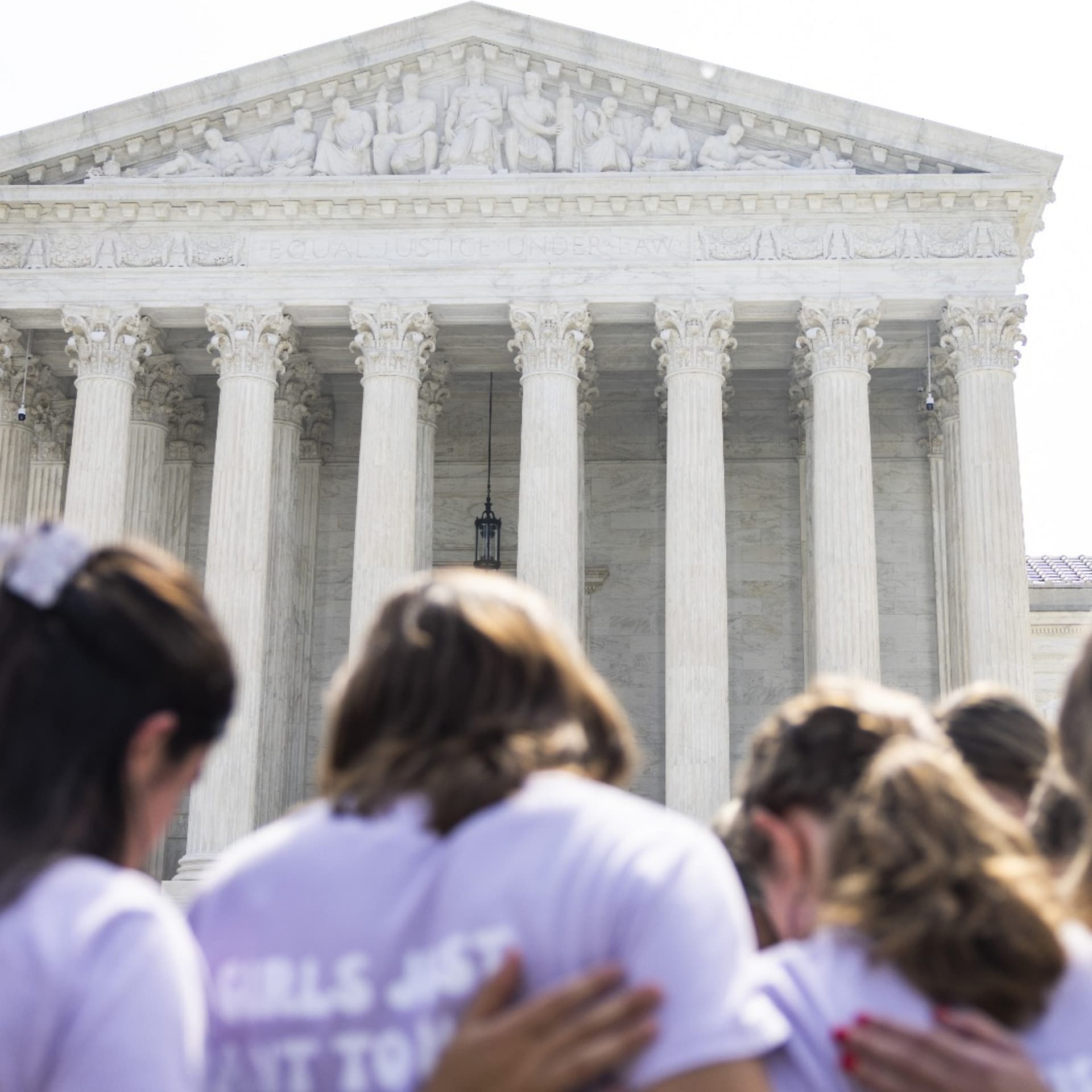
Photo: People gather outside the Supreme Court as it prepares to release decisions in multiple cases in Washington, DC, USA, 29 June 2026. Credit: EPA/Shutterstock