
In short
The Global Story bonus episode about how international law enforcement collaborates to identify and rescue children from sexual abuse material shared on the dark web, using cross-border investigations and technical/forensic clues.
Guests
Greg Squire, Department of Homeland Security (Homeland Security Investigations), child-crimes investigator since 2007; background includes Army service and prior Postal Service work. Host narrators Asma Khalid and Tristan Redman (BBC).
Key claims
Early cases relied on email/instant messaging; around 2010 offenders shifted to the dark web (Tor) for anonymity. Law enforcement can “defeat another network” by coordinating globally, 24/7, across countries. Victim identification often requires manual pixel-level analysis because images lack metadata (no EXIF/timestamps).
Notable examples
“Lucy” case (first dark web case with a Denmark tip), where brick-pattern clues led to a specific U.S. brick plant, narrowing suspects to a 50-mile radius; agents entered the home by 3 p.m. and found Lucy safe. “Twinkle” case: a dark web site for children five and under, uncovered via multilingual chat clues and Portuguese expressions, leading to arrests with help from Portugal and Brazil.
Written by AI. May contain mistakes. Listen to the episode to check what was said.
Chapters
Tap a time to open that second in VOUnderstanding the Dark Side of Humanity
1:47 to 2:19
Exploring the collaboration against child predators online.
“This is a story about the darkest part of humanity.”
The Work of Homeland Security Investigations
2:19 to 2:49
Insights into the challenges of investigating child exploitation.
“From the BBC in London, I'm Asma Khalid.”
Personal Journey into Law Enforcement
2:49 to 3:21
A discussion about Greg's career path and motivations for his work.
“For the last five years, our colleagues at the BBC World Service have followed Greg Squire and other agents around for a big investigation.”
The Emotional Toll of the Job
3:21 to 4:19
Balancing the emotional challenges of work with family life.
“So I've got to ask why you wanted to get involved with this work.”
Processing Trauma in the Line of Duty
4:19 to 4:57
Strategies for handling traumatic material while remaining effective.
“And we had an amazing team in Boston at that time.”
Evolution of Child Exploitation Tactics
4:57 to 6:53
How child predators have adapted their methods over time.
“How are you processing this all while also being a parent?”
Exploring the Dark Web
6:53 to 10:15
Understanding the dark web's role in child exploitation crimes.
“What did it mean to try to hunt down people and try to find children during that time period?”
Case Study: Identifying Victims
10:15 to 12:11
A detailed account of a case involving victim identification on the dark web.
“And so they quickly learned that if they can create these websites on the dark net, they can elude law enforcement like 98 % of the time.”
Challenges of Data Analysis in Investigations
12:11 to 14:02
Discussing the difficulties faced in tracking down offenders and victims.
“So it got to the point where six, seven months into the investigation, she was probably 12-ish years old.”
The Case of the Exposed Brick
14:02 to 18:08
Learn how a photo of bricks led to the breakthrough in locating a missing girl.
“But at the time, a lot of it's just manual searches going through an Excel spreadsheet, you know, sometimes with six, seven thousand, 20 ,000.”
Show all 16 chapters
Urgent Action to Rescue Lucy
18:08 to 19:06
Discover the urgency and steps taken by investigators to secure Lucy's safety.
“If they lived inside that radius, we were looking for their social media pages.”
Global Collaboration in Child Protection
22:03 to 26:52
Explore the international efforts and networks developed to combat online predators.
“And that piqued my curiosity about how global this work is.”
Protecting Kids in the Digital Age
26:52 to 28:03
Learn strategies to keep children safe online and maintain open communication.
“I mean, I guess I'm wondering also, Greg, we've been having this conversation, and I imagine a lot of parents are listening, and really, just to put this bluntly, are going to be really freaked out.”
Empowering Children Against Online Predators
28:03 to 29:37
Learn how to empower children to communicate about potential dangers they face online.
“These five-minute conversations we can have with our kids that are tough.”
Interview with Greg Squire
29:37 to 29:57
Gain insights from Greg Squire of the Department of Homeland Security on combating online threats.
“Greg, thank you very much for taking the time and talking to us.”
Global Story Podcast Reminder
29:57 to 30:21
Discover more about where the world and America intersect through this ongoing podcast.
“That was Greg Squire with the Department of Homeland Security in the U.S.”
Transcript
Automatic transcript. May contain errors.0:00This BBC podcast is supported by ads outside the UK.
0:30Moto Casino, American Social Casino. Spring into deals for seasonal savings. Shop select one fine annuals for just$1. Plus, get a free additional cobalt 40-volt 2-amp hour battery when you buy a select cobalt 40-volt trimmer and blower combo kit. Our best lineup is here at Lowe's. Lowe's, we help, you save. Ballot at 5-6. Annuals offer excludes Alaska and Hawaii. Visit your nearby Lowe's on South Holland Road in Chicago.
1:08Hey there, I'm Asma Khaled. And I'm Tristan Redman. And we're here with a bonus episode for you from the Global Story podcast. The world order is shifting. Old alliances are fraying and new ones are emerging. Some of this turbulence can be traced to decisions made in the United States. But the U.S. isn't just a cause of the upheaval. Its politics are also a symptom of it. Every day we focus on one story, looking at how America and the world shape each other. So we hope you enjoy this episode. And to find more of our show, just search for The Global Story, wherever you get your BBC podcasts. We're taking a step away from the headlines today and bringing you an episode that we've actually been cooking up for a while now.
1:55Now, I need to be upfront. This is a story about the darkest part of humanity. But it's also a story about people around the world finding ways to work together, which in these times is worth talking about. It's a story of how law enforcement agencies work across time zones and borders to rescue children from abuse. From the BBC in London, I'm Asma Khalid. And today on The Global Story, we hear from a man who has spent the past two decades making it his mission to hunt down the child predators who populate the darkest corners of the Internet.
2:40Before we dive into today's show, I just want to let you all know that, as you might imagine, this episode includes details of child sexual abuse. For the last five years, our colleagues at the BBC World Service have followed Greg Squire and other agents around for a big investigation.
2:57Greg Squire:I'm part of Homeland Security Investigations, and we specialize, our group specializes in crimes against children. And, you know, the work has changed and evolved throughout my career, which started in 2007. And, you know, our job is to locate these children, you know, and to minimize the amount of time between when they're abused and when we can find them and rescue them. You have a job that I cannot imagine doing. So I've got to ask why you wanted to get involved with this work. I was in the Army directly out of high school. When I got out of the service, I began working for the Postal Service.
3:38Greg Squire:Doing that, I was going to night school. I delivered mail, yeah. Okay. It was very stable. Two young kids at the time. Yeah. And so that stability was very important, steady income. And then I just started going to night school. I knew I wanted to do something different. I wasn't, you know, no little boys grew up to want to be postman. I don't think. I don't know. My little boys are obsessed with bailout comes by, delivers some mail. The trucks are pretty cool. The shorts are kind of nice. You know, there are some benefits. But you realized it wasn't for you. So you wanted to do something else.
4:08Greg Squire:Yeah, it just wasn't for me. You know, so when I joined Homeland Security, I, you know, I really didn't know what we were getting into. You know, I didn't know much about the crime or how it was investigated or any of that type of stuff. I hadn't had any exposure to it. And we had an amazing team in Boston at that time. And even though there are hardships, the payoff, you know, and to be able to know that you made a big difference in a child's life, there's really nothing that can compete with that. You're a parent yourself, Greg. And part of why I cannot imagine doing this kind of work is, I think it would be impossibly difficult.
4:51to look at images, videos of children being abused day in and day out, and then have to go home and parent my own children. How are you processing this all while also being a parent?
5:06Greg Squire:It's a tricky balance, but I think, you know, if you look at it from the perspective of your own children being safe and comfortable every day, And then at work, you're seeing children who are going through a nightmare. I looked at it in the beginning and said, these children deserve to have the life my children have. And how can we get there? How can we help to get them in a position where they can literally just be a child? And so for me, while it was difficult to see kids the same age as my children, it became kind of part of the mission. Did you ever worry about becoming so accustomed to seeing this all over the time?
5:50I mean, I imagine the first time you see something, it is so shocking. You can't process it. Over time, did your ability to process that traumatic material evolve? And did you ever worry about what that meant?
6:03Greg Squire:Yeah, for sure. I mean, you do become desensitized to a certain degree, but there's some value in that armor. You know, the knee-jerk reaction to instantly look away, right? You need to shoulder that and to say, the child is living through a terrible experience that most of us can't even relate to. So for me to shy away from even looking at the images, that's not the answer. So whilst you do desensitize a certain amount, you know, you don't lose the drive and the motivation. and being able to sort of compartmentalize, like I said, wear that little piece of armor that protects you emotionally. It does help you look at the images objectively and look for those small details as opposed to be so focused on, you know, the horrific act that's occurring there.
6:52Greg Squire:Yeah, exactly. So let's talk more about the work. You began doing this work in 2007. What did it mean to try to hunt down people and try to find children during that time period? Yeah. In 2007, things were certainly, I call it simpler. You know, we might see one or two offenders emailing each other or sending an instant message, you know, through one of those very basic AOL or AIM or whatever it was back in 07. So the crimes themselves were a bit more rudimentary. It was normally a case where we could go to a service provider and say, you know, who is Greg at Yahoo.com? And then we get an identification that way.
7:36So it was simpler then. And, you know, the content wasn't quite as voluminous as it is now. So you mentioned that in the early days, you all were tracking this down through things like Instant Messenger. does it continue to exist in that space or do you see these conversations? Do you see this abuse moving to different places and spaces?
8:04Greg Squire:So as we were tracking the crime from email accounts to instant messenger accounts, technology was advancing at the same time. And the offenders obviously understand what's happening, right? They see, okay, we're getting arrested if we're going to send images over email or if we send images over instant messenger. And right around 2010, we worked a case in Holland. So this was our first real international collaboration with the Dutch National Police, Amsterdam Police, and the individual that was arrested there. We had the opportunity to go and interview him. And when we were doing the interview, he sort of enlightened us to this thing, the dark web.
8:49Greg Squire:I didn't even know what it was. So the dark web is, you know, a subset of the Internet, and it does look just like the Internet. The difference is it can only be accessed through something called the Tor browser. And in the 1990s, the Department of Defense developed Tor so that our spies and people in other countries who couldn't access the Internet could now do that. If you're in China and you want to communicate or see what's happening in the world, your government can't block you because we've created this distributed network of nodes so that the Internet doesn't kind of know where you're coming from.
9:31Greg Squire:Tor became public around 2004 and functions on a distributed network. So anyone can be part of the Tor network if they want to donate some space on their machine or on their server. And that's really how it is anonymous. There is no one central point. There's encryption and communications kind of go like hop around on lily pads. And that's how it remains to this day? And that's how it remains today, yeah. And that sort of belief in the anonymity, is that why it becomes such a platform for people who are abusing children? Yeah, I mean, I think it was almost a no-brainer. You know, here's this portion of the Internet that's completely anonymous.
10:15Greg Squire:Law enforcement isn't there. And so they quickly learned that if they can create these websites on the dark net, they can elude law enforcement like 98 % of the time. And some of these forefathers, I guess, of dark web child exploitation were out there working to kind of recruit people into these sites and say, listen, we all know email and instant messenger are not safe. Come here. Come to our home on the dark web. We have material. Greg, I want you to tell us about the first dark web case that you worked on and how you all were ultimately able to track down the perpetrator. so when we started working on the dark web and we had a colleague from denmark come to us and say hey i found a picture and i think it's from america and his analysis was based on some of the artifacts in the background of the photo so if you imagined a light socket or a door handle or anything that you could sort of say oh this isn't european design this would be american design.
11:30Greg Squire:So when those images, it was only a handful at the beginning, came through, we kind of raised our hand and said, you know, we'll take the lead on this. We're going to make it our mission to try to find this child. At the time, called Lucy, she was about six years old, maybe six or seven years old. And we probably had maybe 10 pictures at that point. But as we began to kind kind of explore this new space, this new area known as the dark web, we were finding more and more and more pictures. And what became frightening was that Lucy was getting older in these photos. Meaning the abuse had been going on for some time.
12:10Greg Squire:Exactly. So it got to the point where six, seven months into the investigation, she was probably 12-ish years old. So we knew at that point that this poor girl has been abused for at least six years. And that's terrifying. It's terrifying as a parent, as an investigator, and your mission is to find her. So at that point, you know, there was a few teams doing what's called victim identification. that's a process of taking these pictures and looking at almost every pixel and trying to see what in those pictures could be unique, could be regionally specific, could be time specific, because the images that are on the dark web, they don't contain what's called XF data.
13:01Greg Squire:They don't contain a signature. It's not like you can look at the back of the photo and go, oh, this is March 10th, nothing, right. No timestamp, no information about cameras, no GPS, of course. And so, you know, we start talking to companies and saying, okay, if this is a t-shirt you're wearing here, when was it sold? Where was it sold? Who sells it? Who's going to have sales records? Who's going to have the knowledge to go, oh, you need to talk to him or her, and they can give you what you need. You know, when you combine that task, which is difficult on its own, with the knowledge that this abuse is ongoing, it's a tremendous amount of pressure.
13:44Greg Squire:And we would take these big databases, some of them with, you know, 30 ,000 people bought, you know, this T-shirt, say, or this bed. And it's a big data issue, you know. I mean, we've come a long way since that time with technology and being able to kind of crunch those numbers. But at the time, a lot of it's just manual searches going through an Excel spreadsheet, you know, sometimes with six, seven thousand, 20 ,000. I guess this is before really the boom of AI. So it's not like you can put photos in. Yeah, this was definitely pre-AI. That would have been nice to have at our disposal back then.
14:20Greg Squire:So back then it was, yeah, it was a lot of whiteboards. It was a lot of spreadsheets printed and, you know, older school detective work. And so we were just moving through these lists and no matches, no matches. And so one afternoon, Thursday afternoon, we just started focusing on this photo. And it was just very strange that there was bricks inside this child's bedroom. So there was an exposed brick wall. An exposed brick wall, which, you know, we kind of all looked at it. We like, geez, we've spent months looking at these. Because you're so focused on the details of the shirts and the bedding, it just didn't really occur to us until that time.
14:56And so we thought there has to be someone who's an expert at bricks.
15:00Greg Squire:We began to just Google bricks, bricks, bricks in the industry. And one of the first hits was the Brick Industry Association. And we figured, why not? And just picked up the phone. And the woman answered the phone. I explained who I was, that we were looking for a missing girl. We don't know where she is in the United States, but we'd like some help if somebody could help identify these bricks. And quite honestly, we didn't really know where it was going to go from there, but just we wanted to kind of check that box and see what results we could get from them. Once we had that conversation with them, they were amazing.
15:41Greg Squire:They said, listen, just email us, you know, the best picture that you can of these bricks. We'll send it to our distribution list and see what they have. And we barely walked to our cars at the end of the day when the phone started ringing.
16:00Greg Squire:and emails started coming in. And there was just like a very instant consensus that this was a particular brick from a particular plant in America. And I eventually ended up having a phone call with John Harp. I work for the Acme Brick Company. I've been in sales since 81. That day, I was sitting at my desk doing my normal probably paperwork or report or something for corporate. and it popped up in my inbox and I read the email and I knew exactly what the brick was. It was a modular eight inch brick and it was square edged. Immediately made the brick pop out to me that it was a flaming Alamo. And I said, well, what can you tell me about it?
16:43Greg Squire:Because we're going to want to ask you for sales records. And he kind of chuckled at that point because he had been making that brick since the seventies. And whilst that was a little bit deflating. I stood there in my living room kind of looking out. My kids are running around the house and you know I think he could tell he kind of took the wind out of my sails a little bit but the next thing he said was you know what bricks are and I said no sir I don't and he said bricks are heavy. What I explained to Greg was that brick are heavy and we can only haul about 10 ,000 to a truck so we're not transporting bricks typically all the way across the country.
17:24So don't be looking way, way out. You need to be looking in this smaller area.
17:30Greg Squire:And he said, I can tell you right now, that brick did not travel 50 miles outside of this plant. And then the lights turned on in my head. And I said, you know, now we can take this pin at that brick factory and draw a 50-mile radius around it and take all those results we did from the furniture, from the clothing, from all those items, and only focus on the ones inside that 50-mile radius. And that just blew the case wide open.
18:07Greg Squire:We just began going through the social media pages of everybody that we found on that list, regardless of what they purchased. If they lived inside that radius, we were looking for their social media pages. and lo and behold i think by 9 a.m that morning we were flipping through and all of a sudden there's lucy right in front of us it's one of those feelings you just never forget and so you all went to the home so um well the home was quite a distance from from boston Our biggest concern was that, you know, it's 9 a.m. and we're going to assume that Lucy's at school. And our mission at that point was to get our agents in that house before she could get home from school.
18:58Greg Squire:We were quite fearful and felt quite responsible at that point to make sure she was never abused again. And so we got on the phone with our agents in that area, and they were in that house by 3 p.m., I think, on that very same day. Wow. Wow. Just a huge—I think the relief and then the anticipation started almost instantly. You know, we felt very confident we had the right house. We felt very confident that Lucy would never face her abuser again. And getting that call around 3 o 'clock and them saying, we're in the house and she's safe.
20:05Only Moto is U.S. owned and operated. Moto. It's American-made. That's who we are, and that's who we care about. Play for free at Moto.us. Moto Casino is the social casino. Void were prohibited. No purchase necessary. Visit Moto.us for more details. Must be 21+. Moto Casino. American social casino. Hey, Chicagoland. Wayfair's big sale is here at the Wayfair store. It's Wayday, and it's on now. Now through April 27th, you can score huge deals on everything home in person. Like up to 60 % off mattresses, up to 40 % off appliances, and up to 60 % off home reno. Plus, you can take home the small stuff that day and get the big stuff shipped fast and free.
20:49Shop Wayday now through April 27th at the Wayfair store at Edens Plaza in Wilmette. Wayfair, every style, every home. Save big money on everything at Menards. Take control of your outdoor space. with Roundup, Weed, and Grass Killer. The Pump and Go container is ready and easy to use. With the Pump and Go sprayer, you don't need to mix your own liquid, and you get up to 10 minutes of continuous spray. Save big on Roundup, Weed, and Grass Killer. Plus, check out our flyer on Menards.com for all the great deals happening now. Save big money at Menards. Hey there, this is Thomas Jermaine, co-host of The Interface, the show that decodes how technology is rewiring your week and your world.
21:36On this week's episode, Apple's CEO is resigning, and we'll look at what that means for the future of smartphones. We'll talk about whether your latest favorite band is actually a secret marketing ploy, and how the AI data center boom has finally met its match, public backlash. Listen on BBC.com or wherever you get your podcasts.
22:02Greg, you mentioned at the beginning of this story about Lucy that you all got a tip from a colleague in Denmark. And that piqued my curiosity about how global this work is. You're based in New England, and your work, it seems, initially is focused on the United States. But over time, it appears that you're needing to collaborate with colleagues around the world.
22:30Greg Squire:Yeah. And this case was a door opening for us. The internet as a whole is borderless. It's a borderless environment. And the dark web created a anonymous borderless environment. So, you know, the team had come together probably a year after Lucy's rescue. It just made sense, you know, combining efforts and being able to sort of have an investigative team that could work 24 hours a day. It's just become, you know, a very well-oiled machine. Are they the equivalent of you, Greg? They're sort of working in equivalent spaces for their own local national law enforcement agencies? Yeah, exactly. These are members of law enforcement in every country, practically.
23:14Greg Squire:You know, we've worked months on investigations where the children were not in the United States. And, you know, that's the mission. Every child matters the same. Can you tell us about the first case you worked on where you were really able to tap into the power of this global network? I mean, I think that maybe we should pause for a moment. I mean, when you look at these sites on the dark web, it is 100 percent a criminal organization. It's very structured. It's very organized. You know, businesses could stand to learn by the way it's structured and organized. It's scary because these guys have the technical aptitude.
23:54Greg Squire:They have more motivation, you could argue, than anybody in a crime type to not want to get caught. You know, this is now maybe an eight-year-old, ten-year-old environment that did not exist before and that now is extremely sophisticated. So, I mean, I think that Twinkle is one of the best examples of that global network. So Twinkle came to light because the website that he was, it appeared he was running, the entire site was dedicated to children five and under. That was a first for us. This was really scary. And, of course, at the beginning of the investigation, we have no idea where he is. But it also became very clear that the number of kids he had access to was extremely high.
24:44Greg Squire:And I think the top count was like maybe 12 or 14 children. Twinkle was the worst person on the dark map regarding the crime of child abuse. So Ricardo is a dear friend of mine. We established a network with different investigators. And also an amazing police officer in Portugal. And it's easy to send a message to someone like Greg and all the other Gregs that I know around the world. We met through another investigation. It takes a network to defeat another network. He was involved in the investigation from the start because Twinkle was posting messages in Portuguese as well as English. Twinkle used several maneuvers to cover the tracks on the dark net.
Read the full transcript
25:30He was writing in different languages like French, Spanish, Portuguese, English.
25:38Greg Squire:So you rely on people that are the native speakers to look at these spelling errors, to look at how, you know, if there's any special phrases. In those chats that were written in English, he used an expression. He said, it cost me the eyes of my face. It's a Portuguese expression. It's not an expression that you can use in English. It was the first clue about the nationality of Drinco. And Ricardo remembers a very particular phrase that would be Portuguese specific and specific to Portugal. And the Brazilian police said, oh, you know what? We arrested a guy a few years ago who was friends with this guy.
26:24Greg Squire:Why don't we look and see what they talked about? And they had a close relationship. They were sharing details about each other's lives. And when Ricardo was able to kind of analyze some of those details, it became quickly obvious who Twinkle actually was in real life. Well, you've been doing this work for a number of years, and you're still doing it. So what do you do when you get home after work to get some of these horrible images out of your mind? I mean, I guess I'm wondering also, Greg, we've been having this conversation, and I imagine a lot of parents are listening, and really, just to put this bluntly, are going to be really freaked out.
27:14There's just no mild way to put that.
27:18Greg Squire:Yeah, I mean, that's okay. It's a frightening topic, you know. But we also, we have the ability to protect our kids. You know, the decisions that we make, you know, like we control the narrative at home. And if there's a little basket in the living room and you say this is where cell phones go after 7 p.m. I like that idea. Then that's where they go. It's very simple. A state police told me one time about a kid having their phone in their bedroom. He says, you know, would you drop your kid off in a park at night? I said, absolutely not. He's like, then why would you allow your kid on the Internet with the door closed in their bedroom?
27:56Greg Squire:Anyone in the world could reach them there. And it's not 100 % terrible things can happen and accidents can happen. But there's also a lot of preventative things. These five-minute conversations we can have with our kids that are tough. They suck. It really is really not a great thing to have to talk to your child about, you know, the possibility of something happening to them. But what did they say? Can they tell you? Is it okay that this or this happens with a family member or a friend? Or I'm at a sleepover and I think this is happening. Do your kids feel comfortable enough to tell you, to tell an aunt, to tell a brother, to tell a sister?
28:40Greg Squire:Those confidences that we can give our kids, and they understand that they have us, and they have people in their lives that will listen to them. That is a strength that we can give our children that these criminals cannot take away. And a kid that says, I see a wolf, maybe they do.
29:02Greg Squire:And I'd be willing to call someone a wolf all day long if they're demonstrating wolf behavior.
29:12Greg Squire:And if I hurt your feelings, guess what? Too bad. That's kind of a hard soup for people to take on. But at the same time, you know, your kids have one shot at growing up. And it's the responsibility that we all have to do that job to take care of them.
29:37I really appreciate that advice. Greg, thank you very much for taking the time and talking to us. And good luck with your continued work.
29:46Greg Squire:Thank you very much. Appreciate it.
29:57That was Greg Squire with the Department of Homeland Security in the U.S. To hear more of his story, you can check out Season 11 of the BBC's podcast, The World of Secrets. And as always, a reminder that we here at The Global Story go deep every day on one story about where the world and America meet. If you're looking for a way to catch up on the latest news, you should check out our sister show, The Global News Podcast. This episode was produced by Zandra Ellen. It was edited by James Shield and mixed by Travis Evans. Our video producer is Matt Pintus. Our senior news editor is Chyna Collins.
30:31And I'm Asma Khalid. Thanks as always for tuning in, and we'll talk to you again tomorrow.
30:59Donald Trump last week announced that he'd be releasing the US government's UFO files. So why the renewed interest in life out there? And what deeper spiritual meaning might people be searching for? Check out the global story We Are Serious Journalists on bbc.com or wherever you get your pods.
From the publisher
Warning: this episode includes discussions of child sexual abuse and upsetting scenes. The BBC has been following a global team of undercover officers as they investigate the most hidden corners of the internet to stop those who exploit and harm children. A dedicated network of specialist investigators has successfully tracked and caught serial paedophiles who operate across the dark web with the same sophistication and secrecy as international organised crime syndicates. We speak to Special Agent Greg Squire who has dedicated his life to rescuing children who might otherwise never be found. His story is featured in the BBC documentary The Darkest Web and the BBC podcast World of Secrets: The Darkest Web. For further information on the issues raised in the programme, contact support organisations in your own country. For a list of organisations in the UK that can provide support go to bbc.co.uk/actionline.
The Global Story brings clarity to politics, business and foreign policy in a time of connection and disruption. For more episodes, just search 'The Global Story' wherever you get your BBC Podcasts. Producer: Xandra Ellin Executive producer: James Shield Mix: Travis Evans Senior news editor: China Collins
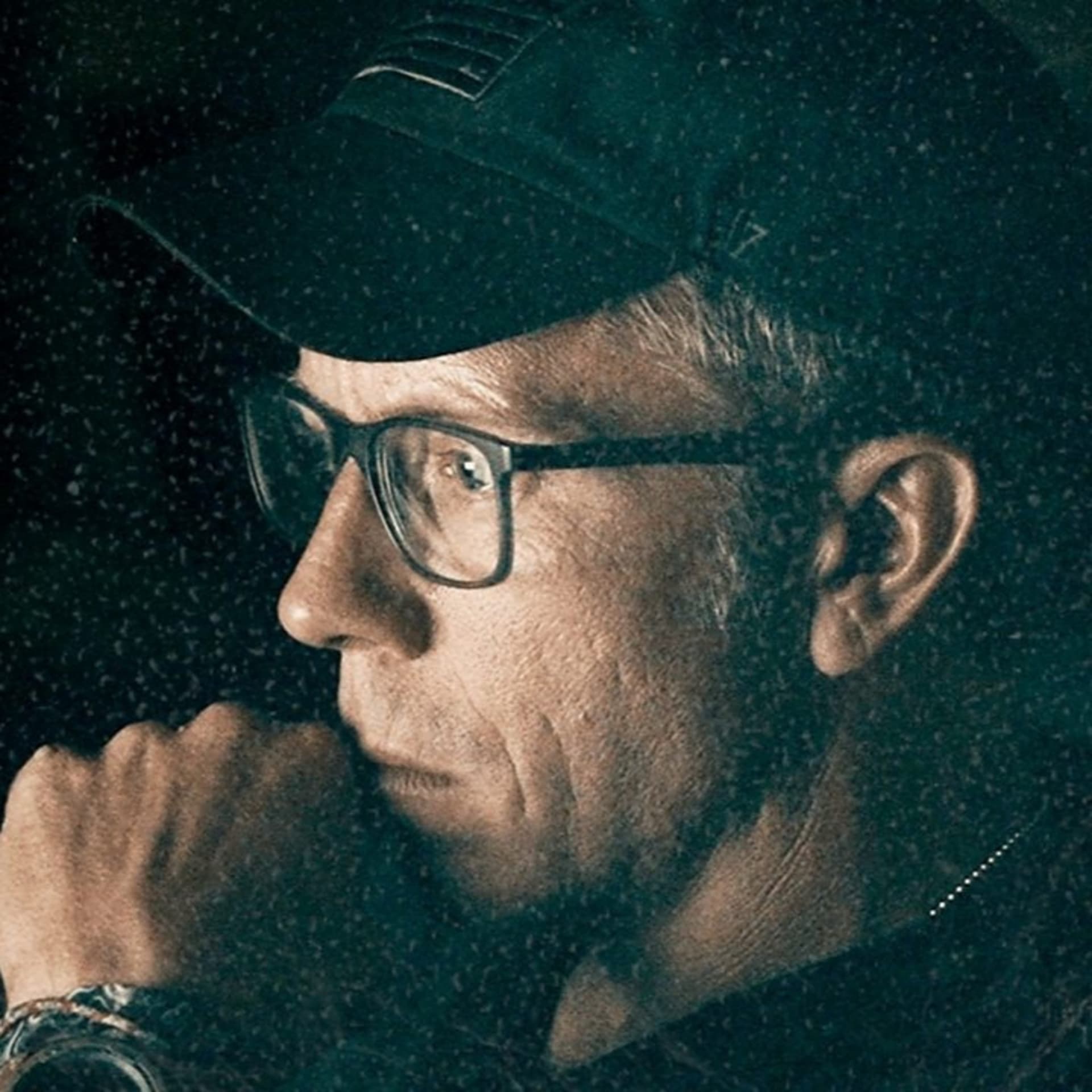
(Photo: Greg Squire in The Darkest Web: Inside the internet’s most hidden corners to save kids – BBC World Service Docs)



