
In short
Global News Podcast Episode Summary
Episode Title
The Happy Pod: Mountaintop Matchmaking
Episode Overview In this unique episode of the Global News Podcast, listeners are introduced to heartwarming stories that intertwine love, community, and creativity. The central theme revolves around unconventional matchmaking in the Swiss mountains, along with other uplifting initiatives from around the globe, such as efforts to combat homelessness in Tasmania, community theater in Finland, and a groundbreaking appearance on a famous dance show by a celebrity with Down syndrome.
---
Key Segments
- Mountaintop Matchmaking: “Mountain Tinder”
- Concept: Handwritten notes left in notebooks on mountain peaks serve as a means for nature lovers to connect romantically.
- Origin: Initiated by Thibault Moni, who desired companionship while hiking in the Swiss Alps; he introduced the idea of notebooks to facilitate connections based on shared interests in nature.
- Impact: The initiative has grown beyond Switzerland, with similar projects emerging as far away as Argentina.
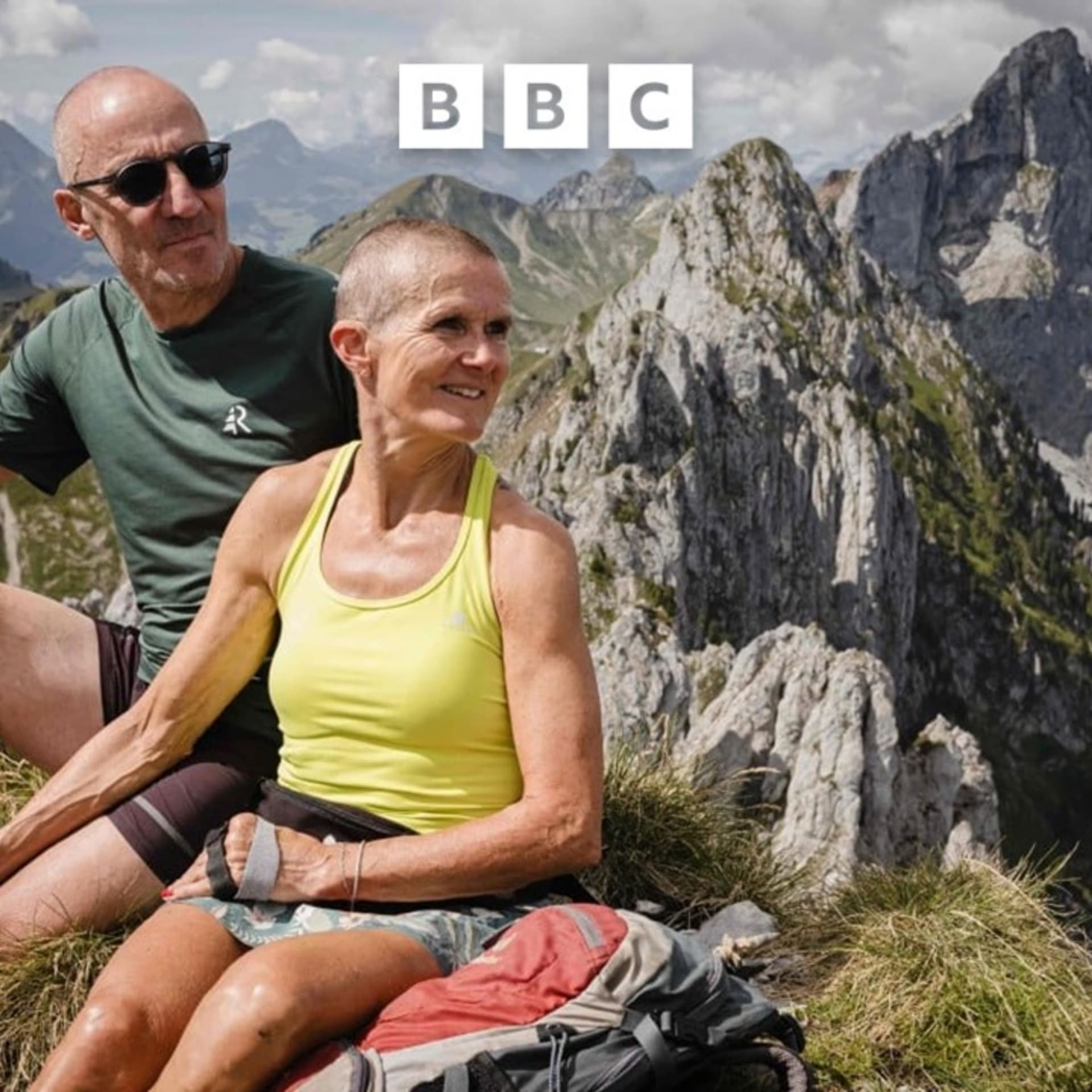
- Personal Story: Cathy and Patrick, a couple who met via this project, recount how a note left by Cathy led to their relationship, emphasizing the ease of connecting over shared experiences in nature.
- Tackling Homelessness in Tasmania
- Story: Richard and Jan Gould address the growing issue of homelessness among older women by transforming a former boarding hall into low-cost housing.
- Motivation: After witnessing the struggles of women experiencing housing insecurity, they took action to provide safe and stable accommodations.
- Community Response: Their project, dubbed "Blue Sky House," receives positive reactions from the local community, highlighting the need for immediate solutions to homelessness.
- Theatre on the Water: Touring Finland
- Company Overview: The Skärgårdstheater, a unique theater group, performs in remote communities aboard a boat.
- History: Founded in 1969, the theater aims to bring culturally enriching performances to rural areas, enhancing community engagement and cultural appreciation.
- Experience: Actors recount the joys and challenges of performing in different venues, emphasizing the unique connection with local audiences and the beauty of the archipelago.
- Breaking Barriers in Dance: Ellie Goldstein on Strictly Come Dancing
- Highlight: Ellie Goldstein becomes the first contestant with Down syndrome to participate in the UK version of the popular dance show.
- Significance: Her participation is seen as a milestone for visibility and representation, aiming to challenge perceptions of ability and disability in the arts.
- Community Support: Fellow dancers and advocates express excitement and pride in Goldstein’s achievement, emphasizing the positive impact it can have on inclusivity in the entertainment industry.
- Innovative Use of Seaweed in Packaging
- Innovation: Nopla, a company founded by Rodrigo Garcia Gonzalez, creates biodegradable packaging using seaweed, designed to replace traditional single-use plastics.
- Product Development: Initial products included an edible water bottle, which gained viral attention; they have since expanded to packaging solutions that are environmentally friendly and compostable.
- Environmental Impact: The initiative has successfully replaced millions of single-use plastics across Europe, marking significant progress in sustainable packaging.
---
Key Takeaways
- Connection through Nature: Personal relationships can blossom in unexpected places, and the simplicity of shared interests can foster deeper connections.
- Community Action: Individual initiatives can have a profound impact on local issues such as homelessness, showcasing the power of grassroots efforts.
- Cultural Enrichment: Bringing art to remote areas enriches community life and fosters social bonds.
- Representation Matters: Media representation of diverse abilities can inspire and empower marginalized communities.
- Sustainability Innovation: Exploring natural materials for packaging can lead to significant environmental benefits, highlighting the importance of sustainable practices.
---
Conclusion The Happy Pod episode presents a tapestry of stories that celebrate love, creativity, community engagement, and environmental consciousness. Each segment reinforces the idea that positive change can stem from individual actions and innovative ideas, ultimately fostering a sense of hope and connection in a complex world.
For more such inspiring stories, listeners are encouraged to engage with the podcast's community by sharing their own experiences via email.
---
The episode was mixed by Graham White, produced by Holly Gibbs, Harry Bly, and Rachel Barkley, and edited by Karen Martin. The host for this episode was Jeanette Jalil.
Written by AI. May contain mistakes. Listen to the episode to check what was said.
Transcript
Automatic transcript. May contain errors.0:00This BBC podcast is supported by ads outside the UK. If journalism is the first draft of history, what happens if that draft is flawed? In 1999, four Russian apartment buildings were bombed, hundreds killed. But even now, we still don't know for sure who did it. It's a mystery that sparked chilling theories. I'm Helena Merriman, and in a new BBC series, I'm talking to the reporters who first covered this story? What did they miss the first time? The History Bureau, Putin and the apartment bombs. Listen on BBC.com or wherever you get your podcasts. This is the Happy Pod from the BBC World Service.
0:49I'm Jeanette Jalil and in this edition, turning to nature to find love. The person has come to the summit, so they most likely love nature and mountains. The first common point is established, and it makes it easier to meet people and for things to work out. The mountain visitor book setting people up on dates. The couple providing low-cost accommodation for older women facing homelessness. I've always wanted to do something about the homeless, but it's never been within our reach. and this one fell within our reach and we thought well let's just do it. An unusual touring theatre company based on a boat and how a reality dancing show first is inspiring people with Down syndrome.
1:34I am very excited because I am keen to raise the awareness to put a really positive message out about ability rather than disability.
1:52We start with some rather special little red books that are helping people find love in the mountains. The idea was started by hiker Thibault Moni two years ago after he found himself wishing during a climb in the Swiss Alps that he had someone to share the view with. So he decided to leave notebooks on a variety of peaks for people to write messages for potential future partners. an alternative to dating apps with the only algorithm being the ability to complete different climbs. The idea, nicknamed Mountain Tinder, has spread, with people as far away as Argentina saying they've started their own notebooks.
2:31Chantal Hartle has been finding out more.
2:37What's that shit say?
2:41Cathy and Patrick set off on a hike from the foot of the Wanflou Mountain. It's a walk they've done many times together. Awaiting them at the summit is not only an incredible view, but a very special reminder of how their close bond began. This is where, nine months ago, Patrick discovered a message left by Cathy in a red leather-bound notebook. Soon after, they had their first date, a long scenic walk ending with a picnic. The pair take a break from their hike in a field surrounded by yellow flowers. They sit side by side, their arms linked, and reminisce about the unusual circumstances that brought them together.
3:37Both agree that this option suited them more than meeting a partner face to face. So what did Cathy's message say that piqued Patrick's interest?
3:49Well, she might not give us the full account, but something about enjoying relaxed hikes and maybe going for a drink afterwards. The man who unwittingly created this match, Thibaut Monny, calls the project the Tinder of the mountains. He came up with the idea because he was tired of conventional dating apps.
4:14Choosing a person by swiping left or right on an image didn't appeal to me very much. I came up with this idea, which is very simple. The person has come to the summit, so they most likely love nature and mountains. The first common point is established. The first date is usually in the mountains and it makes it easier to meet people and for things to work out.
4:43Moni flicks through a notebook full of messages. One person writes that they are passionate about mountains, skiing and climbing. Another says they're looking for someone who likes sports, metal and tattooed women. As for Moni's own note that he left here two years ago, it reads, I climbed up here for the sunset, and next time there'll be two of us. His wish did come true, but not in the way he imagined. His partner reached out to him after seeing him on television, talking about his mountain dating project.
5:19Chantal Hartle reporting. And if you have an unusual story about finding love, we'd love to hear from you. just send us a voice note or an email to globalpodcast at bbc.co.uk. A couple on the Australian island of Tasmania have taken tackling homelessness into their own hands. Richard and Jan Gould noticed older women struggling with housing insecurity, so they bought a former student boarding hall, which they've now turned into low-cost housing for those at risk of losing their homes. Helena Burke has been finding out more. When Richard and Jan moved to Tasmania's largest city, Hobart, three years ago, they decided to open a short-stay rental for women in need.
6:03The couple says the experience opened their eyes to how severe Australia's housing crisis has become. Over the last couple of years we found a number of women who were finding themselves homeless needing to be accommodated. So we've brought them in as guests and they've stayed from either a week or some up to about four or five months. and we're starting to realise that this is a very serious and very deep problem within the city. I think the first one was three days. She'd been sleeping in her car for six weeks. She was in her 60s and she just wanted three days until she got into government housing.
6:37And we had another who had, because of a stroke, had lost her job and she didn't have enough money to move into anywhere in Hobart. We had three or four of them and it just got very sad. In June, Richard and Jan withdrew some money from their retirement fund to purchase a 10-bedroom, five-bathroom home in South Hobart. The building was formally used by the University of Tasmania for student accommodation. The couple says the house will offer stable, low-cost housing for older women at risk of homelessness. We thought, this really is an issue, you know. It wasn't just a once-er. And I've always wanted to do something about the homeless, but it's never been within our reach.
7:19and this one fell within our reach, and we thought, well, let's just do it. Homelessness campaigners say that private citizens shouldn't have to be the ones to take action, and that governments should be doing more to increase affordable housing in Australia. But Richard and Jan say these women need help now, and their project has been welcomed with open arms by the local community. Some people are not quite sure what we're doing, but once they grasp the concept that we're actually doing this to create a safe space for these women, they come on board very quickly. We're setting up projects for the gardening that I've got an architect on board for the works that we've got to get done.
7:57Builders have come forward to talk to us. We're still in the early days of this of course but everyone who's seeing the project and understanding this project is just a community based but we're just giving it a kick off with our financial support. They'll invite their first guests once the house is ready. It needs things like the path was deteriorated so we've got to make it safe. We'd like another little bathroom and kitchen for our tenants upstairs so we'd like to put that in before they came in. And it's very small tweaks that we need to do and we've just got to get council approval to go ahead with it and then we'll be right.
8:33We'll be opening the doors ready to rock and roll hopefully at the beginning of October or earlier if we can do it. The couple have named the building Blue Sky House, a symbol for what they hope it will come to represent. Helena Burke reporting. To Finland now and a group of actors who bring the joy of theatre to remote communities by touring on a boat. Members of the theatre company live on board and dock in towns and villages on the country's southwestern islands to perform. The boat has been afloat for 56 years. Amelia Janssen hopped on board to find out more. On a hot summer's day, I met up with the Skärgårdstheater as they were preparing to perform their play in Bara Sund.
9:17They travel around on their boat MS Sele, and producer William Tigerstedt gave me a tool. She's from the 1930s, almost 20 metres long. She's a character. It has 16 beds. A few of them are a bit short, so if you're over 180 centimetres, I wouldn't recommend. We have electricity on board, we have water. It's a tour bus in a way. So how did a theatre company decide to set sail? Director Tom Reiström also joins us for a chat. Tjärgårdstättern was founded in 1969. It was started by a group of young actors and artsy people in the hippie times in Helsinki. There was this big social project of bringing out good theatre to the more rural areas.
10:08They bought a boat and started this as young students. The first boat was owned by the theatre and then they had shows in the boat. But we don't do that anymore. Now we tour the archipelago and we visit communal houses. And the first boat was actually named by someone pretty famous. It was someone pretty famous. It was named by Tuve Jansson, the author Tuve Jansson, who also was generous enough to give a bit of her good moving money for the theatre. What's the experience like actually spending a whole summer on a ship, sailing around? It's ludicrous, but it's also so magical. There's something different in playing, first of all, in the communal buildings, but also the people in the archipelago are so different from the city people.
10:57They're much nicer and they just have a sense of everything will be figured out in a moment. If we come in and we're like, hey, we have a crisis. they're like, ah, it's going to be fine. And it's also pretty touching to see that, oh, the locals are actually coming to see the show and the summer guests and the tourists who are with their sailboats. We're now in our living quarters. This is like the hangout area of the boat. Every show from past, I don't know, maybe 20 years has left like a relic of themselves. For example, there is a broken guitar and then there is a crocheted salmon. Then there's the motor.
11:37that nobody almost understands, but it's an old motor that has a bit of fixing and repairing here and there. It has its problems. How do you not go crazy? Like you're literally living on top of each other. The situation is that you're in a tight space with a lot of people and your own personal space is nowhere to be seen. So you need to make it your own with headphones, with a book. You have to be ready to solve problems or be okay with the uncertain situation. It's basically what an actor has to do. all the time on stage. And we'll find out about the latest play and how it's going down with audiences later in this episode.
12:15People often ask what the secret is to living a long life. Well, according to Molly Silver, who's just celebrated her 107th birthday, she just somehow forgot to die. Molly, who lives in Cornwall in southwestern England, took up art at the age of 60 and still sells her paintings from her garage. And she's a very, busy woman. She has five children, 13 grandchildren, eight great-grandchildren and six great-great-grandchildren. Her daughter Penny, says Molly, keeps in touch with family and friends online every day. She gets up in the morning and she goes on the internet and looks at Facebook and writes emails and then she does painting.
13:02I think she's pretty amazing. I'm not certain I'm are going to get to that stage, I think I'm not there now. Well, Molly has been giving Jake Wallace some advice on living a long and happy life. You're never on your own nowadays, are you? When I learned to drive, the first time when I left the school and drove home, I suddenly realised that was the only place I could be in where I could be on my own. Nobody could call me, no child could demand anything so I loved driving from then on that's always a joy a little bit of solitude do you think solitude and having time by yourself is important for you know for living a happy life I do I do I think you should be able to sit on one side and just forget everything and just let yourself be yourself for a little while so what I'd like to know is is what what are your views on on happiness and and how to lead a meaningful and happy life well i think being yourself if you can you don't have to pretend to be another person i i've always been happy it's it's in my body to be happy i don't have moments of grief really sad grief but you come through that I think you're amazing Molly it's a classic question but what's the secret to living a long life people ask me and I've no idea it just happened I thought my husband would ask me I thought I'd do it before him but no he went when he was 94 and I'm still jogging along I don't know how I got to be that age.
15:00It just happened year after year. They tell me I'm an old person. I have to go along with that. Do you feel like an old person? No. Just frustrated because I can't do the things I used to do. But no, I don't feel like an old person. Molly Silver, who does sound amazing for 107 years old.
15:32Still to come in the happy pot. Always. It has to have a plastic liner. It looks like cardboard, but it's not. It needs you can recycle or you can compost it. Replacing the hidden plastic in food packaging with seaweed.
15:53Indeed.
16:18series, I'm talking to the reporters who first covered this story. What did they miss the first time? The History Bureau, Putin and the apartment bombs. Listen on bbc.com or wherever you get your podcasts.
16:34Since it began in the UK in 2004, Strictly Come Dancing has spread around the world with dozens of countries producing their own versions of the reality show, also known as Dancing with the Stars. For the uninitiated, celebrities are paired with professional dancers and learn a new dance style and routine every week, with the public choosing which couple to vote off each time. The shows have included stars who are deaf or blind or have prosthetic limbs. And now the model, actor and influencer Ellie Goldstein is set to become the first person with Down syndrome to take part in a regular series in the UK.
17:13I'm honoured and excited to be on a ballroom and not just my mum, I'm a dancer. I like Strictly. I can't wait to get on there. I was only like a beast game at the first time when I get on a ballroom, like, I'm free and I could dance, so any dancing, I'm going to love so much. My best partner is Nikita, of course. I love him. You want Nikita? I want him, please. I love him so much. Well, Becky Rich is a dancer and dance instructor who has Down syndrome and is part of a group called Dance Syndrome, an award-winning UK charity which uses dance to give people opportunities and joy. She told James Kumrasami her dad encouraged her to get into dancing in 2014.
17:56I didn't know what to expect. I'm nervous. But I'm not nervous now because it's been absolutely fantastic. I've gone from strength to strength. I dance teach. We get to perform on bigger stages. and then I dance to musical jazz. And we're talking to you, of course, as it's been announced that Ellie Goldstein is going to be on Strictly Come Dancing. What do you make of that? What did you think when you heard that? Yes, absolutely fantastic and really outstanding achievement for Ellie. I am very excited for her to be on a really big show because I am keen to raise the awareness to put a really positive message out.
18:42I believe in about ability rather than disability. And it's her time to shine. She really is absolutely fantastic. And we are cheering her on all the way. Yeah, well, no prizes for guessing who you're hoping will win. But tell me a bit more about you and what difference has it made to your life, dancing? How would you describe it? Dancing, for me, inspired me. I'm definitely inspirational because the dancing, it makes you feel better. It makes you feel like you're in another world. And to be proud of who we are, I'd be proud of it, absolutely. Well, look, Becky, I'm going to bring in someone who I'm sure is incredibly proud of you, your father, Simon.
19:30From your point of view, just tell us, I mean, clearly Becky has absolutely thrived since she's been dancing. She said you were the one that first got her into it. Just tell us a bit about how that happened. Well, yeah, I mean, Becky's always been very confident, right, from day one. But certainly her involvement with dance syndrome really has sort of developed Becky and her own self-esteem and confidence, but also given her so many opportunities. Becky told us she does a lot of teaching. And I understand maybe she's done a bit of teaching to her dad as well. Is that right? Oh yeah, well that was in lockdown and we were, you know, very frightened really, you know, because clearly we had to take great care of ourselves.
20:14But Becky came up with the idea of perhaps teaching me how to dance, which in itself is an enormous task. Is he any good, Becky? Absolutely fantastic, really outstanding. I'm just passing her a£10 note. Did I? you know yeah Simon obviously Becky's done a lot for visibility through Down syndrome but I wonder what you think of Ellie Goldstein being on Strictly what difference do you think it's going to make we're absolutely delighted obviously and I mean it's significant that somebody that has Down syndrome and I think her approach and their family's approach has been so she's got Down syndrome so what you know there's lots of people that have all sorts of different things but that doesn't really affect how you should approach your lives.
20:59And hopefully this might open up some doors for greater opportunities for more people. That was Becky Rich and her very proud father Simon talking to James Kumrasami. Seaweed is already used as food, fertiliser and even fuel around the world. But you might be surprised to learn it's also being turned into a type of plastic for food and drink packaging. Unlike regular single-use plastics, which can stick around for centuries, it's biodegradable and can break down in just a few weeks. Zoe Gelber has been finding out more.
21:42Rodrigo Garcia Gonzalez is the co-founder and CEO of Nopla, which stands for Not Plastic, a company that have been pioneering the use of seaweed for sustainable bioplastic packaging. An architect by training, Rodrigo has always had a passion for cleaning up plastic waste and for years applied his efforts to making buildings out of old plastic bottles. But after a while, I realised that was a lot of effort for not too much impact. So I came back to the university, in this case to Imperial College and Royal College of Art, where I met Pierre, who is the other co-founder, who was a plastic engineer, to try to rethink how we can package things without using plastic.
22:24They began by honing in on one of the existing ways that seaweed already gets used, in kitchens. This material had been used in the past for many different purposes and one of them is to make fake fruits or things like fake caviar or fake cherries or the fake pimento that is inside of the olives. Rodrigo and Pierre thought, what if we could do this not for cooking? But for packaging. In their student kitchen, they got to work making their first product, an edible water bottle called the Oh. So the first product, we call it Oh, because the name that people give it when this is for the first time, they make the sound of like, ooh, or surprise.
23:03And basically, it looks like a little bubble where we can put water or any other type of liquid into a membrane made out of seaweed. With the purpose that that membrane, you can compost it, but as well if you want it, you can eat it. Do you want to try one, by the way? Yes, I would, yeah. Ooh. Yeah. So put it on your cheek. It's going to explode like a cherry tomato. Mm-hmm. And then you can swallow the membrane if you want. Wow, it's got a lemon in it. Yeah, yeah. In this case, it's kind of like flavour water. When Rodrigo and Pierre posted a video of their edible water bottle online back in 2018, it went viral overnight.
23:43They got a lot of attention and funding. and soon they were supplying their edible water bottles to marathons and other sporting events all over the world. But when COVID hit and events ground to a halt, they decided they wanted to tackle a bigger problem, takeaway packaging, specifically the invisible plastic that often lines takeaway boxes. When you have a takeaway packaging that looks like cardboard, always it has to have a plastic liner, like a plastic film, to protect the cardboard from the grease or the water. It's what happens as well on coffee cups or other types of forms of packaging that it looks like cardboard, but it's not on the cardboard.
24:22And it means you can't recycle it. It means you can recycle or you can compost it. They tweaked their existing methods, so instead of making a bubble, they made a thin seaweed coating, which could be applied to paper or cardboard, industrialising their methods to make it at scale. And then once we have that in bigger scale, we're able to kind of like convert it into boxes of different shapes, different forms, boxes for salads, boxes for burgers, boxes for rice. And now we are in this journey of trying to scale it up to have even more impact because in the world of packaging, it's really linked with the amount of numbers that you can do.
25:00Rodrigo says that their seaweed packaging has replaced more than 21.5 million single-use plastics across Europe by working with some of the big takeaway delivery companies like Uber Eats as well as big catering companies across Europe. Their seaweed boxes can be found in office canteens, stadiums and concert venues. It might not work for everything, so we're not claiming that we can replace all the plastic in the world in all the applications, but at least for short-term consumption and small volumes, we know it works. That was Rodrigo Garcia-Gonzalez ending that report by Zoe Gelber. And you can hear more ingenious uses for seaweed on People Fixing the World wherever you get your BBC podcasts.
Read the full transcript
25:43Earlier on in the programme, we met the theatre company preparing to perform on an island in rural Finland. So, how did it go? Emilia Jansson was there with director Tom Reistrum, who explained more about the play.
26:01It's a second part of a trilogy that is about this place called Lystarö, Lystar Island, somewhere in the outer archipelago and the idea of the show is bringing up the local matters that is really urgent right now. So in the Finnish archipelago we have these communal houses that has been an important part of the whole national identity and has been a really important part for the civil rights movement, the women's movement. But nowadays people move out from these areas. There comes the question who takes care of it. During the break people rush outside to enjoy the fresh air. The sun hasn't set.
26:41It's summer in Finland after all. I managed to speak to Essie and Chris on why they're in the audience today. I think it's very funny and it touches on some interesting subjects as well. Here we have challenges here in the local community, so I can see some reflection of that in the play. I've spent every summer here in the Archipelago since 1992. It's very different. Pure nature, clean. We live on an island, so everything we do, we need to take a boat, take a boat to the local shop, take a boat to the theatre here, for example. So it's a lot of boat life and sea life. Have you been to the theatre company before?
27:19Yeah, it's an established tradition, if we can get tickets. So it's normally fully booked out. I'm here because I have my classmates on this, so I wanted to come and see them. Are you planning on applying to be able to be part of this company in the summers to come? I think it would be nice. I've been touring before as well, so it's not like a new thing for me to tour around with a play. Maybe on a boat would be the new thing. The boat would be really a new thing, so I'm wondering how claustrophobic they get there.
27:56So how do you feel the performance went today? Yeah, it was nice. So you've been here as an actor on board and now you're here as the director. What are the most important things you've learned? I learned a lot from this theatre and I think it's brought some kind of cultural, political identity for my whole career has come from this theatre. That was director Tom Reistrom ending that report by Emilia Janssen.
28:25And that's all from the Happy Pod for now. if you have a story you'd like to share, we'd love to hear from you. As ever, the address is globalpodcast at bbc.co.uk. And you can now watch some of our interviews on YouTube. Just search for The Happy Pod. This edition was mixed by Graham White. The producers were Holly Gibbs, Harry Bly and Rachel Barkley. The editor is Karen Martin. I'm Janat Jalil. Until next time, goodbye.
29:00If journalism is the first draft of history, what happens if that draft is flawed? In 1999, four Russian apartment buildings were bombed, hundreds killed. But even now, we still don't know for sure who did it. It's a mystery that sparked chilling theories. I'm Helena Merriman, and in a new BBC series, I'm talking to the reporters who first covered this story. What did they miss the first time? The History Bureau. Putin and the apartment bombs. Listen on bbc.com or wherever you get your podcasts.
From the publisher
In the Swiss mountains, handwritten notes left on mountain peaks have been turning scenic climbs into unexpected matchmaking journeys, bringing nature lovers together one hike at a time.
Dubbed “Mountain Tinder”, couples are meeting through notebooks tucked into mountaintop letterboxes. The movement is spreading beyond Switzerland, inspiring similar efforts as far away as Argentina. With no swipes or algorithms, it’s a love story written in the clouds.
Also: the couple in Tasmania who have taken tackling homelessness into their own hands; a group of actors who bring the joy of theatre to remote communities in Finland -- by touring on a boat; and how Strictly Come Dancing's first celebrity with Down's Syndrome is inspiring others.



