
In short
The Happy Pod episode highlights four BBC World Service stories: (1) the EMOTIVE postpartum hemorrhage intervention using a plastic blood-measuring drape; (2) a 60+ year friendship between Joy and Diane maintained across Canada and Australia; (3) fly-fishing charity Fishing for Life for people with breast cancer; (4) home adaptations for ADHD, plus conservation reports on the endangered Indian skimmer in India and temperate rainforest restoration in Northern Ireland.
Guests/backgrounds
Dr Hadiza Galadanchi (Nigeria, involved in EMOTIVE research); Prof Ari Kumarasamy (UK, EMOTIVE research); Helena Burke (interviewer); Joy and Diane Seneshaw (Canada/Australia); Jane McCubbin (reporter); Gillian Payne, Heather, Andrew, Libby, Adrian (Fishing for Life participants/volunteers); Louise Mylin (reporter on ADHD-friendly homes); Parveen Shaikh (Bombay Natural History Society, skimmer research); Branka Lissadisar (reporter); John Martin (Woodland Trust); Rosemary Mulholland (Ulster Wildlife Team).
Key claims/notable examples
EMOTIVE: ~14M women/year face excessive bleeding; 70,000 die; drape measurement + “bundle treatment” cut serious complications by ~60%; WHO recommended within six months; Nigeria reports no deaths since rollout. Friendship: started as pen pals in 1965 via Vancouver Sun; met in person in 1980; now uses texts/video calls. Fishing for Life: 10 free groups in England; volunteers teach fly fishing to improve physical/mental wellbeing; examples include Andrew (male patient) and volunteers continuing after bereavement. ADHD homes: sensory-friendly soft floors/mats, hammock swing, visual cues/labels, “ADHD tax” workarounds, clickable light routines. Skimmer: nest guardians (local community) protect sandbar nests; >60% chicks fled; skimmer population on Chambal doubled. Northern Ireland: ~30,000 native trees planted on a 41-acre temperate rainforest site; plastic tubes protect saplings; restoration aims for nature and long-term climate resilience.
Written by AI. May contain mistakes. Listen to the episode to check what was said.
Chapters
Tap a time to open that second in VORevolutionary Plastic Sheet Saves Lives
1:51 to 4:52
Learn how a simple plastic sheet is drastically improving maternal health.
“Well, she's just a very special person in my life.”
A Friendship Spanning Decades
4:53 to 12:12
Joy and Diane share their extraordinary friendship cultivated through letters.
“So the recommendation isn't restricted to just low income countries.”
Fishing for Life Charity Impact
12:13 to 14:01
Discover how a fly-fishing charity supports those affected by breast cancer.
“The charity Fishing for Life aims to help with both physical and mental wellbeing.”
Healing Through Fishing: A Community's Journey
14:01 to 16:06
Explore how a fishing program aids cancer survivors in their recovery.
“Heather was a volunteer for almost a decade before she got her own diagnosis.”
Introduction to Upcoming Stories
16:14 to 16:37
Tease about conservation efforts in Northern Ireland and India.
“It's a win-win for the community staying on the bank of the river because they are getting seasonal employment.”
Creating Neurodivergent-Friendly Spaces
18:44 to 23:26
Hear how families are adapting homes to support children with ADHD.
“To Australia, with homes that are being adapted for ADHD.”
Conservation Success: Protecting the Indian Skimmer
23:27 to 26:56
Learn about efforts to protect the endangered Indian skimmer through community involvement.
“A scientist has been awarded a prestigious conservation award for her efforts to protect the endangered Indian skimmer.”
Restoring Northern Ireland's Temperate Rainforest
26:59 to 28:13
Discover the restoration of a rare temperate rainforest in Northern Ireland.
“We end in Northern Ireland, where a rare and environmentally important rainforest is set to come back to life over the next century.”
Restoring Ireland's Rare Forests
28:13 to 29:43
Learn about the ecological significance and restoration of temperate rainforests in Ireland.
“Woodland creation along that temperate rainforest zone is really important because, you know, future generations will benefit from the nature-based solutions that that rainforest provides.”
Signs of Resistance Against AI
30:12 to 30:31
Explore recent societal reactions and resistance towards artificial intelligence.
“But this week, the Pope issued his first big manifesto, and in it he called to disarm AI.”
Transcript
Automatic transcript. May contain errors.0:00This BBC podcast is supported by ads outside the UK.
0:30The new tropical butterfly refresher from Starbucks. Guava and passion fruit flavors with mango pineapple flavored pearls. Yeah, that feels like summer before you even taste it. Funny how one small stop becomes the best part of the day. Start your summer rhythm with Starbucks. Try the new tropical butterfly refresher from Starbucks. John Daly here. You know what day it is? Neither do I. I live life daily. That's why I only spend on Moto Casino. Moto's got daily free bonuses, daily tournaments, new slots added daily. And the best part, guaranteed daily jackpots. You can't beat that. So today's the day you're gripping to spend it with me on Moto.
1:11America's Social Casino. Play for free on Moto.us. Moto Casino is the social casino. What were prohibited? No purchase necessary. Visit Moto.us for more details. Download the Moto Casino app today. Must be 21 plus. Moto Casino. America's Social Casino. This is The Happy Pod from the BBC World Service.
1:35I'm Holly Gibbs and in this edition... I haven't seen any intervention that is saving women as much. So it's amazing. The simple plastic sheet that is saving the lives of thousands of women after childbirth. Also, the friendship spanning six decades and thousands of kilometres. Well, she's just a very special person in my life. I'm very blessed to have her. We don't have the same blood running in our veins, but we are like sisters. It's really special. The fishing group supporting people with cancer. I'm here in this moment in time and it's just lovely. I get peace and separation from all the doctor's appointments.
2:19You just want it to go on forever. And? I can be myself and it's just I can control what I can do. Adapting homes to help people with ADHD.
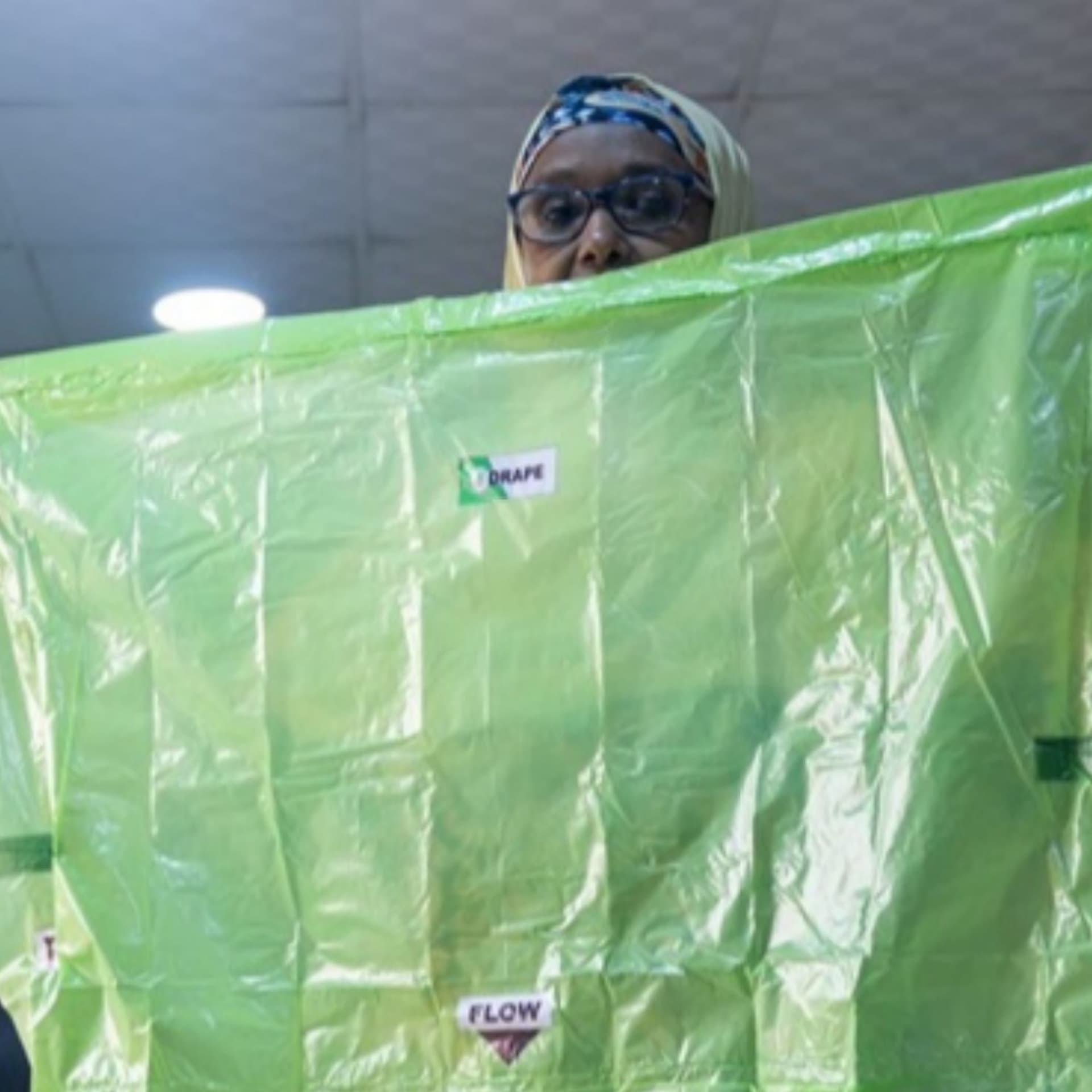
2:36We start with a simple plastic sheet that is saving the lives of tens of thousands of women all over the world. Every year, around 14 million women globally have excessive bleeding after birth, and 70 ,000 die. But researchers found that using a plastic drape to measure blood loss and then giving faster treatments has led to a 60 % lower risk of serious complications. In fact, the findings were so extraordinary that the World Health Organization recommended the new treatment within just six months. I spoke to Dr Hadiza Galadanchi in Nigeria and also to Professor Ari Kumarasamy here in the UK, who were both involved in the research.
3:20As soon as we see that she's lost that amount of blood that is significant, we now immediately give her the bundle treatment. And the bundle treatment is the MOTIVE. And that's where we have the E motive, which is an intervention. We needed to demonstrate that using the drape and using the bundled treatment, as Hadisa mentioned, would in fact improve the outcomes. So we needed to design and conduct a definitive clinical trial, which found a tremendous reduction in the number of women who were bleeding excessively or having surgery or indeed dying from postpartum hemorrhage. these were all reduced with the e-motive intervention.
4:10So Dr Hadiza, how successful has this been in Nigeria? Very, very successful. In fact, I haven't seen any intervention that is saving women as much as the e-motive trial. I've had, you know, people saying that from the day they started using the e-motive intervention, not a single woman has died, you know, due to excessive bleeding. So it's amazing. And apart from saving life, it's even making our labour world very clean. Definitely health care workers can see the impact because we are saving women. The recommendation from the World Health Organization and other international bodies supports the use of it throughout the world.
4:55So the recommendation isn't restricted to just low income countries. The need for an objective measurement device like this blood collection drape is needed for every vaginal birth, for every delivery throughout the world. And for both of you, a personal question. Professor Ari, let's start with you. How does it feel to be working on something that is saving lives and making such a difference to these women? It's a tremendous feeling. I've been doing clinical trials research for nearly three decades. But to have a trial that produces the findings that EMOTEV trial did, which was a massive reduction in women suffering severe postpartum hemorrhage or dying from it, is not very common.
5:45But then to see that research finding being translated into policy and recommendations, And then health ministries and governments and health care providers throughout the world taking up the intervention and making it a reality for women is truly a dream come true. So it's a tremendous feeling. I've worked as a doctor obstetrician in Nigeria for three decades and I've seen so many mothers, so many mothers come and have excessive bleeding and die in front of me and without having the opportunity to save them. So really, you know, with the findings of the way, you know, the intervention has really or is really saving lives.
6:35I mean, it was a feeling that finally we've gotten something. And we're able to do this in six months from the time of the publication of the emotive results to the time WHO, you know, included it in its recommendation was just six months. But then even the more exciting thing is that, you know, with that recommendation, almost every single country is trying to see how they can, you know, introduce that innovation into practice. It's going to be everywhere in this world. And that's the greatest feeling. In fact, the impact is beyond our imagination. Dr. Hadiza Galadanchi and Professor Ari Kumarasamy.
7:23Now to two best friends who have proved that distance is no barrier. Despite living on opposite sides of the world, Joy and Diane have maintained a friendship that has lasted for more than 60 years, and it all started with one letter. The Happy Pod's Helena Burke has been speaking to them, one in Canada and the other in Australia. Joy and Diane first met back in 1965 via a letter. Back in the 60s, there was a pen pal column in the Vancouver Sun, which was the provincial newspaper. And one of my hobbies was pen pals. So when a name came up from Australia, which happened to be Jenny, I wrote to her because I'd always been interested in Australia.
8:09And I was 12 at the time. So I sent my letter off to Jenny. And then what happened, Joy? Well, Jenny got so many replies that she said to me, she was my friend, and she said, oh, would you like one of the letters? And lo and behold, it come from Diane Seneshaw from Canada. And that's where it started. Then I wrote back to her. The girls remain close throughout their teens, writing to each other regularly about school, music and friends. As technology has evolved, they've switched from letters to emails and now texts and video calls. I'm very aware if Joy writes me in the middle of the night, I tell her that she has to go to bed and get some sleep.
8:55And Elrin, remember that one time, Joy, when I got mixed up with phoning and I phoned you in the middle of the night? Yeah. I said, no, don't worry about it. Just keep talking. She said, no, no, I'll ring you back. The friendship has also shifted and grown as time has gone by. We were very busy with our lives when our children were small and, you know, we're working. But sort of as we've got older, things have changed, hasn't it? We got closer. Yeah, we have. And I think the real special thing about our families is that when Joy and I started getting too busy to write, our mums were retired and they became pen pals and they kept us in touch through their letters too so even though we were busy we never lost that relationship we still knew about each other even if we weren't writing back and forth as often so I'm very thankful that that our mums kept us in touch yeah me too after 15 years of writing to each other the women first met in person in 1980 in a small town of Renmark in South Australia where Joy lives.
10:07Since then, they've met up several times with their husbands in tow. So we've been to Australia six times, right Joy? That's right. And Joy, how many for you? Three, we've been to Canada. And another nice thing is that both are men like each other too, which makes it easier for us because that, you know that is important in a relationship that you're that the couples are close not just the women. Joy and Diane say one of the benefits of having a best friend on the other side of the world is that when you tell them your secrets they don't get spread into the local community. I'm so comfortable with Joy and I just feel that I can tell her safely anything so she's my confidant like she was just telling me about some letters she wrote about things that maybe she should burn before she dies because maybe nobody else should read them.
10:56It's just, it's a safe place for me and I can vent with her. In fact, you know, I consider her a sister. I have two sisters but Joy is also a sister because she's, well, she's just a very special person in my life. I'm very blessed to have her. We don't have the same blood running in our veins but we are like sisters. Yeah. It's really special. They hope their story will encourage other people to not let distance be a barrier to maintaining close relationships. Distance doesn't have to influence how you feel about a person you know like even if I hadn't met Joy I think I still would be very connected to her just because we we we are very similar and you know don't let distance be a deterrent for anything.
11:41It'd be nice if more people wrote or had a relationship like you and I have It's really important, obviously, to you and to me, and it was to our mums. You know, if you've got a friend overseas, I think it's really important that you try and keep the connection going. And I think I won the lottery because I'm really glad that I got Joy. Well, I reckon I won the lottery. Joy and Diane speaking to Helena Burke. For the past 18 years, a group of volunteers have given up their time to teach fly fishing to people with breast cancer. The charity Fishing for Life aims to help with both physical and mental wellbeing.
12:25Jane McCubbin has been to one of their riverside branches in the south-west of England. For Libby, for Jane, for Heather and Andrew, this is the sound of healing.
12:40I'm here in this moment in time and it's just lovely like when you go in the supermarket and you hear that doop doop all the time reminds me of a hospital the equipment that they have in hospital so those sounds take you back but you don't get that here so lift up cast out I get peace and separation from all the doctor's appointments. And you just lift. You just want it to go on forever. 18 years ago, Gillian Payne set up Fishing for Life to teach fly fishing to people with breast cancer. Andrew represents the less than 1 % of sufferers who are men who was diagnosed a year ago. You could see the difference in him.
13:28Oh, yeah. Yeah. Yeah, it's totally different now. He wouldn't talk, he'd be sat in a chair, he'd just, there's no point carrying on. Put it through your finger like we did last time. I can see he's not thinking about anything else. I think Julian just wanted to give back and it's amazing. I don't know how many she's set up, but this one's great. Today there are ten Fishing for Life groups all over the country, free for anyone with breast cancer. That's the first dropper. Heather is one of the volunteer coaches. Because you are going to catch one. Well, I'm going to do my very best. Heather was a volunteer for almost a decade before she got her own diagnosis.
14:08So I phoned Gillian and said, I've become one of the girls. If I can help anyone to catch some fish, that would be great. Enjoying the sunshine in the fresh air, moving their shoulders wherever they've had breast cancer to help the lymphatic, help the muscles get better after surgery, to enjoy it. We're counting on you to net the fish, Reg.
14:37Wow, you've got one. Wow, that's my first fish. I've never caught a fish before. Really exciting because I normally just catch weed. So I'm sort of halfway through my treatment. Adrian is helping to coach Libby. Is he good? No, he's rubbish. We've just entangled ourselves. It wasn't me. We're casting at the same time and we've hooked each other's lines. I'm learning all the time. Adrian first came here as a husband supporting a wife. When she died, he stayed on as a volunteer. It was literally a week before Christmas. You know, so four months ago-ish, yeah. This, you know, helps me sort of have a break from thinking about things, yeah.
15:25Right, this is the one. You think? We all get as much out of it, all the volunteers, as much as they do. And when you see the people and how much satisfaction, how it changes their lives. Hundreds have helped here and have been helped, finding peace and hope from the steady concentration of casting a line. Oh, thank you so much. Thank you very much. Three months ago, I wasn't doing anything. just sitting at home, getting depressed, and this stops that process. All your worries and your troubles seem to just melt away. Andrew ending that report from Jane McCubbin.
16:13Coming up on The Happy Pod, protecting a rare rainforest in Northern Ireland and endangered birds in India. It's a win-win for the community staying on the bank of the river because they are getting seasonal employment. As well, it's a win-win for the species that they are getting protection from the people on the bank of the river.
16:37We all can agree that housing is expensive. Rent, mortgage, it doesn't matter which one you're paying, it stings every month. But BUILT can make you feel a little better. Let me explain. Built started out rewarding members on their rent. Now, as of 2026, Built members can also earn points on mortgage payments wherever they live. Every housing payment earns you points you can use toward flights with top travel partners like United & Hyatt, Lyft Rides, Amazon.com purchases, and so much more. And here's what you might not expect. Built members can also get access to a neighborhood concierge. It can make restaurant reservations, book fitness classes, and find new local spots, all while being rewarded at more than 45 ,000 merchant partners.
17:20It's like having a personal assistant baked into where you live. It's simple. Being a renter and now owning a home is better with Bilt. Join the membership for where you live at joinbilt.com slash podcasts. That's J-O-I-N-B-I-L-T dot com slash podcasts. Make sure to use our URL so they know we sent you. 10 hours on my feet, traffic, noise, everybody needing something from me. My head is spinning. I just need the world to stop for one second. But then I get home, shoes off, phone out, and I open Modo Casino. Hundreds of slots, classic table games. It's my instant reset. The variety I want in the quiet I need.
17:59Modo Casino is a social casino. We're prohibited. No purchase necessary. Visit Modo.us for more details. Download the Modo Casino app today. Must be 21 plus. Modo Casino. American Social Casino. Hey, it's Ryan Seacrest for Jewel Osco. For you, save days are here now through June 23rd. Find hot deals throughout the store and earn four times a point. Look for in-store tags to earn on eligible items from Keebler, General Mills, Lactaid, Jack Links, Cheez-It, and Gatorade. Then clip the offer in the app for automatic event-long savings. Stack up those rewards to save even more. Enjoy savings on top of savings when you shop in-store or online for easy pickup or delivery.
18:37Restrictions apply. See the website for full terms and conditions.
18:44You're listening to The Happy Part. To Australia, with homes that are being adapted for ADHD. It's thought 1 in 20 children around the world have the neurodivergent condition. It can lead to a range of issues, including difficulty with attention span and impulsive behaviour. Louise Mylin from ABC News went to meet one family in Tasmania. I've pulled up to a suburban unit in Launceston. Hello. Hi, how are you? I'm probably going to be quiet. It's home to Linda and her two boys, and we're keeping a little quiet at first because four-year-old Eamon is napping. Linda and Evan both have ADHD and both boys have autism.
19:27I guess I never quite know what I should be doing. Like, I'm overthinking it, I think, is, for me, is like, OK, I've been, I'm having a cup of tea. OK, I should sit there. I should do this. Through chatting with other families about ADHD, reading articles and listening to podcasts, she realised something had to change. Like many kids, especially those with ADHD, Evan and Amon seek a lot of sensory stimulation, jumping, spinning, hanging upside down. Their house has hard floors, which weren't suitable. Instead, there's a soft, squishy mat in the living room It feels like I'm walking on pillows If you just take your socks off, it will feel nice on your feet In the playroom, the star of the show is a bright blue hammock-like swing hanging from the roof In the corner, a climbing frame with two gymnastics rings attached with rope So now you're putting your feet through one loop I'm getting my foot.
20:29And your foot in the other one. And you're hanging from a bar, sitting down into it. Yeah, and now. For Linda, creating a space for her children with movement-based activity in mind is really important. The key is to have a stimulating environment. Putting her children in front of a screen just wouldn't cut it. For 11-year-old Evan, the designing of the play area has had huge benefits. It's like a feeling where I can be myself. and it's just I can control what I can do. Linda's family has also embraced visual cues. Stuff or oats, cereal, all visible. I know it sounds really basic, but having my kettle, my tea, coffee, sugar and whatever I drink right there, out, ready, and things I access all the time actually visible helps me.
21:28And there's the easy hack of labelling baskets around the house for placing specific items. Known informally as the ADHD tax, many with the condition have to repurchase items like watches and keys because they regularly lose them. Clutter can also be a big challenge for people with ADHD. So to avoid brain overload, it can be helpful to stash stuff in easily accessible spots. In the boys' playroom, a couch cushion lifts up to reveal a massive toy box. so the kids can throw their stuff in without it being an overstimulating mess. Evan even uses a whiteboard with clickable lights for visual cues in his morning routine.
22:07I find it hard to get out of bed and get dressed on time. I can't make my body actually do it, but I want to. And so I've put this up so then I can do this. And you're lighting up the lights when you press them. And they'll be on. and then when I finish something, I turn them off. A tour of Linda's place has shown me that one person and a bit of creative thinking can go a long way to making life easier for people with ADHD. And Linda's not the only one making changes. I've spoken to architects across Australia who have moved into the business of creating neurodivergent friendly interiors.
22:49Back in the playroom, 11-year-old Evan is in his customised swing, relaxing and playing with a Rubik's Cube. Done. That was just about 20 seconds, I reckon. That was impressive. When you get home to your own place and these rooms with your swing and your big cushion, how does that feel? It feels like that I can wind down and actually be somewhere where I like being. That report was from Louise Mylin and you can hear more about supporting people with ADHD on people fixing the world wherever you get your BBC podcasts. A scientist has been awarded a prestigious conservation award for her efforts to protect the endangered Indian skimmer.
23:34India is home to 90 % of the global population of the black and white waterbird but their ability to create safe nests has been under threat as Branka Lesser-Di Saar reports. That's the sound of the Indian skimmer, a unique orange-billed waterbird native to South Asia. Skimmers tend to lay their eggs on sandbanks in the middle of rivers or other bodies of water. The Chambal River in central and northern India is one of the foremost breeding habitats for the skimmer. But for years, their population along the Chambal has been in steady decline. It's a mystery that Parveen Shaikh, a scientist with the Bombay Natural History Society, decided to investigate.
24:18It's a very beautiful, popular bird, but we didn't know what exactly is the problem for them, why they are declining. Barvin discovered that changing water levels were leaving the skimmers' nests vulnerable to predators. So these birds mainly nest directly on the sandbars that emerge in between of rivers during peak summers. The water which is surrounded on the sandbar is a natural protection to them. But I realised that rivers have changed and this sandbar starts getting connected to the bank when the water level decreases. And that lets to free-ranging docks that access the sandbars and predate on the eggs.
24:58And that was a very sad scenario to see because a very large loss of eggs and chicks were happening. Parveen decided that she wanted to do something to help protect the skimmer population. She realised that simply guarding their nesting area had a huge impact. We were monitoring approximately more than 10-15 nests on one island. There were a couple of days left for the chicks to hatch out. When we walked on the nesting sandbar to do the daily monitoring, we realised that the birds were very disturbed and we saw that a couple of dogs had predated everything except only the last remaining two eggs.
25:37And we realised that it is possible that if we completely keep the predator outside and not let the livestock come on the sandbars, the birds still have chance to, and the eggs and chicks have a chance to survive. Parveen and her team decided to engage local communities in the project, employing them as nest guardians. We experimented it with a couple of nesting sites where we appointed the local community members. We trained them and we told them to protect this nesting colony. And to our surprise, more than 60 % of the chicks successfully fled from this nesting colony. Now, Parveen's team supports over 30 nest guardians who provide round-the-clock protection for skimmer nesting areas.
26:22Thanks to their work, the skimmer population on the Chambal has more than doubled. It's a win-win for the community staying on the bank of the river because they are getting seasonal employment. as well as just a win-win for the species that they are getting protection from the people on the bank of the river. Parvin's advice for other conservationists? Conservation is challenging but believe it in yourself, believe it in your programme and the one thing that we have learned that people need to be part of conservation. It's very important that the communities around the species need to be part of the conservation programme.
26:56That report was from Branka Lissadisar. We end in Northern Ireland, where a rare and environmentally important rainforest is set to come back to life over the next century. It's not the tropical kind you might be thinking of when you hear the word rainforest. This is an ancient and precious woodland known as a temperate rainforest, as John Martin from the Woodland Trust explains. We are trying to make the UK and Northern Ireland in particular better for nature and for people. We believe that woodlands provide a lot of health and well-being benefits for people, but also the nature benefits as well, you know, in terms of carbon capture, climate resilience, a clear kind of nature-based solution to some of the climate nature crisis we find ourselves in at the minute.
Read the full transcript
27:44It's one of the UK and Ireland's most threatened habitats. John Martin also explained why this work is important. Temperate rainforest occurs in areas of high rainfall, mild temperatures and strong kind of ocean influence. It's usually characterized by native tree species such as oak, birch, alder and hazel and complex woodland structures, including like ravines, rivers, rocky outcrops, etc. And although kind of less visually dramatic than tropical rainforests, these systems support extraordinarily specialised and often like globally rare species of flora and faunas. Woodland creation along that temperate rainforest zone is really important because, you know, future generations will benefit from the nature-based solutions that that rainforest provides.
28:37Almost 30 ,000 native trees have been planted in the 41-acre site. That's around 25 football pitches. It will take about a year to see the tips of the trees sprouting up through their protective plastic tubes, but it will be at least 100 years before they're fully grown. Rosemary Mulholland is part of the Ulster Wildlife Team who are running this restoration. Over the years, these trees will grow and it's good to know that I was there at the start. It's a great privilege to take this land and turn it into a habitat that is now largely lost. You know, we would have had a lot of this forest all over Ireland at one time.
29:19It's a very rare habitat. It's actually rarer than tropical rainforest, but it will do a great job as well as supporting wildlife. It will reduce runoff of water, you know, reduce risk of flooding and it will be open to people. John Martin and Rosemary Mulholland.
29:42And that's all from the Happy Pod for now. We'd love to hear from you. As ever, the address is globalpodcast.bbc.co.uk. This edition was produced by Rachel Bolkley. The editor is Karen Martin. I'm Holly Gibbs. Until next time, goodbye.
30:05Is there a backlash to AI brewing? I'm Asma Khalid. I host the Global Story podcast from the BBC. We've all been told that artificial intelligence was our great societal hope. But this week, the Pope issued his first big manifesto, and in it he called to disarm AI. This comes after American college students booed commencement speakers who touted artificial intelligence. What do these signs of resistance mean? Listen to the Global Story on BBC.com or wherever you get your podcasts. I'll see you next time.
From the publisher
Researchers say a simple sheet of plastic is helping to prevent women dying after childbirth. The drape measures blood loss, which allows doctors to provide faster treatment. It's been successful in Nigeria, and now the health professionals want it used across the globe.
Plus, meet Joy and Diane who have been friends for 60 years. It all started with one letter when they were 12 years old and they have been pen pals ever since. Also, the fishing group helping people with breast cancer. The woman trying to save endangered Indian Skimmer water birds. The rare rainforest that is being restored in Northern Ireland over the next 100 years, and the homes in Australia which are being adapted to help people with ADHD.
Our weekly collection of inspiring, uplifting and happy news from around the world.
Presenter: Holly Gibbs. Music composed by Iona Hampson
Picture credit: Gates Foundation/Nelson Owoicho